Hopefully making a ruckus, one blog post at a time!
Be sure to check out my other blog,Joe’s Journey, for selected short stories and personal insights on life and its detours.

Hopefully making a ruckus, one blog post at a time!
Be sure to check out my other blog,Joe’s Journey, for selected short stories and personal insights on life and its detours.
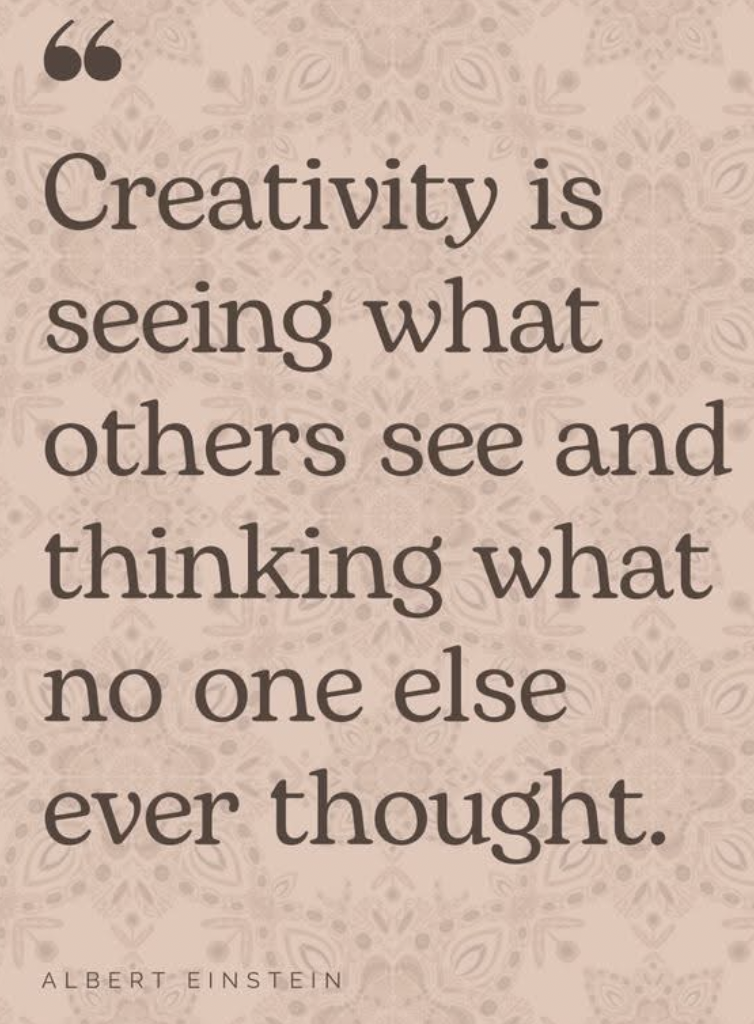
This week’s post highlights a very intriguing article by one Maria Popova who features an interview of Albert Einstein from the early 20th Century and gives us some background into his thinking and feelings of free will and its impact on our imagination. Since imagination and creativity go hand in hand, I felt it appropriate to include this blog post in my creativity series.
We are accidents of biochemistry and chance, moving through the world waging wars and writing poems, spellbound by the seductive illusion of the self, every single one of our atoms traceable to some dead star.
In the interlude between the two World Wars, days after the stock market crash that sparked the Great Depression, the German-American poet and future Nazi sympathizer George Sylvester Viereck sat down with Albert Einstein (March 14, 1879–April 18, 1955) for what became his most extensive interview about life — reflections ranging from science to spirituality to the elemental questions of existence.
It was published in the Saturday Evening Post on October 29, 1929 — a quarter century after Einstein’s theory of relativity reconfigured our basic understanding of reality with its revelation that space and time are the warp and weft threads of a single fabric, along the curvature of which everything we are and everything we know is gliding.

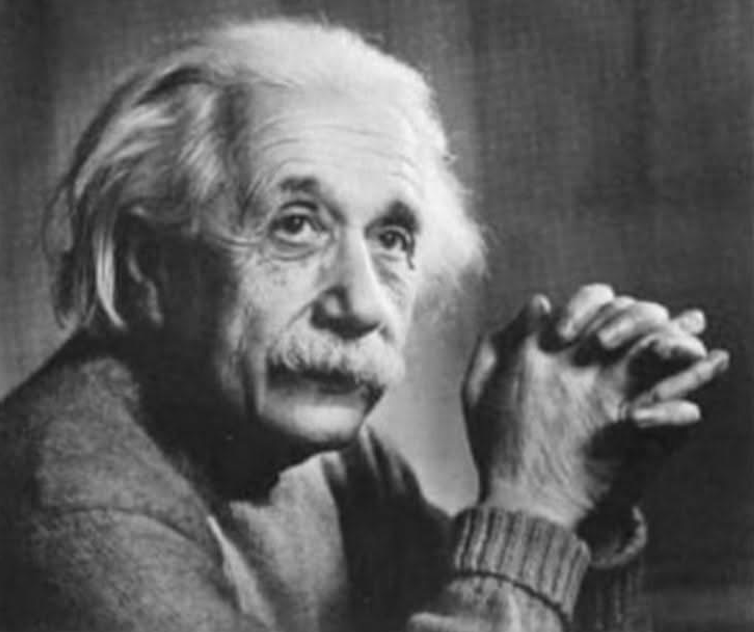
Albert Einstein by Lotte Jacobi. (University of New Hampshire Museum of Art.)
Considering the helplessness individual human beings feel before the immense geopolitical forces that had hurled the world into its first global war and the decisions individual political leaders were making — decisions already inclining the world toward a second — Einstein aims in his sensitive intellect at the fundamental reality of existence:
I am a determinist. As such, I do not believe in free will. The Jews believe in free will. They believe that man shapes his own life. I reject that doctrine philosophically. In that respect I am not a Jew… I believe with Schopenhauer: We can do what we wish, but we can only wish what we must. Practically, I am, nevertheless, compelled to act is if freedom of the will existed. If I wish to live in a civilized community, I must act as if man is a responsible being.
When asked about any personal responsibility for his own staggering achievements, he points a steadfast finger at the nonexistence of free will:
I claim credit for nothing. Everything is determined, the beginning as well as the end, by forces over which we have no control. It is determined for the insect as well as for the star. Human being, vegetables or cosmic dust, we all dance to an invisible tune, intoned in the distance by a mysterious player.
For Einstein, the most alive part of the mystery we live with — the mystery we are — is the imagination, that supreme redemption of human life from the prison of determinism. With an eye to his discovery of relativity, he reflects:
I believe in intuitions and inspirations. I sometimes feel that I am right. I do not know that I am. When two expeditions of scientists, funded by the Royal Academy, went forth to test my theory of relativity, I was convinced that their conclusions would totally tally with my hypothesis. I was not surprised when the eclipse of May 29, 1919, confirmed my intuitions. I would have been surprised if I had been wrong.
I am enough of an artist to draw freely from the imagination. Imagination is more important than knowledge. Knowledge is limited. Imagination encircles the world.
Complement this article with the thoughts of neuroscientist Sam Harris on our primary misconception about free will, and then revisit Einstein on the interconnectedness of our fates.
Many thanks to Maria Popova, Editor and Publisher of The Marginalian (formerly Brain Pickings) for her due diligence in publishing this interview so folks like me can further share it with our creative brethren.
Hopefully making a ruckus, one blog post at a time!
Be sure to check out my other blog, Joe’s Journey, for personal insights on life and its detours.
Feel free to review various creative selections from my website.
Jolan tru!
A variety of quotes to help round out your week.
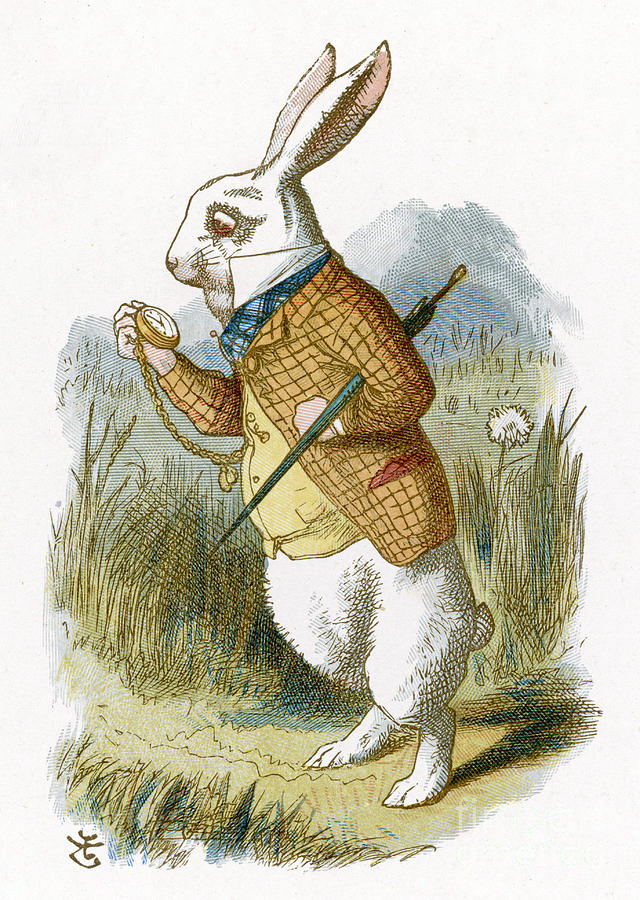
I’m late, I’m late! For a very important date! No time to say ‘hello, goodbye,’ I’m late, I’m late, I’m late! — White Rabbit
No company that markets products or services to the consumer can remain a leader in its field without a deep-seated commitment to advertising. — Edwin Artzt, member, Advertising Hall of Fame
You can say the right thing about a product and nobody will listen. You’ve got to say it in such a way that people will feel it in their gut. Because if they don’t feel it, nothing will happen. — William Bernbach, member, Advertising Hall of Fame
The soft stuff is always harder than the hard stuff. — Roger A. Enrico, member, Advertising Hall of Fame
And that’s the world’s biggest problem: the future is seen as someone else’s concern. –David A. Sinclair, biologist, professor of genetics
Everything has its beauty, but not everyone sees it. – Andy Warhol
The most beautiful thing we can experience is the mysterious. It is the source of all true art and all science. He to whom this emotion is a stranger, who can no longer pause to wonder and stand rapt in awe, is as good as dead: his eyes are closed. – Albert Einstein
Obstacles are those frightful things you see when you take your eyes off your goal. – Henry Ford
Whenever a theory appears to you as the only possible one, take this as a sign that you have neither understood the theory nor the problem which it was intended to solve. – Karl Popper
Diversity is truly about seeing everyone’s uniqueness as a beautiful gift to be nurtured and developed, not changed to conform to some arbitrary standard. — Mary-Frances Winters, American author and diversity & inclusion expert
Hopefully making a ruckus, one blog post at a time!
Be sure to check out my other blog, Joe’s Journey, for a different kind of playground for creativity, innovation and inspiring stuff.

Live Long and Prosper, Ukraine!
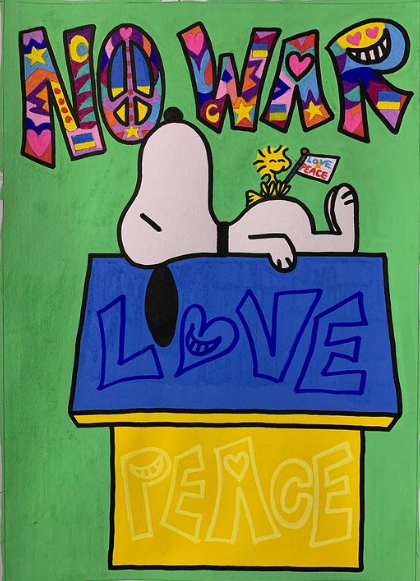
The quotations are as varied as the people who said them. Some you know, some you don’t. That’s what makes them interesting. From Burke to Burnett, Einstein to Degas; throw in a little Serling for seasoning and you’ve got a tasty recipe for March’s quotes.
We don’t grow unless we take risks. Any successful company is riddled with failures. — James E. Burke, Advertising Hall of Fame
Success or failure in business is caused more by mental attitude than by mental capacities. — Walter Dill Scott, Advertising Hall of Fame
Anyone who thinks that people can be fooled or pushed around has an inaccurate and pretty low estimate of people — and he won’t do very well in advertising. — Leo Burnett, Advertising Hall of Fame
If we knew what we were doing, it wouldn’t be called research, would it? – Albert Einstein
If you fall in love with the imagination, you understand that it is a free spirit. It will go anywhere, and it can do anything. – Alice Walker
Curiosity killed the cat, but for a while I was a suspect. – Steven Wright
You must aim high, not in what you are going to do at some future date, but in what you are going to make yourself do to-day. Otherwise, working is just a waste of time. – Edgar Degas
Our job is to simplify, to tear away the unrelated, to pluck out the weeds that are smothering the product message. — William Bernbach, Advertising Hall of Fame
How do we turn science fiction into fact? We do it by inventing our own future and figuring out the realistic steps that we need to make in order to get there. Dare to dream. Let your imagination leap. — David Shapton, Editor In Chief, RedShark Publications, 2012 to 2020
Hopefully making a ruckus, one blog post at a time!
Be sure to check out my other blog, Joe’s Journey, for a different kind of playground for creativity, innovation and inspiring stuff.
Live Long and Prosper, Ukraine!
As it has been about a month or so since we last published some quotes, we thought it timely to publish some news ones. Like before, it contains quotes from various acclaimed individuals from the worlds of advertising, philosophy, science, literature and education. So, go ahead and immerse yourself in creativity – intelligence having fun!
It is easier to tone down a wild idea than to think up a new one.— Alex Osborne, member, Advertising Hall of Fame
The important thing is not to stop questioning. Curiosity has its own reason for existing. One cannot help but be in awe when he contemplates the mysteries of eternity, of life, of the marvelous structure of reality. It is enough if one tries merely to comprehend a little of this mystery every day. Never lose a holy curiosity. – Albert Einstein
Creativity can solve almost any problem. The creative act, the defeat of habit by originality, overcomes everything. – George Lois
If one advances confidently in the directions of his dreams, and endeavors to live the life which he has imagined, he will meet with a success unexpected in common hours. – Henry David Thoreau
Those people who think they know everything are a great annoyance to those of us who do. – Isaac Asimov
An idea can turn to dust or magic, depending on the talent that rubs against it. — William Bernbach, member, Advertising Hall of Fame
Creativity is as important as literacy and numeracy, and I actually think people understand that creativity is important – they just don’t understand what it is. – Ken Robinson
If you’re not prepared to be wrong, you’ll never come up with anything original. – Ken Robinson
I believe this passionately: that we don’t grow into creativity, we grow out of it. Or rather, we get educated out if it. – Ken Robinson
Many highly talented, brilliant, creative people think they’re not – because the thing they were good at at school wasn’t valued, or was actually stigmatized. – Ken Robinson
Hopefully making a ruckus, one blog post at a time!
Be sure to check out my other blog,Joe’s Journey, for personal insights on life and its detours.
The ones who see things differently…who are not fond of rules…they change things. They invent. They imagine. They heal. They explore. They create. — Steve Jobs
Be brave enough to live life creatively. The creative place where no one else has ever been. – Alan Alda
Where there is shouting, there is no true knowledge. – Leonardo da Vinci
I think it’s better to be overly ambitious and fail than to be underambitious and succeed in a mundane way. I have been very fortunate. I failed upward in my life! – Francis Ford Coppola
Meetings are all too often the burial grounds of great ideas. — Keith Reinhard, member, Advertising Hall of Fame
You cannot force ideas. Successful ideas are the result of slow growth. Ideas do not reach perfection in a day, no matter how much study is put upon them. – Alexander Graham Bell
The most dangerous phrase in the language is, We’ve always done it this way. – Grace Hopper
If at first, the idea is not absurd, then there is no hope for it. – Albert Einstein
We are drowning in information, while starving for wisdom. The world henceforth will be run by synthesizers, people able to put together the right information at the right time, think critically about it, and make important choices wisely. – E. O. Wilson
There is nothing to writing. All you do is sit down at a typewriter and bleed. — Ernest Hemingway

Hopefully making a ruckus, one blog post at a time!
Be sure to check out my other blog, Joe’s Journey, for personal insights on life and its detours.
In a continuing effort to highlight various modes of thought by different folks through the ages, the following quotes are offered up to enlighten your imagination and, perhaps, even tickle your funny bone. Then, again, maybe they’ll make you think. Enjoy!
You have to be noticed, but the art is getting noticed naturally, without screaming and without tricks. – Leo Burnett, member, Advertising Hall of Fame
The mind that opens to a new idea never returns to its original size. — Albert Einstein
No moral, no message, no prophetic tract, just a simple statement of fact: for civilization to survive, the human race has to remain civilized. Tonight’s very small exercise in logic from the Twilight Zone.
. . . And . . .
Human beings must involve themselves in the anguish of other human beings. This, I submit to you, is not a political thesis at all. It is simply an expression of what I would hope might be ultimately a simple humanity for humanity’s sake. ― Rod Serling
Inspirational quotes for folks who don’t like them:
On fighting the urge to follow the herd:
Be yourself; everyone else is already taken. — Oscar Wilde
What you think of yourself is much more important than what others think of you. — Seneca
Love yourself first and everything else falls into line. You really have to love yourself to get anything done in this world. — Lucille Ball
On finding the beauty in chaos:
If life were predictable it would cease to be life, and be without flavor. — Eleanor Roosevelt
I would rather die of passion than of boredom. — Vincent van Gogh
Life would be tragic if it weren’t funny. — Stephen Hawking
In spite of everything, I still believe that people are really good at heart. — Anne Frank
Greetings and good day to ‘ya! Here’s your respite into the world of famous and sometimes infamous quotes from a variety of personalities. Any one of these could prove motivation for that ad you’re working on, tweak your imagination, inspire you or just plain bring a smile to your face.
Feel free to share!
Every advertisement should be thought of as a contribution to the complex symbol which is the brand image. – David Ogilvy, member, Advertising Hall of Fame
It is easier to tone down a wild idea than to think up a new one. – Alex Osborne, member, Advertising Hall of Fame
People are very sophisticated about advertising now. You have to entertain them. You have to present a product honestly and with a tremendous amount of pizzazz and flair, the way it’s done in a James Bond movie. But you can’t run the same ad over and over again. You have to change your approach constantly to keep on getting their attention. – Mary Wells Lawrence, member, Advertising Hall of Fame
Question everything. Learn something. Answer nothing. – Euripides
If you can’t turn yourself into your customer, you probably shouldn’t be in the ad writing business at all. – Leo Burnett, member, Advertising Hall of Fame
Never write an advertisement which you wouldn’t want your family to read. You wouldn’t tell lies to your own wife. Don’t tell them to mine. – David Ogilvy, member, Advertising Hall of Fame
Imagination is more important than knowledge. For knowledge is limited, whereas imagination embraces the entire world, stimulating progress, giving birth to evolution. – Albert Einstein
Learn the rules like a pro, so you can break them like an artist. – Pablo Picasso
After a certain high level of technical skill is achieved, science and art tend to coalesce in esthetics, plasticity, and form. The greatest scientists are always artists as well. − Albert Einstein
Some of the biggest advertising mistakes are people who imagine they know what the problem is, or they’re not even thinking about; they’re just coming up with that brilliant idea and trying to force the problem to fit it. – Mary Wells Lawrence, member, Advertising Hall of Fame
Even during times of crisis and major uncertainty, creativity is very useful. The outbreak gripping the world at present, the Corona Virus (covid-19), is causing all sorts of interruption globally. The pandemic is causing us to think like we’ve never thought before or at least in a very long time.
Creativity brings itself to the forefront once again. How we use it to solve some almost unthinkable problems is up to us. Fortunately, we have viable resources upon which to fall back.
In the continuing process of exploring the myriad aspects of creativity, I was intrigued by this article from the Trillo blog regarding how Albert Einstein used a certain kind of “play” to enhance his creative streaks. What’s appealing to me is that all of us can learn from this, whether or not we’re engaged in a global pandemic.
I dare say everyone wants to boost their creativity. Now especially. How about boosting it on a par with the likes of Einstein? Well, it has to do with what’s referred to as Combinatory Play.
What the heck is Combinatory Play?
“Combinatory play seems to be the essential feature in productive thought.”
– Albert Einstein
The term “combinatory play,” also known as combinatorial creativity, was perhaps first coined by Albert Einstein in a letter to French mathematician Jacques Hadamard. In an attempt to understand mathematicians’ mental processes, Hadamard asked Einstein about how he thought.

Einstein’s letter reply, later published in Ideas and Opinions, explained that his thinking process transcended what could be communicated in the written or spoken word, but that there was “a certain connection between those elements and relevant logical concepts.”
Huh?
Well, Einstein was known to play violin whenever he was stuck on a tough problem and often spoke of how music influenced the way he thought about math and science. His sister, Maja, said that sometimes after playing piano, he’d get up and say, “There, now I’ve got it.”
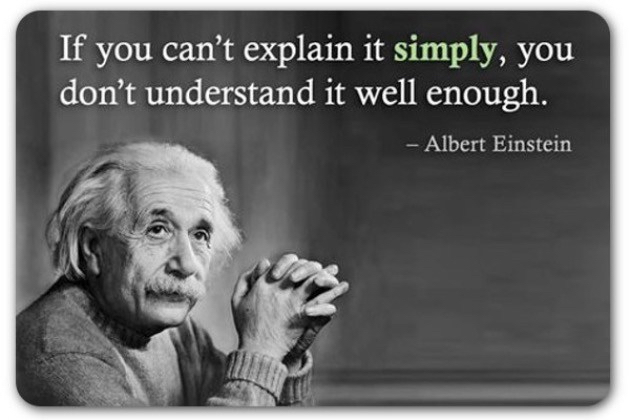
Call it combinatory play, combinatorial creativity, or intuition—we’ve all experienced that flash of insight, that fleeting moment when a solution we’ve been grinding away at reveals itself in an unexpected place. Playing violin helped Einstein theorize about time and space. What might be your Combinatory Play?
“Creativity is just connecting things.” – Steve Jobs

Understanding why Combinatory Play boosts creativity, means we should look at how the brain works.
The brain’s building blocks are neurons: nerve cells that receive and transmit signals along neural pathways. In Harvard professor of psychiatry John Ratey’s A User’s Guide to the Brain, certain pathways are forged at birth, like the ones that control your breathing and heartbeat. Others can be manipulated by learning. So when you’re stuck in a rut, your brain’s neurons could literally be stuck on a neural pathway you’ve carved out through your behavior.
The good news is you can get your brain unstuck by choosing to make new connections—forge a new neural pathway. Ratey explains, “A person who forcibly changes his behavior can break the deadlock by requiring neurons to change connections to enact the new behavior.”
If you’re frustrated by mental processes that lead nowhere, it’s kind of like your brain is taking the same old route to work every day because that’s what you’ve trained it to do. But if the highway is congested and you’re sitting in traffic, it’s up to you to tell your brain that there’s a new route it should take to get to where you want to go.
Your brain is continually striving for order and predictability, and as a result, can get pretty set in its ways. While reverting to familiar paths can keep you safe and comfortable, it can also hinder your creativity. Therefore, it’s important to quiet this part of the brain if you want to invent new solutions. Combinatory Play can help you do this by relaxing your mind.
As clinical psychologist Victoria Stevens explains: “Our pattern-seeking behavior is an essential part of creative thinking, although it can also produce false assumptions and biases when previous experiences lead us to beliefs we do not question. In addition, finding links, connections, and patterns between apparently dissimilar things is essential to creative thinking.”
Your pattern-seeking behavior can benefit you in creative thinking. Just remember to:
Combinatory Play allows you to zoom out, see the bigger picture, and spot the patterns. This is especially true at times like this. Think and act creatively and responsibly, not out of fear or panic but out of rational, logical thought. The calmer we are, the better.
Thanks to Amy Rigby
This Friday’s edition of the blog again highlights various quotes in yet a different manner. Their authors don’t necessarily come from the advertising industry but are involved in some aspect of creativity.
Serling, Poe, Van Gogh, Einstein – quite a master’s collection, wouldn’t you say? While I am definitely a fan of Rod Serling and his Twilight Zone series, I also enjoy the works of my relative, Edgar Allan Poe. Yes, I am a writer. I learned years ago in reading a Louisiana history book, that my great-great-great uncle (Poe) was Edgar’s cousin or something like that.
And, yes, I do believe there is some truth to what “Uncle Edgar” (as I call him) says in the first quote below.


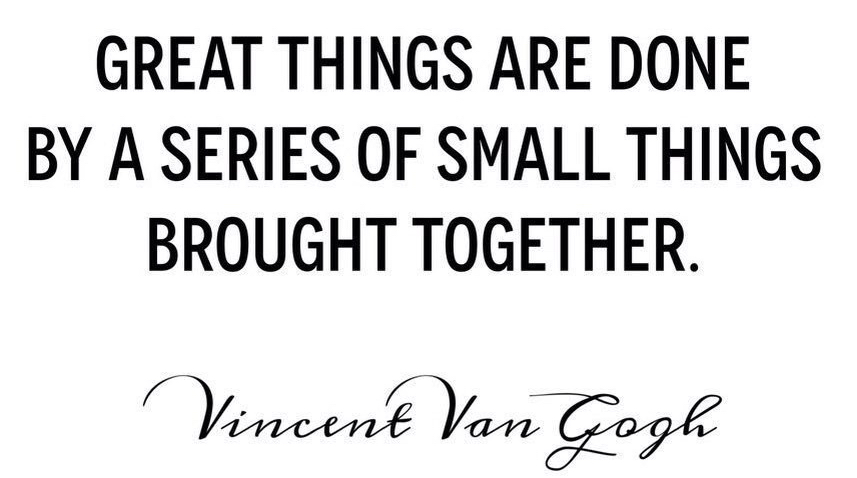
Whenever you write, whatever you write, never make the mistake of assuming the audience is any less intelligent than you are. – Rod Serling
...No matter what the future brings, man’s capacity to rise to the occasion will remain unaltered. Our potential for tenacity and optimism continues, as always, to outfight and outlive any and all changes made by society. – Rod Serling. Twilight Zone “Steel.”

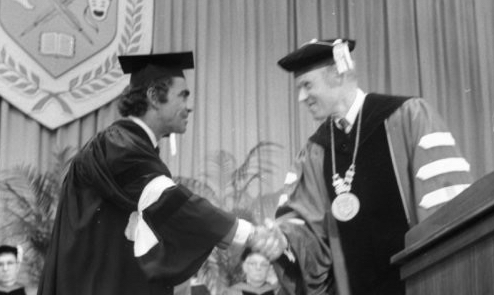
So long as you care, so long as you commit, so long as you concern yourself with the human condition, you have it in your power, perhaps twenty years from now, to be called to deliver a Commencement Address against a background of an infinitely finer world. – Rod Serling

The writer broadens, becomes more observant, more tempered, wiser… It is not something that is injected into him by a needle… It doesn’t work that way. It’s a tedious, tough, frustrating process, but never, ever be put aside by the fact that it’s hard. – Rod Serling.
So, do you have a favorite? Which one really speaks to you? Let me know, and I may pass it on to Uncle Edgar!

