A short story about Charity Hospital New Orleans and its aftermath from Katrina
Prologue
NOLA. Its spirit stays with you long after you’ve gone. The sights, smells, music and culture all linger, sometimes even after one’s memories fade. Those thoughts, dreams, even nightmares can embody your neighbor’s flesh and blood even when that neighbor passed away long ago. Caution: Some photos may be too unnerving or unsettling for some viewers.
A little history . . .
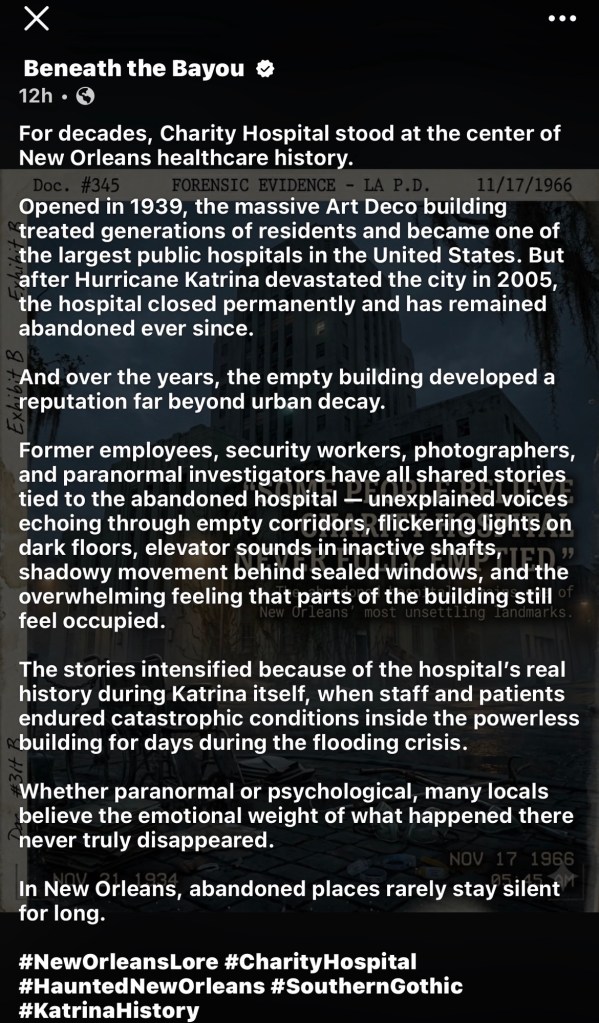
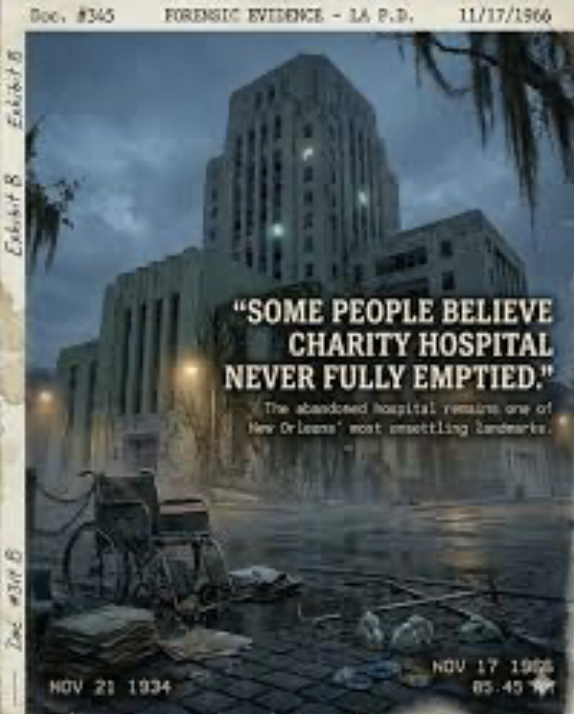
Charity Hospital of New Orleans, LA has long been the medical headquarters for many patients. Some of whom, it is said, never left. If that is so, how many souls stayed behind after the hospital permanently closed? What of them? When alive they endured many horrific events with Hurricane Katrina. Many a sane person would have gone crazy during those times, not able to rid themselves of the nightmarish memories they must still have.
I wonder, do souls have nightmares? Do they wander around aimlessly and body-less seeking answers? Do they seek revenge of some sort? Do they yearn to inhabit other living or dead bodies to continue life anew?
Seems like this would be the stuff of an episode right out of Rod Serling’s Twilight Zone. While interesting to ponder, the hospital sat empty and abandoned for a long time without anything being done to recessitate it. A surreal set of circumstances led to its demise and only in New Orleans could an old, empty hospital reemerge as a haven for lost souls. Spirits, ghosts, whatever you like all need a place to gather, a place to call home. In NOLA’s Charity Hospital, they evidently found it.
But the story doesn’t end here; it merely continues. To what end, you may ask. Well, we don’t know . . . yet.
Chapter One
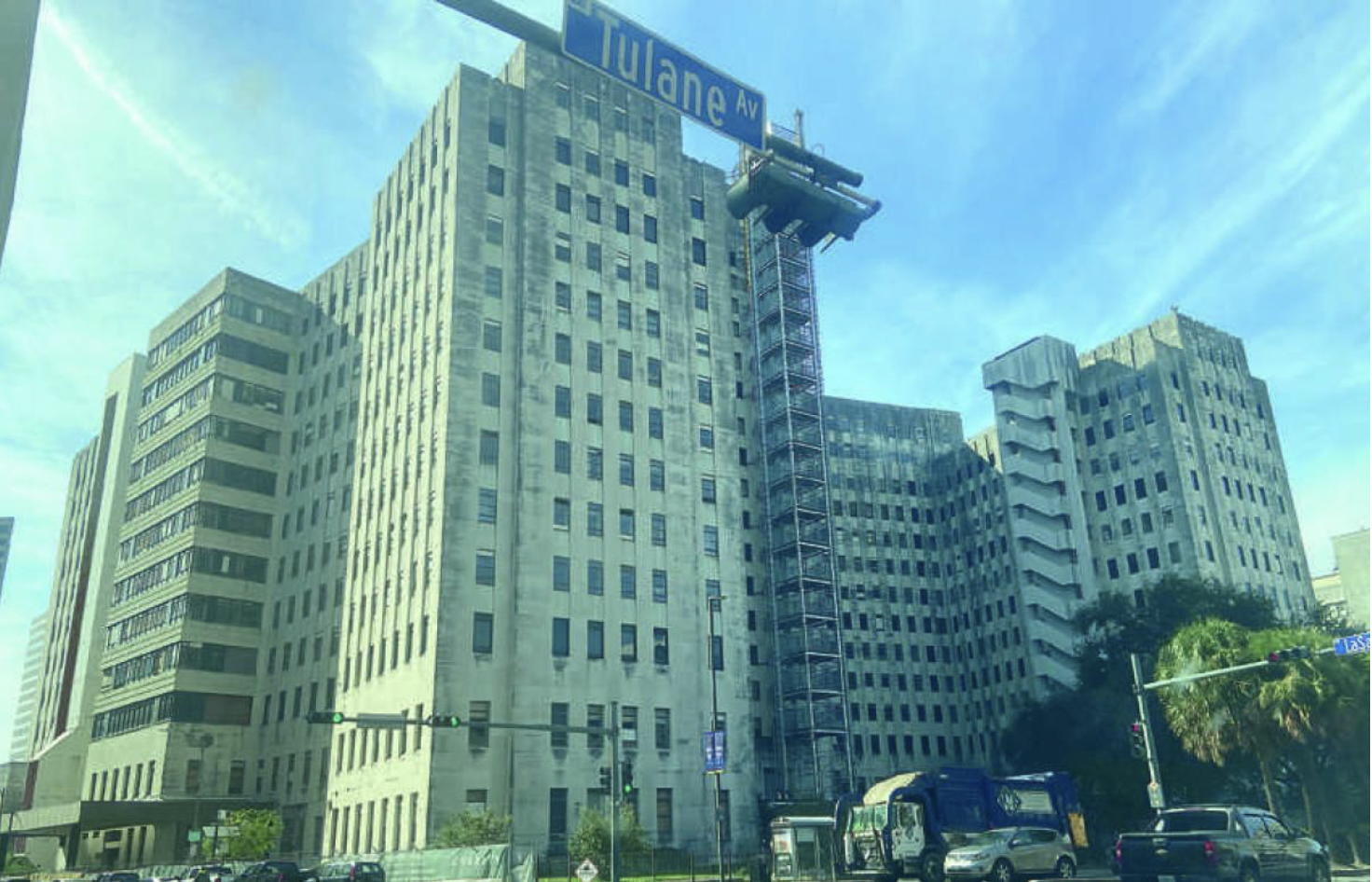
It was a dark and gloomy night in the French Quarter so we thought we’d stroll down a few blocks and see some old buildings. We eventually got to the section of Tulane Avenue where one of the oldest abandoned buildings in the area has sat empty for decades-Charity Hospital New Orleans.
Staring up at the 1939 built 20-story Art Deco building, one gets a feeling that the intimidating structure is not too keen on the idea of letting visitors inside its hallowed halls.
Nevertheless we marched slowly but steadily onward to see what had been left behind when it was evacuated because of Katrina in 2005.
In a word, not much. Yet there was a lot that remained. Indeed, some rooms we passed looked like time itself had died that horrific day. Other rooms appeared as if the patient had hardly gotten out of the room before the flood waters rushed in. And then there was the Autopsy Room.

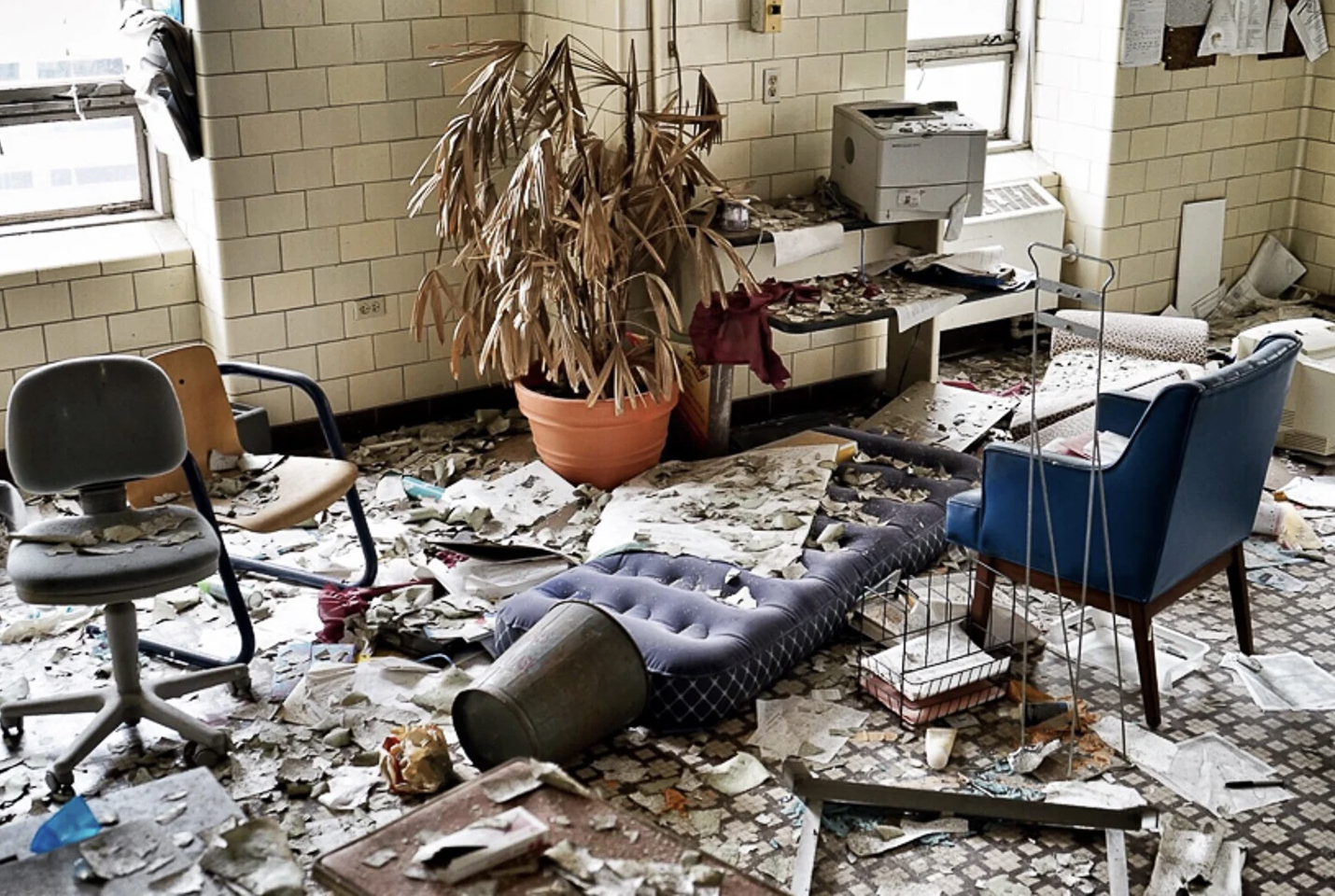
We drew closer not believing what we thought we saw. The patient appeared to be the only “living” creature in the room. Then suddenly one of the “surgeons” unexpectedly looked up and floated in our direction. It was obvious that he/she/it wanted us out of the room – NOW! We didn’t hesitate except for me; I felt like my shoes were glued to the floor. I kinda shook it off a bit and yelled “we’re going, we’re going!”
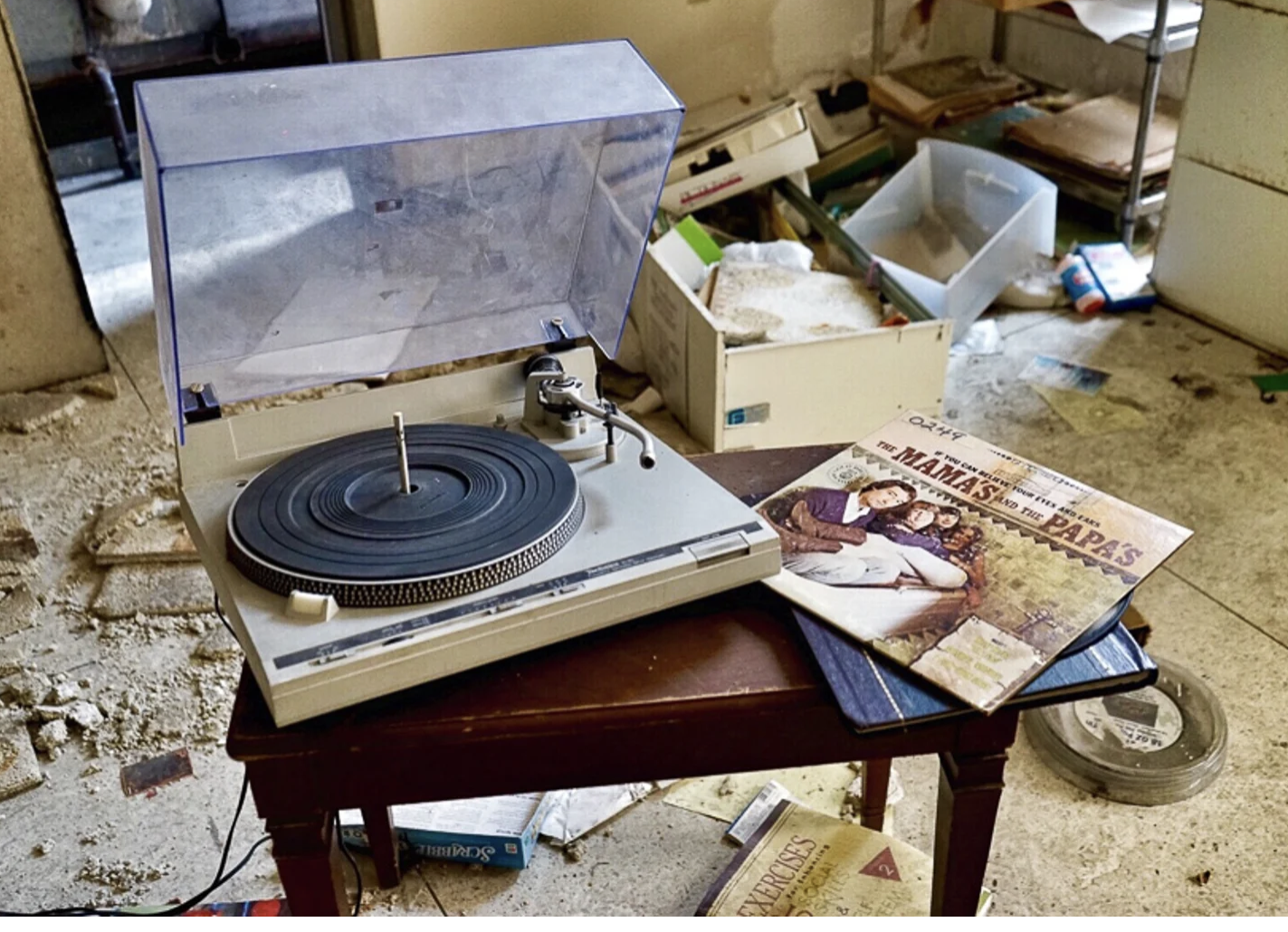
As if these images didn’t make for an uneasy feeling in us, we made our way down this one hallway to see what more could be observed. That’s when we heard it; a soft, eerie-sounding voice whispering “Get out. Leave us alone. We don’t want you here.”
We all just froze. At first we didn’t know what to do or say, if anything. Finally, someone in our group said simply, “Let’s proceed anyway. I’m not going to let a strange voice scare me outta here.”
Well, we continued on, this time ascending two more floors. Alas, it was just as bad and desolate as downstairs. Some rooms appeared as if a bomb had gone off. Others looked like they had only recently been vacated.
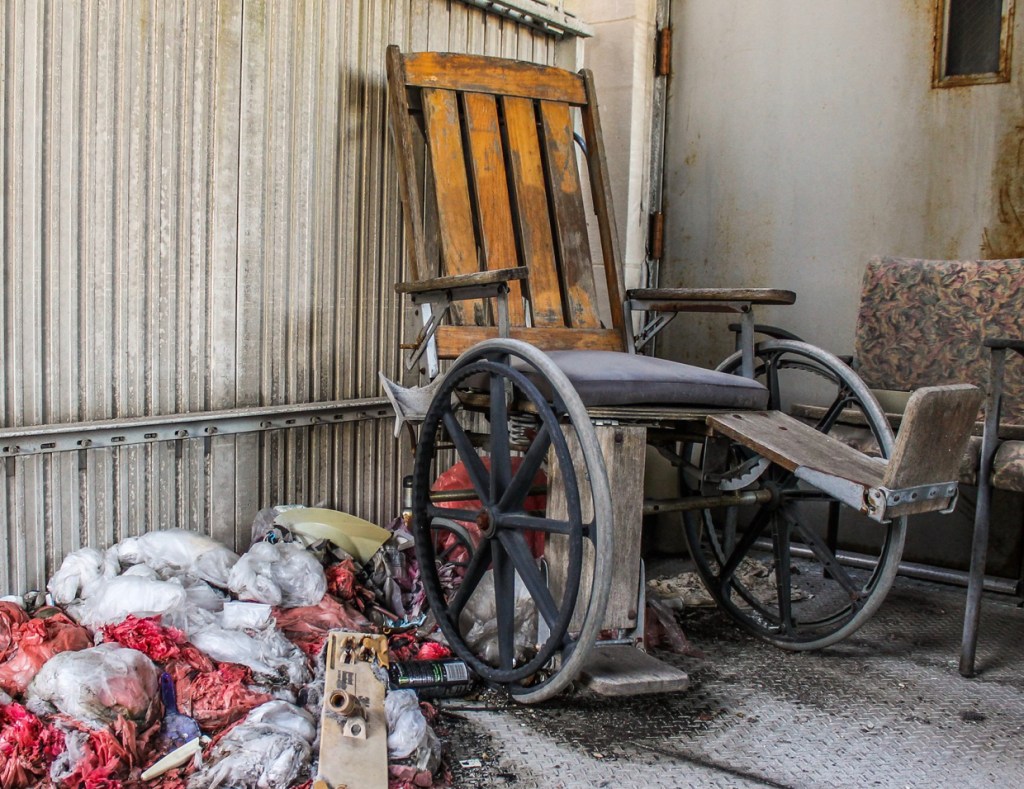
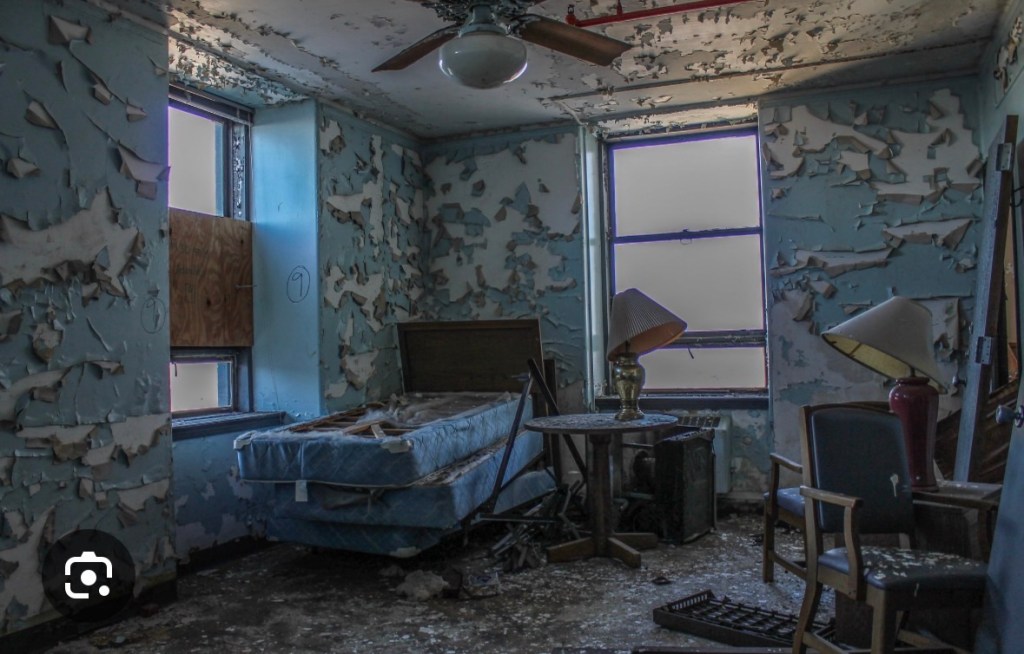
Proceeding down the hallway we came to what appeared to be an operating room. As we peered inside we could see the patient on the table surrounded by ghost-like figures all dressed in surgical gowns.
Back in the hallway we all were grasping for breath and, yes, looking like we’d just seen a ghost! But before we had a chance to recover, approaching from the other end of the hallway were various other ghostly figures heading our way.
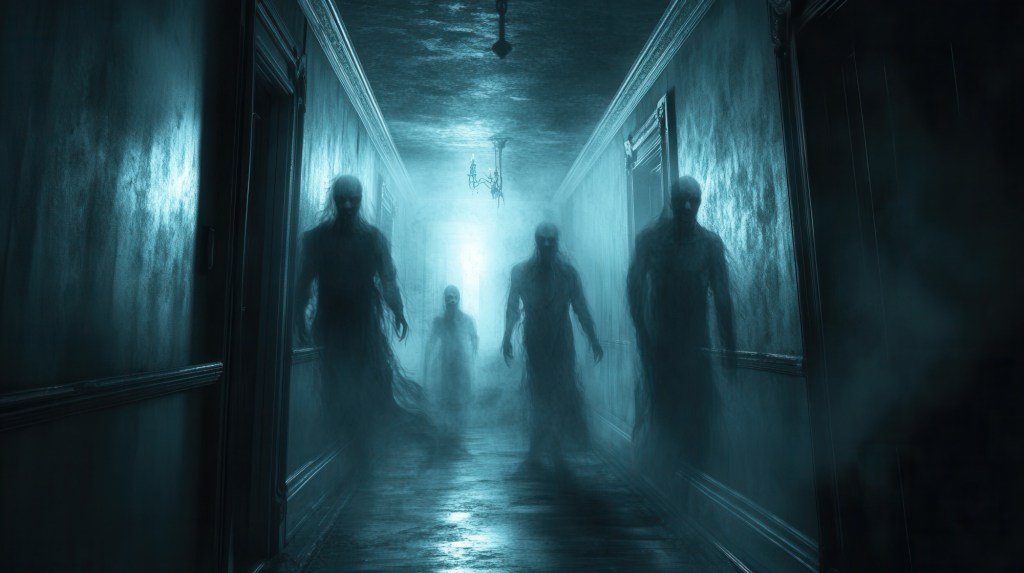
Upon seeing this, we wasted no time in locating the nearest stairwell and ran up, I don’t know, what seemed like several flights of stairs. We came out and were grasping for breath. At this point someone just spouted “to hell with the research, let’s get the hell outta here.”
“Okay, everyone, calm down. We’ve just had the wits scared out of us. If this were Halloween, it would be funny. C’mon, let’s proceed down this hallway and . . . “.
Chapter Two
Just then low screams came from a few doors down. When we got there we witnessed a shadowy figure sitting on the bedside with an ax and a pool of blood clearly visible on the floor with a severed hand laying in the blood.
“Oh my God,” blurted Selma. “Somebody do something! He’ll bleed to death,” she said.
“What makes you think he’s alive?” I asked.
“Oh, I’m sure he’s not. He’s been that way for decades,” says a voice emanating from a nearby chair on the far side of the room.
This time, this ghost appeared more visible than his counterparts before. His features were distinctive but his body had an iridescent glow to it. He was there and yet he wasn’t.
“Excuse me, sir. Do you know this person?,” I asked. “Yes,” said the ghost. “He was my brother, Warren. He died years ago,” stated the ghost.
“Oh, I’m sorry,” said I. “By the way, I’m Joe, this is Selma, Thad and Fred. We’re just exploring the hospital before it gets torn down. We honestly didn’t expect to come into contact with anyone here. But we have; at least we think we have,” I stated.
“My name is Walter. I died some years ago, too. As for meeting folks here, you have indeed come in contact with them. If they’ve seemed to be a little skiddish, they are. They’re not used to visitors especially when the hospital closed some years ago. Everyone in New Orleans thought Charity had been completely evacuated; alas, it was not, as you have seen.
“Oh sure,” Walter continued. “Every body was taken out of Charity but some of those died before being taken out. Those souls decided to stay and remain with the friends they had made while here.”
“So what about you, Walter?,” I asked. “Well,” he started, “I kinda look after this place and my friends. We’re not leaving as we have no place to go. Our families have accepted our deaths and have moved on. Why would we want to go back after all these years and disturb their peace? No sir, not gonna do it!,” Walter stated flatly.
When we reconvened out in the hallway we thought about what to do next.
We all thought it best to leave then so we began toward the stairwell. As we started our descent, we could hear in the distance jazz music from the downstairs coffee shop where a jazz quartet played . . . decades ago. All would be dead by now.
Chapter Three
As Selma led the way and was making the turn on that flat “transition” area between floors, she was startled by the sudden appearance of a cloud-like image swinging an ax and, in the blink of an eye, thrusting it into the mid-section of Selma’s body.
As soon as it began it was over, with the image disappearing into and through the wall. Selma was writhing in pain lying down in a pool of blood grasping for breath. There was little we could do. In moments she would be dead.
Walking down fifteen flights of stairs in a building without power or air conditioning is taxing enough. When you add on carrying a dead body under these conditions it makes for a grueling exercise.
The remaining three of us just knelt there beside Selma, all stunned and in shock. Before we knew it, Fred jumped up, hysterical, and screamed, “I’ve got to get out of here; we’re not wanted!”
With that, he jumped up and proceeded to run downstairs, from the fifteenth floor, but seemed to trip as he was rounding the corner of the stairwell, broke through the railing and fell to the lobby and to his death.
Thad and I exchanged horrified looks and just remained there, motionless and not saying a word.
Chapter Four
Then I stated as calmly as I could, “Ok, let’s proceed together, steadily down the stairs to the lobby. It’s just the two of us now, Thad; there’s nothing more we can do here.”
“But what about Selma? We can’t just leave her here; she deserves better.,” Thad remarked.
“You’re right, Thad, she does,” I injected. So we both picked her up as gently as we could and proceeded resuming our trek downstairs. I suggested we take a moment’s break on the tenth floor to gather ourselves.
We reached the tenth floor and rested some. We were both sweating profusely but had nothing to wipe the sweat from our burning eyes.
Almost there we thought. Adrenaline had started to kick in and traversing the next five flights wasn’t nearly so difficult as we suspected it would be.
We each winked at one another and allowed a wry smile on our faces; we were close to getting out of here. We then took a few more steps then stopped. Froze. We heard something that sounded like crackling wood. Before either one of us could say anything, the floor of the stairwell began to give and in a flash both Thad and Selma’s body fell the remaining five floors. If she was still alive she wouldn’t have survived the drop. Thad wouldn’t have either.
Chapter Five
So now it was just me. Five floors to the lobby and exit. I was shaking so badly I could hardly stand. I managed to steady myself as best I could and slowly, holding onto the railing, got down to the second floor but I had to stop once more to catch my breath.
A few more steps and I’m home free, I thought. When I got to the landing area between first and second floors I just stopped again and thought about what we’d just accomplished. Just a few more steps . . . And then from behind I felt the unnerving sensation of being pushed. Before I knew it I was head over heels tumbling downward and unceremoniously heading for the first floor.
For what had to be only a few seconds, it felt like I was tumbling through infinity. Then, suddenly, I felt motionless, I wasn’t falling anymore. I guess I was laying on the concrete floor but I didn’t feel a thing. Didn’t even feel my heart pumping. My breathing? Don’t think I was. My mind was slowing down, now almost to a standstill.
Is this what it’s like when . . . you’re. . . dying . . .
A final thought to my story. Four new souls entered Charity Hospital to see what happened inside thanks to a wicked woman named Katrina. During their journey they met some very interesting residents, all of whom called Charity home. Never mind that the hospital has been closed for decades and that there are no living residents inside. As there have been since Katrina there are now only souls, the souls of Charity.
Epilogue
The historic Charity Hospital building in New Orleans is undergoing a massive $600+ million redevelopment with Tulane University serving as the anchor tenant and become the heart of Tulane’s Downtown Medical School. The iconic New Orleans hospital served the community for a century as the City’s safety-net hospital, saving hundreds of thousands of lives and training thousands of doctors and nurses. Old Charity will become the flagship building for Tulane’s School of Public Health and Tropical Medicine, as well as housing for biomedical research labs, Tulane’s Innovation Institute and their School of Professional Advancement. The revitalized structure is expected to open around 2027.
The project is moving forward through a complex, years-long journey to revitalize the 90-year-old, 20-story structure that has been largely vacant since Hurricane Katrina in 2005.
- The Vision: The billion-square-foot facility is being renovated to include state-of-the-art medical and life-science labs, approximately 300 apartments, commercial offices, and retail space.
- Tulane University’s Role: Tulane has committed to occupying at least 500,000 square feet of the massive building for public health, biomedical research, and teaching purposes.
- Funding and Politics: The redevelopment faced a major political battle when the New Orleans City Council allocated $20 million in bond/trust funds to help speed up the construction. Mayor LaToya Cantrell previously vetoed this ordinance out of concern for other city budget priorities, but the City Council successfully voted to override the veto to keep the project on.
Hurricane Katrina flooded Charity’s basement, shutting down the hospital and trapping roughly 360 patients and 1,200 staff members inside. Weeks later, a team of volunteers, contractors and the military cleaned out the lower floors to get the hospital “medical ready,” but it would never reopen.
For a closer look at how this monumental structure is being reimagined, you can explore the Charity Hospital Redevelopment Project or read about Tulane’s plans on the Charity Redevelopment page.
Hopefully making a ruckus, one blog post at a time!
Be sure to check out my other blog,Joe’s Journey, for selected short stories and personal insights on life and its detours.
More stories can be read at https://ideasnmore.net/short-stories