Poe and Absence: Loss and Negative Space in the Edgar Allan Poe Canon

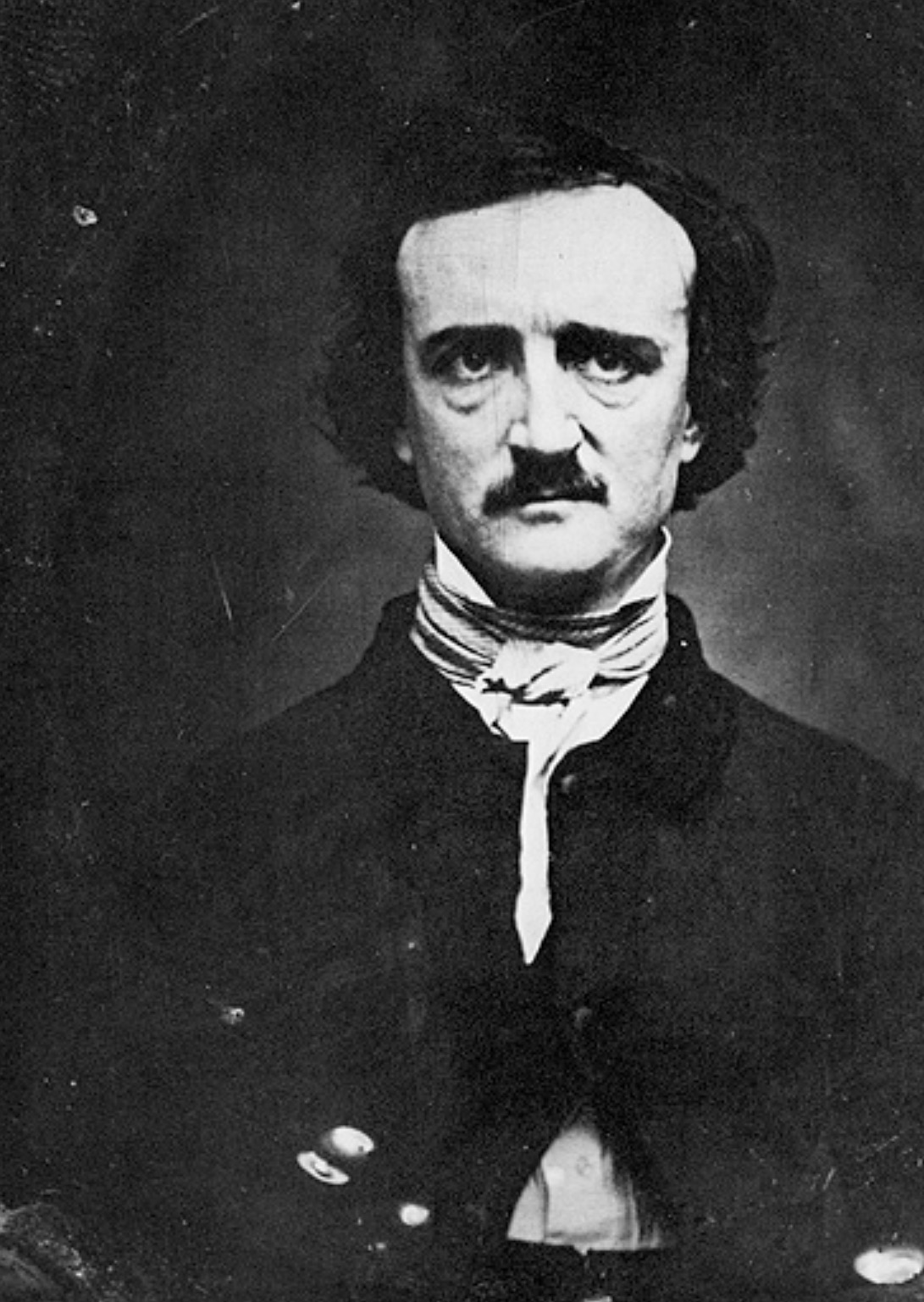
The “Ultima Thule” Daguerreotype by Edwin H. Manchester 1848; Reproduced from a copy daguerreotype, ca.
1860;Courtesy of the American Antiquarian Society

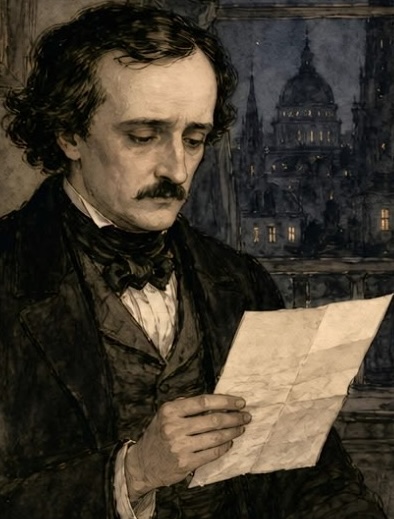
Bestselling author Lyndsay Faye discusses Edgar Allan Poe and his use of loss and negative space in compelling fiction.

After I read LYNDSAY FAYE’s take on Poe’s fiction, I thought it appropriate to share given my recent post about Poe’s death anniversary.

Here’s what Lyndsay had to say:

I stand before you in defense of nothing! Charles Seife wrote in Zero: the Biography of a Dangerous Idea, “The biggest questions in science and religion are about nothingness and eternity, the void and the infinite, zero and infinity.” 

Therefore how natural that every form of art makes use of both what is and is not visible. Pauses in music … blanks on canvas … stillness in dance. And since transforming inert words into three-dimensional motion, sound, imagery, and feeling is undoubtedly an art form, the writer must therefore also attend to not only what is set down, but what is omitted.

We are not speaking of edits. This art of negative space goes far beyond our sacred advice sometimes the delete key is your best friend (sometimes a delete bulldozer is your bosom comrade, which I discover novel after novel by scrapping at least 20,000 words from the first draft). Our focus here is rather on what the Japanese term ma: the possibilities tingling within emptiness—the lack that makes the reader crave—the eclipse delineating the sun. 

The cavity from which Edgar Allan Poe, one of America’s most renowned early authors, drew his greatest effects.

My favorite Poe short story launches its gleeful nightmare straight from the maw of negative space. Indeed, “The Fall of the House of Usher” relies so heavily on nothing that the estate’s shattered relics are literally swallowed into the tarn in the infamous conclusion. But let us instead study its opening lines, the words Poe selects to set his largely empty stage:

During the whole of a dull, dark, and soundless day in the autumn of the year, when the clouds hung oppressively low in the heavens, I had been passing alone, on horseback, through a singularly dreary tract of country; and at length found myself, as the shades of the evening drew on, within view of the melancholy House of Usher.

From the curtain’s rising, we flounder in a blank atmosphere: Rather than lightning-streaked portents, we are given dull darkness; instead of thunderclaps, the afternoon is altogether sans noise. Clouds obscure the skies, our hero is unaccompanied, the countryside is bleak. Yet every word of this non-description of setting is precious, for how unnerving is it that there is nothing of significance to describe at all? While our traveler practically drowns in vacancy, we as readers are strangely intrigued, next to be treated to “vacant eye-like windows,” arguably far more uncanny than eye-like windows watching our hero’s every movement.

Lest we forget: I must refer to him sideways, as “the protagonist,” or “our chronicler,” since the narrator is never graced with a moniker. The nameless raconteur battles the missing throughout this classic work. His friend Roderick Usher, who called for aid? “His reserve had always been excessive and habitual.” The Usher line itself? No branches, no in-laws, just a matched set of spectacularly uncheerful siblings. The estate’s servants? “a valet, of stealthy step, thence conducted me, in silence…” And Roderick’s problem? “I have, indeed, no abhorrence of danger, except in its absolute effect—in terror … in some struggle with the grim phantasm, FEAR.”

We know the moral that there is nothing to fear but Fear itself: In Poe, however, while “The Fall of the House of Usher” is clothed in the same argument, another critically apt reading would be that there is nothing to fear but Nothing. Poe’s poetry is famous, not to say infamous, upon this subject—what doth the Raven quoth so tauntingly but nevermore, nevermore? But myriad other examples are relentlessly woven throughout his prolific canon. I particularly love the miniature ode to loss at the opening of “To M—,” published in 1829:

O! I care not that my earthly lot—
Hath—little of Earth in it—
That years of love have been forgot—
In the fever of a minute—

Or consider, equally preoccupied with the want of key facts, “Ulalume—A Ballad”:

Our talk had been serious and sober,
But our thoughts they were palsied and sere—
Our memories were treacherous and sere;
For we knew not the month was October,
And we marked not the night of the year—

What so touched Poe about negative space? Famously, his personal missing pieces were myriad and transfiguring. The author lost his father in infancy when David Poe, a traveling actor like Edgar’s mother Eliza, abandoned his family. The fatal drowning in open air to which so many succumbed—tuberculosis, or the “White Plague”—robbed Edgar of his mother merely a year later, and in his mid-20s the same disease cruelly stole his beloved child-bride cousin Virginia. 

It is tragic that Poe lacked family, but they were hardly his sole want; he lacked affection from his foster father John Allan, not to mention official adoption papers; he lacked steady employment, often; he therefore spectacularly suffered a lifelong lack of money; he frequently lacked the acclaim he felt was his due. Naturally, we find these themes of holes riddling the work he so frenziedly produced attempting to forge a career—to create from nothing a place in the early American literary pantheon.

My eighth novel, Raven, is not a pastiche of any particular Poe work (though it is structured according to “The Fall of the House of Usher”) but rather mingles the tragic horrors of his entire canon with the aching losses of his biography. Capturing the emptiness he both battled and sought to capture was thus crucial for me in writing the antebellum biography of Raven Helen Allan—like Poe an unwanted orphan and addict of self-destruction. She writes at the opening, “I died a fortnight ago this coming Thursday. It was a terrifically unpleasant experience—being murdered, I mean to say.” Her posthumous autobiography (or is it?) proves rife with losses, and when she is forced to take employment as a paid companion in the foreboding woodlands outside of Baltimore in a disintegrating mansion, she risks everything to tear aside the masks she encounters and reveal the Legrand cousins’ harrowing secrets.

Fascination with the void was of course not new to Poe. Saint Augustine, trying to conceptualize the chaotic pre-Creation abyss in his Confessions, described, “It was not absolute nothingness. It was a kind of formlessness without any definition … True reasoning convinced me that I should wholly subtract all remnants of every kind of form if I wished to conceive the absolutely formless. I could not achieve this.” 

Neither could Edgar Allan Poe, nor did he attempt to—nevertheless, it is in his adoration of the unreachable that we find some of his truest writing. Perhaps the finest example of his reverence for the intangible is found in “Ligeia,” when he wrote in the year 1838:

There is no point, among the many incomprehensible anomalies of the science of the mind, more thrillingly exciting than the fact—never, I believe, noted in the schools—in our endeavors to recall to memory something long forgotten, we often find ourselves upon the very verge of remembrance, without being able, in the end, to remember.

Thanks, Lyndsay! My thoughts: Even though Poe had his mind and imagination somewhere in another universe (Twilight Zone, perhaps?), he is still regarded as one of our most creative and mysterious writers of all time. Time and circumstances permitting, I wish I could have met him. That would be one hell of a conversation, especially over a glass of cognac!
Hopefully making a ruckus, one blog post at a time!

Be sure to check out my other blog,Joe’s Journey, for selected short stories and personal insights on life and its detours.

The Shadows: a Short Story of Ghastly Gatherings

Today is a different kind of blog post. I’m using it to introduce my newest piece of short story fiction. It took me a longer than expected amount of time to complete it, but I finally did. Hope you enjoy it!

********

Welcome! This is a profile in the macabre. It’s a short story about a family who lived in the 19th Century. They lived a rather normal lifestyle back then, aside from a few setbacks in life. They’ve survived but not in the way you might expect.

Introducing the Graybeers: Mr. and Mrs. Jonathan and Priscilla Graybeers, and their two children, Tony and Stephanie, ages 14 and 16, respectively, at the time of death. Tony was shot in the head while Stephanie was downed by an ax. Back in 1862.

Mr. and Mrs. Graybeers committed suicide, each at the other’s hands. In 1863, following a tumultuous year of mental anguish over the loss of their children. It seems mental illness takes its toll.

Looking back, they were a typical northeastern suburban family, college educated, upper middle class, sports-minded.

In present day, they’re like most other families of similar ilk except for one thing: they can disappear. Oh, yes, one other thing: they don’t really have human form; they’re not ghosts, they’re shadows from their former life. They even live in a mansion called The Shadows, which is near a cemetery.

This image has an empty alt attribute; its file name is the-cemetary-by-jaroslav-gebr.jpg
The Cemetery by Jaroslav Gebr

Aside from select social occasions, the family rarely leaves the Shadows. The mansion has been in their family for centuries. And the location next to the cemetery has always been a family favorite, so no one has ever thought of selling the property.

Although on rare occasions, an unwitting realtor will appear at the door only to be “greeted” by Mr. Graybeers himself. But being a shadow, he really can’t be seen so the realtor leaves his card and walks away, seemingly unaffected by the opening and closing of the door — by itself.

Continue reading →

Special Friday the 13th Edition: Rod Serling – In His Own Words.

The Man. The Mind. The Mentor.

The Dad. The Television Star.

The Host. The Creator.

Mr. Twilight Zone himself.

Night of the Meek

“Christmas is more than barging up and down department store aisles and pushing people out of the way. Christmas is another thing finer than that. Richer, finer, truer, and it should come with patience and love, charity, compassion.”

“Somewhere between apathy and anarchy lies the thinking human being.”

“Violence does not spring from a vacuum. It’s born out of other men’s violence. It gets nurtured and it grows in a soil of prejudice and of hate and of bigotry.”

“Every writer is a frustrated actor who recites his lines in the hidden auditorium of his skull.”

Serling-Judge him

“A basic ‘must’ for every writer. A simple solitude– physical and mental.” ~ AS I KNEW HIM: My Dad Rod Serling

“More than a man has died…More than a gallant young President has been put to death. What has been assassinated is a faith in ourselves. What has been murdered-a belief in our decency, our capacity to love, our sense of order and logic and civilized decorum.”

“Our greatest responsibility is not to be pencils of the past…”

“This is what I learned at Antioch-when something was wrong, I could get up on my own two feet and make comment on it… I think the idea of questioning is not only a right, it is a responsibility.”

Serling-young

“Remember that your salvation is in your capacity for human warmth–in that remarkable propensity for love.”

“I found that it was all right to have Martians saying things Democrats and Republicans could never say.”

My dad said in a final interview, “I’d like to write something that my peers, my colleagues, my fellow writers would find a source of respect. I’d rather win a Writer’s Guild award than almost anything…”

“No moral, no message, no prophetic tract, just a simple statement of fact: for civilization to survive, the human race has to remain civilized. Tonight’s very small exercise in logic from the Twilight Zone.” –             The Shelter

Serling new pic

Rod left us way too soon. Not surprisingly, he is still today someone we look up to, someone we admire. From The Twilight Zone to the Night Gallery, he put his imagination on display for millions of fans.

As a writer myself, I’ve often wondered what kind of morbid, macabre mysteries would have come alive if Rod Serling and Edgar Allan Poe had lived in the same century. Deaths-Head Revisited, Murders in the Rue Morgue, The Monsters Are Due on Maple Street,  Annabel Lee, A Stop at Willoughby, The Fall of the House of Usher, Nightmare at 20,000 Feet and, of course, The Raven.

All that we see or seem is but a dream within a dream. Because this, you see, is the Twilight Zone. Quoth the raven, “Nevermore!”

Quotes . . .Quotes . . .Quotes. And then some!

Greetings and good day to ‘ya! Here’s your respite into the world of famous and sometimes infamous quotes from a variety of personalities. Any one of these could prove motivation for that ad you’re working on, tweak your imagination, inspire you or just plain bring a smile to your face.

Feel free to share.

It’s the start of the week. Have some fun. NOW!

Enjoy!!

smartquote-top The most common trouble with advertising is that it tries too hard to impress people. —James Randolph Adams, member, Advertising Hall of Fame

Advertising did not invent the products or services which called forth jobs, nor inspire the pioneering courage that built factories and machinery to produce them. What advertising did was to stimulate ambition and desire – the craving to process, which is the strongest incentive to produce.– Bruce Barton, member, Advertising Hall of Fame

We would accomplish many more things if we did not think of them as impossible. – Vince Lombardi

Advertising is what you do when you can’t go see somebody. That’s all it is. — Fairfax Cone, member, Advertising Hall of Fame

In writing advertising it must always be kept in mind that the customer often knows more about the goods than the advertising writers because they have had experience in buying them, and any seeming deception in a statement is costly, not only in the expense of the advertising but in the detrimental effect produced upon the customer, who believes she has been misled. — John Wanamaker, member, Advertising Hall of Fame

Creativity varies inversely with the number of cooks involved in the broth. — Bernice Fitz-Gibbon, member, Advertising Hall of Fame

There is no such thing as ‘soft sell’ and ‘hard sell.’ There is only ‘smart sell’ and ‘stupid sell.’ —Charles H. Brower, member, Advertising Hall of Fame

When a distinguished but elderly scientist states that something is possible, he is almost certainly right. When he states that something is impossible, he is very probably wrong. – Arthur C. Clarke

Millions saw the apple fall, but Newton was the one who asked why.       – Bernard Baruch

They who dream by day are cognizant of many things which escape those who dream only by night. – Edgar Allan Poe smartquote-bottom


Friday Fun Quotes: Masters’ Collection

This Friday’s edition of the blog again highlights various quotes in yet a different manner. Their authors don’t necessarily come from the advertising industry but are involved in some aspect of creativity.

Serling, Poe, Van Gogh, Einstein – quite a master’s collection, wouldn’t you say? While I am definitely a fan of Rod Serling and his Twilight Zone series, I also enjoy the works of my relative, Edgar Allan Poe. Yes, I am a writer. I learned years ago in reading a Louisiana history book, that my great-great-great uncle (Poe) was Edgar’s cousin or something like that.

And, yes, I do believe there is some truth to what “Uncle Edgar” (as I call him) says in the first quote below.

Uncle Edgar Quote

Edgar Allan Poe-silhoutte quote

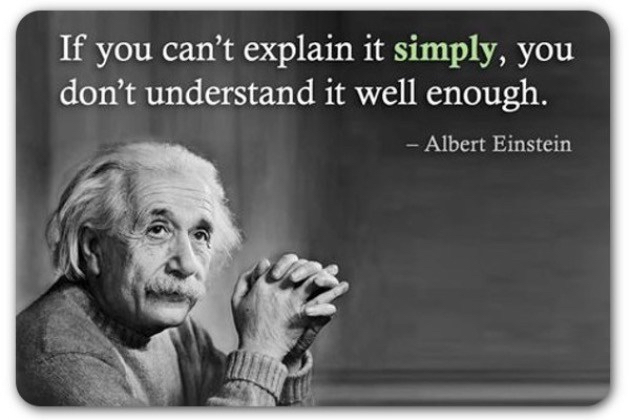
Albert Einstein quote

Van Gogh Quote

Whenever you write, whatever you write, never make the mistake of assuming the audience is any less intelligent than you are.                                                                        –  Rod Serling 

...No matter what the future brings, man’s capacity to rise to the occasion will remain unaltered. Our  potential for tenacity and optimism continues, as always, to outfight and outlive any and all changes made by society. – Rod Serling. Twilight Zone “Steel.”


Rod Serling Profile:Quote

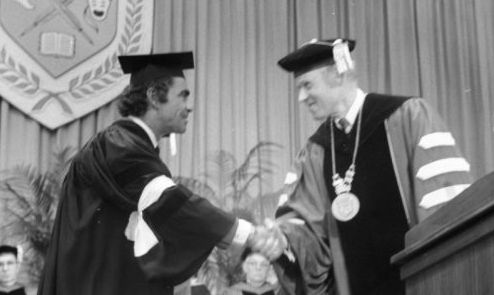
Rod Serling-Graduation

So long as you care, so long as you commit, so long as you concern yourself with the human condition, you have it in your power, perhaps twenty years from now, to be called to deliver a Commencement Address against a background of an infinitely finer world. – Rod Serling

Rod Serling-Behind Curtain

The writer broadens, becomes more observant, more tempered, wiser… It  is not something that is injected into him by a needle…  It doesn’t  work that way. It’s a tedious, tough, frustrating process, but never,  ever be put aside by the fact that it’s hard. – Rod Serling.

So, do you have a favorite? Which one really speaks to you? Let me know, and I may pass it on to Uncle Edgar!