Author’s Note: This is my latest addition (#19) to my short story compilation. It’s a tale of our time-traveler hero going into the future while on vacation and his unexpected encounter with a pirate named Hook (no, not that one) and a smuggling ring of fine jewels.
Pirate ship bow with Jolly Roger flag flying in stormy open sea near rocky coastline. Adobe Stock
Just last week I read in AdAge about recent developments in the industry to deal with current trends and news-making discussion. Thanks to Ewan Larkin, Gillian Follett, Brandon Doerrer, and Jon Springer for putting this article together. I felt it appropriate to share with you for reading pleasure and knowledge.
Advertising Week New York returned to the Penn District last week with a bevy of creators, the same dizzying lines and crowds and, at least in intent, less AI conversation. Agentic media buying was a hot topic, too, with executives mulling over how much control software should have over the process. Key takeaways below.
The push and pull of AI
One year after ChatGPT trucks swarmed the conference, Advertising Week tried to turn down the volume on AI. The push started before the event, with a campaign promoting face-to-face interaction. This week, event staff wore T-shirts urging attendees to “give AI a break,” a message that also blared on screens during panels.
“I’ve been to eight conferences this year and this is the first one where the panels and conversations were not completely dominated by talk of AI,” said Tom Morrissy, chief growth officer at media agency Noble People.
That could also be because some of the AI conversation shifted to other marketing conferences held this week. Former WPP CEO Mark Read brought his new invite-only, AI-focused event series, Prompt, to Manhattan on Tuesday. On Wednesday, influencer marketing platform Statusphere hosted its inaugural Status Summit, centered on how AI is reshaping the customer journey. And on Thursday, marketing leaders including Ulta Chief Marketing Officer Kelly Mahoney and PepsiCo Beverages U.S. CMO Mark Kirkham took the stage at Zeta Live, the annual conference hosted by martech company Zeta Global.
Still, plenty of Advertising Week programming focused on AI, from agentic commerce to how brands compete in the world of large language models. There was a good deal of tech on display, too. Kovio, which sells ad space on humanoid robots, had one stumbling through the building, waving and blowing kisses at the many passersby it drew.
Celebrities, big crowds and a change in venue
The Female Quotient’s FQ Lounge was one of the hottest spots, consistently packed from Monday through Wednesday as attendees sought out CMOs and brand executives.
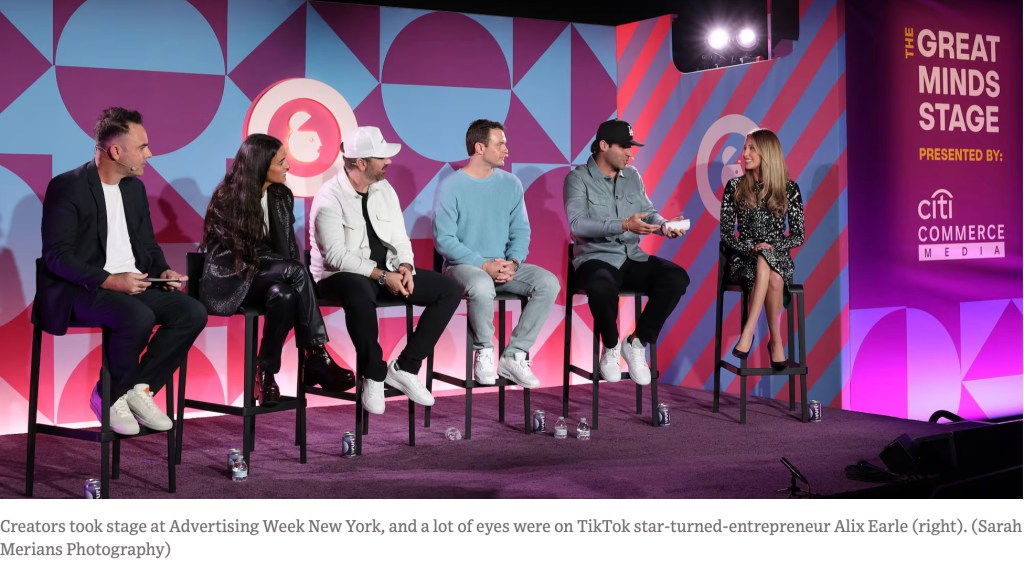
Trevor Noah drew a long line for his Great Minds Stage session focused on brand partnerships and YouTube. Attendees also crammed into the small Marketplace Stage room to see Terry Crews and leaders from Ogilvy and Creative Artists Agency discuss AI and protecting creator and celebrity likenesses. TikTok star-turned-entrepreneur Alix Earle was on stage Tuesday morning for a conversation about the creator economy.
Creator marketing has outgrown the sponsored post
Conversations around creator marketing have officially evolved beyond best practices for brand-sponsored social posts. Several panels instead explored creators’ growing influence on everything from AI search to Hollywood.
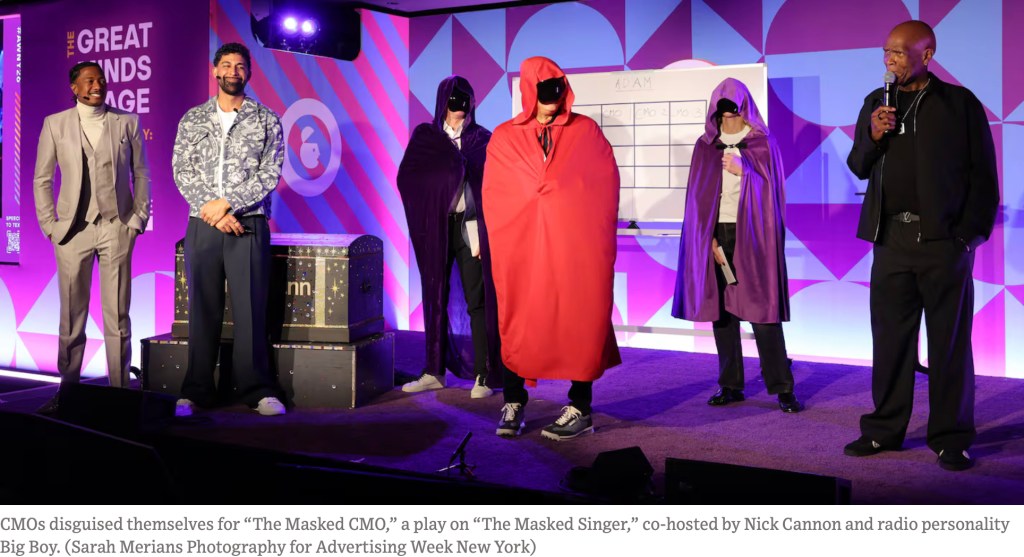
On Thursday, creator Dhar Mann took over the main stage to host Advertising Week’s first “Creator Day,” where CMOs, creators and other attendees participated in games and challenges inspired by reality TV formats. A session called “The Masked CMO” (inspired by Fox’s “The Masked Singer”) had NFL CMO Tim Ellis, Blizzard Entertainment CMO Monica Austin and Wendy’s newly installed CMO Tariq Hassan don cloaks and masks and describe what they’re seeking from creator partners.
“Facilitating the environments where creators and marketers can be together in the same room is something I think we need to do more often,” said Jessica Williams, CMO of financial services app OnePay, who spoke during Mann’s Creator Day. She said she’s focused on establishing more direct relationships with creators, particularly those who work with the brand on larger, longer-term campaigns, rather than routing everything through agencies.
“I have so many creators now that I can just text [to ask] ‘Hey, what do you think about this? Do you have anyone who might be interested in this?’” Williams said. Earle made a similar point during her main stage appearance, saying she’s currently in group chats with two brands she’s working on campaigns for and values being directly involved in those discussions.
Blenders Eyewear took that philosophy a step further in July, when it brought creator Jordan Howlett into the C-suite as the brand’s first chief content officer. On stage at Advertising Week, Howlett and Blenders CEO Jack Gray discussed how the partnership goes beyond a typical ambassador deal, giving Howlett a say in the brand’s content strategy and product development.
“We’re reaching such a transitional period, where I think a lot of people—creator, brand or otherwise—are realizing that the previous [creator marketing] model … has run its course,” Howlett told Ad Age. He expects that more brand-creator partnerships in 2027 will resemble his relationship with Blenders.
Another recurring theme was marketers allocating bigger parts of their creator budgets to creator-hosted events and experiences in 2027. Scott and Alexis Fisher, co-founders of Creator Nation, the newly launched, Live Nation-backed creator management venture, told Ad Age that helping creators organize and host live events—from stadium tours to mall meet-and-greets—is a major priority for the firm.
“We want to bring back that fandom and the fan experience that really drives creators,” said Scott Fisher, who founded talent firm Select Management Group in 2010. He recalled that in the creator economy’s early days, “our clients would show up to a mall, and the fire department would get called” when the crowd inevitably got too large. “If you have fans, then you have a business—a long-term business.”
Creator-hosted events are emerging as a bigger priority across industries. OnePay’s Williams and Carlos Wigle, chief creative officer at personal-injury law firm Morgan & Morgan, both said they plan to partner with creators on events next year. “In a world of AI, people want those real experiences,” Williams said.
Agentic media buying questions remain
Leaders from brands and agencies discussed the potential for AI agents to take over more of the media buying process, and questions remain about how much control advertisers are actually willing to hand over. Several sessions explored the technology needed to automate media transactions, connect agents across buying platforms and shift more investment decisions away from humans.
A Thursday session presented by Vistar Media—featuring Maureen Bosetti, chief investment officer at Omnicom Media; Bruce Williams, CEO of dentsu X; and Danielle Sporkin, senior VP of media and marketing services at Ferrero—examined the risk of prioritizing faster media execution at the expense of strategy, creative and a meaningful understanding of audiences. At a Wednesday panel hosted by Snowflake, Jason Dailey, North American agency partnerships lead at Meta, and Mike Treon, head of connected TV and video strategy at PMG, stressed that agents still need a deeper understanding of brands’ businesses before they can be trusted to make those decisions.
Dailey said agents need three things to make useful media decisions: context, constraints and an understanding of consequences. That includes everything from a brand’s budget and margins to seasonality and restrictions on where it will advertise. While AI models have become more sophisticated, connecting them to that information remains challenging.
“The models were really never the hard part,” Dailey said. “The hard part was, how do you take those three C’s and then actually get that into the ad system?”
Meta announced new capabilities for its AI business assistant that provide more memory of advertisers’ past campaigns, goals and seasonality, along with tests of tools that allow advertisers to create campaigns, adjust targeting and change budgets through conversational prompts. Meta is also expanding its Model Context Protocol server, which allows advertisers to connect outside AI tools to its ad platform. Actions prepared by agents can be transferred into Ads Manager as drafts, with explicit advertiser approval required before campaigns go live.
For now, adoption remains uneven. Dailey said some agency partners are restricting access to agentic tools to a handful of employees, while others are making them available across their organizations. The degree of autonomy varies as well, from allowing agents to retrieve campaign information to permitting them to make actual changes. Those decisions depend partly on each organization’s technology investments and appetite for risk.
Hopefully making a ruckus, one blog post at a time!
Be sure to check out my other blog,Joe’s Journey, for selected short stories and personal insights on life and its detours.
Below is a briefing of various articles compiled by the AAByAd Age Staff. Some you will need asubscription to read while others you may not. I have a $20 per month subscription to stay close to the industry.
In 2030, advertising will be defined by advances in AI, new consumer behaviors, evolving career paths and shifting agency models. To help marketers prepare, Ad Age gathered insights from more than 100 leaders across brands, agencies, media companies, consultancies and tech, along with perspectives from our readers. The result is a wide-ranging look at the forces already reshaping the business—and what they mean for the years ahead.
What is Ad Age Future of Advertising 2030?
Who is it for?
Ad Age’s Future of Advertising 2030, available exclusively to All Access subscribers, examines how marketing, media, agencies, creativity, culture, leadership and ad tech will change over the next five years. The package features 14 stories with insights from industry leaders and readers, plus exclusive checklists, timelines and interactive elements.
This package is built for anyone shaping the future of marketing—from junior specialists building skills to CMOs setting strategy. It’s designed for agency leaders, media buyers, creatives and brand marketers who need more than predictions: clear strategies, checklists and guidance to prepare for the next five years. If you plan, buy, build, measure or lead, this roadmap will help you get in shape for what’s next.
After reading about this commercial and then seeing it, I felt it worthy of sharing, especially for those who may not be aware. So listen, watch and read about it. I think you’ll be impressed as I was. Enjoy! Thanks Tim Rudd of AdAge for your share.
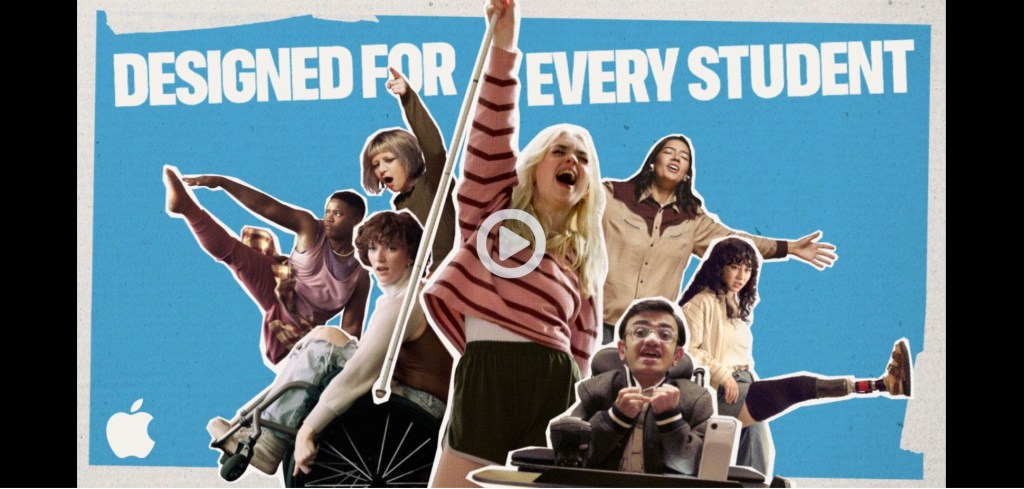
Apple’s effervescent three-minute accessibility spot “I’m Not Remarkable” won the 2026 Emmy Award for Outstanding Commercial on Sunday—the tech giant’s third Emmy win for best commercial in the past four years and its second Emmy win partnering with Somesuch director Kim Gehrig on an accessibility message.
The five other nominees this year included another Apple spot—the holiday story “A Critter Carol”—as well as the Adidas World Cup spot “Backyard Legends”; Coinbase’s Cannes Grand Prix winner “Your Way Out”; Levi’s 2026 Super Bowl spot “Backstory”; and Nike’s “Why Do It?” anthem from last summer.
“I’m Not Remarkable,” made in-house by Apple, rolled out last December. Set to the Kittyy & The Class track of the same name, the musical piece follows Deaf and disabled students through classrooms, dorms and parties at college. The lyrics reject the usual narratives portraying disabled people as extraordinary, arguing instead that they simply use different tools. Apple features including Magnifier for Mac, Braille Access, Accessibility Reader, VoiceOver, AssistiveTouch and Live Captions appear throughout the film as students juggle lectures, friendships and deadlines.
Gehrig also directed Apple’s accessibility spot “The Greatest,” which won the Outstanding Commercial Emmy in 2023. Apple also won the award in 2024 for the holiday spot “Fuzzy Feelings.” (Uber One interrupted Apple’s streak last year, winning for the spot “Brian Cox Goes to College.”)
Hopefully making a ruckus, one blog post at a time!
Be sure to check out my other blog,Joe’s Journey, for selected short stories and personal insights on life and its detours.
A very interesting look at one of America’s most iconic fashion and retail traditions from an insider’s perspective. Enjoy the intake and the share.
Opening Hook
Most people will remember Neiman Marcus as a department store.
She remembers it as one of Dallas’ greatest creative institutions.
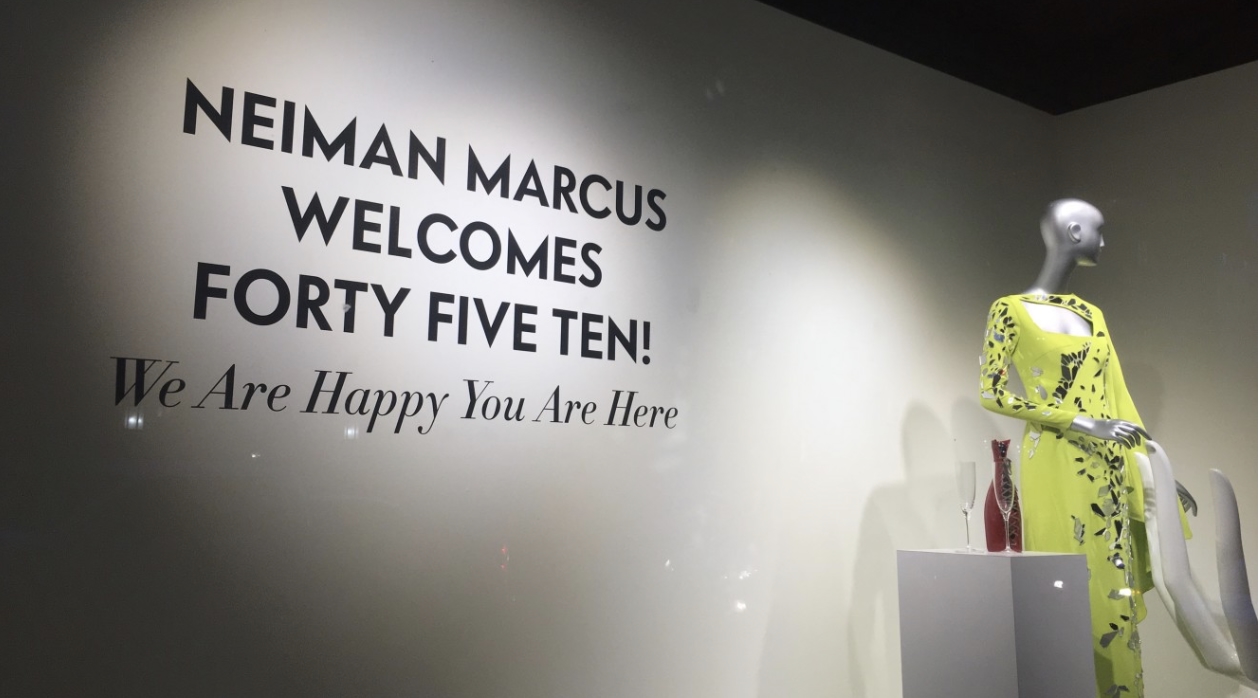
Long before she became a designer, Bucki Rogers visited the downtown flagship not to shop—but to study.
Every season brought new window displays, new visual stories, and new reasons to stop and look.
Looking back, I realize those visits influenced my creative career far more than I understood at the time.
The Breakdown
For many people, Neiman Marcus was retail.
For creatives, it was inspiration.
Stanley Marcus and Ken Knight understood something many brands still struggle with today:
People don’t remember products. They remember experiences.
The windows weren’t displays. They were theater.
The store wasn’t a destination because of what it sold.
It was a destination because of how it made people feel.
Long before experiential marketing became a buzzword, Neiman Marcus was practicing it every day.
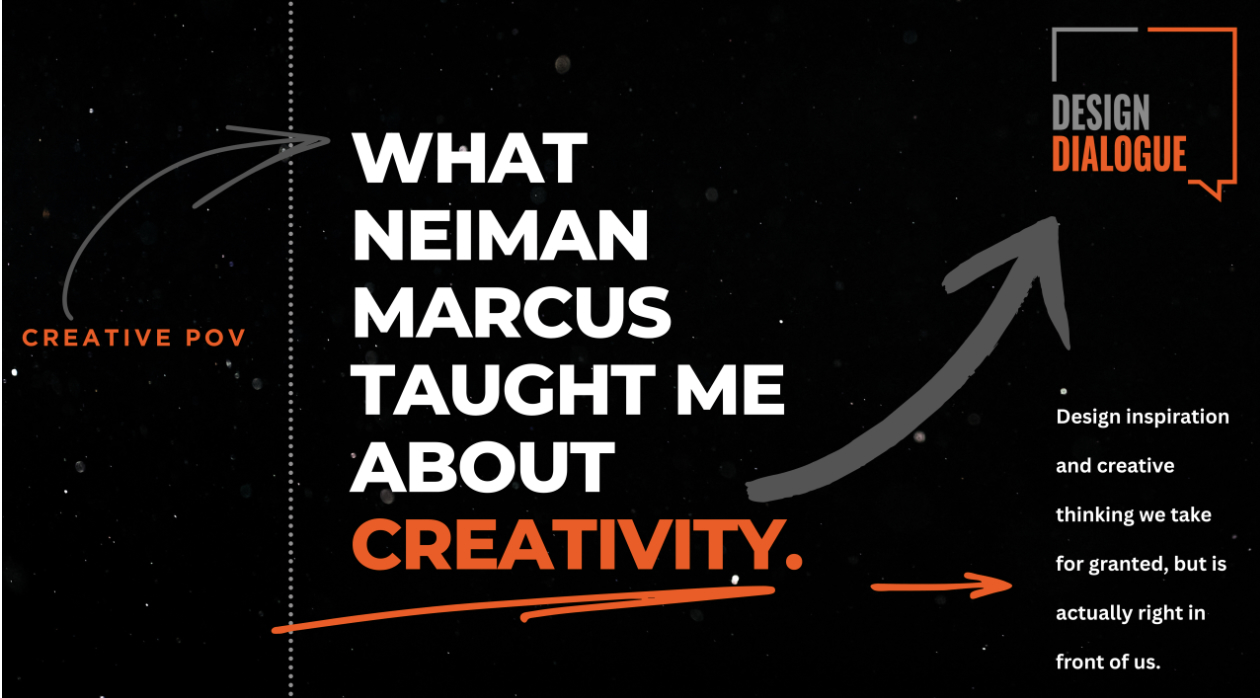
My Creative POV
I’m not a retail designer.
But I often find myself borrowing the same principles that made Neiman Marcus unforgettable:
Create anticipation
Reward curiosity
Make people feel something
Design the experience, not just the object
Some of the most important creative lessons I’ve learned didn’t come from a classroom or agency.
They came from places like Neiman Marcus.
Places where creativity was visible.
Accessible.
Public.
Why It Matters
As Dallas prepares to say goodbye to the flagship in September, I can’t help but think about the generations of designers, photographers, artists, merchandisers, and creative thinkers who walked through those doors and left inspired.
The building may close.
The influence won’t.
Great creative work doesn’t just sell products. It shapes future creatives. Sometimes the most influential design isn’t found in a studio. It’s found in the places that inspire us before we even know we’re looking for inspiration.
Thanks to Bucki Rogers, VP, Creative at X-Caliber & Affiliate Companies | Corporate Branding, Brand Marketing Strategy
Hopefully making a ruckus, one blog post at a time!
Be sure to check out my other blog,Joe’s Journey, for selected short stories and personal insights on life and its detours.
I found this interview quite interesting and thought you might, too. Enjoy!
Surely a legacy brand like Crayola has done all it could to grow, right? Wrong.
In this episode of the Marketing Vanguard podcast, recorded live at Brandweek in Atlanta, Victoria Lozano, then-CMO of Crayola, proves that the growth work of even the most iconic brands can and should never stop.
From how nostalgia can be leveraged to the advantage of expanding into unexpected categories, this conversation covers it all.
What you’ll learn:
How to merge nostalgia with future-forward relevance
Why a CMO’s role with high-awareness brands requires category expansion
The framework for segmented messaging across stakeholder groups
How to unlock hidden revenue streams in plain sight, like recognizing that 57% of Crayola purchases are made by adults without children
The power of branded sensory identity as a defensible competitive advantage
Why ecosystem thinking matters more than individual business unit performance
Victoria Lozano, former CMO of Crayola, is renowned for her expertise in brand strategy, category expansion and omnichannel marketing across iconic consumer brands. With a career spanning Fortune 500 CPG companies including HBC, beverages and confectionery, she has built a diverse track record in product innovation, location-based entertainment, and educational strategy.
Her work at Crayola demonstrates how legacy brands can evolve, redefine brand categories, unlock new consumer segments, and build enduring marketing strategies that transcend traditional product boundaries, all while maintaining emotional resonance.
Episode Highlights:
[00:26] Merge Nostalgia with Cultural Relevance to Stay Top-of-Mind — Victoria articulates the strategic tension facing iconic brands: leverage the emotional power of nostalgia while simultaneously showing up in current cultural conversations and proving relevance to today’s consumers. Nostalgia alone creates brand warmth but risks positioning the brand as a historical artifact; relevance alone without emotional resonance feels opportunistic and inauthentic.
The solution is to actively design products, experiences, and content that honor the brand’s heritage while addressing present-day consumer values. In Crayola’s case, that’s creativity as essential skill, wellness, self-expression and mental health.
[06:18] Redefining Your Use Case, Expand Revenue — Victoria highlights a counterintuitive but telling statistic: 57% of Crayola purchases now come from households without children, a massive untapped segment driven by adult wellness and self-expression rather than childhood nostalgia. By repositioning coloring from a kids’ creativity tool to an adult therapeutic escape (competing against wine, meditation apps, and wellness products), Crayola unlocked an entirely new growth category that’s expanding three percentage points year-over-year.
This insight reveals that growth for mature brands lies not in market share cannibalization but in redefining what problem the product solves for new audiences.
[07:50] Craft Differentiated Value Promises for Each Audience Segment — Victoria demonstrates that premium brands must make fundamentally different promises to distinct audiences, whether it’s kids, parents, teachers or adults. In Crayola’s case, for example, for kids, the promise is simple joy and fun; for parents, it’s skill development and childhood enrichment backed by research. CMOs can operationalize this by mapping each audience segment’s core motivation, then reverse-engineering messaging and channel strategy from that single, clear promise.
The result is messaging that feels authentic to each group while maintaining consistent brand identity, increasing conversion likelihood across the entire customer ecosystem. This approach transforms competitive pressure from a distraction into a reinforcement of positioning, since each segment’s promise is so precisely calibrated to their unique needs.
[13:41] Shift Societal Conversation Around Creativity as a Core CMO Advocacy Role — Victoria positions the CMO role as not merely a growth driver but as a cultural advocate responsible for shifting how society values and nurtures creativity in both children and adults. Rather than treating this as brand marketing theater, she frames it as a substantive strategic priority that shapes product development, partnerships, education strategy, and media investment.
CMOs can apply this by identifying one core societal value or belief that aligns with brand purpose and then systematically deploying marketing resources, research, partnerships, and content to shift public perception of that value. This approach generates earned media, attracts mission-aligned consumers, builds employee pride, and creates barriers to entry that pure product competition cannot match.
JENNY ROONEY is Chief Brand and Community Officer, leading strategy for the overall ADWEEK brand as well as the ways in which we serve and support our audiences with high-value content, products, partnerships and experiences, notably through our community programs such as Marketing Vanguard.
Hopefully making a ruckus, one blog post at a time!
Be sure to check out my other blog,Joe’s Journey, for selected short stories and personal insights on life and its detours.
Something you either have or you don’t. Something that shows up in artists, designers, musicians, but not in them.
Sir Ken Robinson spent decades challenging that assumption.
He argued that creativity isn’t a rare gift. It’s the application of imagination, and imagination is the birthright of every human being. The ability to bring in to mind things that aren’t present to our senses. To anticipate. To empathize. To invent.
After the Cannes Festival ended a few weeks back, I read an interesting interview with Richard Edelman about trust. Below are just a few questions slightly edited for clarity that I think you’ll find enlightening. The interview was conducted by Jeanine Poggi, AdAge Editor-in-Chief.
Trust is a recurring theme at the Cannes Lions International Festival of Creativity this year, and Richard Edelman, the CEO of Edelman, thinks the challenge runs deeper than declining trust in institutions or the rise of AI-generated content.
Consumers are becoming more insular, relying on smaller networks and trusted voices to make sense of the world around them, Edelman argued during a conversation with Ad Age. The impact for marketers, he said, is a shift from “we” to “me”—from broad messages designed to reach everyone to more personal connections that make consumers feel seen, understood and represented. That shift has major implications for how brands communicate, who they partner with and what it takes to break through.
Edelman, who has led the agency since 1996, shared his views on why creators are becoming more influential than celebrities, what marketers are getting wrong about audience connection and why he believes brands need to stop talking at consumers and start meeting them where they are.
Jeanine Poggi: How do you build trust today?
Richard Edelman: The first is, we have to do information from the bottom up. Bottom up means we have to talk to friends and family, we have to talk to people like pastors, pharmacists. It can’t be top down. That’s change No. 1.
Change No. 2 is brands have to do something, they can’t just say something. So if you want to be successful, you need to be in action mode. Some of it can be fun action but you can’t just get attention. You can’t just be living in culture.
Third is, and that’s why I think our research at Cannes is important, we have to recognize that people are in a very insular mindset, that their groups have become very small. And that if you’re insular, if I see you selling to people who are different than me, I’m going to reject your marketing. So I’m gonna say you’re not for me.
Poggi: So then how do brands build broad appeal when consumers are becoming more insular?
Edelman: We have to stop having campaigns that are about we and be about me.
How do I benefit you? I benefit you because I see you, I’m helping you, I’m making you feel better, I’m giving you a chance to talk back to me.
I think, for example, science needs to have a new deal with society. Science was always just accepted—we have a polio vaccine. Now it’s well, were the clinical trials biased? People are asking different questions. And so we have to take information down to a level. It has to be not only in local market, but even the micro market.
Poggi: Are brands putting too much emphasis on celebrity influencers?
Edelman: They should be looking to creators. They should be looking to people who have feet on the street. We want trusted creators. We want people who speak with authority to smaller audiences, because it’s more credible.
That’s the job for PR, is to find them, speak with them, involve them with the clients and have 50 of them go to Korea and be part of the process of developing a foldable phone. And then they’re on the journey.
Poggi: What’s the biggest shift marketers need to understand right now?
Edelman: I want people on the brand side to understand that the glass mirror is shattered on the ground. And that we’re lots of little shards and we have to talk to the shards and we have to talk to people in the way that they want to speak. And that’s with ordinary folks who have experience with the product and who are therefore believable.
Poggi: What do you think CMOs are getting wrong?
Edelman: I think they have to play offense. I think they can’t play defense. I think they can’t hide. I thought the Super Bowl stuff, a lot of it, was not penetrating to me because it was not memorable.
I think what’s going to stand out is brands that really inform me and value me as a voice, and they do it in part by letting go of their power.
Why are e-commerce brands succeeding? They’re succeeding because it’s a person like me. It may be someone a bit more celebrity, but big brands have to disperse their power and can’t feel big. They have to act small.
And I’m nervous that brands go, “I don’t want to be in politics.” Fair enough. I don’t want you to be in politics either.
But I want you to be relevant, and I want you to listen to people—the fears, inflation.
The second is fear of AI. This is crazy: two-thirds of people think they’re going to be sacked because of AI.
And the last and most problematic is: people have no sense of what the truth is. And so they’re withdrawing.
The brand has to find that withdrawn person and say, “come out, let’s talk about what you care about. And here’s something that’s going to make you feel optimistic.”
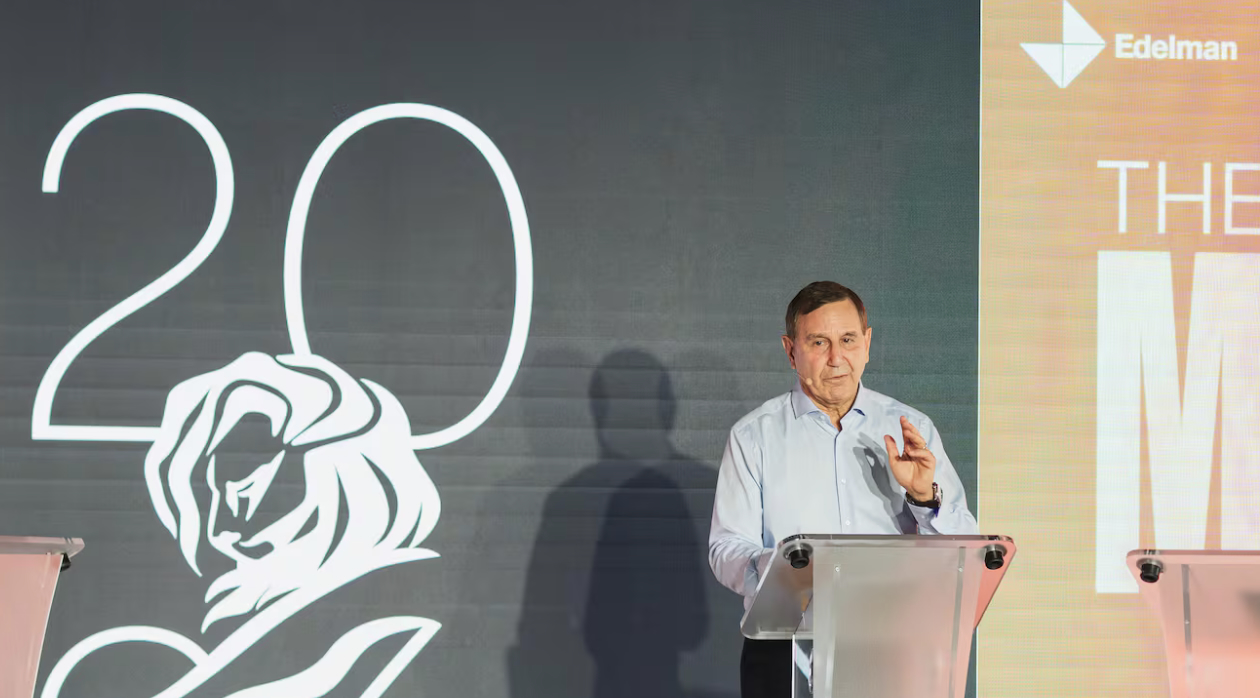
Richard Edelman speaking at the 2026 Cannes Lions International Festival of Creativity. (Edelman)
Hopefully making a ruckus, one blog post at a time!
Be sure to check out my other blog,Joe’s Journey, for selected short stories and personal insights on life and its detours.
“Clients respect talent” is a quote I read recently by Vincent Cullers, Advertising Hall of Fame. I wonder if this is universally true. Personally, I think not.
I think sometimes that’s what we’d like to think. More often than not, I’ve witnessed clients showing “ad agency execs” and/or creative professionals the lack of respect and not thinking anything of it. Now, in my experience not all clients are like this, obviously. But it only takes a few to put a sour taste in your mouth.
These are usually the type who have a greater-than-normal ego and believe they know everything or at least more than the ad guy in the room. Now, by “ad guy,” I’m referring to the expert who really knows his or her profession and has spent more than a year or two practicing the craft. This client loves to do his/her own thing and truly believes his ideas are amazing and should be implemented. That, naturally, is not always the case.
When the ad guy tries to explain to the client why this or that proposed idea may not work or is not appropriate, the client usually just ignores the logistics involved or the expense anticipated with an actual production. Also, depending on the maturity and experience level of the ad guy, the client may not appreciate the advice being given.
Times change, of course, as do people. Society can be very cruel at times as was evidenced decades ago during the fifties and sixties. No matter how smart one was, the color of one’s skin often determined whether or not one would even be invited into the conference room for a presentation.
“In those days, no African-Americans were working in advertising. They not only couldn’t get in the door, they didn’t go beyond the lobby.”
Vincent Cullers
Vincent T. Cullers (b. 1924 – October 4, 2003) was an American designer, advertising professional, and civil rights activist. Motivated by the civil rights movement in the United States, Vince Cullers made history in 1956 by founding Vince Cullers Advertising, recognized as the first African American-owned advertising agency.
Nowadays the color of one’s skin matters less than it did decades ago but, alas, the respect issue remains in some circles of the industry and society as a whole. Even the best qualified ad guy can tear down years of respect and admiration if he/she comes across as unprofessional, immature or, dare I say, irrespecutful. After all, respect goes two ways. It should always be upheld at both ends.
Hopefully making a ruckus, one blog post at a time!
Be sure to check out my other blog,Joe’s Journey, for selected short stories and personal insights on life and its detours.
This is an article I recently came across in AdAge by Tim Nudd about one of the more creative talents in the industry. It’s a very interesting interview that I think you’ll enjoy.
One of the industry’s most widely admired creatives, Gerry Graf has had quite the journey in advertising. He’s worked at big holding-company agencies and smaller indie boutiques (founding several of the latter himself) and developed a reputation along the way for entertaining—often outlandish—work underpinned by strong strategy.
Graf has also gotten into the creative awards game with his own show, Astroland, whose judges are required to be new to the business—as a way of shaking up how the industry views its best output.
As he takes on his new role at Joan, Graf talks about some of his favorite work, past and present, what he’s learned from running Astroland, how to be a better creative and why great ideas always make clients nervous.
Gerry, tell us … your first job in advertising, and your current job.
My first job in advertising was at Saatchi & Saatchi Health writing radio ads for Dexatrim—basically an amphetamine. Each ad starred Deidre Hall from the soap “Days of Our Lives” and started, “Independent studies prove that Dexatrim helps you lose weight.” Now: partner and global chief creative officer at Joan Creative.
An ad or campaign that inspired you coming up in the business.
Donna Weinheim and Cliff Freeman’s “Soviet Fashion Show” for Wendy’s from agency Dancer Fitzgerald Sample. I had a chance to work with Donna later on and confessed to her that I stole her Wendy’s ad structure for my first big hit with Snickers. She forgave me.
The last ad that made you jealous.
A content series for Alexis Bittar Jewelry called “The Bittarverse” from Mason Interactive. Netflix, if you are reading, please make this a series.
A recent project you’re proud of.
The last project I worked on with the greats at Slap Global for Lay’s FIFA World Cup called the Epic Watch Party It took a year to make and a lot of trust between us and a brave client. Messi, Beckham, Alexia Putellas, Steve Carrell and Thierry Henry plan a World Cup watch party. We worked with Meta to create a WhatsApp group so the five could plan in real time; it currently has 5 million members. It’s basically our own content channel where the stars post content, make fun of each other and actually plan a real watch party.
What you’re most excited about in joining Joan as chief creative officer.
Of course Lisa [Clunie, CEO] and all the talent at Joan. And the unrestricted independence to make the world’s best work.
The biggest thing you’ve learned in running the Astroland awards.
Astroland judges have five years or less of experience in advertising. They’re basically all Gen Z. The biggest thing I’ve learned from them is their definition of what an ad is. Winners have been TikTok content series (“Bittarverse”), independent creators messing around, concert tours, pop-up shops, album covers, subreddits, as well as classic 30-second videos. As one judge said, it’s “any creative expression that makes me feel something for a brand.”
One thing that can make anyone a better creative.
Work longer hours than everyone else.
What most brands still don’t understand about creativity.
Great ideas should make you nervous. If you want breakthrough work, there is always an element of risk. Ideas that the world talks about and sell millions of whatever you are selling always have an element that scares the client.
Something people might not know about you.
I was in my school production of “Fiddler on the Roof” as a bottle dancer at Tzeitel and Motel’s wedding.
Where advertising is headed next.
Hopefully we move to a space where advertising tells you something about a product or service that makes you consider buying it.
Hopefully making a ruckus, one blog post at a time!
Be sure to check out my other blog,Joe’s Journey, for selected short stories and personal insights on life and its detours.