The ones who see things differently…who are not fond of rules…they change things. They invent. They imagine. They heal. They explore. They create. — Steve Jobs
Be brave enough to live life creatively. The creative place where no one else has ever been. – Alan Alda
Where there is shouting, there is no true knowledge. – Leonardo da Vinci
I think it’s better to be overly ambitious and fail than to be underambitious and succeed in a mundane way. I have been very fortunate. I failed upward in my life! – Francis Ford Coppola
Meetings are all too often the burial grounds of great ideas. — Keith Reinhard, member, Advertising Hall of Fame
You cannot force ideas. Successful ideas are the result of slow growth. Ideas do not reach perfection in a day, no matter how much study is put upon them. – Alexander Graham Bell
The most dangerous phrase in the language is, We’ve always done it this way. – Grace Hopper
If at first, the idea is not absurd, then there is no hope for it. – Albert Einstein
We are drowning in information, while starving for wisdom. The world henceforth will be run by synthesizers, people able to put together the right information at the right time, think critically about it, and make important choices wisely. – E. O. Wilson
There is nothing to writing. All you do is sit down at a typewriter and bleed. — Ernest Hemingway
Hopefully making a ruckus, one blog post at a time!
Be sure to check out my other blog, Joe’s Journey, for personal insights on life and its detours.
• Idea Tub – can be a physical place or thing and/or an electronic file. It’s a compilation of all ideas ever submitted since you started keeping track, but organized as to be readily accessible.
An elaborate Idea Tub
• Don’t let the execution bury the idea. Your message will be diluted and possibly even confusing if the creative is too cute, too complex or just plain dumb. Think napkin, not computer.
• Realize your own sense of creativity by challenging your imagination and stimulate thoughts to lead yourself to a new level of solution.
• The idea, for best results, should be media and discipline neutral. Otherwise, you limit yourself.
• Focus on how you’re going to make the idea work and be relevant. But, never fall in love with it.
• Don’t ever underestimate the power of the mind or your imagination. Don’t ever be afraid to ask, “Why, Why not or What if . . .?”.
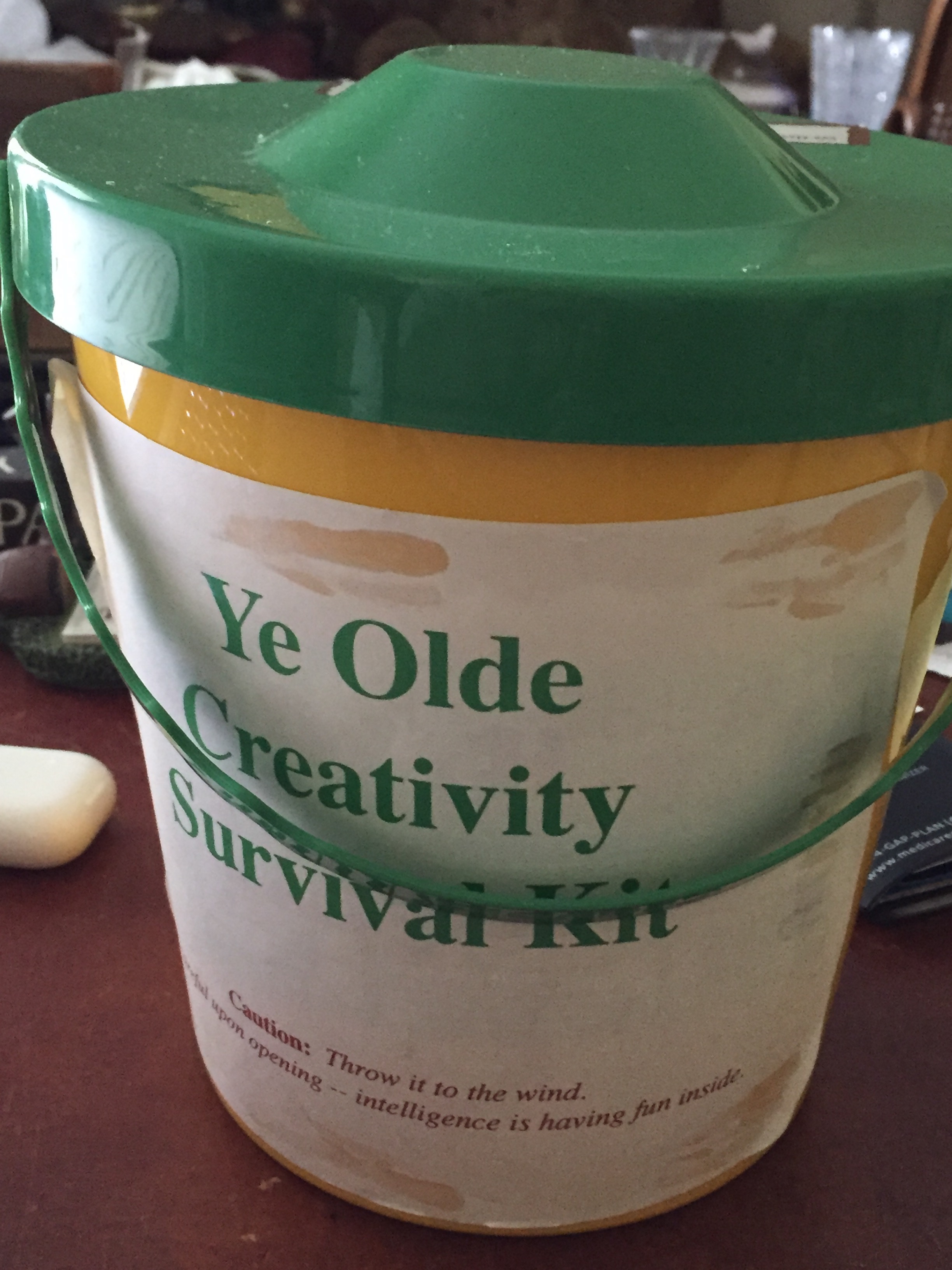
• Ye Olde Creativity Survival Kit — Any sort of container in which you place whatever makes you FEEL creative and THINK creatively. In this industry, silly is sometimes serious business.
• Thinking at Warp Speed – Generating ideas at breakneck speed is a great way to capture ideas on Post-it Notes (one per note) in answering a specific question to solve a problem. Remember Giant Post-its for your “idea wall” which can foster brainstorming and open-door policy idea addition.
• Drill Down Technique – Discovering THE idea. In this unusual method choose your five best ideas and ELIMINATE THEM, choose five more and ELIMINATE THEM. The last idea Post-it may or may not be the best, but it’s one to which you normally would not have paid much attention. Go play.
• As ideas are developed, make sure their essence is refined. Make sure your ideas are clear and you can explain their basic value in about 20 seconds. If you can’t explain it to an 8-year old so they’ll understand it, you need to refine your idea more.
• Don’t manage creativity; manage for creativity. Provide an environment that is open and receptive to new ideas, and that builds failure into the process. Acknowledge error or failure in a constructive and supportive way.
Hopefully making a ruckus, one blog post at a time!
Be sure to check out my other blog,Joe’s Journey,for personal insights on life and its detours.
At one time or another, we’ve all been on a creative hot streak even if we didn’t realize it. The words flowed freely, the design snapped into place magically making for very impactful creative. But how did that happen? How does one get on a “hot steak” of creativity? A new study from the Kellogg School of Management at Northwestern University may have a road map.
The secret involves experimenting with a wide range of subjects, styles, and techniques before perfecting a specific area of one’s craft—what the authors describe as a mix of exploration and exploitation.
“Although exploration is considered a risk because it might not lead anywhere, it increases the likelihood of stumbling upon a great idea,” the study’s lead author, Dashun Wang, said in a statement. “By contrast, exploitation is typically viewed as a conservative strategy. If you exploit the same type of work over and over for a long period of time, it might stifle creativity. But, interestingly, exploration followed by exploitation appears to show consistent associations with the onset of hot streaks.”
Wang’s findings, published in the journal Nature, sought to identify periods of intense creativity in the work of visual artists, as well as film directors and scientists. The team used image recognition algorithms to analyze data from 800,000 artworks from 2,128 artists, including Jackson Pollock, Frida Kahlo, and Vincent van Gogh. The rest of the study was based on Internet Movie Database (IMDb) data sets for 4,337 directors, and publications and citations on the Web of Science and Google Scholar for 20,040 scientists.
Creative trajectories and hot-streak dynamics: three exemplary careers. Data analyzing the work of Jackson Pollock, Peter Jackson, and John Fenn.
Pollock, who achieved widespread popular and critical success with his groundbreaking drip paintings from 1946 to 1950, is one of three creators singled out as examples in the paper.
Director Peter Jackson, who famously made the “The Lord of the Rings” epic fantasy trilogy after experimenting in genres such as horror-comedy and biography is another.
John Fenn, who won the 2002 Nobel Prize in chemistry for his work with electrospray ionization, having previously studied numerous other topics is another.
The paper identified patterns in the creators’ work over time—changes in brushstrokes, plot points or casting decisions, or research topics. It noted the diversity both in the period leading up to a hot streak, which typically lasts about five years, and at other times in the subject’s career. Five years?!
I found this to be surprising in that most hot streaks I’ve personally encountered have been anywhere from a few hours to several months. I’ve never thought of them in terms of years. Anywhoo . . .
In all three fields, the trend tended toward a more diverse body of work in the period before a hot streak than at other points in time. Then, during the hot streak, the creators tended to continue to work in the same vein, suggesting “that individuals become substantially more focused on what they work on, reflecting an exploitation strategy during hot streak.”
So when is your next hot streak coming up and will you know it when it hits you?
This post is based upon the article by Sarah Cascone of Art Net News.
Since it’s been a few weeks when Quotes last appeared, I thought it was time to bring them back. Mostly advertising folks below but a few that are just as memorable. Everyone comes from a different perspective. Enjoy!
Conceit is God’s gift to little men. — Bruce Barton, member, Advertising Hall of Fame
Nothing splendid has ever been achieved except by those who dared believe that something inside of them was superior to circumstance. — Bruce Barton, member, Advertising Hall of Fame
A good ad should be like a good sermon: It must not only comfort the afflicted, it also must afflict the comfortable. — Bernice Fitz-Gibbon, member, Advertising Hall of Fame
It is easier to tone down a wild idea than to think up a new one. — Alex Osborne, member, Advertising Hall of Fame
Some questions don’t have answers, which is a terribly difficult lesson to learn. — Katharine Graham, member, Advertising Hall of Fame
The heart of creativity is discipline. — William Bernbach, member, Advertising Hall of Fame
If you can’t turn yourself into your customer, you probably shouldn’t be in the ad writing business at all. — Leo Burnett, member, Advertising Hall of Fame
I do not regard advertising as entertainment or an art form, but as a medium of information. — David Ogilvy, member, Advertising Hall of Fame
Advertising, to be successful, must understand or anticipate basic human needs and wants and interpret available goods and services in terms of their want-satisfying abilities. This is the very opposite of manipulation. — Charles H. Sandage, Advertising Hall of Fame
What would life be if we had no courage to attempt anything? – Vincent Van Gogh
Creativity Tip #34: Start fooling around. Splash the paint on. Scribble the words down. Sing.
Hopefully making a ruckus, one blog post at a time!
Be sure to check out my other blog,Joe’s Journey,for personal insights on life and its detours.
Is your school or workplace divided between the “creatives” versus the “practical” people? Yet surely, David Kelley suggests, creativity is not the domain of only a chosen few. Telling stories from his legendary design career and his own life, he offers ways to build the confidence to create.
As for building confidence, afraid of snakes? This may help.
David Kelley’s company IDEO helped create many icons of the digital generation — but what matters even more to him is unlocking the creative potential of people and organizations to innovate routinely.
So give it a listen. I think you’ll be glad you did.
David Kelley giving his TED Talk
Creativity Tip #4: Trying to satisfy everybody never got anybody anywhere. Focus on what’s important, then do it.
Hopefully making a ruckus, one blog post at a time!
Be sure to check out my other blog, Joe’s Journey, for personal insights on life and its detours.
Do you think you’re creative? Let’s find out, shall we. According to researchers from McGill, Harvard, and the University of Melbourne, a quick test could reveal how much creative potential lies within. A recent article by Connie Lin in Fast Company magazine explores an interesting take on a creativity test.
Creativity has long been considered tough to quantify. But an international cohort of researchers from McGill University, Harvard University, and the University of Melbourne are tackling that challenge with a recent study that claims a four-minute test could reveal how much creative potential lies within.
HubSpot Blog
Here’s how it works: 1) Take a seat. 2) Think of 10 words that are as wildly unrelated—in definition, category, or concept—as possible. 3) Input here.
That’s it—the rest is algorithmic magic. The test, which is called the Divergent Association Task, then employs a computational program that measures the “semantic distance” between the words. For example: The words “cat” and “dog,” which are different but somewhat related, would have a shorter semantic distance than the words “cat” and “tunnel,” which bear fewer links.
According to researchers, people who can conjure up words with greater semantic distance might objectively be more creative. So if your words were “green,” “blue,” and “purple,” you might be deemed less creative than if your words were “sashay,” “gumption,” and “leaf.”
Results of the Divergent Association Task (DAT) appeared to match results that study participants received from two other well-established creativity barometers (the Alternative Uses Task and the Bridge-the-Associative Gap Task), suggesting it’s at least as effective.
The DAT, however, does not divine creativity in umbrella terms, but rather tests one specific type of creativity: divergent thinking, which is the capacity to generate an array of diverse solutions to an open-ended problem.
According to Jay Olson, the creator of the DAT, that’s just a “sliver”—but it’s the first step toward understanding creativity more broadly, and how it might be cultivated in the minds of the next generation.
“Creativity is fundamental to human life,” said Olson, who is a doctoral graduate of McGill’s Department of Psychiatry and a postdoctoral fellow at Harvard. “The more we understand its complexity, the better we can foster creativity in all its forms.”
The studyis in National Academy of Sciences Proceedings.
So, how creative are you?
Creativity Tip #26: Everyone needs a Creativity Survival Kit. What is that, you ask? It’s any sort of container that holds items that make you feel or be creative.
Hopefully making a ruckus, one blog post at a time!
Be sure to check out my other blog,Joe’s Journey, for personal insights on life and its detours.
From Steinem to Van Gogh to Serling and more, these quotes cover a multitude of personalities and perspectives. Enjoy as you read through the history makers, some of our time, some not.
Without leaps of imagination, or dreaming, we lose the excitement of possibilities. Dreaming, after all, is a form of planning. Gloria Steinem
You cannot rely upon what you have been taught. All you have learned from history is old ways of making mistakes. There is nothing that history can tell you about what we must do tomorrow. Only what we must not do. Edwin H. Land
What would life be if we had no courage to attempt anything? Vincent Van Gogh
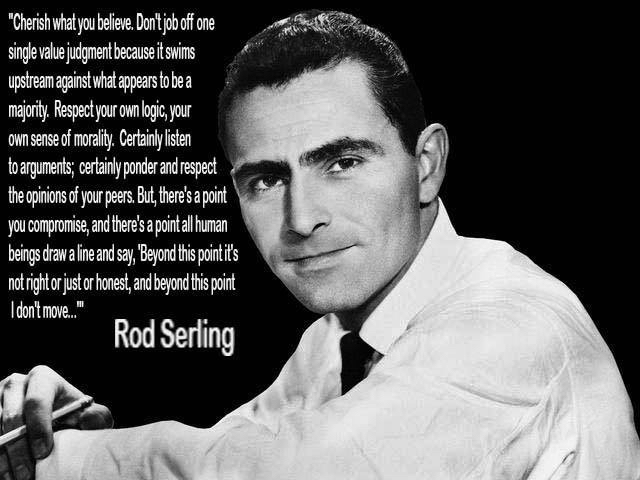
It isn’t enough for a sole voice of reason to exist. In this time of uncertainty we’re so sure that villains lurk around every corner that we will create them ourselves if we can’t find them. For while fear may keep us vigilant, it’s also fear that tears us apart. Rod Serling
Rod Serling
An important idea not communicated persuasively is like having no idea at all. William Bernbach, member, Advertising Hall of Fame
In writing advertising it must always be kept in mind that the customer often knows more about the goods than the advertising writers because they have had experience in buying them, and any seeming deception in a statement is costly, not only in the expense of the advertising but in the detrimental effect produced upon the customer, who believes she has been misled. John Wanamaker, member, Advertising Hall of Fame
Creativity is so delicate a flower that praise tends to make it bloom while discouragement often nips it at the bud. Alex Osborn, member, Advertising Hall of Fame
Good advertising is written from one person to another. When it is aimed at millions, it rarely moves anyone. Fairfax M. Cone, member, Advertising Hall of Fame
The scientist has marched in and taken the place of the poet. But one day somebody will find the solution to the problems of the world and remember, it will be a poet, not a scientist. Frank Lloyd Wright
Creativity Tip #36: If you can’t explain your idea to an 8-year old, it’s too complicated.
Hopefully making a ruckus, one blog post at a time!
Be sure to check out my other blog, Joe’s Journey, for personal insights on life and its detours.
As it has been some time since a post was published with nothing but quotes, I thought we’d resurrect the form. Whereas in previous posts there has been a variety of authors quoting something not necessarily pertaining to advertising or the industry. This time, however, I thought we go with an emphasis on advertising, at least from people from within the ad biz. Enjoy!
When we are too timid to risk failure, we reduce the opportunities to succeed. And we eliminate the chance to learn. Keith Reinhard, member, Advertising Hall of Fame
Remove advertising, disable a person or firm from proclaiming its wares and their merits, and the whole of society and of the economy is transformed. The enemies of advertising are the enemies of freedom. David Ogilvy, member, Advertising Hall of Fame
Creative imagination — the lamp that lit the world — can light our lives. Alex F. Osborn, member, Advertising Hall of Fame
Let us blaze new trails. Let us prove to the world that good taste, good art and good writing can be good selling. William Bernbach, member, Advertising Hall of Fame
I have learned that any fool can write a bad ad, but that it takes a real genius to keep his hands off a good one. Leo Burnett, member, Advertising Hall of Fame
An important idea not communicated persuasively is like having no idea at all. William Bernbach, member, Advertising Hall of Fame
When we are too timid to risk failure, we reduce the opportunities to succeed. And we eliminate the chance to learn. Keith Reinhard, member, Advertising Hall of Fame
Creativity is no longer about grabbing attention or raising consumer awareness. Its goal is to remind consumers about what is fundamental and gratifying about a brand. Peter A. Georgescu, member, Advertising Hall of Fame
Rules are for people who don’t know what to do. AND I don’t like closed doors. Creativity flourishes best in an environment of open doors and open minds. Keith Reinhard, Advertising Hall of Fame
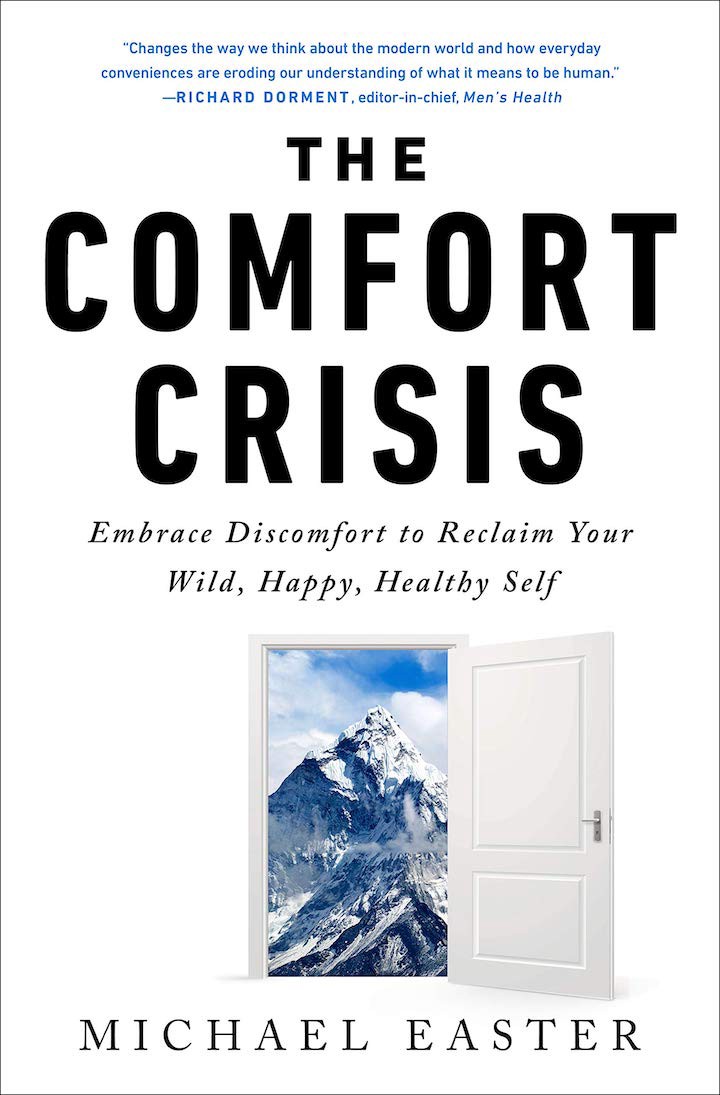
Portions of this post are based on excerpts from the book by Michael Easter, The Comfort Crisis. We spend an awful lot of time consuming digital media, lest we get easily bored. A recent study looked at what happens to a bored mind without easy access to media?
The Canadian neuroscientist James Danckert recruited some volunteers and put them into a neuroimaging scanner, and induced them into a mood of being bored They had them watch two guys hanging laundry for eight minutes. You could say they were bored out of their gords!
While bored, a part of their brains called the “default mode network” fired on. It’s a network of brain regions that activates when we’re unfocused, when our mind is off and wandering. Mind wandering is a rest state that restores and rebuilds the resources needed to work better and more efficiently when we’re focused on the outside world.
Mind wandering is also a key driver of creativity, which is why other studies have found that bored people score significantly higher on creativity tests. Research dating back to the 1950s may explain why we’re now facing a “creativity crisis.”
If I didn’t already know this was a 1950’s Classroom, I would have guessed it. Has that look and feel – BTW, where are the little girls?
Ellis Paul Torrance was an American psychologist. In the 1950s he noticed something off target about American classrooms. Teachers tended to prefer the subdued, book-smart kids. They didn’t much care for the kids who had tons of energy and big ideas. Kids who’d think up odd interpretations of readings, inventive excuses for why they didn’t do their homework, and morph into mad scientists every lab day.
The system deemed these kids “bad.” But Torrance felt they were misunderstood. Because if a problem comes up in the real world, all the book-smart kids look for an answer in … a book. But what if the answer isn’t in a book? Then a person needs to get creative.
He thus devoted his life to studying creativity and its uses for good. In 1958 he developed the “Torrance Test.” It’s since become the gold standard for gauging creativity. The TTCT (Torrance Tests of Creative Thinking) assess how creatively a child’s mind works and are often given to children to determine advanced placement or as part of an entrance examination. Instead of traditionally taught subjects such as reading or math, these tests assess creativity. Children are scored on a number of aspects, including:
Creative titles for pictures
Expressions
Imagery
and Humor
He had a large group of children in the Minnesota public school system take the exam. It includes exercises like showing a kid a toy and asking her, “how would you improve this toy to make it more fun?”
Torrance analyzed all the kids’ scores. He then tracked every accomplishment the kids earned across their lives, until he died in 2003, when his colleagues took on the job. If one of the kids wrote a book, he’d mark it; if a kid founded a business, he’d mark it; if a kid submitted a patent, he’d mark it. Every achievement was logged. What he found raises big questions about how we judge intelligence.
The kids who came up with more, better ideas in the initial tests were the ones who became the most accomplished adults. They were successful inventors and architects, CEOs and college presidents, authors and diplomats, etc.
Torrance testing, in fact, bests IQ testing so much so that a recent study of Torrance’s Kids found that creativity was a threefold better predictor of much of the students’ accomplishment compared to their IQ scores.
Now, according to Easter, we’ve killed off one of the main drivers of creativity: mind wandering. The result? A researcher at the University of William and Mary analyzed 300,000 Torrance Test scores since the 50s. She found that creativity scores began to nosedive in 1990.
She concluded that we’re now facing a “creativity crisis.” The scientist blames our hurried, over-scheduled lives and “ever increasing amounts of time interacting with electronic entertainment devices.”
And that’s bad news. Particularly when we consider that creativity is a critical skill in today’s economy, where most of us work with our brains rather than brawn.
Despite what productivity gurus will have us believe, the key to improving creativity might be to occasionally do nothing at all. Or, at least, not dive into a screen. We’ll think distinctly, in a way that delivers more original ideas.
Yet, ironically, society’s tech giants still deliver more advanced software to supposedly aid us in our creativity, while holding us increasingly captive. A proper balance has yet to be realized. And may not ever.
While it may sound silly, occasionally doing nothing works. At least for me, it does. Of course, my body may not be doing anything but my mind is usually traveling at warp speed. It’s usually during these times that I let my mental forces do what they’ll do. More times than not, they produce . . . an idea . . . several ideas . . . a partial script . . . something to which I can apply time-in-the-future to develop.
Boredom is just one evolutionary discomfort we’ve lost from our lives. Easter’s book, The Comfort Crisis, investigates nine others, covering what happens to our bodies, minds, and sense of self without them—and the benefits we can reap by reintroducing these evolutionary discomforts into our lives.
Whatever you end up creating, for it to count, it needs to ship. Ship in the sense that it needs to be published, displayed, lectured, drawn, invented, etc. Whatever you create needs exposure.
If you’re not that familiar with Seth or his myriad of work, go explore Seth’s site. You’ll be glad you did.
I’ve been following Seth’s podcast, Akimbo, for several years now and find it quite nourishing. I also subscribe to his emails. How he does this 365 days of the year, I’ll never know.
But, I’m glad he does.
So take a listen below to Seth’s take on Creativity if you haven’t already. Once done, choose to create something.
Then ship it!
Hopefully making a ruckus, one blog post at a time!
Be sure to check out my other blog,Joe’s Journey, for personal insights on life and its detours.