Below is a briefing of various articles compiled by the AAByAd Age Staff. Some you will need asubscription to read while others you may not. I have a $20 per month subscription to stay close to the industry.
In 2030, advertising will be defined by advances in AI, new consumer behaviors, evolving career paths and shifting agency models. To help marketers prepare, Ad Age gathered insights from more than 100 leaders across brands, agencies, media companies, consultancies and tech, along with perspectives from our readers. The result is a wide-ranging look at the forces already reshaping the business—and what they mean for the years ahead.
What is Ad Age Future of Advertising 2030?
Who is it for?
Ad Age’s Future of Advertising 2030, available exclusively to All Access subscribers, examines how marketing, media, agencies, creativity, culture, leadership and ad tech will change over the next five years. The package features 14 stories with insights from industry leaders and readers, plus exclusive checklists, timelines and interactive elements.
This package is built for anyone shaping the future of marketing—from junior specialists building skills to CMOs setting strategy. It’s designed for agency leaders, media buyers, creatives and brand marketers who need more than predictions: clear strategies, checklists and guidance to prepare for the next five years. If you plan, buy, build, measure or lead, this roadmap will help you get in shape for what’s next.
After reading about this commercial and then seeing it, I felt it worthy of sharing, especially for those who may not be aware. So listen, watch and read about it. I think you’ll be impressed as I was. Enjoy! Thanks Tim Rudd of AdAge for your share.
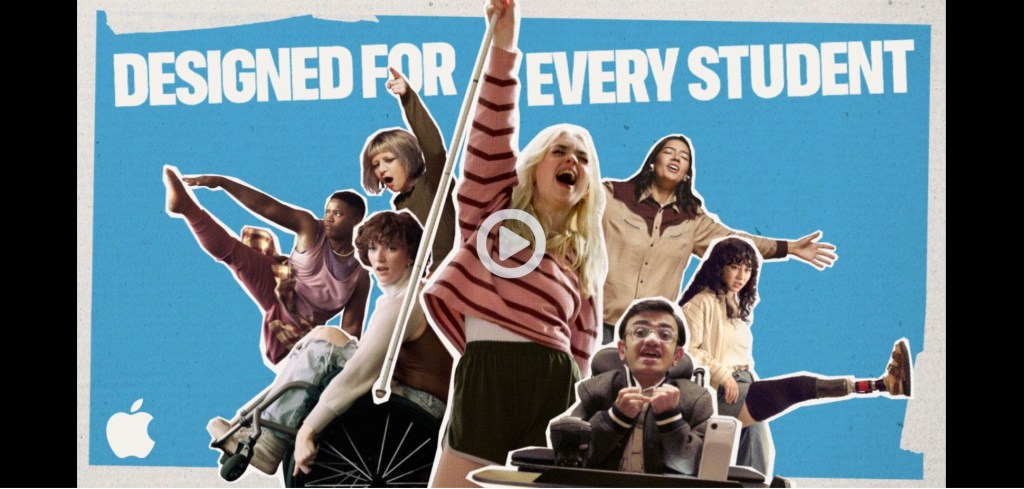
Apple’s effervescent three-minute accessibility spot “I’m Not Remarkable” won the 2026 Emmy Award for Outstanding Commercial on Sunday—the tech giant’s third Emmy win for best commercial in the past four years and its second Emmy win partnering with Somesuch director Kim Gehrig on an accessibility message.
The five other nominees this year included another Apple spot—the holiday story “A Critter Carol”—as well as the Adidas World Cup spot “Backyard Legends”; Coinbase’s Cannes Grand Prix winner “Your Way Out”; Levi’s 2026 Super Bowl spot “Backstory”; and Nike’s “Why Do It?” anthem from last summer.
“I’m Not Remarkable,” made in-house by Apple, rolled out last December. Set to the Kittyy & The Class track of the same name, the musical piece follows Deaf and disabled students through classrooms, dorms and parties at college. The lyrics reject the usual narratives portraying disabled people as extraordinary, arguing instead that they simply use different tools. Apple features including Magnifier for Mac, Braille Access, Accessibility Reader, VoiceOver, AssistiveTouch and Live Captions appear throughout the film as students juggle lectures, friendships and deadlines.
Gehrig also directed Apple’s accessibility spot “The Greatest,” which won the Outstanding Commercial Emmy in 2023. Apple also won the award in 2024 for the holiday spot “Fuzzy Feelings.” (Uber One interrupted Apple’s streak last year, winning for the spot “Brian Cox Goes to College.”)
Hopefully making a ruckus, one blog post at a time!
Be sure to check out my other blog,Joe’s Journey, for selected short stories and personal insights on life and its detours.
A very interesting look at one of America’s most iconic fashion and retail traditions from an insider’s perspective. Enjoy the intake and the share.
Opening Hook
Most people will remember Neiman Marcus as a department store.
She remembers it as one of Dallas’ greatest creative institutions.
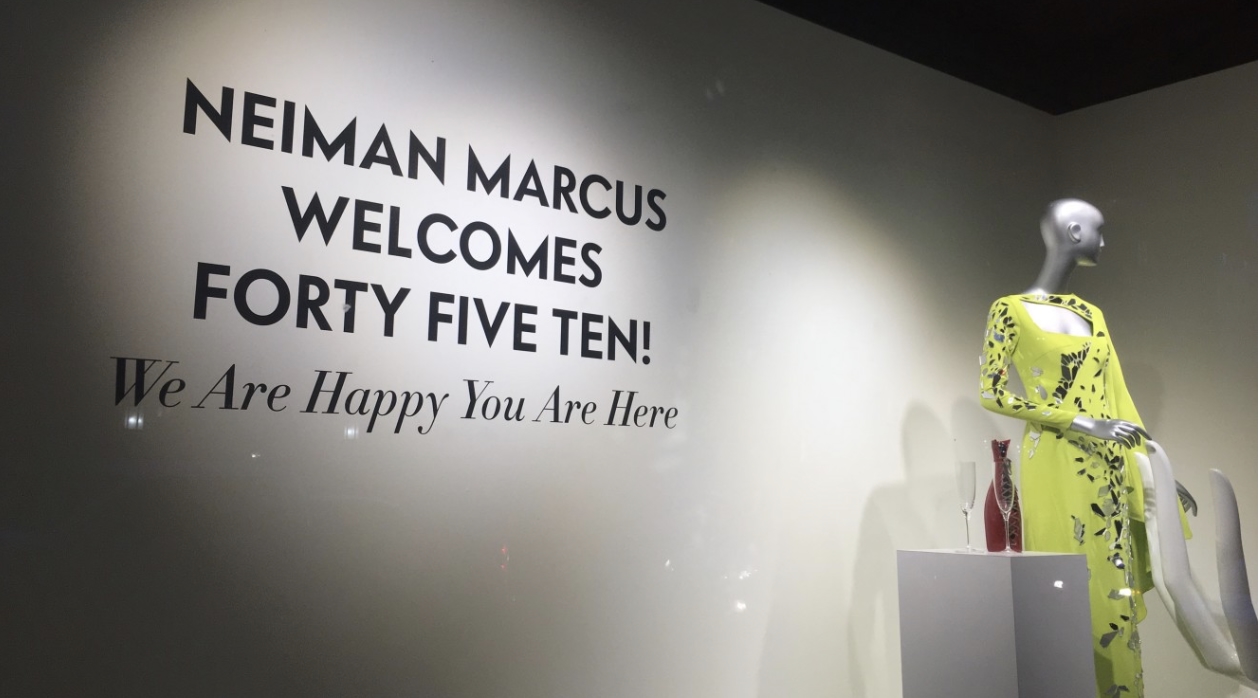
Long before she became a designer, Bucki Rogers visited the downtown flagship not to shop—but to study.
Every season brought new window displays, new visual stories, and new reasons to stop and look.
Looking back, I realize those visits influenced my creative career far more than I understood at the time.
The Breakdown
For many people, Neiman Marcus was retail.
For creatives, it was inspiration.
Stanley Marcus and Ken Knight understood something many brands still struggle with today:
People don’t remember products. They remember experiences.
The windows weren’t displays. They were theater.
The store wasn’t a destination because of what it sold.
It was a destination because of how it made people feel.
Long before experiential marketing became a buzzword, Neiman Marcus was practicing it every day.
My Creative POV
I’m not a retail designer.
But I often find myself borrowing the same principles that made Neiman Marcus unforgettable:
Create anticipation
Reward curiosity
Make people feel something
Design the experience, not just the object
Some of the most important creative lessons I’ve learned didn’t come from a classroom or agency.
They came from places like Neiman Marcus.
Places where creativity was visible.
Accessible.
Public.
Why It Matters
As Dallas prepares to say goodbye to the flagship in September, I can’t help but think about the generations of designers, photographers, artists, merchandisers, and creative thinkers who walked through those doors and left inspired.
The building may close.
The influence won’t.
Great creative work doesn’t just sell products. It shapes future creatives. Sometimes the most influential design isn’t found in a studio. It’s found in the places that inspire us before we even know we’re looking for inspiration.
Thanks to Bucki Rogers, VP, Creative at X-Caliber & Affiliate Companies | Corporate Branding, Brand Marketing Strategy
Hopefully making a ruckus, one blog post at a time!
Be sure to check out my other blog,Joe’s Journey, for selected short stories and personal insights on life and its detours.
I found this interview quite interesting and thought you might, too. Enjoy!
Surely a legacy brand like Crayola has done all it could to grow, right? Wrong.
In this episode of the Marketing Vanguard podcast, recorded live at Brandweek in Atlanta, Victoria Lozano, then-CMO of Crayola, proves that the growth work of even the most iconic brands can and should never stop.
From how nostalgia can be leveraged to the advantage of expanding into unexpected categories, this conversation covers it all.
What you’ll learn:
How to merge nostalgia with future-forward relevance
Why a CMO’s role with high-awareness brands requires category expansion
The framework for segmented messaging across stakeholder groups
How to unlock hidden revenue streams in plain sight, like recognizing that 57% of Crayola purchases are made by adults without children
The power of branded sensory identity as a defensible competitive advantage
Why ecosystem thinking matters more than individual business unit performance
Victoria Lozano, former CMO of Crayola, is renowned for her expertise in brand strategy, category expansion and omnichannel marketing across iconic consumer brands. With a career spanning Fortune 500 CPG companies including HBC, beverages and confectionery, she has built a diverse track record in product innovation, location-based entertainment, and educational strategy.
Her work at Crayola demonstrates how legacy brands can evolve, redefine brand categories, unlock new consumer segments, and build enduring marketing strategies that transcend traditional product boundaries, all while maintaining emotional resonance.
Episode Highlights:
[00:26] Merge Nostalgia with Cultural Relevance to Stay Top-of-Mind — Victoria articulates the strategic tension facing iconic brands: leverage the emotional power of nostalgia while simultaneously showing up in current cultural conversations and proving relevance to today’s consumers. Nostalgia alone creates brand warmth but risks positioning the brand as a historical artifact; relevance alone without emotional resonance feels opportunistic and inauthentic.
The solution is to actively design products, experiences, and content that honor the brand’s heritage while addressing present-day consumer values. In Crayola’s case, that’s creativity as essential skill, wellness, self-expression and mental health.
[06:18] Redefining Your Use Case, Expand Revenue — Victoria highlights a counterintuitive but telling statistic: 57% of Crayola purchases now come from households without children, a massive untapped segment driven by adult wellness and self-expression rather than childhood nostalgia. By repositioning coloring from a kids’ creativity tool to an adult therapeutic escape (competing against wine, meditation apps, and wellness products), Crayola unlocked an entirely new growth category that’s expanding three percentage points year-over-year.
This insight reveals that growth for mature brands lies not in market share cannibalization but in redefining what problem the product solves for new audiences.
[07:50] Craft Differentiated Value Promises for Each Audience Segment — Victoria demonstrates that premium brands must make fundamentally different promises to distinct audiences, whether it’s kids, parents, teachers or adults. In Crayola’s case, for example, for kids, the promise is simple joy and fun; for parents, it’s skill development and childhood enrichment backed by research. CMOs can operationalize this by mapping each audience segment’s core motivation, then reverse-engineering messaging and channel strategy from that single, clear promise.
The result is messaging that feels authentic to each group while maintaining consistent brand identity, increasing conversion likelihood across the entire customer ecosystem. This approach transforms competitive pressure from a distraction into a reinforcement of positioning, since each segment’s promise is so precisely calibrated to their unique needs.
[13:41] Shift Societal Conversation Around Creativity as a Core CMO Advocacy Role — Victoria positions the CMO role as not merely a growth driver but as a cultural advocate responsible for shifting how society values and nurtures creativity in both children and adults. Rather than treating this as brand marketing theater, she frames it as a substantive strategic priority that shapes product development, partnerships, education strategy, and media investment.
CMOs can apply this by identifying one core societal value or belief that aligns with brand purpose and then systematically deploying marketing resources, research, partnerships, and content to shift public perception of that value. This approach generates earned media, attracts mission-aligned consumers, builds employee pride, and creates barriers to entry that pure product competition cannot match.
JENNY ROONEY is Chief Brand and Community Officer, leading strategy for the overall ADWEEK brand as well as the ways in which we serve and support our audiences with high-value content, products, partnerships and experiences, notably through our community programs such as Marketing Vanguard.
Hopefully making a ruckus, one blog post at a time!
Be sure to check out my other blog,Joe’s Journey, for selected short stories and personal insights on life and its detours.
After the Cannes Festival ended a few weeks back, I read an interesting interview with Richard Edelman about trust. Below are just a few questions slightly edited for clarity that I think you’ll find enlightening. The interview was conducted by Jeanine Poggi, AdAge Editor-in-Chief.
Trust is a recurring theme at the Cannes Lions International Festival of Creativity this year, and Richard Edelman, the CEO of Edelman, thinks the challenge runs deeper than declining trust in institutions or the rise of AI-generated content.
Consumers are becoming more insular, relying on smaller networks and trusted voices to make sense of the world around them, Edelman argued during a conversation with Ad Age. The impact for marketers, he said, is a shift from “we” to “me”—from broad messages designed to reach everyone to more personal connections that make consumers feel seen, understood and represented. That shift has major implications for how brands communicate, who they partner with and what it takes to break through.
Edelman, who has led the agency since 1996, shared his views on why creators are becoming more influential than celebrities, what marketers are getting wrong about audience connection and why he believes brands need to stop talking at consumers and start meeting them where they are.
Jeanine Poggi: How do you build trust today?
Richard Edelman: The first is, we have to do information from the bottom up. Bottom up means we have to talk to friends and family, we have to talk to people like pastors, pharmacists. It can’t be top down. That’s change No. 1.
Change No. 2 is brands have to do something, they can’t just say something. So if you want to be successful, you need to be in action mode. Some of it can be fun action but you can’t just get attention. You can’t just be living in culture.
Third is, and that’s why I think our research at Cannes is important, we have to recognize that people are in a very insular mindset, that their groups have become very small. And that if you’re insular, if I see you selling to people who are different than me, I’m going to reject your marketing. So I’m gonna say you’re not for me.
Poggi: So then how do brands build broad appeal when consumers are becoming more insular?
Edelman: We have to stop having campaigns that are about we and be about me.
How do I benefit you? I benefit you because I see you, I’m helping you, I’m making you feel better, I’m giving you a chance to talk back to me.
I think, for example, science needs to have a new deal with society. Science was always just accepted—we have a polio vaccine. Now it’s well, were the clinical trials biased? People are asking different questions. And so we have to take information down to a level. It has to be not only in local market, but even the micro market.
Poggi: Are brands putting too much emphasis on celebrity influencers?
Edelman: They should be looking to creators. They should be looking to people who have feet on the street. We want trusted creators. We want people who speak with authority to smaller audiences, because it’s more credible.
That’s the job for PR, is to find them, speak with them, involve them with the clients and have 50 of them go to Korea and be part of the process of developing a foldable phone. And then they’re on the journey.
Poggi: What’s the biggest shift marketers need to understand right now?
Edelman: I want people on the brand side to understand that the glass mirror is shattered on the ground. And that we’re lots of little shards and we have to talk to the shards and we have to talk to people in the way that they want to speak. And that’s with ordinary folks who have experience with the product and who are therefore believable.
Poggi: What do you think CMOs are getting wrong?
Edelman: I think they have to play offense. I think they can’t play defense. I think they can’t hide. I thought the Super Bowl stuff, a lot of it, was not penetrating to me because it was not memorable.
I think what’s going to stand out is brands that really inform me and value me as a voice, and they do it in part by letting go of their power.
Why are e-commerce brands succeeding? They’re succeeding because it’s a person like me. It may be someone a bit more celebrity, but big brands have to disperse their power and can’t feel big. They have to act small.
And I’m nervous that brands go, “I don’t want to be in politics.” Fair enough. I don’t want you to be in politics either.
But I want you to be relevant, and I want you to listen to people—the fears, inflation.
The second is fear of AI. This is crazy: two-thirds of people think they’re going to be sacked because of AI.
And the last and most problematic is: people have no sense of what the truth is. And so they’re withdrawing.
The brand has to find that withdrawn person and say, “come out, let’s talk about what you care about. And here’s something that’s going to make you feel optimistic.”
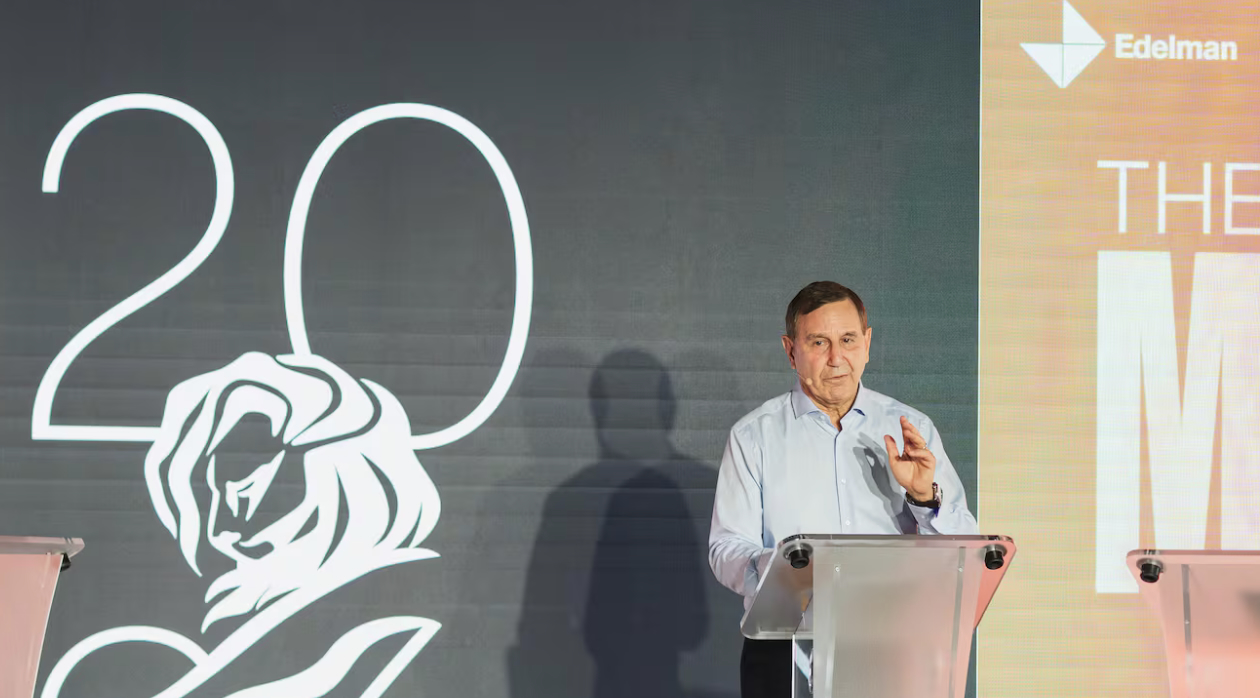
Richard Edelman speaking at the 2026 Cannes Lions International Festival of Creativity. (Edelman)
Hopefully making a ruckus, one blog post at a time!
Be sure to check out my other blog,Joe’s Journey, for selected short stories and personal insights on life and its detours.
“Clients respect talent” is a quote I read recently by Vincent Cullers, Advertising Hall of Fame. I wonder if this is universally true. Personally, I think not.
I think sometimes that’s what we’d like to think. More often than not, I’ve witnessed clients showing “ad agency execs” and/or creative professionals the lack of respect and not thinking anything of it. Now, in my experience not all clients are like this, obviously. But it only takes a few to put a sour taste in your mouth.
These are usually the type who have a greater-than-normal ego and believe they know everything or at least more than the ad guy in the room. Now, by “ad guy,” I’m referring to the expert who really knows his or her profession and has spent more than a year or two practicing the craft. This client loves to do his/her own thing and truly believes his ideas are amazing and should be implemented. That, naturally, is not always the case.
When the ad guy tries to explain to the client why this or that proposed idea may not work or is not appropriate, the client usually just ignores the logistics involved or the expense anticipated with an actual production. Also, depending on the maturity and experience level of the ad guy, the client may not appreciate the advice being given.
Times change, of course, as do people. Society can be very cruel at times as was evidenced decades ago during the fifties and sixties. No matter how smart one was, the color of one’s skin often determined whether or not one would even be invited into the conference room for a presentation.
“In those days, no African-Americans were working in advertising. They not only couldn’t get in the door, they didn’t go beyond the lobby.”
Vincent Cullers
Vincent T. Cullers (b. 1924 – October 4, 2003) was an American designer, advertising professional, and civil rights activist. Motivated by the civil rights movement in the United States, Vince Cullers made history in 1956 by founding Vince Cullers Advertising, recognized as the first African American-owned advertising agency.
Nowadays the color of one’s skin matters less than it did decades ago but, alas, the respect issue remains in some circles of the industry and society as a whole. Even the best qualified ad guy can tear down years of respect and admiration if he/she comes across as unprofessional, immature or, dare I say, irrespecutful. After all, respect goes two ways. It should always be upheld at both ends.
Hopefully making a ruckus, one blog post at a time!
Be sure to check out my other blog,Joe’s Journey, for selected short stories and personal insights on life and its detours.
Just a week or so ago the Cannes International Festival of Creativity was held in Cannes, France. Below is a write-up from AdAge’s Editor-in Chief on her impressions. Interesting reading!
It’s me! (at right) Moderating a panel at this year’s Cannes Lions
On my way to Cannes, Delta offered a $7,000 voucher to switch to a later flight because my red-eye was overbooked. I almost abandoned the festival altogether. In truth, I was already exhausted by the idea of yet another conversation about AI anxiety and another debate about how the heart of the festival—the creative—has been replaced by data and technology.
I begrudgingly got on the plane (at least I had the rosé to look forward to).
This year, though, Ad Age took a bit of a different approach to the festival. Instead of filling the week with back-to-back panels, we convened chief marketing officers, creators, agency executives and marketing leaders for smaller roundtable discussions. We gave them the space to talk more freely, and they went deep on the challenges they are facing (it wasn’t just AI):
In our CMO roundtable, marketers spent a meaningful amount of time talking about convincing CFOs that creativity matters.
During our creator-brand discussion, creators challenged brands to stop treating them like media buys and start treating them like strategic partners.
At our Leading Women Network roundtable, a conversation about career visibility quickly became one about the invisible work required simply to be in the room.
Each of those conversations, without fail, ended with talking about trust, community and what it means to build genuine connection. It was these conversations that made dealing with what the French consider air conditioning worth the trip.
Here’s what else I’m taking home from the conversations at this year’s festival:
Marketing is becoming more human, not less.
One of my favorite moments from the week came during a CMO Spotlight panel I moderated at the Palais. I asked each of them the same question:
In one word, what’s the future of marketing?
Zena Srivatsa Arnold, CMO of Sephora, answered: community.
Tamika Young, CMO of Hinge, said: heart.
Marta Moreno Gómez, senior marketing manager, Heineken and international premium brands, Heineken Company, chose: human.
Three different answers, but the sentiment was the same: the future of marketing is built on stronger human connections.
Richard Edelman, CEO of Edelman, described a world that’s becoming more insular, where consumers increasingly rely on smaller networks and trusted voices. His advice to marketers: shift messaging from “we” to “me.” Build trust by making people feel seen, understood and represented.
That same thinking surfaced elsewhere throughout the week:
Pinterest’s “Less URL. More IRL.” activation reflected a desire for deeper, real-world connections. Netflix centered its Cannes presence around fandom. Even conversations about creators weren’t really about creators—they were about the communities they’ve built and the trust they’ve earned.
Again and again, technology was discussed as an enabler, not the strategy itself.
The creativity conversation has changed
For years, one of the recurring debates at Cannes has been whether creativity—the very thing the festival was built to celebrate—has taken a back seat to performance marketing.
That conversation is still happening.
But this year, it felt secondary to a different one: how marketers can convince the rest of the organization that creativity is a business driver, not just a marketing function.
It showed up in different ways throughout the week. The new Creative Brand Lionsrecognized companies that have built creativity into the way they operate, not just those that produced a standout campaign. Procter & Gamble’s Marc Pritchard spoke about using AI to accelerate creativity, not replace it. And across conversations with marketing leaders, the focus was less on choosing between brand and performance and more on building organizations where creativity can consistently drive business results.
The question is no longer whether creativity matters. It’s how organizations create the conditions for it to thrive and how marketing leaders make the case for it across the business. Creativity is increasingly being viewed not as a campaign outcome, but as an organizational capability.
Creator marketing has grown up
Five years ago, most creator conversations revolved around reach, engagement and follower counts. That isn’t what I heard this week.
Brands talked about bringing creators into annual planning before a brief exists. Creators described themselves as consultants, product advisors and entrepreneurs. Compensation discussions extended beyond sponsorships to licensing, equity and long-term partnerships.
Edelman argued that brands should be investing less in celebrity and more in trusted creators with deep credibility inside smaller communities. The common thread was trust.
This year, marketers were asking much more practical questions: How should teams be organized? What work belongs in-house? Which workflows should AI handle? Where does human judgment still matter most?
Pritchard described AI as a way to uncover insights faster and accelerate creative development, not replace it. One participant in our roundtable captured the sentiment in a single sentence: “You still need people with excellent taste.”
That may have been my favorite quote of the week because it recognizes what technology still can’t replace.
Leadership isn’t just built at work
But the conversation that personally had the biggest impact on me came during our Leading Women Network roundtable.
We started by talking about networking, personal brands and career visibility. We ended up talking about everything it takes just to be in the room.
Women shared stories about partners rearranging schedules, grandparents flying in to help with childcare and the weeks of planning required simply to spend a few days in Cannes. One participant admitted she rarely talks publicly about those realities because she worries they’ll be interpreted as a lack of commitment. I suspect that’s true of many women leaders in this industry.
We spend a lot of time talking about how people become leaders. We spend far less time talking about what it takes to make leadership possible in the first place.
That conversation was a reminder that visibility isn’t just about raising your hand or building your network. For many leaders, it’s supported by an invisible layer of planning, tradeoffs and care work that rarely gets acknowledged but makes showing up possible.
The conversation that matters: Trust
If there was one thread running through nearly every conversation I heard, it was trust.
Edelman talked about consumers relying on smaller circles and trusted voices. CMOs talked about community, heart and being more human. Brand leaders talked aboutgiving creators more ownership. Marketers also talked about earning buy-in from their own organizations.
As the industry becomes more complex, technology alone isn’t going to solve the hardest problems. Those solutions come from people sharing ideas, challenging one another and learning together.
That’s why Ad Age keeps bringing this community together—not just to report on what’s changing, but to create space for people in the industry to make sense of it with one another.
I’m glad I didn’t take that $7,000 voucher.
Hopefully making a ruckus, one blog post at a time!
Be sure to check out my other blog,Joe’s Journey, for selected short stories and personal insights on life and its detours.
Wieden+Kennedy’s Jessica Apellaniz on Mexico finding its creative voice
This is a recent interview I found enlightening and interesting. I trust you will, too.
The chief creative officer of W+K Mexico also discusses crafting one’s creative process and the real magic of creativity. (W+K)
Jessica Apellaniz became Wieden+Kennedy Mexico’s first chief creative officer when the agency opened its Mexico City office in 2023. Since then, she has shaped the office’s creative vision and work for clients including Nike, Ford, Uber and Anheuser-Busch InBev.
Previously, she served as Ogilvy’s CCO for Latin America, leading award-winning campaigns for brands such as Coca-Cola, KFC, Mondelēz and American Express.
Apellaniz began her career in production, including a stint at MTV Latin America, before moving into copywriting and creative leadership. One of the few women to hold a regional creative leadership role in Latin America, she has also been an advocate for building more representative and inclusive teams across the industry.
We spoke with her about deadlines, crafting one’s creative process, Mexico’s creative voice in the region and the real magic of creativity.
Jessica, tell us … your first job in advertising, and your current job.
My first job was actually at Blockbuster, which tells you how long I’ve been around. My first copywriting job was at Terán\TBWA, working on Palacio de Hierro, basically a headline paradise. More than 20 years later, I helped found W+K Mexico.
An ad or campaign that inspired you coming up in the business.
Telecom’s “La Llama Que Llama.” I loved the absurdity of it. Funnily enough, they just brought it back, which makes me feel inspired and old at the same time.
The last ad that made you jealous.
“Viva La Vulva” and “Never Just a Period.” I used to hate getting the “girly brief” just because I was the girl in the room. After Libresse, all I wanted was a tampon brief.
A recent project you’re proud of.
“Who’s Waiting for You?” for Victoria Beer is a film that reminds us someone is waiting on the other side. It made me think of death not as an ending, but as the day I get to hug my dad again.
Something exciting that’s happening in the Mexico creative scene.
I think Mexico is finally finding its own voice. Argentina became known for brilliant scripts, Brazil for extraordinary craft. We’re embracing our own maximalism—proudly rooted, beautifully messy and deeply human.
One thing that can make anyone a better creative.
Craft your creative process. Figure out how to get yourself into that state where ideas can roam freely. The process is different for everyone.
How you personally get inspired.
I walk with headphones on. I read books that somehow connect to whatever I’m working on—and, of course, deadlines—they’re underrated creative directors.
What most brands still don’t understand about creativity.
The biggest misunderstanding is that creativity is the output. The real magic is in the way it helps you see the problem differently.
Something people might not know about you.
I’m an introvert, an overthinker and dyslexic. Which means every idea gets tested a thousand times before it leaves my head.
Where advertising is headed next.
We might finally see Dan Wieden and Phil Knight’s dream come true: advertising that doesn’t feel like advertising at all.
Hopefully making a ruckus, one blog post at a time!
Be sure to check out my other blog,Joe’s Journey, for selected short stories and personal insights on life and its detours.
The art world has succumbed to controversy via a graphic outdoor display of the menstrual period. Continuing education of health issues is in the public interest so why is this display so disturbing to some?
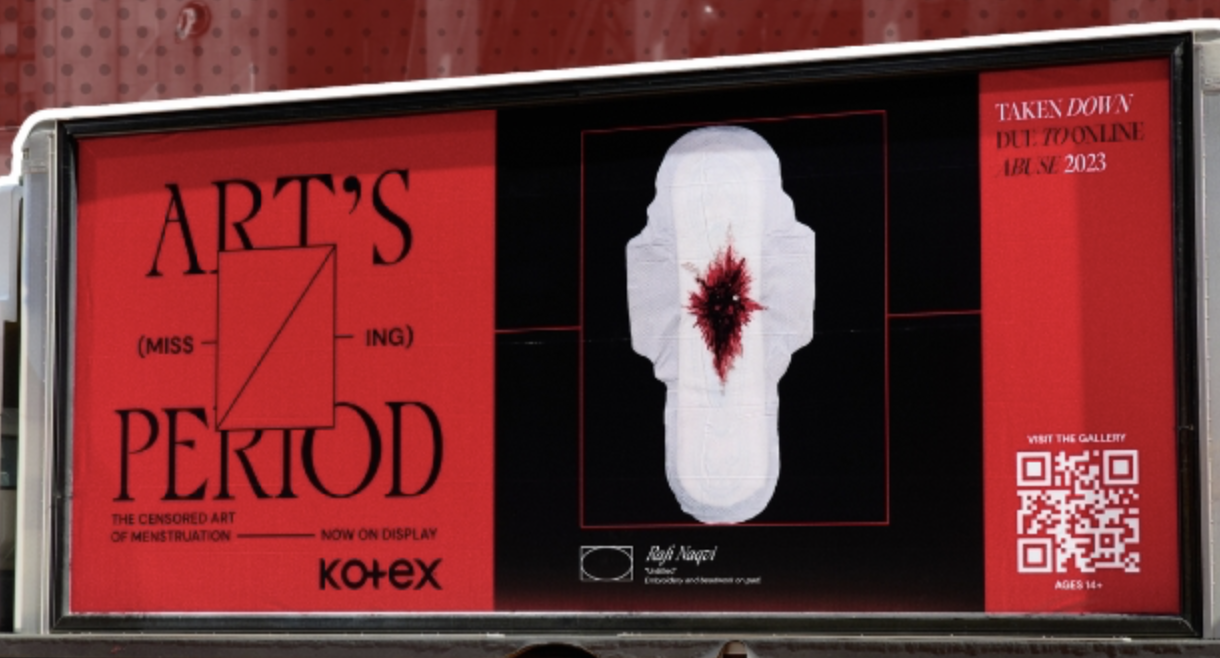
Singapore – Kotex has launched a global campaign highlighting the absence of menstrual blood in mainstream art, positioning it as a long-standing form of cultural censorship.
Developed with DAVID London and Ogilvy Singapore, “Art’s Missing Period” brings together works that were previously rejected by galleries or removed from public display due to their depiction of menstruation.
The campaign reframes the issue as one of visibility, arguing that while violent imagery involving blood is widely accepted, menstrual blood remains excluded.
Kotex revives banned art showing period blood
“Visibility shapes culture, and we set out to change both,” said Genevieve Gransden, Executive Creative Director at DAVID London.
“This is not just a campaign. It is a restoration of voices, narrative and art that deserves to be seen,” said Selma Ahmed, Executive Creative Director at DAVID London.
The campaign includes a short documentary directed by Emmy award-winning filmmaker Kathryn Everett and narrated by journalist Noor Tagouri.
The film examines how depictions of blood tied to violence are widely shown, while menstrual blood is treated as taboo, and features accounts from artists who have faced rejection linked to the theme.
Beyond film, Kotex has rolled out mobile billboards and street posters outside major museums, including the Guggenheim, the Metropolitan Museum of Art, the Whitney Museum of American Art, and the Museum of Modern Art.
The placements position the campaign directly at the doorstep of institutions central to shaping public art discourse.
QR codes embedded in these placements direct audiences to a virtual gallery hosting more than 40 artworks centred on menstruation.
The online platform, launched on April 6, 2026, will run for one year and is designed to provide a dedicated space for artists and exhibitions exploring the subject.
The campaign marks Kotex’s latest effort to address stigma around periods, shifting the conversation from product messaging to broader cultural representation.
Thanks to Sharona Nicole Semilla of Marketech APAC for contributing this article
Hopefully making a ruckus, one blog post at a time!
Be sure to check out my other blog,Joe’s Journey, for selected short stories and personal insights on life and its detours.
Creatives can lead in the AI era by reclaiming foundational skills such as editing, packing, lighting and overall execution. Adobe Stock
An opinion piece I found interesting and thought it best to share. Hope you find it worth the read.
The traditional creative process began with a client brief. From there, strategy was developed, and only then would the creative process start. Teams brainstormed, then collaborated with creative leads until a deck was prepared. Once the client approved the deck, there was a sense of relief: the idea was greenlit.
AI fundamentally altered this process. Now, once an idea is approved in a deck, AI sets creatives on a new journey—an extension of the original process.
What felt like the end is now just the beginning.
Greater need for clear vision
I won’t argue the well-worn territory that AI is just a tool and that people must lead creative processes. But having established the importance of humanity to lead, it’s important to determine where people fit in the new creative process for situations where AI will be used.
It’s been asked: Is our new role solely to be the very best prompt writers we can be, knowing that the output will be determined by precise inputs, phrased in a way the computers can metabolize?
I don’t think we simply become “creative prompters.” It’s not about being on a pedestal and giving direction; it’s about being where the work is actually shaped. This exciting shift makes us creatives more professional again, relying on technical knowledge rather than just intuition.
In the AI era, approval marks the start of a new creative process, where creatives need to become a kind of artisan again, despite using technology. Specifically, evolving creatives must know exactly what to ask for—providing references from art, cinema, fashion, architecture and advertising itself—to direct the AI.
Jarring? Perhaps. Beautiful? Indeed.
Precision and exploration
Traditional creatives are all about precision, while AI is about exploration. In the AI era, creatives must double down on precision while being open to exploration. That means rethinking the creative role altogether.
This shift requires creatives to adopt more than a sensibility; they need technical expertise and holistic vision. Here are the fundamentals you need to succeed:
1. Story fundamentals
Creatives must be articulate about what they feel and think in executing the approved concept: Clear story references, resources and vision that once belonged to directors or producers must now come directly from the creative’s mind.
To become true craftspeople again, creatives must be immersed in advertising history while studying modern techniques and resources. This forces you to rely on technical knowledge rather than just intuition, experience or criteria. Transcend the suggestion that creatives will become prompters. Go beyond that; it’s more than just giving well-referenced instructions.
In a way, this is where the terms “creative” and “creator” converge. With each iteration of instructions, the work is being shaped, changed, evolved and improved. It’s precisely about shaping the work as it’s being created.
2. Visual fundamentals
Creatives need strong visual literacy even more in an AI era. Studying other arts like photography, cinema, fashion, architecture and design is a foundation. Bring clear aesthetic references from the idea stage to define the original visual look. On a more technical level, understand and apply concepts like composition, lighting, tone, texture and more.
When creatives acquire these skills, they move beyond simply prompting visuals and begin shaping them. Each iteration becomes an opportunity to refine the idea. Again, creatives become both thinkers and makers, using AI not just to generate images but to actively build a distinct visual language as the work is being created.
3. Direction fundamentals
Finally, creatives need strong direction skills: the ability to translate an idea into vision, then vision into reality. It all comes down to what the audience sees. Creatives must speak the language of camera, editing, pacing, cinematography, lighting and overall execution details.
Refine this skill by thinking like directors earlier in the process. Move from proposing ideas to actively shaping how those ideas come to life. In this, AI becomes a collaborative execution partner; with each iteration, creatives can guide performance, refine tone and evolve the work in real time, ensuring the final result reflects a cohesive, intentional vision.
Amid the AI revolution, embrace your own renaissance. The traditional era’s end is your new beginning, too.
Because AI transformed creative approval, making the end the beginning, creatives must evolve from executors into true creative professionals. Reclaim foundational skills and you’ll lead in AI-driven execution. Clear references, resources and vision—what once belonged to directors or producers—now come directly from the creative’s mind.
David Castellanos is creative lead at Erich & Kallman.
Hopefully making a ruckus, one blog post at a time!
Be sure to check out my other blog,Joe’s Journey, for selected short stories and personal insights on life and its detours.