A very interesting look at one of America’s most iconic fashion and retail traditions from an insider’s perspective. Enjoy the intake and the share.
Opening Hook
Most people will remember Neiman Marcus as a department store.
She remembers it as one of Dallas’ greatest creative institutions.
Long before she became a designer, Bucki Rogers visited the downtown flagship not to shop—but to study.
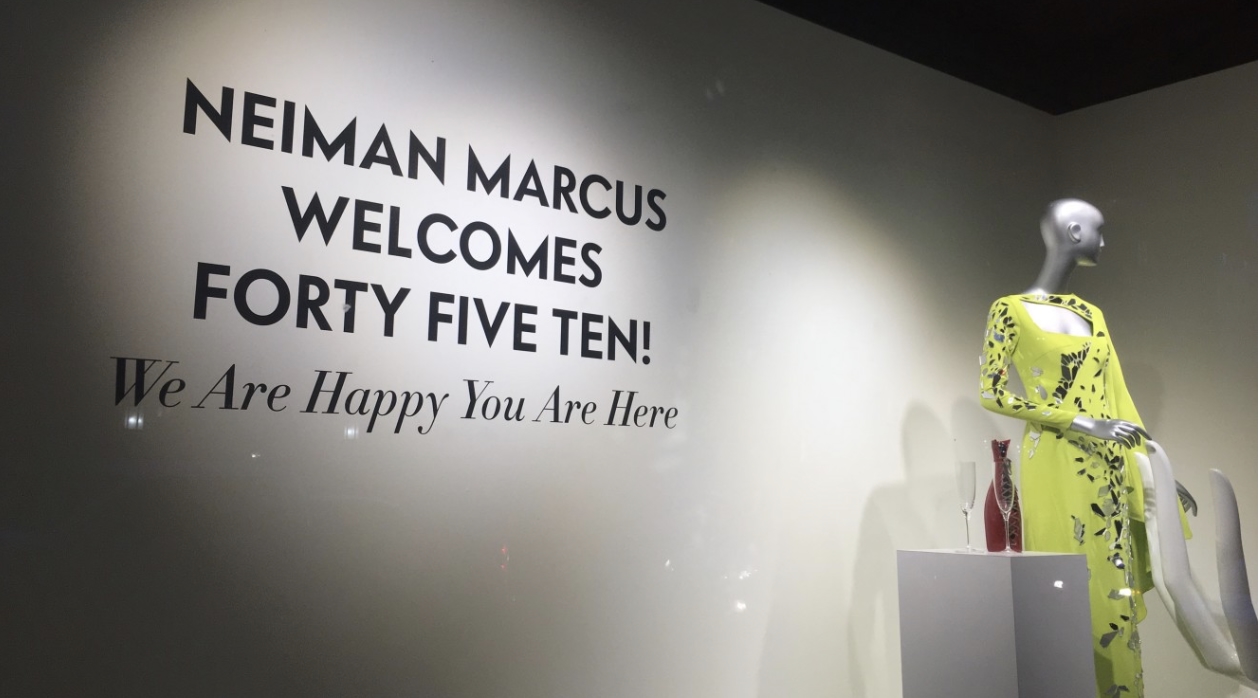
Every season brought new window displays, new visual stories, and new reasons to stop and look.
Looking back, I realize those visits influenced my creative career far more than I understood at the time.
The Breakdown
For many people, Neiman Marcus was retail.
For creatives, it was inspiration.
Stanley Marcus and Ken Knight understood something many brands still struggle with today:
People don’t remember products. They remember experiences.
The windows weren’t displays. They were theater.
The store wasn’t a destination because of what it sold.
It was a destination because of how it made people feel.
Long before experiential marketing became a buzzword, Neiman Marcus was practicing it every day.
My Creative POV
I’m not a retail designer.
But I often find myself borrowing the same principles that made Neiman Marcus unforgettable:
Create anticipation
Reward curiosity
Make people feel something
Design the experience, not just the object
Some of the most important creative lessons I’ve learned didn’t come from a classroom or agency.
They came from places like Neiman Marcus.
Places where creativity was visible.
Accessible.
Public.
Why It Matters
As Dallas prepares to say goodbye to the flagship in September, I can’t help but think about the generations of designers, photographers, artists, merchandisers, and creative thinkers who walked through those doors and left inspired.
The building may close.
The influence won’t.
Great creative work doesn’t just sell products. It shapes future creatives. Sometimes the most influential design isn’t found in a studio. It’s found in the places that inspire us before we even know we’re looking for inspiration.
Thanks to Bucki Rogers, VP, Creative at X-Caliber & Affiliate Companies | Corporate Branding, Brand Marketing Strategy
Hopefully making a ruckus, one blog post at a time!
Be sure to check out my other blog,Joe’s Journey, for selected short stories and personal insights on life and its detours.
I found this interview quite interesting and thought you might, too. Enjoy!
Surely a legacy brand like Crayola has done all it could to grow, right? Wrong.
In this episode of the Marketing Vanguard podcast, recorded live at Brandweek in Atlanta, Victoria Lozano, then-CMO of Crayola, proves that the growth work of even the most iconic brands can and should never stop.
From how nostalgia can be leveraged to the advantage of expanding into unexpected categories, this conversation covers it all.
What you’ll learn:
How to merge nostalgia with future-forward relevance
Why a CMO’s role with high-awareness brands requires category expansion
The framework for segmented messaging across stakeholder groups
How to unlock hidden revenue streams in plain sight, like recognizing that 57% of Crayola purchases are made by adults without children
The power of branded sensory identity as a defensible competitive advantage
Why ecosystem thinking matters more than individual business unit performance
Victoria Lozano, former CMO of Crayola, is renowned for her expertise in brand strategy, category expansion and omnichannel marketing across iconic consumer brands. With a career spanning Fortune 500 CPG companies including HBC, beverages and confectionery, she has built a diverse track record in product innovation, location-based entertainment, and educational strategy.
Her work at Crayola demonstrates how legacy brands can evolve, redefine brand categories, unlock new consumer segments, and build enduring marketing strategies that transcend traditional product boundaries, all while maintaining emotional resonance.
Episode Highlights:
[00:26] Merge Nostalgia with Cultural Relevance to Stay Top-of-Mind — Victoria articulates the strategic tension facing iconic brands: leverage the emotional power of nostalgia while simultaneously showing up in current cultural conversations and proving relevance to today’s consumers. Nostalgia alone creates brand warmth but risks positioning the brand as a historical artifact; relevance alone without emotional resonance feels opportunistic and inauthentic.
The solution is to actively design products, experiences, and content that honor the brand’s heritage while addressing present-day consumer values. In Crayola’s case, that’s creativity as essential skill, wellness, self-expression and mental health.
[06:18] Redefining Your Use Case, Expand Revenue — Victoria highlights a counterintuitive but telling statistic: 57% of Crayola purchases now come from households without children, a massive untapped segment driven by adult wellness and self-expression rather than childhood nostalgia. By repositioning coloring from a kids’ creativity tool to an adult therapeutic escape (competing against wine, meditation apps, and wellness products), Crayola unlocked an entirely new growth category that’s expanding three percentage points year-over-year.
This insight reveals that growth for mature brands lies not in market share cannibalization but in redefining what problem the product solves for new audiences.
[07:50] Craft Differentiated Value Promises for Each Audience Segment — Victoria demonstrates that premium brands must make fundamentally different promises to distinct audiences, whether it’s kids, parents, teachers or adults. In Crayola’s case, for example, for kids, the promise is simple joy and fun; for parents, it’s skill development and childhood enrichment backed by research. CMOs can operationalize this by mapping each audience segment’s core motivation, then reverse-engineering messaging and channel strategy from that single, clear promise.
The result is messaging that feels authentic to each group while maintaining consistent brand identity, increasing conversion likelihood across the entire customer ecosystem. This approach transforms competitive pressure from a distraction into a reinforcement of positioning, since each segment’s promise is so precisely calibrated to their unique needs.
[13:41] Shift Societal Conversation Around Creativity as a Core CMO Advocacy Role — Victoria positions the CMO role as not merely a growth driver but as a cultural advocate responsible for shifting how society values and nurtures creativity in both children and adults. Rather than treating this as brand marketing theater, she frames it as a substantive strategic priority that shapes product development, partnerships, education strategy, and media investment.
CMOs can apply this by identifying one core societal value or belief that aligns with brand purpose and then systematically deploying marketing resources, research, partnerships, and content to shift public perception of that value. This approach generates earned media, attracts mission-aligned consumers, builds employee pride, and creates barriers to entry that pure product competition cannot match.
JENNY ROONEY is Chief Brand and Community Officer, leading strategy for the overall ADWEEK brand as well as the ways in which we serve and support our audiences with high-value content, products, partnerships and experiences, notably through our community programs such as Marketing Vanguard.
Hopefully making a ruckus, one blog post at a time!
Be sure to check out my other blog,Joe’s Journey, for selected short stories and personal insights on life and its detours.
Something you either have or you don’t. Something that shows up in artists, designers, musicians, but not in them.
Sir Ken Robinson spent decades challenging that assumption.
He argued that creativity isn’t a rare gift. It’s the application of imagination, and imagination is the birthright of every human being. The ability to bring in to mind things that aren’t present to our senses. To anticipate. To empathize. To invent.