A “How to” for Improving Your Creativity

Usually every week I come across an article or narrative on creativity, its many facets and how better to utilize one’s own creativity. Such is the case this week.

One of the subscriptions I maintain (zero cost, but there is an option for minimal cost) is with Medium. I’ve even posted some of my writings on the site.

This week I came across a posting having to do with noise and the role it plays in creativity. It was written by Donald Rattner, Architect, and since it has some very interesting points, I’d like to share it with you. . .

. . .Maybe it was inevitable, but after years of touting the virtues of the open workspace, people who plan and use them appear to be having second thoughts about its effectiveness. Among the biggest drivers behind the mounting backlash are complaints about noise, especially in the form of overheard conversations, ringing phones, and clattering machines.

But before you jump on the “silence is golden” bandwagon, it might be worth taking a step back to assess the problem with a cooler, more objective eye, especially if you spend some part of your day in creative problem solving. The reason? A modicum of noise has been found to boost idea generation, rather than interfere with it.

Noises Off or Noises On?

Credit a team of researchers drawn from several different universities for daring to challenge status quo thinking.

In 2012, the trio published a paper documenting a series of lab experiments they ran to study the effect of noise on creative task performance. Their methods were pretty straightforward: Subjects performed various exercises designed to measure ideational fluency and open-mindedness while a soundtrack played in the background.

The track played at either a low (50 decibels), middle (70db), or high volume (85db). A fourth group performed the same exercises without any accompanying soundtrack to establish a baseline from which to measure the collected results.

Contrary to expectation, the people in the quiet sessions did not achieve the top scores. That honor went to subjects exposed to midlevel noise (70db).

Illustration: The author

As a point of reference, 70db is the rough equivalent of the din at a bustling restaurant or coffee shop. It also approximates the loudness of a running shower, which is probably one reason why we so often get good ideas while under the spigot.

It’s evident from the data that the right type and level of noise can literally change the way our creative minds work. But how? And why? And how do we harness this information to boost our creative output in real-world settings?

Guilford’s Model of Creative Thinking

A model of creative thinking first developed in the 1950s might be the most effective vehicle for providing answers to these questions.

The model was the brainchild of the psychologist J.P. Guilford, an important figure in the history of modern creativity studies. Its basic premise is that creative thinking comprises two styles of cognitive processing: divergent and convergent.

Divergent thinking corresponds to what we variously call right-brain or generative thinking. It is generally abstract, big-picture, intuitive, nonlinear, and inward-focused in nature. It induces us to see things as they could be, rather than as they are.

Convergent thinking is nearly the mirror opposite. Unlike divergent thinking, it is rational, objective, sequential, narrowly focused, highly detailed, and concrete in character. It looks outward rather than inward for answers, such as when we apply the external laws of mathematics to calculate the sum of two plus two, instead of drawing from our imagination.

For Guilford, the creative process is neither one nor the other alone, but both styles working in tandem, and nominally in sequence.
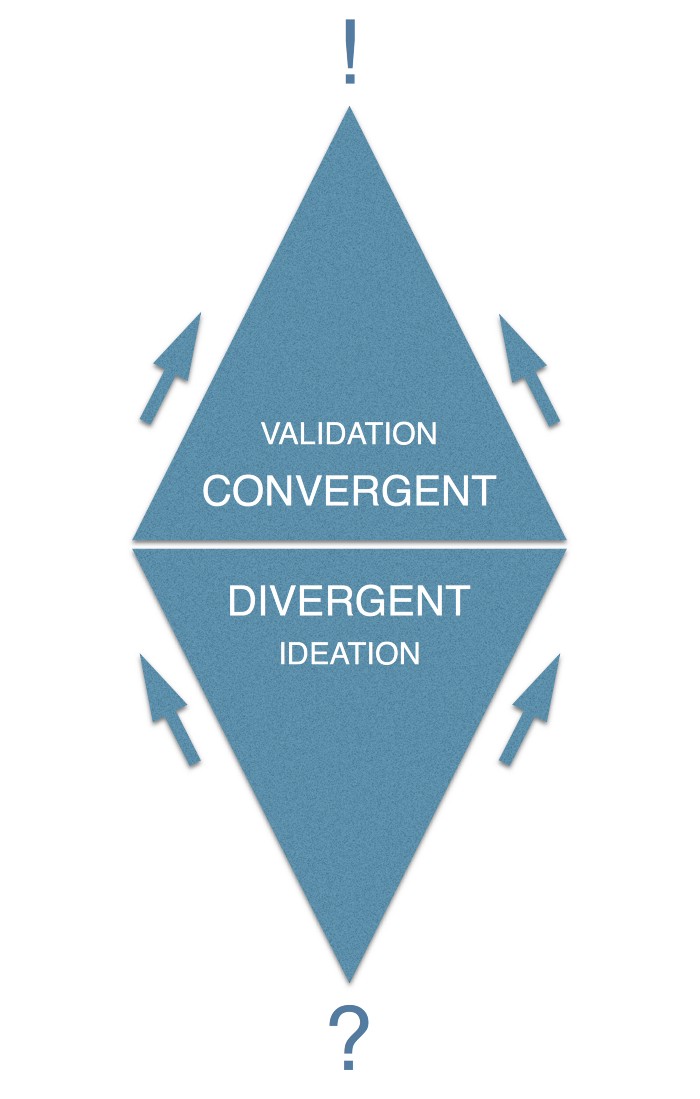
Illustration: The author

As a linear progression, Guilford’s model translates into a five-stage process composed of the following phases:

  1. Definition of the problem to be solved: (?).
  2. A period of divergent thinking, during which you open up your mind to as many ideas for potential solutions as time, budget, energy, or creative capability allow. Brainstorming is a technique for inducing divergent thinking.
  3. A point of inflection where divergency ceases and convergency begins.
  4. A period of convergent thinking, during which you narrow down your options to zero in on a potential solution, which is then tested and validated.
  5. Realization of a final solution: (!).

In real life, of course, the creative process rarely travels in an uninterrupted straight-line trajectory from (?) to (!). More often than not, you find yourself going backwards one or more steps before getting to your goal — if you reach it at all.

But as a conceptual model, Guilford’s paradigm gives a pretty accurate picture of how our minds work in the course of working out feasible solutions to creative problems.

The Value of Noise

Continue reading →

Select Quotes From Advertising and Education

Here’s a sample of select quotes from some of the great minds in advertising and education.


The arts, sciences, humanities, physical education, languages and maths all have equal and central contributions to make to a student’s education. – Ken Robinson

You can be creative in anything – in math, science, engineering, philosophy – as much as you can in music or in painting or in dance. – Ken Robinson

Whether or not you discover your talents and passions is partly a matter of opportunity. If you’ve never been sailing, or picked up an instrument, or tried to teach or to write fiction, how would you know if you had a talent for these things? – Ken Robinson

You can’t be a creative thinker if you’re not stimulating your mind, just as you can’t be an Olympic athlete if you don’t train regularly. – Ken Robinson

Every area of trouble gives out a ray of hope, and the one unchangeable certainty is that nothing is certain or unchangeable. -John E. Kennedy, member, Advertising Hall of Fame

Brand value is very much like an onion. It has layers and a core. The core is the user who will stick with you until the very end. – Edwin Artzt, member, Advertising Hall of Fame

When you are through changing, you are through. – Bruce Barton, member, Advertising Hall of Fame

If you can’t turn yourself into your customer, you probably shouldn’t be in the ad writing business at all. – Leo Burnett, member, Advertising Hall of Fame

Creativity is no longer about grabbing attention or raising consumer awareness. Its goal is to remind consumers about what is fundamental and gratifying about a brand. – Peter A. Georgescu, member, Advertising Hall of Fame

We pay just as dearly for our triumphs as we do for our defeats. Go ahead and fail. But fail with wit, fail with grace, fail with style. A mediocre failure is as insufferable as a mediocre success. – Bruce Barton, member, Advertising Hall of Fame


Hoping to make a ruckus, one blog post at a time!

A Toast Unlike Any Other

New Year’s has a lot of tradition surrounding it. Champagne and toasts are usually at the top of the list, right alongside resolutions. It takes a certain amount of creativity to come up with a toast, so when I came upon this toast the other day I thought it somewhat appropriate to share. I couldn’t help it, given that I’m from the Bayou State of Louisiana.

Enjoy! Cheers!


Hopefully making a ruckus, one blog post at a time!

Be sure to check out my other blog,Joe’s Journey, for personal insights on life and its detours.


Boosting Your Creativity – Just Like Einstein – Even in Crisis Times!

4 Ways Play Gets You Out of a Brain Rut, and Helps One Deal with a Crisis.

The human brain can get stuck in a rut thanks to neural pathways and a fondness for the familiar. So how can you free your brain and lead it on a path to innovation? Based on research and real-life examples from great minds, here are four ways Play can get you out of a brain rut:

1. Cross Train Your Brain

Each cross-training activity works a different, but complementary, part of the body that will help get you stronger in the overall event, task or project. In other words, if you’re a novelist, try your hand at poetry. If you’re a painter, dabble in sculpting. If you’re a computer scientist, play around with web design. For instance, how did playing violin help Einstein theorize about matter and energy?

A study from UC Irvine and the University of Wisconsin found that giving piano lessons to preschoolers significantly improved their spatial-temporal reasoning— a key skill needed for math and science—much more than giving computer lessons, singing lessons, or no lessons at all. So try a new activity within your field or related to it; you’ll expand your neural connections and strengthen your brain overall.

2. Take a Shower, Go for a Walk or Do Some Other Mundane Activity

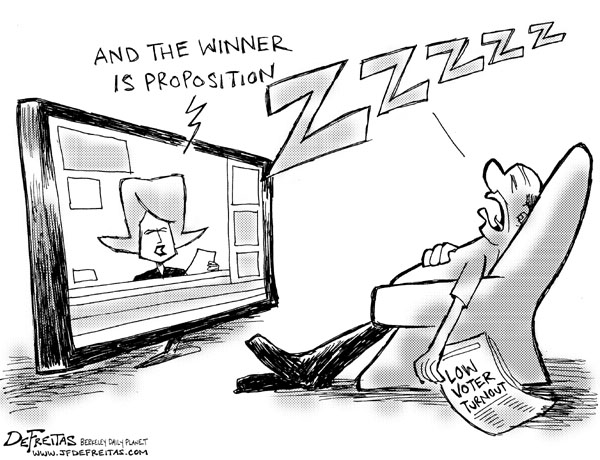
First, creativity and relaxation could be linked. I’ve found that whenever I’m really tired, my creativity just hits a wall. Trying to go on is fruitless. Wrap it up and go to bed or walk away from whatever it is you’re working on and come back to it in several hours or the next day. Depending on when you’re doing this, try something boring, like showering or taking a walk (though some folks would argue that this exercise is not boring) or go for a swim. These tasks don’t require substantial cognitive effort, so our brains are free to wander. And contrary to popular belief, a brain “at rest” isn’t really resting at all. ZZZ's

Some researchers believe there is a positive correlation between our daydreaming state (occurring in a brain region that becomes more active at rest) and creativity. Mind-wandering may allow the conscious to give way to the subconscious, so the brain can connect disparate ideas.

Second, distractions may boost creativity. Research by Harvard professor Shelley Carson found that high creative achievement was associated with low latent inhibition, or the capacity to screen out irrelevant information, especially if the participants had a high IQ. For the creative mind, inspiration can be found everywhere. Sometimes, you just need to distract yourself long enough to notice it. Continue reading →

Obsession with Productivity Can Kill Creativity.

Don’t Let It Kill Yours!

How would a “productive day” compare to a “creative day”? What would, if anything, they have in common? Chances are not much.  One might think a productive day would be closely aligned with scratching off items on a to-do list. On the other hand, someone’s idea of a creative day might not even have a to-do list. 475px-The_Scream

Our current work world is obsessed with productivity. We are inundated with books, articles, white papers, to time block this and time block that; all just to do more work. But our relentless quest to be productive is undermining one of the most important abilities in today’s workplace: creativity.

What of the future, though? Will machine learning and artificial intelligence perform the routine aspects of our work at the expense of our ingenuity and creativity? So how do we create the right conditions for creativity, particularly when we are trying to deal with a to-do list?

Consider this comment from screenwriter Aaron Sorkin (the mastermind behind the television show West Wing and films like Moneyball and The Social Network). He told The Hollywood Reporter that he takes six showers a day. “I’m not a germaphobe,” he explains but when his writing isn’t going well, he’ll shower, change into new clothes, and start again.

Sorkin’s trade relies on him minting something fresh on a regular basis. And it occurred to him that his best thoughts were not happening in moments of fevered concentration, but when he was in the shower. So he had a shower installed in the corner of his office and makes regular use of it. He has described the process as “a do-over” for triggering original ideas.

In 1939, James Webb Young, a Madison Avenue advertising executive, wrote a definitive guide to the process of creativity, A Technique for Producing Ideas. In this short book, Webb Young reminds us, “that an idea is nothing more nor less than a new combination of old elements.” In his view, the skill of creativity is the ability to spot new connections between familiar thoughts, and the art is “the ability to see [new] relationships.”

Fifty years later, Steve Jobs observed something similar: “Creativity is just connecting things. When you ask creative people how they did something, they feel a little guilty because they didn’t really do it, they just saw something. It seemed obvious to them after a while. That’s because they were able to connect experiences they’ve had and synthesize new things.” Webb Young also lays out a remarkably simple technique for creative thought. It involves stimulation. Continue reading →

Some More Quotes

As it has been about a month or so since we last published some quotes, we thought it timely to publish some news ones. Like before, it contains quotes from various acclaimed individuals from the worlds of advertising, philosophy, science, literature and education. So, go ahead and immerse yourself in creativity – intelligence having fun!

It is easier to tone down a wild idea than to think up a new one.— Alex Osborne, member, Advertising Hall of Fame

The important thing is not to stop questioning. Curiosity has its own reason for existing. One cannot help but be in awe when he contemplates the mysteries of eternity, of life, of the marvelous structure of reality. It is enough if one tries merely to comprehend a little of this mystery every day. Never lose a holy curiosity. – Albert Einstein

Creativity can solve almost any problem. The creative act, the defeat of habit by originality, overcomes everything. – George Lois

If one advances confidently in the directions of his dreams, and endeavors to live the life which he has imagined, he will meet with a success unexpected in common hours. – Henry David Thoreau

Those people who think they know everything are a great annoyance to those of us who do. – Isaac Asimov

An idea can turn to dust or magic, depending on the talent that rubs against it. — William Bernbach, member, Advertising Hall of Fame

Creativity is as important as literacy and numeracy, and I actually think people understand that creativity is important – they just don’t understand what it is. – Ken Robinson
 
If you’re not prepared to be wrong, you’ll never come up with anything original. – Ken Robinson
 
I believe this passionately: that we don’t grow into creativity, we grow out of it. Or rather, we get educated out if it. – Ken Robinson
 
Many highly talented, brilliant, creative people think they’re not – because the thing they were good at at school wasn’t valued, or was actually stigmatized. – Ken Robinson

Hopefully making a ruckus, one blog post at a time!

Be sure to check out my other blog,Joe’s Journey, for personal insights on life and its detours.

Happy Thanksgiving to All!!


Leave it to Charlie Brown and Snoopy to bring out the goodness in all of us. Plus, a chuckle or two as well. As we give Thanks today, let us remember the “small” things along with the larger items on our Thankful List. I’m thankful I can still chuckle! I’m thankful for lunch and dinner invitations so I don’t have to cook. I’m thankful for good cooks. I’m thankful for fellowship with good friends. I’m thankful for meeting new friends.

So as we sit down to Thanksgiving Dinner today, let’s remember it was only last year that most of us couldn’t have an in-person visit with family and/or friends. Today, most of us can. Bring on the turkey and the stuffing along with the pumpkin and pecan pies. Don’t forget the hearty appetites and the good cheer to spread. Enjoy your Thanksgiving. We deserve it. Oh, yeah, leave room for seconds and leftovers!

Happy Thanksgiving to all!!


Hopefully making a ruckus, one blog post at a time!

Be sure to check out my other blog,Joe’s Journey, for personal insights on life and its detours.

Creative Tidbits and Other Advice


The other day when I was putting some luggage back up into the closet, I came across a small notebook with a few items written in it. Must have been some of my notes from a long-ago seminar I attended somewhere. These statements are in no particular order and only one is attributable to someone. Take them for what they’re worth. Who knows, they may be able to help enhance your creativity.

Wasting time is usually resistance to writing

Be violent and original in your work, but be orderly in your normal life

Get quiet — be still and apply yourself

Creativity: Sudden cessation of stupidity

Most good ideas come fully formed

Celebrate small victories

“No” is a complete sentence

We have no art. We do everything as well as possible.

“Everything is art direction.” — Lee Clow

How to suck less: It’s not about concepts; it’s about execution (how we work)

Enemies: Laziness and Arrogance

“Effort and struggle to create simplicity and grace lives on in the soul.”


Hopefully making a ruckus, one blog post at a time!

Be sure to check out my other blog,Joe’s Journey, for personal insights on life and its detours.


Ye Olde Creativity Survival (Tool)Kit

Last week I posted about my upcoming trek to Baton Rouge and shared a list of creative guidelines to keep in mind when enhancing one’s creativity. That was what I shared with the ad club of Baton Rouge last Friday. One of the main items I shared was the Creativity Survival Kit and that’s what I’d like to review on this post, especially for folks who have no idea what I’m talking about.

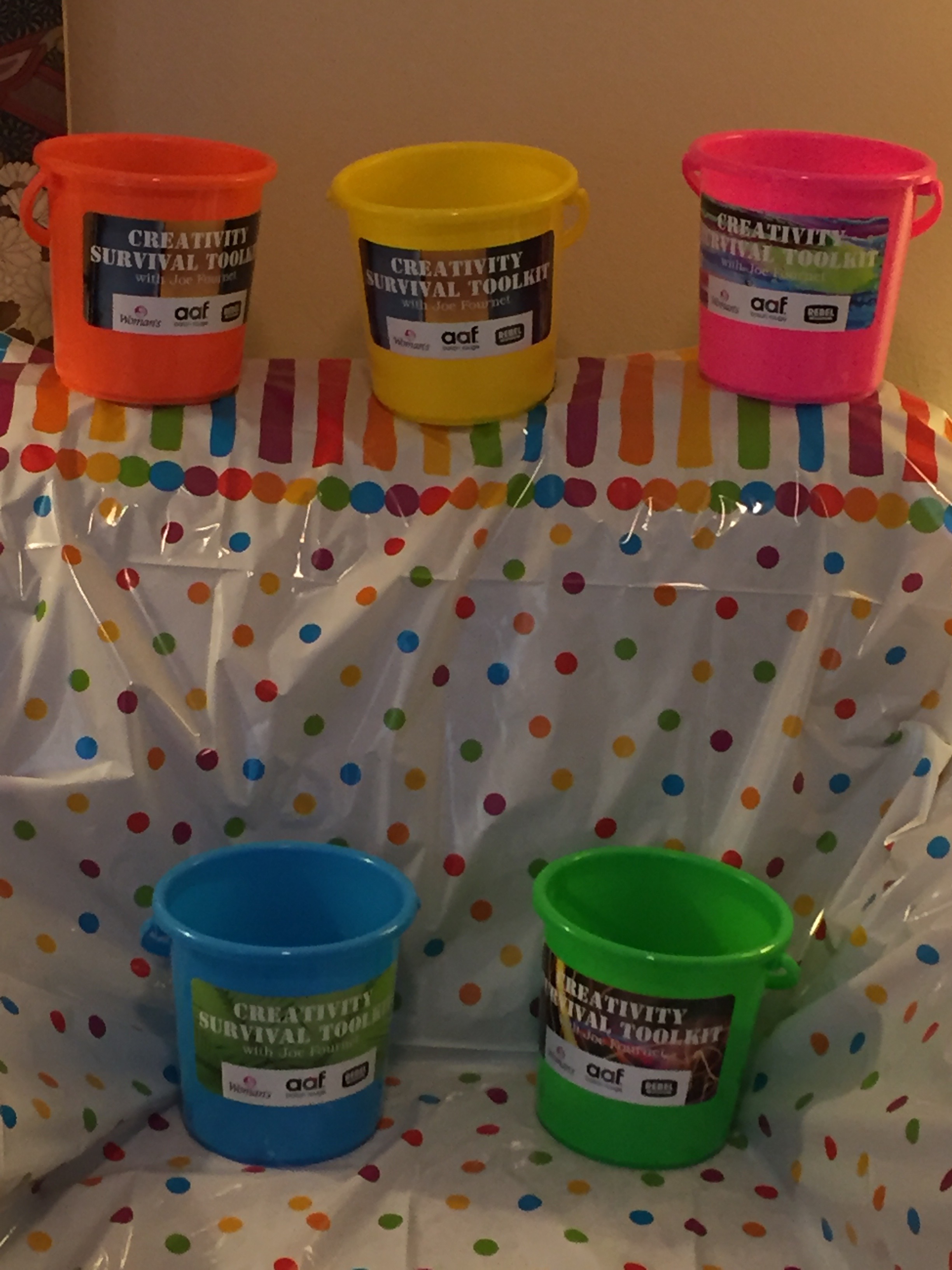
One of several different colored Creativity Kits the Baton Rouge ad club made as giveaways.

The Creativity Survival (Tool) Kit is simply any container or bucket filled with items that make you feel creative or think creatively. The contents can be almost anything depending on the individual.

They can be notes that remind you of various things, especially those items that are too large to fit into your bucket. They can be serious or silly. No judgements here; after all, it’s YOUR kit.

One of the main elements in the Kit is a stack of Post It Notes. The timed exercise, lead by a moderator, is thus: Whatever problem confronts you to be solved, needs a specific question to be asked that may help solve it. The more specific, the better.

The challenge is to come up with, say, 50 ideas in five minutes or, if you dare, 100 ideas in ten minutes. Once this is done, pick your 25 best ideas and, are you ready for this . . . TRASH THEM! Then from the 25 remaining, select your next 20 best ideas . . . and . . . TRASH THEM!

I know this is not what you’re used to doing, but trust me, this is a different take on a standard way of drilling down to the best idea. I call it the Evil Twin Technique.

Now, you’re left with five “maybe not-so-great-ideas.” For the purposes of this exercise, select three of them that you feel are good and, you know the drill, TRASH THEM. From the two remaining, trash one that you feel is better than the other one. You have one idea left. It may not have been one you thought about when you first began or one that you paid little or no attention to during this process.

You’ve come upon your Evil Twin. Whether or not it pans out as a worthwhile idea to help solve your problem remains to be seen. Your due process may bear that out. If you can combine this exercise with the more standard approach (instead of trashing the “best ideas,” keep them and simply narrow the list down to just one), it will be interesting what types of solution approaches one could come up with.  

Some other items in my kit include

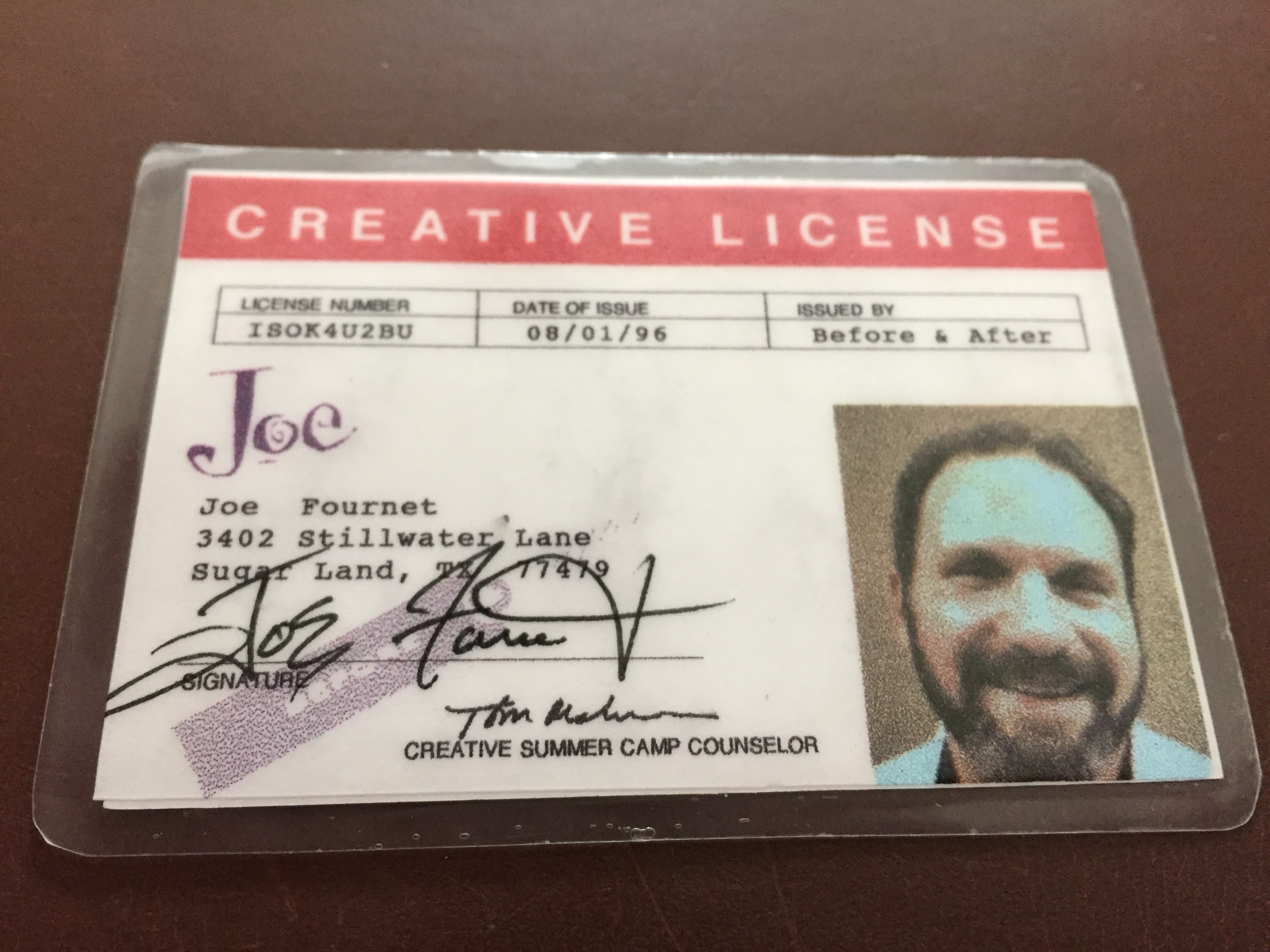
and my certification

along with my alter ego, Snoopy, and his pal, the Energizer Bunny. What can I say, I have an eclectic tool kit!

As my business card states, “Crayons. The essence of creativity.” Crayons are colorful and so should your world of creativity. Similarly, your Creativity Survival Toolkit should reflect your colorful personality and lend itself to enhance your creative world.

Hopefully making a ruckus, one blog post at a time!

Be sure to check out my other blog,Joe’s Journey, for personal insights on life and its detours.

Creativity Guidelines as Presented to the Baton Rouge Ad Club

Because some of you won’t be able to make my presentation tomorrow to the Baton Rouge Chapter of the American Advertising Federation, I thought I might include some of the tips I’ll give to the group in this blog post.

Regardless of how you may be involved in this industry, we all share in the design and development of our own creativity. These tips will hopefully sharpen your current set of skills so that you’ll be better equipped to address challenges as they arise.

Enjoy your dip in the pool of creative tips!


 Always think of yourself as creative! If in doubt, think of this: If you can challenge your own imagination and
stimulate thoughts leading you to a new level of solution, you’ll be realizing your own sense of creativity.


Creativity needs to be synonymous with “FUN!”


Don’t manage creativity; manage FOR creativity. Provide an environment that is open and
receptive to new ideas. Acknowledge error or failure in a constructive and supportive way, build
it into your culture as part of the process; don’t ridicule it; honor and embrace it.

Consider adopting the “suckless mentality” – When presented with something that doesn’t quite
measure up, say something to the effect of “Gee, that really sucks. However, if your tried this or
that, it might suck less.”


Chief Marketing Officers must have creativity in themselves, for the good of the business and
their own teams. “Creativity as a weapon of business is under-leveraged not for lack of ideas, but
for lack of courage to use them or refusal to give up on them. The phrase, ‘We don’t have time for
creativity,’ is not something you would ever hear in the most successful businesses,” says Mark-hans
Richer, former Sr. VP-CMO Harley-Davidson.


Trying to satisfy everybody never got anybody anywhere. Focus on what’s important, then do it.


The strategy must be clear, concise and on target. Your message is going to be screwed up if the
creative is too cute, too complex, doesn’t follow strategy or is just plain dumb.


Don’t let the execution bury the idea. The computer and software are just tools to enhance the
idea, not to compete with, replace, or screw it up. Use your own computer – your brain.


Take time to think. There’s always more than one way to do something. That’s creativity!


Do not bring a DEAD CAT without a shovel! In other words, never present a problem without
bringing the shovel – at least two possible solutions. In doing so, you save time if one of these
solutions is the one adopted, and you can share your creative thinking while learning more about
what’s important to your boss; remember, you may not know all there is to know.

**********

Hopefully making a ruckus, one blog post at a time!

Be sure to check out my other blog,Joe’s Journey, for personal insights on life and its detours.