The end of mid-size agencies? Inside the shifts that will reshape the ad business

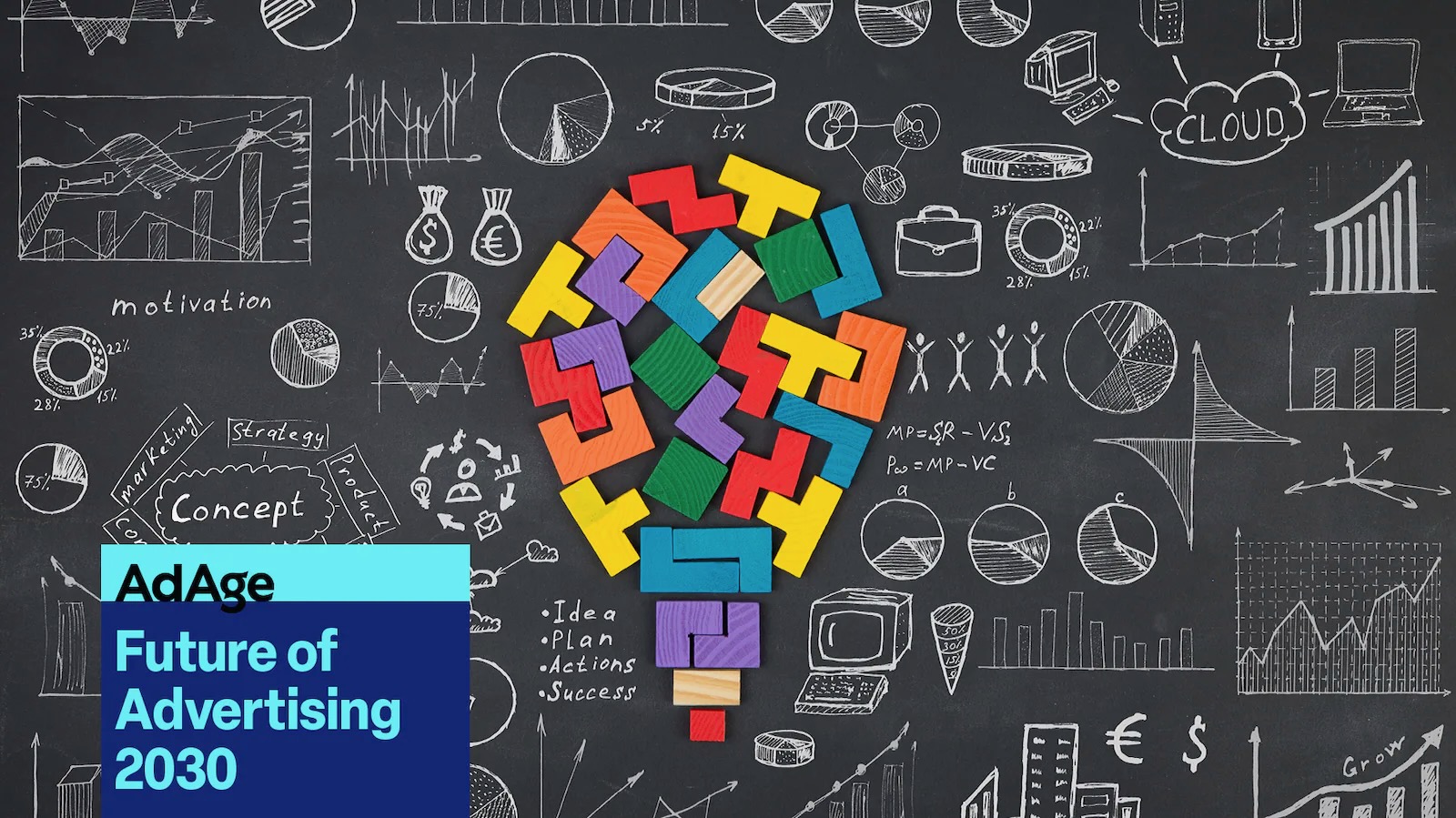
This story is part of Ad Age’s Future of Advertising 2030 series exploring how marketing, media and creativity will evolve over the next five years.

Advertising agencies are in the process of setting strategies for the next five years despite numerous unknowns—the impact of AI, speed of consolidation and increasing ease of in-housing among them. These variables may have wide-reaching impact, including the potential demise of mid-size agencies, that marketers should be preparing for now.

On Ad Age Insider, Ad Age reporters look at the future of ad agencies and strategies that industry leaders are putting into place now to prepare.

“A lot of [agencies’] executional work becomes commoditized by AI, and a lot of marketers will have pretty robust in-house systems. So the real value and agency lie in their strategic thinking and being able to bring an outsider perspective to the equation.” –Ewan Larkin, agency reporter, Ad Age

Ad Age Insider podcast transcript

Parker Herren, host: How will the agency landscape transform by 2030? What has surprised you guys the most in your reporting on the future of agencies?

The demise of mid-size agencies

Brian Bonilla, senior agency reporter: It’s hard to be surprised, but I would say something that might surprise people in general—the role of the mid-size agency might go away by 2030, meaning we’re already seeing a lot of small, independent agencies get a lot of business, but we’re now starting to see those same agencies competing with each other and competing with large agencies and seeing a leveling of new business opportunities. And at the same time, mid-size agencies, which typically range from like 100 to maybe 250 employees, are competing with large holdco networks of like 5,000 employees for the same business. 

So by 2030, you’re going to see those mid-sized agencies either merge with other entities or sell to private equity firms or things like that. That’s going to be something that might be surprising for a lot of people, and I think will happen quicker than people realize.

How agency structures will shift

Ewan Larkin, agency reporter: This is interesting. For a couple of years, agencies have been trying to market themselves as consultants, and it hasn’t really stuck. To some degree, it has, but I think it’s obvious they are still service providers fundamentally. But I actually do think now we might see that shift start to stick a little bit. A lot of the executional work becomes commoditized by AI, and a lot of marketers will have pretty robust in-house systems. So the real value at agencies lies in their strategic thinking and being able to bring an outsider perspective to the equation. 

I think that puts them in direct contact … with the likes of Deloitte Digital and Accenture Song. So the focus for agencies really should be building up some of those consulting capabilities and commerce consulting capabilities. Agencies like VML are already starting to do this. They rolled out a unit earlier that encompasses consulting, CX and other things, and that already accounts for about 40% of their overall global revenue. So, I expect more people to make moves like this. This is one of the early stages of holding companies really being able to package up one of those offerings.

Parker: For Ad Age’s Future of Advertising package, media reporter Brandon Doerrer wrote about 2030 readiness. And chief technology reporter Garett Sloane dug into the 2030 tech stack. That sounds pretty thrilling. What did you guys find in your reporting?

Brandon: People tend to think that there are just going to be more and more integrated accounts, especially between creative and media. The walls are really coming down between those two functions. We are seeing brands increasingly hire the same agency to handle both of those functions. So, agencies are going to need to get used to those two functions not being in silos anymore, not having walls exist between those two teams.

Garett: We’re already starting to see these roles change. We’re seeing shifting ways of billing clients, different business models, different services agencies have to cater to. So, it’s already happening. It’s going to happen more and more where agencies are going to have to operate as platforms and services that can interact with brands and help brands build their ad tech stacks, acting as consultants, acting as facilitators into this futuristic landscape.

That’s where agencies need to go, and they’re starting already by developing new products and services. Whether that will work is still an open question, and if they can adjust and change—some will, some won’t.

The social AOR resurgence

Parker: Let’s talk influencers. Gillian Follett covered the future of the social and influencer space. Is there any way the future of influencers will impact agencies in 2030?

Gillian: Experts that I talked to for the story said that they predict the spectrum of influencer agencies will stretch to the extremes. So, we’ll see more brands working with influencer functions within larger holding companies, or we’ll see brands looking to very specialized boutique agencies who specialize in specific platforms or types of creators, like gaming creators, for example.

We’re also going to continue to see influencer budgets increase, not at the same meteoric rate that we’ve seen over the past couple of years, but based on forecasts from intelligence companies like eMarketer, it’s definitely on an upward trajectory. 

We’re also seeing a resurgence of social agency of record assignments from brands across different categories. Something that I spoke to one marketer about was this idea that it’s not just the brands that are trying to target Gen Z or want to be social-first anymore that are looking for social AORs. It’s brands that they wouldn’t expect, like more established legacy brands are looking for social AORs. And a lot of these brands are seeking the insights that social media can provide in terms of what consumers are looking for, the types of products that they’re craving and using social as the foundation for their marketing campaigns rather than having social be a tacked-on piece at the end.

Parker: Okay, Lindsay, I’m going to let you round out this group with some intel from your reporting on the RFP process in 2030.

Lindsay Rittenhouse, senior agency reporter: Within the RFP process, agencies are going to have to stop the theater—the glossy presentations, the pitch decks, and really showcase how you’re working as a team. Get ready to be in more chemistry meetings—enough with the showboating and the theater in the pitch.

Parker: Tell us how marketers should begin preparing for that now.

Lindsay: Well, they have to set up the process so that there are more chemistry meetings and more time for the meatier stuff, the interviewing, the briefings, the working together, and just get rid of some of the processes. You don’t have to do these massive pitch presentations. [Marketers] are the ones who set the process for the RFP, so don’t allow the theatrics.

Agencies in 2030—how to plan ahead

Parker: I want to hear everyone’s advice for how marketers or agency leaders can begin prepping for their 2030 strategy. Why don’t we just go round robin, starting with you, Brian.

Brian: Start thinking about what type of agency model do you want as a marketer. We’re seeing roster agency models become way more popular, meaning instead of having just one AOR handle everything, I’ll have a social agency here, I’ll have a creative agency here or I’ll have a roster of five creative agencies. 

If you’re an agency, start thinking about what model makes the most sense for you to be in—should I be more niche or should I broaden my capabilities? And as a marketer—same question but on the flip side. If I’m going to be spending less on marketing, but I’m expecting to have more outcomes, what is the best model that makes sense for my external partnerships? Because I do think agencies will still be necessary as much as we’re talking about in-housing and things like that.

Ewan: They need to clarify which functions they want done in-house, which ones they need outsourced, very clearly defining what they can do themselves versus what is essential that they get from an external partner. There is a push for efficiency, and, obviously, everybody wants to save costs, so they want to bring it in-house, but you are going to need an external partner. You always do need that outside perspective. So, very clearly define what needs to be done yourselves and what you need an agency for. 

But rethinking agency relationships in general—they’ve always been seen as providers, that’s what they are, but now a lot of them are going to be actually helping build those internal capabilities. So identify which agencies are high-level strategic thinkers, which ones really understand your brand and your challenges, which ones can help me build my internal chops. Those are the ones that I think are likely to have long-term value.

Brandon: On the agency side of things, if you’re a creative agency and you don’t already have media capabilities, really digging in and evaluating if it would be worth building that out. If you have a unique angle, something to offer brands to make yourself stand out from the plethora of media agencies that can do the same thing. Media is probably in a similar boat. At least having an understanding of various creative processes is going to be helpful.

On the marketer side of things, brands can just not be afraid to ask. I did a story not too long ago about how indie creative agencies can respond to requests for media services. And the reason why agencies are starting to think about either building these capabilities internally or which media agencies they can partner with is because they’re getting these requests. Marketers—don’t be afraid to ask if you have an indie creative shop that you’re working with that doesn’t do media. They’re getting used to getting that question already, and they are starting to think about how to best answer that question. So, no dumb questions is the advice.

Garett: They could start developing the services and tools, and some are. We’ve seen agencies launch AI agents—the trading bots that they can all of a sudden potentially give out to brands to start to use. A lot of these tools that agencies are building are internal, but eventually, they’re going to make them external and start shipping them to brands to use as part of their suite of services. So, agencies start building internally and then will start giving it out to the masses.

Gillian: Brands should start considering whether they want to look to agencies to help them with sharpening their social strategies to adapt to this new way of seeking consumer insights from social and using social as a starting point for marketing. For some brands, it might make more sense to develop a social media team in-house to lead these efforts for the brand. Some brands have sought social media agencies of record because of the wide range of functions that are involved in social media marketing today, like paid social, creator marketing, social media intelligence gathering. There’s just a lot that goes into it these days.

Brands should start considering whether that’s something they can do in-house, or if they need to find partners to help them develop those strategies as social becomes more and more important.

Key Takeaways

  • Mid-size agencies will likely disappear by 2030, either merging or selling to private equity firms
  • Agencies are shifting from ad makers to consultants and platform builders
  • Creative and media functions will merge as brands increasingly hire one agency for both services

Hopefully making a ruckus, one blog post at a time!

Be sure to check out my other blog, Joe’s Journey, for selected short stories and personal insights on life and its detours.
Ideas, not AI, will decide who survives in 2030

In a world where everything can be personalized and optimized, there’s only one true differentiator left: ideas. (Adobe Stock)

AI will undoubtedly shrink the marketing services industry. Or so that’s the opinion of industry paper Ad Age via author Barry Lowenthal in a recent piece a few weeks back. Thought it worthwhile to share again especially to those of you who may not have seen it yet.

Many of the functions agencies are paid for today—targeting, media planning, asset versioning — are already being handled faster and cheaper by machines.

Yet the most successful agencies in 2030 won’t be those with the biggest AI budgets; they’ll be the ones still capable of original thought.

Since the explosion of generative AI, holding companies have raced to future-proof themselves, pouring hundreds of millions of dollars into the technology. They’ve hired engineers, signed vendor deals and built proprietary tools. The logic is that automation improves margins by enabling more work to be produced with less overhead, and it’s attractive to clients.

But here’s the problem: Everyone is doing the same thing.

AI platforms might look different, but they’re powered by the same foundation—similar models, trained on similar data, offering similar outputs.

AI is a great equalizer. While early investment and enterprise deals offer short-term advantages, the tools are ultimately accessible to all. As technology becomes commodified, there’s only one true differentiator left: ideas.

In a world where everything can be personalized and optimized—where every ad element, from celebrity to color palette to music cue, is engineered for conversion—what cuts through is the unexpected.

Zany, emotional, human ideas. The kinds that make people laugh out loud, tear up or text a friend because it hit a nerve. The kind no algorithm can predict because they come from life experience, not data.

Those ideas aren’t born from prompts or dashboards, but from humans living messy, interesting lives—wandering museums, walking unfamiliar streets, swapping stories at a dive bar.

The agencies that stay relevant in an AI era will be the ones that protect this kind of cultural immersion. They’ll hire for life experience, not just technical literacy. They’ll measure inspiration like they do performance, instead of grinding their teams into creative exhaustion. They’ll reward originality over speed and efficiency. 

If the goal is to survive the next five years, curiosity and creative instinct must be treated as core competencies.

That means rethinking workflows to allow time for discovery, not just delivery. It means protecting those unproductive long walks and deep rabbit holes.

The payoff won’t always show up neatly in a dashboard, so it will be a challenging pitch to the CFO. But in a world where AI devours everything else agencies in once thought made them valuable, it’s the only bet worth making.

That’s the future. And no, you can’t buy it; you have to nurture it.

********

I agree with Mr. Lowenthal, original thought leading to creatively inspired ideas will and must lead the way. I’ve been involved in this business for several decades and I realize that the industry has turned into a young person’s game. Most have grown up with AI and consider it the “standard.” That is unfortunate. It still must be considered a tool in the work belt of the creative person who’s developing the idea. It can’t be used as the end-all. That is unless sameness is one’s idea of creative thought.

Hopefully making a ruckus, one blog post at a time!

Be sure to check out my other blog, Joe’s Journey, for selected short stories and personal insights on life and its detours.

Advertising Hall of Fame Quotes-Part 7

As it’s been some time since I last submitted for your amusement various illustrious quotes, I thought I’d showcase the seventh in a series of various worth-remembering “sayings” which I find interesting and inspiring, and, hopefully, you will, too.

Mostly excerpted from the newsletter “Smart Brief” from the American Advertising Federation, these quotes are usually from a member of the Advertising Hall of Fame but not all.

quote

61. All of us who professionally use the mass media are the shapers of society. We can vulgarize that society. We can brutalize it. Or we can help lift it onto a higher level.

— William Bernbach

62. Plan the sale when you plan the ad.

— Leo Burnett

63. When a client comes to us with a product, he is, in effect, giving us a problem to be solved. … Some of the biggest advertising mistakes are people who imagine they know what the problem is, or they’re not even thinking about; they’re just coming up with that brilliant idea and trying to force the problem to fit it.

— Mary Wells Lawrence

64. In good times, people want to advertise; in bad times, they have to. (Note: Doesn’t mean they realize this, however.)

— Bruce Barton

65. Ever tried. Ever failed. No matter. Try again. Fail again. Fail better.

— Samuel Beckett (could have been in the Hall of Fame in his time)

66. The agency’s account executive should be able to step into the sales manager’s shoes if the sales manager drops dead today.

— Morris Hite

67. I am one who believes that one of the greatest dangers of advertising is not that of misleading people, but that of boring them to death.

— Leo Burnett

68. We simply cannot allow the First Amendment to be legislated away. If we ever compromise, we’ve sold out the industry’s future and made fools of those who shaped its past.

— John E. O’Toole

69. A successful man is one who can lay a firm foundation with the bricks others have thrown at him.

— David Brinkley

70. Nothing comes merely by thinking about it.

— John Wanamaker

Got a favorite? Lemme know.

To Think, Per Chance To Create.

Something to ponder or just day dream about. Seriously.

To sleep, per chance to dream;

Frozen Thinker

To think, per chance to create

To write, per chance to make sense;

To be read or heard, per chance to be understood.

Oh, tis a wicked web we weave,

Were it not for words or deed,

Would the mind go where the soul doth lead?

Perish thy thought and free thyself from doubt,

On the edge of reality, solutions await.

Colorful Crayons

But, lo, what of even the simple idea?

Impactful creative is its nourishment to foster growth.

Yet, regardless of which crayon you choose,

The results can still be compelling.


“Frozen Thinker” graphic by Vasava

Advertising Hall of Fame Quotes – Part 6

Here’s the sixth in a series of various worth-remembering quotes which I find interesting and inspiring, and, hopefully, you will, too. Excerpted from the newsletter “Smart Brief” from the American Advertising Federation, these quotes are usually from a member of the Advertising Hall of Fame.

quote

51. I have a theory that the best ads come from personal experience. Some of the good ones I have done have really come out of the real experience of my life, and somehow this has come over as true and valid and persuasive.

— David Ogilvy

52. Too many ads that try not to go over the reader’s head end up beneath his notice.

— Leo Burnett

53. You can’t use up creativity. The more you use, the more you have.

— Maya Angelou (not part of original series; just a great quote)

54. Meetings are all too often the burial grounds of great ideas.

— Keith Reinhard

55. Play by the rules, but be ferocious.

— Phil Knight

56. A good ad should be like a good sermon: It must not only comfort the afflicted, it also must afflict the comfortable.

— Bernice Fitz-Gibbon

57. Some questions don’t have answers, which is a terribly difficult lesson to learn.

— Katharine Graham

58. Appeals that sound good when described to a client or employer are not always the most effective appeals that can be used. Clever, tricky ideas often sound fine when described in a conference room. But some simple, basic, plain-as-the-nose-on-your-face idea will sell more goods.

— John Caples

59. Courtesy is the one coin you can never have too much of or be stingy with.

— John Wanamaker

60. I think the harder you work, the more luck you have.

— Dave Thomas

So, which ones are your favorites?

Do you have a favorite or favorites in the series?

Lemme know.

Advertising Hall of Fame Quotes – Part 4

Here’s the fourth in a (for now) five-part series of various worth-remembering quotes which I believe you’ll find interesting and hopefully inspiring. Excerpted from the newsletter “Smart Brief” from the American Advertising Federation, these quotes are usually from a member of the Advertising Hall of Fame.

Quote

31. Consumers are statistics. Customers are people.

— Stanley Marcus

32. It takes a real storm in the average person’s life to make him realize how much worrying he has done over the squalls.

— Bruce Barton

33. Big ideas are so hard to recognize, so fragile, so easy to kill. Don’t forget that, all of you who don’t have them.

— John Elliott Jr.

34. I have learned that any fool can write a bad ad, but that it takes a real genius to keep his hands off a good one.

— Leo Burnett

35. Good advertising is written from one person to another. When it is aimed at millions, it rarely moves anyone.

— Fairfax M. Cone

36. The creative process is often a matter of changing ‘What is’ to ‘What if?’ We first observe the status quo and then imagine a status novus.

— Keith Reinhard

37. No company that markets products or services to the consumer can remain a leader in its field without a deep-seated commitment to advertising.

— Edwin Artzt

38. Remove advertising, disable a person or firm from proclaiming its wares and their merits, and the whole of society and of the economy is transformed. The enemies of advertising are the enemies of freedom.

— David Ogilvy

39. We pay just as dearly for our triumphs as we do for our defeats. Go ahead and fail. But fail with wit, fail with grace, fail with style. A mediocre failure is as insufferable as a mediocre success.

— Bruce Barton

40. Know what the client wants, know what the client needs, and know how to cause the client to want what the client needs.

— Keith Reinhard

 So, which one or ones is/are your favorite(s)? Lemme know.

Advertising Hall of Fame Quotes – Part 3

Here’s the third in a multi-part series of various worth-remembering quotes which I believe you’ll find interesting and hopefully inspiring. Excerpted from the newsletter “Smart Brief” from the American Advertising Federation, these quotes are usually from a member of the Advertising Hall of Fame.

Quote

21. And I have always believed that advertising has a powerful impact on our society. It not only influences public taste and conduct; it also helps shape society’s values.

— Liener Temerlin

22. Creativity is no longer about grabbing attention or raising consumer awareness. Its goal is to remind consumers about what is fundamental and gratifying about a brand.

— Peter A. Georgescu

23. Nothing splendid has ever been achieved except by those who dared believe that something inside of them was superior to circumstance.

— Bruce Barton

24. There is no such thing as a mass mind. The mass audience is made up of individuals, and good advertising is written always from one person to another. When it is aimed at millions, it rarely moves anyone.

— Fairfax Cone

25. Advertising is a non-moral force, like electricity, which not only illuminates but electrocutes. Its worth to civilization depends upon how it is used.

— J. Walter Thompson

26. Creativity is so delicate a flower that praise tends to make it bloom while discouragement often nips it at the bud.

— Alex Osborn

27. An idea can turn to dust or magic, depending on the talent that rubs against it.

— William Bernbach

28. Rules are for people who don’t know what to do.

— Keith Reinhard

29. There is not some absolutely revolutionary model that somehow produces the best work. The core principle is still a battle between what’s relevant and what’s not.

— David Droga

30. When we are too timid to risk failure, we reduce the opportunities to succeed. And we eliminate the chance to learn.

— Keith Reinhard

So, which one or ones is/are your favorite(s)? Lemme know.

Advertising Hall of Fame Quotes – Part 2

Here’s another in a multi-part series of various worth-remembering quotes which I believe you’ll find interesting and hopefully inspiring. Excerpted from the newsletter “Smart Brief” from the American Advertising Federation, these quotes are usually from a member of the Advertising Hall of Fame.

Get ready to chuckle, and, I hope, remember.

q-curly-double

11. Know what the client wants, know what the client needs, and know how to cause the client to want what the client needs.

— Keith Reinhard

12. The good ideas are all hammered out in agony by individuals, not spewed out by groups.

— Charles Brower

13. The three ingredients of effective advertising are relevance, originality and impact, the initials of which spell out what clients most desire: ROI.

— Keith Reinhard

14. Anyone who thinks that people can be fooled or pushed around has an inaccurate and pretty low estimate of people — and he won’t do very well in advertising.

— Leo Burnett

15. Creativity varies inversely with the number of cooks involved in the broth.

— Bernice Fitz-Gibbon

16. When you are through changing, you are through.

— Bruce Barton

17. There are two kinds of men who don’t amount to much: those who can’t do what they are told and those who can do nothing else.

— Cyrus H. K. Curtis

18. You must make the product interesting, not just make the ad different. And that’s what too many of the copywriters in the U.S. today don’t yet understand.

— Rosser Reeves

19. Advertising is the ability to sense, interpret … to put the very heart throbs of a business into type, paper and ink.

— Leo Burnett

20. An important idea not communicated persuasively is like having no idea at all.

— William Bernbach

So, which one or ones is/are your favorite(s)? Lemme know.

GE’s attempt to “creaturefy” scary ideas – not bad!

Ideas can scare the hell out of people. They can denote change if they’re adopted.

Too many times we’re not even given the time to explore generating new ideas. Yet, we seem to be constantly trying to evolve and innovate. Hmmmm, last time I checked, one needed ideas to do that. At least one.

This is the third in a series of four related blog posts I referenced in my recent presentation to the AAF Rio Grande Valley. It pertains to ideas and how people react to them. It’s not always receptive especially since ideas are not always welcome.

Hats of to GE for this innovative commercial about ideas and their surprising effects on people. It’s actually been airing since 2014 but I just noticed it a few months ago, and again recently. Good for them to continue the campaign.

The first time I saw it, I really wasn’t sure what I was watching. The more I watched, the more intrigued I got. It still “gets” me in an unnerving kind of way. Several times I just wanted to go “yuck” to myself, but then felt guilty about wanting to do so.

For those who haven’t seen it or who might have missed it, here’s what a scary idea could look like. Next time you come across one, you might give it a bit more respect than one normally would.


Creativity as a Problem Solver

During my recent presentation on creativity and creative thinking to the AAF Rio Grande Valley, I referenced using creativity to help solve problems. No matter how cutesy an ad looks or what kind of special effects one uses, if a problem does not get closer to being solved, the process is not doing any good.

The following video is one I suggested that interestingly addresses how creativity helps solve problems. It’s an excerpt from this year’s Aspen Ideas Festival, where a group of people who work in media, design, and the arts were asked about how the creative process can lend itself to unlocking solutions.