
Misfits: Leading the Way in Innovation

Recently I came across this article on innovation but from a point of view I had not really thought about before. Its author, Gonçalo Melo, is an inspiring designer who has also authored many articles on design and design thinking. It’s an interesting read and I thought I’d share it with you.

Innovation has a history of being driven by those who refuse to conform, the self-proclaimed misfits of society. These individuals, often labeled as unconventional or rebellious, have a unique approach to innovation — they prioritize passion over convention. Let’s delve into the captivating world of misfit innovators and discover why their focus on passion is a key to their success.

The Power of Nonconformity:

Misfits have an innate resistance to conformity. They’re not motivated by societal norms or traditional paths; instead, they are driven by their own vision and unbridled passion. This refusal to adhere to the status quo allows them to see opportunities others might miss.

Passion as the North Star:

For misfit innovators, passion serves as their guiding star. They don’t embark on projects solely for profit or recognition; they pursue endeavors that genuinely excite them. This unwavering passion fuels their creativity and determination.

Embracing Failure as Fuel:

Misfits understand that innovation often involves risk and failure. They don’t shy away from challenges or setbacks; instead, they use them as stepping stones to refine their ideas and achieve their goals. Failure is not a deterrent but a source of motivation.

The Art of Authenticity:

Misfits are unapologetically themselves. They don’t conform to corporate or societal expectations of how they should behave or present themselves. This authenticity resonates with others and attracts like-minded individuals who share their passion.

Reshaping Industries:

History is rife with examples of misfits who disrupted entire industries. Think of Steve Jobs, who transformed technology and entertainment with his passion for design and user experience. His unconventional approach redefined what was possible.

Igniting Collaborative Fires:

Misfits have a magnetic quality that draws in collaborators who share their vision. These partnerships are not built on hierarchy but on a shared passion for innovation. Together, they challenge norms and drive progress.

The Passion-Driven Workforce:

In today’s competitive job market, misfit innovators are reshaping the workforce. They prioritize meaningful work over traditional employment, valuing companies that align with their passions and values.

Cultivating Inclusive Environments:

Misfits foster inclusive environments where diversity of thought is celebrated. They recognize that innovation thrives when individuals from varied backgrounds and perspectives come together in pursuit of a common passion.

A Misfit Renaissance:

As society evolves, the misfit spirit is on the rise. Increasingly, individuals are prioritizing their passions over conventional career paths, leading to a renaissance of innovation driven by authenticity and purpose.

The Challenge to Conventional Wisdom:

Misfit innovators challenge us to question conventional wisdom and explore new horizons. They remind us that passion is a powerful force capable of reshaping industries, redefining success, and inspiring a brighter, more innovative future.

In a world often driven by conformity and convention, misfit innovators serve as beacons of inspiration. Their unwavering focus on passion demonstrates that tru innovation arises not from adherence to norms but from the pursuit of what sets your soul on fire. As we celebrate the misfits, we celebrate the future of innovation itself.

Hopefully making a ruckus, one blog post at a time!

Be sure to check out my other blog, Joe’s Journey, for selected short stories and personal insights on life and its detours.

Special Quotes and a Christmas Gift, too

This being the week before Christmas I thought it appropriate to present some special quotes for this month and to end the list with a Christmas thought. Season’s Greetings and Happy Holidays!

Neither wisdom nor good will is now dominant. Hope lies in dreams, in imagination and in the courage of those who dare to make dreams into reality. – Jonas Salk

Some questions don’t have answers, which is a terribly difficult lesson to learn. — Katharine Graham, member, Advertising Hall of Fame

I want to put a ding in the universe. – Steve Jobs

Let’s gear our advertising to sell goods, but let’s recognize also that advertising has a broad social responsibility. — Leo Burnett, member, Advertising Hall of Fame

Nobody has ever built a brand by imitating somebody else’s advertising. — David Ogilvy, member, Advertising Hall of Fame

The heart of creativity is discipline. — William Bernbach, member, Advertising Hall of Fame

Like the musical score, a mission statement is only as good as the performance it inspires. — Keith Reinhard, member, Advertising Hall of Fame

I do not regard advertising as entertainment or an art form, but as a medium of information. — David Ogilvy, member, Advertising Hall of Fame

In writing advertising it must always be kept in mind that the customer often knows more about the goods than the advertising writers because they have had experience in buying them, and any seeming deception in a statement is costly, not only in the expense of the advertising but in the detrimental effect produced upon the customer, who believes she has been misled. — John Wanamaker, member, Advertising Hall of Fame

Christmas is more than barging up and down department store aisles and pushing people out of the way. Christmas is another thing finer than that. Richer, finer, truer, and it should come with patience and love, charity, compassion. ~ Rod Serling


Hopefully making a ruckus, one blog post at a time!

Be sure to check out my other blog, Joe’s Journey, for personal insights on life and its detours.
And, check out creative selections from my website.

Jolan tru!

Quotes by Ogilvy, Voltaire, Jobs, et. al.

As it’s the last Tuesday in July and since I accidentally skipped June, I thought it time for Quotes. From Bernbach and Barton to Serling and Steinem . . . enjoy!


Innovation is the ability to see change as an opportunity — not as a threat. – Steve Jobs

We pay just as dearly for our triumphs as we do for our defeats. Go ahead and fail. But fail with wit, fail with grace, fail with style. A mediocre failure is as insufferable as a mediocre success. — Bruce Barton, member, Advertising Hall of Fame

The heart of creativity is discipline. — William Bernbach, member, Advertising Hall of Fame

Nobody has ever built a brand by imitating somebody else’s advertising. — David Ogilvy, member, Advertising Hall of Fame

Judge a man by his questions rather than by his answers. – Voltaire

Discussion is an exchange of knowledge; argument an exchange of ignorance. – Robert Quillen

Consumers are statistics. Customers are people. — Stanley Marcus, member, Advertising Hall of Fame

Without leaps of imagination, or dreaming, we lose the excitement of possibilities. Dreaming, after all, is a form of planning. – Gloria Steinem

The soul without imagination is what an observatory would be without a telescope. – Henry Ward Beecher

I think that the singular evil of our time is prejudice. It is from this evil that all other evils grow and multiply. In almost everything I’ve written there is a thread of this: a man’s seemingly palpable need to dislike someone other than himself. — Rod Serling, LA Times, 1967


Hopefully making a ruckus, one blog post at a time!

Be sure to check out my other blog, Joe’s Journey, for personal insights on life and its detours.
And, check out creative selections from my website.

Jolan tru!

Quotes for May, Graduation and Enlightenment

Tis that time of year again when graduation ceremonies and insightful speeches are given to enlighten the crowd. Other notables are included here for their wisdom and foresight within the advertising industry and beyond. So, take note; it’s time for May quotes!


Attract attention, maintain interest, create desire and get action. — E. Elmo St. Lewis, member, Advertising Hall of Fame

That which is good or great makes itself known, no matter how loud the clamor of denial. That which deserves to live — lives. — Theodore Francis MacManus, member, Advertising Hall of Fame

The saddest aspect of life right now is that science gathers knowledge faster than society gathers wisdom. – Isaac Asimov

It’s really hard to design products by focus groups. A lot of times, people don’t know what they want until you show it to them. – Steve Jobs

The world of reality has its limits; the world of imagination is boundless. – Jean-Jacques Rousseau

Click on the image to get a better view of the quote

Commencement Address/ Ithaca College May 1972

The place to start in advertising is the basic selling appeal. An appeal that fulfills some existing need in the prospect’s mind, an appeal that can be readily understood and believed. — Morris Hite, member, Advertising Hall of Fame

I have learned that any fool can write a bad ad, but that it takes a real genius to keep his hands off a good one. — Leo Burnett, member, Advertising Hall of Fame

Art is not just our expression of life and of ourselves. It is not just our internal cry: Art is the lie we need about the world and ourselves. When we write or paint or act or compose, we are imposing an order, yes, but we are also crafting a world we can control, and usually it is one we can admire–or at the very least recognize. Art is not elite; art is not on a high shelf for a chosen few. Art is, like religion, a primary narcotic. — Marlon Brando

We have a need for an enlightened, watchful articulate opposition. We have no need for semi-secret societies who are absolutist, dictatorial, and would substitute for a rule of law and reason an indiscriminate assault on the institutions that must be held sacrosanct. — Rod Serling


Hopefully making a ruckus, one blog post at a time!

Be sure to check out my other blog, Joe’s Journey, for personal insights on life and its detours.

And, check out creative selections from my website.

Jolan tru!

Creativity + Constraints = A Good Pairing?

When one adds any sort of constraint to the creative process, one gets bogged down, right? Um, not necessarily. In fact, it could be just the opposite. From a variety of perspectives, constraints can open up dialogue and creative opportunities not originally thought or considered.

Portions of this blog post, originated by one, Lee Duncan, got me to thinking about just that. In the early stages of writing a short story, I jotted down some thoughts on my iPhone, knowing they would be automatically “copied” to another application (Notes) on my laptop so I could continue at some later date. When that later date came and I went to access them on my laptop, the additions I had made were nowhere to be found.

Oh, the horror!

I discovered a major constraint! Now, I had to rely on memory to reconstruct the few paragraphs I had previously written. I realized I couldn’t remember everything word for word so I revised my thinking a bit to write new dialogue based around what I did remember. All in all, it turned out okay (so far).

In his post, Duncan cites that designers, artists, writers, and creatives of all kinds are often told to “think outside the box” and let their imagination run wild. He asserts that creativity loves constraints. That limitations can actually enhance our creativity rather than hinder it? I tend to agree.

Both he and I agree that the idea that constraints can fuel creativity is not new. In fact, it has been embraced by some of the world’s most innovative thinkers, including Dr. Seuss, who famously wrote “Green Eggs and Ham” using only 50 different words. Steve Jobs once said, “Creativity is just connecting things. When you ask creative people how they did something, they feel a little guilty because they didn’t really do it, they just saw something. It seemed obvious to them after a while. That’s because they were able to connect experiences they’ve had and synthesize new things.”

Thinking Differently

Constraints force us to think differently. Or “newly” as in my case. They force us to look at a problem from a different angle and approach it in a new way. When we’re faced with limitations, we’re forced to be more resourceful, more innovative, and more creative.

Duncan cites an Instagram example: In the early days, the platform’s co-founders were faced with a constraint: they had to build a photo-sharing app for the iPhone using only the phone’s built-in camera. Rather than seeing this as a limitation, they embraced it and created a platform that revolutionized the way we share and consume visual content.

The Brain on Constraints

Research has shown that constraints can actually stimulate the brain and enhance our problem-solving abilities. When faced with a difficult problem, our brains tend to default to familiar solutions. But when we’re presented with constraints, we’re forced to explore new solutions and think outside the box.

One study conducted by the University of Amsterdam found that participants who were given a set of constraints to work within were more creative in their problem-solving than those who were given no constraints at all. Another study found that imposing a deadline on a creative project actually increased creativity, as it forced participants to make decisions and move forward with their work.

In my view, this wouldn’t necessarily increase creativity but it would increase the possibility of failure or at the very least, some new ideas. Creativity would then evolve.

Ideas and Constraints

Constraints can therefore help us generate better ideas. When we’re given a blank slate and no direction, it can be overwhelming and difficult to know where to start. You’re sort of blindly throwing the dart at the board and seeing where it lands. But when we’re given a set of constraints, we’re forced to work within certain parameters, which can actually help us come up with more focused and relevant ideas.

When a group of designers was tasked with creating a new line of office furniture, they were given a set of constraints to work within, including a specific budget and a requirement that the furniture be modular and easy to assemble. Rather than hindering their creativity, these constraints helped them generate a range of innovative ideas that met the client’s needs and exceeded their expectations.

Applying Constraints to Facilitation

Constraints can also be applied to facilitation, or the process of leading a group through a creative problem-solving process. By imposing constraints on the group, the facilitator can help guide them toward more creative solutions.

For example, a facilitator might ask a group to brainstorm ideas for a new product, but impose a constraint that the product must be made entirely from recycled materials. This constraint forces the group to think about sustainability and environmental impact, which can lead to more innovative ideas.

If no constraints were added, the group might generate hundreds of new ideas but would have to undergo a due diligence exercise to decide which ideas were better and then further decide how to proceed. That’s another exercise entirely but well worth the time invested.

While it may seem counter-intuitive, constraints can actually be a powerful tool for fueling creativity. They force us to think differently, stimulate our brains, help us generate better ideas, and can be applied to facilitation to guide groups toward more innovative solutions.

When constraints happen, and they will, gather your thoughts and let your imagination roam, exploring new opportunities and possibilities. I think you’ll find that paired together, creativity and constraints make for a viable coupling.


This blog post is based upon an article by Lee Duncan, an IBM Enterprise Design Thinking Leader.


Hopefully making a ruckus, one blog post at a time!

Be sure to check out my other blog, Joe’s Journey, for personal insights on life and its detours.

And, check out creative selections from my website.

Jolan tru!


Originality: Not required for creativity

Whether or not you agree with the premise, I found the following essay from Psychology Today an interesting take on a myth that still finds itself debatable in certain circles. Where do creative ideas come from? Are they truly original? Well, according to the essay . . .

One of the most persistent myths is that a creative idea is a totally original idea. That is, to be creative one must be able to create ideas that have never been thought before, ideas that never existed before, absolutely original. {Personally, I don’t buy this.}

{One could consider saying that all original ideas are creative but not all creative ideas are original. I would not necessarily agree with the first part of that statement but I would agree with the second part.}

The truth is that most innovative ideas are not original ideas. In most cases, they are simply the combination of previous ideas into a new concept or format. It’s about making connections with stuff that’s already there. Steve Jobs, the founder of Apple, brought this all into perspective when he said:

Creativity is just connecting things. When you ask creative people how they did something, they feel a little guilty because they really didn’t do it, they just saw something. It seemed obvious to them after awhile. That’s because they were able to connect experiences they’ve had and synthesize new things. And the reason they were able to do that was that they’ve had more experiences or that they have thought more about their experiences than other people.


One of the most-oft cited cases of creativity centers around Johannes Gutenberg who, in 1450, combined the wine press and the coin punch to create movable type and the printing press. Movable metal pieces allowed pages to be printed much more quickly than the standard wooden blocks used to press ink onto paper.

His “combination of pre-existing technologies” created printing presses that could print thousands of pages a day. This revolution allowed books to be printed more quickly and more efficiently, allowing the middle class to obtain them as never before. The result was the rapid spread of knowledge across the European continent. That intellectual revolution came about due, in large measure, to the combination of two previous (and seemingly unconnected) ideas: a wine press and a coin punch.

Creative Combinations

Ancient Greeks were also aware of the power of creative combinations. For example, it was the Greeks who combined soft copper with soft tin to create hard bronze. At their most basic levels, Gutenberg’s printing press and the creation of bronze were simply a combination of already existing ideas. History also records these interesting combinations of pre-existing concepts:

1. Copier + telephone = fax machine

2. Bell + clock = alarm clock

3. Trolley + suitcase = suitcase with wheels.

4. Igloo + hotel = ice palace

5. Mathematics + biology = laws of heredity

We like to believe that creativity is the result of a determined, focused, and solo entrepreneur who, through a flash of inspiration solves a problem for the betterment of humankind. It’s a great plot line for a TV special, but it ignores a basic fact of life about the stories of most innovations: They rarely include the human networks that sustain (and make possible) radical new ideas or changes. In fact, history is frequently edited in order to recognize a sole genius or innovator. Phil McKinney, host of the nationally syndicated radio show, Killer Innovations, puts it this way:

We have a saying in the innovation industry: “There’s no such thing as a truly new idea. Ideas are the result of building on the work of others.” Many of the creative ideas that led to creating great companies were the result of a team. Some examples: Microsoft, Intel, Google, Skype and many more.

We continue to think that to be creative is to have the ability to create new ideas rather than to combine old ideas into new configurations. It’s a persistent myth that frequently blocks us whenever we’re faced with a personal challenge or work-related endeavor. To the contrary, however, creativity is not always a series of “brilliant new ideas,” but often is the result of a lifetime of experiences and diligence in working on combinations of those ideas (instead of giving up on them after one or two failures). The myth that every idea must be an idea never considered before (in the history of humankind) is a significant impediment to our ability to think creatively.

Key Takeaways

  • We often make the mistake of assuming that creative ideas are always original ideas.
  • Creativity is, quite often, a combination of two “old” ideas.
  • One’s creativity can be enhanced by linking two or more disparate concepts.

Regardless of one’s viewpoint, never be afraid to brainstorm with your own imagination and consider borrowing from other ideas. Those ideas can always be improved upon and/or give birth to a totally new and different idea. That’s being creative.


Thanks to Dr. Fredericks for the essay and for the various examples of original thought on which this post is based. Anthony D. Fredericks, Ed.D., is Professor Emeritus of Education at York College of Pennsylvania and the author of From Fizzle to Sizzle: The Hidden Forces Crushing Your Creativity and How You Can Overcome Them.


Hopefully making a ruckus, one blog post at a time!

Be sure to check out my other blog, Joe’s Journey, for a different kind of playground for creativity, innovation and inspiring stuff.

Obsession with Productivity Can Kill Creativity.

Don’t Let It Kill Yours!

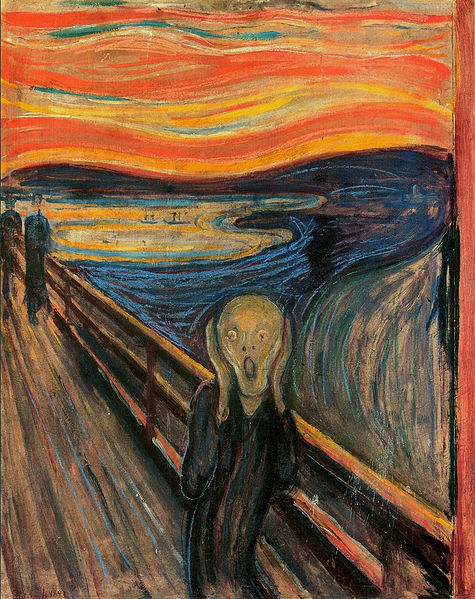
How would a “productive day” compare to a “creative day”? What would, if anything, they have in common? Chances are not much.  One might think a productive day would be closely aligned with scratching off items on a to-do list. On the other hand, someone’s idea of a creative day might not even have a to-do list. 475px-The_Scream

Our current work world is obsessed with productivity. We are inundated with books, articles, white papers, to time block this and time block that; all just to do more work. But our relentless quest to be productive is undermining one of the most important abilities in today’s workplace: creativity.

What of the future, though? Will machine learning and artificial intelligence perform the routine aspects of our work at the expense of our ingenuity and creativity? So how do we create the right conditions for creativity, particularly when we are trying to deal with a to-do list?

Consider this comment from screenwriter Aaron Sorkin (the mastermind behind the television show West Wing and films like Moneyball and The Social Network). He told The Hollywood Reporter that he takes six showers a day. “I’m not a germaphobe,” he explains but when his writing isn’t going well, he’ll shower, change into new clothes, and start again.

Sorkin’s trade relies on him minting something fresh on a regular basis. And it occurred to him that his best thoughts were not happening in moments of fevered concentration, but when he was in the shower. So he had a shower installed in the corner of his office and makes regular use of it. He has described the process as “a do-over” for triggering original ideas.

In 1939, James Webb Young, a Madison Avenue advertising executive, wrote a definitive guide to the process of creativity, A Technique for Producing Ideas. In this short book, Webb Young reminds us, “that an idea is nothing more nor less than a new combination of old elements.” In his view, the skill of creativity is the ability to spot new connections between familiar thoughts, and the art is “the ability to see [new] relationships.”

Fifty years later, Steve Jobs observed something similar: “Creativity is just connecting things. When you ask creative people how they did something, they feel a little guilty because they didn’t really do it, they just saw something. It seemed obvious to them after a while. That’s because they were able to connect experiences they’ve had and synthesize new things.” Webb Young also lays out a remarkably simple technique for creative thought. It involves stimulation. Continue reading

Quotes Times Ten . . .

The ones who see things differently…who are not fond of rules…they change things. They invent. They imagine. They heal. They explore. They create. — Steve Jobs

Be brave enough to live life creatively. The creative place where no one else has ever been. – Alan Alda

Where there is shouting, there is no true knowledge. – Leonardo da Vinci

I think it’s better to be overly ambitious and fail than to be underambitious and succeed in a mundane way. I have been very fortunate. I failed upward in my life! – Francis Ford Coppola

Meetings are all too often the burial grounds of great ideas. — Keith Reinhard, member, Advertising Hall of Fame

You cannot force ideas. Successful ideas are the result of slow growth. Ideas do not reach perfection in a day, no matter how much study is put upon them. – Alexander Graham Bell

The most dangerous phrase in the language is, We’ve always done it this way. – Grace Hopper

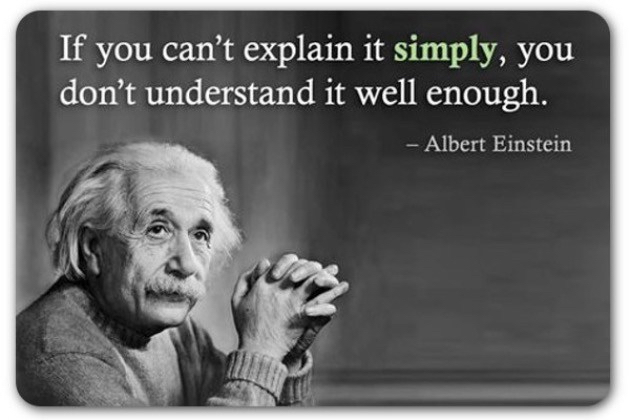
If at first, the idea is not absurd, then there is no hope for it. – Albert Einstein

We are drowning in information, while starving for wisdom. The world henceforth will be run by synthesizers, people able to put together the right information at the right time, think critically about it, and make important choices wisely. – E. O. Wilson


There is nothing to writing. All you do is sit down at a typewriter and bleed. — Ernest Hemingway

Hopefully making a ruckus, one blog post at a time!

Be sure to check out my other blog, Joe’s Journey, for personal insights on life and its detours.
Obsession with Productivity Can Kill Creativity.

Don’t Let It Kill Yours!

How would a “productive day” compare to a “creative day”? What would, if anything, they have in common? Chances are not much.  One might think a productive day would be closely aligned with scratching off items on a to-do list. On the other hand, someone’s idea of a creative day might not even have a to-do list.

475px-The_ScreamOur current work world is obsessed with productivity. We are inundated with books, articles, white papers, to time block this and time block that; all just to do more work. But our relentless quest to be productive is undermining one of the most important abilities in today’s workplace: creativity. What of the future, though? Will machine learning and artificial intelligence perform the routine aspects of our work at the expense of our ingenuity and creativity?

So how do we create the right conditions for creativity, particularly when we are trying to deal with a to-do list?

Consider this comment from screenwriter Aaron Sorkin (the mastermind behind the television show West Wing and films like Moneyball and The Social Network). He told The Hollywood Reporter that he takes six showers a day. “I’m not a germaphobe,” he explains but when his writing isn’t going well, he’ll shower, change into new clothes, and start again. Sorkin’s trade relies on him minting something fresh on a regular basis. And it occurred to him that his best thoughts were not happening in moments of fevered concentration, but when he was in the shower. So he had a shower installed in the corner of his office and makes regular use of it. He has described the process as “a do-over” for triggering original ideas.

In 1939, James Webb Young, a Madison Avenue advertising executive, wrote a definitive guide to the process of creativity, A Technique for Producing Ideas. In this short book, Webb Young reminds us, “that an idea is nothing more nor less than a new combination of old elements.” In his view, the skill of creativity is the ability to spot new connections between familiar thoughts, and the art is “the ability to see [new] relationships.”

Fifty years later, Steve Jobs observed something similar: “Creativity is just connecting things. When you ask creative people how they did something, they feel a little guilty because they didn’t really do it, they just saw something. It seemed obvious to them after a while. That’s because they were able to connect experiences they’ve had and synthesize new things.”

Webb Young also lays out a remarkably simple technique for creative thought. It involves stimulation. Continue reading

Boosting Your Creativity – Just Like Einstein – Even in Crisis Times! Part 1.

Even during times of crisis and major uncertainty, creativity is very useful. The outbreak gripping the world at present, the Corona Virus (covid-19), is causing all sorts of interruption globally. The pandemic is causing us to think like we’ve never thought before or at least in a very long time.

Creativity brings itself to the forefront once again. How we use it to solve some almost unthinkable problems is up to us. Fortunately, we have viable resources upon which to fall back.

In the continuing process of exploring the myriad aspects of creativity, I was intrigued by this article from the Trillo blog regarding how Albert Einstein used a certain kind of “play” to enhance his creative streaks. What’s appealing to me is that all of us can learn from this, whether or not we’re engaged in a global pandemic.

I dare say everyone wants to boost their creativity. Now especially. How about boosting it on a par with the likes of Einstein? Well, it has to do with what’s referred to as Combinatory Play.

What the heck is Combinatory Play?

“Combinatory play seems to be the essential feature in productive thought.”
– Albert Einstein

The term “combinatory play,” also known as combinatorial creativity, was perhaps first coined by Albert Einstein in a letter to French mathematician Jacques Hadamard. In an attempt to understand mathematicians’ mental processes, Hadamard asked Einstein about how he thought.

Einstein-final

Einstein’s letter reply, later published in Ideas and Opinions, explained that his thinking process transcended what could be communicated in the written or spoken word, but that there was “a certain connection between those elements and relevant logical concepts.”

Huh?

Well, Einstein was known to play violin whenever he was stuck on a tough problem and often spoke of how music influenced the way he thought about math and science. His sister, Maja, said that sometimes after playing piano, he’d get up and say, “There, now I’ve got it.”

Albert Einstein quote

Call it combinatory play, combinatorial creativity, or intuition—we’ve all experienced that flash of insight, that fleeting moment when a solution we’ve been grinding away at reveals itself in an unexpected place. Playing violin helped Einstein theorize about time and space. What might be your Combinatory Play?

“Creativity is just connecting things.” – Steve Jobs

Steve+Jobs

Stuck in Traffic on the Neural Pathway to Nowhere

Understanding why Combinatory Play boosts creativity, means we should look at how the brain works.

The brain’s building blocks are neurons: nerve cells that receive and transmit signals along neural pathways. In Harvard professor of psychiatry John Ratey’s A User’s Guide to the Brain, certain pathways are forged at birth, like the ones that control your breathing and heartbeat. Others can be manipulated by learning. So when you’re stuck in a rut, your brain’s neurons could literally be stuck on a neural pathway you’ve carved out through your behavior.

The good news is you can get your brain unstuck by choosing to make new connections—forge a new neural pathway. Ratey explains, “A person who forcibly changes his behavior can break the deadlock by requiring neurons to change connections to enact the new behavior.”

If you’re frustrated by mental processes that lead nowhere, it’s kind of like your brain is taking the same old route to work every day because that’s what you’ve trained it to do. But if the highway is congested and you’re sitting in traffic, it’s up to you to tell your brain that there’s a new route it should take to get to where you want to go.

Comfort In Familiarity

Your brain is continually striving for order and predictability, and as a result, can get pretty set in its ways. While reverting to familiar paths can keep you safe and comfortable, it can also hinder your creativity. Therefore, it’s important to quiet this part of the brain if you want to invent new solutions. Combinatory Play can help you do this by relaxing your mind.

The Brain’s Inclination for Seeking Patterns Encourages Innovation

As clinical psychologist Victoria Stevens explains: “Our pattern-seeking behavior is an essential part of creative thinking, although it can also produce false assumptions and biases when previous experiences lead us to beliefs we do not question. In addition, finding links, connections, and patterns between apparently dissimilar things is essential to creative thinking.”

Your pattern-seeking behavior can benefit you in creative thinking. Just remember to:

  • Question your assumptions
  • Try to find patterns where it seems like none exist

Combinatory Play allows you to zoom out, see the bigger picture, and spot the patterns. This is especially true at times like this. Think and act creatively and responsibly, not out of fear or panic but out of rational, logical thought. The calmer we are, the better.

Continued in Part 2 . . .


Thanks to Amy Rigby in