
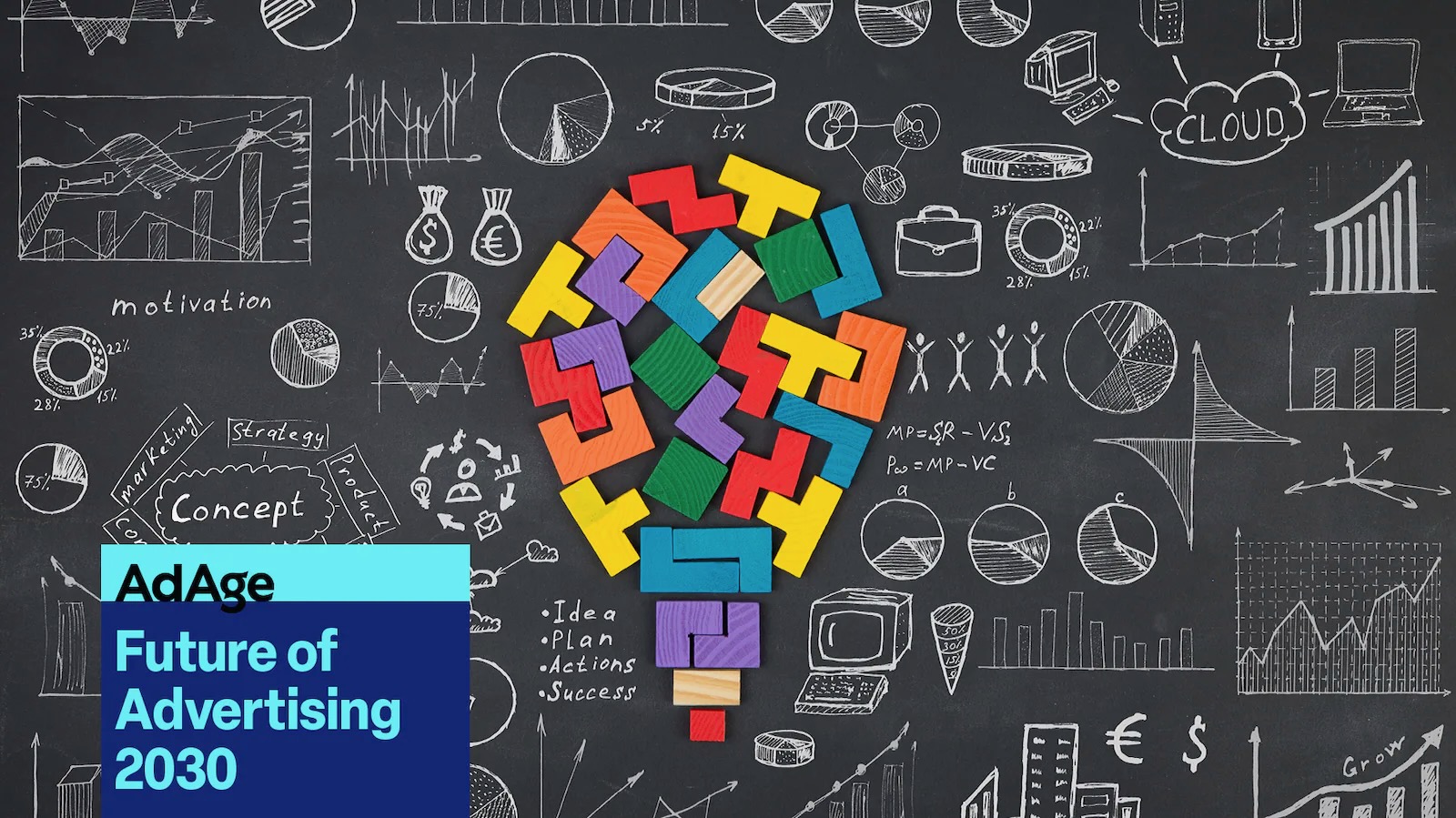
8 agency leaders divulge the most pressing issues facing their business—and how they’re navigating them

The 4As hosted a roundtable with Ad Age and seven industry leaders from holding companies and independent agencies at Advertising Week New York to discuss some of the most pressing issues facing executives today.

Lindsay Rittenhouse reported that the roundtable included a lineup of executives spanning a wide range of roles and companies: 4As CEO Justin Thomas-Copeland; Stacey Hightower, CEO of Omnicom Specialty Marketing Group; Frances Webster, CEO of independent agency Walrus; Tracey Faux-Pattani, CEO of independent shop Butler, Shine, Stern & Partners; Chris Foster, CEO of Omnicom Public Relations Group; Ian Grody, chief creative officer of independent shop Giant Spoon; Joe Baratelli, executive VP and chief creative officer of independent agency RPA; and Nada Bradbury, CEO of Ad-ID, which sets a standard for the industry to identify advertising assets across all media.

These leaders discussed a wide range of topics, including how they are using AI in their day-to-day; how they are driving value in their agencies; the means to stand out in an increasingly crowded market; and what talent they are hiring.

Some takeaways from the conversation:

How agency leaders are using AI

Webster said Walrus is using AI to respond to an “RFI right now … it’s helping us with upfront strategy and segmentation.”

“It’s like the internet from the ‘90s, you’ve got to surf the wave and you can’t have a two-year plan,” she said. “It’s a three-month plan or a six-month plan. But if you’re not engaging with it, you’re out.”

Hightower said Omnicom Specialty Marketing Group has been using AI in Europe “for quite some time.” He said the agency created a call center that has been using AI to speak with customers who dial in on branded hotlines. It’s also now bringing internal efficiencies. For example, Omnicom Specialty Marketing Group uses AI to sift through resumes.

“We do probably 5,000, on average, hires a year in Europe … We can’t get to every resume that comes into our inbox,” Hightower said.

“We’re an indie shop, so we’re bootstrapping everything,” Baratelli said. “We’re using it around the stuff no one wants to do, reporting, scoping.”

The conversation came on the heels of Madison Logic releasing new research from a Harris Interactive survey of more than 300 business-to-business marketing leaders. It found that three in four of those surveyed believe the future of advertising will be defined by AI-driven creative processes (73%) in the next five years. Two in three of those surveyed predicted personalization at scale and immersive advertising (66% each) will become more prevalent, and 84% believe traditional advertising will be dead by 2030.

Still, all of the executives agreed that advertising is a relationship business and nothing will change that.

“It’s important to point out that these are all really responsible uses of AI,” Ad-ID’s Bradbury said. “What we are seeing on our side is folks trying to understand the various uses of AI. So everybody does all this great work [and] we’re getting calls saying, ‘Can you help verify this for me? Is this a product that came out of an agency? There’s this other layer that you just can’t control [AI] that we need to start to wrap our arms around it.”

Strategists are in demand

AdAge asked what jobs are most in demand right now and strategy was the one definitive.

Faux-Pattani said BSSP is always on the hunt for great strategists, but noted that the shop sometimes struggles to find truly top candidates in that space. She said curiosity is always needed in that role, but the agency has had a hard time finding candidates who have curiosity that is “intuitive” versus “data curiosity.”

The strategy role is also shifting and putting more pressure on professionals in those roles.

Since clients are buying more “connected solutions,” agencies need strategies to be adept in everything from “commerce to brand, to media, to analytics, to creative understanding,” Thomas-Copeland said. “I don’t know any strategies that can do all of those things really well. And then at the same time in the room there was a call for strategy as a function to be front-of-house with clients. So suddenly they’re in a new environment.”

Webster argued that strategists and account people now have to “battle together … as an account strategist, you really need to understand your client’s business much better than they do.”

Hunting for new business opportunities

Most of the executives said there is a lot of opportunity to win new pieces of business, but they are far-ranging in size. Industry and agency leaders also have to be strategic in deciding what accounts to go after. 

Health care agency reviews are on the rise, for example, and Faux-Pattani said she sees a lot more “emerging brands” looking to hire shops right now.

In terms of the boon in health care agency reviews, Thomas-Copeland said that category has always been more “resilient” to macroeconomic factors. Still, 4As agency members have told the organization that even within health care marketing, “projects are not being solidified … in terms of planning and commitments, there’s a bit less of that,” he said.

Thomas-Copeland said agencies are having to place “their bets on where they’re going to look for opportunity, and trying to get really good at judging what is an opportunity that looks like it has some longevity, versus the one-and-done.”

“We’ve been very selective over the past 18 months or so in terms of the clients that we pursue from a business perspective and it’s worked,” Giant Spoon’s Grody said. “Over the last six months, we’ve won 67% of our pitches. The reason is we go after fewer, bigger, better and then we find smaller clients where we see that profound growth potential.”

Webster said Walrus has had success going after emerging brands that have reached $200 million to $400 million in revenue and are “ready to spend. They’re either getting ready for an IPO or sale, or they’ve just sold and need to show return on that investment,” she said.

For Omnicom Public Relations Group, Foster said it’s a much different situation.

“We will probably chase 2,500 RFPs in the course of a year,” he said. “We’re doing 100 or so a week as a network, if not more. The deal flow is very different in PR than advertising and media … in Europe, I’m seeing competitive consolidation in the marketplace, and so the deal sizes are small because there’s just a lot more competition.”

How to stand out in a crowded market

Faux-Pattani said she’s starting to see more intimate pitches with two or three competing shops, versus somewhere between four and six, which she welcomes. She said she sometimes will turn down a pitch if there are too many shops vying for the account.

That might be good for the agencies invited to pitch, but that means there are even fewer opportunities to get a foot in the door. The executives discussed how they are standing out in an increasingly overcrowded market that sees new agencies popping up seemingly every day to compete with holding company shops and independents alike.

“There are 14,000 agencies out there,” Webster said, making it more pertinent to understand your niche and where it makes sense for you to show up as an agency. Walrus, she said, goes after the opportunities it wants, rather than waiting for them.

“We have a robust sales department, PR program and outreach program,” she said. “For these smaller pieces of business, too, it’s much easier to hunt—to prospect, build, identify opportunities and make relationships, so we’re not actually having to go into a pitch. We close a lot of business that way.”

Hightower said Omnicom Specialty Marketing Group promotes itself through “product innovation and storytelling.”

“In Europe, we will pitch a suite of modalities, so we’ll say, ‘Give us your budget and we’ll figure out the best way to implement your spend across a number of modalities,” he said. “That has resonated well in that marketplace. In the U.S., it’s been through technology, building platforms where we are able to acquire data about the client, about their value chain, and then providing them feedback that can help them reduce costs and get more bang for their buck.”

Despite the conservative backlash to diversity initiatives, the executives said they remain committed.

The state of DEI

“From a 4As standpoint, the focus will continue to be on inclusive teams, and inclusive teams are great for business, they’re great for being an economic multiplier, they’re great for brands being much more in tune with the market,” Thomas-Copeland said.

Webster reiterated that point, saying companies with diverse boards and teams outperform those that are not.

“We’ve always been committed to inclusivity,” Grody said. “We remain committed to inclusivity. Nothing has changed.”

Hopefully making a ruckus, one blog post at a time!

Be sure to check out my other blog, Joe’s Journey, for selected short stories and personal insights on life and its detours.

Ideas, not AI, will decide who survives in 2030

In a world where everything can be personalized and optimized, there’s only one true differentiator left: ideas. (Adobe Stock)

AI will undoubtedly shrink the marketing services industry. Or so that’s the opinion of industry paper Ad Age via author Barry Lowenthal in a recent piece a few weeks back. Thought it worthwhile to share again especially to those of you who may not have seen it yet.

Many of the functions agencies are paid for today—targeting, media planning, asset versioning — are already being handled faster and cheaper by machines.

Yet the most successful agencies in 2030 won’t be those with the biggest AI budgets; they’ll be the ones still capable of original thought.

Since the explosion of generative AI, holding companies have raced to future-proof themselves, pouring hundreds of millions of dollars into the technology. They’ve hired engineers, signed vendor deals and built proprietary tools. The logic is that automation improves margins by enabling more work to be produced with less overhead, and it’s attractive to clients.

But here’s the problem: Everyone is doing the same thing.

AI platforms might look different, but they’re powered by the same foundation—similar models, trained on similar data, offering similar outputs.

AI is a great equalizer. While early investment and enterprise deals offer short-term advantages, the tools are ultimately accessible to all. As technology becomes commodified, there’s only one true differentiator left: ideas.

In a world where everything can be personalized and optimized—where every ad element, from celebrity to color palette to music cue, is engineered for conversion—what cuts through is the unexpected.

Zany, emotional, human ideas. The kinds that make people laugh out loud, tear up or text a friend because it hit a nerve. The kind no algorithm can predict because they come from life experience, not data.

Those ideas aren’t born from prompts or dashboards, but from humans living messy, interesting lives—wandering museums, walking unfamiliar streets, swapping stories at a dive bar.

The agencies that stay relevant in an AI era will be the ones that protect this kind of cultural immersion. They’ll hire for life experience, not just technical literacy. They’ll measure inspiration like they do performance, instead of grinding their teams into creative exhaustion. They’ll reward originality over speed and efficiency. 

If the goal is to survive the next five years, curiosity and creative instinct must be treated as core competencies.

That means rethinking workflows to allow time for discovery, not just delivery. It means protecting those unproductive long walks and deep rabbit holes.

The payoff won’t always show up neatly in a dashboard, so it will be a challenging pitch to the CFO. But in a world where AI devours everything else agencies in once thought made them valuable, it’s the only bet worth making.

That’s the future. And no, you can’t buy it; you have to nurture it.

********

I agree with Mr. Lowenthal, original thought leading to creatively inspired ideas will and must lead the way. I’ve been involved in this business for several decades and I realize that the industry has turned into a young person’s game. Most have grown up with AI and consider it the “standard.” That is unfortunate. It still must be considered a tool in the work belt of the creative person who’s developing the idea. It can’t be used as the end-all. That is unless sameness is one’s idea of creative thought.

Hopefully making a ruckus, one blog post at a time!

Be sure to check out my other blog, Joe’s Journey, for selected short stories and personal insights on life and its detours.

‘Unfairy Tales’ Wins Cannes Grand Prix

This animated spot is simply awesome. And touching. And serious. And gripping.

It sort of grips you by the throat as you’re reaching for the Kleenex.

UNICEF_UnfairyTalesMalakandtheBoat16

Every so often I see a commercial or piece of design work that intrigues me or, in this case, stops me in my tracks. The photo still alone does that but the spot goes on to do more damage to my soul.

According to Advertising Age’s “Creativity,” 180LA and UNICEF have earned the Cannes Grand Prix for Good for the “Unfairy Tales” campaign, a series of films that first seem to start out like sweet kids’ stories but then take dramatic and, at times, terrifying turns when you discover the children are fleeing for their lives from war-torn Syria.

Among the stories were the tale above, “Malak and the Boat,” which chronicled a seven-year-old girl’s harrowing journey on the seas, and, at the end of the trip, is the only survivor of a boat that had been once full of her fellow countrymen.

Kudos to the men and women who had the guts to go forth with this message and for the artful way in which it was created and produced. While the animation brings a potent emotional punch to the stories, the appearance of the real-life protoganists at the end of each short really drives the point home.

Visually stimulating animation and poignant storytelling.

A powerful combination. We’d be well served to see more of this.

The short films mark the debut of UNICEF’s #actofhumanity global initiative, designed to promote positive perception of the tens of millions of refugee children around the world.

The Grand Prix for Good is chosen from all the Gold Lion-winning work that was created for charities or not for profit, as well as those with public service messages, with the exception of those awarded in Pharma, Health/Wellness, Innovation and Film Craft. Such efforts are not eligible for Grand Prix in their respective categories. The Titanium/Integrated Grand Prix jury determines the winner.

Nicely done and well deserved!

A little creative juice for the soul. Thank You, Creativity!

Ever get curious? Well, I was curious as to what the back cover of my Advertising Age issues referred when they featured someone and a quote. Near the bottom of the page was listed “Thank You Creativity.”

join-us-02

OK, what gives?

“A love letter to the stories, lessons and magic of creativity.” Or so says the home page.

The rest is rather intriguing. See for yourself and Enjoy.

Thank You, indeed, Creativity!

Advertising Hall of Fame Quotes – Part 6

Here’s the sixth in a series of various worth-remembering quotes which I find interesting and inspiring, and, hopefully, you will, too. Excerpted from the newsletter “Smart Brief” from the American Advertising Federation, these quotes are usually from a member of the Advertising Hall of Fame.

quote

51. I have a theory that the best ads come from personal experience. Some of the good ones I have done have really come out of the real experience of my life, and somehow this has come over as true and valid and persuasive.

— David Ogilvy

52. Too many ads that try not to go over the reader’s head end up beneath his notice.

— Leo Burnett

53. You can’t use up creativity. The more you use, the more you have.

— Maya Angelou (not part of original series; just a great quote)

54. Meetings are all too often the burial grounds of great ideas.

— Keith Reinhard

55. Play by the rules, but be ferocious.

— Phil Knight

56. A good ad should be like a good sermon: It must not only comfort the afflicted, it also must afflict the comfortable.

— Bernice Fitz-Gibbon

57. Some questions don’t have answers, which is a terribly difficult lesson to learn.

— Katharine Graham

58. Appeals that sound good when described to a client or employer are not always the most effective appeals that can be used. Clever, tricky ideas often sound fine when described in a conference room. But some simple, basic, plain-as-the-nose-on-your-face idea will sell more goods.

— John Caples

59. Courtesy is the one coin you can never have too much of or be stingy with.

— John Wanamaker

60. I think the harder you work, the more luck you have.

— Dave Thomas

So, which ones are your favorites?

Do you have a favorite or favorites in the series?

Lemme know.

Advertising Hall of Fame Quotes – Part 2

Here’s another in a multi-part series of various worth-remembering quotes which I believe you’ll find interesting and hopefully inspiring. Excerpted from the newsletter “Smart Brief” from the American Advertising Federation, these quotes are usually from a member of the Advertising Hall of Fame.

Get ready to chuckle, and, I hope, remember.

q-curly-double

11. Know what the client wants, know what the client needs, and know how to cause the client to want what the client needs.

— Keith Reinhard

12. The good ideas are all hammered out in agony by individuals, not spewed out by groups.

— Charles Brower

13. The three ingredients of effective advertising are relevance, originality and impact, the initials of which spell out what clients most desire: ROI.

— Keith Reinhard

14. Anyone who thinks that people can be fooled or pushed around has an inaccurate and pretty low estimate of people — and he won’t do very well in advertising.

— Leo Burnett

15. Creativity varies inversely with the number of cooks involved in the broth.

— Bernice Fitz-Gibbon

16. When you are through changing, you are through.

— Bruce Barton

17. There are two kinds of men who don’t amount to much: those who can’t do what they are told and those who can do nothing else.

— Cyrus H. K. Curtis

18. You must make the product interesting, not just make the ad different. And that’s what too many of the copywriters in the U.S. today don’t yet understand.

— Rosser Reeves

19. Advertising is the ability to sense, interpret … to put the very heart throbs of a business into type, paper and ink.

— Leo Burnett

20. An important idea not communicated persuasively is like having no idea at all.

— William Bernbach

So, which one or ones is/are your favorite(s)? Lemme know.

Why Would Burger King Sell Red Burgers in Japan?

Sell red what? That’s what I thought when I first saw the headline, “The Inside Story on Why Burger King Sells Red Burgers in Japan.”

I didn’t think someone would make this up, especially since Advertising Age was reporting the story. Well, I became intrigued and felt like this may make for an interesting blog post on a site like this, exploring all forms of creativity and innovation.

Even in a land of relentlessly wacky fast food innovations, Burger King Japan has nabbed a lot of attention with its all-black burgers.

BK's Black Burger

Burger King Japan’s black burger.

Yeah, you heard right. The sight of pitch-black buns and cheese, evidently, really gets to people.

Pass the Pepto, please!

But wait, that’s nothing.

Burger King Japan recently launched an all-red burger, with red-colored cheese, buns and, obviously, hot sauce. A Google search turned up more than 150 headlines in English alone on the new creation.

What Better Way to Get Brand Attention on a Tight Budget?

The Aka Samurai from Burger King Japan. Also comes with chicken.

BK's Red Burger

As some of you may be gasping about now at the sight of the Red Burger (personally, I prefer the sight of the Red version over the Black), the question arising in my mind was “why?”

Obviously, the folks at Ad Age were curious, too. So, Burger King Japan’s general manager for business management, Masanori Tatsuiwa, who worked previously at agencies including Ogilvy & Mather Japan, answered a few questions about the red Aka Samurai Burger (buns and cheese tinted with tomato powder), the black Kuro Burger (which used bamboo charcoal and squid ink), as well as the brand’s “flame-grilled” personal fragrance.

Here are excerpts from that interview . . .

Ad Age: Where do these ideas come from, and what’s your process?

Mr. Tatsuiwa: We sit down with marketing and R&D look for something unusual. When we start to think about something, we have taste tests inside the restaurant. We have 93 restaurants in Japan.

At the moment we don’t have much ad budget in our hands, so we do almost everything by ourselves. We are not using any creative agencies for these products. This way we don’t need any big money to expand our awareness in the market.

Burger King is not big compared to the competitor companies in Japan. McDonald’s has about 3,000 restaurants in Japan. The local MOS Burger chain has almost 1,400 restaurants. (Editor’s note: Burger King re-entered Japan in 2007, after a first attempt had failed after eight years in 2001 amid tough fast food competition.)

Ad Age: How big is your marketing team?

Mr. Tatsuiwa: Five people. Including R&D.

Ad Age: So, why red this time?

Mr. Tatsuiwa: This is the fourth year we’ve had a black burger, and we wanted to have something new happen this year. And we were also thinking about the Burger King “Angry Whopper,” (a jalapeno-laden rendition of the classic), that launched in some markets, but with the color the same as usual. Brown. We thought making it red would make people curious and express the hot taste.

Ad Age: Are other markets picking up on these ideas?

Mr. Tatsuiwa: Burger King Singapore has a black burger and a white burger this year. Burger King Malaysia has a black burger called the Ninja.

Ad Age: On April 1 you had a one-day-only sale of something called “Flame-Grilled Fragrance.” (The 1,000-piece limited edition flasks sold for $41 and came with a Whopper. They sold out.) Why a perfume?

Mr. Tatsuiwa: The idea came from Burger King in the U.S., they had a perfume several years ago. We thought we could use that on “Whopper Day” in Japan.

We were thinking if we announced a launch for this kind of perfume for April 1 (yes, April Fool’s Day), some people might think it wasn’t true (and that would generate more conversations about it). But we seriously produced this product, and that was very effective. We collaborated with a local perfume company and asked them to produce a flame-grilled smell. It was a very unique order for them. They worked very hard on it. (I’m not making this up, gang. Sounds like the perfect White Elephant gift.)

Ad Age: How were sales?

Mr. Tatsuiwa: It was a record for one-day sales on a weekday.

Now, honestly, even as promotion-crazy as we tend to be in the US of A, I wonder if either one of these would fly. What do you think, marketers and creative folks? Would any of you client companies have the guts to try something like this or to let your agencies develop this kind of special promotion?

I doubt it.

Hell, if it tastes good, why not. Just put on a blindfold while eating one (especially the black version).

When we fail to fail, we fail. Creativity suffers.

In his recent talk before the Ad Age Small Agency Conference, Dan Wieden, co-founder of Wieden & Kennedy in Portland, OR, stressed the importance of failure, or, rather, the freedom to fail.

Talking about his agency’s mantra, “fail harder,” Mr. Wieden referenced the significance of one making three collossal mistakes before moving on to more fruitful creativity. He mentioned how mistakes are too often seen as marks of stupidity, instead of building blocks of knowledge.

I know, not everyone feels they have the flexibility to make ONE mistake, let alone three or more. That’s a scary thought!

Consistent barriers seem to be erected that prevent us from experiencing failure. Some are self-imposed, while others are insinuated by organizations and companies with which we work or perform services. Time to fail is rarely included in the timeline for producing most projects.

Everyone wants results now, not three days from now (at least, that’s how it feels at times). Yet, one must be diligent in expressing doubt that a hurried or tight timeline would include time to fail.

In today’s fast-paced business climate, failure doesn’t seem to be tolerated. “We don’t have time to fail,” seems to be the business mantra. Ah, therein lies the rub.

When it comes to creativity, those of us practicing it everyday don’t seem to be allowed to think about failure. Yes, I admit it – I did not achieve perfection on the first draft of my _________ (fill in the blank with design, article, illustration, photograph or whatever).

I “failed.”

190px-The_Scream

Edvard Munch’s “The Scream”

That’s hogwash (technical term)!

Companies like Nike, Apple, Pixar and even others much smaller in size, openly embrace failure and incorporate it into their systems.

Those who don’t engage creativity everyday, seem to think that it’s some commodity one can easily switch on or off at will. This attitude does a disservice to those involved in practicing the craft as well as for whom they are practicing it.

It’s unrealistic to ignore failure. It’s unrealistic not to schedule time for its possible appearance. It’s reality that we need to learn from the process to improve upon what we just created. We need to make time to do that, and then move on.

The other reality: Will anybody really care?