At the Intersection of Curiosity and Creativity

Seems like I’ve run across a number of articles over the past month or so dealing with a variety of topics in the realm of creativity. This posting is no different, and, yet, it is, uh, different. While many may find it difficult to define what creativity is, many will no doubt have an easy time knowing about curiosity. While everyone is curious, not everyone sees themselves as creative. Well, maybe this post will alter your perspective.

An article I recently came across by Helge Tennø discusses what happens at the intersection of creativity and curiosity, and what doesn’t happen.

He states the reason we struggle to come up with original ideas is not for a lack of creativity but a lack of curiosity.

“Every year we go into the same room with the same information and the same questions .. what do you think happens? Every year we come out with the same ideas” — frustrated workshop facilitator.

Creativity is limited to what we already know, it is only the re-combination of available information and experience. Creativity is not magic, it doesn’t produce ideas out of thin air.

In addition, most competitors think the same way, because they use the same methods and the same questions to find the same insights.

Outperforming your competition is not as much about who is the most creative or who has the deepest data. It’s as much about who can see something nobody else can.

Currently the trend is to apply a lot of data to buy our way out of this problem. Hoping that the machine will magically see connections our human brains can’t.

But machines are only reflections of our own values, ideas and biases. If we are staring down one rabbit hole the machine will only help us dig deeper.

We should therefore redesign our creative workshops. From combining information into ideas, to exploring questions we need to ask and information we don’t have.

There is a simple way to unlock this behavior: just ask “what has to be true for x to be true”, where x is your strategy, an existing product, something you are already doing .. anything.

One of the most productive ways to learn something new is experimentation.

The purpose of an experiment is not to confirm that you are correct (sometimes it is), but it should most often be used to surprise you.

To help you learn something that you didn’t know two minutes prior.

And the way to do that is to reduce the cost of an experiment to almost zero (because if experiments are expensive the organization will more likely prioritize experiments confirming their existing knowledge).

The real measure of success is the number of experiments that can be crowded into 24 hours.” — Thomas Alva Edison

With cheap and fast experiments the company can explore hypotheses and assumptions they never tested before, learn new things, capture new insights, venture into new areas.

With their new learnings they can combine both information they never had before with questions they never asked before.

“Researchers suggest it is uncertainty, or when you think you know something then discover you don’t, that leads to curiosity and learning outcomes.” — Celeste Kidd, assistant professor of psychology at UC Berkeley.

In short:

We only know what we know, and we know very little. (But we know a lot more than we think we do.)

We need to shift our focus from creativity to insights and questions. And experimentation is a low hanging fruit and one of the fastest tracks we can use to get us there.

Recommended places to start your experimentation journey:

(4). Experimentation works, Stefan H. Thomke

(5). How managers can build a culture of experimentation, Frank V. Cespedes and Neil Hoyne

(6). Why Business Schools Need to Teach Experimentation, by Elizabeth R. Tenney, Elaine Costa, and Ruchi M. Watson

(7). Get Comfortable Breaking Your Product, Rik Higham


While I agree with most of what the author states, creativity should always embrace insights and questions. Creativity is not borne out of thin air but rather from the insights and experiences we have within us. Curiosity can definitely spur on creativity and vice versa.


Hopefully making a ruckus, one blog post at a time!

Be sure to check out my other blog, Joe’s Journey, for personal insights on life and its detours.

And, check out creative selections from my website.

Jolan tru!

Seven Principles for the Future of Creativity

Recently, I came across an article featuring Nick Law, global creative chairperson, Accenture Song, laying out seven principles for the future of creativity. He took a deep dive into the necessity of establishing and embodying principles as a brand. 

Law stated, “Every company needs to have consistent principles and dynamic practices. Sometimes, our industry forgets that it needs to be dynamic.” 

He shared a set of principles that can help brands cultivate a fresh perspective when it comes to generating creative business ideas. 

Nick Law, Accenture Song’s global creative chairperson was speaking at Goafest 2023

The seven principles for the future of creativity, guided by Law, emphasize the importance of embracing creativity, technology, and collaboration.

The principles are as follows:

Consistent principles, dynamic practices

Law’s first principle highlighted the need for organizations to establish robust principles as a framework while adapting to the changing practices of the industry. 

“Without such principles in businesses, scaling becomes a challenge. We need to maintain a strong marketing philosophy while fostering innovation within a company,” he said. 

Singular vision, collaborative culture

The second principle emphasizes the importance of collaboration in the creative process. 

Law shared, “The need for mixing and matching different talents and fostering a collaborative environment within teams is key.”

First, design yourself

Law’s third principle shared the prominence of being sharp at the top level and connecting at the bottom level of the marketing funnel. 

He said, “Organizations should have effective communication and connection between top-level management and employees at all levels. Clear communication and understanding of the company’s goals are essential for a brand’s success.” 

Loose with ideas, tight with execution 

Law’s fourth principle pointed out the need for creatives to be dynamic and adaptable in the face of rapid change. 

He shared, “When it comes to ideation, it is key to connecting the diverse abilities, organization, and consumers to foster creativity within an organization. There should be both generalists and specialists within a business to ensure ideas are executed effectively.” 

Technology is creative 

“Creativity cannot exist without technology. Creatives should work closely with evolving technologies to achieve impactful storytelling,” expressed Law.

Deep simplicity

Law shared an example from his experience working with Nike, where a complex product was simplified to ensure consumers were not overwhelmed with unnecessary complexity. 

“While creating Nike Pods we had complicated the process with too much data. The key is to marry both creative ideation and technology to effectively target a consumer,” he said.

Start in the middle

Law also touched on the evolving marketing funnel, stating that the consideration phase is now key in the consumer journey. 

He concluded, “Businesses should look at human connections and emotions in the bottom level of the funnel. We should aim to create an impactful storytelling approach to engage consumers effectively.”


During the past ten to twenty years, creativity has seen a world of change and, yet, there are certain truths that, while tested, always bear fruit. Nick’s seven principles seem to echo those truths. Today’s creatives should take these seven principles to heart. You won’t be sorry.


Hopefully making a ruckus, one blog post at a time!

Be sure to check out my other blog, Joe’s Journey, for personal insights on life and its detours.

And, check out creative selections from my website.

Jolan tru!

Top Tips for Kick-Starting Creativity

Albeit some years back, I came up with a list of tips for kick-starting one’s creativity. These are tips I’ve learned over the years and have put into practice. May they serve you as well as they have me!

Hopefully making a ruckus, one blog post at a time!

Be sure to check out my other blog, Joe’s Journey, for personal insights on life and its detours.


Feel free to review various creative selections from my website.

Quotes and Quotes

Each month I feature a variety of quotes from different personalities on different subjects. However, they all center around one topic: Creativity. Enjoy!


Creativity requires the courage to let go of certainties. – Erich Fromm

There is nothing like a dream to create the future. – Victor Hugo

A good ad should be like a good sermon: It must not only comfort the afflicted, it also must afflict the comfortable. — Bernice Fitz-Gibbon, member, Advertising Hall of Fame

Horace Mann said, ‘Be ashamed to die until you have won some victory for humanity.’ Let’s paraphrase that tonight. Let us be ashamed to LIVE without that victory. — Rod Serling “A Most Non-Political Speech” May 31st 1964, Delivered by Dick Van Dyke/ Los Angeles Memorial Coliseum

Time is what we want most and what we use worst. – William Penn

Like the musical score, a mission statement is only as good as the performance it inspires. — Keith Reinhard, member, Advertising Hall of Fame

The heart of creativity is discipline. — William Bernbach, member, Advertising Hall of Fame

Let’s gear our advertising to sell goods, but let’s recognize also that advertising has a broad social responsibility. — Leo Burnett, member, Advertising Hall of Fame

Why do musicians compose symphonies and poets write poems? They do it because life wouldn’t have any meaning for them if they didn’t. That’s why I draw cartoons. It’s my life.⁠ —Charles M. Schulz⁠

Good advertising is written from one person to another. When it is aimed at millions, it rarely moves anyone. — Fairfax M. Cone, member, Advertising Hall of Fame


Hopefully making a ruckus, one blog post at a time!

Be sure to check out my other blog, Joe’s Journey, for personal insights on life and its detours.


Emotional intelligence creates climate, enabling creativity

Creativity is all around us. We can’t escape it. There are those of us whose livelihood depends on creativity, the designers, artists, writers, etc. There are countless others who are affected by creative surroundings and may not realize it. Whether or not we do, we all have emotions that definitely affect creativity.

But what if we feel creatively deprived? What if a designer feels one day that he/she just doesn’t feel inspired? What if we feel we’re having an “off” day?

A recent study in the Journal of Creative Behavior shows the power of emotional intelligence to make creativity happen. The study from the Yale Center of Emotional Intelligence found that emotionally intelligent supervisors create a climate that benefits creativity and innovation in those they work with.

Zorana Ivcevic Pringle, Ph.D., provided the synopsis of the study, highlights of which are outlined in this blog post. Dr. Pringle is a Senior Research Scientist at the Yale Center for Emotional Intelligence. She studies the role of emotion and emotion skills in creativity and well-being, as well as how to use the arts (and art-related institutions) to promote emotion and creativity skills.

What do emotionally intelligent supervisors do? First, they are skilled at reading employees’ emotions, such as realizing when someone is upset or disappointed or when they are worried about changes at work. They not only can read emotions but acknowledge them explicitly.

Second, they help employees channel their feelings toward achieving important goals. They inspire enthusiasm and they model decision making that takes into account both optimistic and pessimistic voices (and concerns and hopes behind them).

Third, emotionally intelligent supervisors understand how different decisions or events affect people’s experiences at work. And finally, they are able to successfully manage their own emotions, as well as help employees when they are upset or frustrated.

The just-published Yale study asked three groups of questions: One group of questions asked people to describe their supervisors’ behavior. Another group of questions asked about people’s emotional experiences of work. Finally, the third group of questions asked to what extent people have opportunities to grow and make progress at work and how often they are creative at work.

The study results show that when supervisors acknowledge that employees have feelings and that these emotional experiences matter, the work climate becomes more positive and supportive. Employees described dramatically different emotional experiences if they had supervisors who acted in emotionally intelligent ways or not.

The quality of relationships spilled into feelings about employees’ duties and tasks, and that, in turn, affected creativity and innovation in what they accomplished. Our study suggests that supervisors’ emotional intelligence is a job resource for their employees that helps both their wellbeing and successful performance at work.

When people were asked how they feel about work in their own words, two-thirds of the top feelings mentioned by those whose supervisors were emotionally intelligent were positive, while 70 percent of the top feelings mentioned by those whose supervisors were not emotionally intelligent were negative.

Those whose supervisors were emotionally intelligent mentioned being happy three times more often than being stressed. By contrast, those whose supervisors do not show emotional intelligence most often said they were frustrated and stressed. 

How do supervisors and leaders make a difference for their employees’ ability to be creative? Organizational behavior scholars Jing Zhou and Jennifer George have shown that emotionally intelligent supervisors know that emotions provide information about ourselves, the environment, and those around us.

Emotionally intelligent supervisors are able to notice employee dissatisfaction, recognize that dissatisfaction conveys information about a real problem, and can find a way to approach this problem as an opportunity for improvement. Emotionally intelligent supervisors can manage their own and employees’ emotions to help with creative work. They can recognize when people are overly optimistic and can provide informative feedback to prevent settling on ideas prematurely and inspire persistence.

The Yale study shows that supervisors can create a climate where employees have opportunities to grow and are inspired and motivated in their jobs. Supervisors who acknowledge that employees cannot leave emotions at the door, who recognize employees’ feelings, understand where they are coming from, and who help employees manage their feelings, will have both happier and more creative employees.

The results are relevant for anyone who influences others, such as teachers working with students or parents with their children. The emotional climate we create will influence both how those around us feel and what they are able to do.

This holds true for various sets of employees and those independent contractors whose specialties involve creativity and positive emotions. Indeed, the corporate world needs to be aware of this more than ever, especially when an increasing number of employees are rethinking a return to the office.

Here’s to positive re-enforcement of emotions amidst a favorable environment of creativity!


Hopefully making a ruckus, one blog post at a time!

Be sure to check out my other blog, Joe’s Journey, for a different kind of playground for creativity, innovation and inspiring stuff.


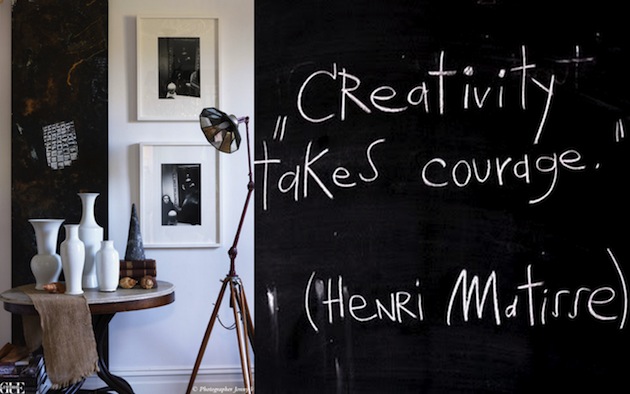
Creativity Takes Courage

Fear and courage don’t seem likely bedfellows. Yet, they are showing us every day how they play together amongst the citizenry of Ukraine. When you’re fighting for survival, it stretches the limit of one’s creativity. Some may say that creativity is not even involved in warfare. I disagree.

While creativity in warfare interacts with a much higher level of courage and seriousness compared to presenting an advertising campaign, it requires effort and takes courage, as Matisse says. The Ukranian people are showing resiliency and mucho bravery. Creativity lives within that realm.

Fear and courage impact our creative thinking and expression

Even in a non-combat zone, fear attacks us everyday. Courage is what most of us try and muster to get through a day’s time unscathed by said fear. We may not be fighting to stay alive but we are fighting. We’re fighting our internal demons and our self-doubt. We’re fighting to retain some of our creativity and resourcefulness.

Author and teacher Elizabeth Gilbert admits “the only reason I can speak so authoritatively about fear is that I know it so intimately. I know every inch of fear, from head to toe. I’ve been a frightened person my entire life.”

She points out that “Evolution did well to install a fear reflex within you, because if you didn’t have any fear, you would lead a short, crazy, stupid life. You would walk into traffic. You would jump into giant waves off the coast of Hawaii, despite being a poor swimmer…

“So, yes, you absolutely do need your fear, in order to protect you from actual dangers.

But you do not need your fear in the realm of creative expression.

Continue reading

What of Creativity in the 21st Century?

A lot of people have, over time, written about creativity. They’ve tried to define it, rationalize it and better understand it. There are opinions galore. The article I reference in this post offers another perspective on the subject of creativity in the here and now.

Creativity can be wonderful in its use and experience. Everyone enjoys that potential even if they don’t recognize it as one of their assets. It can also be quite frustrating during its process. Just think of giving birth to an original idea. Then developing that idea into something useful and meaningful. That can be rough sledding. It can also be a helluva lot of fun!

In so far as the state of creativity in the 21st Century, I ran across an article posted on Medium.com that addresses this subject. It’s quite interesting and I want to share it with you. See link below.

In his discussion, the author elaborates on three traits he feels are essential to develop a creative process that works for us and the people we serve:

  • Harnessing Flexibility is a Prerequisite
  • Seeking Collective Confidence and Collaboration
  • Having Empathy is the Key

Also, here’s a video clip from the late Sir Ken Robinson who was an expert on various aspects of creativity, especially how best to apply it in education.

Here’s the link to state of creativity in 21st Century.

Hopefully making a ruckus, one blog post at a time!

Be sure to check out my other blog, Joe’s Journey, for a different kind of playground for creativity, innovation and inspiring stuff.

Some More Quotes

As it has been about a month or so since we last published some quotes, we thought it timely to publish some news ones. Like before, it contains quotes from various acclaimed individuals from the worlds of advertising, philosophy, science, literature and education. So, go ahead and immerse yourself in creativity – intelligence having fun!

It is easier to tone down a wild idea than to think up a new one.— Alex Osborne, member, Advertising Hall of Fame

The important thing is not to stop questioning. Curiosity has its own reason for existing. One cannot help but be in awe when he contemplates the mysteries of eternity, of life, of the marvelous structure of reality. It is enough if one tries merely to comprehend a little of this mystery every day. Never lose a holy curiosity. – Albert Einstein

Creativity can solve almost any problem. The creative act, the defeat of habit by originality, overcomes everything. – George Lois

If one advances confidently in the directions of his dreams, and endeavors to live the life which he has imagined, he will meet with a success unexpected in common hours. – Henry David Thoreau

Those people who think they know everything are a great annoyance to those of us who do. – Isaac Asimov

An idea can turn to dust or magic, depending on the talent that rubs against it. — William Bernbach, member, Advertising Hall of Fame

Creativity is as important as literacy and numeracy, and I actually think people understand that creativity is important – they just don’t understand what it is. – Ken Robinson
 
If you’re not prepared to be wrong, you’ll never come up with anything original. – Ken Robinson
 
I believe this passionately: that we don’t grow into creativity, we grow out of it. Or rather, we get educated out if it. – Ken Robinson
 
Many highly talented, brilliant, creative people think they’re not – because the thing they were good at at school wasn’t valued, or was actually stigmatized. – Ken Robinson

Hopefully making a ruckus, one blog post at a time!

Be sure to check out my other blog,Joe’s Journey, for personal insights on life and its detours.

Creative Tidbits and Other Advice


The other day when I was putting some luggage back up into the closet, I came across a small notebook with a few items written in it. Must have been some of my notes from a long-ago seminar I attended somewhere. These statements are in no particular order and only one is attributable to someone. Take them for what they’re worth. Who knows, they may be able to help enhance your creativity.

Wasting time is usually resistance to writing

Be violent and original in your work, but be orderly in your normal life

Get quiet — be still and apply yourself

Creativity: Sudden cessation of stupidity

Most good ideas come fully formed

Celebrate small victories

“No” is a complete sentence

We have no art. We do everything as well as possible.

“Everything is art direction.” — Lee Clow

How to suck less: It’s not about concepts; it’s about execution (how we work)

Enemies: Laziness and Arrogance

“Effort and struggle to create simplicity and grace lives on in the soul.”


Hopefully making a ruckus, one blog post at a time!

Be sure to check out my other blog,Joe’s Journey, for personal insights on life and its detours.


Quotes Times Ten . . .

The ones who see things differently…who are not fond of rules…they change things. They invent. They imagine. They heal. They explore. They create. — Steve Jobs

Be brave enough to live life creatively. The creative place where no one else has ever been. – Alan Alda

Where there is shouting, there is no true knowledge. – Leonardo da Vinci

I think it’s better to be overly ambitious and fail than to be underambitious and succeed in a mundane way. I have been very fortunate. I failed upward in my life! – Francis Ford Coppola

Meetings are all too often the burial grounds of great ideas. — Keith Reinhard, member, Advertising Hall of Fame

You cannot force ideas. Successful ideas are the result of slow growth. Ideas do not reach perfection in a day, no matter how much study is put upon them. – Alexander Graham Bell

The most dangerous phrase in the language is, We’ve always done it this way. – Grace Hopper

If at first, the idea is not absurd, then there is no hope for it. – Albert Einstein

We are drowning in information, while starving for wisdom. The world henceforth will be run by synthesizers, people able to put together the right information at the right time, think critically about it, and make important choices wisely. – E. O. Wilson


There is nothing to writing. All you do is sit down at a typewriter and bleed. — Ernest Hemingway

Hopefully making a ruckus, one blog post at a time!

Be sure to check out my other blog, Joe’s Journey, for personal insights on life and its detours.