Viagra’s Emotional Rebrand Wins the Cannes Lions Pharma Grand Prix 

Vaseline and New Zealand Herpes Foundation also take top health honors

A bold herpes awareness campaign took home top honors in the Health categories at Cannes Lions 2025.

I know that Cannes has been over for a week or so but I read this and wanted to share it. Thanks toAUDREY KEMP, a staff reporter for Adweek based in New York City. Good advice and a good read, especially for those who may not be up on Cannes.

Pharma Lions

Viagra won the Grand Prix in the Pharma category.

The “Make Love Last” campaign by Ogilvy Shanghai and Viatris repositions Viagra with an emotional, cinematic narrative focused on intimacy and long-term relationships. The campaign marks a departure from more clinical or humor-driven approaches and was praised for its film craft and cultural sensitivity.

The sexual wellness brand’s cinematic campaign led the Health category winners at Cannes. Other Grand Prix honors went to Unilever’s Vaseline and a bold nonprofit awareness push for herpes education.

Health and Wellness Lions

Unilever’s Vaseline won the Grand Prix in Health and Wellness.

The “Vaseline Verified” campaign, led by Ogilvy Singapore, used social media creators to combat skincare misinformation online. The effort stood out for addressing health literacy in underserved communities and using platform-native storytelling to restore trust in science.

Health Grand Prix for Good

The New Zealand Herpes Foundation won the Grand Prix for Good.

“The Best Place in the World to Have Herpes,” developed by Finch and Motion Sickness, reframed stigma around sexually transmitted infections through bold humor and transparency. With help from real patients, the campaign used outdoor, digital and long-form content to drive destigmatization and raise awareness globally.

Review all the Cannes Lions Grand Prix winners here.

Hopefully making a ruckus, one blog post at a time!

Brands shy away from creative risk

Periodically I come across articles of interest that I want to share. Below is one such piece. It’s written by Aaron Baar and delves into the mindsets of marketers and their respective brands when it comes to taking risks. Given the current socio-political environment, it’s no wonder that companies are backing away from and giving second thought to creative risks. So, let’s get to it, shall we?

Among marketers, 63% are focused on short-term tactics rather than long-term brand building, up from 53% in 2023. Photo via Adobe Stock

Dive Brief:

  • Only 13% of brand marketers and creatives view their companies as “risk-friendly” when it comes to creativity, while 29% are highly risk averse, according to the 2025 State of Creativity report from Lions, which produces the annual Cannes Lions creativity festival.
  • The report, now in its fifth year, surveys more than 1,000 marketers and creatives around the world and includes qualitative information from one-on-one industry leaders. More than half of respondents (51%) said their customer insights are too weak to develop bold creative, and 57% said they struggle to react quickly to cultural moments. 
  • The survey also revealed that brands are increasingly focusing on short-term marketing activities, rather than long-term brand building. In the 2025 survey, nearly two-thirds (63%) of respondents said their brands were focusing on such tactics, up from 53% in 2023. 

Dive Insight:

Brand and agency executives are becoming more risk-averse when it comes to marketing creative, which could negatively impact growth, according to the largest creativity festival. Outside data cited in the report backs up the assertion that stronger creativity leads to better business results. Brands that take creative risks generate four times higher profit margins than those that don’t, per WARC and Kantar. Additionally, brands with an appetite for creative risk are 33% more likely to see long-term revenue growth, according to Deloitte.

The aversion to “creative risk-taking,” defined by the survey as “bold, unconventional ideas that challenge norms and engage audiences in unexpected ways,” boils down to issues marketers face like poor insights and an inability to respond to cultural moments quickly, per the report. 

With regard to insights, 51% of respondents said their ability to develop high-quality insights was poor or very poor. Conversely, only 13% said their ability was very good or excellent. The main barriers to developing quality insights were a lack of understanding and clarity as to what makes a good insight, not enough priority on insight development and insufficient time allocated to insight exploration. 

The report noted that strong agency-brand relationships and more diverse teams and methods yielded better, more actionable insights. Additionally, AI use also increased efficiency and reduced bias.

A lack of confidence in consumer insights is also leading to brands’ inability to respond to cultural moments. According to the report, 57% of brands struggle to react quickly when something happens, and only 12% rate their ability to do so as “excellent.” Other challenges include too many layers in the approval process and limited resources and investment. Recommendations include streamlining internal processes and shaping culture rather than chasing it.

Interesting take, wouldn’t you say? I’d be curious as to your take on this report and, given your perspectives, what comments you may have. Let me know, okay?

Hopefully making a ruckus, one blog post at a time!
Be sure to check out my other blog, Joe’s Journey, for selected short stories and personal insights on life and its detours.

Quotable Quotes: Sir John Speaks, Again.

In a recent blog, I published an excerpt of an interview with British advertising legend John Hegarty, co-founder of Bartle Bogle Hegarty. While he was there in Cannes for their 2018 Festival of Creativity, he had more to say during a lunch event.

Here are some of Sir John’s pearls of wisdom:

The fundamentals of marketing haven’t changed, the tactics have. But the marketing industry has forgotten the art of persuasion.

Marketing people don’t step out of their bubble enough and see how the general public live.

The separation of media and creative was one of the biggest mistakes ever. The market isn’t always right.

The three pillars of branding: Is it memorable; am I motivated by it; is it truthful? We remember ideas and things that move us.

We’re living in a celebrity culture, not a fame culture. Fame adds to a brand’s value, even if you’re not going to buy it. A brand is not only made by the people who buy it, but also by people that know about it.

The foundation of brands is trust.

Data has been around since the nativity, but we’ve become slaves to it, like we did with market research.

Message to creatives: read things other people aren’t reading.

Being the biggest isn’t the same as being a brand leader.

Have a favorite? Let me know!

Why Would Burger King Sell Red Burgers in Japan?

Sell red what? That’s what I thought when I first saw the headline, “The Inside Story on Why Burger King Sells Red Burgers in Japan.”

I didn’t think someone would make this up, especially since Advertising Age was reporting the story. Well, I became intrigued and felt like this may make for an interesting blog post on a site like this, exploring all forms of creativity and innovation.

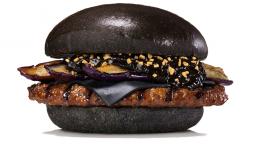
Even in a land of relentlessly wacky fast food innovations, Burger King Japan has nabbed a lot of attention with its all-black burgers.

BK's Black Burger

Burger King Japan’s black burger.

Yeah, you heard right. The sight of pitch-black buns and cheese, evidently, really gets to people.

Pass the Pepto, please!

But wait, that’s nothing.

Burger King Japan recently launched an all-red burger, with red-colored cheese, buns and, obviously, hot sauce. A Google search turned up more than 150 headlines in English alone on the new creation.

What Better Way to Get Brand Attention on a Tight Budget?

The Aka Samurai from Burger King Japan. Also comes with chicken.

BK's Red Burger

As some of you may be gasping about now at the sight of the Red Burger (personally, I prefer the sight of the Red version over the Black), the question arising in my mind was “why?”

Obviously, the folks at Ad Age were curious, too. So, Burger King Japan’s general manager for business management, Masanori Tatsuiwa, who worked previously at agencies including Ogilvy & Mather Japan, answered a few questions about the red Aka Samurai Burger (buns and cheese tinted with tomato powder), the black Kuro Burger (which used bamboo charcoal and squid ink), as well as the brand’s “flame-grilled” personal fragrance.

Here are excerpts from that interview . . .

Ad Age: Where do these ideas come from, and what’s your process?

Mr. Tatsuiwa: We sit down with marketing and R&D look for something unusual. When we start to think about something, we have taste tests inside the restaurant. We have 93 restaurants in Japan.

At the moment we don’t have much ad budget in our hands, so we do almost everything by ourselves. We are not using any creative agencies for these products. This way we don’t need any big money to expand our awareness in the market.

Burger King is not big compared to the competitor companies in Japan. McDonald’s has about 3,000 restaurants in Japan. The local MOS Burger chain has almost 1,400 restaurants. (Editor’s note: Burger King re-entered Japan in 2007, after a first attempt had failed after eight years in 2001 amid tough fast food competition.)

Ad Age: How big is your marketing team?

Mr. Tatsuiwa: Five people. Including R&D.

Ad Age: So, why red this time?

Mr. Tatsuiwa: This is the fourth year we’ve had a black burger, and we wanted to have something new happen this year. And we were also thinking about the Burger King “Angry Whopper,” (a jalapeno-laden rendition of the classic), that launched in some markets, but with the color the same as usual. Brown. We thought making it red would make people curious and express the hot taste.

Ad Age: Are other markets picking up on these ideas?

Mr. Tatsuiwa: Burger King Singapore has a black burger and a white burger this year. Burger King Malaysia has a black burger called the Ninja.

Ad Age: On April 1 you had a one-day-only sale of something called “Flame-Grilled Fragrance.” (The 1,000-piece limited edition flasks sold for $41 and came with a Whopper. They sold out.) Why a perfume?

Mr. Tatsuiwa: The idea came from Burger King in the U.S., they had a perfume several years ago. We thought we could use that on “Whopper Day” in Japan.

We were thinking if we announced a launch for this kind of perfume for April 1 (yes, April Fool’s Day), some people might think it wasn’t true (and that would generate more conversations about it). But we seriously produced this product, and that was very effective. We collaborated with a local perfume company and asked them to produce a flame-grilled smell. It was a very unique order for them. They worked very hard on it. (I’m not making this up, gang. Sounds like the perfect White Elephant gift.)

Ad Age: How were sales?

Mr. Tatsuiwa: It was a record for one-day sales on a weekday.

Now, honestly, even as promotion-crazy as we tend to be in the US of A, I wonder if either one of these would fly. What do you think, marketers and creative folks? Would any of you client companies have the guts to try something like this or to let your agencies develop this kind of special promotion?

I doubt it.

Hell, if it tastes good, why not. Just put on a blindfold while eating one (especially the black version).