Ethics. A word that is at times used too little because most people don’t think ethics exists any longer. It has been said that a man or woman is not truly whole if he or she does not possess ethical behavior within. It’s has become painfully obvious that some of us don’t. That’s sad.
It’s particularly troubling in marketing and advertising. For years those industries, especially advertising, had a lower ethics image than used car salesmen. Fortunately, that image is not as bad as it was. Today’s environment and enhanced creativity has increased the need for a true belief and practice of ethical behavior in what the industry puts forth to the consumer.
The following article is a good dissertation on the importance of ethics in advertising and its crucial need when developing creativity.
*******
If the world’s most prestigious stage for creativity can be gamed, what does that say about the structures behind the stories we tell?
There are still advertising professionals who treat ethics as something to call in after the crash, never to integrate into the system.
The Cannes Lions cheating scandal has exposed a fracture at the heart of advertising: a growing contradiction between the public ideals that the advertising industry promotes and the problematic business behaviors behind the scenes.
In the advertising industry, we like to think of ourselves as storytellers. But in truth, we are choice architects. We shape how people see, feel and decide, often invisibly, powerfully and at scale. That is a position of enormous influence, and it carries a moral impact.
As legal scholar Cass Sunstein has long argued, even small nudges can have major consequences. What we design into our messaging, the defaults, the frames and the incentives, can improve lives or quietly exploit them. In advertising, as in public policy, how we shape choice matters as much as what we say.
Yet, astonishingly, there are still advertising professionals who treat ethics like outsourced IT support: something to call in after the crash, never to integrate into the system.
This is not just shortsighted. It’s reckless. Ethics is not a bolt-on; it is the foundation. No trust, no transaction. Ethics cannot be outsourced; it must be embedded into every campaign as a priority capability.
The ethical advantage
Advertising thrives when people believe in it. Yet today, surveys show consumer trust in advertising hovering near historic lows. Greenwashing, data misuse and AI-manipulated content have all made audiences wary of what they see. Worse, new entrants to the profession increasingly ask: Does this industry reflect my values?
The answer must be yes. But only if we earn it.
Ethical advertising isn’t a compliance checkbox; it’s a design choice. And it can be a competitive edge. Agencies and brands that adopt clear ethical standards, disclose targeting criteria, evidence-backed sustainability claims and consent-based personalization are not only preempting legal risk, but signaling integrity. And integrity is sticky.
Consumers, employees, shareholders and customers all want to work with firms they can trust. That trust must be built by actions, not taglines.
The role of learning and professional development
Ethical decision-making in advertising isn’t instinctive; it’s learned. As the landscape evolves, so too must the frameworks and training that guide professionals in the field. We are entering an era where fluency in ethical reasoning is as essential as creative talent or data literacy. This is the professional norm in law, finance, medicine, architecture, engineering, real estate and most other major professions.
That’s why continuous learning matters. Whether you’re navigating consent-based data use, sustainability claims or AI-generated content, knowing how to assess what’s fair, transparent and responsible requires both study and structure. Ethical practice is not just a matter of personal judgment; it’s a professional discipline.
What comes next
Ethical practice doesn’t constrain creativity; it liberates it. When boundaries are clear and trust is high, bold ideas flourish. When young professionals believe they’re part of something credible, they stay. And when clients see ethics as a lever, not a liability, better work gets made.
The Institute for Advertising Ethics is an organization that spearheads ethical standards in education of our profession. I am a founding member and firmly believe in the continued development of the professionals in our industry. Ethics is a standard of practice we dare not let go to the wayside. After all, excellence in creativity is at stake, along with our reputation as practitioners of the industry.
“Beyond the Brief” aims to redefine creative inclusion
This is another article I came across from the Cannes Festival last month that I wanted to share. It was written by AUDREY KEMP, a staff reporter for Adweek based in New York City. It has an interesting take on the creative industry and the players of today leading us into advertising’s future.
Havas is using Cannes Lions’ global stage to challenge the ad industry’s assumptions about what creative talent looks like—and who gets to be included.
On Monday, June 16, the French holding company debuted “Beyond the Brief,” a global campaign that positions neurodivergent minds as the future of the creative industry.
The effort builds on Havas’ Neuroverse initiative, launched in March, which supports the recruitment, retention, and development of neurodivergent talent through training, inclusive design, and partnerships. It’s also backed by new research from the agency, in partnership with nonprofit Understood.org and the 4A’s, that examines how neurodivergent creatives experience the workplace.
One stat that stood out to Donna Murphy, global CEO of Havas Creative and Health Networks, is that 40% of neurodivergent people are unemployed.
“The creative power they have is bar none,” Murphy told ADWEEK. “We saw a unique opportunity, not only for inclusion, but also for the market expansion of our clients.”
Inclusion as Innovation
Havas sees the lack of neurodiverse talent in advertising not just as an inclusion issue, but a source of untapped commercial potential. According to the agency’s study, over half of Gen Z identifies as neurodivergent—a demographic shift that’s forcing brands to reconsider how they design, market, and communicate.
“They think differently, they have sensory issues, and they see differently. If they go into a store and it’s not curated properly, and they’re overwhelmed, they leave,” said Murphy. “If you aren’t speaking to them, you’re going to miss that whole part of the market.”
The agency’s work around neurodivergence isn’t new. In 2023, Havas created a campaign for Reckitt-owned detergent brand, Vanish, that followed the daily life of a young autistic girl. During development, the team learned that autism and ADHD are often underdiagnosed in women and girls—a theme the campaign brought to light.
The spot sparked national conversation in the U.K., racking up 5 million TikTok views in 24 hours and, according to Murphy, leading to “the highest ever month of autism diagnosis.”
“Beyond the Brief” takes that advocacy global, with teaser ads along Cannes’ Croisette posing the question: “What if the future of creativity doesn’t look like the past—and never did?”
The campaign culminated in a main stage panel on Monday at the Lumière Theatre in the Palais, titled “Neurodivergent Minds: They Don’t Need Advertising—Advertising Needs Them.” Timed with Neurodiversity Pride Day, the session featured Murphy; global recording artist Lola Young; Renee Connolly, chief belonging and inclusion officer at Merck; and The New York Times’ Michael Barbaro as moderator.
The campaign title is also a deliberate nod to the awards culture of Cannes.
“We have to remind ourselves sometimes that Cannes is an award show,” said Loris Repellin, chief of staff, Havas Creative and Havas Health Networks. “The campaign that receives the most awards [is the one that] goes beyond the brief.”
Tools for Change
Off the Croisette, Havas is building infrastructure to support neurodivergent talent. The agency has developed training programs and partnered with an architecture firm to design more inclusive spaces, complete with VR simulations to illustrate sensory processing differences in the workplace.
The agency is expanding these efforts across its network, including through Havas People—its talent communications and employer branding division—and a growing neurodiversity practice. Havas has also begun hiring neurodivergent talent, including Sydney, a former intern now working as a copywriter, and Catherine, a leading SEO expert—though the agency did not share their full names.
But systemic change, Murphy said, takes more than hiring. “They work totally differently. Sometimes they need to work remotely. Sometimes they need quiet space. Sometimes they need extra time. Sometimes they need less time,” she said of neurodivergent people. “Traditional employees don’t always have the patience to deal with it… which is why the training is so important.”
Murphy admitted that while Havas has already begun its journey to include neurodiverse talent in its workforce, “we don’t have all the answers… we’re still learning as we go.”
But she maintained that agencies that don’t embrace this growing talent pool are “going to fall behind.”
Hopefully making a ruckus, one blog post at a time!
Be sure to check out my other blog, Joe’s Journey, for selected short stories and personal insights on life and its detours.
Vaseline and New Zealand Herpes Foundation also take top health honors
A bold herpes awareness campaign took home top honors in the Health categories at Cannes Lions 2025.
I know that Cannes has been over for a week or so but I read this and wanted to share it. Thanks toAUDREY KEMP, a staff reporter for Adweek based in New York City. Good advice and a good read, especially for those who may not be up on Cannes.
Pharma Lions
Viagra won the Grand Prix in the Pharma category.
The “Make Love Last” campaign by Ogilvy Shanghai and Viatris repositions Viagra with an emotional, cinematic narrative focused on intimacy and long-term relationships. The campaign marks a departure from more clinical or humor-driven approaches and was praised for its film craft and cultural sensitivity.
The sexual wellness brand’s cinematic campaign led the Health category winners at Cannes. Other Grand Prix honors went to Unilever’s Vaseline and a bold nonprofit awareness push for herpes education.
Health and Wellness Lions
Unilever’s Vaseline won the Grand Prix in Health and Wellness.
The “Vaseline Verified” campaign, led by Ogilvy Singapore, used social media creators to combat skincare misinformation online. The effort stood out for addressing health literacy in underserved communities and using platform-native storytelling to restore trust in science.
Health Grand Prix for Good
The New Zealand Herpes Foundation won the Grand Prix for Good.
“The Best Place in the World to Have Herpes,” developed by Finch and Motion Sickness, reframed stigma around sexually transmitted infections through bold humor and transparency. With help from real patients, the campaign used outdoor, digital and long-form content to drive destigmatization and raise awareness globally.
Review all the Cannes Lions Grand Prix winners here.
Hopefully making a ruckus, one blog post at a time!
The advertising industry has seen beaucoup changes over the past few years. One recent change that is sweeping the ad scene is Artificial Intelligence or AI for short. We’re still grappling with it.
Man and AI robot waiting for a job interview: AI vs human competition Credit: Adobe Stock
With this in mind, I came across an article written by the Op-Ed Contributor of MediaPost, Manjiry Tamhane, who sheds a fairly comprehensive take on AI and how best to understand it and cope with it to enhance our creativity and, in turn, our marketing and advertising. It’s a bit of a long read but worth it.
Writes Manjiry . . .
The marketing landscape is undergoing a seismic shift. The rise of artificial intelligence (AI) is not just transforming how brands engage with consumers—it’s revolutionising how we measure, optimise, and ultimately prove the value of creativity itself. For marketers eager to demonstrate the tangible impact of their creative work on sales, AI-powered measurement techniques offer an unprecedented opportunity.
This is an exciting, future-focused moment for our industry. Creativity has always been at the heart of effective marketing, but now, thanks to AI, we can finally unlock its full commercial potential with scientific precision.
Why Creative Effectiveness Is More Important Than Ever
In a world where consumers are bombarded by thousands of messages every day, creativity is what cuts through the noise. It shapes perceptions, drives engagement, and builds lasting brand equity. However while media optimisation—deciding where and when to place messages—has long been a focus, it’s increasingly clear that creative quality is just as critical. In fact, research from the Institute of Practitioners in Advertising (IPA) suggests that up to 49% of a campaign’s sales uplift can be attributed to creativity.
Yet, for years, measuring the true impact of creative ideas and executions has been notoriously difficult. Marketers have often relied on intuition, anecdotal evidence, or basic metrics such as impressions and click-through rates. While tools like ad recall surveys, focus groups, and creative awards offer some insight, these methods frequently fall short of capturing the full contribution of creativity to business outcomes. Traditional measures tend to overlook how creative quality drives emotional engagement, brand equity, and importantly, sales impact.
Enter AI. With the advent of advanced data analytics and machine learning, we now have the tools to decode what makes creative work effective—and, crucially, to link it directly to sales performance.
The Evolution of AI in Marketing: From Data Mining to Generative Models
To appreciate the transformative power of AI, it’s worth reflecting on how far we’ve come. In the 1990s, AI in marketing was largely limited to rule-based systems—useful for direct marketing, credit scoring, and basic customer segmentation. The 2000s saw the rise of machine learning and web analytics, enabling marketers to understand online behaviour in new ways.
The 2010s ushered in the era of deep learning and personalisation. AI could now analyse unstructured data—images, text, even video—at scale, powering everything from chatbots to personalised recommendations. Fast forward to today, and generative AI models like ChatGPT, Gemini, and Llama are producing compelling copy, visuals, and even video content tailored to specific audiences and platforms.
What’s changed most dramatically is speed and scale. Since 2010, the cost of computing power has plummeted, while the volume of global data has exploded. This abundance of data fuels ever more sophisticated AI systems, capable of processing information and generating insights in real time. While AI has enabled marketers to analyse vast datasets and uncover patterns, we are now entering an era defined by ‘agentic AI’—artificial intelligence systems that can act with autonomy and initiative. These AI agents are capable of proactively managing tasks, making decisions, and optimising campaigns in real time.
For marketers, this means moving beyond hindsight (what happened) and insight (why it happened), to true foresight—predicting what will work best before campaigns even launch.
Cracking the Code: How AI Measures Creative Effectiveness
So, how does AI help us truly understand the effectiveness of creative work?
The answer lies in the ability to analyse vast numbers of creative assets—across multiple channels, formats, and iterations—and extract the features that drive results. With agentic AI, intelligent agents can autonomously evaluate creative assets, identify high-performing elements, and recommend improvements, freeing up human teams to focus on strategy and ideation.
Here’s how next-generation AI-led techniques are transforming creative measurement:
1. Feature Importance
Machine learning models can automatically score each creative feature—be it a visual element, tone of voice, messaging, or format—against key business outcomes such as sales or brand lift. By connecting creative features to end-market measurement, marketers can pinpoint which elements have the greatest impact, and which may be holding back performance.
2. Feature Testing
With thousands of creative variations running across different channels, it’s impossible for humans to keep track of what works best. AI analyses past campaigns to identify which combinations of features consistently perform well. AI agents can continuously test and learn from past campaigns, autonomously adjusting parameters to find optimal combinations. This enables teams to establish rules and guidelines for future creative development, ensuring that each execution is built for success.
3. Predictive Modelling
Perhaps most excitingly, AI allows marketers to simulate and predict the likely performance of creative assets before they go live. If a particular advert underperformed, predictive modelling can reveal which features—if added or emphasised—would have boosted its impact. This empowers creative teams to experiment boldly, iterate rapidly, and optimise campaigns with confidence.
4. Content Recommendations
Advanced AI models don’t just diagnose problems—they prescribe solutions. By analysing patterns across successful campaigns, AI can recommend specific changes to creative content, such as introducing the brand name earlier in a video or adjusting the call-to-action for greater clarity. Crucially, these recommendations respect brand guidelines and ensure consistency across all touchpoints.
5. Visualising the Brand Space
AI can also map out the “creative execution space” for a brand and its competitors, revealing who owns which creative territories and where there may be opportunities for differentiation. For example, analysis of fast-food advertising in the US has shown how one brand’s creative approach began to encroach on another’s distinctive territory—insights that would be nearly impossible to glean manually.
AI Across the Funnel: Precision at Every Stage
While AI is transforming creative measurement, it’s important to remember that the fundamentals of marketing remain unchanged. At its core, marketing is about guiding customers through a journey—from awareness and consideration to conversion, retention, and advocacy.
What’s changed is how AI enables us to execute each stage with unprecedented precision and agility:
Top of Funnel: AI analyses massive datasets to segment audiences and optimise ad placements, maximising reach and impressions.
Mid-Funnel: Personalisation engines ensure that potential customers see content tailored to their needs, while predictive analytics anticipate what information or incentives will move them closer to purchase.
Bottom of Funnel: AI streamlines the conversion process, optimising landing pages, personalising calls-to-action, and automating follow-ups.
Post-Conversion: AI-driven customer service tools provide instant support, while predictive models trigger retention strategies and suggest complementary products.
At every stage, AI helps marketers model key performance indicators (KPIs), attribute value accurately, and optimise investments for maximum growth. Crucially, it is creative that acts as the catalyst, moving consumers seamlessly through the funnel—from capturing attention at the awareness stage, to sparking interest and consideration, driving action at conversion, and fostering loyalty post-purchase. By harnessing AI to measure and refine creative effectiveness at each touchpoint, brands can ensure their messaging not only reaches the right audience but also resonates powerfully, guiding consumers along the journey and maximising the impact of every marketing investment.
Taking Action: How to Embrace the Future of Creative Measurement
To harness the full potential of AI-led creative effectiveness measurement, brands should consider the following actions:
Adopt a Data-Driven Mindset: Invest in AI-powered tools and talent to move from intuition to evidence-based creative strategies. Make data central to every decision.
Foster Experimentation: Encourage rapid testing and learning, using AI to simulate and refine creative concepts before launch. Create a culture where experimentation is celebrated and failure is seen as a step towards improvement.
Align Creativity with Business Goals: Use AI insights to ensure every creative decision is linked to measurable sales impact, not just aesthetic appeal or awards.
Assess Organisational Readiness: Evaluate your organisation’s data, technology, and people to ensure you’re equipped for sustainable, AI-driven growth. Tools like the Marketing Impact Readiness Assessment (MIRA) can help benchmark your capabilities.
Prioritise Privacy and Ethics: As you embrace AI, ensure robust governance and transparency around data usage. Build trust with customers by being clear about how their data informs creative targeting and measurement.
A Bold New Era for Creative Effectiveness
AI isn’t just reshaping creative development—it’s redefining how we measure, optimise, and prove the value of creativity. However, the true power of this new era lies in the collaboration between human ingenuity and AI-driven insight. While AI brings speed, scale, and analytical precision, it is human creativity, intuition, and strategic thinking that inspire ideas, craft compelling narratives, and connect emotionally with audiences.
Credit: Adobe Stock
Brands that embrace these future-focused techniques—harnessing the best of both human talent and artificial intelligence—will lead the way, delivering campaigns that don’t just look great, but drive real business results. The future of creative effectiveness is bright, bold, and powered by a partnership between imagination and intelligence.
Now is the time to combine your team’s creative vision with the transformative capabilities of AI, creating marketing that inspires, engages, and delivers measurable growth.
Are you ready to seize the opportunity? The next chapter of creative effectiveness starts now—with humans and AI working together.
What form that will take, who knows. One thing’s for sure; it’s the next stop on Creativity’s journey to persuasive excellence.
Hopefully making a ruckus, one blog post at a time!
Be sure to check out my other blog, Joe’s Journey, for selected short stories and personal insights on life and its detours.
A few weeks ago I read a piece from the New York Times about a man who cultivated his creativity at a young age. While we all may not echo his circumstances, we can sure learn from them. Every one of us needs a little spark of creativity now and then to make life a wee bit more interesting . . . And fun.
*****
Last May, my father-in-law showed up at my house with a child-size drum set in his trunk. That might make some parents shudder, but I was thrilled. I was a drummer when I was younger, with a set just like this one, and now my 7-year-old son could follow in my footsteps.
I’ve learned two things in the year since. First, you can’t force your kids to like the things you like; my son has probably played those drums for 15 minutes total. More important, though, I learned that I wasn’t a former drummer. I’m still a drummer. Even though I hadn’t engaged that part of my brain in years, my trips downstairs to do laundry now usually include a few minutes bashing on that little drum set. I’m not making beautiful music — just ask my neighbors — but I’m having a great time. Every little session leaves me feeling energized.
That spark of creativity is something my colleagues at Well, The Times’s personal health and wellness section, think everyone could use more of. Starting tomorrow, they’ve got a five-day challenge that aims to help readers nurture their creative side. I spoke with Elizabeth Passarella, the writer behind the project, to learn more.
After years away from the drums, I’ve been shocked by how good it feels to make music. Why is that?
What you feel is what many of us feel when we do something creative: giddy and inspired. Whether you do something more traditionally creative, like draw or play music, or riff on a recipe because you were out of an ingredient, it gives you a little boost. And there is plenty of research that links creativity to happiness and better moods.
Some people reading this are gifted painters and musicians, I’m sure. But others would probably say that they don’t have much artistic talent. What would you say to them?
You are all creative in some way. There’s a definition of creativity that researchers use: generating something novel that is also useful. That could be the score to a movie. It could also be, as one expert told me, a brilliant solution to keeping your dog out of a certain area of your house. Or making up a weird game to play with your toddler.
Basically, anybody can be creative at any time.
Yes. And it might come more naturally to some of us. But it’s a skill you can practice and grow. Several researchers I spoke to emphasized how curiosity — just being open to something new or asking questions — is a hallmark of being creative. We can all nurture that.
[Note:: I have an avid curiosity and a sometimes warped sense of humor].
Part of the goal here, I know, is to help people actually get over the hump and do a creative new thing. How does that happen?
Every day, we give you a short exercise that’s a warm-up for your brain. Kind of like a stretch. And we tell you the aspect of creative thinking that it’s demonstrating, some of which you probably already do but just don’t realize. For example, having constraints when you are problem-solving can improve your solutions. It’s why I write snappier articles when my editors give me word counts (which they always do). On the day we talk about constraints, we’ll ask you to write a poem using only certain words we provide. I love that challenge. You’ll see one of my poems as an example. Be nice.
I’m sure your poetry is just as good as my drumming. Before this project, did you consider yourself a creative person?
[Note: I agree with what he says; I’ve been an advertising creative director, copywriter, and currently a freelance writer]
Absolutely. I’m a journalist, I write books and I have no other employable skills. Writing is the only job I’ve ever had, so honestly, learning techniques to get out of a rut and knowing I can grow my own creativity feels like I’ve gained a little job security. (Haha, just kidding. There’s no job security in writing.) But in all seriousness, before reporting this story, I would have said that creativity always alights on you, like a muse. I learned that, no, you can work at it. That makes me excited and hopeful.
I hope all you creative and soon-to-be creatives get something from this article. After all, a part of creativity is sharing about creativity. Have fun, guys!
Hopefully making a ruckus, one blog post at a time!
Be sure to check out my other blog, Joe’s Journey, for selected short stories and personal insights on life and its detours.
When executing advertising, it’s best to think of yourself as an uninvited guest in the living room of a prospect who has the magical power to make you disappear instantly. — John O’Toole, member, Advertising Hall of Fame
A good advertisement is one which sells the product without drawing attention to itself. — David Ogilvy, member, Advertising Hall of Fame
Creative imagination — the lamp that lit the world — can light our lives.– Alex F. Osborn, member, Advertising Hall of Fame
I have always believed that writing advertisements is the second most profitable form of writing. The first, of course, is ransom notes. — Philip Dusenberry, member, Advertising Hall of Fame
If you have anything really valuable to contribute to the world, it will come through the expression of your own personality, that single spark of divinity that sets you off and makes you different from every other living creature. — Bruce Barton, member, Advertising Hall of Fame
The soft stuff is always harder than the hard stuff. — Roger A. Enrico, member, Advertising Hall of Fame
Let us blaze new trails. Let us prove to the world that good taste, good art and good writing can be good selling. — William Bernbach, member, Advertising Hall of Fame
Creative people thrive in environments that stimulate and reward original thinking — where freedom is valued and controls are kept to a minimum. — Keith Reinhard, member, Advertising Hall of Fame
The advertisers who believe in the selling power of jingles have never had to sell anything. — David Ogilvy, member, Advertising Hall of Fame
Know what the client wants, know what the client needs, and know how to cause the client to want what the client needs. — Keith Reinhard, member, Advertising Hall of Fame
Anyone who thinks that people can be fooled or pushed around has an inaccurate and pretty low estimate of people — and he won’t do very well in advertising. — Leo Burnett, member, Advertising Hall of Fame
Hopefully making a ruckus, one blog post at a time!
Be sure to check out my other blog,Joe’s Journey, for selected short stories and personal insights on life and its detours.
It’s been awhile since quotes have been featured on this blog and since various sayings by interesting people are not going away I thought it time to have quotes resurface. So . . .
Creativity is no longer about grabbing attention or raising consumer awareness. Its goal is to remind consumers about what is fundamental and gratifying about a brand. — Peter A. Georgescu, member, Advertising Hall of Fame
Attract attention, maintain interest, create desire and get action. — E. Elmo St. Lewis, member, Advertising Hall of Fame
Regardless of the moral issue, dishonesty in advertising has proved very unprofitable. — Leo Burnett, member, Advertising Hall of Fame
Creativity is so delicate a flower that praise tends to make it bloom while discouragement often nips it at the bud. — Alex Osborn, member, Advertising Hall of Fame
Never write an advertisement which you wouldn’t want your family to read. You wouldn’t tell lies to your own wife. Don’t tell them to mine. — David Ogilvy, member, Advertising Hall of Fame
I have come up with something that I think is a bizarre and novel method of execution. One designed to challenge your talents. — Twilight Zone’s “The Jeopardy Room” by Rod Serling stars Martin Landau and John van Dreelen.
Every area of trouble gives out a ray of hope, and the one unchangeable certainty is that nothing is certain or unchangeable. — John E. Kennedy, member, Advertising Hall of Fame
Meetings are all too often the burial grounds of great ideas.— Keith Reinhard, member, Advertising Hall of Fame
Why does the eye see a thing more clearly in dreams than with the imagination being awake?– Leonardo da Vinci
Today’s marketplace is cluttered with products that are no better and no worse than their competitors. — Phil Dusenberry, member, Advertising Hall of Fame
Hopefully making a ruckus, one blog post at a time!
Be sure to check out my other blog, Joe’s Journey, for personal insights on life and its detours.
And, check out various creative selections from ideasnmore.net.
As it has been some time since a post was published with nothing but quotes, I thought we’d resurrect the form. Whereas in previous posts there has been a variety of authors quoting something not necessarily pertaining to advertising or the industry. This time, however, I thought we go with an emphasis on advertising, at least from people from within the ad biz. Enjoy!
When we are too timid to risk failure, we reduce the opportunities to succeed. And we eliminate the chance to learn. Keith Reinhard, member, Advertising Hall of Fame
Remove advertising, disable a person or firm from proclaiming its wares and their merits, and the whole of society and of the economy is transformed. The enemies of advertising are the enemies of freedom. David Ogilvy, member, Advertising Hall of Fame
Creative imagination — the lamp that lit the world — can light our lives. Alex F. Osborn, member, Advertising Hall of Fame
Let us blaze new trails. Let us prove to the world that good taste, good art and good writing can be good selling. William Bernbach, member, Advertising Hall of Fame
I have learned that any fool can write a bad ad, but that it takes a real genius to keep his hands off a good one. Leo Burnett, member, Advertising Hall of Fame
An important idea not communicated persuasively is like having no idea at all. William Bernbach, member, Advertising Hall of Fame
When we are too timid to risk failure, we reduce the opportunities to succeed. And we eliminate the chance to learn. Keith Reinhard, member, Advertising Hall of Fame
Creativity is no longer about grabbing attention or raising consumer awareness. Its goal is to remind consumers about what is fundamental and gratifying about a brand. Peter A. Georgescu, member, Advertising Hall of Fame
Rules are for people who don’t know what to do. AND I don’t like closed doors. Creativity flourishes best in an environment of open doors and open minds. Keith Reinhard, Advertising Hall of Fame
In a London-based publication on advertising, Shots conducted Q&A interviews with various agency and production firms around the globe.
They were asked one thing: How are you and your company coping with the current restrictions and what impact do you think they will have on the industry and your business?
In this special edition of Quotes, relating to that question, we hear how businesses are coping, what the potential fallout of this crisis could be, and about the initiatives being put in place to foster creativity during this isolation period. Here are some highlights.
Recovery will happen, however, many of the brands and clients we work with have other priorities right now and we are very sensitive to this.Sarah Cutler, Director of Partnerships, makemepulse London
Right now, the world is in isolation physically and emotionally – I believe there will be a reaction to this.Simon Hatter, Founder & Creative Director, Rumour Has It Amsterdam
Some are set up for success and, for others, this will be a wake-up call.Nancy Crimi-Lamanna, Chief Creative Officer, FCB Toronto
The world must keep moving and creative problem-solving has a vital role to play.James Razzall, President, Advertising North America, Framestore
As crippling as this crisis has been for our industry, finding ways to support brand messaging in a time where consumers are looking to them to give back is a vital role.Justin Wineburgh, CEO & President, Alkemy X
Our Chinese co-workers shared their best practices at a very early stage, both from a business and safety aspects. The worst scenario would actually be not to come prepared for what’s next. We must help companies and brands to be up and running just before lockdown ends.Olivier Lefebvre, CEO and Partner at FF Paris
The best response is to think how you, as a brand, can be genuinely useful to people.Sam Walker, ECD, Uncommon London
This will result in less projects and less work and unfortunately, in the long run, put companies out of business.Espen Horn, Executive Producer, Motion Blur Norway
I see this hitting of the pause button not just as a problem but, just possibly, as an amazing opportunity.Charlie Crompton, Managing Partner & EP, Rogue Films London
Due to the fact that there is zero new business coming in… we also started to develop self-improvement ideas for the whole company.Patrick Volm-Dettenbach, Executive Producer, ELEMENT E Filmproduktion Germany
The world is also changing how it consumes media. Print will likely take a hit (Playboy was the first to announce it had stopped printing).Héloïse Hooton, Founder, Hooton Public Relations
Our biggest priority is to relieve the anxiety of everyone in the company.Joseph Bonnici Partner & Executive Creative Director, Bensimon Byrne Toronto
I am convinced that advertisers will have to continue communicating through campaigns/commercials, especially once life returns to normal. Ruben Goots, Founder and EP, Hamlet Belgium
What will never change about our business is that creativity, craft and smart solutions will always win the day.Ari Kuschnir, Founder & Managing Partner, m ss ng p eces
It is simply impossible for any business to survive a period of expenditure with no income over a prolonged period of time. What we don’t want is a lag in getting going again and that is very much the views of the agencies we have spoken to.Spencer Dodd, Joint MD & EP, Merman London
If this crisis has one upside for entrepreneurs, it will be to force us to focus on essentials, reinvent how we do things in a leaner way.Simon Cachera, Co-Founder, Victor & Simon Amsterdam
If you liked this post, check out some others here . . .
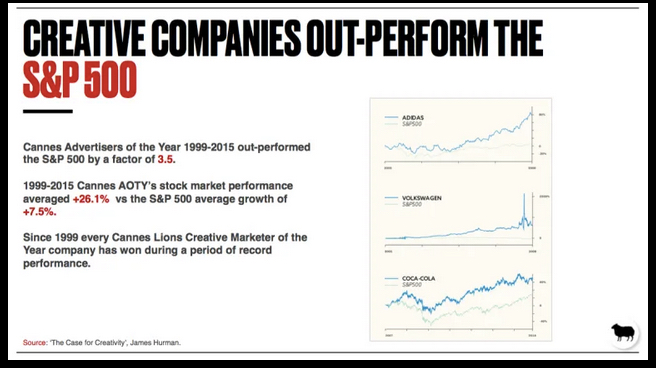
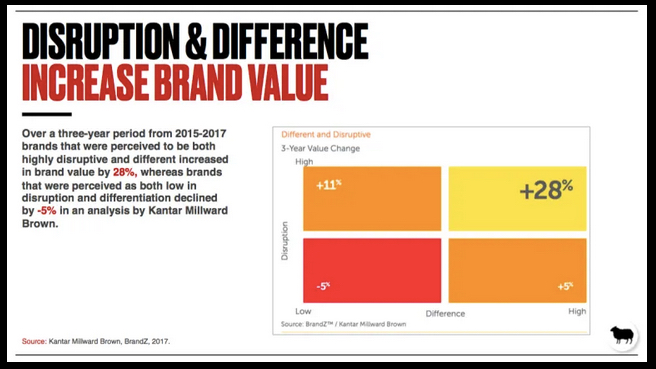
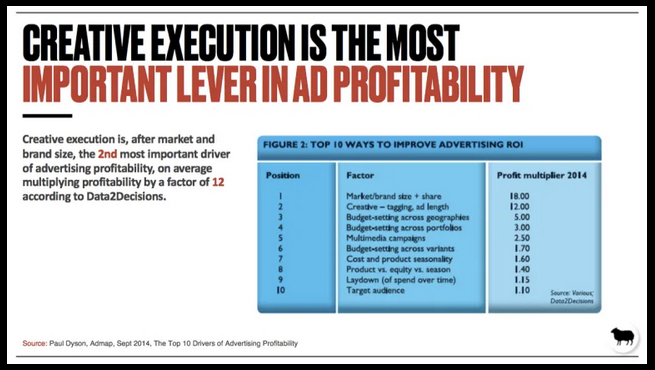
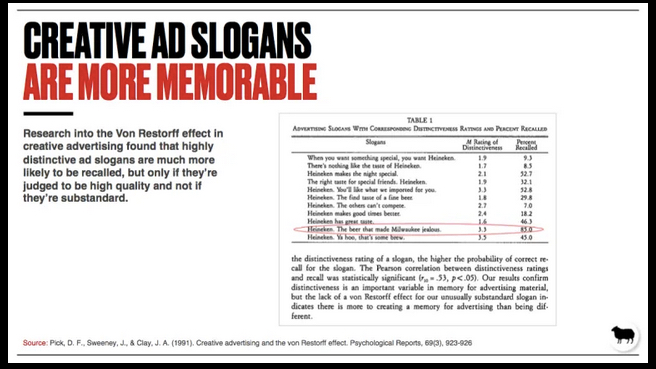
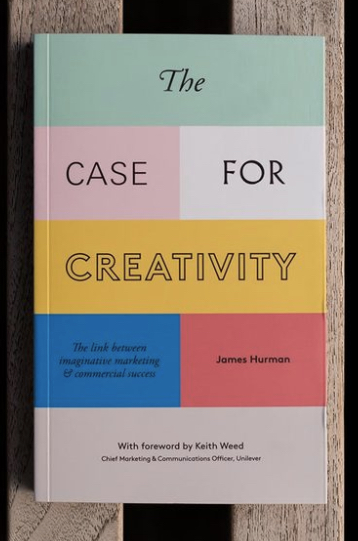
This is not a whodunit, nor is it a Perry Mason murder mystery about the Case of the Kangaroo Court. What it is, however, is the Business Case for Creativity.
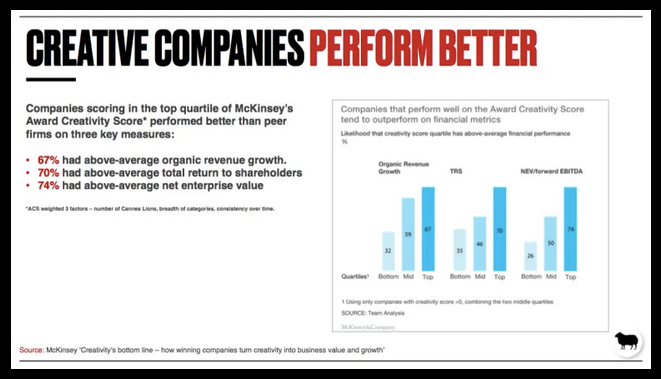
An excerpt from a review of the book itself reveals, “Debate in the advertising and marketing industries has raged for decades: does creativity make advertising more effective? Or is it just the folly of creative people looking to win their next award?
“The arguments of both advocates and cynics have until recently been based on conjecture and anecdotal evidence. James Hurman’s seminal creative effectiveness book The Case for Creativity brings the debate to a conclusion with three decades of international research into the link between creativity and business results.”
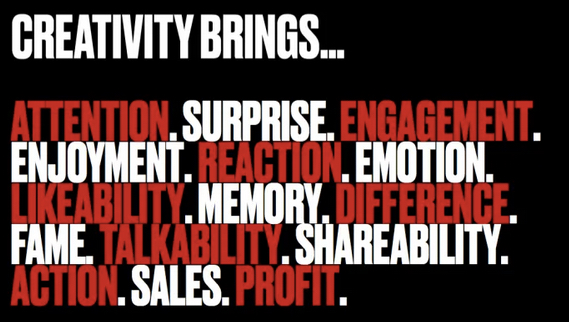
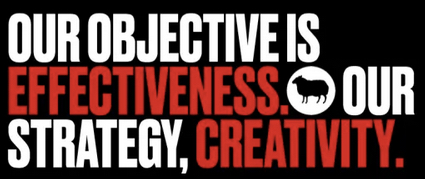
Tom Roach, BBH’s (Bartle-Bogle-Hegarty) effectiveness head, was asked by Thinkbox to present the business case for creativity at their spring event. Inspired by Thinkbox’s own innovative slide desk, the presentation he gave brought together the best evidence for the value of creativity in marketing communications. Here are excerpts from that presentation along with my own take on the case for creativity.
Simply stated, without creativity one has nothing. The beautifully executed creative plan of an advertising campaign can not be overshadowed by something comprised of “just the facts.” The campaign must have charisma, its own personality, to be believable. However, being believable doesn’t necessarily mean playing it safe or conservative.
Take this attitude from Keith Wood of Unilever in his Forward of the book:
That may be the case but the industry still has a ways to go and many more folks need to know. While this may be true, can we say there is a crisis in creativity? If so, how so and what is it?
First, let’s take a step or two back and ask: “What do we mean by creative?”
Well, there’s this . . .
And this . . .
And this somewhat in-your-face guideline . . .
Okay, all good and fruitful definitions and clarifications of what creativity is or entails. As with several key issues in the business world, creativity is complicated, especially when the problem is multifaceted and everyone on the marketing committee has a different viewpoint.
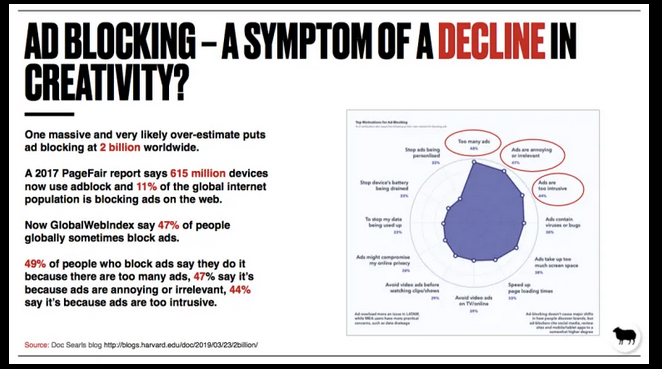
But, is there a crisis in creativity? Well, let’s see.
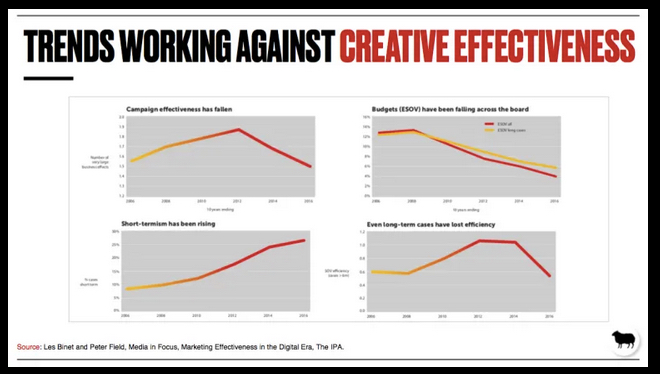
Campaign effectiveness has fallen (UL), Budgets have been falling (UR), Short-termination has been rising (LL), Long-term cases have lost efficiency (LR)
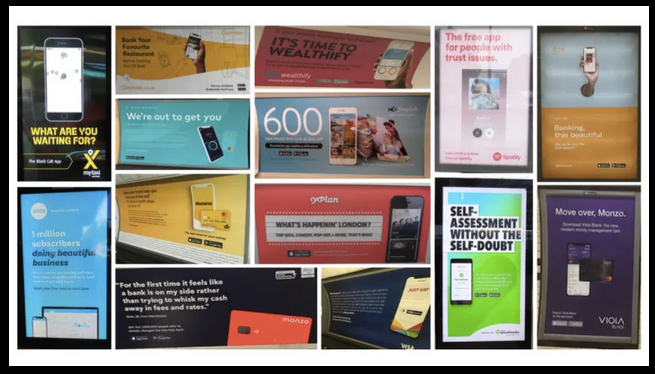
Hmmmmm, looking kinda murky, isn’t it? Let’s consider this :
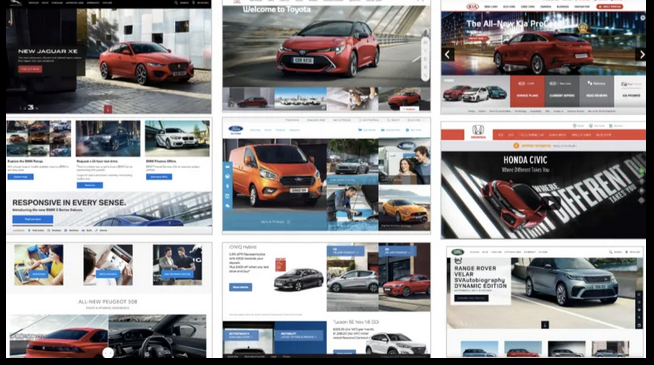
Ah, yes, nothing like differentiation in car ads!
While the above slides are true, I vote for more thoughtfulness and less cutesyness. In some advertising, the ad could have the audio muted (saying what the ad is about) with just the video or image shown, and most folks wouldn’t be able to tell what product is being promoted. Let’s face it, cars and cologne can be interchangeable. And, I guess, trucks are destined to be driven only in the “out-in-the-middle-of-nowhere” scenarios.
I’d like to add at least one more: Intangibles. Sometimes you just don’t know what makes a good ad good. It just works.
I definitely agree with this last poster. Effectiveness is key to creative execution. Smart creativity is a must. Play to one’s audience still applies but do so without insulting their intelligence. I’ll go out on a limb and say that, generally speaking, a twenty-something copywriter has little to no understanding of how best to relate to the “senior plus” set, unless he can relate to his grandparents.
If you want to view a more in-depth portrayal of this presentation, see the Business Case for Creativity. It’s not your ordinary slide deck. Neither is the book on which the presentation is based.












 ideasnmoreblog