New Aspects of Creativity for 2022

Creativity can spring from a variety of different sources, some even unlikely. Behind each scenario is a person or persons developing the idea and following it through to completion. Below is a report on such creativity.

Each year, Fast Company reveals a new list of the Most Creative People in Business. The folks we highlight have accomplished something in the past year that no one in their field ever has before, something that’s already having a discernible and important impact.

As you’ll see, we take a different view of creativity than our fellow business media outlets do. To us, creativity isn’t limited to the fields typically thought of as “creative,” such as entertainment, marketing, or branding. We know that creativity is happening everywhere: science labs, law offices, parliamentary halls, and even the open seas—and thank goodness. Creativity is what leads people to fix the world’s most urgent problems.

The work that’s been done by this year’s cohort of 56 Most Creative People in Business showcases several ways that creativity can lead to bold and substantial change. Here are some of the lessons they offer, for 2022 and beyond.

Just do something

Dismayed by the rise in fentanyl overdoses among recreational drug users, Allison Heller and Dean Shold took action. Their organization, FentCheck, is putting drug-test strips where the users are, and saving lives. Reynold Verret, president of Xavier University of Louisiana, is building a robust academic pipeline that’s creating more Black doctors and health industry leaders. Not content to live with the glaring vaccine inequity across the world, Baylor College infectious disease experts Maria Elena Bottazzi and Peter Hotez developed the first-ever open sourced COVID vaccine, called Corbevax, which has already been administered to tens of millions. When Russia invaded Ukraine, Pavel Vrzheshch redeployed the employees at his branding/ad agency as “creative warriors,” which led to the wide-reaching, Zelensky-endorsed “Be Brave like Ukraine” campaign.

Put people first

After Whitney Pegden noticed that Walmart delivery customers were bonding not just with the service but the delivery workers themselves, she expanded the program accordingly. With various societal needs exposed by the COVID pandemic, Norma Edith Garcia-Gonzalez converted LA’s county parks to health centers, shelters, and food pantries, with great results, and focused on helping (and employing) local youth. Audio engineer Heba Kadry enhances the connection between musical artists—such as Mdou Moctar and Japanes Breakfast—and their fans. Seniors thrive when they’re part of a community, which is why Selfhelp Realty Group’s Evelyn Wolff has built The Atrium at Sumner. As climate change makes hurricanes, floods, and wild fires more frequent and extreme, Resilience Force founder Saket Soni is standing up for disaster recovery workers, and securing them better employment terms.

Protect what’s important

Microsoft’s Tom Burt is calling upon his legal background to safeguard users’ data from hackers, thieves, and foreign adversaries. Through a logistics app called PRoduce, Crystal Díaz is restoring food sovereignty to Puerto Rico, which currently imports 85% of its food. Gina Asoudegan is bringing regenerative agriculture to supermarkets at scale with Applegate Farms’s new Do Good Dog. Knowing that a free (and robust) press is vital to our democracy, New York Times vets Megan Twohey and Jodi Kantor have written a book called Chasing the Truth to share what they’ve learned with young journalists and encourage them to “engage with the world and make progress.”

Stand up to the giants

As the behemoths of Big Tech continue to grow even more dominant, several courageous individuals are finding innovative ways to keep their power in check. The EU’s Margrethe Vestager led the passage of two new landmark pieces of legislation that will go further than anything before to level the playing field worldwide. Gretchen Peters is working with lawmakers to expose organized crime on social media. Creative-thinking attorney Jay Edelson is leading winning lawsuits that protect users’ biometric data and more. And while there may be a ton of hype out there about the new world of “Web3,” Molly White sees right through it (and enables us see, too).

Blur the lines

Singer-songwriter Arooj Aftab has made the ancient art of ghazal feel brand new. Sort Of co-creator Bilal Baig positions gender-fluidity in a fresh and sensitive way. Fashion designer Kingsley Gbadegesin channels the queer community’s perspective (and has gained wider following because of it). Former YouTube superstar Casey Neistat chronicles the rise and fall of another YouTube star, David Dobrik, in a revealing documentary called Under the Influence. Puppetmaster Toby Olié figured out how to translate Spirited Away‘s ethereal characters to the stage. Unity’s Timoni West is transporting actual data into immersive digital worlds in order to solve real-life problems.

Run clean

Wind-powered charging buoys that power idling cargo ships at sea? Maersk’s Sebastian Klasterer Toft and David Samad are developing that. An electric speedboat that virtually flies above the water? Candela’s Gustav Hasselskog just built one. Meanwhile, Maxine Bédat wrote a widely read book (called Unraveled) about the pollution-heavy life cycle of a single pair of jeans and is now fighting, through her New Standard Institute, to hold the apparel industry accountable. Sharon Prince is fighting for accountability, too; she’s gotten construction industry leaders and major architecture firms on board to ensure that their materials aren’t produced with slave labor.

Make it fun

Mark Rober is the Willy Wonka of science. Kyla Scanlon uses a spoonful of sharp comedic timing to help to the financial education go down. Walt Disney Studios’s marketing chief Asad Ayaz keeps the multiverses spinning. With Twelve Minutes, Luis Antonio brings character study to gaming. In addition to being a world-class surfer, John John Florence has created a performance-wear and clothing line, Florence Marine X, that lets other surfers in on the creative action.


Thanks to Jill Bernstein of Fast Company for contributing the information.


Hopefully making a ruckus, one blog post at a time!

Be sure to check out my other blog, Joe’s Journey, for a different kind of playground for creativity, innovation and inspiring stuff.
 

Cannes Lions 2022: The State of Creativity

Every summer the advertising world treks to France and pays tribute to its version of Mecca, the Cannes Creativity Festival. In the words of a UK publication who was onsite last week, “Cannes Lions is a circus, a meeting of minds, a place to hear the same buzzwords again and again and a chance to listen to celebrities try to explain how to do advertising to rooms full of people who do advertising for a living.

But it’s also a chance to take the temperature of creativity once a year. Seeing all the work that’s winning and being surrounded by people talking about creativity gives people a unique bird’s eye perspective for just one week.”

So, while talking to the cross section of creative leaders, a very broad, but pertinent question was asked: “what is the state of creativity in 2022?”

Here’s what some of them said.

Caitlyn Ryan
VP, Meta

There’s much more optimism and real celebration. We were seeing lots more joyful work. There was one piece that won Gold [in Social & Influencer], for BMW China for the Lunar New Year. The team worked out that the word for BMW in China includes the word horse, and it was the year of the Tiger. It’s properly bonkers but it’s also so joyful. I think it’s a really great example of a couple of things, this celebration and joyfulness, but also as a social campaign. They created all of these assets that then they gave over to the community that allowed them to socialise the idea. I think it’s quite complex but it looks simple and fun.

Yes, there of course is social purpose work – and there was amazing work, especially the charity work The Lost Class, which was just beautiful. That definitely triggers a reaction and wanting to sign up to a social purpose activation. Also we can sell products through joyfully co-creating with the community. I think that’s a really important next step out of the pandemic. It’s incredibly important that we get the economy up and running again, and we use creativity to do that.

Bruno Bertelli
Global Creative Director, Publicis WW and CEO, Le Pub

On one level, there’s a little bit of dated work. Still purpose-led, still a little bit from the past. But on the other hand, there is a trend which is interesting, which is that today brands cannot tell people [things] or inspire people, it’s much more about supporting people doing things. Even if it’s for a small issue, it’s much more about supporting people in what they want to achieve. Story-doing has become much more societally relevant and less strategic – what’s your purpose, what’s your message? Some of these activations don’t even need a message because it’s clear that ‘here’s an issue and I’m just here to help’. It’s a very gen-z attitude. The other thing is not all brands are understanding the importance of being topical today. It’s so important after covid. If you’re not topical, you’re not going anywhere. 

Anna Qvennerstedt
Senior Partner and Chairman of the Board, Forsman & Bodenfors

Last year I was judging brand experience and activation. And I think that my big takeaway from last year was that there are so many really ‘nice’ ideas, but you can feel how quite a few of them are just… very reasonable. You look at it and it’s well done… but there’s no tension in it. There’s no element of surprise. It’s just basically very, very clever. And I think in the jury, when you look at it, you know that it’s going to do well, but then you see something where there’s an actual idea that is expected and no one saw coming, and that sort of changes you a little bit. Those are the ones that win the big awards, I think, and there are not many of them. I mean, again, lots of great work, but those really unexpected ones felt quite rare.

But I think there’s a renaissance for really creative ideas, that we’re sort of starting to see a little bit in the requests from clients.

Rod Sobral
Global CCO, Oliver 

I am a paranoid optimistic. I know it’s a cliche, but I use it all the time. I think every leader should be a bit of a paranoid optimistic. You have to believe that things are going to change, that it’s going to evolve in order for you to be in the right state of mind, and to take some risks. 

My view on that is absolutely, still the most important thing in the marketplace – and I don’t think this will ever change – is the idea. And an idea that connects with you on an emotional or a rational level, sometimes both. 

I think we do have this superpower in our industry to change people’s lives. It can be an ad that’ll put a smile on your face or remind you to call your mom or it can be an app that will help you to deal with your asthma or to run better. So I know that this is possible. And I think we should be doing that. 

I believe, when it comes to the state of creativity, we are in a very exciting place, frankly, because I feel that there’s a lot of energy to try things. Let’s be honest, with digital, with commerce, we have so many platforms, we produce so much. Any creative can relate to the many times you create something and you end up with one asset that people see for a fraction of a second. There is a lot of vision from people saying, ‘I don’t want to be part of the clutter, I want to be part of the signal’. The more clutter there is, the more anxious people get to change, to try to do something to break the mould.

John Berghdal
Global Creative Lead, Forsman & Bodenfors

There was so much fear in the last few years and everybody was thinking about just controlling things, not wanting things to get out of hand. And of course, then you lean on data, and you’re like, ‘OK, Facebook, Google, what can you give me? This is my budget and let’s just use programmatic. Let’s just steer this thing to not have a catastrophe, we’re going to control the situation’. Through creativity and unexpectedness, you have to be bold. You have to risk something – and I don’t think people have been in a risky kind of mood… [We were talking earlier] about the pendulum and maybe this is when people are waking up and coming out and saying, ‘OK, wait a minute, let’s build brands that people care about.’


Hopefully making a ruckus, one blog post at a time!

Be sure to check out my other blog, Joe’s Journey, for a different kind of playground for creativity, innovation and inspiring stuff.
 

Live long and prosper, Ukraine.

Quotes – Special Edition

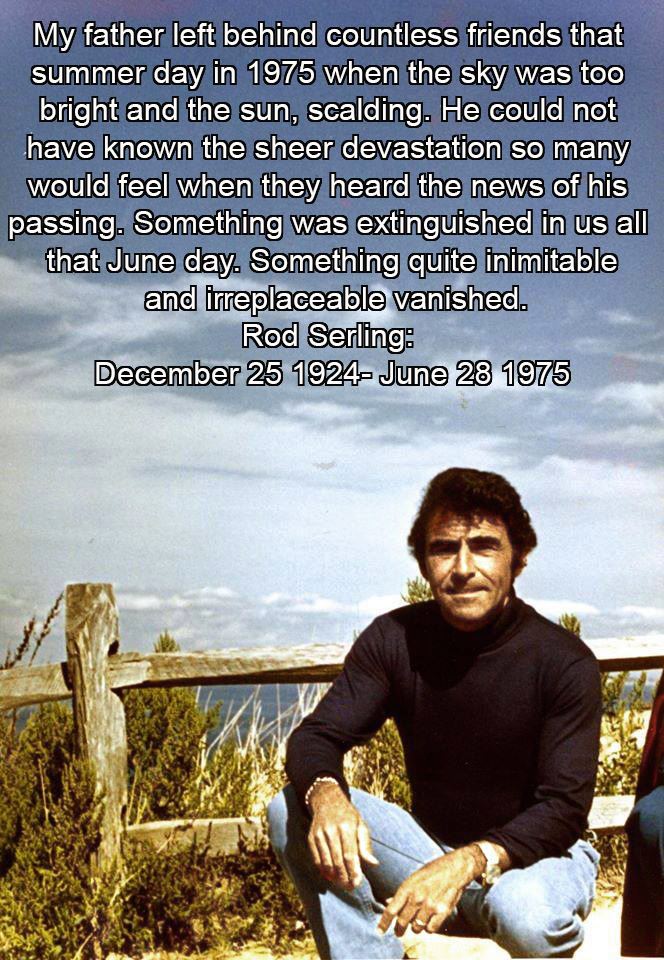
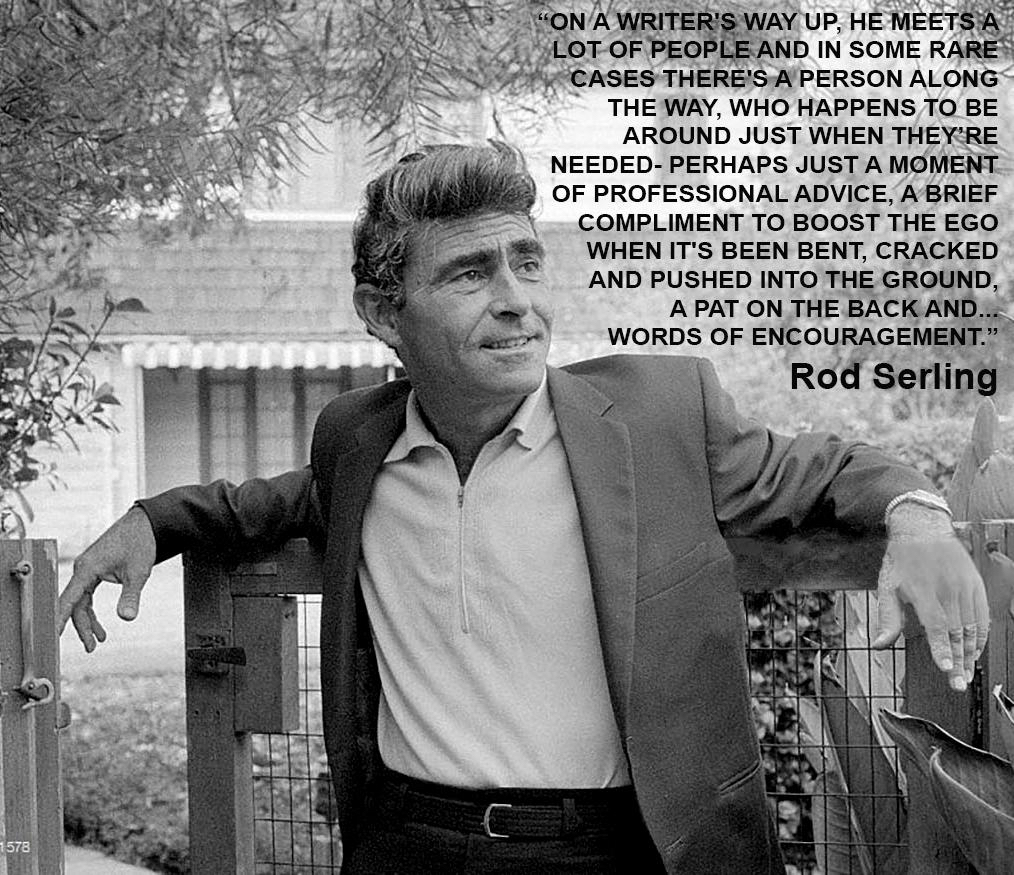
Forty-seven years ago this week, June 28, 1975, creativity lost an icon. A mentor to many both near and afar and an inspiration to those of us putting “pen to paper.” Rod Serling, creator and host of the TV series, The Twilight Zone, was a master at utilizing one’s imagination and turning it on its ear. And we loved him for it!

These quotes pay tribute not only to Rod but to various creative artists and thought leaders who have also played a role in tweaking our imagination and how we think.

I just want [people] to remember me a hundred years from now. I don’t care that they’re not able to quote any single line that I’ve written. But just that they can say, ‘Oh, he was a writer.’ That’s sufficiently an honored position for me.Rod Serling

An important idea not communicated persuasively is like having no idea at all. — William Bernbach, Advertising Hall of Fame

Human beings must involve themselves in the anguish of other human beings. This, I submit to you, is not a political thesis at all. It is simply an expression of what I would hope might be ultimately a simple humanity for humanity’s sake. ― Rod Serling

Like the musical score, a mission statement is only as good as the performance it inspires. — Keith Reinhard, Advertising Hall of Fame

Let’s gear our advertising to sell goods, but let’s recognize also that advertising has a broad social responsibility. — Leo Burnett, Advertising Hall of Fame

Treasure diversity. Seek unity, not uniformity. Strive for oneness, not sameness. — Dan Zadra, American businessman and author

Human history becomes more and more a race between education and catastrophe. – H. G. Wells

Good advertising is written from one person to another. When it is aimed at millions, it rarely moves anyone. — Fairfax M. Cone, Advertising Hall of Fame

In order to attain the impossible, one must attempt the absurd. – Miguel de Cervantes

I think, at a child’s birth, if a mother could ask a fairy godmother to endow it with the most useful gift, that gift should be curiosity. – Eleanor Roosevelt
 
Failure is the condiment that gives success its flavor. – Truman Capote


Hopefully making a ruckus, one blog post at a time!

Be sure to check out my other blog, Joe’s Journey, for a different kind of playground for creativity, innovation and inspiring stuff.
 

Live long and prosper, Ukraine.

Emotions and Their Role in Your Creativity

Every once in awhile I run across an article that really speaks to me about my creativeness and my own psychological workings. This particular article by Dr. Mihaela Ivan Holtz speaks to that. I’ve highlighted her work in some of my previous blog posts. You may very well already enjoy a good relationship with a psychotherapist who understands your background and troubles. If not, seek one out. And refer to the link at the end of this post for more insightful information.

Now, Dr. Holtz, the floor, er, uh, post is yours . . .

As a creative, you use your emotions to tell compelling stories. When your art is born from a genuine emotional expression, you offer your audience a glimpse of the unique you – your interpretation and manifestation of human experiences. 

There’s something about living in the full depth of human experience that is conducive to creativity. The extent to which one can step into the full breadth of their emotions is what makes them a true artist. The ability to be with and use complex and mixed layers of emotions is important for creativity.

It’s through the moments of deep insight and states of intimate connection to your inner world that your craft comes alive.

When you are intimately connected to your emotions’ texture, nuance, and depth, it comes through your art. Your audience can feel the depth of your feeling, and your work truly speaks to their hearts. 

Thanks to the  expression of pure emotion, others can find a piece of themselves in your art. When art comes from an intimate connection to your internal world, the people who witness it  can feel seen, heard, or validated. They are transformed when you share your own experience of transformation.

Uninspired man holding a guitar

Unfortunately, it’s not always easy to find and maintain this connection with your emotions and convey them in your art.  Unhealed emotional trauma, unconscious conflicts, and unhealthy defensive strategies that you may have developed to cope with life’s challenges can all interfere with your creativity.

When you hit a creative block or a prolonged dry spell, you may find yourself wondering: “Why do my emotions mess up my creativity?”

Many times, unprocessed trauma causes your emotions to feel too intense, overwhelming, or  painful. You can’t stay present with such feelings and you disconnect from your own inner emotional world.  You may feel like you can only tiptoe around the edges of your experience, but can never go too deep. You keep a safe distance from your own emotional experiences. It doesn’t seem possible to  tap into the depth and beauty of your emotions and use them to further your creativity. 

This inability to engage your emotions and go deep are all signs that you may need to do some emotional work to help you process trauma, conflicts, or defenses that are locking you out of your emotional creative space. 

If you’re someone who feels comfortable in your inner creative world some of the time but then loses touch with that place at other times, you may find yourself confused and looking for answers. You may be grieving the loss of your creativity since it has been so long since you were able to access your creative emotional space.

To reconnect to your creativity, you need to do your own inner healing work. Your current struggles are a sign that emotional trauma from your past needs to be examined, processed, and integrated. 

How can doing your “emotional work” help you regain your creativity? 

When you do your emotional work to heal old conflicts and trauma, you can access the full spectrum of your emotions and use them to enhance your art. You can remove the barriers to creativity and  find that you can organically enter your artistic flow.

Thanks to the healing process, the “emotional work” you can do with a trained psychotherapist, you can connect with all that you are. Your emotions, talents, and skills can come together and you can express yourself and you trust your creativity. 

The creative brain is unique, and that is why therapy for creative people needs to be sensitive to your specific needs. 

Creative people have greater connections between two areas of the brain that are typically at odds with one another.  The brain regions associated with focus and the brain network of regions associated with imagination, spontaneity, and emotions are in conversation in the creative brain.

Unfortunately, these connections usually tend to be impaired by unhealed trauma. Psychotherapy can help you reconnect these parts of your brain so you can regain your creativity and discover new creative energy. 

Focused and passionate female dancer practicing in a studio

When creative people commit to doing their emotional work, they develop their ability to stay in complex and even seemingly incompatible states of being. In other words, they can access the messiness of their minds and human experience with more comfort, ease, and focus. They can really dive into their old and present emotional experiences and internal world to create.

What kind of psychotherapy would help you? 

There is no cookie-cutter treatment plan for creatives with emotional trauma. The treatment is a creative journey in itself. Together, we enter a meaningful process  uniquely crafted to help you get in touch with your life experiences and reconnect you with your own artistic voice and expression. 

When you process the emotional trauma and conflicts you will feel: “My creativity is the core of who I am. My past struggles do not define me.  My past can inform what I create, but is not the core of who I am.”

That shift will help you stay intimately connected with your emotional world to make your authentic art that will touch audiences and, in some way either great or small, transform our world. 

I am Mihaela Ivan Holtz, Doctor in Clinical Psychology. I help creatives face and shift emotional trauma, depression, anxiety, performance anxiety, creative blocks, and addictions – to be and live their own best version. You can read more about Therapy for Creatives and Performers here.


Hopefully making a ruckus, one blog post at a time!

Be sure to check out my other blog, Joe’s Journey, for a different kind of playground for creativity, innovation and inspiring stuff.

Live long and prosper, Ukraine.

Quotes . . .Quotes . . .

It’s that time of the month again wherein I present an array of quotes from a variety of well-respected folks offering numerous perspectives. From Obama to Burnett to Serling and more.

Take note. Take a listen. Take heed. Put ’em into practice if you can. Enjoy!


Promoting science isn’t just about providing resources, it’s about protecting free and open inquiry. It’s about ensuring that facts and evidence are never twisted or obscured by politics or ideology. It’s about listening to what our scientists have to say, even when it’s inconvenient, especially when it’s inconvenient. Because the highest purpose of science is the search for knowledge, truth and a greater understanding of the world around us. – Barack Obama

Don’t let anyone rob you of your imagination, your creativity, or your curiosity. It’s your place in the world; it’s your life. Go on and do all you can with it, and make it the life you want to live.  – Mae Jemison

Nothing splendid has ever been achieved except by those who dared believe that something inside of them was superior to circumstance. — Bruce Barton, member, Advertising Hall of Fame

The place to start in advertising is the basic selling appeal. An appeal that fulfills some existing need in the prospect’s mind, an appeal that can be readily understood and believed. — Morris Hite, member, Advertising Hall of Fame

I have learned that any fool can write a bad ad, but that it takes a real genius to keep his hands off a good one. — Leo Burnett, member, Advertising Hall of Fame

Defeat is not the worst of failures. Not to have tried is the true failure. – George E. Woodberry

A teacher’s influence doesn’t stay in school. It goes out into the world and cannot truly ever be measured. Every student you inspire to do something great goes on to inspire others. There is no limit to your impact. – George Couros

It has forever been thus: So long as we write what we think, then all of the other freedoms – all of them – may remain intact. And it is then that writing becomes a weapon of truth, an article of faith, an act of courage. – Rod Serling

A good ad should be like a good sermon: It must not only comfort the afflicted, it also must afflict the comfortable. — Bernice Fitz-Gibbon, member, Advertising Hall of Fame

It is easier to tone down a wild idea than to think up a new one. — Alex Osborne, member, Advertising Hall of Fame


Hopefully making a ruckus, one blog post at a time!

Be sure to check out my other blog, Joe’s Journey, for a different kind of playground for creativity, innovation and inspiring stuff.


Live Long and Prosper, Ukraine!

Creativity vs Strategy

Creativity depends on strategy to be effective and successful. And vice versa. Do they need to live in harmony together? From the United Kingdom, the British agency Five by Five’s strategy director Catherine McPherson and creative director Ravi Beeharry discuss the secret to an effective relationship between creativity, strategy and craft.

Strategy, creativity, or craft – which is more important to a successful ad? And how should they work together?

“It used to be like a relay race, with each department handing the baton to another along the production line,” says Five by Five’s strategy director Catherine McPherson. “But today rather than strategy handing over a brief and washing its hands, we’re now running alongside the creatives and cheering them on.”

To an extent, the secret to effective advertising has always been found in the relationship between strategy, creativity, and craft. Too much strategy can leave a campaign feeling more like a PowerPoint presentation, whilst unrestrained creativity risks derailing a brand’s messaging. Get the balance right, however, and you land on the kind of genius which works miracles in the marketplace.

“While there is a balance to be struck, there isn’t a simple formula,” notes creative director Ravi Beeharry. “You have to look at it on a case-by-case basis. Take the iconic Meerkat from Compare the Market, for example.

You might look at that and consider it to be an example of creativity which went a bit out of control. What is a meerkat saying about that brand? But in practice it was enormously effective because the balance was right in that instance”.

Knowing which element should take prominence, the pair agree, comes down to your definition of success. 

“Does success mean winning at Cannes, or does it mean driving sales in the short-term? Or is it brand recognition? It might sound obvious, but being intentional about the end result is the first step to getting the balance right”, says Catherine.

“Something we’ll reference quite often at Five by Five is Peter Field’s research into the recent decline in creative effectiveness, and one takeaway from that has been that we don’t look for compromise between strategy and creativity but rather look for harmony. They should feed into one another”. 

“The best creativity bounces off strategy like it’s a springboard”, notes Ravi. “And craft is the execution – actually, let me rephrase that. Craft is good execution. Knowing the precise balance between those elements will ultimately come down to judgement and context. It all adds up to having strong ideas, clearly communicated”.

‘Strong ideas, clearly communicated’ is Five by Five’s strategic approach to briefs. It’s what ensures their clients’ brands get noticed, processed and recalled – and it’s ultimately what delivers effective campaigns. 

And as Ravi notes, when it comes to measuring a successful campaign, context will always be king. However, in recent years a fracturing media environment has made identifying that context all the more challenging. 

The Ever-Growing Crowd

One reality of the modern industry is that an idea can no longer realistically be designed to live in one place. The seemingly endless proliferation of channels and platforms which occurred in the last decade has created a marketing landscape with more nuance than at any point in the industry’s history. But, according to Catherine and Ravi, there are still ways of finding the right balance between strategy, creativity, and craft. 

“Something which we’ve lost sight of, I feel, is precisely what we should be using these different platforms for. They don’t need to be additional challenges, they should be seen as additional tools.

“If you’re going to take one single idea and contort it to fit a TV screen as well as a mobile phone, then I’ve no doubt that storytelling and quality will suffer as a result. But if you work out how to take a central idea and present it in a bespoke way for different formats, then you’re far more likely to have an impactful campaign”, she says. 

For Ravi, there’s an opportunity for brands to become more memorable by elevating creativity and craft across multiple platforms. “It’s probably true to say that there’s a focus on promotion over entertainment at the moment”, he says. “And perhaps much of the culture and capabilities of social platforms, for example, lend themselves to promotion.”

“But look at what Nike put out just recently after Nadal won the Grand Slam. There wasn’t a single pair of trainers or shorts advertised, just a celebration of a sporting achievement which played into Nike’s brand in such an obvious way it doesn’t need underlining.

I came across that video on Twitter, so that’s a great example of using a social platform to drive results through entertainment. It’s a great execution of strategy, creativity, and craft”. 

In the words of both Catherine and Ravi, these kinds of pitch-perfect ideas are the cumulative result of a long-term approach to each of strategy, creativity, and craft.

“McDonalds is another example of a brand that gets this consistently right”, says Catherine. “They run a lot of product-focused ads on the high street but they also consistently come out with beautifully-told stories based on human truths, designed for TV.”

“It’s creativity, strategy, and craft working in perfect harmony over the course of many years. And it’s because they’ve nailed their brand-building that the shorter-term promotions work so well”. 

That long-term approach, then, is perhaps as close to a ‘winning formula’ as a brand is likely to get. But, as Ravi points out, the best insights are invariably based on a kind of magic which can’t be bottled. 

“At Five by Five we have an unprecedented number of tools and analytics available to us”, he says, “but those genius ideas which link strategy, creativity and craft together can’t come out of a formula. If they could, it wouldn’t really be genius”.


Live Long and Prosper, Ukraine!


Hopefully making a ruckus, one blog post at a time!

Be sure to check out my other blog, Joe’s Journey, for a different kind of playground for creativity, innovation and inspiring stuff.

March Madness, er, uh, Quotes, That Is!

The quotations are as varied as the people who said them. Some you know, some you don’t. That’s what makes them interesting. From Burke to Burnett, Einstein to Degas; throw in a little Serling for seasoning and you’ve got a tasty recipe for March’s quotes.


We don’t grow unless we take risks. Any successful company is riddled with failures. — James E. Burke, Advertising Hall of Fame

Success or failure in business is caused more by mental attitude than by mental capacities. — Walter Dill Scott, Advertising Hall of Fame

Anyone who thinks that people can be fooled or pushed around has an inaccurate and pretty low estimate of people — and he won’t do very well in advertising. — Leo Burnett, Advertising Hall of Fame

If we knew what we were doing, it wouldn’t be called research, would it? – Albert Einstein

If you fall in love with the imagination, you understand that it is a free spirit. It will go anywhere, and it can do anything. – Alice Walker

Curiosity killed the cat, but for a while I was a suspect. – Steven Wright

You must aim high, not in what you are going to do at some future date, but in what you are going to make yourself do to-day. Otherwise, working is just a waste of time. – Edgar Degas

Our job is to simplify, to tear away the unrelated, to pluck out the weeds that are smothering the product message. — William Bernbach, Advertising Hall of Fame

How do we turn science fiction into fact? We do it by inventing our own future and figuring out the realistic steps that we need to make in order to get there. Dare to dream. Let your imagination leap. — David Shapton, Editor In Chief, RedShark Publications, 2012 to 2020


Hopefully making a ruckus, one blog post at a time!

Be sure to check out my other blog, Joe’s Journey, for a different kind of playground for creativity, innovation and inspiring stuff.



Live Long and Prosper, Ukraine!


Empowering the Women of Advertising – Today

Today is the day of AAF Northeast Arkansas’ panel discussion on Empowering the Women of Advertising. I’m proud to be a participant on their panel so I have a vested interest in the event’s success.

Increasing diverse participation in advertising and marketing is a business issue, and we need everyone involved. To that end, AAF Northeast Arkansas is today raising awareness about ways to involve more men in creating inclusive work environments and how women can claim their strength within the advertising realm. 

By coincidence, a British publication interviewed several key women in advertising about the current status of their gender within their industry. The timing of this report is appropriate with the timing of the Arkansas AAF panel today.

Think about the people who make the buying decisions for their households. It’s extremely likely that the majority of them are women. And they’re probably more likely to be older than younger. Now think about agency creative departments that you know of – do those teams reflect the people who are likely most efficient to market to? Probably not.

In a recent interview with LBB, a British publication, Sue Higgs, joint ECD at dentsuMB in the UK, had this advice: “I find that it’s someone else’s problem, ageism”. The stage in life Sue’s at now is a huge asset to her as a creative leader. “The great thing about being in your mid-life or wherever we are is that it’s quite liberating,” she said. “It’s quite liberating, I think, to find your strength, and your power, and your voice.”

And that liberated voice is exactly what creatives need to flourish. One thing Sue said she’s learned from her experience is that: “As you get older you learn that people lose their jobs for a trillion reasons and none of them is actually speaking your mind. There’s nothing more fulfilling to say to a young female than: ‘Just tell them. Just say it, your biggest weapon is your point of view. That’s why you’re here. Please use it.’

Continue reading

Select Quotes From Advertising and Education

Here’s a sample of select quotes from some of the great minds in advertising and education.


The arts, sciences, humanities, physical education, languages and maths all have equal and central contributions to make to a student’s education. – Ken Robinson

You can be creative in anything – in math, science, engineering, philosophy – as much as you can in music or in painting or in dance. – Ken Robinson

Whether or not you discover your talents and passions is partly a matter of opportunity. If you’ve never been sailing, or picked up an instrument, or tried to teach or to write fiction, how would you know if you had a talent for these things? – Ken Robinson

You can’t be a creative thinker if you’re not stimulating your mind, just as you can’t be an Olympic athlete if you don’t train regularly. – Ken Robinson

Every area of trouble gives out a ray of hope, and the one unchangeable certainty is that nothing is certain or unchangeable. -John E. Kennedy, member, Advertising Hall of Fame

Brand value is very much like an onion. It has layers and a core. The core is the user who will stick with you until the very end. – Edwin Artzt, member, Advertising Hall of Fame

When you are through changing, you are through. – Bruce Barton, member, Advertising Hall of Fame

If you can’t turn yourself into your customer, you probably shouldn’t be in the ad writing business at all. – Leo Burnett, member, Advertising Hall of Fame

Creativity is no longer about grabbing attention or raising consumer awareness. Its goal is to remind consumers about what is fundamental and gratifying about a brand. – Peter A. Georgescu, member, Advertising Hall of Fame

We pay just as dearly for our triumphs as we do for our defeats. Go ahead and fail. But fail with wit, fail with grace, fail with style. A mediocre failure is as insufferable as a mediocre success. Bruce Barton, member, Advertising Hall of Fame


Hoping to make a ruckus, one blog post at a time!

Emerging Creative Trends to Watch for in 2022

Research shows that creatives are faced with fewer resources and greater demand. They helped their businesses pivot to remote work last year by improving productivity and learning new technical skills. Further, and in contrast to the trend of bringing design talent and work in-house for the past several years, in-house creative teams are more inclined to partner with outside creative agencies and freelancers.


That’s according to key findings in a new report based on a survey of 400 creatives and marketers. The fourth annual Creative Management Report by inMotionNow and InSource, a professional association for creatives, identified industry changes stemming from the pandemic, along with creative trends to watch over the next year.


These findings demonstrate just how much creative teams have evolved. More importantly, it underscores why marketing and business leaders have become increasingly reliant on creatives for that vital Design Thinking, a process that starts with user insights, challenges assumptions and redefines problems, not just for design and deliverables.


Below are three takeaways for marketing leaders.


1. Providing Strategic Value Is Now Table Stakes for Creative Teams — Balanced with Speed, Resource and Volume Constraints


The study identified the top three challenges facing creatives as follows:


  1. The speed at which they are expected to work (73%)
  2. Too few resources to accomplish the work (61%)
  3. High demand for more creative content (59%)


While those are all familiar challenges to most creatives, what they did not identify as a top challenge is of equal interest: Respondents didn’t identify “being seen as a strategic contributor” as among the top three—for the first time in the four-year history of the survey.


“We have a seat at the strategic table, but that’s because we’ve earned it and we continue to earn it every day and raise the bar on what we can contribute,” said Hank Lucas, head of creative services at global life sciences organization MilliporeSigma.


Lucas was one of five outside experts who contributed written analysis about the survey’s findings to the report.


“We’re not just here to make some pretty stuff,” he said. “Tell us what you’re trying to achieve and let us help you move the needle.”


2. Creative Problem-Solving and Adaptability Were Crucial to Remote Work


In subsequent questions, respondents were more precise about the specific resource constraints presented as the pandemic unfolded. While 58% said their workloads had increased, about one-third said their teams experienced layoffs and furloughs. In addition, another 31% faced budget cuts which eliminated some of the technology tools that facilitate the creative process.


Despite the adversity, creatives rose to the occasion and brought their problem-solving talents and adaptability to bear. Most creatives (57%) claimed they “became more productive” despite cuts to budget and staff. Another two-thirds of respondents learned new skills such as video, livestreaming and podcasting, all of which proved pivotal to business continuity during remote work.


The resource constraints may have also prompted creative and marketing leaders to rethink the in-housing trend—that is, bringing design talent and work in-house rather than using external agencies—that’s unfolded in recent years.


While in-house creative teams still manage much of the work, the majority (86%) reported that they currently partner with agencies and freelancers. Further, in 2021 about one-third of teams are planning to increase the work they send to outside resources. This creates new opportunities and demands for tools and processes for collaboration.


When prompted why they hire outside agencies, respondents stated that their top reason was in order to access specialized skills (64%). Subsequent responses were a need for increased capacity (44%), assistance with strategy development (24%) and quicker completion of work (20%).


“The beauty of working with freelancers is that you don’t have to go through this whole hiring and onboarding process,” says April Koenig, founder and CEO of Creatives on Call. “You can find people who have the targeted skill sets that you need and get them in and get the work done quickly.”


She notes that approach may also help with fatigue and burnout, which have become critical leadership issues over the past 12 months. “This really helps alleviate some of the physical and emotional pressure that teams face when the organization is so reliant on them,” she says.


Continue reading