As it has been some time since a post was published with nothing but quotes, I thought we’d resurrect the form. Whereas in previous posts there has been a variety of authors quoting something not necessarily pertaining to advertising or the industry. This time, however, I thought we go with an emphasis on advertising, at least from people from within the ad biz. Enjoy!
When we are too timid to risk failure, we reduce the opportunities to succeed. And we eliminate the chance to learn. Keith Reinhard, member, Advertising Hall of Fame
Remove advertising, disable a person or firm from proclaiming its wares and their merits, and the whole of society and of the economy is transformed. The enemies of advertising are the enemies of freedom. David Ogilvy, member, Advertising Hall of Fame
Creative imagination — the lamp that lit the world — can light our lives. Alex F. Osborn, member, Advertising Hall of Fame
Let us blaze new trails. Let us prove to the world that good taste, good art and good writing can be good selling. William Bernbach, member, Advertising Hall of Fame
I have learned that any fool can write a bad ad, but that it takes a real genius to keep his hands off a good one. Leo Burnett, member, Advertising Hall of Fame
An important idea not communicated persuasively is like having no idea at all. William Bernbach, member, Advertising Hall of Fame
When we are too timid to risk failure, we reduce the opportunities to succeed. And we eliminate the chance to learn. Keith Reinhard, member, Advertising Hall of Fame
Creativity is no longer about grabbing attention or raising consumer awareness. Its goal is to remind consumers about what is fundamental and gratifying about a brand. Peter A. Georgescu, member, Advertising Hall of Fame
Rules are for people who don’t know what to do. AND I don’t like closed doors. Creativity flourishes best in an environment of open doors and open minds. Keith Reinhard, Advertising Hall of Fame
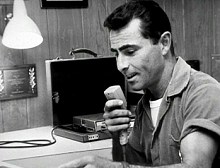
To sleep. Perchance to dream. To dream. Perchance to imagine. To imagine. Perchance to create. To create. Perchance to write; perchance to make a difference. Mr. Rod Serling definitely made a difference and impacted society with his unique form and brand of creativity in his writing.
One could not watch an episode of either the Twilight Zone or Night Gallery and not be moved in some way. His genius and commentary were not limited to “inside” the story lines, but could also be found in his opening and closing narration.
Take the following, for example:
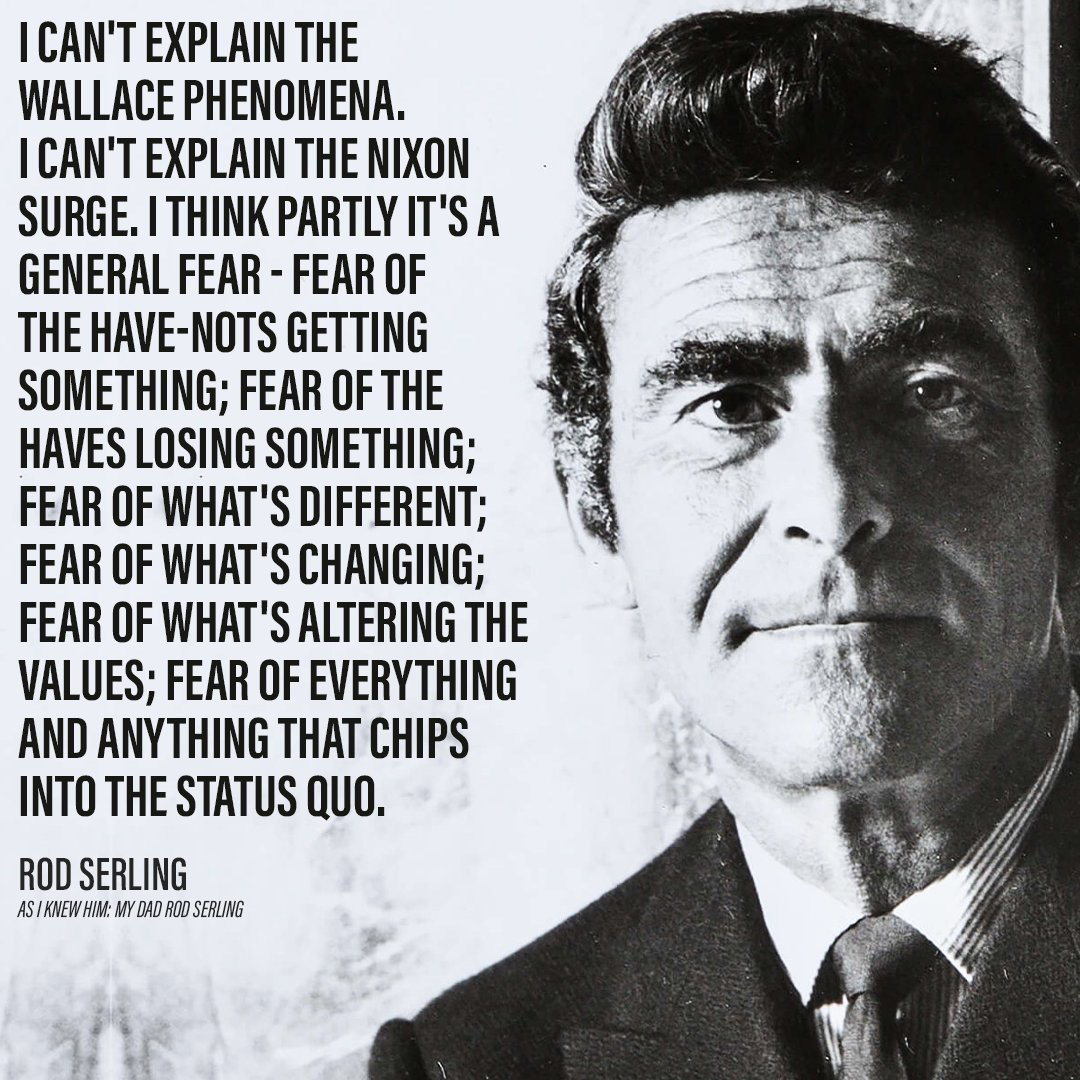
Then there’s this gem on creativity (circa 1971):
Quoting from the book “As I knew Him: My Dad, Rod Serling,” by Anne Serling, (wonderful read, by the way) “In what was to be my father’s final interview, he was asked what he wanted people to say about him a hundred years from then. He responded, ‘I don’t care that they’re not able to quote any single line that I’ve written. But just that they can say, ‘Oh, he was a writer.’ That’s sufficiently an honored position for me.'”
As creativity goes, he was a master. As a writer, he was unsurpassed in this genre of storytelling. Oh sure, you have Mark Twain, Hemingway, Poe, Dickens, and Stephen King to name a few. But they were different; they each had their own style. Serling was also of another generation.
I often wonder what great works he would have produced should he have lived beyond 50 years. If King was or is the master of horror, then Serling, surely, was the master of the macabre for his generation, just as Edgar Allan Poe was for his. Not surprisingly, Poe was a great influence on Serling.
One thing to keep in mind, no matter who is or has influenced you as a creative person or a writer in particular, don’t be afraid to extend your limits, your boundaries. If you don’t think you can design it, write it or overcome it, try creating it anyway. Get to work even if you’re doing it in small, baby steps.
Even Hemingway wrote in a one sentence at a time mindset. Serling, being aware of his capacities, didn’t limit himself to actual writing of words. His generation of technology at least afforded him the dicta-phone so he could keep pace with his mind.
A time traveler with his magic walking stick that, among other things, makes him invisible on demand and also serves as a teleportation device, travels back to 1965 to visit the Majestic Hotel in Lake Charles, LA. Just before it’s torn down.Unbeknownst to him, however, he’s not the only one who made the trek.
i
Dressed in a three piece, white linen suit with straw hat, the Visitor was no stranger to style. His cane, or walking stick as it is sometimes referred, is black with an ornate, brass top as if to resemble the crown on an office building. A green button is displayed in its center.
He slowly gazes around the elaborate lobby as if he’s expecting someone; either that, or he’s casing the joint for future opportunity of financial gain. Somehow, I rather doubt that.
There seems to be electricity in the air today as if all those gathered here anticipate some grand event. No doubt many a grand event has been held in this majestic old hotel. Yet this day seems different.
He stops a nearby guest and inquires, “I say, pardon me, but what’s all the excitement around the lobby today?” The reply is anything but cordial. “Excitement? What excitement?” exclaims the guest.
“Don’t you know?” asks the guest. “Why the Majestic is being torn down. After all these years the grand ole dame is being reduced to shambles and rubble,” he says. “Damn shame if ya ask me!” he sniffs.
The Visitor sits there, expressionless for the most part. He studies the lobby and its inhabitants. It’s not like they are a vengeful mob about to attack. It’s more like they anticipate the destruction without knowing when.
The Visitor senses this and begins to move about, first, though giving his cane a friendly glance.
Slowly, deliberately he begins to meander throughout the lobby, gradually making his way toward the front door and eventually onto the lobby porch or as it’s more commonly referred, the South Porch.
The Visitor stops and simply stands there, weighing in on the sights in the street before him as well as the few men seated in the many rocking chairs along the porch. It’s a mild Summer day and not nearly as warm as would normally be the case in Southwest Louisiana.
The Majestic Hotel was quite the luminary in its day, having hosted Harry Houdini, the Barrymores, General and Mrs. Eisenhower and Jackie and John Kennedy. It had its own power plant and water system, as well as ceiling fans in every room. It had a popular restaurant and was alleged to have hosted every president from Theodore Roosevelt to JFK, though not necessarily when they were president. Yet despite all this, it was deemed “obsolete” in 1965 and was demolished for parking.
The Visitor gazes down at his cane and wonders to himself, “Hmmmmm . . .”
“Damn shame about the pending destruction of the Majestic, doncha think, Mr. , uh . . .,” queries the porch stranger as he approaches the Visitor. “Can’t you do anything about it?,” he asks, assuming the Visitor is in management with the hotel.
“Sir, I’m just a guest, like you. I don’t know what to tell you. Oh, the name is Curtis, Mr. Curtis,” replied the Visitor. “But I will say I tend to agree with you in that it is a shame about the hotel’s destruction. It’s especially true if they aren’t planning to build another fine hotel in its place.,” said Curtis.
Our Visitor knew and thought to himself that, according to the Space-Time Continuum, the destruction of the hotel could not be changed. It will go as planned here in 1965. Curtis can’t change that nor does he want to do so, even though he does think it’s a mistake.
Perhaps it’s time to return to a period when the hotel was at its roaring best, he wonders, the Twenties.
Gradually making his way back into the lobby, our Visitor ventures down a hallway leading, eventually, to a row of guest rooms. After he makes sure he is alone in the hall, he quietly but directly speaks into the crown of his Walking Stick, “Majestic Hotel, Lake Charles, Louisiana, Lobby Bar, circa 1925.”
He presses the green button atop its face and . . . he’s gone!
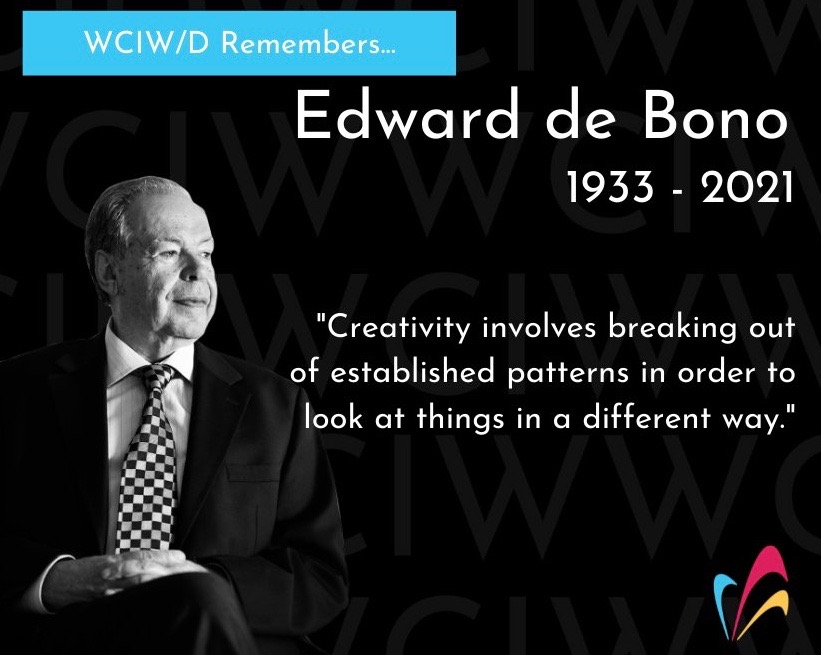
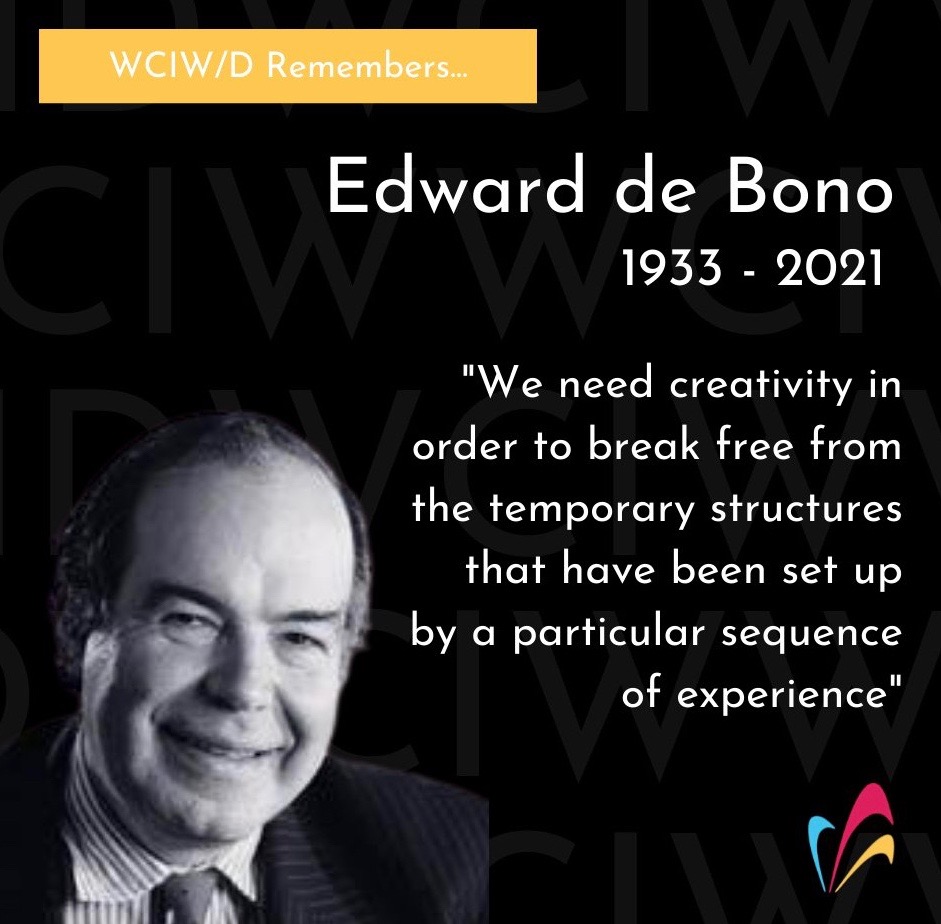
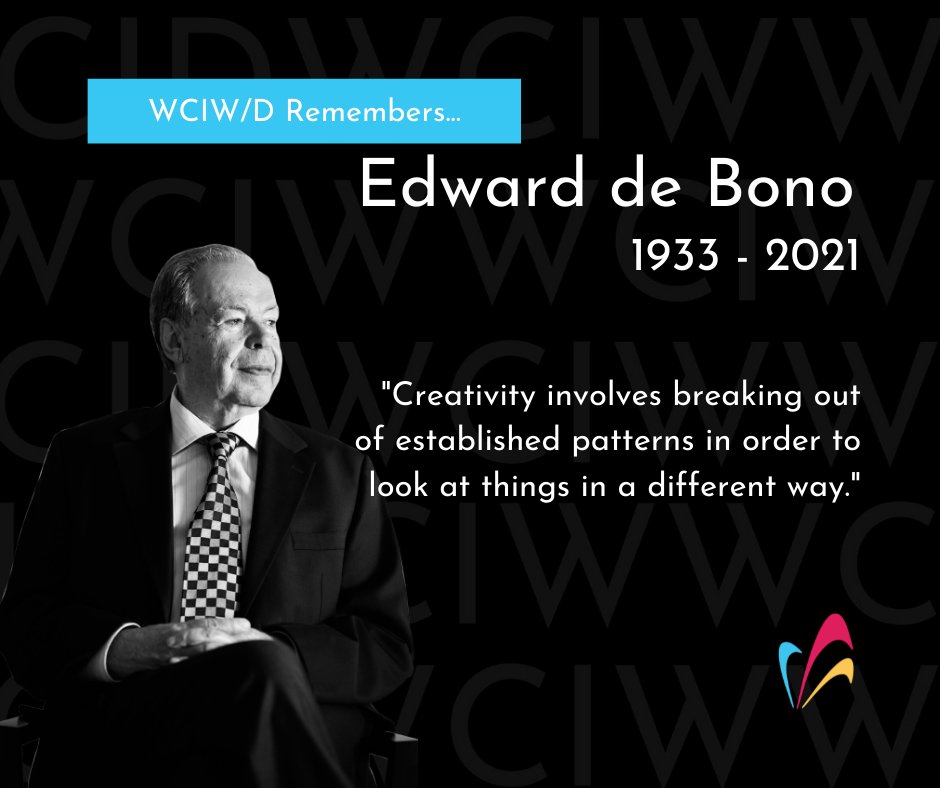
As you may know, Edward de Bono recently passed away. What he leaves with him is a vast treasure trove of creative insights and reminders of how and what we might do to strengthen and enhance our own creativity. Here are some select quotes from him provided by the World Creativity Innovation Week/Day and Prady, whom we thank for letting us further promote the creative thoughts of Dr. de Bono.
More de Bono quotes:
A memory is what is left when something happens and does not completely unhappen.
Most executives, many scientists, and almost all business school graduates believe that if you analyze data, this will give you new ideas. Unfortunately, this belief is totally wrong. The mind can only see what it is prepared to see.
Creativity is a great motivator because it makes people interested in what they are doing. Creativity gives hope that there can be a worthwhile idea. Creativity gives the possibility of some sort of achievement to everyone. Creativity makes life more fun and more interesting.
Creative thinking is not a talent, it is a skill that can be learnt. It empowers people by adding strength to their natural abilities which improves teamwork, productivityand where appropriate profits.
The need to be right all the time is the biggest bar to new ideas.
Bonus Quotes:
Humor is by far the most significant activity of the human brain.
It has always surprised me how little attention philosophers have paid to humor, since it is a more significant process of mind than reason. Reason can only sort out perceptions, but the humor process is involved in changing them.
Hopefully making a ruckus, one blog post at a time!
Be sure to check out my other blog,Joe’s Journey,for personal insights on life and its detours.
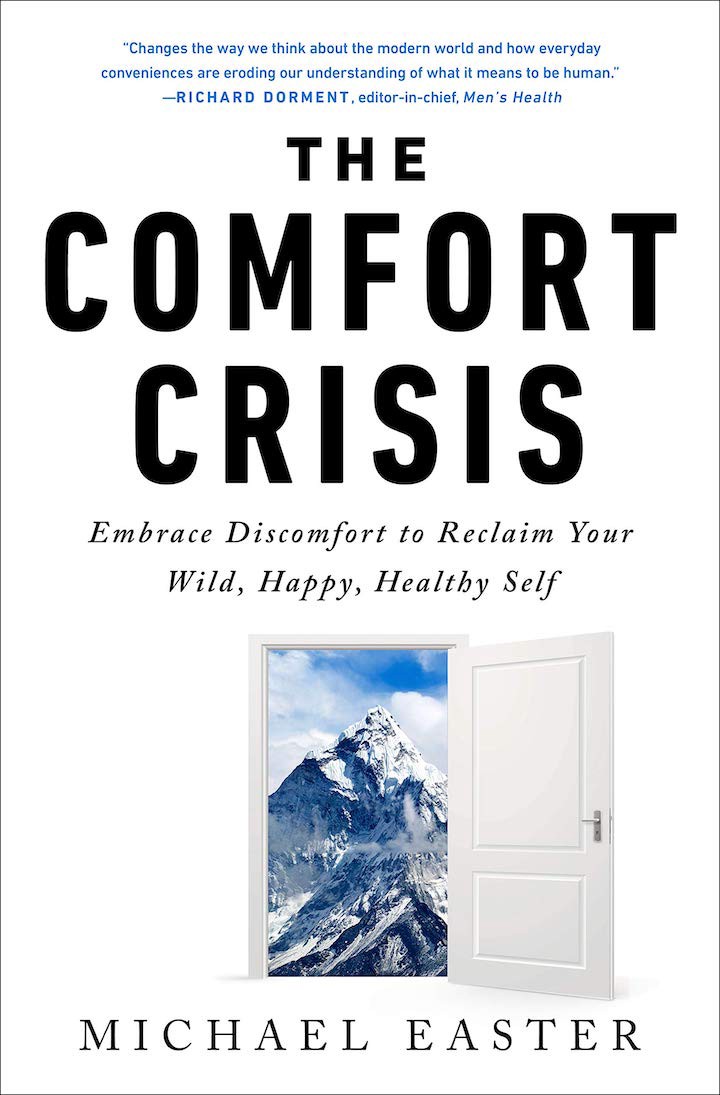
Portions of this post are based on excerpts from the book by Michael Easter, The Comfort Crisis. We spend an awful lot of time consuming digital media, lest we get easily bored. A recent study looked at what happens to a bored mind without easy access to media?
The Canadian neuroscientist James Danckert recruited some volunteers and put them into a neuroimaging scanner, and induced them into a mood of being bored They had them watch two guys hanging laundry for eight minutes. You could say they were bored out of their gords!
While bored, a part of their brains called the “default mode network” fired on. It’s a network of brain regions that activates when we’re unfocused, when our mind is off and wandering. Mind wandering is a rest state that restores and rebuilds the resources needed to work better and more efficiently when we’re focused on the outside world.
Mind wandering is also a key driver of creativity, which is why other studies have found that bored people score significantly higher on creativity tests. Research dating back to the 1950s may explain why we’re now facing a “creativity crisis.”
If I didn’t already know this was a 1950’s Classroom, I would have guessed it. Has that look and feel – BTW, where are the little girls?
Ellis Paul Torrance was an American psychologist. In the 1950s he noticed something off target about American classrooms. Teachers tended to prefer the subdued, book-smart kids. They didn’t much care for the kids who had tons of energy and big ideas. Kids who’d think up odd interpretations of readings, inventive excuses for why they didn’t do their homework, and morph into mad scientists every lab day.
The system deemed these kids “bad.” But Torrance felt they were misunderstood. Because if a problem comes up in the real world, all the book-smart kids look for an answer in … a book. But what if the answer isn’t in a book? Then a person needs to get creative.
He thus devoted his life to studying creativity and its uses for good. In 1958 he developed the “Torrance Test.” It’s since become the gold standard for gauging creativity. The TTCT (Torrance Tests of Creative Thinking) assess how creatively a child’s mind works and are often given to children to determine advanced placement or as part of an entrance examination. Instead of traditionally taught subjects such as reading or math, these tests assess creativity. Children are scored on a number of aspects, including:
Creative titles for pictures
Expressions
Imagery
and Humor
He had a large group of children in the Minnesota public school system take the exam. It includes exercises like showing a kid a toy and asking her, “how would you improve this toy to make it more fun?”
Torrance analyzed all the kids’ scores. He then tracked every accomplishment the kids earned across their lives, until he died in 2003, when his colleagues took on the job. If one of the kids wrote a book, he’d mark it; if a kid founded a business, he’d mark it; if a kid submitted a patent, he’d mark it. Every achievement was logged. What he found raises big questions about how we judge intelligence.
The kids who came up with more, better ideas in the initial tests were the ones who became the most accomplished adults. They were successful inventors and architects, CEOs and college presidents, authors and diplomats, etc.
Torrance testing, in fact, bests IQ testing so much so that a recent study of Torrance’s Kids found that creativity was a threefold better predictor of much of the students’ accomplishment compared to their IQ scores.
Now, according to Easter, we’ve killed off one of the main drivers of creativity: mind wandering. The result? A researcher at the University of William and Mary analyzed 300,000 Torrance Test scores since the 50s. She found that creativity scores began to nosedive in 1990.
She concluded that we’re now facing a “creativity crisis.” The scientist blames our hurried, over-scheduled lives and “ever increasing amounts of time interacting with electronic entertainment devices.”
And that’s bad news. Particularly when we consider that creativity is a critical skill in today’s economy, where most of us work with our brains rather than brawn.
Despite what productivity gurus will have us believe, the key to improving creativity might be to occasionally do nothing at all. Or, at least, not dive into a screen. We’ll think distinctly, in a way that delivers more original ideas.
Yet, ironically, society’s tech giants still deliver more advanced software to supposedly aid us in our creativity, while holding us increasingly captive. A proper balance has yet to be realized. And may not ever.
While it may sound silly, occasionally doing nothing works. At least for me, it does. Of course, my body may not be doing anything but my mind is usually traveling at warp speed. It’s usually during these times that I let my mental forces do what they’ll do. More times than not, they produce . . . an idea . . . several ideas . . . a partial script . . . something to which I can apply time-in-the-future to develop.
Boredom is just one evolutionary discomfort we’ve lost from our lives. Easter’s book, The Comfort Crisis, investigates nine others, covering what happens to our bodies, minds, and sense of self without them—and the benefits we can reap by reintroducing these evolutionary discomforts into our lives.
Whatever you end up creating, for it to count, it needs to ship. Ship in the sense that it needs to be published, displayed, lectured, drawn, invented, etc. Whatever you create needs exposure.
If you’re not that familiar with Seth or his myriad of work, go explore Seth’s site. You’ll be glad you did.
I’ve been following Seth’s podcast, Akimbo, for several years now and find it quite nourishing. I also subscribe to his emails. How he does this 365 days of the year, I’ll never know.
But, I’m glad he does.
So take a listen below to Seth’s take on Creativity if you haven’t already. Once done, choose to create something.
Then ship it!
Hopefully making a ruckus, one blog post at a time!
Be sure to check out my other blog,Joe’s Journey, for personal insights on life and its detours.
I couldn’t let the week go by without a Tip-o-the (Six) Hats to the truly creative wizard I had the pleasure of meeting back in 2005 at an international creativity conference.
Creative thinker Edward de Bono has died less than a month after celebrating his 88th birthday. De Bono died last Wednesday morning and the news of his passing was announced by his family.
I really didn’t know anything about him before I met him at this conference in Austin, Texas. He was one of the featured panelists at the conference and, one could argue, probably the most famous. He was also unassuming as he sat there on the panel giving out advice and counsel based on his many books, especially Six Hats.
Edward de Bono photo: Roy Zhao
That’s one of several he autographed for me as we visited for a brief bit following his presentation.
Born in Malta, De Bono graduated as a doctor but went on to study psychology and physiology from where he developed an interest in thinking processes.
He fathered the phrase lateral thinking, which has an entry in the Oxford English Dictionary, and developed multiple thinking strategies, including the Six Thinking Hats method.
In a statement, his family described de Bono as a global citizen, who returned to Malta in his final years.
“This has always been his home. He lived an extraordinary life, inspiring, encouraging and enabling all of us to be better and more creative thinkers. He wrote in his book The Mechanism of Mind: ‘A memory is what is left when something happens and does not completely unhappen.’ May the memory of Edward live on and inspire many future generations,” the family said.
De Bono received his initial education at St Edward’s College and the Royal University of Malta, where he achieved a degree in medicine. Then as a Rhodes Scholar at Christchurch, Oxford, where he gained a degree in psychology and physiology and a D.Phil. in medicine.
He holds a PhD from Cambridge, a DDes from the Royal Melbourne Institute of Technology, and a LLD from Dundee. He has had faculty appointments at the universities of Oxford, Cambridge, London and Harvard.
Thanks to the World Creativity and Innovation Week/Day
He has written over 60 books and programs, with translations into 43 languages, has been invited to lecture in 58 countries and has made three television series. Included among these 60 books are Serious Creativity, Creativity Workout, and Handbook for the Positive Revolution, all now displayed in my library with his autograph.
His ideas have been sought by governments, not for profit organizations and many of the leading corporations in the world, such as IBM, Boeing, Nokia, Siemens, 3M, GM, Kraft, Nestle, Du Pont, Prudential, Shell, Bosch, Goldman Sachs, Ernst & Young and others.
The global consultancy, Accenture, chose him as one of the fifty most influential business thinkers. In a 2004 interview with MaltaToday, de Bono even proposed a solution to the Israeli-Palestinian conflict as he launched his thinking centre in Malta.
In 1994, de Bono was made an officer of the National Order of Merit by the President of Malta.
Thanks to Kurt Sanson of MaltaToday for material upon which this blog is based.
Hopefully making a ruckus, one blog post at a time!
Be sure to check out my other blog, Joe’s Journey, for personal insights on life and its detours.
I’m sort of numb, sitting in Pam’s huge, upholstered easy chair just staring into space. It’s only been a few weeks since she died and here I am staring at the forlorn-looking black box that the funeral home delivered containing her ashes.
I’m scared to open it. I’ve never even seen someone’s ashes before. Not sure what to expect.
I sit. I stare. I wonder. I need a drink! Maybe two!!
After I return with my Jack Daniel’s on-the-rocks, I put the glass down and notice some liquid residue evidently left over from a glass no longer sitting here on the coffee table. I just mutter to myself that I’ll wipe it up later.
I take a sip of Jack, replace the glass on the table and reach for the black box to open it. Opening is no problem but I see that the bag inside is tightly tied so as to prevent spillage of the ashes.
Or so I thought.
When I lifted the bag from its container and began to remove it from the box, it began to slip from my hand and spill out onto the table. Evidently, the bag was not as securely tied as I was led to believe.
Though startled, and slightly embarrassed, even though there’s no one else home, I quickly apologized to Pam for having accidentally spilled some of her ashes. When I began to wipe up the ashes from the table, I noticed some weird reaction start to take place with those ashes.
It seems that some of them spilled precisely where some liquid remained from a few drinks ago.
I sat there mesmerized as I watched some chemical reaction taking place with the spilled ashes and liquid. To my amazement, it seemed as if some sort of figure was beginning to form.
A blob. Unrecognizable. But then, my God, it’s transforming right before my eyes into . . . a . . . person.
Pamela’s Voice imagerpy from The Night Gallery
I watch, amazed, not knowing what, if anything, to do. I am utterly transfixed on what is happening right before me. Then to my astonishment, it stands there and speaks, “Hi Joe!”
“It” is Pam, and I faint.
ii
“Uh, Joe,” she says. “It’s me, Pam, I think, though I’m not sure how I got here. It’s kinda fuzzy to me.”
“You wouldn’t believe me if I told you,” I muttered, slowly beginning to regain consciousness.
“Do you remember dying?,” I asked. “You know, you really screwed up my day, not to mention yours!,” I stated as flatly sarcastic as I could.
“I don’t know. I mean, I remember laying on the bed, semi-asleep and then, well, nothing. It’s as if everything went black,” she said.
“I don’t want to dwell on your death, Pam. I’m still in some kind of shock. It was I who discovered you, thank you very much,” I said.
“That moment was my worst nightmare come true,” I retorted.
“I’m sorry, but I didn’t exactly plan it that way,” she said. “But enough of this! How the hell did I get back here and what am I doing in our living room?”, she asked.
“Well, I was handling your bag of ashes and they slipped out of my hands with some spilling into a little residue of liquid there on the table. The mixture began some sort of chemical reaction and the next thing I know, you formed into, uh, you” I explained.
“You mean I was sort of resurrected from my ashes?,” she blurted out.
“That’s pretty much it,” I said.
“Well, that explains the gritty taste in my mouth,” she said as she sort of spit out some sandy-like substance.
“Why are you looking at me that way?” she asked.
“It’s not everyday, Pam, that I bring the dead back to life!” I said. “And,” as I stumbled for words, “you’re much younger looking than when you died,” I explained. “You look like you did when we first met, about 30 years ago!” I confessed.
“Maybe your appearance has something to do with your transformation,” I offered. “Whatever the explanation, I’m glad it has taken place” I admitted.
Evidently, unknown to me at the time, the mixing of the liquid with ashes that produced the chemical reaction also transformed the liquid somehow to create a person. This has resulted in forming a human, in this case, Pam, as I recall her from when we first met.
Oh, man, do I have questions, I thought. Does simply mixing a little of the ashes with any liquid produce this magical transformation to a “living being?” Is this magical elixir the solution for bringing the dead back to life?
“Pam, why don’t we take a little walk outside and get some fresh air? You’ve been bagged and bottled up for too long,” I suggested.
She agreed and off we went. However, as soon as we began to walk out the front door, she screamed in agony. We both immediately stopped and I looked down in horror.
She had begun to disappear!
iii
Her feet and ankles were dissolving and were starting to leave behind some dust reside. Thinking quickly in almost a reactive sort of way, I grabbed hold of her and immediately yanked her entire body back inside the house.
Within moments, thankfully, the shape of both feet and ankles began to return to normal appearance.
“Whew, thank God,” I exclaimed in shortness of breath. I was still holding on to her and sort of afraid to let her go. We eventually made it back to the living room where we both sat down in utter relief, she on the table and me in her overgrown chair.
“What the hell was that all about,” she screamed. “I started to disappear,” she said.
“Yeah, I know” I said. “I have a theory,” I suggested.
“Perhaps once the person leaves the house or the dwelling she occupies, she begins to dissolve and then disintegrates. In other words, she can’t venture outside or else she returns to dust or ashes in your case,” I theorized.
“You mean I can’t go outside or physically leave this house?,” she exclaimed.
“Not this way,” I said.
“Damn!” she retorted.
“Well, after all, you’re dead, remember?” I told her.
“As you have said on more than one occasion, my dear Joe, ‘minor little detail!'” she deadpanned.
iv
My now-growing list of questions boggles my mind: Is this chemical reaction trick a way of always producing Pam whenever I wish? Even though this creation is evidently limited to exist within the boundaries of my home, is that enough to satisfy me or to counter my longing for her? Could I bring her back in a different setting if I began the process from a different locale?
NightGalleryArtMinds
I have no clue at this point. The quest for clarification is now upon me. Where will it lead? Am I flirting with another dimension? Where is Rod Serling when you need him?
I think I’ll pour me another Jack Daniel’s and sit, contemplate . . . and chat with Pam.
Hopefully making a ruckus, one blog post at a time!
Be sure to check out my other blog, Joe’s Journey, for personal insights on life and its detours.
It is by logic that we prove, but by intuition that we discover. To know how to criticize is good, to know how to create is better. – Poincaré
Nothing in life is to be feared, it is only to be understood. Now is the time to understand more, so that we may fear less. – Marie Curie
Sometimes when I consider what tremendous consequences come from little things, I am tempted to think there are no little things. – Bruce Barton, member, Advertising Hall of Fame
A good ad should be like a good sermon: It must not only comfort the afflicted, it also must afflict the comfortable. – Bernice Fitz-Gibbon, member, Advertising Hall of Fame
I have learned that trying to guess what the boss or the client wants is the most debilitating of all influences in the creation of good advertising. – Leo Burnett, member, Advertising Hall of Fame
Nobody counts the number of ads you run; they just remember the impression you make. – William Bernbach, member, Advertising Hall of Fame
Fun without sell gets nowhere, but sell without fun tends to become obnoxious.– Leo Burnett, member, Advertising Hall of Fame
Imagination is the beginning of creation. You imagine what you desire, you will what you imagine, and at last, you create what you will. – George Bernard Shaw
Hopefully making a ruckus, one blog post at a time!
Be sure to check out my other blog, Joe’s Journey, for personal insights on life and its detours.
My my, what will they think of next? I learned something . . . that, evidently, a pubic hair can sing! I did not realize that. What else did I not realize, Gillette?
Now, I know what you must be thinking: “What in the hell kind of blog post is this?!” It’s, uh, well, different.
This blog sets out each week to present thoughts and ideas about various aspects of creativity; those that touch directly on advertising and those that do not. This is one that does.
According to AdAge, marketers increasingly have dared to defy traditional taboos when it comes to personal care, as we’ve seen in more pushes around menstruation, breastfeeding and grooming. In the case of the latter, brands such as Billie razors andVeet razors have given the thumbs up to having hair wherever you want it, while EOS recently celebrated a TikTok creator who has been teaching her fans the best way to shave their lady parts. Now, Gillette Venus is jumping into the bikini line fray by encouraging consumers to “say pubic.”
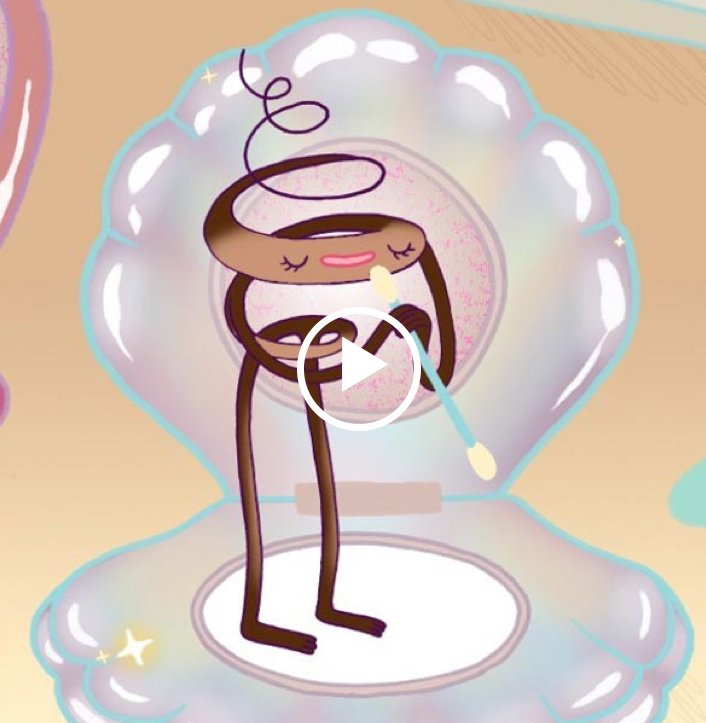
The centerpiece of the campaign from Grey is an animated film starring a singing pubic hair. Yes, you heard me right.
“Hi, I’m a pube!” she announces before breaking into a Broadway-style tune, singing of her plight as a lowly, gnarly curl, hoping to be treated like her colleagues who spring forth from other parts of the body. As the tune ramps up, she’s joined by other pubettes in a Busby Berkeley-style routine.
For those of you unable to log into the AdAge site to view the animation, here are the lyrics to Gillette’s latest.
I’m just a pube, and it’s not fair. All I ever wished to be was just another hair But when they got one look at me The ruling from society was “Ewww” “Not you!” Oh what’s a curl to do It seems like all the ads are showing perfect skin and shiny hair But what about this other world inside your underwear? It’s ok to say our name You really can say pubic No need to be ashamed It’s even kind of therapeutic Why the mass hysteria about the pubic area? There’s nothing diabolical about this little follicle So take care of us, your pubic hair If you trim, or you shave or you’re bare down there Whichever way’s your way It’s all okayyyyyyyyy Yes, it’s okay!
Another push encouraging consumers to be at ease with body parts and bodily functions
The campaign aims to normalize conversation around body parts like the pubic area to make women feel more comfortable about grooming there. “Because pubic is not a dirty word, and your pubic hair and skin deserve its own care,” the brand said in a statement.
Gillette Venus had conducted a female consumer survey about the use of anatomical terms such as “pubic.” It found that nearly half of them believed it feels more accurate to use such terms yet only 18% are actually using them. More than half, 56%, said they wished there were more accurate imagery and descriptions in media of women grooming in the pubic region.
The campaign playfully addresses the issue, while the Gillette Venus site promoting the products also features imagery of a diverse range of women shaving their bikini lines. The packaging too, features the words “pubic hair.” Along with the video, the effort includes a TikTok component inviting others to sing “The Pube Song.”
“With over two decades of research and scientific development in women’s hair and skin under our belt, literally, we know that grooming means something different to every woman,” said MyAnh Nghiem, Gillette Venus communications director in the statement. “Our new collection not only offers women more options for pubic grooming than we ever have before, but starts a new conversation about using language that accurately and respectfully represents the female body.”
Okay, okay, some of you may already be saying, “Enough is enough!” You gotta admit, though, advertising ain’t boring (well, alright, some of it is; some of it is even dreadful). This spot tries to be educational, informative, and entertaining, I guess, if not a little quirky. Frankly, if you didn’t realize the animated curl was in fact a pubic hair, I’m not sure that you’d figure it out based solely on looks.
What will they think of next? Uh, I’d really rather not think about it.










 ideasnmoreblog