“Christmas is more than barging up and down department store aisles and pushing people out of the way. Christmas is another thing finer than that. Richer, finer, truer, and it should come with patience and love, charity, compassion.” — Rod Serling
Today is my Dad’s birthday. He left us when he was 72 back in 1978. I miss him. I miss my family, most of whom have passed on from when I knew them growing up. He would agree with Mr. Serling and the quotes above and below. Dad was a quiet man; even tempered. Like my Uncle June, a true gentleman.
Mom, Dad, Grandmother (Maw) 1976
Rod Serling was another man I admired and respected. As a writer, I’ve looked to Rod as a sort of mentor, always conscientious as to what I put down in words. I always strive to be insightful, imaginative and entertaining, just as Rod did. Alas, we lost him in 1975, the year I graduated from college. when he was only 50. The words and messages he brought forth then are just as powerful and meaningful today. Dad would definitely approve.
Merry Christmas and Happy Birthday, Daddy and long live Rod Serling!!
Hopefully making a ruckus, one blog post at a time!
Be sure to check out my other blog, Joe’s Journey, for selected short stories and personal insights on life and its detours.

An unlikely pairing some would surmise but they’re actually made for each other. In another of various selected articles from AdAge, this article I read recently by Matt Kaupa discusses how best for brands to align data with creative and do so from the beginning. Developing and studying one or the other separately won’t do any good.
At first glance, “data” and “creative” feel like opposites. One loves structure, the other color. One obsesses over decimal points, the other ellipses. But when they team up, the results can be surprising. And the best work happens when they collaborate from the start—not when data shows up at the end to judge. Here’s how to get there.
Don’t wait until after launch
Too often, data gets invited to the party only after a campaign is out in the world. At that point, it’s just there to grade the work, not shape it. Data and creative are two ingredients in the same dish. If you taste the soup only after it’s served, you can complain about the flavor—but you missed your shot to add the seasoning.
Strategy: Bring analysts into the creative kickoff. Audience insights—demographics, psychographics, behaviors, even reactions to past campaigns—can shape tone, format and story direction from day one. If you want to measure success, then why wouldn’t measurement help guide the strategy?
Example: Want to talk to busy moms in Charlotte? Don’t guess. See what they actually engage with at 10 p.m. Trying to position a brand as “premium” but still “relatable”? Let sentiment data show the words they use—not the words you wish they used.
Speak in the audience’s words
Every brand has its own vocabulary, but if your audience doesn’t speak that language, you’re basically shouting into the void. It doesn’t matter how clever your copy is if no one understands it—or worse, if it feels out of touch.
Strategy: Pull top organic search terms and social comments into the copy deck. Use their words, not yours.
Example: In industries like health care or finance, expert language doesn’t always translate. Otolaryngology? That’s just an ENT.
Don’t ignore A/B test losers
Everyone loves a winner, but the losing versions of a campaign are often way more interesting. They show you where instincts clashed with reality—and that tension is where new ideas live.
Strategy: Treat every test as a learning lab, not just a scoreboard. Every version has a story to tell—whether it’s what to do, or what to avoid.
Example: Sometimes insights come from a single weird data blip. Why did that version spike in Wisconsin? It didn’t have anything to do with cheese—or overrated football teams (skol!).
Let dashboards tell a story
Dashboards don’t have to be painful. But let’s be honest: They usually are. They’re dense, ugly and built for people who already live and breathe numbers. For everyone else? They’re more like a punishment than a resource.
Strategy: Co-build reporting visuals with designers so your dashboards are as compelling as your campaigns. When data looks like a story, people actually use it. Also, dummy-proof your insights: structure data and visuals in a way that reduces the number of assumptions—especially wrong ones—that your audience has to make.
Example: Imagine if your media dashboard looked less like a spreadsheet exploded and more like an infographic—highlighting trends, telling a narrative, and pulling out the “so what” at a glance. One client stopped ignoring their reports entirely once we reframed their monthly dashboard like a campaign storyboard. Suddenly, the CFO wasn’t just tolerating the data—he was quoting it in meetings.
Flip feedback into fuel
Brands collect mountains of feedback but rarely use it for anything more than “good job” or “try again.” What if, instead of treating it like a report card, you treated it like raw material? Customers are basically writing copy for you every day.
Strategy: Use real-time listening tools to turn survey responses or social reactions into iterative campaign content.
Example: Imagine a spot stitched together directly from customer feedback. Or a campaign whose copy comes entirely from what people are saying online.
Wrap smarter
When the campaign’s over, most people move on to the next thing. But the wrap-up is where the hidden treasure lives. Go beyond “what performed” and dig into why—because those answers set you up for the next win.
Strategy: Cluster analysis can reveal new audience segments. Performance patterns can challenge assumptions. Maybe Gen Z does like long-form after all—just not when you lead with product shots.
Data shouldn’t chase creative, and creative shouldn’t wait for data. The smartest work happens when both teams co-own the problem from day one. Remember that data isn’t just numbers. Just as we need to speak our audience’s language, we also need to speak the creatives’ language. Incorporate qualitative data—social comments, organic searches, reviews, surveys—to make sure we don’t lose the forest for the numbers.
Hopefully making a ruckus, one blog post at a time!
Be sure to check out my other blog, Joe’s Journey, for selected short stories and personal insights on life and its detours.
Some say yes but CMOs are still chasing ads while consumers crave something beyond a screen. I recently ran across an article in AdAge about this and thought it worthwhile to pass on. Seems like the industry is changing right before our eyes. It’s difficult to keep up let alone try to figure out where it’s headed years from now. Hopefully this article will clarify some of the mystery.
The rules of attention have changed. Ads cost more than ever but work less than ever. People are paying to skip, block or scroll right past them. But experiences? They’re lining up for those and sometimes paying to get in.
Look at Lollapalooza, Coachella or the US Open, where the brands aren’t a backdrop, they’re part of the headline. Festivals and big cultural moments aren’t just about music or sports anymore; they’re about the branded experiences people talk about long after the event ends.
The disconnect is clear. Netflix has 247 million subscribers paying to avoid ads. Spotify Premium has 220 million doing the same. Every one of those subscriptions is a consumer saying: “My attention is valuable enough that I’ll pay to protect it.” Yet advertisers keep pouring money into channels people are actively opting out of. That’s not a strategy; that’s a slow leak.
Meanwhile, experiential is thriving. The category grew 10.5% last year to $128 billion. Why? Because instead of interrupting what people want, it is what people want. A great branded experience doubles as entertainment, content and memory. It creates emotion, builds loyalty and turns people into advocates.
Vibrant Urban Pop-Up Storefront Transforms Cityscape with Interactive Marketing and Philanthropy – Adobe Stock
Younger consumers are driving this shift fastest. They don’t just want to sit back and watch a brand throw messages at them. They want to take part, contribute, belong. Creator culture proves it, and experiential is the live version of that same energy.
Action above ads. Experience above everything. The brands that win are the ones that stop interrupting what people care about and become what people care about.
The shift is already happening. The only question is: Will you lead it, or watch it pass you by?
Well?
Hopefully making a ruckus, one blog post at a time!
Be sure to check out my other blog, Joe’s Journey, for selected short stories and personal insights on life and its detours.
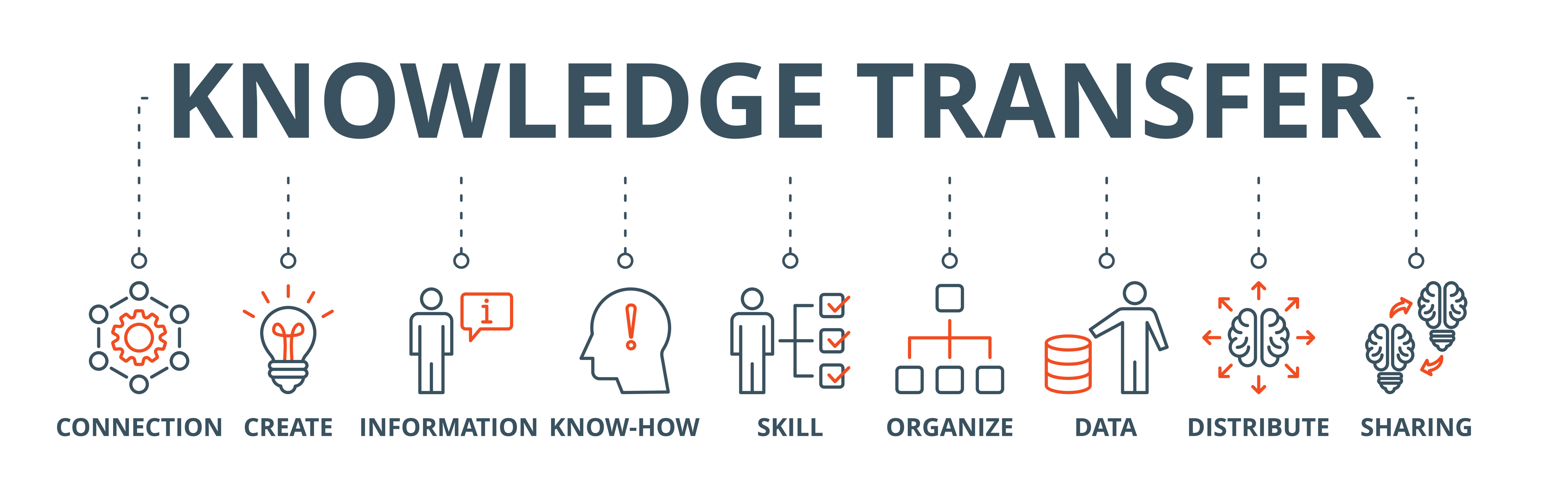
When perusing Threads last night, I ran across this quote from the recently deceased actor/icon Robert Redford. As he was, in my opinion and in many others, a creative genius, I felt this quote appropriate to share on my creative blog.
Mr. Redford was many things to many people and I’m sure by now you have read or heard many of the tributes that have poured in from across the globe. Whether you saw him in one of his many movie roles or learned from him at the Sundance Film Festival or heard him in one of his environmental lectures, you witnessed a very talented individual expressing views he deeply believed in. You may have even shared some of his views. Maybe not.
Either way, in my opinion, Mr. Redford is entitled to our respect. He was a class individual, wonderful actor, impactful director/producer and a global icon who was always quite humble. Whether or not the collective “we” want to admit it, the entertainment industry and in particular the film industry lost a legend this week.
Regardless of how each of us was impacted and touched by Mr. Redford, we are all a little better off because of him. Rest in peace, Bob Redford. You deserve it!
Hopefully making a ruckus, one blog post at a time
A few weeks ago I read a piece from the New York Times about a man who cultivated his creativity at a young age. While we all may not echo his circumstances, we can sure learn from them. Every one of us needs a little spark of creativity now and then to make life a wee bit more interesting . . . And fun.
*****
Last May, my father-in-law showed up at my house with a child-size drum set in his trunk. That might make some parents shudder, but I was thrilled. I was a drummer when I was younger, with a set just like this one, and now my 7-year-old son could follow in my footsteps.
I’ve learned two things in the year since. First, you can’t force your kids to like the things you like; my son has probably played those drums for 15 minutes total. More important, though, I learned that I wasn’t a former drummer. I’m still a drummer. Even though I hadn’t engaged that part of my brain in years, my trips downstairs to do laundry now usually include a few minutes bashing on that little drum set. I’m not making beautiful music — just ask my neighbors — but I’m having a great time. Every little session leaves me feeling energized.
That spark of creativity is something my colleagues at Well, The Times’s personal health and wellness section, think everyone could use more of. Starting tomorrow, they’ve got a five-day challenge that aims to help readers nurture their creative side. I spoke with Elizabeth Passarella, the writer behind the project, to learn more.
After years away from the drums, I’ve been shocked by how good it feels to make music. Why is that?
What you feel is what many of us feel when we do something creative: giddy and inspired. Whether you do something more traditionally creative, like draw or play music, or riff on a recipe because you were out of an ingredient, it gives you a little boost. And there is plenty of research that links creativity to happiness and better moods.
Some people reading this are gifted painters and musicians, I’m sure. But others would probably say that they don’t have much artistic talent. What would you say to them?
You are all creative in some way. There’s a definition of creativity that researchers use: generating something novel that is also useful. That could be the score to a movie. It could also be, as one expert told me, a brilliant solution to keeping your dog out of a certain area of your house. Or making up a weird game to play with your toddler.
Basically, anybody can be creative at any time.
Yes. And it might come more naturally to some of us. But it’s a skill you can practice and grow. Several researchers I spoke to emphasized how curiosity — just being open to something new or asking questions — is a hallmark of being creative. We can all nurture that.
[Note:: I have an avid curiosity and a sometimes warped sense of humor].
Part of the goal here, I know, is to help people actually get over the hump and do a creative new thing. How does that happen?
Every day, we give you a short exercise that’s a warm-up for your brain. Kind of like a stretch. And we tell you the aspect of creative thinking that it’s demonstrating, some of which you probably already do but just don’t realize. For example, having constraints when you are problem-solving can improve your solutions. It’s why I write snappier articles when my editors give me word counts (which they always do). On the day we talk about constraints, we’ll ask you to write a poem using only certain words we provide. I love that challenge. You’ll see one of my poems as an example. Be nice.
I’m sure your poetry is just as good as my drumming. Before this project, did you consider yourself a creative person?
[Note: I agree with what he says; I’ve been an advertising creative director, copywriter, and currently a freelance writer]
Absolutely. I’m a journalist, I write books and I have no other employable skills. Writing is the only job I’ve ever had, so honestly, learning techniques to get out of a rut and knowing I can grow my own creativity feels like I’ve gained a little job security. (Haha, just kidding. There’s no job security in writing.) But in all seriousness, before reporting this story, I would have said that creativity always alights on you, like a muse. I learned that, no, you can work at it. That makes me excited and hopeful.
I hope all you creative and soon-to-be creatives get something from this article. After all, a part of creativity is sharing about creativity. Have fun, guys!
Hopefully making a ruckus, one blog post at a time!
Be sure to check out my other blog, Joe’s Journey, for selected short stories and personal insights on life and its detours.
Recently I came across this article on innovation but from a point of view I had not really thought about before. Its author, Gonçalo Melo, is an inspiring designer who has also authored many articles on design and design thinking. It’s an interesting read and I thought I’d share it with you.
Innovation has a history of being driven by those who refuse to conform, the self-proclaimed misfits of society. These individuals, often labeled as unconventional or rebellious, have a unique approach to innovation — they prioritize passion over convention. Let’s delve into the captivating world of misfit innovators and discover why their focus on passion is a key to their success.
The Power of Nonconformity:
Misfits have an innate resistance to conformity. They’re not motivated by societal norms or traditional paths; instead, they are driven by their own vision and unbridled passion. This refusal to adhere to the status quo allows them to see opportunities others might miss.
Passion as the North Star:
For misfit innovators, passion serves as their guiding star. They don’t embark on projects solely for profit or recognition; they pursue endeavors that genuinely excite them. This unwavering passion fuels their creativity and determination.
Embracing Failure as Fuel:
Misfits understand that innovation often involves risk and failure. They don’t shy away from challenges or setbacks; instead, they use them as stepping stones to refine their ideas and achieve their goals. Failure is not a deterrent but a source of motivation.
The Art of Authenticity:
Misfits are unapologetically themselves. They don’t conform to corporate or societal expectations of how they should behave or present themselves. This authenticity resonates with others and attracts like-minded individuals who share their passion.
Reshaping Industries:
History is rife with examples of misfits who disrupted entire industries. Think of Steve Jobs, who transformed technology and entertainment with his passion for design and user experience. His unconventional approach redefined what was possible.
Igniting Collaborative Fires:
Misfits have a magnetic quality that draws in collaborators who share their vision. These partnerships are not built on hierarchy but on a shared passion for innovation. Together, they challenge norms and drive progress.
The Passion-Driven Workforce:
In today’s competitive job market, misfit innovators are reshaping the workforce. They prioritize meaningful work over traditional employment, valuing companies that align with their passions and values.
Cultivating Inclusive Environments:
Misfits foster inclusive environments where diversity of thought is celebrated. They recognize that innovation thrives when individuals from varied backgrounds and perspectives come together in pursuit of a common passion.
A Misfit Renaissance:
As society evolves, the misfit spirit is on the rise. Increasingly, individuals are prioritizing their passions over conventional career paths, leading to a renaissance of innovation driven by authenticity and purpose.
The Challenge to Conventional Wisdom:
Misfit innovators challenge us to question conventional wisdom and explore new horizons. They remind us that passion is a powerful force capable of reshaping industries, redefining success, and inspiring a brighter, more innovative future.
In a world often driven by conformity and convention, misfit innovators serve as beacons of inspiration. Their unwavering focus on passion demonstrates that tru innovation arises not from adherence to norms but from the pursuit of what sets your soul on fire. As we celebrate the misfits, we celebrate the future of innovation itself.
Hopefully making a ruckus, one blog post at a time!
Be sure to check out my other blog, Joe’s Journey, for selected short stories and personal insights on life and its detours.
It’s been awhile since quotes have been featured on this blog and since various sayings by interesting people are not going away I thought it time to have quotes resurface. So . . .
Creativity is no longer about grabbing attention or raising consumer awareness. Its goal is to remind consumers about what is fundamental and gratifying about a brand. — Peter A. Georgescu, member, Advertising Hall of Fame
Attract attention, maintain interest, create desire and get action. — E. Elmo St. Lewis, member, Advertising Hall of Fame
Regardless of the moral issue, dishonesty in advertising has proved very unprofitable. — Leo Burnett, member, Advertising Hall of Fame
Creativity is so delicate a flower that praise tends to make it bloom while discouragement often nips it at the bud. — Alex Osborn, member, Advertising Hall of Fame
Never write an advertisement which you wouldn’t want your family to read. You wouldn’t tell lies to your own wife. Don’t tell them to mine. — David Ogilvy, member, Advertising Hall of Fame
I have come up with something that I think is a bizarre and novel method of execution. One designed to challenge your talents. — Twilight Zone’s “The Jeopardy Room” by Rod Serling stars Martin Landau and John van Dreelen.
Every area of trouble gives out a ray of hope, and the one unchangeable certainty is that nothing is certain or unchangeable. — John E. Kennedy, member, Advertising Hall of Fame
Meetings are all too often the burial grounds of great ideas.— Keith Reinhard, member, Advertising Hall of Fame
Why does the eye see a thing more clearly in dreams than with the imagination being awake?– Leonardo da Vinci
Today’s marketplace is cluttered with products that are no better and no worse than their competitors. — Phil Dusenberry, member, Advertising Hall of Fame
Hopefully making a ruckus, one blog post at a time!
Be sure to check out my other blog, Joe’s Journey, for personal insights on life and its detours.

And, check out various creative selections from ideasnmore.net.
Creativity can be found in some surprising places. From advertising and computer science to art and statistics. It’s what we do with it that matters. Below are various quotes from different people expressing a feeling or an observation about how creativity has impacted them in some way, directly and indirectly. Enjoy the quotes for March as we spring into Spring.
Play by the rules, but be ferocious. — Phil Knight, member, Advertising Hall of Fame
Many persons have an idea that one cannot be in business and lead an upright life, whereas the truth is that no one succeeds in business to any great extent, who misleads or misrepresents.— John Wanamaker, member, Advertising Hall of Fame
To me, mathematics, computer science, and the arts are insanely related. They’re all creative expressions. – Sebastian Thrun
I have learned that trying to guess what the boss or the client wants is the most debilitating of all influences in the creation of good advertising. — Leo Burnett, member, Advertising Hall of Fame
We pay just as dearly for our triumphs as we do for our defeats. Go ahead and fail. But fail with wit, fail with grace, fail with style. A mediocre failure is as insufferable as a mediocre success. — Bruce Barton, member, Advertising Hall of Fame
Change is inevitable. Growth is optional. — John C. Maxwell
Be a voice, not an echo. — Anonymous
Advertising, to be successful, must understand or anticipate basic human needs and wants and interpret available goods and services in terms of their want-satisfying abilities. This is the very opposite of manipulation.— Charles H. Sandage, member, Advertising Hall of Fame
 Consumers are statistics. Customers are people. — Stanley Marcus, member, Advertising Hall of Fame
 No moral, no message, no prophetic tract, just a simple statement of fact: For civilization to survive, the human race has to remain civilized.~ Rod Serling
Hopefully making a ruckus, one blog post at a time!
Be sure to check out my other blog, Joe’s Journey, for personal insights on life and its detours.
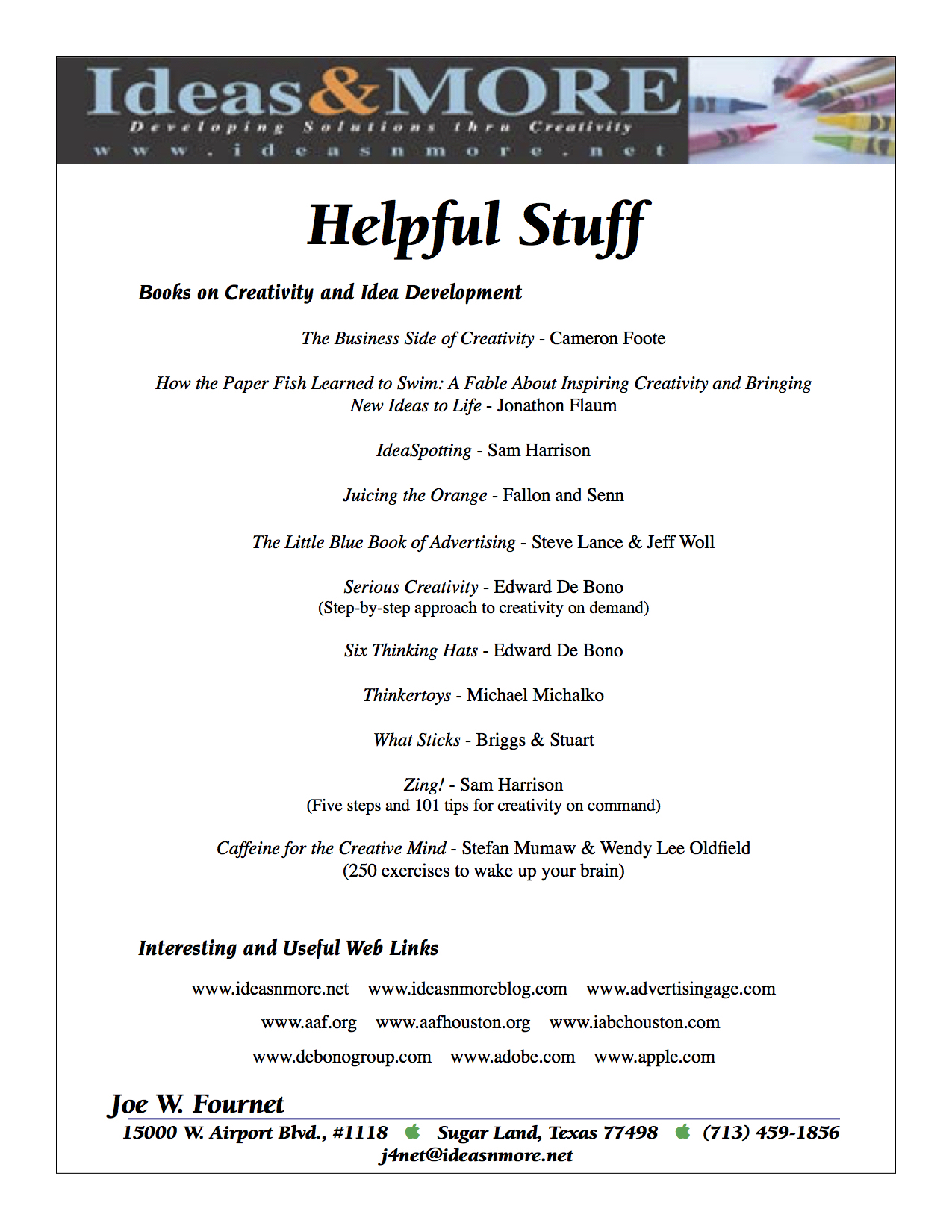
Some times we all need a kick in the pants to get our creative juices to start flowing. Perhaps the attachments in this post will help in that regard. I wrote these years ago in preparation for some speaking engagements. Given their nature, I’d bet they’re still valid today.
Hopefully making a ruckus, one blog post at a time!
Be sure to check out my other blog, Joe’s Journey, for personal insights on life and its detours.
. . . when we see and read what others have said that made an impact. May these quotes bring about an impact for you as well. Enjoy!
All of us who professionally use the mass media are the shapers of society. We can vulgarize that society. We can brutalize it. Or we can help lift it onto a higher level. — William Bernbach, member, Advertising Hall of Fame
The voyage of discovery is not in seeking new landscapes but in having new eyes. ― Thomas Alva Edison
Nothing comes merely by thinking about it. — John Wanamaker, member, Advertising Hall of Fame
I would rather have a mind opened by wonder than one closed by belief. – Gerry Spence
Ninety-nine percent of the failures come from people who have the habit of making excuses. – George Washington Carver
Reading, conversation, environment, culture, heroes, mentors, nature—all are lottery tickets for creativity. Scratch away at them and you’ll find out how big a prize you’ve won. – Twyla Tharp
Chaos is the only thing that honestly wants you to grow. The only friend who really helps you be creative. — Dan Wieden, member Advertising Hall of Fame
What we are doing is satisfying the American public. That’s our job. I always say we have to give most of the people what they want most of the time. That’s what they expect from us. — William Paley, member, Advertising Hall of Fame
Advertising is what you do when you can’t go see somebody. That’s all it is. — Fairfax Cone, member, Advertising Hall of Fame
When a distinguished but elderly scientist states that something is possible, he is almost certainly right. When he states that something is impossible, he is very probably wrong. – Arthur C. Clarke
Hopefully making a ruckus, one blog post at a time!
Be sure to check out my other blog, Joe’s Journey, for personal insights on life and its detours.