Fembot, Svedka’s reborn mascot, will star in the brand’s AI-powered Super Bowl ad. (Svedka)
Now that we know the Seattle Seahawks and New England Patriots will face off in this year’s Super Bowl, another thing is certain: viewers want funny, celebrity-filled ads—but they are split on the role of AI.
Reporter Erika Wheless said Ad Age partnered with the Harris Poll to gauge consumers’ expectations for this year’s Super Bowl ads by surveying around 1,000 consumers in mid-January.
Seventy-one percent of respondents said they most want to see funny ads, while 46% said that they are most likely to remember a funny ad. Brands are listening—funny spots comprised 70% of Big Game ads in the last three years, according to iSpot.
Super Bowl viewers are divided on AI
Technology and AI-generated ads are less popular. The Harris Poll found that 17% of those surveyed most wanted to see AI-generated ads, with millennials being the most open to them (28%), followed by Gen Z (21%).
Respondents were also split on how comfortable they would be watching an ad with AI-generated celebrities, characters, or spokespersons, with 51% feeling “very” or “somewhat comfortable” and 49% “not at all” or “not very.”
This year, Svedka Vodka is bringing back its robot mascot, Fembot, in a fully generative AI commercial. Silverside AI is working on the ad, the same agency that led Coca-Cola’s much-talked-about AI Christmas ad.
Forty-four percent of those surveyed said that they did not like the idea of AI being used in ads or that the use of AI feels fake or misleading. Thirty-six percent said that they would be more open to AI-generated ads if ads disclosed that AI was used, while 33% said they would not be comfortable with an AI ad at all, even if AI use was disclosed, the ad was obviously fictional, or a character or a celebrity approved their likeness being used.
Which brands do consumers want to see in Super Bowl ads?
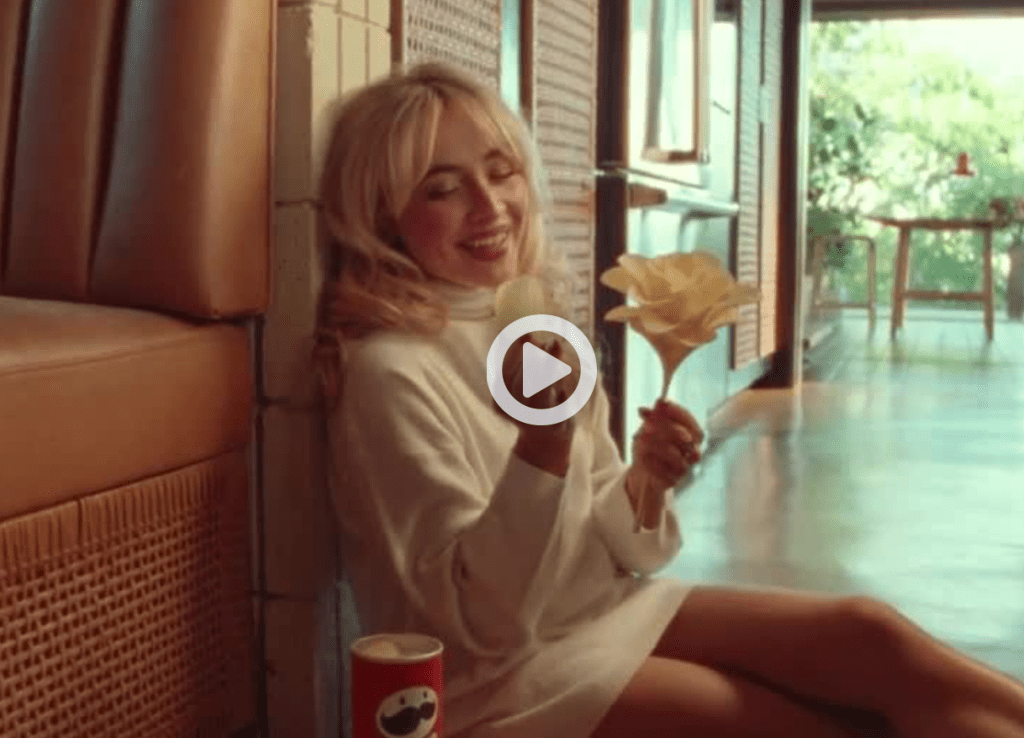
When it comes to the kinds of companies that should advertise in the Super Bowl, 70% of those surveyed think packaged food and drink and snack food companies should advertise, up from 47% last year. That’s good news for the multitude of food and drink brands in this year’s game, including Lay’s, Poppi, Pepsi, Ritz, Liquid Death, Kinder Bueno, Pringles and Nerds.
SB2026 – Teaser – Love at first bite: Pringles U.S. Commercial
Seventy-two percent believe restaurants and food delivery apps should have ads, but only 63% of Gen Z agrees. Instacart and Uber Eats return, joined by Grubhub, while DoorDash opts for a social-first strategy.
Gen Zers (in their late 20s) and millennials (around 30 to 45 in 2026) were most excited about celebrity-driven ads, at 40% and 39%, respectively. Last year, 68% of Super Bowl ads featured a celebrity. This year, Pringles teams up with Sabrina Carpenter, Kinder Bueno features influencer Paige DeSorbo, Instacart collaborates with Ben Stiller and Benson Boone.
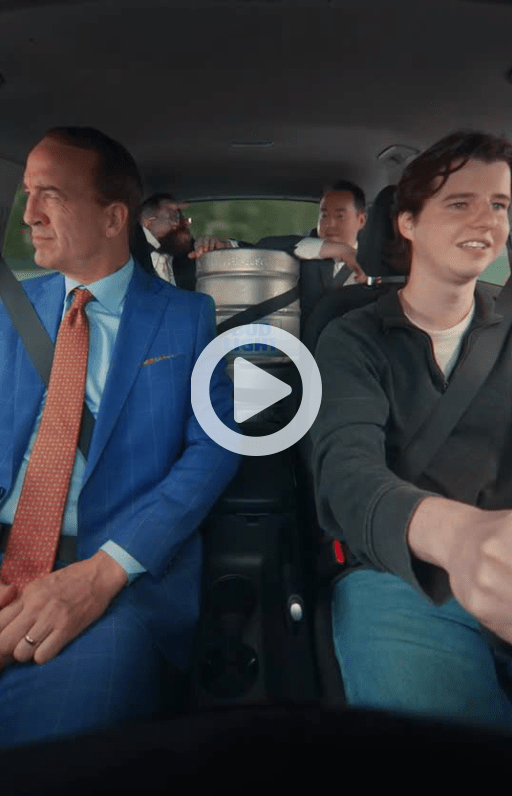
Bud Light brings back Peyton Manning, Shane Gillis, and Post Malone.
Gen Z and millennials plan to stay active on their second screens, with 61% and 62% looking up featured brands, texting about ads, and posting reactions on social media.
When it comes to alcohol advertising, there is a generational divide: 67% of Gen Xers (ages 45 to 60) think alcohol brands should advertise, compared to 49% of Gen Zers, reflecting the younger generation’s lower alcohol consumption. Additionally, 70% of Gen Xers believed automotive brands should advertise, significantly higher than Gen Z’s 32%. Thus far, Cadillac and Toyota are the only auto brands to confirm ad buys.
The good news for advertisers is that excitement for the game builds annually, with 82% of those surveyed likely to watch this year’s game on Feb. 8, up from 72% last year and 67% in 2024.
Last year’s Super Bowl drew 127.7 million viewers across Fox, Fox Deportes, Telemundo and the Tubi streaming platform, making it the largest audience in the history of the game, according to Nielsen. NBCUniversal announced in early September that it had sold out of ad inventory for this year’s game, which will air on NBC, Peacock and Telemundo.
Let’s hope this year’s batch of ads will be much improved over last year’s underwhelming batch. Until then, we’ll wait and see.
Hopefully making a ruckus, one blog post at a time!
Be sure to check out my other blog,Joe’s Journey, for selected short stories and personal insights on life and its detours.
Fueling Creativity in Education bridges the gap between the science of creativity and classroom practice, with a focus on both creative teaching and teaching creativity. Since launching during the pandemic, we’ve interviewed over 100 leading researchers, educators, and administrators.
Hopefully making a ruckus, one blog post at a time!
Be sure to check out my other blog,Joe’s Journey, for selected short stories and personal insights on life and its detours.
Canadian graphic designer Jean-Pierre Lacroix explains how creative agencies and brands can make better use of generative AI by using it to expand team creativity.
As in the past I came across this article on the Web and thought it both interesting and inspiring. Given our challenging times, I think you will too. Enjoy!
The concept of generative AI technology creating content from user prompts using advanced algorithms. Adobe Stock
Every brand and agency is trying to tap into the promise of generative AI. So far, the results don’t always meet expectations. Is that so surprising? AI is brand new technology that no one fully understands, including its creators. Right now, we’re in an era that calls for experimentation. Results will come, but maybe not how we imagine. In the meantime, we must adopt a human-centered approach to AI, enabling creative teams to use AI as a platform for thinking differently and learning.
So far, the best AI brand activations aren’t AI-generated ads or design. Successful examples of creatives using AI have a distinctly human perspective. For example, Heinz created an ad showing the audience what happens when they prompt AI to create images of ketchup: it reproduces hundreds of variations of the iconic Heinz bottle design. No matter how they try, according to the ad, they can’t get AI to drop the Heinz label because it’s synonymous with ketchup.
Although the ad shows AI-generated imagery, Heinz is cleverly using AI to make a point about their brand rather than to generate and execute a creative idea.
On the other hand, when companies try to generate creative using AI, even the best work requires enormous human effort and it doesn’t always come off well with consumers. That may change, but today, AI-generated material just doesn’t look and feel right. The fear that AI will take jobs away from humans causes concern in some scenarios, for example with the use of AI-generated models.
How should creative teams be using AI today? It’s about testing and learning to develop skills and confidence. No one can say for sure how AI models will evolve but being prepared means teams need to start experimenting now.
Key considerations for AI experimentation
Create a cross-functional team assigned to explore AI tools relevant to their roles. Tracking and testing new models, staying informed about potential legal concerns and gathering case studies will ensure you have a strong foundational knowledge to guide decision-making.
Establish guidelines for AI use at your company. You’ll need someone who’s on top of legal matters, keeping in mind that various legislation is pending in many regions. You also need to understand how your consumers or clients perceive AI. Although there are some who hate AI no matter the circumstances, for most people, context matters. Conduct research with your stakeholders to make sure your intended uses align with their preferences. Provide your team with an approved list of licensed tools to use and establish a process for testing new ones.
Try, fail, try again. At our company, we created an AI self-assessment platform that allows brands to evaluate their design against a competitor through the lens of our branding philosophy. This was a test-and-learn scenario that resulted in numerous unsatisfactory iterations, ultimately leading to a beta model that runs well, albeit with some caveats. (You can test it for yourself.) As we continue to improve the tool, our team continues to learn. Don’t expect perfection because you won’t get it. Building confidence, knowledge and skills should be the goal.
Be transparent. If you work with clients, gauge their comfort level with AI and give them the option to opt out if you intend to make it part of your workflow. Something as simple as AI notetaking may run counter to privacy policies, for example.
Protect your privacy and the privacy of clients. Before using any AI platform, ensure your IT team reviews their data policies. This brings us back to establishing guidelines. Ensure that everyone at your company is aware of which platforms they’re permitted to use, and that the appropriate people have licensed accounts where data will be kept confidential.
Better, faster creative? Not yet
The hype around AI may lead some to think creative work can be completed faster and at a lower cost. At this stage, efficiency-finding with AI is only possible if you significantly lower your standards. Most creative agencies and brands would likely agree that AI can be useful in ideation but isn’t as helpful in execution.
For example, we’ve found that even when given clear design guidelines, it’s very difficult for AI to create final art for packaging that works in real life. We’ve found it useful for editing images, brainstorming a hundred ways to depict a watermelon and general ideation. But so far, human creatives are still significantly better at everything else.
AI does a decent job writing emails and copy for social media, but that too is bumping up against some limitations. Consumers are starting to recognize the tone of AI-generated copy and they find it grating.
AI is best suited to help structure content, create headlines and keywords and clean up copy. Marketers shouldn’t let their writing skills decline! AI can decipher what makes a clickable headline, but it doesn’t have any fresh ideas – it’s a solid Beatles cover band, but it’s no Lennon or McCartney.
Where we’ve found it most useful is with coding, where it helps us do more in a shorter time frame. However, teams still need to be proficient enough to know how to prompt for the right code and how to correct mistakes.
The human connection gap
One of the most common consumer-facing uses of AI is chatbots. They give us insight into the human connection gap that can occur with AI. Although serviceable and polite, AI chatbots annoy people. We know they’re not human and this changes the way we treat them.
Consider the Taco Bell drive-through incidentwhere a customer derailed an AI chatbot by ordering thousands of glasses of water. In cities with fleets of self-driving cars, they often get stuck and cause traffic jams because drivers won’t let them in the way they would a human driver.
Then there are the many incidents of people assaulting robots, especially humanoids. As much as we love a fun tool to play with, creatives can’t ignore the dehumanizing potential of AI.
How do we deal with this? The answer isn’t ignoring AI but learning how to use it to support human ideas and interactions. If what the utopia tech companies are selling is achievable, it will be because users engage with it thoughtfully. Creative teams are in a great position to lead this kind of conscientious, intelligent use of AI.
Jean-Pierre Lacroix is president of Shikatani Lacroix Design, a global branding firm specializing in transforming customer experiences for consumer packaged goods companies, financial institutions and retailers. He is a member of the Registered Graphic Designers of Ontario, and has sat on the board of the Society of Environmental Graphic Designers, Packaging Association of Canada and the Association of Professional Futurists.
Hopefully making a ruckus, one blog post at a time!
Be sure to check out my other blog, Joe’s Journey, for selected short stories and personal insights on life and its detours.
Spooky entrance to haunted neighborhood by the bay. Adobe Stock
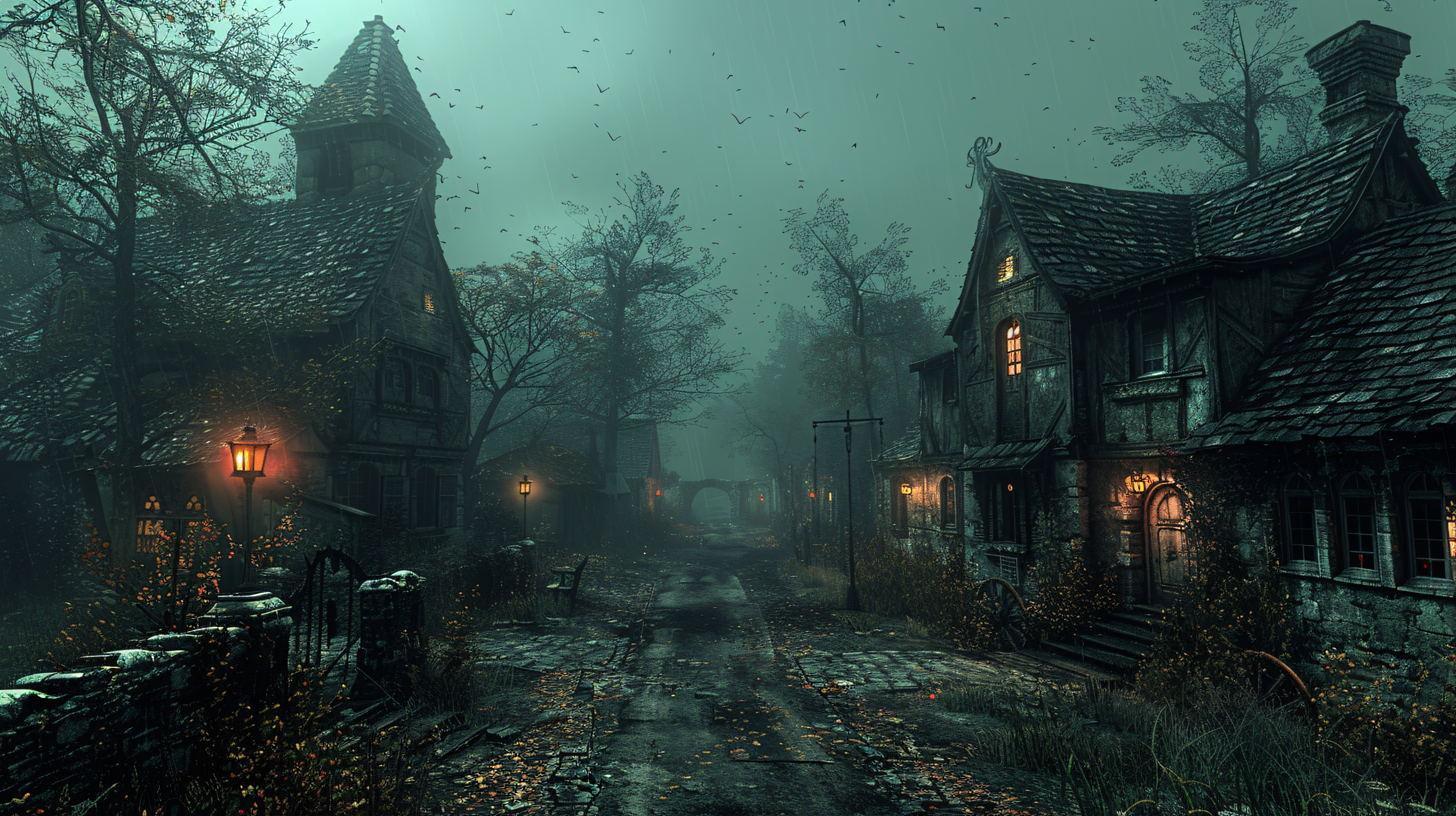
It seemed tranquil enough at first sight. It also appeared quite spooky. The residents didn’t seem to mind, after all they were used to it. It was the outsider who would occasionally visit their neighborhood by the sea. It was the outsider who got queasy when he set foot in the neighborhood. It was the outsider who wouldn’t return from whence he came. It could be the outsider who might become a permanent resident if he didn’t end up dead.
You see, the residents were very selective as to whom they invited into their little neighborhood by the bay. It didn’t matter to them that it was haunted. That just added a bit of allure to the area. No, it wasn’t the Twilight Zone. It was just a little haunted neighborhood by the bay.
By what or from whom is it haunted you might ask? There have been rumors scattered around for years but nobody knows for sure. Seems like around the late 19th Century, a shipwreck happened upon the shores of what would become this little neighborhood.
The wreck was the result of a horrendous storm that destroyed the ship and caused the crew to abandon her. As the storm ravaged on, some of the crew was lost at sea with only a handful of them surviving and eventually making it to shore.
Once there, the remaining crew found refuge in an old abandoned shack from where they would ride out the storm.
As the story/rumor goes, the fledgling crew mates did what they could to survive but kept a low profile in the neighborhood. All appeared to be going okay for the neighborhood until about one year later.
That was the year, in fact the exact day, a year later when another massive storm hit the area and completely wiped out many in this shoreline populace. Including the house in which lived the crew mates. The house still stood but the crew was gone.
No signs of anyone, anywhere. No belongings, no nothing. They just vanished.
THREE YEARS LATER
One night as a couple of the residents were out for a stroll, one noticed a distant light coming from one of the houses on the edge of the neighborhood. As they got closer they discovered the light was emanating from the long abandoned house that was vacated after the bad storm several years prior. But how could that be; no one had been living there since the previous and only occupants from the ship wreck and they had completely vanished after the storm hit. They were all thought dead.
Through a bit of trepidation and curiosity, the couple decided to investigate and moved closer to the house. Because the house had been abandoned after the storm and not been kept up, it was in a state of disrepair and looked dilapidated. Nevertheless, the couple nervously managed to walk up to the front steps near the entrance. Then they froze as if they had encountered an invisible wall. They couldn’t move. The only thing they felt was cold, extreme cold as if from a meat storage locker.
Although they stood there frozen in place, they could still see their surroundings but it was as if time itself had stopped. That’s when they saw it. Slowly but ever so gradually the front door began to open. As they stood there they felt the expectation of finally seeing someone answering the door, albeit under very strange circumstances. But as the door creaked open, they saw no one. An empty space in the entrance way.
What to make of this? They didn’t know what to think. Or do. How long would they remain frozen in place?
It seemed like it was just a blink, a millisecond in time before they found themselves inside the house standing unfrozen in the entranceway. Though they could move, they did not. They just stared at one another as if to silently ask “what do we do now?”. They were in total darkness except for a tiny light at the end of the hallway. This couldn’t be the light they saw from outside. That one, they surmised, must have come from the upstairs. But how? Were these lamps, candles set ablaze. There had been no electricity turned on since the storm hit and as far as they knew, the house was abandoned.
Or was it? How were the lights on? Even if the light source was a candle, it would have to be lit. Like it or not, further investigation was in order.
So the couple slowly made their way toward the flickering light at the end of the hall and just as they approached it they suddenly felt immense cold, as if they had walked into a freezer. It was just like they’d experienced when they reached the front door.
Simultaneously at that point the light flickered out and they were standing in complete darkness. But for a moment. There, just a few steps away and up what appeared to be a staircase, flickered another light as if beckoning them up the staircase. Interestingly the cold seemed to immediately dissipate when they began walking upstairs.
But as soon as they approached the light it moved. It was as if someone or something was leading them somewhere and holding the light as they traversed the curving, spiral staircase. Even in this twilight setting they could see no one. The light seemed to be moving on its own, always staying just slightly ahead of the couple.
When they finally arrived at the top of the stairs, they discovered open air, no rooms or walls, save for one partly dilapidated door that lead to an empty, what was left of a bedroom.
The light was still flickering but just barely, given the slight evening breeze from the adjoining bay.
The couple just stood there, frozen, afraid to step anywhere for fear of the timbers giving way. It was at this moment that they felt an uncontrollable sense of movement like they were being pushed toward the large opening on the bay side of the house.
Haunted castle at night, with glowing ghostly figures drifting through the misty air outside. Adobe Stock
There was nothing here but open air and a drop of about 300 feet down to the rocks below. No one could survive that fall. But why were they standing there now, right on the precipice of falling to their death?
They were once again standing there in total darkness. No sound except for the uneasy beating of their hearts. Their pulse raced, blood pressure climbing and anxiety rising to new heights.
Could they have outstayed their uninvited welcome? Did someone want them dead? Who the hell was behind these flickering lights? Was this a convoluted prank or sick joke? In any event they were more than ready to take their leave.
Because of their unsure footing they slowly started backing away from the open air portion of the storm-torn wall and began to turn around and walk out.
That’s when they heard it; a scraggly old voice that sounded more like a whisper.
“Where are you going? You can’t leave now, the party’s just begun. Besides you just got here,” voiced something quite invisible to their eyes. As they were still trying to adjust their eyesight in the dark, a candlelight appeared right in front of them, seemingly floating in mid-air.
There was no one present. This time, though, instead of a rush of very cold air they felt only a slight chill. As if a door had simply opened to the night air.
“Who’s there?” blurted out the man. No one answered.“ I said, ‘who’s there? Show yourself or at least speak and answer me.”
Silence.
Finally, the man turned to his lady friend and urged, “come on, let’s get the hell out of here.”
They began to walk but the flickering light stayed just in front of them, floating in mid-air. Whenever they turned, it turned. Always in front.
When the couple reached out in front of them to see if they would feel anything, all they felt was air; nothing.
“I don’t know who or what you are but we’re leaving; we’ve had enough,” said the man. Just then the light seemed to move out of their way as if to let them by. As the couple made their way out of this “semi death trap” their way out was lit by another floating light.
They made their way safely down the stairwell and into the foyer and out the door. Once outside they stopped and just looked at each other. Totally perplexed but relieved they would now be on their way back home in the neighborhood.
An eerie haunted mansion with shadowy figures peering out of the windows in the night. Adobe Stock
While the couple was walking away, the door gradually closed and the soft sound of quiet laughter could be heard from within the house.
Then a distant voice, “you think they’ll be back?” “Oh, I’m sure of it,” said another voice. “And we’ll be ready.”
***************
Over the course of the next few weeks, the couple queried several of their friends in the neighborhood and told them of their encounter in the apparently abandoned house at the end of the block overseeing the bay. Not one person they talked to knew anything about the house and had understood it had long been empty, that no-one had lived there since before the storm hit.
After one such neighborly conversation, the couple returned to their abode where they had been residing for just the past six months. As they discussed with each other their various conversations with their neighbors, they agreed that something was amiss. No one knew anything and/or no one was talking.The couple suspected their neighbors knew more than they were letting on.
During these last few weeks the conversations with their neighbors did reveal circumstances about the shipwreck over a year ago and that some survivors did make it onshore to seek cover from the storm. It was at this time that the survivors sought refuge in the old house at the end of the neighborhood. This fact was confirmed by the neighbors who recalled that time. After that, however, no one could recall anything. On this topic the neighborhood grew silent.
As the couple thought back on their eerie encounter inside the house, they began to wonder if they hadn’t experienced the presence of the survivors in ghostly form. They didn’t really believe in that sort of thing but at this point it seemed a viable explanation. Or one very elaborate hoax. But why? And, what’s with the neighborhood acting clueless?
One thing was sure: The couple wouldn’t get any clarification from their neighbors. They’d have to further investigate on their own. So, by mid morning the next day the couple set out to walk down the neighborhood “streets” – if you could call dirty, muddy avenues streets – to end up at the old house on the edge of the neighborhood overlooking the bay. They anticipated a different experience that time of the morning in contrast to their initial visit late at night.
Before they even got near the house, they thought it was extremely odd that the neighborhood was so quiet. There wasn’t a soul stirring, no dogs barking, nobody out for a morning jog. There was . . . no life at all present. It was as if everyone and everything had died.
As the couple approached the house, the hairs on the back of their necks rose up and a genuine sense of anxiety increased within them. When they got to the front door, they stopped cold. They heard voices, although somewhat muted, coming from inside. It sounded like a gathering of people were having some sort of meeting. They knocked, politely of course, but no one answered. Then the door creaked open ever so slightly so they cautiously opened it and stepped in. There was no one inside and no noise whatsoever. What happened to all those voices? Where had they gone?
As they stood there in the foyer, seeing nothing, they heard a voice very distinctly say, ” Welcome. Nice to see you again. We’re having a little get-together of the neighborhood and discussing future plans for the area. Won’t you come in and join us?”. The couple hadn’t moved but said, “uh, sure, we’d love to join you.”
As they both continued walking into what appeared to be nothingness, the man let out an agonizing groan and immediately dropped to his knees. His wife, looking on with startled amazement, gasped as she saw a huge silver sword driven into her husband’s abdomen. Not knowing what to do at that instant, she started to kneel down beside him when he let out an horrific scream as another silver, razor-sharp sword was being thrust into his back, killing him instantly. As he fell to his side, she tried to embrace him but looked up at where she thought someone stood above her and yelled out, “Why in God’s name have you done this? What did we ever do to you?”.
The invisible voice soon took shape, as did the rest of the characters in the room, and remarked “We want to welcome you two into our neighborhood. Our neighborhood of ghostly beings, our disembodied souls who still want to live and rejoice.”
As the woman muttered, “but I don’t understand; why did you have to kill my husband?” “Simple,” the ghost said; “you need to be dead before you can enter into our neighborhood.” Just then the woman muttered in disbelief, “but I’m not dead.” Upon hearing that, the rest of the gathering shouted back to her, “Yet, deary, but you soon will be.”
Looking upon them with mystified horror, the woman, still bending down beside her dead husband, started to say something when everything went black. No noise, no voices, no feeling. She was numb except for an unknown sense of disembodiment. Turns out she hadn’t felt when her head left her body as it rolled down the floor in the foyer. She subsequently collapsed right beside her dead husband, blood spilling profusely from her body.
The “main ghostly figure” proudly announced to the group, “Behold, the newest members of our neighborhood. We shall call them Joe and Karen, such a sweet couple.” The group responded with an energetic round of applause. One of the ghost members added, “they will make such a nice contribution to our neighborhood.”
And with that the applause continued, thundering down the hallway into the misty night air. The Manor by the bay had done its job. The neighborhood would grow quiet again. Until the next time . . .
The neighborhood by the bay and its ghostly appearance at night is quiet for now. Adobe Stock
For other stories of mystery and the macabre, check out my collection at ideasnmore.net/gallery
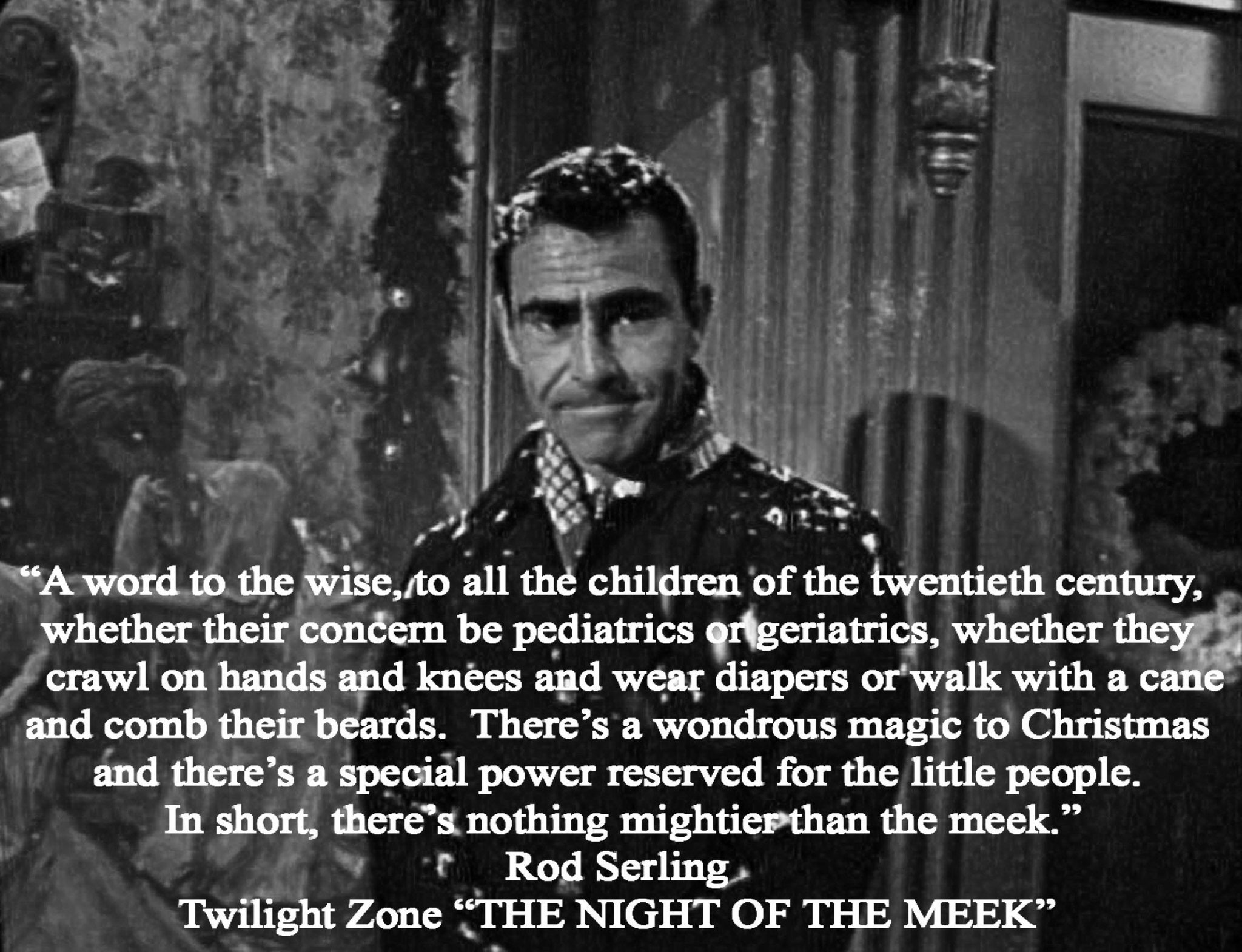
“Christmas is more than barging up and down department store aisles and pushing people out of the way. Christmas is another thing finer than that. Richer, finer, truer, and it should come with patience and love, charity, compassion.” — Rod Serling
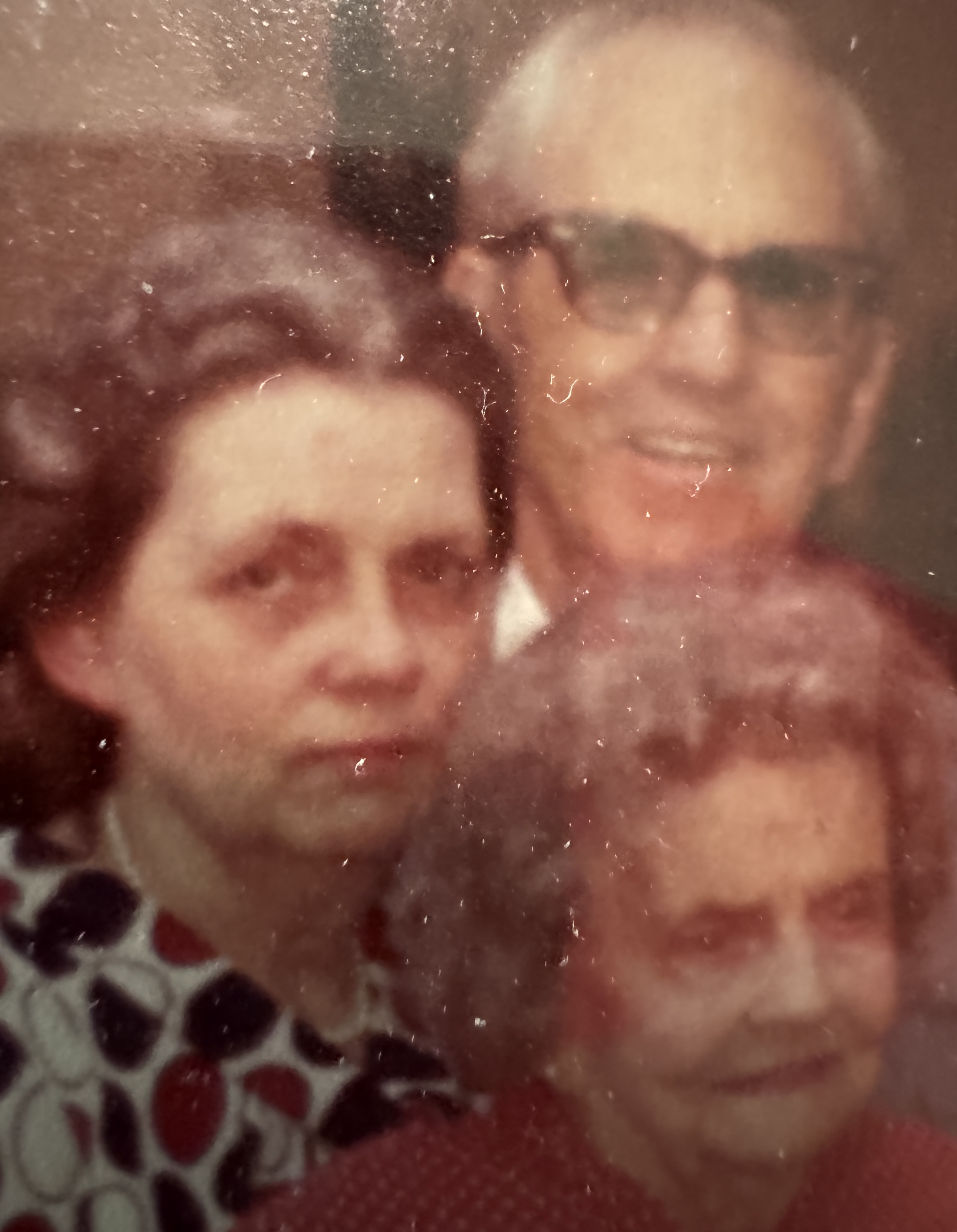
Today is my Dad’s birthday. He left us when he was 72 back in 1978. I miss him. I miss my family, most of whom have passed on from when I knew them growing up. He would agree with Mr. Serling and the quotes above and below. Dad was a quiet man; even tempered. Like my Uncle June, a true gentleman.
Mom, Dad, Grandmother (Maw) 1976
Rod Serling was another man I admired and respected. As a writer, I’ve looked to Rod as a sort of mentor, always conscientious as to what I put down in words. I always strive to be insightful, imaginative and entertaining, just as Rod did. Alas, we lost him in 1975, the year I graduated from college. when he was only 50. The words and messages he brought forth then are just as powerful and meaningful today. Dad would definitely approve.
Merry Christmas and Happy Birthday, Daddy and long live Rod Serling!!
Hopefully making a ruckus, one blog post at a time!
Be sure to check out my other blog, Joe’s Journey, for selected short stories and personal insights on life and its detours.
Advertising agencies are in the process of setting strategies for the next five years despite numerous unknowns—the impact of AI, speed of consolidation and increasing ease of in-housing among them. These variables may have wide-reaching impact, including the potential demise of mid-size agencies, that marketers should be preparing for now.
On Ad Age Insider, Ad Age reporters look at the future of ad agencies and strategies that industry leaders are putting into place now to prepare.
“A lot of [agencies’] executional work becomes commoditized by AI, and a lot of marketers will have pretty robust in-house systems. So the real value and agency lie in their strategic thinking and being able to bring an outsider perspective to the equation.” –Ewan Larkin, agency reporter, Ad Age
Ad Age Insider podcast transcript
Parker Herren, host: How will the agency landscape transform by 2030? What has surprised you guys the most in your reporting on the future of agencies?
The demise of mid-size agencies
Brian Bonilla, senior agency reporter: It’s hard to be surprised, but I would say something that might surprise people in general—the role of the mid-size agency might go away by 2030, meaning we’re already seeing a lot of small, independent agencies get a lot of business, but we’re now starting to see those same agencies competing with each other and competing with large agencies and seeing a leveling of new business opportunities. And at the same time, mid-size agencies, which typically range from like 100 to maybe 250 employees, are competing with large holdco networks of like 5,000 employees for the same business.
So by 2030, you’re going to see those mid-sized agencies either merge with other entities or sell to private equity firms or things like that. That’s going to be something that might be surprising for a lot of people, and I think will happen quicker than people realize.
How agency structures will shift
Ewan Larkin, agency reporter: This is interesting. For a couple of years, agencies have been trying to market themselves as consultants, and it hasn’t really stuck. To some degree, it has, but I think it’s obvious they are still service providers fundamentally. But I actually do think now we might see that shift start to stick a little bit. A lot of the executional work becomes commoditized by AI, and a lot of marketers will have pretty robust in-house systems. So the real value at agencies lies in their strategic thinking and being able to bring an outsider perspective to the equation.
I think that puts them in direct contact … with the likes of Deloitte Digital and Accenture Song. So the focus for agencies really should be building up some of those consulting capabilities and commerce consulting capabilities. Agencies like VML are already starting to do this. They rolled out a unit earlier that encompasses consulting, CX and other things, and that already accounts for about 40% of their overall global revenue. So, I expect more people to make moves like this. This is one of the early stages of holding companies really being able to package up one of those offerings.
Brandon: People tend to think that there are just going to be more and more integrated accounts, especially between creative and media. The walls are really coming down between those two functions. We are seeing brands increasingly hire the same agency to handle both of those functions. So, agencies are going to need to get used to those two functions not being in silos anymore, not having walls exist between those two teams.
Garett: We’re already starting to see these roles change. We’re seeing shifting ways of billing clients, different business models, different services agencies have to cater to. So, it’s already happening. It’s going to happen more and more where agencies are going to have to operate as platforms and services that can interact with brands and help brands build their ad tech stacks, acting as consultants, acting as facilitators into this futuristic landscape.
That’s where agencies need to go, and they’re starting already by developing new products and services. Whether that will work is still an open question, and if they can adjust and change—some will, some won’t.
The social AOR resurgence
Parker: Let’s talk influencers. Gillian Follett covered the future of the social and influencer space. Is there any way the future of influencers will impact agencies in 2030?
Gillian: Experts that I talked to for the story said that they predict the spectrum of influencer agencies will stretch to the extremes. So, we’ll see more brands working with influencer functions within larger holding companies, or we’ll see brands looking to very specialized boutique agencies who specialize in specific platforms or types of creators, like gaming creators, for example.
We’re also going to continue to see influencer budgets increase, not at the same meteoric rate that we’ve seen over the past couple of years, but based on forecasts from intelligence companies like eMarketer, it’s definitely on an upward trajectory.
We’re also seeing a resurgence of social agency of record assignments from brands across different categories. Something that I spoke to one marketer about was this idea that it’s not just the brands that are trying to target Gen Z or want to be social-first anymore that are looking for social AORs. It’s brands that they wouldn’t expect, like more established legacy brands are looking for social AORs. And a lot of these brands are seeking the insights that social media can provide in terms of what consumers are looking for, the types of products that they’re craving and using social as the foundation for their marketing campaigns rather than having social be a tacked-on piece at the end.
Parker: Okay, Lindsay, I’m going to let you round out this group with some intel from your reporting on the RFP process in 2030.
Lindsay Rittenhouse, senior agency reporter: Within the RFP process, agencies are going to have to stop the theater—the glossy presentations, the pitch decks, and really showcase how you’re working as a team. Get ready to be in more chemistry meetings—enough with the showboating and the theater in the pitch.
Parker: Tell us how marketers should begin preparing for that now.
Lindsay: Well, they have to set up the process so that there are more chemistry meetings and more time for the meatier stuff, the interviewing, the briefings, the working together, and just get rid of some of the processes. You don’t have to do these massive pitch presentations. [Marketers] are the ones who set the process for the RFP, so don’t allow the theatrics.
Agencies in 2030—how to plan ahead
Parker: I want to hear everyone’s advice for how marketers or agency leaders can begin prepping for their 2030 strategy. Why don’t we just go round robin, starting with you, Brian.
Brian: Start thinking about what type of agency model do you want as a marketer. We’re seeing roster agency models become way more popular, meaning instead of having just one AOR handle everything, I’ll have a social agency here, I’ll have a creative agency here or I’ll have a roster of five creative agencies.
If you’re an agency, start thinking about what model makes the most sense for you to be in—should I be more niche or should I broaden my capabilities? And as a marketer—same question but on the flip side. If I’m going to be spending less on marketing, but I’m expecting to have more outcomes, what is the best model that makes sense for my external partnerships? Because I do think agencies will still be necessary as much as we’re talking about in-housing and things like that.
Ewan: They need to clarify which functions they want done in-house, which ones they need outsourced, very clearly defining what they can do themselves versus what is essential that they get from an external partner. There is a push for efficiency, and, obviously, everybody wants to save costs, so they want to bring it in-house, but you are going to need an external partner. You always do need that outside perspective. So, very clearly define what needs to be done yourselves and what you need an agency for.
But rethinking agency relationships in general—they’ve always been seen as providers, that’s what they are, but now a lot of them are going to be actually helping build those internal capabilities. So identify which agencies are high-level strategic thinkers, which ones really understand your brand and your challenges, which ones can help me build my internal chops. Those are the ones that I think are likely to have long-term value.
Brandon: On the agency side of things, if you’re a creative agency and you don’t already have media capabilities, really digging in and evaluating if it would be worth building that out. If you have a unique angle, something to offer brands to make yourself stand out from the plethora of media agencies that can do the same thing. Media is probably in a similar boat. At least having an understanding of various creative processes is going to be helpful.
On the marketer side of things, brands can just not be afraid to ask. I did a story not too long ago about how indie creative agencies can respond to requests for media services. And the reason why agencies are starting to think about either building these capabilities internally or which media agencies they can partner with is because they’re getting these requests. Marketers—don’t be afraid to ask if you have an indie creative shop that you’re working with that doesn’t do media. They’re getting used to getting that question already, and they are starting to think about how to best answer that question. So, no dumb questions is the advice.
Garett: They could start developing the services and tools, and some are. We’ve seen agencies launch AI agents—the trading bots that they can all of a sudden potentially give out to brands to start to use. A lot of these tools that agencies are building are internal, but eventually, they’re going to make them external and start shipping them to brands to use as part of their suite of services. So, agencies start building internally and then will start giving it out to the masses.
Gillian: Brands should start considering whether they want to look to agencies to help them with sharpening their social strategies to adapt to this new way of seeking consumer insights from social and using social as a starting point for marketing. For some brands, it might make more sense to develop a social media team in-house to lead these efforts for the brand. Some brands have sought social media agencies of record because of the wide range of functions that are involved in social media marketing today, like paid social, creator marketing, social media intelligence gathering. There’s just a lot that goes into it these days.
Brands should start considering whether that’s something they can do in-house, or if they need to find partners to help them develop those strategies as social becomes more and more important.
Key Takeaways
Mid-size agencies will likely disappear by 2030, either merging or selling to private equity firms
Agencies are shifting from ad makers to consultants and platform builders
Creative and media functions will merge as brands increasingly hire one agency for both services
Hopefully making a ruckus, one blog post at a time!
Be sure to check out my other blog, Joe’s Journey, for selected short stories and personal insights on life and its detours.
The 4As hosted a roundtable with Ad Age and seven industry leaders from holding companies and independent agencies at Advertising Week New York to discuss some of the most pressing issues facing executives today.
Lindsay Rittenhouse reported that the roundtable included a lineup of executives spanning a wide range of roles and companies: 4As CEO Justin Thomas-Copeland; Stacey Hightower, CEO of Omnicom Specialty Marketing Group; Frances Webster, CEO of independent agency Walrus; Tracey Faux-Pattani, CEO of independent shop Butler, Shine, Stern & Partners; Chris Foster, CEO of Omnicom Public Relations Group; Ian Grody, chief creative officer of independent shop Giant Spoon; Joe Baratelli, executive VP and chief creative officer of independent agency RPA; and Nada Bradbury, CEO of Ad-ID, which sets a standard for the industry to identify advertising assets across all media.
These leaders discussed a wide range of topics, including how they are using AI in their day-to-day; how they are driving value in their agencies; the means to stand out in an increasingly crowded market; and what talent they are hiring.
Some takeaways from the conversation:
How agency leaders are using AI
Webster said Walrus is using AI to respond to an “RFI right now … it’s helping us with upfront strategy and segmentation.”
“It’s like the internet from the ‘90s, you’ve got to surf the wave and you can’t have a two-year plan,” she said. “It’s a three-month plan or a six-month plan. But if you’re not engaging with it, you’re out.”
Hightower said Omnicom Specialty Marketing Group has been using AI in Europe “for quite some time.” He said the agency created a call center that has been using AI to speak with customers who dial in on branded hotlines. It’s also now bringing internal efficiencies. For example, Omnicom Specialty Marketing Group uses AI to sift through resumes.
“We do probably 5,000, on average, hires a year in Europe … We can’t get to every resume that comes into our inbox,” Hightower said.
“We’re an indie shop, so we’re bootstrapping everything,” Baratelli said. “We’re using it around the stuff no one wants to do, reporting, scoping.”
The conversation came on the heels of Madison Logic releasing new research from a Harris Interactive survey of more than 300 business-to-business marketing leaders. It found that three in four of those surveyed believe the future of advertising will be defined by AI-driven creative processes (73%) in the next five years. Two in three of those surveyed predicted personalization at scale and immersive advertising (66% each) will become more prevalent, and 84% believe traditional advertising will be dead by 2030.
Still, all of the executives agreed that advertising is a relationship business and nothing will change that.
“It’s important to point out that these are all really responsible uses of AI,” Ad-ID’s Bradbury said. “What we are seeing on our side is folks trying to understand the various uses of AI. So everybody does all this great work [and] we’re getting calls saying, ‘Can you help verify this for me? Is this a product that came out of an agency? There’s this other layer that you just can’t control [AI] that we need to start to wrap our arms around it.”
Strategists are in demand
AdAge asked what jobs are most in demand right now and strategy was the one definitive.
Faux-Pattani said BSSP is always on the hunt for great strategists, but noted that the shop sometimes struggles to find truly top candidates in that space. She said curiosity is always needed in that role, but the agency has had a hard time finding candidates who have curiosity that is “intuitive” versus “data curiosity.”
The strategy role is also shifting and putting more pressure on professionals in those roles.
Since clients are buying more “connected solutions,” agencies need strategies to be adept in everything from “commerce to brand, to media, to analytics, to creative understanding,” Thomas-Copeland said. “I don’t know any strategies that can do all of those things really well. And then at the same time in the room there was a call for strategy as a function to be front-of-house with clients. So suddenly they’re in a new environment.”
Webster argued that strategists and account people now have to “battle together … as an account strategist, you really need to understand your client’s business much better than they do.”
Hunting for new business opportunities
Most of the executives said there is a lot of opportunity to win new pieces of business, but they are far-ranging in size. Industry and agency leaders also have to be strategic in deciding what accounts to go after.
Health care agency reviews are on the rise, for example, and Faux-Pattani said she sees a lot more “emerging brands” looking to hire shops right now.
In terms of the boon in health care agency reviews, Thomas-Copeland said that category has always been more “resilient” to macroeconomic factors. Still, 4As agency members have told the organization that even within health care marketing, “projects are not being solidified … in terms of planning and commitments, there’s a bit less of that,” he said.
Thomas-Copeland said agencies are having to place “their bets on where they’re going to look for opportunity, and trying to get really good at judging what is an opportunity that looks like it has some longevity, versus the one-and-done.”
“We’ve been very selective over the past 18 months or so in terms of the clients that we pursue from a business perspective and it’s worked,” Giant Spoon’s Grody said. “Over the last six months, we’ve won 67% of our pitches. The reason is we go after fewer, bigger, better and then we find smaller clients where we see that profound growth potential.”
Webster said Walrus has had success going after emerging brands that have reached $200 million to $400 million in revenue and are “ready to spend. They’re either getting ready for an IPO or sale, or they’ve just sold and need to show return on that investment,” she said.
For Omnicom Public Relations Group, Foster said it’s a much different situation.
“We will probably chase 2,500 RFPs in the course of a year,” he said. “We’re doing 100 or so a week as a network, if not more. The deal flow is very different in PR than advertising and media … in Europe, I’m seeing competitive consolidation in the marketplace, and so the deal sizes are small because there’s just a lot more competition.”
How to stand out in a crowded market
Faux-Pattani said she’s starting to see more intimate pitches with two or three competing shops, versus somewhere between four and six, which she welcomes. She said she sometimes will turn down a pitch if there are too many shops vying for the account.
That might be good for the agencies invited to pitch, but that means there are even fewer opportunities to get a foot in the door. The executives discussed how they are standing out in an increasingly overcrowded market that sees new agencies popping up seemingly every day to compete with holding company shops and independents alike.
“There are 14,000 agencies out there,” Webster said, making it more pertinent to understand your niche and where it makes sense for you to show up as an agency. Walrus, she said, goes after the opportunities it wants, rather than waiting for them.
“We have a robust sales department, PR program and outreach program,” she said. “For these smaller pieces of business, too, it’s much easier to hunt—to prospect, build, identify opportunities and make relationships, so we’re not actually having to go into a pitch. We close a lot of business that way.”
Hightower said Omnicom Specialty Marketing Group promotes itself through “product innovation and storytelling.”
“In Europe, we will pitch a suite of modalities, so we’ll say, ‘Give us your budget and we’ll figure out the best way to implement your spend across a number of modalities,” he said. “That has resonated well in that marketplace. In the U.S., it’s been through technology, building platforms where we are able to acquire data about the client, about their value chain, and then providing them feedback that can help them reduce costs and get more bang for their buck.”
Despite the conservative backlash to diversity initiatives, the executives said they remain committed.
The state of DEI
“From a 4As standpoint, the focus will continue to be on inclusive teams, and inclusive teams are great for business, they’re great for being an economic multiplier, they’re great for brands being much more in tune with the market,” Thomas-Copeland said.
Webster reiterated that point, saying companies with diverse boards and teams outperform those that are not.
“We’ve always been committed to inclusivity,” Grody said. “We remain committed to inclusivity. Nothing has changed.”
Hopefully making a ruckus, one blog post at a time!
Be sure to check out my other blog, Joe’s Journey, for selected short stories and personal insights on life and its detours.
In a world where everything can be personalized and optimized, there’s only one true differentiator left: ideas. (Adobe Stock)
AI will undoubtedly shrink the marketing services industry. Or so that’s the opinion of industry paper Ad Age via author Barry Lowenthal in a recent piece a few weeks back. Thought it worthwhile to share again especially to those of you who may not have seen it yet.
Many of the functions agencies are paid for today—targeting, media planning, asset versioning — are already being handled faster and cheaper by machines.
Yet the most successful agencies in 2030 won’t be those with the biggest AI budgets; they’ll be the ones still capable of original thought.
Since the explosion of generative AI, holding companies have raced to future-proof themselves, pouring hundreds of millions of dollars into the technology. They’ve hired engineers, signed vendor deals and built proprietary tools. The logic is that automation improves margins by enabling more work to be produced with less overhead, and it’s attractive to clients.
But here’s the problem: Everyone is doing the same thing.
AI platforms might look different, but they’re powered by the same foundation—similar models, trained on similar data, offering similar outputs.
AI is a great equalizer. While early investment and enterprise deals offer short-term advantages, the tools are ultimately accessible to all. As technology becomes commodified, there’s only one true differentiator left: ideas.
In a world where everything can be personalized and optimized—where every ad element, from celebrity to color palette to music cue, is engineered for conversion—what cuts through is the unexpected.
Zany, emotional, human ideas. The kinds that make people laugh out loud, tear up or text a friend because it hit a nerve. The kind no algorithm can predict because they come from life experience, not data.
Those ideas aren’t born from prompts or dashboards, but from humans living messy, interesting lives—wandering museums, walking unfamiliar streets, swapping stories at a dive bar.
The agencies that stay relevant in an AI era will be the ones that protect this kind of cultural immersion. They’ll hire for life experience, not just technical literacy. They’ll measure inspiration like they do performance, instead of grinding their teams into creative exhaustion. They’ll reward originality over speed and efficiency.
If the goal is to survive the next five years, curiosity and creative instinct must be treated as core competencies.
That means rethinking workflows to allow time for discovery, not just delivery. It means protecting those unproductive long walks and deep rabbit holes.
The payoff won’t always show up neatly in a dashboard, so it will be a challenging pitch to the CFO. But in a world where AI devours everything else agencies in once thought made them valuable, it’s the only bet worth making.
That’s the future. And no, you can’t buy it; you have to nurture it.
********
I agree with Mr. Lowenthal, original thought leading to creatively inspired ideas will and must lead the way. I’ve been involved in this business for several decades and I realize that the industry has turned into a young person’s game. Most have grown up with AI and consider it the “standard.” That is unfortunate. It still must be considered a tool in the work belt of the creative person who’s developing the idea. It can’t be used as the end-all. That is unless sameness is one’s idea of creative thought.
Hopefully making a ruckus, one blog post at a time!
Be sure to check out my other blog, Joe’s Journey, for selected short stories and personal insights on life and its detours.
An unlikely pairing some would surmise but they’re actually made for each other. In another of various selected articles from AdAge, this article I read recently by Matt Kaupa discusses how best for brands to align data with creative and do so from the beginning. Developing and studying one or the other separately won’t do any good.
At first glance, “data” and “creative” feel like opposites. One loves structure, the other color. One obsesses over decimal points, the other ellipses. But when they team up, the results can be surprising. And the best work happens when they collaborate from the start—not when data shows up at the end to judge. Here’s how to get there.
Don’t wait until after launch
Too often, data gets invited to the party only after a campaign is out in the world. At that point, it’s just there to grade the work, not shape it. Data and creative are two ingredients in the same dish. If you taste the soup only after it’s served, you can complain about the flavor—but you missed your shot to add the seasoning.
Strategy: Bring analysts into the creative kickoff. Audience insights—demographics, psychographics, behaviors, even reactions to past campaigns—can shape tone, format and story direction from day one. If you want to measure success, then why wouldn’t measurement help guide the strategy?
Example: Want to talk to busy moms in Charlotte? Don’t guess. See what they actually engage with at 10 p.m. Trying to position a brand as “premium” but still “relatable”? Let sentiment data show the words they use—not the words you wish they used.
Speak in the audience’s words
Every brand has its own vocabulary, but if your audience doesn’t speak that language, you’re basically shouting into the void. It doesn’t matter how clever your copy is if no one understands it—or worse, if it feels out of touch.
Strategy: Pull top organic search terms and social comments into the copy deck. Use their words, not yours.
Example: In industries like health care or finance, expert language doesn’t always translate. Otolaryngology? That’s just an ENT.
Don’t ignore A/B test losers
Everyone loves a winner, but the losing versions of a campaign are often way more interesting. They show you where instincts clashed with reality—and that tension is where new ideas live.
Strategy: Treat every test as a learning lab, not just a scoreboard. Every version has a story to tell—whether it’s what to do, or what to avoid.
Example: Sometimes insights come from a single weird data blip. Why did that version spike in Wisconsin? It didn’t have anything to do with cheese—or overrated football teams (skol!).
Let dashboards tell a story
Dashboards don’t have to be painful. But let’s be honest: They usually are. They’re dense, ugly and built for people who already live and breathe numbers. For everyone else? They’re more like a punishment than a resource.
Strategy: Co-build reporting visuals with designers so your dashboards are as compelling as your campaigns. When data looks like a story, people actually use it. Also, dummy-proof your insights: structure data and visuals in a way that reduces the number of assumptions—especially wrong ones—that your audience has to make.
Example: Imagine if your media dashboard looked less like a spreadsheet exploded and more like an infographic—highlighting trends, telling a narrative, and pulling out the “so what” at a glance. One client stopped ignoring their reports entirely once we reframed their monthly dashboard like a campaign storyboard. Suddenly, the CFO wasn’t just tolerating the data—he was quoting it in meetings.
Flip feedback into fuel
Brands collect mountains of feedback but rarely use it for anything more than “good job” or “try again.” What if, instead of treating it like a report card, you treated it like raw material? Customers are basically writing copy for you every day.
Strategy: Use real-time listening tools to turn survey responses or social reactions into iterative campaign content.
Example: Imagine a spot stitched together directly from customer feedback. Or a campaign whose copy comes entirely from what people are saying online.
Wrap smarter
When the campaign’s over, most people move on to the next thing. But the wrap-up is where the hidden treasure lives. Go beyond “what performed” and dig into why—because those answers set you up for the next win.
Strategy: Cluster analysis can reveal new audience segments. Performance patterns can challenge assumptions. Maybe Gen Z does like long-form after all—just not when you lead with product shots.
Data shouldn’t chase creative, and creative shouldn’t wait for data. The smartest work happens when both teams co-own the problem from day one. Remember that data isn’t just numbers. Just as we need to speak our audience’s language, we also need to speak the creatives’ language. Incorporate qualitative data—social comments, organic searches, reviews, surveys—to make sure we don’t lose the forest for the numbers.
Hopefully making a ruckus, one blog post at a time!
Be sure to check out my other blog, Joe’s Journey, for selected short stories and personal insights on life and its detours.
In a recent edition of Ad Age I caught an interesting article posted by Jon Gibbs having to do with the importance of creative ideas to brand growth. I thought it appropriate enough to share it with you. So here goes . . . enjoy!
In today’s climate of shrinking budgets, AI automation and relentless pressure to prove ROI fast, marketers are increasingly forced to make creative decisions based on what’s measurable rather than what’s meaningful. Dashboards and spreadsheets dominate boardroom conversations. But metrics tell you only what has worked. Creativity shows you what could work.
That difference is critical. The most powerful growth doesn’t come from simply following the data; it comes from ideas bold enough to break new ground. Ideas that capture attention, stir emotion and become memorable. Safe decisions may feel efficient, but safe doesn’t build distinctiveness. Safe builds sameness. And sameness is a dangerous place for brands to be in a hyper-competitive, three-second-attention world.
Creativity is what gives brands an edge. It’s how you move from being seen to being remembered. In other words, when creativity leads, the numbers follow.
The problem is that creative ambition is often cut short by over-measurement. Distinctive ideas can feel unfamiliar at first, and unfamiliarity makes people uncomfortable in a test group. Measure too early, and you’re often just testing comfort levels, not long-term effectiveness. As a result, bold work gets diluted or dropped before it has the chance to breathe.
So how can leaders, whether running an agency or leading marketing inside a brand, protect creativity in a world ruled by metrics?
Trust your instincts
We often turn to measurement when we’re unsure about trusting our instincts. But instinct isn’t guesswork: it’s built on years of experience, consumer understanding and category knowledge. Leaders who know their brand and market well should feel confident backing that expertise when making decisions.
That doesn’t mean being reckless. It means recognising that the best creative decisions often come from people who understand the brand and its audience most deeply, not from what a spreadsheet says.
Protect the process
Great ideas take time to evolve. They need space to be explored, debated and refined. Forcing ideas through rapid testing cycles or rushed approval rounds is more likely to drown out the creative ideas in favor of safer ideas proven by metrics. Agency leaders should create an environment where their teams can push boundaries without the constant fear of metrics-based rejection early on. Brand leaders must give their agencies the space to explore, not demand instant metrics.
The world’s obsession with efficiency often makes this worse. Too many global brand decisions happen in 15-minute Teams calls with a yes or no verdict. That’s not enough time for the deeper conversations that sharpen ideas. Feedback loops matter; every time work is put on the table, the team learn more about each other’s insights and instincts. Cutting those discussions out cuts out a lot of that depth that drives strong creative ideas.
Protecting the process also means resisting the urge to test too soon. The point of iterative feedback is to build confidence before the work goes in front of consumers; otherwise, you end up evaluating unfinished thinking.
Know when to hold your nerve
Almost every bold idea meets a moment of doubt. They’re supposed to feel novel or different. Leaders earn their value by having the conviction to back the work. If the strategy is sound, the team is experienced and the creative instinct is strong, that’s the time to stand by it.
Brand campaigns that hold their nerve are usually the ones that people remember. Nike did this with its “So Win” Super Bowl return this year (after 27 years), which highlighted the rise of female athletes. Rather than celebrity cameos or quick laughs, it backed a cinematic, purpose-driven film, and the risk paid off with one of the most celebrated ads of the night.
Use metrics wisely
Metrics are essential for informing insight, for sense-checking later in the process and for guiding optimization once work is in market. But they shouldn’t dictate the earliest imaginative ideas, because those ideas need space to breathe.
And not all research is equal. Too often, multimillion-dollar brand decisions hinge on the cheapest possible online focus group. Thirty people in a £500 panel should not determine the fate of a £25 million brand. Poor-quality research is worse than no research at all. Whether you’re commissioning research on the brand side or interpreting it on the agency side, resist the temptation to reduce decisions to the cheapest possible test.
Telstra’s recent stop-motion campaign, which scooped the Cannes Lions Film Craft Grand Prix, is a good example: 26 playful shorts that probably wouldn’t have survived an early focus group, but once in market, they resonated widely. It proves the value of creative originality.
Champion distinctiveness over novelty
Bold does not mean weird for weird’s sake. Distinctive ideas are rooted in what makes a brand unique. It amplifies personality, sharpens positioning and makes the brand easier to recall in buying moments. Leaders should push teams to be distinctive, not just different, by allowing space for imaginative thinking, while asking the right questions: what does the brand want to be known for? What makes it meaningfully different? How can creativity make that difference visible and memorable?
Too many people today have become conditioned to believe that what can be measured is what matters most, but agency and brand leaders need to show that the truth is the opposite. What matters most often can’t be fully measured in advance.
The campaigns that thrive will be the ones with leaders who defend creativity against premature measurement, holding their nerve when bold ideas feel risky, and treating creativity as the most important driver of growth.
Hopefully making a ruckus, one blog post at a time!
Be sure to check out my other blog, Joe’s Journey, for selected short stories and personal insights on life and its detours.







 ideasnmoreblog