Ideas, not AI, will decide who survives in 2030

In a world where everything can be personalized and optimized, there’s only one true differentiator left: ideas. (Adobe Stock)

AI will undoubtedly shrink the marketing services industry. Or so that’s the opinion of industry paper Ad Age via author Barry Lowenthal in a recent piece a few weeks back. Thought it worthwhile to share again especially to those of you who may not have seen it yet.

Many of the functions agencies are paid for today—targeting, media planning, asset versioning — are already being handled faster and cheaper by machines.

Yet the most successful agencies in 2030 won’t be those with the biggest AI budgets; they’ll be the ones still capable of original thought.

Since the explosion of generative AI, holding companies have raced to future-proof themselves, pouring hundreds of millions of dollars into the technology. They’ve hired engineers, signed vendor deals and built proprietary tools. The logic is that automation improves margins by enabling more work to be produced with less overhead, and it’s attractive to clients.

But here’s the problem: Everyone is doing the same thing.

AI platforms might look different, but they’re powered by the same foundation—similar models, trained on similar data, offering similar outputs.

AI is a great equalizer. While early investment and enterprise deals offer short-term advantages, the tools are ultimately accessible to all. As technology becomes commodified, there’s only one true differentiator left: ideas.

In a world where everything can be personalized and optimized—where every ad element, from celebrity to color palette to music cue, is engineered for conversion—what cuts through is the unexpected.

Zany, emotional, human ideas. The kinds that make people laugh out loud, tear up or text a friend because it hit a nerve. The kind no algorithm can predict because they come from life experience, not data.

Those ideas aren’t born from prompts or dashboards, but from humans living messy, interesting lives—wandering museums, walking unfamiliar streets, swapping stories at a dive bar.

The agencies that stay relevant in an AI era will be the ones that protect this kind of cultural immersion. They’ll hire for life experience, not just technical literacy. They’ll measure inspiration like they do performance, instead of grinding their teams into creative exhaustion. They’ll reward originality over speed and efficiency. 

If the goal is to survive the next five years, curiosity and creative instinct must be treated as core competencies.

That means rethinking workflows to allow time for discovery, not just delivery. It means protecting those unproductive long walks and deep rabbit holes.

The payoff won’t always show up neatly in a dashboard, so it will be a challenging pitch to the CFO. But in a world where AI devours everything else agencies in once thought made them valuable, it’s the only bet worth making.

That’s the future. And no, you can’t buy it; you have to nurture it.

********

I agree with Mr. Lowenthal, original thought leading to creatively inspired ideas will and must lead the way. I’ve been involved in this business for several decades and I realize that the industry has turned into a young person’s game. Most have grown up with AI and consider it the “standard.” That is unfortunate. It still must be considered a tool in the work belt of the creative person who’s developing the idea. It can’t be used as the end-all. That is unless sameness is one’s idea of creative thought.

Hopefully making a ruckus, one blog post at a time!

Be sure to check out my other blog, Joe’s Journey, for selected short stories and personal insights on life and its detours.

Creative ideas—not spreadsheets—drive long-term brand growth

In a recent edition of Ad Age I caught an interesting article posted by Jon Gibbs having to do with the importance of creative ideas to brand growth. I thought it appropriate enough to share it with you. So here goes . . . enjoy!

In today’s climate of shrinking budgets, AI automation and relentless pressure to prove ROI fast, marketers are increasingly forced to make creative decisions based on what’s measurable rather than what’s meaningful. Dashboards and spreadsheets dominate boardroom conversations. But metrics tell you only what has worked. Creativity shows you what could work.

That difference is critical. The most powerful growth doesn’t come from simply following the data; it comes from ideas bold enough to break new ground. Ideas that capture attention, stir emotion and become memorable. Safe decisions may feel efficient, but safe doesn’t build distinctiveness. Safe builds sameness. And sameness is a dangerous place for brands to be in a hyper-competitive, three-second-attention world.

Creativity is what gives brands an edge. It’s how you move from being seen to being remembered. In other words, when creativity leads, the numbers follow.

The problem is that creative ambition is often cut short by over-measurement. Distinctive ideas can feel unfamiliar at first, and unfamiliarity makes people uncomfortable in a test group. Measure too early, and you’re often just testing comfort levels, not long-term effectiveness. As a result, bold work gets diluted or dropped before it has the chance to breathe.

So how can leaders, whether running an agency or leading marketing inside a brand, protect creativity in a world ruled by metrics?

Trust your instincts

We often turn to measurement when we’re unsure about trusting our instincts. But instinct isn’t guesswork: it’s built on years of experience, consumer understanding and category knowledge. Leaders who know their brand and market well should feel confident backing that expertise when making decisions.

That doesn’t mean being reckless. It means recognising that the best creative decisions often come from people who understand the brand and its audience most deeply, not from what a spreadsheet says.

Protect the process

Great ideas take time to evolve. They need space to be explored, debated and refined. Forcing ideas through rapid testing cycles or rushed approval rounds is more likely to drown out the creative ideas in favor of safer ideas proven by metrics. Agency leaders should create an environment where their teams can push boundaries without the constant fear of metrics-based rejection early on. Brand leaders must give their agencies the space to explore, not demand instant metrics.

The world’s obsession with efficiency often makes this worse. Too many global brand decisions happen in 15-minute Teams calls with a yes or no verdict. That’s not enough time for the deeper conversations that sharpen ideas. Feedback loops matter; every time work is put on the table, the team learn more about each other’s insights and instincts. Cutting those discussions out cuts out a lot of that depth that drives strong creative ideas. 

Protecting the process also means resisting the urge to test too soon. The point of iterative feedback is to build confidence before the work goes in front of consumers; otherwise, you end up evaluating unfinished thinking.

Know when to hold your nerve

Almost every bold idea meets a moment of doubt. They’re supposed to feel novel or different. Leaders earn their value by having the conviction to back the work. If the strategy is sound, the team is experienced and the creative instinct is strong, that’s the time to stand by it. 

Brand campaigns that hold their nerve are usually the ones that people remember. Nike did this with its “So Win” Super Bowl return this year (after 27 years), which highlighted the rise of female athletes. Rather than celebrity cameos or quick laughs, it backed a cinematic, purpose-driven film, and the risk paid off with one of the most celebrated ads of the night.

Use metrics wisely

Metrics are essential for informing insight, for sense-checking later in the process and for guiding optimization once work is in market. But they shouldn’t dictate the earliest imaginative ideas, because those ideas need space to breathe. 

And not all research is equal. Too often, multimillion-dollar brand decisions hinge on the cheapest possible online focus group. Thirty people in a £500 panel should not determine the fate of a £25 million brand. Poor-quality research is worse than no research at all. Whether you’re commissioning research on the brand side or interpreting it on the agency side, resist the temptation to reduce decisions to the cheapest possible test.

Telstra’s recent stop-motion campaign, which scooped the Cannes Lions Film Craft Grand Prix, is a good example: 26 playful shorts that probably wouldn’t have survived an early focus group, but once in market, they resonated widely. It proves the value of creative originality.

Champion distinctiveness over novelty

Bold does not mean weird for weird’s sake. Distinctive ideas are rooted in what makes a brand unique. It amplifies personality, sharpens positioning and makes the brand easier to recall in buying moments. Leaders should push teams to be distinctive, not just different, by allowing space for imaginative thinking, while asking the right questions: what does the brand want to be known for? What makes it meaningfully different? How can creativity make that difference visible and memorable?

Too many people today have become conditioned to believe that what can be measured is what matters most, but agency and brand leaders need to show that the truth is the opposite. What matters most often can’t be fully measured in advance. 

The campaigns that thrive will be the ones with leaders who defend creativity against premature measurement, holding their nerve when bold ideas feel risky, and treating creativity as the most important driver of growth.

Hopefully making a ruckus, one blog post at a time!

Be sure to check out my other blog, Joe’s Journey, for selected short stories and personal insights on life and its detours.

Creative Tidbits and Other Advice


The other day when I was putting some luggage back up into the closet, I came across a small notebook with a few items written in it. Must have been some of my notes from a long-ago seminar I attended somewhere. These statements are in no particular order and only one is attributable to someone. Take them for what they’re worth. Who knows, they may be able to help enhance your creativity.

Wasting time is usually resistance to writing

Be violent and original in your work, but be orderly in your normal life

Get quiet — be still and apply yourself

Creativity: Sudden cessation of stupidity

Most good ideas come fully formed

Celebrate small victories

“No” is a complete sentence

We have no art. We do everything as well as possible.

“Everything is art direction.” — Lee Clow

How to suck less: It’s not about concepts; it’s about execution (how we work)

Enemies: Laziness and Arrogance

“Effort and struggle to create simplicity and grace lives on in the soul.”


Hopefully making a ruckus, one blog post at a time!

Be sure to check out my other blog,Joe’s Journey, for personal insights on life and its detours.


A Dozen Tips to Enhance Your Creativity

• Creativity needs to be synonymous with “FUN!”

• Idea Tub – can be a physical place or thing and/or an electronic file. It’s a compilation of all ideas
ever submitted since you started keeping track, but organized as to be readily accessible.

An elaborate Idea Tub

• Don’t let the execution bury the idea. Your message will be diluted and possibly even confusing if
the creative is too cute, too complex or just plain dumb. Think napkin, not computer.

• Realize your own sense of creativity by challenging your imagination and stimulate thoughts to lead
yourself to a new level of solution.

• The idea, for best results, should be media and discipline neutral. Otherwise, you limit yourself.

• Focus on how you’re going to make the idea work and be relevant. But, never fall in love with it.

• Don’t ever underestimate the power of the mind or your imagination. Don’t ever be afraid to ask,
“Why, Why not or What if . . .?”.

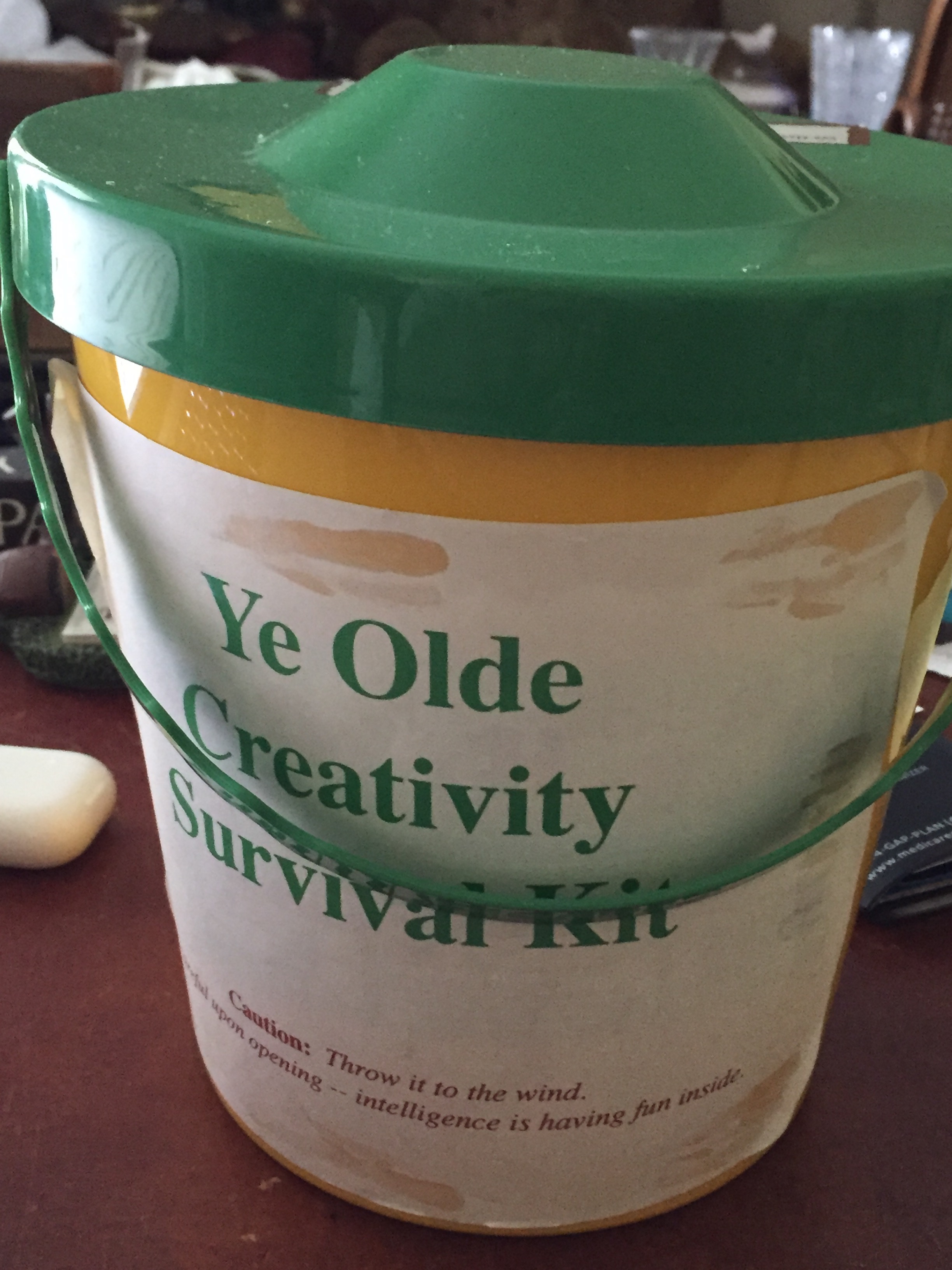
• Ye Olde Creativity Survival Kit — Any sort of container in which you place whatever makes you
FEEL creative and THINK creatively. In this industry, silly is sometimes serious business.

• Thinking at Warp Speed – Generating ideas at breakneck speed is a great way to capture ideas on
Post-it Notes (one per note) in answering a specific question to solve a problem. Remember Giant
Post-its for your “idea wall” which can foster brainstorming and open-door policy idea addition.

• Drill Down Technique – Discovering THE idea. In this unusual method choose your five best ideas
and ELIMINATE THEM, choose five more and ELIMINATE THEM. The last idea Post-it may or
may not be the best, but it’s one to which you normally would not have paid much attention. Go play.

• As ideas are developed, make sure their essence is refined. Make sure your ideas are clear and
you can explain their basic value in about 20 seconds. If you can’t explain it to an 8-year old so they’ll understand it, you need to refine your idea more.

• Don’t manage creativity; manage for creativity. Provide an environment that is open and receptive
to new ideas, and that builds failure into the process. Acknowledge error or failure in a constructive
and supportive way.

Hopefully making a ruckus, one blog post at a time!

Be sure to check out my other blog, Joe’s Journey, for personal insights on life and its detours.

Creativity and Risk Taking

Being creative requires taking some risks. Sometimes it’s the risks that hold us back from moving forward and being creative. Learn about two types of risks, what it really means to step out of your comfort zone, and how to test assumptions you might have about your fears.

How do you think you’d do getting out of your comfort zone? As a test, try my Creativity Tip below. First, think of a question that is a problem needing to be solved. Then, tackle tip #23. As an added challenge, try coming up with 100 ideas (one or two words or short phrases) in 10 minutes.

Creativity Tip #23: Warp Speed Thinking – Come up with as many one or two-word ideas as you can in 5 minutes.

Hopefully making a ruckus, one blog post at a time!

Be sure to check out my other blog, Joe’s Journey, for personal insights on life and its detours.
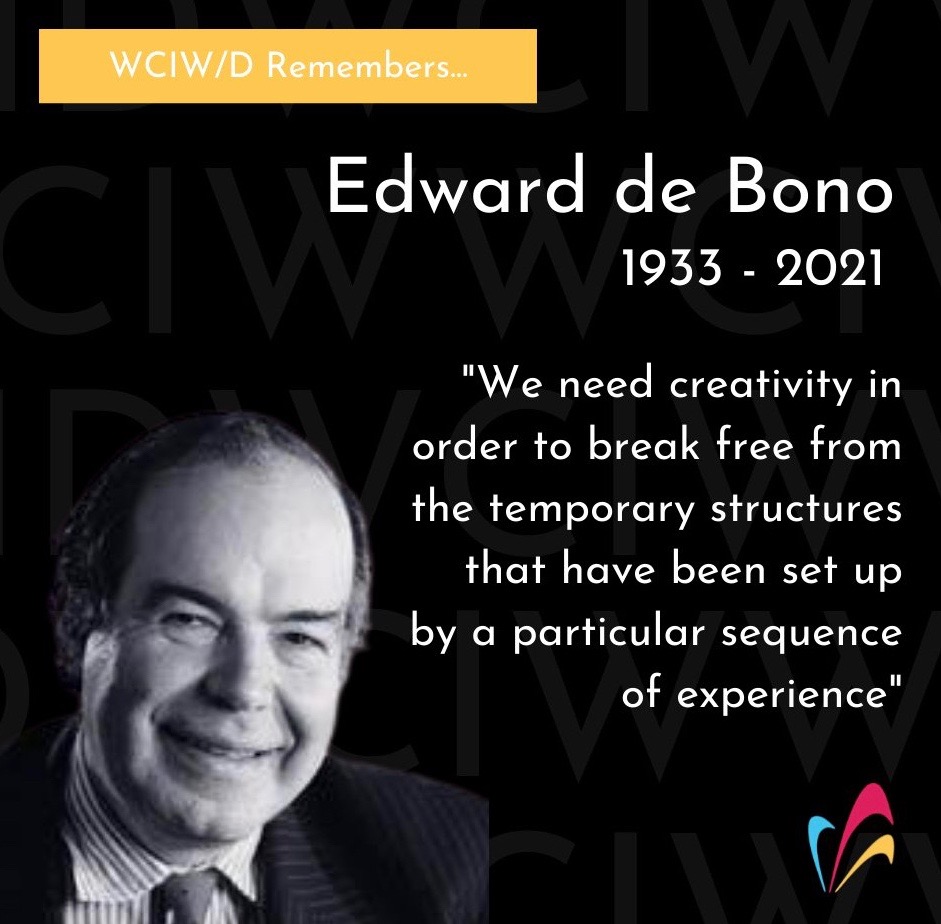
de Bono on Creativity

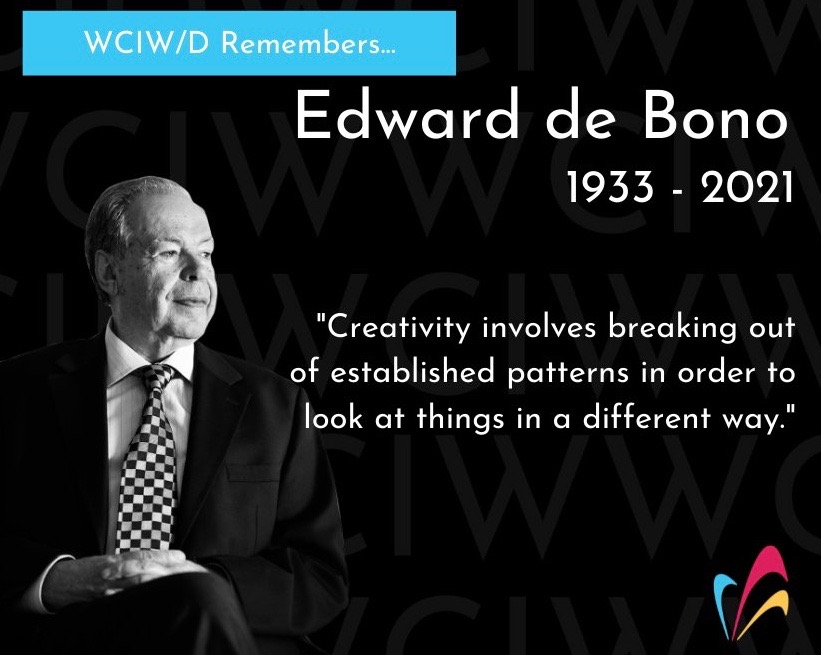
As you may know, Edward de Bono recently passed away. What he leaves with him is a vast treasure trove of creative insights and reminders of how and what we might do to strengthen and enhance our own creativity. Here are some select quotes from him provided by the World Creativity Innovation Week/Day and Prady, whom we thank for letting us further promote the creative thoughts of Dr. de Bono.

More de Bono quotes:

A memory is what is left when something happens and does not completely unhappen.

Most executives, many scientists, and almost all business school graduates believe that if you analyze data, this will give you new ideas. Unfortunately, this belief is totally wrong. The mind can only see what it is prepared to see.

Creativity is a great motivator because it makes people interested in what they are doing. Creativity gives hope that there can be a worthwhile idea. Creativity gives the possibility of some sort of achievement to everyone. Creativity makes life more fun and more interesting.

Creative thinking is not a talent, it is a skill that can be learnt. It empowers people by adding strength to their natural abilities which improves teamwork, productivity and where appropriate profits.

The need to be right all the time is the biggest bar to new ideas.

Bonus Quotes:

Humor is by far the most significant activity of the human brain.

It has always surprised me how little attention philosophers have paid to humor, since it is a more significant process of mind than reason. Reason can only sort out perceptions, but the humor process is involved in changing them.

Hopefully making a ruckus, one blog post at a time!

Be sure to check out my other blog, Joe’s Journey, for personal insights on life and its detours.

Don’t Look Now, Our Creativity is Leaking

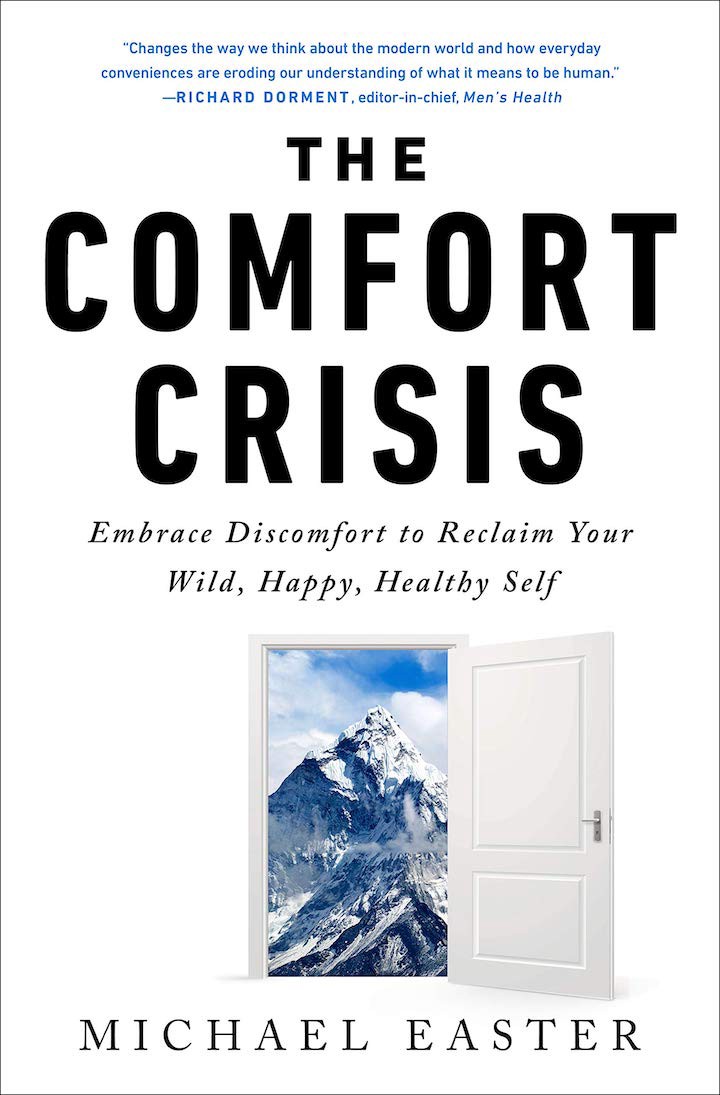
Portions of this post are based on excerpts from the book by Michael Easter, The Comfort Crisis. We spend an awful lot of time consuming digital media, lest we get easily bored. A recent study looked at what happens to a bored mind without easy access to media?

The Canadian neuroscientist James Danckert recruited some volunteers and put them into a neuroimaging scanner, and induced them into a mood of being bored They had them watch two guys hanging laundry for eight minutes. You could say they were bored out of their gords!

While bored, a part of their brains called the “default mode network” fired on. It’s a network of brain regions that activates when we’re unfocused, when our mind is off and wandering. Mind wandering is a rest state that restores and rebuilds the resources needed to work better and more efficiently when we’re focused on the outside world.

Mind wandering is also a key driver of creativity, which is why other studies have found that bored people score significantly higher on creativity tests. Research dating back to the 1950s may explain why we’re now facing a “creativity crisis.”

If I didn’t already know this was a 1950’s Classroom, I would have guessed it. Has that look and feel – BTW, where are the little girls?

Ellis Paul Torrance was an American psychologist. In the 1950s he noticed something off target about American classrooms. Teachers tended to prefer the subdued, book-smart kids. They didn’t much care for the kids who had tons of energy and big ideas. Kids who’d think up odd interpretations of readings, inventive excuses for why they didn’t do their homework, and morph into mad scientists every lab day.

The system deemed these kids “bad.” But Torrance felt they were misunderstood. Because if a problem comes up in the real world, all the book-smart kids look for an answer in … a book. But what if the answer isn’t in a book? Then a person needs to get creative.

He thus devoted his life to studying creativity and its uses for good. In 1958 he developed the “Torrance Test.” It’s since become the gold standard for gauging creativity. The TTCT (Torrance Tests of Creative Thinking) assess how creatively a child’s mind works and are often given to children to determine advanced placement or as part of an entrance examination. Instead of traditionally taught subjects such as reading or math, these tests assess creativity. Children are scored on a number of aspects, including:

  • Creative titles for pictures
  • Expressions
  • Imagery
  • and Humor

He had a large group of children in the Minnesota public school system take the exam. It includes exercises like showing a kid a toy and asking her, “how would you improve this toy to make it more fun?”

Torrance analyzed all the kids’ scores. He then tracked every accomplishment the kids earned across their lives, until he died in 2003, when his colleagues took on the job. If one of the kids wrote a book, he’d mark it; if a kid founded a business, he’d mark it; if a kid submitted a patent, he’d mark it. Every achievement was logged. What he found raises big questions about how we judge intelligence.

The kids who came up with more, better ideas in the initial tests were the ones who became the most accomplished adults. They were successful inventors and architects, CEOs and college presidents, authors and diplomats, etc.

Torrance testing, in fact, bests IQ testing so much so that a recent study of Torrance’s Kids found that creativity was a threefold better predictor of much of the students’ accomplishment compared to their IQ scores.

Now, according to Easter, we’ve killed off one of the main drivers of creativity: mind wandering. The result? A researcher at the University of William and Mary analyzed 300,000 Torrance Test scores since the 50s. She found that creativity scores began to nosedive in 1990.

She concluded that we’re now facing a “creativity crisis.” The scientist blames our hurried, over-scheduled lives and “ever increasing amounts of time interacting with electronic entertainment devices.”

And that’s bad news. Particularly when we consider that creativity is a critical skill in today’s economy, where most of us work with our brains rather than brawn.

Despite what productivity gurus will have us believe, the key to improving creativity might be to occasionally do nothing at all. Or, at least, not dive into a screen. We’ll think distinctly, in a way that delivers more original ideas.

Yet, ironically, society’s tech giants still deliver more advanced software to supposedly aid us in our creativity, while holding us increasingly captive. A proper balance has yet to be realized. And may not ever.

While it may sound silly, occasionally doing nothing works. At least for me, it does. Of course, my body may not be doing anything but my mind is usually traveling at warp speed. It’s usually during these times that I let my mental forces do what they’ll do. More times than not, they produce . . . an idea . . . several ideas . . . a partial script . . . something to which I can apply time-in-the-future to develop.

Boredom is just one evolutionary discomfort we’ve lost from our lives. Easter’s book, The Comfort Crisis, investigates nine others, covering what happens to our bodies, minds, and sense of self without them—and the benefits we can reap by reintroducing these evolutionary discomforts into our lives.

Friday Fun Quotes: Advertising & Others

Continuing a series of various illustrious quotes, here are some worth-remembering “sayings” which I find interesting and inspiring. Hopefully, you will, too.

Some quotes are from the American Advertising Federation newsletter “Smart Brief,” while others come from various sources. Enjoy!!

Not everything that can be counted counts; and not everything that counts can be counted. – George Gallup

Innovation demands that you take risks, make mistakes, and fail.            – Keynote speaker Dr. Tony Wagner at #SASInstitute2018

My definition, then, of the creative process is that it is the emergence in action of a novel relational product, growing out of the uniqueness of the individual on the one hand, and the materials, events, people, or circumstances of his life on the other.Carl R. Rogers

I found that after meditating I would go down to my desk in my studio and sit there to write. And nothing would come. Everything was so peaceful, so harmonious; I was blissed out. And I had to realize through harsh experience that the secret of being a writer is to go to your desk with your mind full of chaos, full of formlessness—formlessness of the night before, formlessness which threatens you, changes you.Rollo May (making an identical observation about his creative process. He was also a visual artist and worked full-time as a writer before becoming a psychologist.)

We were created to be creative, and every day is a battle to turn that into more joy than frustration. – Lee Clow

Now that I have your attention, here are 94 characters making you regret that you gave it. Just like most advertising today. – Lee Clow

The secret of change is to focus all your energy not on fighting the old but on building the new. – Socrates

Second hand books are wild books, homeless books; they have come together in vast flocks of variegated feather, and have a charm which the domesticated volumes of the library lack.  Virginia Woolf

The saddest aspect of life right now is that science gathers knowledge faster than society gathers wisdom.  Isaac Asimov

It is difficult to produce a television documentary that is both incisive and probing when every twelve minutes one is interrupted by twelve dancing rabbits singing about toilet paper.  Rod Serling


Friday Fun Quotes: Advertising and Otherwise

Continuing a series of various illustrious quotes, here are some worth-remembering “sayings” which I find interesting and inspiring. Hopefully, you will, too.

Some quotes are from the American Advertising Federation newsletter “Smart Brief,” while others come from various sources. Enjoy!!

quote

Maybe that’s enlightenment enough: to know that there is no final resting place of mind; no moment of smug clarity. Perhaps wisdom… is realizing how small I am, and unwise, and how far I have yet to go.   Anthony Bourdain, 1956-2018

There is no way for the American economic system to function without advertising. – John O’Toole

He who can no longer pause to wonder and stand rapt in awe is as good as dead; his eyes are closed. – Albert Einstein

Imagination is not only the uniquely human capacity to envision that which is not, and therefore the fount of all invention and innovation. In its arguably most transformative and revelatory capacity, it is the power to that enables us to empathize with humans whose experiences we have never shared. – J. K. Rowling

I’ve always felt advertising was a major instrument of the free enterprise system. Effective advertising can not only have a truly powerful impact on clients’ fortunes but for their stockholders and employees as well and therein a great ripple effect on our economy. Liener Temerlin

To succeed, planning alone is insufficient. One must improvise as well. – Isaac Asimov

I have a theory that the best ads come from personal experience. Some of the good ones I have done have really come out of the real experience of my life, and somehow this has come over as true and valid and persuasive. – David Ogilvy

Be honest, truthful, and altruistic. If you concern yourself with taking care of others, there’ll be no room for lies, bullying and cheating. If you’re truthful you can live transparently, which will enable you to establish trust, the basis for making friends. – Dalai Lama 

There is no material with which human beings work which has so much potential energy as words. – Earnest Elmo Calkins

Inspiration can strike at anytime, anywhere. But usually not at 1 a.m. in the office. – Lee Clow via Lee Clow’s Beard tweet

So, whatchathink? Gotta favorite? Lemme know.

Masking Emotional Creativity

Mask-tongue

What an unusual and intriguing exhibit. Emotions on display.

Extraordinary.

When I first saw some of these works in an article, I thought “how inspiring!” So, I wanted to share. Creativity, as this blog illustrates, comes in a variety of executions. Even though digital seems to be everywhere these days, I find it refreshing to see exhibits like this one in London that showcase a traditional form of creativity – in paper.

The upcoming 2018 London Design Biennale will be devoted to the theme of ‘Emotional States’. National entries will explore how design affects every aspect of our lives – the way we live and how we live – and influences our very being, emotions and experiences.

For the second consecutive edition, Pentagram, the world’s largest independently-owned design studio, has created the visual identity and promotional materials for the Biennale. As with the previous identity, a restricted colour palette of orange, black and white is used.

In response to the theme of ‘Emotional States’ and taking inspiration from Charles Darwin’s seven universal emotions, Pentagram created and commissioned a series of arresting masks, handmade by Wakefield-based paper artist Andy Singleton and photographed by London-based John Ross.

Mask1

A universal phenomenon that spans centuries, masks have been used to interpret and illustrate the beautiful, the grotesque, the sublime – and everything else in between. Pentagram’s aim was to create a series of masks that could subtly, yet coherently, communicate this diverse range of emotional states.

Pentagram decided to use paper – supplied by G.F Smith – to create the final masks, owing to both its flexibility as a material, and its capacity to inspire intimacy from the intricate nature of its craft. Working with paper-artist Andy Singleton in an iterative process of trial and error, the final form of each mask was defined, and subsequently sculpted.

The resulting avant-garde masks, photographed by John Ross, bring the Biennale’s theme to life in a way that is independent of race, gender and age. The striking visual identity delivers captivating visuals that have been applied across the event’s online banners, print, outdoor, social media and marketing materials – which were also designed by Pentagram.

Masks 1

Masks 2


Read more about the upcoming September exhibit and

Pentagram’s involvement.