The other day when I was putting some luggage back up into the closet, I came across a small notebook with a few items written in it. Must have been some of my notes from a long-ago seminar I attended somewhere. These statements are in no particular order and only one is attributable to someone. Take them for what they’re worth. Who knows, they may be able to help enhance your creativity.
Wasting time is usually resistance to writing
Be violent and original in your work, but be orderly in your normal life
Get quiet — be still and apply yourself
Creativity: Sudden cessation of stupidity
Most good ideas come fully formed
Celebrate small victories
“No” is a complete sentence
We have no art. We do everything as well as possible.
“Everything is art direction.” — Lee Clow
How to suck less: It’s not about concepts; it’s about execution (how we work)
Enemies: Laziness and Arrogance
“Effort and struggle to create simplicity and grace lives on in the soul.”
Hopefully making a ruckus, one blog post at a time!
Be sure to check out my other blog,Joe’s Journey, for personal insights on life and its detours.
Last week I posted about my upcoming trek to Baton Rouge and shared a list of creative guidelines to keep in mind when enhancing one’s creativity. That was what I shared with the ad club of Baton Rouge last Friday. One of the main items I shared was the Creativity Survival Kit and that’s what I’d like to review on this post, especially for folks who have no idea what I’m talking about.
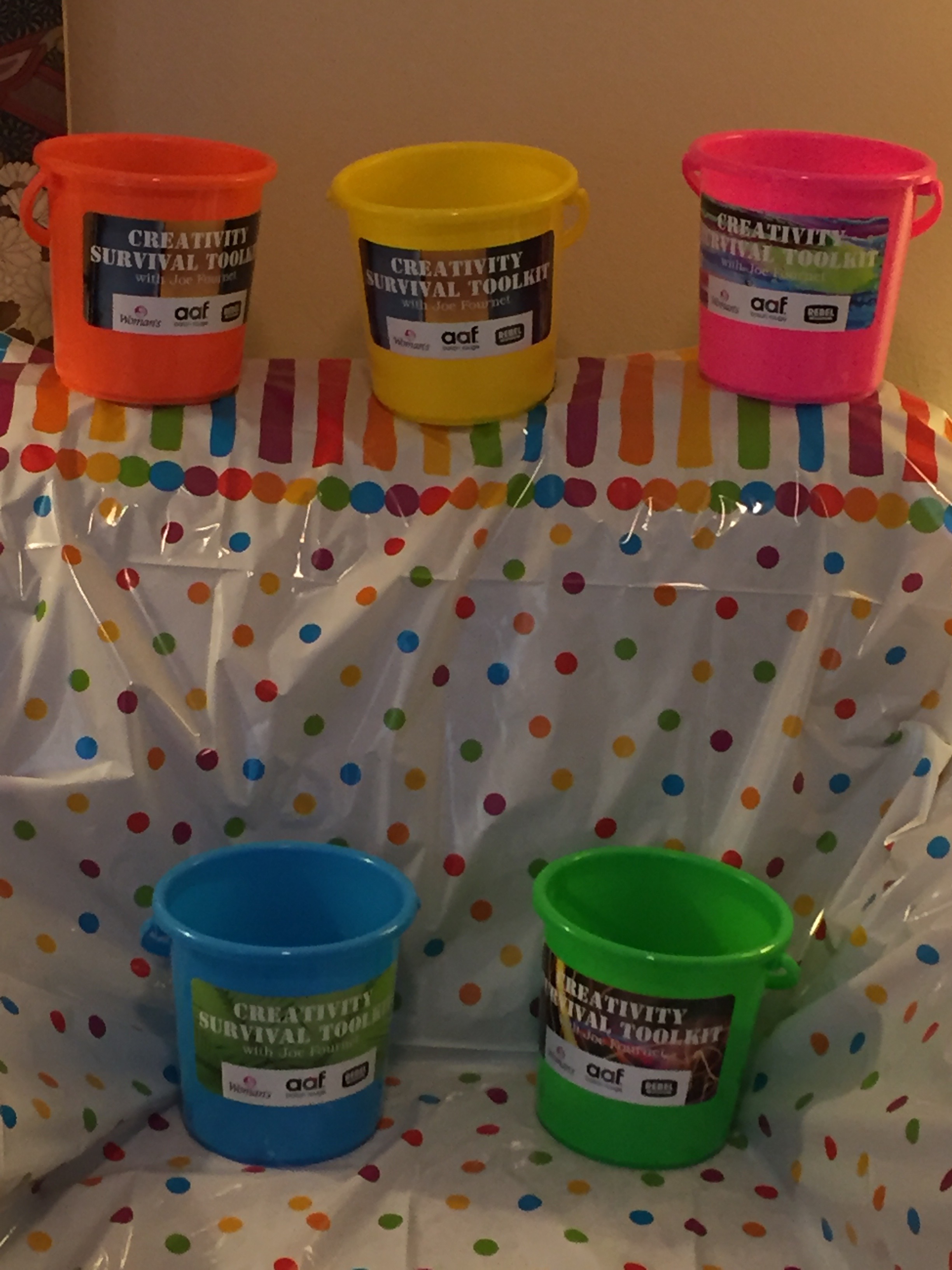
One of several different colored Creativity Kits the Baton Rouge ad club made as giveaways.
The Creativity Survival (Tool) Kit is simply any container or bucket filled with items that make you feel creative or think creatively. The contents can be almost anything depending on the individual.
They can be notes that remind you of various things, especially those items that are too large to fit into your bucket. They can be serious or silly. No judgements here; after all, it’s YOUR kit.
One of the main elements in the Kit is a stack of Post It Notes. The timed exercise, lead by a moderator, is thus: Whatever problem confronts you to be solved, needs a specific question to be asked that may help solve it. The more specific, the better.
The challenge is to come up with, say, 50 ideas in five minutes or, if you dare, 100 ideas in ten minutes. Once this is done, pick your 25 best ideas and, are you ready for this . . . TRASH THEM! Then from the 25 remaining, select your next 20 best ideas . . . and . . . TRASH THEM!
I know this is not what you’re used to doing, but trust me, this is a different take on a standard way of drilling down to the best idea. I call it the Evil Twin Technique.
Now, you’re left with five “maybe not-so-great-ideas.” For the purposes of this exercise, select three of them that you feel are good and, you know the drill, TRASH THEM. From the two remaining, trash one that you feel is better than the other one. You have one idea left. It may not have been one you thought about when you first began or one that you paid little or no attention to during this process.
You’ve come upon your Evil Twin. Whether or not it pans out as a worthwhile idea to help solve your problem remains to be seen. Your due process may bear that out. If you can combine this exercise with the more standard approach (instead of trashing the “best ideas,” keep them and simply narrow the list down to just one), it will be interesting what types of solution approaches one could come up with.
Some other items in my kit include
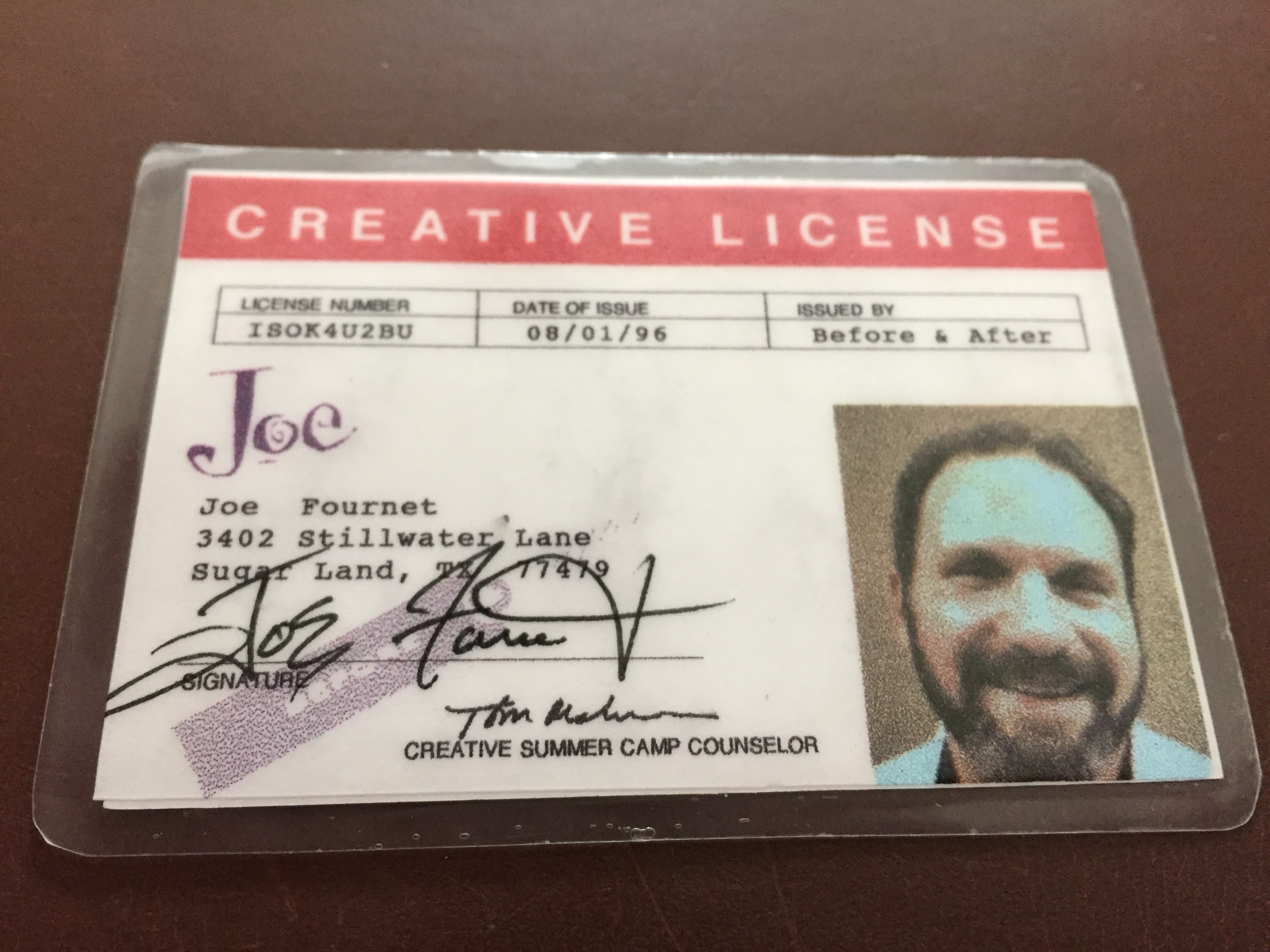
and my certification
along with my alter ego, Snoopy, and his pal, the Energizer Bunny. What can I say, I have an eclectic tool kit!
As my business card states, “Crayons. The essence of creativity.” Crayons are colorful and so should your world of creativity. Similarly, your Creativity Survival Toolkit should reflect your colorful personality and lend itself to enhance your creative world.
Hopefully making a ruckus, one blog post at a time!
Be sure to check out my other blog,Joe’s Journey, for personal insights on life and its detours.
Because some of you won’t be able to make my presentation tomorrow to the Baton Rouge Chapter of the American Advertising Federation, I thought I might include some of the tips I’ll give to the group in this blog post.
Regardless of how you may be involved in this industry, we all share in the design and development of our own creativity. These tips will hopefully sharpen your current set of skills so that you’ll be better equipped to address challenges as they arise.
Enjoy your dip in the pool of creative tips!
Always think of yourself as creative! If in doubt, think of this: If you can challenge your own imagination and stimulate thoughts leading you to a new level of solution, you’ll be realizing your own sense of creativity.
Creativity needs to be synonymous with “FUN!”
Don’t manage creativity; manage FOR creativity. Provide an environment that is open and receptive to new ideas. Acknowledge error or failure in a constructive and supportive way, build it into your culture as part of the process; don’t ridicule it; honor and embrace it.
Consider adopting the “suckless mentality” – When presented with something that doesn’t quite measure up, say something to the effect of “Gee, that really sucks. However, if your tried this or that, it might suck less.”
Chief Marketing Officers must have creativity in themselves, for the good of the business and their own teams. “Creativity as a weapon of business is under-leveraged not for lack of ideas, but for lack of courage to use them or refusal to give up on them. The phrase, ‘We don’t have time for creativity,’ is not something you would ever hear in the most successful businesses,” says Mark-hans Richer, former Sr. VP-CMO Harley-Davidson.
Trying to satisfy everybody never got anybody anywhere. Focus on what’s important, then do it.
The strategy must be clear, concise and on target. Your message is going to be screwed up if the creative is too cute, too complex, doesn’t follow strategy or is just plain dumb.
Don’t let the execution bury the idea. The computer and software are just tools to enhance the idea, not to compete with, replace, or screw it up. Use your own computer – your brain.
Take time to think. There’s always more than one way to do something. That’s creativity!
Do not bring a DEAD CAT without a shovel! In other words, never present a problem without bringing the shovel – at least two possible solutions. In doing so, you save time if one of these solutions is the one adopted, and you can share your creative thinking while learning more about what’s important to your boss; remember, you may not know all there is to know.
**********
Hopefully making a ruckus, one blog post at a time!
Be sure to check out my other blog,Joe’s Journey, for personal insights on life and its detours.
• Idea Tub – can be a physical place or thing and/or an electronic file. It’s a compilation of all ideas ever submitted since you started keeping track, but organized as to be readily accessible.
An elaborate Idea Tub
• Don’t let the execution bury the idea. Your message will be diluted and possibly even confusing if the creative is too cute, too complex or just plain dumb. Think napkin, not computer.
• Realize your own sense of creativity by challenging your imagination and stimulate thoughts to lead yourself to a new level of solution.
• The idea, for best results, should be media and discipline neutral. Otherwise, you limit yourself.
• Focus on how you’re going to make the idea work and be relevant. But, never fall in love with it.
• Don’t ever underestimate the power of the mind or your imagination. Don’t ever be afraid to ask, “Why, Why not or What if . . .?”.
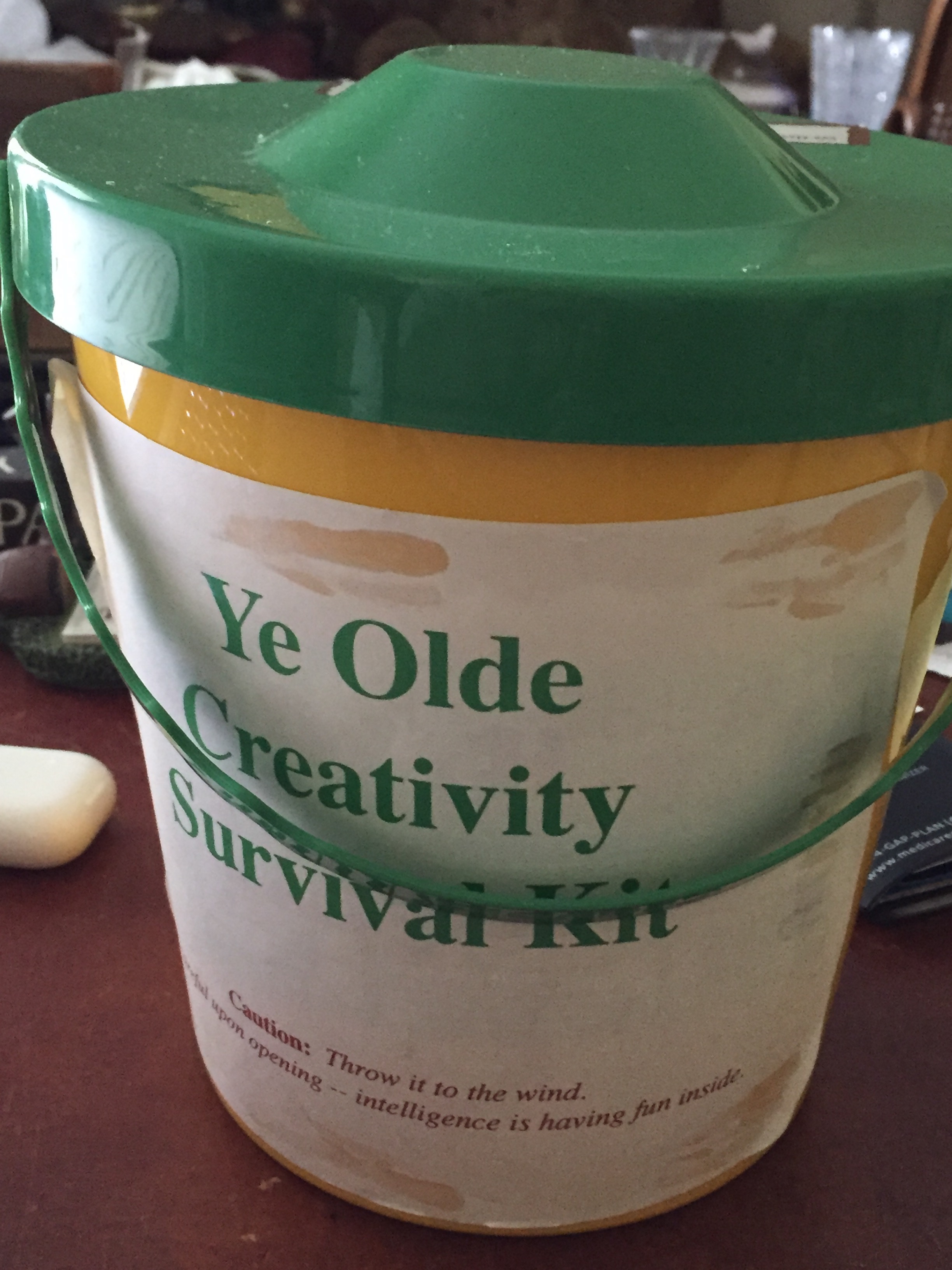
• Ye Olde Creativity Survival Kit — Any sort of container in which you place whatever makes you FEEL creative and THINK creatively. In this industry, silly is sometimes serious business.
• Thinking at Warp Speed – Generating ideas at breakneck speed is a great way to capture ideas on Post-it Notes (one per note) in answering a specific question to solve a problem. Remember Giant Post-its for your “idea wall” which can foster brainstorming and open-door policy idea addition.
• Drill Down Technique – Discovering THE idea. In this unusual method choose your five best ideas and ELIMINATE THEM, choose five more and ELIMINATE THEM. The last idea Post-it may or may not be the best, but it’s one to which you normally would not have paid much attention. Go play.
• As ideas are developed, make sure their essence is refined. Make sure your ideas are clear and you can explain their basic value in about 20 seconds. If you can’t explain it to an 8-year old so they’ll understand it, you need to refine your idea more.
• Don’t manage creativity; manage for creativity. Provide an environment that is open and receptive to new ideas, and that builds failure into the process. Acknowledge error or failure in a constructive and supportive way.
Hopefully making a ruckus, one blog post at a time!
Be sure to check out my other blog,Joe’s Journey,for personal insights on life and its detours.
Being creative requires taking some risks. Sometimes it’s the risks that hold us back from moving forward and being creative. Learn about two types of risks, what it really means to step out of your comfort zone, and how to test assumptions you might have about your fears.
How do you think you’d do getting out of your comfort zone? As a test, try my Creativity Tip below. First, think of a question that is a problem needing to be solved. Then, tackle tip #23. As an added challenge, try coming up with 100 ideas (one or two words or short phrases) in 10 minutes.
Creativity Tip #23: Warp Speed Thinking – Come up with as many one or two-word ideas as you can in 5 minutes.
Hopefully making a ruckus, one blog post at a time!
Be sure to check out my other blog, Joe’s Journey, for personal insights on life and its detours.
Is your school or workplace divided between the “creatives” versus the “practical” people? Yet surely, David Kelley suggests, creativity is not the domain of only a chosen few. Telling stories from his legendary design career and his own life, he offers ways to build the confidence to create.
As for building confidence, afraid of snakes? This may help.
David Kelley’s company IDEO helped create many icons of the digital generation — but what matters even more to him is unlocking the creative potential of people and organizations to innovate routinely.
So give it a listen. I think you’ll be glad you did.
David Kelley giving his TED Talk
Creativity Tip #4: Trying to satisfy everybody never got anybody anywhere. Focus on what’s important, then do it.
Hopefully making a ruckus, one blog post at a time!
Be sure to check out my other blog, Joe’s Journey, for personal insights on life and its detours.
From Steinem to Van Gogh to Serling and more, these quotes cover a multitude of personalities and perspectives. Enjoy as you read through the history makers, some of our time, some not.
Without leaps of imagination, or dreaming, we lose the excitement of possibilities. Dreaming, after all, is a form of planning. Gloria Steinem
You cannot rely upon what you have been taught. All you have learned from history is old ways of making mistakes. There is nothing that history can tell you about what we must do tomorrow. Only what we must not do. Edwin H. Land
What would life be if we had no courage to attempt anything? Vincent Van Gogh
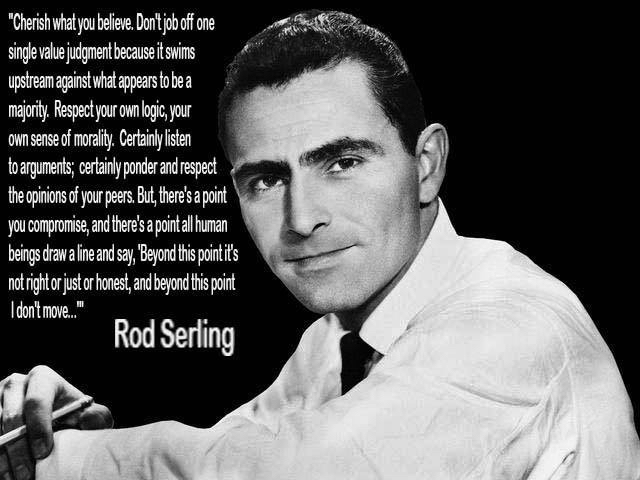
It isn’t enough for a sole voice of reason to exist. In this time of uncertainty we’re so sure that villains lurk around every corner that we will create them ourselves if we can’t find them. For while fear may keep us vigilant, it’s also fear that tears us apart. Rod Serling
Rod Serling
An important idea not communicated persuasively is like having no idea at all. William Bernbach, member, Advertising Hall of Fame
In writing advertising it must always be kept in mind that the customer often knows more about the goods than the advertising writers because they have had experience in buying them, and any seeming deception in a statement is costly, not only in the expense of the advertising but in the detrimental effect produced upon the customer, who believes she has been misled. John Wanamaker, member, Advertising Hall of Fame
Creativity is so delicate a flower that praise tends to make it bloom while discouragement often nips it at the bud. Alex Osborn, member, Advertising Hall of Fame
Good advertising is written from one person to another. When it is aimed at millions, it rarely moves anyone. Fairfax M. Cone, member, Advertising Hall of Fame
The scientist has marched in and taken the place of the poet. But one day somebody will find the solution to the problems of the world and remember, it will be a poet, not a scientist. Frank Lloyd Wright
Creativity Tip #36: If you can’t explain your idea to an 8-year old, it’s too complicated.
Hopefully making a ruckus, one blog post at a time!
Be sure to check out my other blog, Joe’s Journey, for personal insights on life and its detours.
Having trouble getting your creativity loaded? Those creative juices simply not flowing for ‘ya? “Creativity block” is something akin to writer’s block. It’s a difficult stage to get through and at times can last longer than we’d like. It’s been especially difficult developing new ideas, creating new products and launching new services in the chaotic reality of this pandemic.
subpng.com
Do times of uncertainty cause a decline in creativity and innovation? That’s not exactly a slam dunk of a “yes”. History tells us that innovation and creativity thrive even in periods of uncertainty and chaos.
Many successful companies like Airbnb and Uber, for example, were founded during the GreatRecession of 2007-2009. General Electric was established and grew during the massive economic downturn in America, also known as “The Panic of 1893.”
According to this Harvard Business School article on innovation, the Great Depression of the 1930s was one of the most innovative decades in the last century. A proliferation of new technologies, exceptional innovations and inventions that pushed the world forward were conceived and created during that time period.
Inventions such as the jet engine and the helicopter were created, followed by the FM radio, sunglasses, copiers, nylons, ballpoint pens, electric razors, car radios and much more.
Accessing the mindset of creativity and innovation in times of uncertainty is not easy. When we feel as if we are losing control over our external circumstances, we start telling ourselves there is no point in starting the creative process, as nothing we do will succeed. Nothing like shooting ourselves in our creative feet before we begin!
Uncertain times are the norm. It’s always been that way. We can’t predict the future and the only thing we can control is us. We’re the source of creativity, innovation and inspiration. Nothing new there.
The stability and certainty we need to support our creative process comes from within. How can we tap into that? As I touched upon in another blog post, we need to find an inner calm so that we may better conjure up the spark to our creativity. It’s there in all of us. We just need to find that which can ignite the spark.
Hemingway ignited the spark when he had trouble getting started on writing, by writing one declarative sentence . . . the rest, he said, will start to come naturally. You’ve got to “prime the pump,” so to speak. Even the artist needs to take a brush or a pen and just start doodling, anything that will stimulate the mind.
When we find our inner calm, alongside our commitment to continue the creative process no matter what, we’ll also find the right mindset for stepping up and making progress. The more we detach ourselves from the external madness, the more we can engage the creative process. We need to “catch the wave” before we can ride it.
Recession, chaos, uncertainty, and, yes, even a pandemic or two go hand in hand with creativity and innovation. Uncertainty surrounds us whether we like it or not. So, let’s deal with it in some way, shape or form. Start creating, inventing, solving problems and adding value. You do that by thinking clearly, calmly and intuitively. Concentrate on what you can control. The rest usually takes care of itself.
This post was contributed, in part, from an article by Nili Peretz, Forbes Councils Member.
Creativity Tip #27: Never fall in love with your idea; there’s always a better one around the corner.
Hopefully making a ruckus, one blog post at a time!
Be sure to check out my other blog, Joe’s Journey, for personal insights on life and its detours.
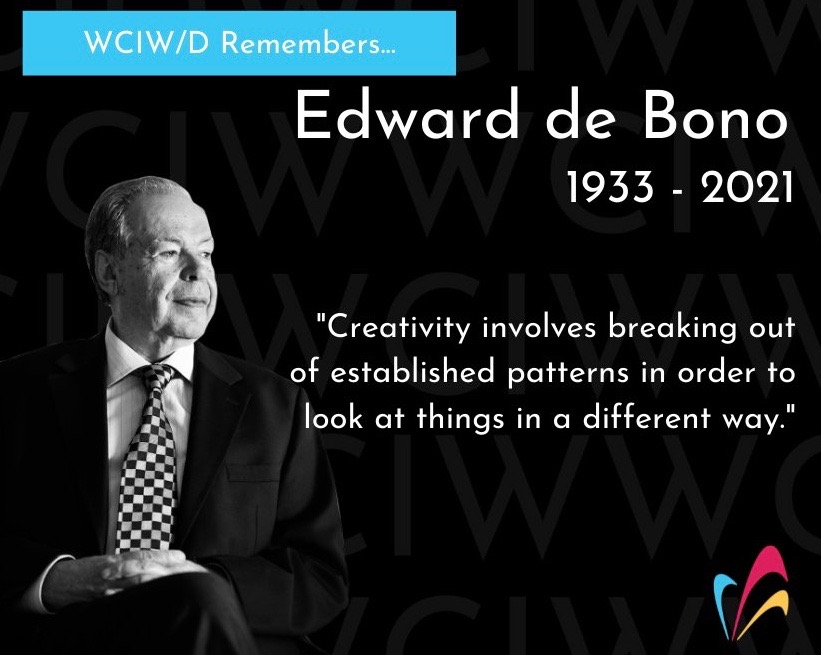
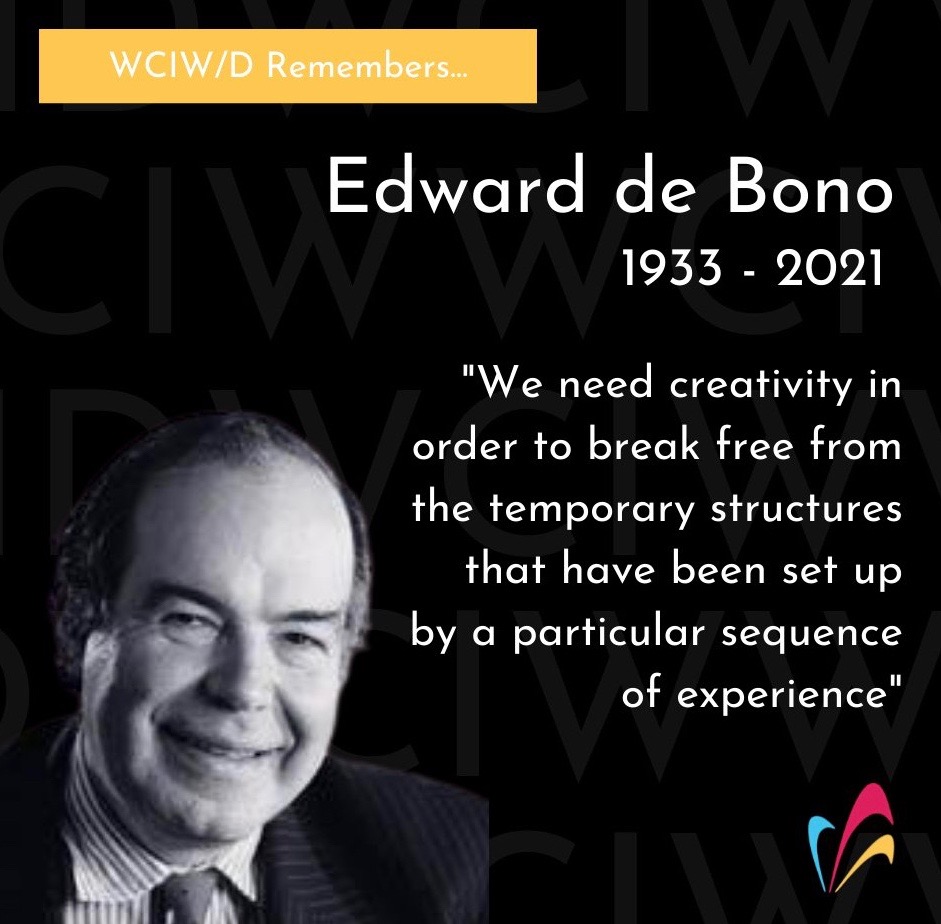
As you may know, Edward de Bono recently passed away. What he leaves with him is a vast treasure trove of creative insights and reminders of how and what we might do to strengthen and enhance our own creativity. Here are some select quotes from him provided by the World Creativity Innovation Week/Day and Prady, whom we thank for letting us further promote the creative thoughts of Dr. de Bono.
More de Bono quotes:
A memory is what is left when something happens and does not completely unhappen.
Most executives, many scientists, and almost all business school graduates believe that if you analyze data, this will give you new ideas. Unfortunately, this belief is totally wrong. The mind can only see what it is prepared to see.
Creativity is a great motivator because it makes people interested in what they are doing. Creativity gives hope that there can be a worthwhile idea. Creativity gives the possibility of some sort of achievement to everyone. Creativity makes life more fun and more interesting.
Creative thinking is not a talent, it is a skill that can be learnt. It empowers people by adding strength to their natural abilities which improves teamwork, productivityand where appropriate profits.
The need to be right all the time is the biggest bar to new ideas.
Bonus Quotes:
Humor is by far the most significant activity of the human brain.
It has always surprised me how little attention philosophers have paid to humor, since it is a more significant process of mind than reason. Reason can only sort out perceptions, but the humor process is involved in changing them.
Hopefully making a ruckus, one blog post at a time!
Be sure to check out my other blog,Joe’s Journey,for personal insights on life and its detours.
Well, as with any blog post, one tends to change one’s mind once in awhile. I had planned to begin a series of posts dealing with depression, among other topics, as it pertains to creativity. As I find myself not ready to do that yet, I went back to my vault of various quotes. Since I have only enough for one more post at this point in time, that’s what I’m posting this time out. Stay tuned.
Apparently on screen I look tall, ageless, close to omniscient-delivering jeopardy-laden warnings through gritted teeth, but when people see me on the street, they say ‘this kid is 5 foot 5, he’s got a broken nose, and looks as foreboding as a bank teller…’ Rod Serling.
The place to start in advertising is the basic selling appeal. An appeal that fulfills some existing need in the prospect’s mind, an appeal that can be readily understood and believed. – Morris Hite, member, Advertising Hall of Fame
There are no passengers on spaceship earth. We are all crew. – Marshall McLuhan, philosopher
I have learned that any fool can write a bad ad, but that it takes a real genius to keep his hands off a good one. – Leo Burnett, member, Advertising Hall of Fame
Be brave enough to live life creatively. The creative place where no one else has ever been. – Alan Alda
It is difficult to say what is impossible, for the dream of yesterday is the hope of today and the reality of tomorrow. – Robert H. Goddard
Creativity is the power to connect the seemingly unconnected. – William Palmer
Sometimes when I consider what tremendous consequences come from little things, I am tempted to think there are no little things. Bruce Barton, member, Advertising Hall of Fame
It’s kind of a strange, backslapping ritual that we go through in this town where you get awards for almost everything. For surviving the day you’re going to get awards. So I can’t suggest that those things represent any pinnacle of achievement. – Serling from #Oscars #AcademyAwards