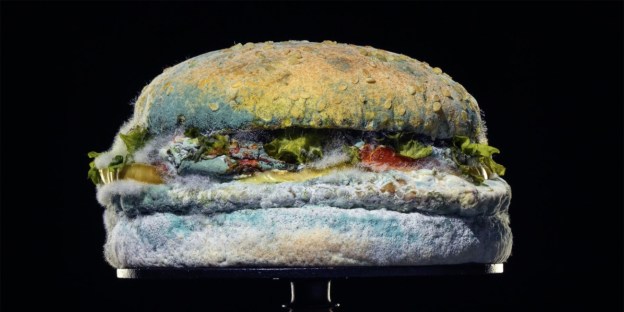
This is one Whopper we pray will never find its way onto BK’s menu.

WARNING: If you’re squeamish, prepare yourself and, please, don’t throw up on your computer monitor!

burger-king-moldy-whopper-2020

        Burger King highlights “the beauty of no artificial preservatives” in its Moldy Whopper campaign.
Burger King

In a word, BLEAHHHHH!!!

Last week, according to Adweek, Burger King unveiled a global ad campaign  highlighting its commitment to dropping all artificial preservatives. Such campaigns, while laudable, come and go somewhat often without generating much more than passing interest.

This one is truly bizarre. It tests just how far Burger King can virtually thrust its product down its customers’ throats before they gag.

The Moldy Whopper campaign, created through a partnership between three agencies, features intriguingly high-resolution photography and video of a Whopper being consumed not by humans, but rather by the horribly incredible passage of time itself. In other words, we get to see a Whopper rotting. Lovely!

Adweek reports that each ad shows a Whopper whose ingredients are being engulfed in mold, alongside a date stamp letting you know how long the burger has been exposed to the elements (too long, but typically about a month). The tagline, are you ready for this, describes the images as “the beauty of no artificial preservatives.”

Is beauty really in the eye of the beholder?

The work promotes the brand’s pledge to drop all artificial preservatives, which it has accomplished across much of Europe and 400 locations in the United States. By the end of the year, Burger King says it will have removed artificial preservatives from Whoppers in all U.S. locations. That’s nice and laudable.

I’m still feeling nauseous.

“At Burger King, we believe that real food tastes better,” (no kidding) said Fernando Machado, CMO for Burger King parent company Restaurant Brands International. “That’s why we are working hard to remove preservatives, colors and flavors from artificial sources from the food we serve in all countries around the world.”

burger-king-moldy-whopper-outdoor-1-2020

Burger King

I’m sorry but this just looks gross! It’s certainly not appealing at all. I get what they’re trying to convey but I wonder if BK ever considered giving out Tums, Alka Seltzer or nausea tablets with their meals.

In addressing reality, Adweek posits that the mold campaign might be challenging to common sense, but it was also a difficult one to accomplish in terms of craft and required months to achieve.

“We are very proud of crafting this idea,” said Björn Ståhl, executive creative director for Ingo, one of three agencies involved. “Mold grows in a very inconsistent way. We had to work for several months, with different samples, to be able to showcase the beauty of something which is usually considered undesirable.”

” . . . the beauty of something undesirable.” Really? Sort of sounds like a contradiction in terms. I’m still feeling nauseous.

burger-king-moldy-whopper-outdoor-2-2020

Burger King

So how will it go over? According to Adweek’s reporting, in the short term, the likely answer is: not great. Head-scratching advertising tends to generate quite a bit of short-term negative publicity, usually thanks to morning talk shows and late-night monologues.

And some within advertising will call the work “awards bait,” knowing that juries at Cannes Lions and other awards festivals tend to swoon over concepts that challenge every seemingly obvious but unwritten rule of advertising, such as “Don’t make your food look like it will literally kill people.”

But in the process of sparking debate and consternation, the campaign is also likely to resonate across the industry and encourage other brands to take similar moves, knowing that the ideas will be easier to sell when something so “off the wall” (that’s one way to put it) has already been sold to a major global corporation.

burger-king-moldy-whopper-vertical-1-2020

Burger King

This campaign will indeed show something else:  How strong are BK’s customers’ stomachs? This is revolting no matter how “beautiful” the photography. Just because a global corporation has gone along with this hideous idea doesn’t make it one to copy. After all, how many global CEO’s have signed off on something that should never have come out of committee?

What will definitely be interesting to see will be the types of “toned down” ideas and executions coming forth that are based on the Moldy Whopper campaign.

In the meantime, BK needs to supply their restaurants with plenty of Tums and barf bags, just in case.


PS . . . Thanks to David Griner (@griner), creative and innovation editor at Adweek and host of Adweek’s podcast, “Yeah, That’s Probably an Ad” for source material for this blog.

Handwritten OOH Boards Deal Delicate Subject Gut Punch. Kudos!!

In most circles, any discussion of mental health is still taboo. On this side of the “pond” we often pretend mental health is something other than what it really is, a disease, which can and should be treated.

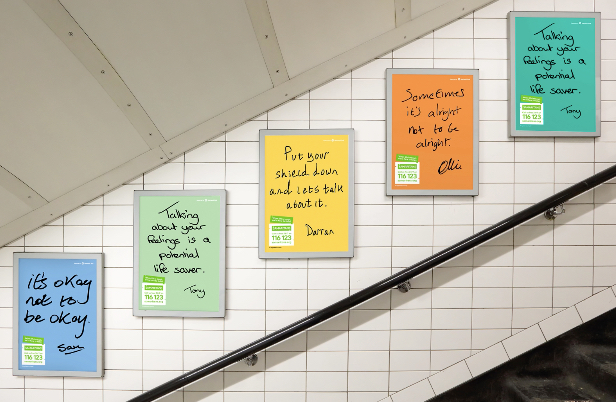
In the UK, mental health is being put to the forefront by some interesting outdoor boards.   The campaign is for Samaritan, a charity who tackles mental health and its challenges.

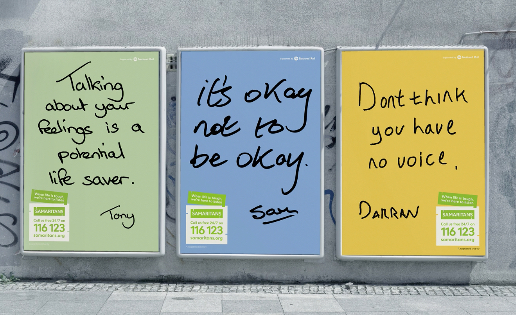
Featured in Ad Age, the campaign by Mother London directly takes on mental health by asking actual men, not actors, to share their stories and opinions. A unique approach the campaign uses is to feature handwritten words of advice from real-life men who have previously contacted the Samaritans feeling depressed or suicidal.

Running at locations like train stations, the boards are aimed at men when they are most susceptible, when they may be considering hurting themselves or pondering suicide. The campaign also includes social media ads.

Mental Health Billboards in UK

According to AdAge’s reporting, the campaign comes as Samaritans releases results of a nationwide survey, which shows two in five (41%) men in England, Scotland and Wales aged 20-59 do not seek support when they need it because they prefer to solve their own problems.

Paul McDonald, executive director of external affairs at Samaritans, says: “We didn’t want to create just another awareness campaign. So we asked men to share their stories with us. Men who have been through tough times and come through the other side.

“They wrote some words down, and we’ve got those words on the posters to inspire and encourage other men going through difficult times to seek help, and to contact Samaritans if they’re ready to talk.”

Being in the U.S., I can’t help but wonder what kind of effect this sort of campaign would have on men here in the states. My guess is that results would echo the UK’s results if not prove more so. Most men like to solve our own problems or not even admit we have one.

Kudos to the Brits for trying to face this problem head on. Again, creativity in this case is best showcased rather simply but directly.

More OOH Mental Board

So what, dear readers, do you think of this campaign? Think it will work. Think it will do what it’s designed to do?

Let me know your thoughts. I’d love to hear your comments!

Season’s Greetings & Merry Christmas!

Version 2

And you thought you had a dysfunctional family!

Colorfully Weird, “Speeding” Image Wins Hyundai Cannes Lion. Should it Have?

Winning an award in the advertising business is a big deal. The really big deals come annually during the sun-baked, beach-worshipping, booze-enhanced party in France known famously as the Cannes International Festival of Creativity. This year was no exception.

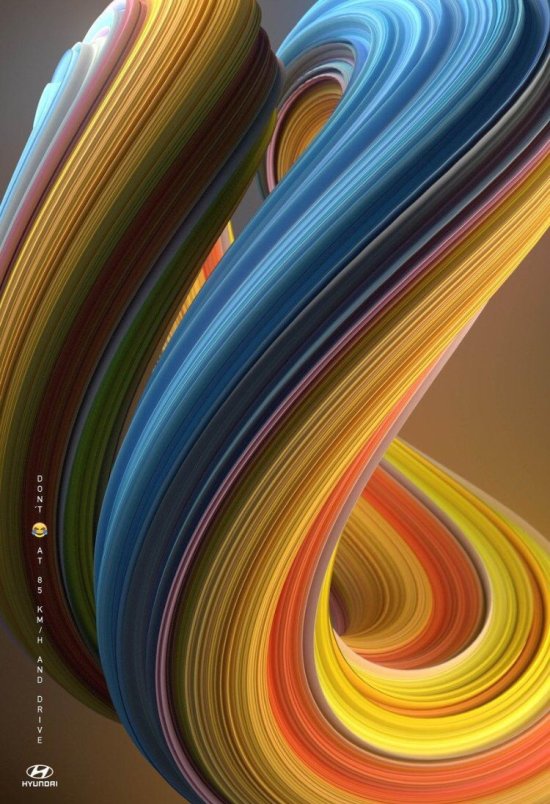
Except. One campaign that did win a Lion was done by MullenLowe/SSP3 for Hyundai called Speeding Emojis. As their brief explained, “Every day, more people are involved in car accidents for texting and driving. To make drivers aware of this issue, we decided to use one of the most common elements, when it comes to writing: emojis. But we wanted to use them in a different way. So, we decided to show how they would look at 69, 85, 43 and 76 km/h to prove that texting and driving at the same time just doesn’t make sense.”

Color Swirl Hyundai Ad

Colorful representation of an emoji used while texting when traveling at various high speeds. Note the vertical line of copy at left basically saying “don’t text at xy speed and drive.”

The explanation given in the brief by the agency obviously doesn’t appear in the ad, nor should it. Given this, how is one to know what the image is? While the single line of copy is pretty self-explanatory, the big-ass image of a color swirl is not.

The campaign also uses several different emoji varieties with accompanying swirls of different colors, tying in with that emoji.

Color Swirl Hyundai-green

Another in series of colorful swirls in Hyundai’s Don’t (emoji) and Drive campaign

Given that the image dominates the ad and the tag line is sort of lost, it sort of begs the question: What the Hell does the image represent and/or why isn’t that explained in some fashion? Given an art director’s or designer’s perspective, one might wonder, “How’d they do that?” or “What is that supposed to be?”

Well, this is where it gets even more interesting. According to a post on Twitter, a very “similar looking” image is available from Shutterstock. Now, it’s not unusual to use stock imagery in spec work or presentations but unless an agency is in partnership with a stock footage and imagery company like Shutterstock, this is highly unusual and probably not even kosher. There’s not even a credit given to Shutterstock in the ad nor to the designer who created the original artwork, Rik Oostenbroek.

Color Swirl Hyundai-large

Color swirl image via Shutterstock compared to image used in Hyundai ad campaign.

I’m surprised that, to my knowledge thus far, neither Shutterstock nor Rik Oostenbroek have contacted the agency or Hyundai about about this; of course, this assumes that approval was given beforehand. Even if it was, where’s the credit?

In reporting on the story, Adweek requested a response from MullenLowe who sent the following:

“In regards to this particular campaign, the images were identified as the most fitting way to illustrate the important ‘don’t text and drive’ message for our client. The appropriate rights for the four images were purchased through the correct channels and we acted legally within the terms of the licence. We have been in contact with the artist claiming credit for the work on social media, with a full explanation of the creative process and the surrounding legalities.

“D&AD investigated the entry and deemed it eligible on the evidence provided.”

But . . . where’s the originality? Some folks may not have a problem with using stock imagery in ads while I’m sure some do. Are we seeing some sort of trend in advertising? What’s the proper use of stock photography and when and where should it be used?

“If you literally copy and paste something and stick a line of copy on it, I don’t think it’s worthy of an award,” said Chris Garbutt, global CCO of TBWA\Worldwide and a frequent awards juror. “I don’t think it’s enough to do that anymore.”

I believe this ad and its campaign has a few issues. Feel free to write in the comments section of this blog and let me know your thoughts.

Personally, these images remind me of something caught in a time warp, but absolutely nothing concerning automobiles. The concept of “don’t text and drive” could apply to any cell phone provider’s message, for that matter.

The images do illicit one’s attention. However, their reaction may produce a “WTF?”

Go figure.


Can Good Friday Actually Be “Good”?

This blog usually highlights creativity and various aspects of innovation and imagination. On this Good Friday, I’m wondering if we as a society have what it takes to make it, and subsequent days, actually a good Friday.

Are we innovative and creative enough within each of us to make positive for civil discourse? Especially on those topics we disagree?

Though it would be a nice gesture to love our fellow man and woman, many don’t see that as reality. Treating one another with respect, however, is another matter. It’s one in which we should take to heart and do. All the time. Everyday.

Politics and religion don’t mix; at least, that’s what used to be said. Nowadays, one seems to feed off the other. If one person doesn’t like another’s religion, based in part of oft times misguided prejudices, that person ridicules, insults and basically treats that other person, whom he/she may not even know, like a second class citizen, if even that.

That’s wrong. That’s racism. That’s really being stupid.

I’m sure Jesus is looking down upon us all, shaking his head and thinking, “People, people what in Heaven’s name are you doing? That’s your brother; that’s your sister. Didn’t I teach you better than this?”

This is Friday. We’re at the end of the week, and what a week it has been. The sports world was stunned when we witnessed Tiger Woods win his fifth Green Jacket at The Masters (and his 15th major). No sooner than the celebration began did we learn about the horrific fire at Notre Dame Cathedral in Paris. And now the Mueller Report has been released, redactions and all.

Emotions have run high and low all week. Plus, this is Holy Week to boot. Jesus was crucified today and on Sunday (Easter) He rose. Let’s not forget Passover this weekend, too.

Given all that has gone on this past week and is yet to come, I pray that as a civilized people we can continue to come together; just a heck of a lot better than we’ve done thus far. It’s okay to disagree, folks; it’s not okay to berate, insult or make fun of someone simply because you don’t like what they said or how they look.

Alas, we seem to stray from true civil discourse and prefer to argue, sometimes violently rather than engage in calm rhetoric. We’re supposed to be creative individuals. Why not think in terms of possible solutions based upon our strengths and commonalities rather than our differences and negativity.

God blessed us with a brain. Let’s use it constructively along with our imagination to better our cause. But when we see injustice or something we don’t understand, it’s also okay to raise questions and challenge the status quo. We will never all see eye to eye.

But we all need to be moving forward. Onward and upward is not merely a catchy phrase, it’s a belief system. We have different and various beliefs, coming from disparate backgrounds and experiences. That’s a good thing.

So let us picture ourselves posing in a multinational, multiracial, multigenerational photo, arms crossed with hands clasped: Christians, Jews, Muslim, Arab, Israeli, Indian, LGBTQ, Martian (with and without antennae), Saturnite. That would make for a nice cover photo of Time’s Persons of the Year.

It would bring about a smile on Jesus’ face and put an extra bounce in the Easter Bunny’s hop. Let’s all try and have a truly good Friday and a blessed Holy Weekend.


Sir John at 2018 Cannes Festival of Creativity on, well, Creativity.

Okay, I’ll admit it, I’ve been involved in the advertising and marketing industry for a long time. Mostly, I’ve enjoyed it. I love creating things. I love the creative process, creative problem solving. I love creativity.

Creativity is, in part, what this blog is all about. It’s also, me thinks, one of those words that is vastly overused, and when you ask several people what is meant by it, you’ll get several different responses. It’s difficult for most folks to equate creativity with, say, engineering. Frankly, I think it was damned creative when the design and engineering of the Golden Gate Bridge came about.

Creativity is always evolving. We, as creative practitioners, should be evolving right along with it. So, whenever I see an article on the subject or hear a renowned expert talk about it, I want to read and listen to what is said. Maybe I can pick up some tips.

That happened recently when reading an issue of AdAge. I thought I’d share some of what I read.

The expert: Sir John Hegarty.

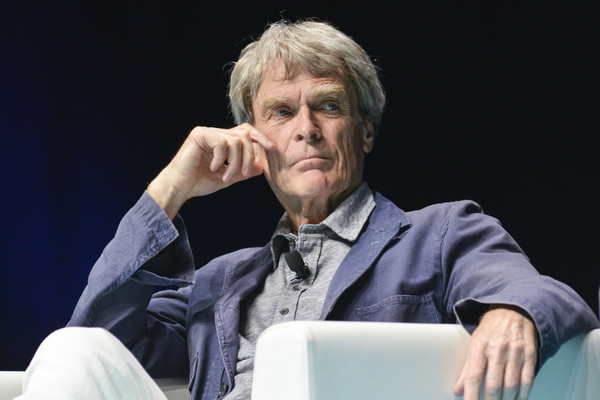
Sir John Hegarty Cannes 2016

Sir John Hegarty attends The Cannes Lions 2016 on June 20, 2016 in Cannes, France.
(June 19, 2016 – Source: Christian Alminana/Getty Images Europe)

Sir John was attending the 2018 Cannes Festival of Creativity where he’s been coming since 1989. A founding shareholder in Saatchi & Saatchi and a co-founder of TBWA London before starting Bartle Bogle Hegarty in 1982, Sir John has himself been behind hall of fame work for Levi’s, Volkswagen and Audi. Never shy about his opinions, Hegarty took the opportunity of yet another Cannes Lions to share a few thoughts on the current state of creativity with Ad Age.

A few excerpts from the interview by . . .

You’ve bemoaned the increasing role data and tech have played in the creative process.

I was accused by Martin Sorrell of being a dinosaur because somebody said “Hegarty doesn’t believe in data,” which is not actually true. Data is fundamentally important. One of the greatest stories ever told, the Nativity, came out of data collection, didn’t it? You’ve got to remember a brand’s job is also to convert.  . . . Go out and throw your net wide. How do I know who’s going to like what I’m selling?

Meaning that with targeting, advertisers are preaching to the converted?

It’s not that. It’s a lazy way of marketing: “Look at the data, what does the data tell us? It’s an instruction manual!” No, it’s not an instruction manual. You’ve got to think about how you’re building the values of this brand. I know I’m boring and I say this all the time, but a brand is made not only by the people who buy it but also by the people who know about it.

“Those people” being the brand itself and also agents of the brand?

If I say to you “Rolls Royce,” you say, “Ooh!” You’re probably not going to buy one, but by talking to a broad audience who understands what your brand is about, you become part of culture. We are forgetting that part of advertising’s function of course is about effectiveness, but it’s also helping that brand become a part of culture.

Last year the talk was all about Fearless Girl. There doesn’t seem to be a corollary this year.

I’ll get provocative here again: Fearless Girl did what for the brand? I don’t know what brand it was associated with. We’ve lost connection. We’ve confused persuasion with promotion. Everybody got hugely excited about the Nike FuelBand 10 years ago. I thought it was a brilliant promotion. I used to be a runner. There was no way I would ever run in Nikes. New Balance, yes. I don’t care how many FuelBands you create, I won’t buy them. I don’t think you make a great running shoe. You have to persuade me.

What do you make of consultancies moving into the agency space?

Why shouldn’t these people get involved? Unless you understand how to convert that into a communications program that stands out in the marketplace, then what’s the point? The trouble is agencies are their own worst enemies and are not very good at establishing a trusted rapport with clients.

You mentioned the Nativity being the original data-informed creative. You look at the Ten Commandments, some of the most enduring “content” ever, and it was written on stone. The oldest medium there is.

Exactly. The greatest brand in the world is the Catholic Church. Best logo. Every lesson in marketing is there. The point is: Two thousand years, some problems, still going. Where will you be in 2,000 years?

Well, gee, Sir John, I don’t know where I’ll be in 2,000 years. I imagine I’ll most likely have been turned into a pile of dust somewhere or maybe I’ll have been recycled somehow. The key word here is imagine-ation. It’s the heart and soul of creativity. Each one of us has an unlimited imagination and boundless creativity — even when we think we don’t.

It’s when limitations are thrust upon us that our abilities are challenged. At times, our creativity is even called into question. As Albert Einstein once said, “Imagination is more important than knowledge.” It’s what we do with our knowledge that’s important.

How may we apply creativity and that imagination to do something constructive with that knowledge, to contribute to society, to help educate someone; heck, even to make someone laugh. We must keep on creating, keep on striving.

Does it take a mindset of creativity to be creative? Huh, imagine that!

If Spring Was Season of Creativity, What, Then Is Summer?

It’s Summertime! Generally, we all think of summer as starting on June 1 and going through August 31. Summer 2018 actually started June 21, the Summer Solstice, our longest day of the year.

What the heck does summer have to do with our creativity, anyway? Are we inspired because of the summer rains, weary of the intense heat, but relaxed and excited about our vacations?

Or do we hit our creativity pause buttons because of all these? Summer Time is supposed to be Fun Time, isn’t it? Isn’t creativity synonymous with fun?

Well, let’s step back a bit, shall we. My friend, Felix Scardino, LCSW, sends out a regular message at least once a quarter about various insights on creativity and the mind, art and psychology. In a message a few months ago, Felix referred to Thomas Merton reminding us that in Winter, plants appear dead, yet within them are resources that lead to new life. Spring thus bursts forth with color and growth, a season of creativity.

Season of Creativity

According to Felix, Spring can remind you not to jump to dire conclusions when all seems lost, when you can’t see much in your future, or when you feel that your reserves have dried up.

He notes that our resources for new ideas and insights are often so hidden that our lives look like dead branches, and we’ll begin to see shoots of life and hope, which usher us into our Spring.

Are we suppressing any feelings, hiding insights, feeling weary about expression? What of our hidden voice? Isn’t it time to feel alive again, to, as Felix puts it, allow what lives inside of us to come out?

Assuming we have done this during these past few months, can we presume that a new, refreshed mode of thought and creativity is taking shape within us for the summer months?

If so, what creative shape becomes us?

Summer: ‘Tis the Season of the Mind at Play?

In an article in KOSMOS, journal for global transformation, authors Jorge N. Ferrer, Marina T. Romero and Ramon V. Albareda discuss how creativity in academia is similar to our seasons.

In Summer, some flowers have matured into fruits and some of those fruits become ripe. It is the season of harvest, celebration, sharing, and gratitude. It is also a time to rest, to peacefully contemplate the new seeds contained in the fruits, and to plan another cycle for the following Autumn. In the creative process, the ‘fruits’ represent the ideas or expressions selected for further elaboration and refinement.

Summer is the season of the mind—a time for the intellectual and aesthetic elaboration of ideas. It is also time to open oneself to the many wonders, possibilities, and joys of summer, which can now expand and stimulate the mind with insights that can refine those fruitful ideas. That kinda sounds like f-u-n.

There is, however, nothing that says we can’t allow ourselves to be open to things year-round. Dialoging with others about one’s ideas in order to polish them, and putting those ideas into writing or other expressive means is a natural progression of the creative process whether or not this is done during summer. Yet, Summertime does present some unique characteristics and qualities.


Summer-Play

Borrowed from Felix’s Summer Email Message – thanks, Felix!

It is usually a more relaxed time during which the mind can indeed play with its surroundings and explore possibilities, if we let it.

Curiosity is a wonderful attribute of creativity, and summer’s playground lends a world of potential ideas to the curious. Take time to play and be curious (always). Let your mind reignite and stimulate your passion. We owe it to ourselves.

However, therein lies the problem. Playing. We’re forgetting how to do it and we, both children AND adults, are not doing it enough.

In his recent “Summer Email,” Felix refers to research scientist Dr. Stuart Brown, who states that a chance to beef up your intuitive skills, improve your relationships and refine your ability to solve problems are a few of the benefits of play he writes about in his book, Play: How it Sharpens the Brain, Opens the Imagination, and Invigorates the Soul.  
As Felix points out, play is a certain purposelessness, spontaneity, abandon, and openness to experience-as well as relaxed movement. The more you infuse your work with these playful traits, the more creative and innovative the result.


Some theorists even suggest that the opposite of play is not work but depression! I can understand this point. Like millions of us, I suffer from depression, and lack of play. Summers used to be full of play and excitement: Golf and boating and water skiing. Seems life a couple of lifetimes ago!

As the seasons bring about different senses to the body – cold in winter, hot in summer – so, too, does the mind reflect these various feelings. One’s creative passion may run very differently when confronting a robust fireplace with a hot toddy compared to how one feels while sinking one’s toes in the sand at the beach on July 4th.

Both are valuable and resourceful experiences in our creative process. This is Summer Time, so take time to enjoy and let your minds play and explore. New dimensions within your own creativity lie ahead, waiting to be realized. As they are, our creative shapes evolve.

Relax. Summer’s heat may have you sweating and thirsting for coolness, but you have plenty of time before the fire will need stoking and the toddy heated.


Images: Potent Portraits of Creative Expression

Images have a way of striking our emotions. Creativity is fueled. Emotions are stoked.

Some folks get upset, angry, sad. Others become calm, excited, enthusiastic, joyful.

Shock, horror, puzzlement, admiration.

Some find peace while others find fear. Art and photography have a way of doing this. Museums and art galleries tend to bring these feelings out in all of us.

These past few months I’ve come across a variety of different images, different ways of conveying creativity. Since that’s what this blog is all about, I thought I’d share  a taste of what I’ve viewed.

13PamelasVoicesmall_465_451_int

“Pamela’s Voice” in Night Gallery

The Museum of Fine Arts Houston, The Guggenheim Museum in New York, and, yes, even Rod Serling’s Night Gallery in your mind are fine examples of artistic and creative expression. Those of you outside the U.S. who may not be familiar with Mr. Serling may find this rather intriguing regarding the paintings featured in his Night Gallery.


A few weeks ago I wrote about a summer conference I attended at Houston’s Jung Center on Imagination. As they often do, the Center featured several paintings on display at that time. A few caught my eye for one reason or another. If you’d like more information about these images, please contact The Jung Center.

IMG_1073

“Chaos” – Margaret Wheeler (Grami)

I was struck by the vibrant colors immersed onto a dark background, but with areas of white and yellow stubbornly bursting through. I thought, “Chaos, indeed, but in a quiet, peaceful setting.”


IMG_1056

“Rising” – Kutani Village, Japan – Roy Spann


I just thought this was a neat photograph. Then, the more I looked at it, I thought . . . “Hmmmm, umbrellas in variety of colors . . . would make an interesting ad for Travelers Insurance.”


IMG_1053

“Protector” – Tamer Ghoneim

This reminded me of some very cool abstract art that Apple may have for a screen saver, very vibrant in colors – you can’t take your eyes off it. I couldn’t. It’s actually a photo print on metal.


IMG_1032

Part of the Vanzant Driver presentation, “The Street of Heaven Was As Glass”


Vanzant’s discussion was intriguing on “The Visionary Imagination” alongside Jay Wehnert. This illustration was one of several artistic expressions presented that challenged the “boundaries of the imagination.”

These next two images below were not part of the Jung Center’s exhibit, but two very different photographs that caught my eye.

Notre Dame %22Winter%22001

Iconic Statue on the Notre Dame campus

This first one was sent to me from the University of Notre Dame in South Bend, IN as part of a Thank You for supporting the university.

It captures one of the iconic statues on campus during Winter with the Golden Dome peaking out from the background. Note the areas of snow  acting as “winter eyebrows.”

This second one was an ad I saw in a publication, Arts+Culture, based in Dallas, Texas. It’s one fine publication covering the arts and culture scene in Texas.

The photo immediately captured my attention because I wasn’t sure if I saw what I thought I saw: A young girl “shooting the bird.” Then I read the caption: “A little rebellion now and then is a good thing.” Thomas Jefferson said that and I’m inclined to agree.

Little girl gesturing

“Nic Noblique – Sculptor” – photo of Azo by her mom, Audra Sewell Noblique.

The ad is for Nic Noblique -Sculptor. When I emailed Nic for permission to run the ad featuring his daughter, he told me the ad had received quite a few comments and he’d gotten good response from it. The photo, taken a few years ago when Azo was seven (she’s now 12), afforded their daughter the opportunity to flip the bird and “get it out of her system.”

I applaud both Nic and his wife Audra, not to mention their daughter, for having the guts to run an ad like this, and Arts+Culture Magazine for having the maturity to approve it for publication.

Art is a very subjective medium. Advertising can be as well. Both can be perplexing. As varied as our society is today, so are the images we confront.

Kudos to the creatives and artists who continue to push the envelope with taste and style and who entice our imagination and intrigue our minds.

And a thank you to those museums and galleries who think enough of the contributions to our collective, creative universe to exhibit and publish these works.

To the creators, go the spoils.

To the viewers, go the enjoyment.

To everyone, onward. Create!

‘Unfairy Tales’ Wins Cannes Grand Prix

This animated spot is simply awesome. And touching. And serious. And gripping.

It sort of grips you by the throat as you’re reaching for the Kleenex.

UNICEF_UnfairyTalesMalakandtheBoat16

Every so often I see a commercial or piece of design work that intrigues me or, in this case, stops me in my tracks. The photo still alone does that but the spot goes on to do more damage to my soul.

According to Advertising Age’s “Creativity,” 180LA and UNICEF have earned the Cannes Grand Prix for Good for the “Unfairy Tales” campaign, a series of films that first seem to start out like sweet kids’ stories but then take dramatic and, at times, terrifying turns when you discover the children are fleeing for their lives from war-torn Syria.

Among the stories were the tale above, “Malak and the Boat,” which chronicled a seven-year-old girl’s harrowing journey on the seas, and, at the end of the trip, is the only survivor of a boat that had been once full of her fellow countrymen.

Kudos to the men and women who had the guts to go forth with this message and for the artful way in which it was created and produced. While the animation brings a potent emotional punch to the stories, the appearance of the real-life protoganists at the end of each short really drives the point home.

Visually stimulating animation and poignant storytelling.

A powerful combination. We’d be well served to see more of this.

The short films mark the debut of UNICEF’s #actofhumanity global initiative, designed to promote positive perception of the tens of millions of refugee children around the world.

The Grand Prix for Good is chosen from all the Gold Lion-winning work that was created for charities or not for profit, as well as those with public service messages, with the exception of those awarded in Pharma, Health/Wellness, Innovation and Film Craft. Such efforts are not eligible for Grand Prix in their respective categories. The Titanium/Integrated Grand Prix jury determines the winner.

Nicely done and well deserved!

Hong Kong at Night! Inspiring.

This is just damn gorgeous. Hong Kong at night. Honoring LGBT.

I came across this photo somewhere on the internet and just had to grab it. I wish I knew the photographer!

Sometimes a photograph is all one needs to be impacted.

Breathe in the colors. Be inspired!

Hong Kong at Night in LGBT Colors