The end of mid-size agencies? Inside the shifts that will reshape the ad business

This story is part of Ad Age’s Future of Advertising 2030 series exploring how marketing, media and creativity will evolve over the next five years.

Advertising agencies are in the process of setting strategies for the next five years despite numerous unknowns—the impact of AI, speed of consolidation and increasing ease of in-housing among them. These variables may have wide-reaching impact, including the potential demise of mid-size agencies, that marketers should be preparing for now.

On Ad Age Insider, Ad Age reporters look at the future of ad agencies and strategies that industry leaders are putting into place now to prepare.

“A lot of [agencies’] executional work becomes commoditized by AI, and a lot of marketers will have pretty robust in-house systems. So the real value and agency lie in their strategic thinking and being able to bring an outsider perspective to the equation.” –Ewan Larkin, agency reporter, Ad Age

Ad Age Insider podcast transcript

Parker Herren, host: How will the agency landscape transform by 2030? What has surprised you guys the most in your reporting on the future of agencies?

The demise of mid-size agencies

Brian Bonilla, senior agency reporter: It’s hard to be surprised, but I would say something that might surprise people in general—the role of the mid-size agency might go away by 2030, meaning we’re already seeing a lot of small, independent agencies get a lot of business, but we’re now starting to see those same agencies competing with each other and competing with large agencies and seeing a leveling of new business opportunities. And at the same time, mid-size agencies, which typically range from like 100 to maybe 250 employees, are competing with large holdco networks of like 5,000 employees for the same business. 

So by 2030, you’re going to see those mid-sized agencies either merge with other entities or sell to private equity firms or things like that. That’s going to be something that might be surprising for a lot of people, and I think will happen quicker than people realize.

How agency structures will shift

Ewan Larkin, agency reporter: This is interesting. For a couple of years, agencies have been trying to market themselves as consultants, and it hasn’t really stuck. To some degree, it has, but I think it’s obvious they are still service providers fundamentally. But I actually do think now we might see that shift start to stick a little bit. A lot of the executional work becomes commoditized by AI, and a lot of marketers will have pretty robust in-house systems. So the real value at agencies lies in their strategic thinking and being able to bring an outsider perspective to the equation. 

I think that puts them in direct contact … with the likes of Deloitte Digital and Accenture Song. So the focus for agencies really should be building up some of those consulting capabilities and commerce consulting capabilities. Agencies like VML are already starting to do this. They rolled out a unit earlier that encompasses consulting, CX and other things, and that already accounts for about 40% of their overall global revenue. So, I expect more people to make moves like this. This is one of the early stages of holding companies really being able to package up one of those offerings.

Parker: For Ad Age’s Future of Advertising package, media reporter Brandon Doerrer wrote about 2030 readiness. And chief technology reporter Garett Sloane dug into the 2030 tech stack. That sounds pretty thrilling. What did you guys find in your reporting?

Brandon: People tend to think that there are just going to be more and more integrated accounts, especially between creative and media. The walls are really coming down between those two functions. We are seeing brands increasingly hire the same agency to handle both of those functions. So, agencies are going to need to get used to those two functions not being in silos anymore, not having walls exist between those two teams.

Garett: We’re already starting to see these roles change. We’re seeing shifting ways of billing clients, different business models, different services agencies have to cater to. So, it’s already happening. It’s going to happen more and more where agencies are going to have to operate as platforms and services that can interact with brands and help brands build their ad tech stacks, acting as consultants, acting as facilitators into this futuristic landscape.

That’s where agencies need to go, and they’re starting already by developing new products and services. Whether that will work is still an open question, and if they can adjust and change—some will, some won’t.

The social AOR resurgence

Parker: Let’s talk influencers. Gillian Follett covered the future of the social and influencer space. Is there any way the future of influencers will impact agencies in 2030?

Gillian: Experts that I talked to for the story said that they predict the spectrum of influencer agencies will stretch to the extremes. So, we’ll see more brands working with influencer functions within larger holding companies, or we’ll see brands looking to very specialized boutique agencies who specialize in specific platforms or types of creators, like gaming creators, for example.

We’re also going to continue to see influencer budgets increase, not at the same meteoric rate that we’ve seen over the past couple of years, but based on forecasts from intelligence companies like eMarketer, it’s definitely on an upward trajectory. 

We’re also seeing a resurgence of social agency of record assignments from brands across different categories. Something that I spoke to one marketer about was this idea that it’s not just the brands that are trying to target Gen Z or want to be social-first anymore that are looking for social AORs. It’s brands that they wouldn’t expect, like more established legacy brands are looking for social AORs. And a lot of these brands are seeking the insights that social media can provide in terms of what consumers are looking for, the types of products that they’re craving and using social as the foundation for their marketing campaigns rather than having social be a tacked-on piece at the end.

Parker: Okay, Lindsay, I’m going to let you round out this group with some intel from your reporting on the RFP process in 2030.

Lindsay Rittenhouse, senior agency reporter: Within the RFP process, agencies are going to have to stop the theater—the glossy presentations, the pitch decks, and really showcase how you’re working as a team. Get ready to be in more chemistry meetings—enough with the showboating and the theater in the pitch.

Parker: Tell us how marketers should begin preparing for that now.

Lindsay: Well, they have to set up the process so that there are more chemistry meetings and more time for the meatier stuff, the interviewing, the briefings, the working together, and just get rid of some of the processes. You don’t have to do these massive pitch presentations. [Marketers] are the ones who set the process for the RFP, so don’t allow the theatrics.

Agencies in 2030—how to plan ahead

Parker: I want to hear everyone’s advice for how marketers or agency leaders can begin prepping for their 2030 strategy. Why don’t we just go round robin, starting with you, Brian.

Brian: Start thinking about what type of agency model do you want as a marketer. We’re seeing roster agency models become way more popular, meaning instead of having just one AOR handle everything, I’ll have a social agency here, I’ll have a creative agency here or I’ll have a roster of five creative agencies. 

If you’re an agency, start thinking about what model makes the most sense for you to be in—should I be more niche or should I broaden my capabilities? And as a marketer—same question but on the flip side. If I’m going to be spending less on marketing, but I’m expecting to have more outcomes, what is the best model that makes sense for my external partnerships? Because I do think agencies will still be necessary as much as we’re talking about in-housing and things like that.

Ewan: They need to clarify which functions they want done in-house, which ones they need outsourced, very clearly defining what they can do themselves versus what is essential that they get from an external partner. There is a push for efficiency, and, obviously, everybody wants to save costs, so they want to bring it in-house, but you are going to need an external partner. You always do need that outside perspective. So, very clearly define what needs to be done yourselves and what you need an agency for. 

But rethinking agency relationships in general—they’ve always been seen as providers, that’s what they are, but now a lot of them are going to be actually helping build those internal capabilities. So identify which agencies are high-level strategic thinkers, which ones really understand your brand and your challenges, which ones can help me build my internal chops. Those are the ones that I think are likely to have long-term value.

Brandon: On the agency side of things, if you’re a creative agency and you don’t already have media capabilities, really digging in and evaluating if it would be worth building that out. If you have a unique angle, something to offer brands to make yourself stand out from the plethora of media agencies that can do the same thing. Media is probably in a similar boat. At least having an understanding of various creative processes is going to be helpful.

On the marketer side of things, brands can just not be afraid to ask. I did a story not too long ago about how indie creative agencies can respond to requests for media services. And the reason why agencies are starting to think about either building these capabilities internally or which media agencies they can partner with is because they’re getting these requests. Marketers—don’t be afraid to ask if you have an indie creative shop that you’re working with that doesn’t do media. They’re getting used to getting that question already, and they are starting to think about how to best answer that question. So, no dumb questions is the advice.

Garett: They could start developing the services and tools, and some are. We’ve seen agencies launch AI agents—the trading bots that they can all of a sudden potentially give out to brands to start to use. A lot of these tools that agencies are building are internal, but eventually, they’re going to make them external and start shipping them to brands to use as part of their suite of services. So, agencies start building internally and then will start giving it out to the masses.

Gillian: Brands should start considering whether they want to look to agencies to help them with sharpening their social strategies to adapt to this new way of seeking consumer insights from social and using social as a starting point for marketing. For some brands, it might make more sense to develop a social media team in-house to lead these efforts for the brand. Some brands have sought social media agencies of record because of the wide range of functions that are involved in social media marketing today, like paid social, creator marketing, social media intelligence gathering. There’s just a lot that goes into it these days.

Brands should start considering whether that’s something they can do in-house, or if they need to find partners to help them develop those strategies as social becomes more and more important.

Key Takeaways

  • Mid-size agencies will likely disappear by 2030, either merging or selling to private equity firms
  • Agencies are shifting from ad makers to consultants and platform builders
  • Creative and media functions will merge as brands increasingly hire one agency for both services

Hopefully making a ruckus, one blog post at a time!

Be sure to check out my other blog, Joe’s Journey, for selected short stories and personal insights on life and its detours.
The future of ad jobs—what changes to expect by 2030 and why it matters

In my recent past I ran across this story about future advertising jobs and thought it interesting in light of the increasing presence of AI. The story is part of Ad Age’s Future of Advertising 2030 series exploring how marketing, media and creativity will evolve over the next five years. I thought it worth sharing. Credit Lindsay Rittenhouse, senior reporter, Ad Age.

As the advertising industry transforms, the skills needed to climb the ladder are as well. At the top, chief marketing officers may take on new duties as others in the C-suite are replaced by AI; at the entry level, young marketers need to develop targeted and differentiated skills to stand out against work that could be automated.

And the relationship between the highest and lowest workers may change as the need for apprentice-like models emerges to maintain the talent pipeline.

“Some agencies are now rethinking how junior roles are comprised…By 2030, they’re going to be looking for generalists, more client-facing junior employees, more strategists versus the intern-type tasks, the reporting and those technical kinds of jobs.”

Ad Age Insider podcast transcript

Parker Herren, host: Let’s dig in to today’s topic: inside the rapidly changing job market and how talent can plan ahead for their career paths. Jack, how will the CMO job look different in 2030?

The CMO of 2030

Jack Neff, editor-at-large: For CMOs, AI may actually help them to some extent in that AI is good at what a lot of CMOs aren’t good at: data, analytics, legal logistics, product science, things of that nature. And some folks believe that AI will lessen the role of other participants in the C-suite and increase the role of marketers.

The new entry level

Parker: Lindsay, I know you had perspective on the opposite end of the industry. How will entry-level jobs change by 2030?

Lindsay Rittenhouse, senior reporter:From my reporting, AI is going to drastically change the role of junior employees. So a lot of the tasks that they’re doing right now in media, there’s reporting and certain technical tasks—AI can take over, which threatens their jobs. But some agencies are now rethinking how junior roles are comprised.

They’re building junior roles. By 2030, they’re going to be looking for generalists, more client-facing junior employees, more strategists versus them doing the intern-type tasks, the reporting and those technical kinds of jobs.

The new AI workflow

Parker: AI seems to be a recurring theme. So let’s popcorn over to Garett Sloane, Ad Age’s chief technology reporter. Then we’ll go to senior agency reporter Brian Bonilla and media reporter Brandon Doerrer.

Garett Sloane, chief technology reporter:I’m sure we’re going to hear a lot of this throughout the package, this sort of angst about whether AI will be taking jobs, how much it will replace. And when you talk to the experts, it’s always, “AI will supplement your job,” and, “it’s going to just be an assistant,” and, “it’s going to make you do more work, not less; we’re going to need more workers, not fewer.” 

I think that may be a little optimistic. I think some of these AI agents being developed and other tools built on AI—these are going to replace a lot of work that is currently being done. You’re going to have to be working with AI and someone who’s knowledgeable about it to manage a lot more and do a lot more with less. So I think we have to be ready for that.

Brian: There’s a few different things here. Again, with AI, we’re seeing resumes being catered to AI-specific roles. And a lot of times, people are looking for people who understand how to prompt-engineer specific tasks. And we’re seeing [applications] that have specific tests for different AI functions. Talent needs to be thinking about getting prepared for that, just like how when I was growing up, I was prepared for certain questions. I think these are going to be very common. 

Beyond AI, we’re seeing a few different rises. Social media accounts, in general, are growing within agencies. I’m expecting a rise in social media expertise, same as strategists and consulting-type roles, especially as agencies like VaynerMedia, for example, they’re investing in this new product called Co-Lab, where the whole premise is basically having agency teams built within in-house teams at brands. And they believe that by 2030, this can make up 50% of their revenue. That is not a traditional advertising agency role. 

So how do you prepare for that? You need to start thinking more strategically. How are you building your consulting expertise just as much as your creative thinking expertise?

Brandon: I spoke with Matt Moorut, who is an analyst at Gartner, for my 2030 checklist story, and we talked a lot about how the unpredictability of the next five years makes it a lot harder to justify hiring specialists anymore, particularly in media. It just doesn’t make a lot of sense to hire people who have a lot of hyper-expertise on one platform or a small handful of platforms. It seems like marketers are going to benefit from having a broad skill set and being generalists.

Parker: How can talent start preparing right now for that unpredictability?

Brandon: Something that Matt and I talked about is that it makes more sense to train the employees you have right now to be more generalists, give them a broader set of tools, especially in the media landscape. Get them familiar with all the different places that they can help a brand show up. These people already know the needs of a brand, of a company, and it’s going to be easier to train the people you already have than to hire new generalists and get them familiar with everything that a brand needs.

Parker: Who else has a tip for marketers? Jack?

Jack: [Marketers] should probably work on becoming adept at managing AI as part of their workforce essentially, and becoming conceivably the force within the C-suite that is better at working with AI than anybody else.

The emerging apprenticeship model

Parker: Okay, I’m seeing a hand. This is Creativity Editor Tim Nudd with a little nuance on this AI conversation.

Tim Nudd, creativity editor: One thing I think is interesting and important as agencies and brands get ready for this new structure is finding ways to maintain the excitement in the creative department. One interesting thing is that people worry about what’s called “cognitive atrophy” when it comes to AI, which is where if AI does a lot for you, then you start to think less yourself and maybe you lose skills. And I think that can be true in creativity as well, where if AI is coming up with most of your ideas and you’re just curating them, that could have a negative impact on people’s creativity. 

One thing that agencies can do to prepare is to think about how to guard against that. If you think back to the Renaissance, there was this apprentice model where the young folks learning a craft would have direct access to the master. Creative departments could end up being structured that way too, where juniors work more directly with senior creatives much earlier in their careers. That doesn’t happen a lot now. 

So, to guard against AI doing all the work and people not actually learning any skills, marketers and agencies would do well to really focus on human mentorship and really getting people to learn those skills, the fundamentals of creativity, fundamentals of advertising earlier in their careers, or really [give] access to the top folks.

What this may end up doing is hollowing out the middle management within creative agencies, where you really have the seniors who can work directly with the brands, and then you’ve got more juniors who are learning the trade directly from them. In some ways, it could end up being a throwback to the centuries-old model of learning from the master within advertising too.

Parker: Garrett, take us home with a last thought on how talent can prepare for the industry’s future job market.

Garett: They should be incorporating AI into their general daily work. You’re using ChatGPT every day—I’m sure people are already doing that. It’s already become part of the basic computing tools we’re using. 

A fun term to come out of my future of ad tech story is a topic known as “vibe targeting.” Vibe targeting is using AI in sort of a jazzy, freestyle way where you’re prompting it to come up with new ideas and for targeting in programmatic advertising. It’s about finding new audiences, just going with the flow to figure out the best way to come up with a target audience, feeding AI different pieces of data so you can uncover new trends maybe from social media or from something about your brand. And then having AI assist you with just good vibes.

Hopefully making a ruckus, one blog post at a time!

Be sure to check out my other blog, Joe’s Journey, for selected short stories and personal insights on life and its detours.

Creativity: Key Driver to Profitability in B2B Advertising

In my continuing effort to share pertinent information regarding the value that creativity plays in today’s marketplace, I share the following interview from LinkedIn as it relates to business-to-business advertising.

As part of a multi-year partnership between LinkedIn and Cannes Lions, LinkedIn along with its think tank, the B2B Institute, worked with the Cannes Lions as a strategic thought partner to develop the Creative B2B Lions Awards. Below are excerpts from a LinkedIn interview with Tyrona Heath, Director of Marketing Engagement at LinkedIn’s B2B Institute. It is aimed at celebrating and championing B2B excellence to drive creativity and excitement amongst B2B brands, marketers, and advertisers.

Summary:

  • Creativity is a key driver of profitability in B2B marketing and plays a crucial role in building brand recognition, differentiation, and market share
  • B2B advertising is facing a crisis of creativity, with research showing that 75% of B2B ads receive a low effectiveness rating
  • B2B brand building has a massive untapped opportunity, with significant growth potential in the marketing services industry

When you talk about creativity in B2B, it can feel abstract. Can you explain it in a tangible and relatable way?

For a long time, people have associated B2B with purely business-related content, detached from the principles that influence decision-making. However, B2B content is consumed by human decision-makers who are influenced by the same factors as any other audience. Emotion, storytelling, music, characters, and persuasive techniques are all necessary in B2B to inspire decision-making. Ultimately, it’s about creating a memorable brand that stands out and drives effective outcomes, with creativity at the center.

Is B2B advertising facing a crisis of creativity? And if so, how did we get here?

In the case of B2B advertising, there is a significant opportunity for improvement. Research indicates that the majority of B2B ads lack memorability and effectiveness. According to an analysis with our creative effectiveness partner, System1, a staggering 75% of B2B ads received a low effectiveness rating of one star out of five. These ads failed to leave a lasting impression, effectively communicate the message, or evoke an emotional response. This means they were not effective in building brand awareness or generating a return on investment.

How do you sell the need for brand building and creativity to senior marketers or budget holders?

That’s a great question, and it relates to our previous discussion about marketing to the CFO. Ogilvy Rory Sutherland once compared discussing brand with a finance director to talking about the healing power of crystals to a head surgeon. To finance-focused individuals, brand discussions may come across as fluffy and irrelevant. The best ads are effective because they better encode an association in a buyer’s memory, and brand building is one of the most powerful levers for driving business growth by building memories. We need to shift our mindset to effectively communicate the connection and value of brand building and creativity.

Continue reading

AI’s Impact on Creativity in Ad industry: A Panel Review

How do you think AI will impact creativity in the ad industry – positively and negatively – in the near future? This is the question put forth to a panel of nine industry gurus, moderated by one Carol Cooper of Shots, in a recent article. There’s been so much written already about AI that I felt it appropriate and timely to share this panel discussion since it relates to creativity and advertising.


Johnny Vulkan, Founding Partner, Anomaly

The first photograph was allegedly taken in 1826 but it wasn’t until just shy of 100 years later that an American gallery deemed photography worthy of inclusion in their collection. After all, what artistic skill does it require to create a mechanical and chemical replication of reality?

We’re now, hopefully, more enlightened about photography and the still; moving and digitally manipulated form has become a central part of our industry. And now we have a new tool, AI.

Whilst it can be crude, nascent, often clumsily disappointing and inaccurate, we’re already seeing exquisitely crafted images and concepts brought to life. Some of these outputs would’ve taken weeks to achieve using more conventional methods, and maybe only the finest of today’s craftspeople would be able to even come close. Now, like so much software before it, seemingly impossible ideas can take seconds to render, and that democratizing of creation is exciting and terrifying in equal measure.

Jobs will be lost. New jobs will be created, but it’s clear that the best insurance anyone can have would be to experiment, learn and play. 

AI is not without problems and it’s natural for us all to experience some discomfort as ‘bad actors’ have the same access to tools as people with less malicious intent, but this genie will not be going back in the bottle. We can probably predict a few years of highly litigious legal jeopardy as all industries struggle to define new rules and concepts in intellectual property and rights but this will only slow rather than reverse the direction of travel.

It won’t take 100 years for AI creativity to appear in gallery collections, in fact it’s already controversially helping to win awards and competitions. But it’s still ultimately a tool. One that any one of us can wield and learn to master. What a great chance for us all to learn.

Above: Anomaly founder Johnny Vulkan, made by AI with Lensa.


Johnny Budden, Executive Creative Director at AKQA

As with any new technology, you could choose to limit human advancement or take people to the moon. When cars were invented we didn’t change our previous methods of transportation – we still walked, cycled and moved around as before. We simply had access to technology that improved our method of getting around.

There are countless possibilities of using AI to add creativity to our work – not replace it. And we are now harnessing those possibilities to advance civilization. For example, HeyPi.com is a compassionate AI that cares about your needs. GoFundMe used AI animation to bring donation stories to life.

The power of machine learning created a match between Serena Williams and her past self, from her first Grand Slam at the 1999 US Open versus her most recent at the 2017 Australian Open. We are going to the moon, everyday.

The advantages of AI means that our boutique team is expanded now into a team of a million. We are still driven by the same imagination and passion as before, only now with access to an infinite resource of information to help us achieve the future faster.

Continue reading

Can AI and Creativity Coexist? An AI Followup

Recently we have been hearing a great deal about Artificial Intelligence (AI) and its impact on society. Last week this blog posted some of that information and this week shares with you a followup of sorts. Below is part of an interview with two professors from UCLA, Jacob Foster and Danny Snelson, and their take on AI’s influence on us. Thanks to Jonathan Riggs for spearheading the effort.


One of the Writers Guild of America’s demands in its current strike is for studios to regulate the use of artificial intelligence for creating, writing and rewriting TV and movie scripts and other material.

That might have sounded like a far-fetched concern just a few years ago. But with increasingly sophisticated, easily accessed AI tools already making inroads in other creative fields — literary magazines and fine arts competitions have lately had to contend with a glut of AI-generated submissions — there is a very real concern that expensive, time-intensive human creative labor could soon be outsourced to machines.

Higher education has reached an inflection point, too, now that AI tools can pass graduate-level exams and write serviceable essays at the touch of a button. Already, UCLA has posted a faculty guide and held a virtual town hall on the subject.

“We in the humanities have long thought about these kinds of questions, especially at the experimental limits of what constitutes creativity,” said Danny Snelson, a UCLA assistant professor of English and a writer, editor and archivist. “Lately I’ve been thinking about this artwork by Robert Rauschenberg from 1961 in which he sent a one-line telegram: ‘This Is a Portrait of Iris Clert if I Say So.’ It’s a perfect rejoinder to where some of the debates about creativity and AI are right now.”

Jacob Foster is a UCLA associate professor of sociology, computational social scientist and co-director of the Diverse Intelligences Summer Institute, which unites scholars to explore cognition in all forms. He also has pondered the revolution that appears to be unfolding.

“Something terrible and amazing is about to happen, but no one has a full idea what these systems are capable of — or an entirely clear picture of how they do the things that they do,” he said.

In a joint interview, Foster and Snelson spoke about how chatbots could be used in teaching, offered historic analogs for the current AI explosion and opined about whether technology is actually capable of creativity. Answers have been edited slightly for length and clarity.


Are you excited or concerned about where AI is headed — or both?

Jacob Foster: I’m excited, given my broad interest in how complex wholes become smarter than their parts. I agree with the school of thought that says AI creates opportunities to get at a more fundamental understanding of — and clarity about — things like intelligence and creativity.

Danny Snelson                                                        David Esquivel/UCLA

Danny Snelson: I’m tremendously excited watching these developments unfold, but in a physiological sense — an excited state of fight or flight. Things are moving faster than we can understand them. These developments change things in ways that matter. The effects of algorithmic bias are real and the harms of technological development are never equally distributed.

Foster: To that point, I recently asked ChatGPT to write short plays about the nature of creativity. Until I explicitly told it that the expert on creativity had to be a woman, it always came up with a story about a singular male genius interacting with a female muse or with a female petitioner seeking his advice.

When you read the technical report for GPT, they have worked very hard to tamp down on problematic responses — for example, using reinforcement learning with human feedback — but even this neutral prompt resulted in a gender-biased response. AI is a mirror of the things we’ve written and the stories we’ve told, and that becomes a much bigger deal when it’s potentially determining who gets jobs or certain insurance rates.

I’m helping to organize a program at our Institute for Pure and Applied Mathematics on the mathematics of intelligences, and trying to develop the theoretical foundations of AI is obviously a big motivation. I don’t think we have the resources within social theory to think about the possible rearrangements of society that such technologies could enable. We don’t know how to deal with social change that’s happening so quickly and pervasively.


Is AI capable of creativity?

Foster: We often reserve the notion of creativity for the capacity to generate interesting, novel things. But the contrarian part of me wants to argue when people say, “Large language models aren’t creative; they’re just putting things together.” Humans do that, too — look at many of the papers produced by students or academics!

Snelson: These systems reveal just how formally consistent most writing is. The more generic the formats that these predictive models simulate, the more successful they are. These developments push us to recognize the normative functions of our forms and potentially transform them.

Jacob Foster                                                           David Esquivel/UCLA

Foster: I think of the short film “Sunspring,” directed by my friend Oscar Sharp, which came out in 2016 and was the first movie written by AI. The script itself is only borderline coherent — this was a much earlier iteration of the technology — but it becomes something much more elevated when interpreted by the human actors, director and viewers.

Snelson: William S. Burroughs would cut up different texts and smash them together to produce a kind of surrealist energy. And he said this beautiful thing, which is that by using this cut-up method, you’re cutting into the present for the future to leak out. Right now, we have an opportunity to think about these new forms of fluid, coherent, algorithmic writing and how we might cut into them to see what they might reveal.


Can ChatGPT actually be an asset in teaching at the university level?

Snelson: In my Intro to Comics course, my students collectively wrote a full book in the first week, before they knew anything about the subject, using ChatGPT. I think it’s useful for them to experiment with the essay, and then for the rest of the course we instead use comics formats to produce new knowledge about comics.

We want our students to use modes of critical thinking to navigate the world around them, which now includes these AI tools. Experimenting and playing with them will prepare students, hopefully, to think critically in a technological environment that’s always changing and shifting.

Foster: That’s a very helpful tonic for the prejudice that the essay is a necessary gym to build the skills we want students to have. It’s of a type with my faintly ludicrous “old person” attitude that me learning how to use card catalogs made me uniquely capable to deal with the internet age.

Snelson: Right now, for example, there’s a moral panic in academe about essays. Having taught the fundamentals of argumentation, evidence and rhetoric for over a decade, I can tell you essay writing is not a mysterious formula. The essay has stood strong for a while now; it has limitations that other modes — some of which are still to be invented — may yet be better at when it comes to inspiring students to develop the kind of critical thought needed to address generative algorithms.

Foster and Snelson chatting in the UCLA Court of Sciences                                                                            David Esquivel/UCLA


How will we look back on this moment in time?

Snelson: If the history of major technological inventions is any indicator — I’m thinking here of the printing press and the internet — we’ll look back at this time as a moment of confusion and flux with a huge amount of widespread misunderstanding, and, hopefully, with unexpected avenues toward a better future.

It makes me think of this great anecdote by Rudy Rucker, who helped invent the genre of cyberpunk fiction in the 1980s. At some point, he woke up with this universal computing device in his hand that could access all of human knowledge while still living in the extreme disparities of contemporary America and he realized that a cyberpunk future was already well underway.

Foster: In some sense, this is a generalization and acceleration of the experience humans have always had negotiating a world of vast forces far beyond themselves.

As folks like the computer scientist Danny Hillis and mathematician Norbert Wiener have remarked, we’ve been dealing with artificial intelligence for centuries, in the form of corporations and bureaucracies that take human beings as their parts and turn them into vast, impersonal collective machines. Will we be able to tame or resist these new machines? I hope so.


On a side note: The Houston Area Apple Users Group will meet on May 20, 2023, with the main meeting topic being AI Chatbots. We will be comparing Google Bard, Microsoft Bing, and OpenAI ChatGPT. This meeting will be held via Zoom. 

The Power of Creative Excellence and the Loss of an Icon

Every once in awhile it’s nice to get another perspective on creativity and its influence in the advertising industry. So this week the creativity blog focuses on an interview with Rob Reilly, the creative lead of WPP. We also acknowledge the passing of an icon who truly embodied the power of creative excellence, Dan Wieden. Below are some excerpts from that interview conducted by Carly Weihe.

In sitting down with Reilly, his passion for creativity and the high quality standards he puts into his work is clear. Under his creative lead, WPP won the Most Creative Company of 2022 at Cannes. Animated and engaging, it’s no surprise he is the chief creative officer for the largest advertising company in the world. With a little over a year under his belt at the company, his outlook on the future is a positive one, emphasizing the importance of collaboration and brand consistency as key factors for continued success.

I have a photograph of the Fearless Girl in my room. I discovered that you had a hand in bringing it to life.

That’s one of the best things someone’s ever started an interview with. I think the accomplishment you can have is to create something that has an impact long after you leave this earth. When the stock brokers come out, they have to face her and remember to do the right thing the next day. The City of New York wanted to move her into a park because she was causing a lot of traffic. We were like, ‘no, we’ll move her to Tokyo or London instead because everybody wants her.’

So, we showed them the comp of the only place we would accept, State Street, and that’s where she is today. We don’t know what the return on investment is on that piece of work, because who knows if it inspired, some president or someone starting a company or finding a cure to a disease, because they were inspired to be a bit fearless.

You’ve been a part of other social justice campaigns such as #NYCSaysGay. How do you leverage real problems to inspire people?

Well,if you’ve seen anything that I’ve done or any presentations I’ve made, I really talk about creativity being today’s most valuable asset. So yes, the NYC Love was a campaign that we did against the Don’t Say Gay issue that they had in Florida. (The campaign was digital billboard advertisements strategically placed across Florida that emphasized NYC’s commitment to the LGBTQ+ community, in partnership with New York City’s mayor Eric Adams.)The idea is great. But the media placement is what makes it really great.

The creative headlines are fun and interesting and pretty punchy, but it’s a fact, that you’re able to buy the media in the States basically telling people to leave Florida, and the state of Florida couldn’t stop it. You need some real ingenuity and real creativity to do that. I have high hopes for creativity being taught to children in schools eventually. We’re teaching our kids a lot of things, and we should be teaching them to use their brain and creative ways to solve problems.

Too many people think, “Oh, I’m not creative.” But you don’t have to be an artist to be creative. You just have to use your brain in different and unique ways to solve things. I feel like more and more creativity is going to be used to get us out of sometimes the messes we create as a country and as a world.

How does hiring talent play into that mission?

I think younger people want to work for companies that are doing the right thing. Whether you choose to work at a company or whether it’s the couple of brands you choose to support, you’re watching what they do. But you also want to have a good career and make money and these two things don’t have to be mutually exclusive.

I think we’ve got to continue to attract unique and different types of individuals by doing the right things for them, and then the right things out in the world. I think where we’re struggling when we get into the diversity and inclusion aspect. I feel like we got to do a way better job of making sure all types of people with all types of opinions and voices and backgrounds are included and this is the business.

Continue reading

Cannes Lions 2022: The State of Creativity

Every summer the advertising world treks to France and pays tribute to its version of Mecca, the Cannes Creativity Festival. In the words of a UK publication who was onsite last week, “Cannes Lions is a circus, a meeting of minds, a place to hear the same buzzwords again and again and a chance to listen to celebrities try to explain how to do advertising to rooms full of people who do advertising for a living.

But it’s also a chance to take the temperature of creativity once a year. Seeing all the work that’s winning and being surrounded by people talking about creativity gives people a unique bird’s eye perspective for just one week.”

So, while talking to the cross section of creative leaders, a very broad, but pertinent question was asked: “what is the state of creativity in 2022?”

Here’s what some of them said.

Caitlyn Ryan
VP, Meta

There’s much more optimism and real celebration. We were seeing lots more joyful work. There was one piece that won Gold [in Social & Influencer], for BMW China for the Lunar New Year. The team worked out that the word for BMW in China includes the word horse, and it was the year of the Tiger. It’s properly bonkers but it’s also so joyful. I think it’s a really great example of a couple of things, this celebration and joyfulness, but also as a social campaign. They created all of these assets that then they gave over to the community that allowed them to socialise the idea. I think it’s quite complex but it looks simple and fun.

Yes, there of course is social purpose work – and there was amazing work, especially the charity work The Lost Class, which was just beautiful. That definitely triggers a reaction and wanting to sign up to a social purpose activation. Also we can sell products through joyfully co-creating with the community. I think that’s a really important next step out of the pandemic. It’s incredibly important that we get the economy up and running again, and we use creativity to do that.

Bruno Bertelli
Global Creative Director, Publicis WW and CEO, Le Pub

On one level, there’s a little bit of dated work. Still purpose-led, still a little bit from the past. But on the other hand, there is a trend which is interesting, which is that today brands cannot tell people [things] or inspire people, it’s much more about supporting people doing things. Even if it’s for a small issue, it’s much more about supporting people in what they want to achieve. Story-doing has become much more societally relevant and less strategic – what’s your purpose, what’s your message? Some of these activations don’t even need a message because it’s clear that ‘here’s an issue and I’m just here to help’. It’s a very gen-z attitude. The other thing is not all brands are understanding the importance of being topical today. It’s so important after covid. If you’re not topical, you’re not going anywhere. 

Anna Qvennerstedt
Senior Partner and Chairman of the Board, Forsman & Bodenfors

Last year I was judging brand experience and activation. And I think that my big takeaway from last year was that there are so many really ‘nice’ ideas, but you can feel how quite a few of them are just… very reasonable. You look at it and it’s well done… but there’s no tension in it. There’s no element of surprise. It’s just basically very, very clever. And I think in the jury, when you look at it, you know that it’s going to do well, but then you see something where there’s an actual idea that is expected and no one saw coming, and that sort of changes you a little bit. Those are the ones that win the big awards, I think, and there are not many of them. I mean, again, lots of great work, but those really unexpected ones felt quite rare.

But I think there’s a renaissance for really creative ideas, that we’re sort of starting to see a little bit in the requests from clients.

Rod Sobral
Global CCO, Oliver 

I am a paranoid optimistic. I know it’s a cliche, but I use it all the time. I think every leader should be a bit of a paranoid optimistic. You have to believe that things are going to change, that it’s going to evolve in order for you to be in the right state of mind, and to take some risks. 

My view on that is absolutely, still the most important thing in the marketplace – and I don’t think this will ever change – is the idea. And an idea that connects with you on an emotional or a rational level, sometimes both. 

I think we do have this superpower in our industry to change people’s lives. It can be an ad that’ll put a smile on your face or remind you to call your mom or it can be an app that will help you to deal with your asthma or to run better. So I know that this is possible. And I think we should be doing that. 

I believe, when it comes to the state of creativity, we are in a very exciting place, frankly, because I feel that there’s a lot of energy to try things. Let’s be honest, with digital, with commerce, we have so many platforms, we produce so much. Any creative can relate to the many times you create something and you end up with one asset that people see for a fraction of a second. There is a lot of vision from people saying, ‘I don’t want to be part of the clutter, I want to be part of the signal’. The more clutter there is, the more anxious people get to change, to try to do something to break the mould.

John Berghdal
Global Creative Lead, Forsman & Bodenfors

There was so much fear in the last few years and everybody was thinking about just controlling things, not wanting things to get out of hand. And of course, then you lean on data, and you’re like, ‘OK, Facebook, Google, what can you give me? This is my budget and let’s just use programmatic. Let’s just steer this thing to not have a catastrophe, we’re going to control the situation’. Through creativity and unexpectedness, you have to be bold. You have to risk something – and I don’t think people have been in a risky kind of mood… [We were talking earlier] about the pendulum and maybe this is when people are waking up and coming out and saying, ‘OK, wait a minute, let’s build brands that people care about.’


Hopefully making a ruckus, one blog post at a time!

Be sure to check out my other blog, Joe’s Journey, for a different kind of playground for creativity, innovation and inspiring stuff.


Live long and prosper, Ukraine.

Creativity vs Strategy

Creativity depends on strategy to be effective and successful. And vice versa. Do they need to live in harmony together? From the United Kingdom, the British agency Five by Five’s strategy director Catherine McPherson and creative director Ravi Beeharry discuss the secret to an effective relationship between creativity, strategy and craft.

Strategy, creativity, or craft – which is more important to a successful ad? And how should they work together?

“It used to be like a relay race, with each department handing the baton to another along the production line,” says Five by Five’s strategy director Catherine McPherson. “But today rather than strategy handing over a brief and washing its hands, we’re now running alongside the creatives and cheering them on.”

To an extent, the secret to effective advertising has always been found in the relationship between strategy, creativity, and craft. Too much strategy can leave a campaign feeling more like a PowerPoint presentation, whilst unrestrained creativity risks derailing a brand’s messaging. Get the balance right, however, and you land on the kind of genius which works miracles in the marketplace.

“While there is a balance to be struck, there isn’t a simple formula,” notes creative director Ravi Beeharry. “You have to look at it on a case-by-case basis. Take the iconic Meerkat from Compare the Market, for example.

You might look at that and consider it to be an example of creativity which went a bit out of control. What is a meerkat saying about that brand? But in practice it was enormously effective because the balance was right in that instance”.

Knowing which element should take prominence, the pair agree, comes down to your definition of success. 

“Does success mean winning at Cannes, or does it mean driving sales in the short-term? Or is it brand recognition? It might sound obvious, but being intentional about the end result is the first step to getting the balance right”, says Catherine.

“Something we’ll reference quite often at Five by Five is Peter Field’s research into the recent decline in creative effectiveness, and one takeaway from that has been that we don’t look for compromise between strategy and creativity but rather look for harmony. They should feed into one another”. 

“The best creativity bounces off strategy like it’s a springboard”, notes Ravi. “And craft is the execution – actually, let me rephrase that. Craft is good execution. Knowing the precise balance between those elements will ultimately come down to judgement and context. It all adds up to having strong ideas, clearly communicated”.

‘Strong ideas, clearly communicated’ is Five by Five’s strategic approach to briefs. It’s what ensures their clients’ brands get noticed, processed and recalled – and it’s ultimately what delivers effective campaigns. 

And as Ravi notes, when it comes to measuring a successful campaign, context will always be king. However, in recent years a fracturing media environment has made identifying that context all the more challenging. 

The Ever-Growing Crowd

One reality of the modern industry is that an idea can no longer realistically be designed to live in one place. The seemingly endless proliferation of channels and platforms which occurred in the last decade has created a marketing landscape with more nuance than at any point in the industry’s history. But, according to Catherine and Ravi, there are still ways of finding the right balance between strategy, creativity, and craft. 

“Something which we’ve lost sight of, I feel, is precisely what we should be using these different platforms for. They don’t need to be additional challenges, they should be seen as additional tools.

“If you’re going to take one single idea and contort it to fit a TV screen as well as a mobile phone, then I’ve no doubt that storytelling and quality will suffer as a result. But if you work out how to take a central idea and present it in a bespoke way for different formats, then you’re far more likely to have an impactful campaign”, she says. 

For Ravi, there’s an opportunity for brands to become more memorable by elevating creativity and craft across multiple platforms. “It’s probably true to say that there’s a focus on promotion over entertainment at the moment”, he says. “And perhaps much of the culture and capabilities of social platforms, for example, lend themselves to promotion.”

“But look at what Nike put out just recently after Nadal won the Grand Slam. There wasn’t a single pair of trainers or shorts advertised, just a celebration of a sporting achievement which played into Nike’s brand in such an obvious way it doesn’t need underlining.

I came across that video on Twitter, so that’s a great example of using a social platform to drive results through entertainment. It’s a great execution of strategy, creativity, and craft”. 

In the words of both Catherine and Ravi, these kinds of pitch-perfect ideas are the cumulative result of a long-term approach to each of strategy, creativity, and craft.

“McDonalds is another example of a brand that gets this consistently right”, says Catherine. “They run a lot of product-focused ads on the high street but they also consistently come out with beautifully-told stories based on human truths, designed for TV.”

“It’s creativity, strategy, and craft working in perfect harmony over the course of many years. And it’s because they’ve nailed their brand-building that the shorter-term promotions work so well”. 

That long-term approach, then, is perhaps as close to a ‘winning formula’ as a brand is likely to get. But, as Ravi points out, the best insights are invariably based on a kind of magic which can’t be bottled. 

“At Five by Five we have an unprecedented number of tools and analytics available to us”, he says, “but those genius ideas which link strategy, creativity and craft together can’t come out of a formula. If they could, it wouldn’t really be genius”.


Live Long and Prosper, Ukraine!


Hopefully making a ruckus, one blog post at a time!

Be sure to check out my other blog, Joe’s Journey, for a different kind of playground for creativity, innovation and inspiring stuff.

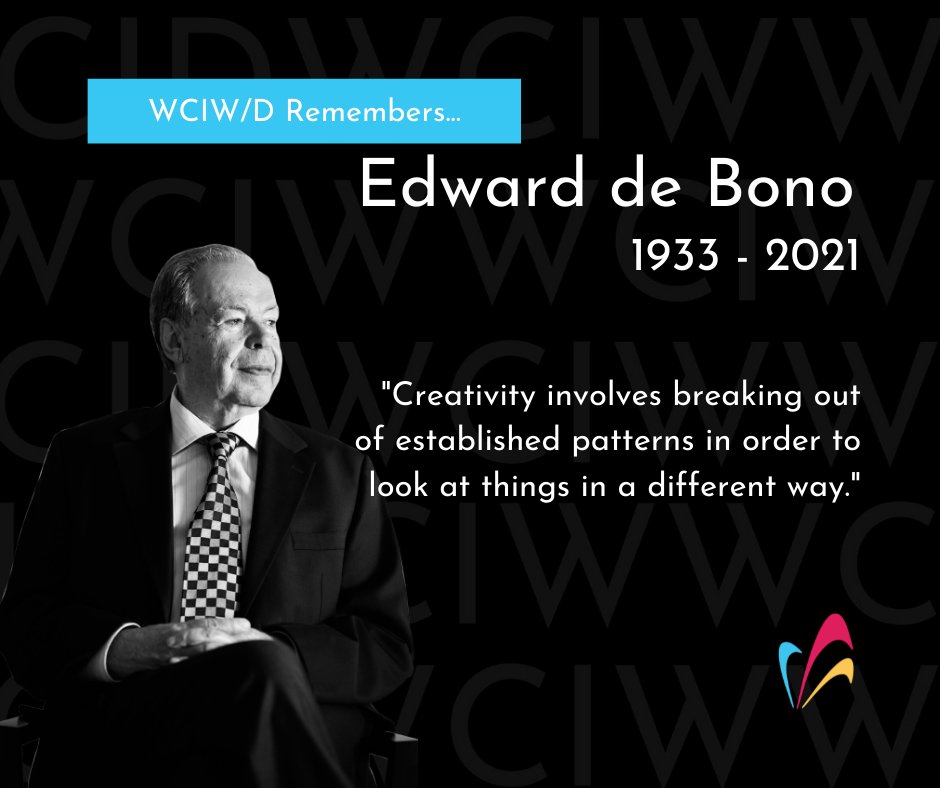
Special Edition: Creativity Mastermind, Father of Lateral Thinking Edward de Bono Has Died

I couldn’t let the week go by without a Tip-o-the (Six) Hats to the truly creative wizard I had the pleasure of meeting back in 2005 at an international creativity conference.

Creative thinker Edward de Bono has died less than a month after celebrating his 88th birthday. De Bono died last Wednesday morning and the news of his passing was announced by his family. 

I really didn’t know anything about him before I met him at this conference in Austin, Texas. He was one of the featured panelists at the conference and, one could argue, probably the most famous. He was also unassuming as he sat there on the panel giving out advice and counsel based on his many books, especially Six Hats.

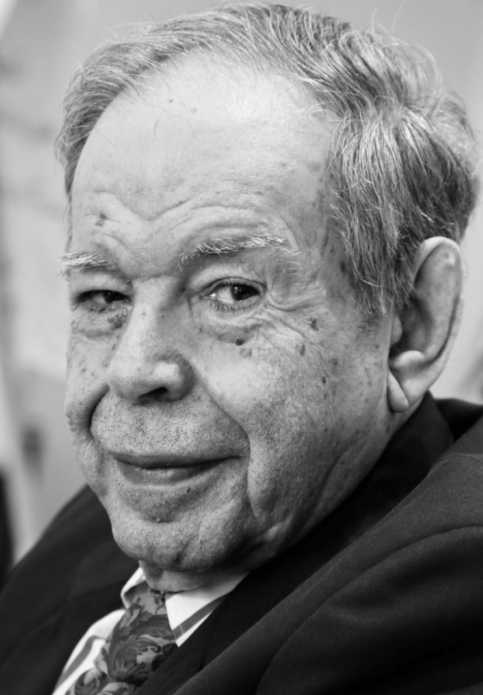
Edward de Bono photo: Roy Zhao

That’s one of several he autographed for me as we visited for a brief bit following his presentation.

Born in Malta, De Bono graduated as a doctor but went on to study psychology and physiology from where he developed an interest in thinking processes.

He fathered the phrase lateral thinking, which has an entry in the Oxford English Dictionary, and developed multiple thinking strategies, including the Six Thinking Hats method.

In a statement, his family described de Bono as a global citizen, who returned to Malta in his final years.

“This has always been his home. He lived an extraordinary life, inspiring, encouraging and enabling all of us to be better and more creative thinkers. He wrote in his book The Mechanism of Mind: ‘A memory is what is left when something happens and does not completely unhappen.’ May the memory of Edward live on and inspire many future generations,” the family said.

De Bono received his initial education at St Edward’s College and the Royal University of Malta, where he achieved a degree in medicine. Then as a Rhodes Scholar at Christchurch, Oxford, where he gained a degree in psychology and physiology and a D.Phil. in medicine.

He holds a PhD from Cambridge, a DDes from the Royal Melbourne Institute of Technology, and a LLD from Dundee. He has had faculty appointments at the universities of Oxford, Cambridge, London and Harvard. 

Thanks to the World Creativity and Innovation Week/Day

He has written over 60 books and programs, with translations into 43 languages, has been invited to lecture in 58 countries and has made three television series. Included among these 60 books are Serious Creativity, Creativity Workout, and Handbook for the Positive Revolution, all now displayed in my library with his autograph.

His ideas have been sought by governments, not for profit organizations and many of the leading corporations in the world, such as IBM, Boeing, Nokia, Siemens, 3M, GM, Kraft, Nestle, Du Pont, Prudential, Shell, Bosch, Goldman Sachs, Ernst & Young and others.

The global consultancy, Accenture, chose him as one of the fifty most influential business thinkers. In a 2004 interview with MaltaToday, de Bono even proposed a solution to the Israeli-Palestinian conflict as he launched his thinking centre in Malta.

In 1994, de Bono was made an officer of the National Order of Merit by the President of Malta.

Thanks to Kurt Sanson of MaltaToday for material upon which this blog is based.

Hopefully making a ruckus, one blog post at a time!

Be sure to check out my other blog, Joe’s Journey, for personal insights on life and its detours.

Crisis Coping for Creative Pros – Part 3 of 3

Over the past two blog posts about crisis coping, we’ve listened in on a conversation between the author, Ellyn Kail, and photographer Danny Ghitis about various methods to cope for creatives who have been entangled in the Coronavirus pandemic.

In this, the third and last post of the series, they explore what it’s like finding a sense of community during these very scary times.

*********************************

In the last two weeks, I have received more than two dozen emails about the temporary closures of galleries and studio spaces amid the coronavirus pandemic. I’ve received several more about canceled exhibitions. This is a period of uncertainty for the photography community as a whole, but in this time, we’ve also witnessed people coming together.

In between those letters about closures and cancelations, there have also been emails from artists who are hosting camera giveaways, publishers who are discounting their books, and non-profit organizations who are offering free talks and photog resources.

Globally, photographers are sharing information about how we can donate supplies to local hospitals and encouraging us all to practice social distancing for the safety and well-being of the community.

Over the past week, we’ve spoken to the photographer and professional development coach Danny Ghitis about how creatives can cope during this time and continue to create meaningful work in unprecedented circumstances.

Photography, like any art form, can be a solitary pursuit, but it’s also full of communities and resources. With all the recent gallery closures and exhibition cancellations, how can photographers stay connected and engaged with one another?

“This is so crucial. One of the main causes of my own burnout was a feeling of isolation as a photographer, and that was way before all this coronavirus mayhem. We are wired to need other people. That lone wolf photographer icon can be really damaging because it makes asking for help look like a weakness when, in reality, it’s a superpower.

“In a way, this moment offers a unique opportunity. Everyone is struggling with the same overarching challenge. Everyone needs help, and we have the technology to easily stay in touch. We’re not as spread thin as usual with a thousand networking events, galleries, meetings, etc. So reach out, offer support, provide feedback, invite conversation, have a virtual coffee, host a roundtable discussion.”

Has the creative community faced any upheavals like this one in recent years, if not on the same scale? If so, what can we learn from that time, and how can we apply those lessons to the here and now?

“I graduated from college with a photojournalism degree in 2006, the year before the iPhone hit the market and changed everything. The newspaper bureau where I interned closed a couple months after I arrived (not my fault, I swear!). I started my freelance career at the same time as the 2008 financial meltdown.

“Somehow, I made it work and grew as a human and professional. And guess what, I’m not that special. Human beings are resilient by evolutionary design. We’ve outlasted and overpowered nearly every other living organism and are capable of incredible adaptation. If you’re reading this and you’re human, you already have the tools you need inside your body.”

What are some ways you see the creative community coming together right now to support and help one another? Any moments that have given you hope?

“All of a sudden we’re in it together. We have a common struggle and purpose. We’re thinking collectively like a tribe like in the good old prehistoric days. Of course, we don’t wish sickness and suffering upon anyone and hope this goes away soon, but it does offer a unique opportunity to see the big picture.

“I keep getting emails and social media posts about virtual gatherings and support groups, and I am getting more messages than usual from friends checking in. I just started an online meetup group, and there are lots of others out there if you’re willing to search. It’s all about taking initiative and reaching out.”

How would you advise photographers and other creatives who suddenly have a lot of free time on their hands?

“This can be viewed as a great opportunity because we’re being forced to evaluate how to spend our time wisely. First, the mindset work. If you’re not in a good state of mind, it’s very hard to be focused and productive. If you want business results, practice self-care. Remember how flight attendants demonstrate putting on your oxygen mask first? Same deal. Take care of yourself to take care of others.

“Ask yourself, ‘How can I serve?’ It’s easy to get caught up in self-centered problem solving during a crisis, while orienting toward service can be more effective in creating action and will make you feel better. What do others need, and what skills do you have that can help them?”

**********

We are truly living in unprecedented times. Deadly times. History has recorded plagues, wars, and various catastrophes yet we’ve managed to survive. Granted, the planet has lost life in measurable means before but we’ve never faced a global pandemic like this before. I guess, in a sense, this could be compared to chemical warfare on a global scale from an invisible enemy.

Yet, we will live on. We will create and innovate. We have to do that now to find a vaccine to nullify the virus so we may begin to get used to a new normal. Things won’t be the same since we won’t be the same, those of us who will survive. But we will. We have to. Together. Smarter. Stronger. More persistent. Less partisan.

Wait, what’s that? It’s creativity knocking at the door. Let’s welcome her in, shall we!


This is part three of three of our interview with Danny Ghitis. Here are parts one and two.