Know Thyself and That Which Makes You Tick . . .

Quotes. Funny thing about quotes: They can be instrumental in getting over a point of view or conveying one’s opinion or setting oneself apart from others. In general, they’re supposed to be unique, jaw dropping and memorable. Here’s the latest batch out of my electronic grab bag of quotes by various folks from within the advertising community and beyond. Enjoy!


If you hear a voice within you say you cannot paint, then by all means paint and that voice will be silenced. – Vincent Van Gogh

Vincent Van Gogh

You have to know yourself … really know what makes you tick. — Shirley Polykoff, Advertising Hall of Fame

Advertising is what you do when you can’t go see somebody. That’s all it is. — Fairfax Cone, Advertising Hall of Fame

We don’t grow unless we take risks. Any successful company is riddled with failures. — James E. Burke, Advertising Hall of Fame

Success or failure in business is caused more by mental attitude than by mental capacities. — Walter Dill Scott, Advertising Hall of Fame

All creative people want to do the unexpected. – Hedy Lamarr

Hedy Lamarr

Nothing splendid has ever been achieved except by those who dared believe that something inside of them was superior to circumstance. – Bruce Barton, Advertising Hall of Fame

An expert is a person who has made all the mistakes that can be made in a very narrow field. – Niels Bohr

Our job is to simplify, to tear away the unrelated, to pluck out the weeds that are smothering the product message. — William Bernbach, Advertising Hall of Fame

Bill Bernbach

The place to start in advertising is the basic selling appeal. An appeal that fulfills some existing need in the prospect’s mind, an appeal that can be readily understood and believed. — Morris Hite, Advertising Hall of Fame


Hopefully making a ruckus, one blog post at a time!

Be sure to check out my other blog, Joe’s Journey, for a different kind of playground for creativity, innovation and inspiring stuff.

Contradictions and Creativity

There appear to be many factors that infiltrate the creative realm when dealing with problem solving. Obviously, the way we think is of paramount importance. Rarely do we think along the “straight and narrow” but usually have to navigate various problematic areas before arriving at some conclusion. Notice I didn’t say the “correct” or most viable solution.

Studying this trait in creative development, Art Markman, Ph.D., a cognitive scientist at the University of Texas whose research spans a range of topics in the way people think, drew upon a paper, referenced below, that deals with creativity research and how contradictions play a part in evolving a solution.

Research on creativity points out that most thinking follows a path of least resistance in which a situation reminds people of experiences related to that situation, and they determine what to do based on what emerges from memory. This use of memory is valuable, because it is what enables people to use their experience to guide their actions. After all, people should generally do what they did in the past in order to navigate a situation effectively and efficiently.

As a result, if a situation calls for creativity, it is important to block that path of least resistance in some way. A paper by Ella Miron-Spektor, Kyle Emich, Linda Argoe, and Wendy Smith in a 2022 issue of Organizational Behavior and Human Decision Processes suggests one way of blocking this path of least resistance in group creativity.

They suggest that there are two factors that can come together to promote creativity. The first is that teams need to embrace contradictions when generating creative ideas rather than choosing a trade-off between them. For example, when designing a product, there is often a trade-off between expense of the materials and design and the performance of the product.

A designer might opt to create a luxury product that is high in price and performance or an economy product that is low in price and performance. But a creative team that embraces contradictions might seek new materials that provide an improvement in performance while keeping prices low.

In order to do this work of embracing contradictions, though, teams must also be motivated to think carefully about the problem rather than just going with the first idea they think of. The researchers suggest that the ideal combination for creativity requires both an orientation to embrace contradictions and the motivation to think deeply about the problem.

They tested this possibility in two studies. Participants were placed into teams of three people and given a design problem to make a prototype for a creative but affordable car using parts from a building set. To simulate the expense of the car, each part had a price associated with it.

The researchers manipulated both people’s orientation to contradictions as well as their motivation to think about the problem. They influenced people’s orientation to contradictions through instructions. Some groups were encouraged to embrace the contradictions they saw rather than deny them. Other groups were just told to review different perspectives without suggesting that they embrace the contradictions.

They manipulated people’s motivation to think in different ways in different studies. In one study, participants given high motivation to think were told they would be interviewed about their team strategy after the study and that they would watch a video of their brainstorming and be asked to comment on it.

Knowing they would have to justify their responses was expected to create high motivation to think carefully. The control group was not told about any interviews. A second study manipulated motivation to think through instructions that either asked participants to review and understand opposing perspectives or simply said that successful teams look for compromise.

The creativity of ideas was assessed by independent raters who examined how novel and useful the ideas were. This is a standard way of evaluating the creativity of the ideas people generate. Consistently, the most creative ideas were generated by those groups who had been asked to embrace contradictions and had a high motivation to think about the ideas.

All of the other conditions had lower and roughly similar levels of creativity. One of the studies also had raters look at the group dynamic and assess whether all the group really elaborated their ideas by discussing them and explaining their usefulness. The groups that embraced contradictions and were motivated to think were more likely to elaborate their ideas than those in the other groups.

This research suggests that contradiction can be a fruitful source of creative ideas. Contradictions can be used as a motivation to seek a new way of resolving a conflict rather than just compromising. However, putting in the effort to really embrace a contradiction requires being motivated to think through ideas carefully rather than just reaching a quick compromise and moving on. Ultimately, creativity requires effort, and so teams that are asked to be creative need some incentive to want to do that work.

Agree? Disagree? No opinion? Regardless, drop a comment if you so choose and  let me know.

Key points

  • Most thought follows a path of least resistance and is not creative.
  • Embracing contradictions can be a fruitful path for creativity.
  • Teams embrace contradictions only when they are motivated to want to think deeply about a problem.

Thanks to these sources for supplying the information on which this blog post is based.

References

Miron-Spektor, E., Emich, K. J., Argote, L., & Smith, W. K. (2022). Conceiving opposites together: Cultivating paradoxical frames and epistemic motivation fosters team creativity. Organizational Behavior and Human Decision Processes, 171, 104-153.

Art Markman, Ph.D., is a cognitive scientist at the University of Texas whose research spans a range of topics in the way people think.


Hopefully making a ruckus, one blog post at a time!

Be sure to check out my other blog, Joe’s Journey, for a different kind of playground for creativity, innovation and inspiring stuff.

Quotes – It’s What They Said

It’s that time of the month again when we feature different quotes from a variety of people in the fields of creativity, the arts, psychology, advertising and many more. Some are very well known while others not so much. In any event, they are thought-provoking, interesting and in some cases, rather surprising.


Creators, makers of the new, can never become obsolete, for in the arts there is no correct answer. The story of discoverers could be told in simple chronological order, since the latest science replaces what went before. But the arts are another story — a story of infinite addition. We must find order in the random flexings of the imagination. – Daniel J. Boorstin

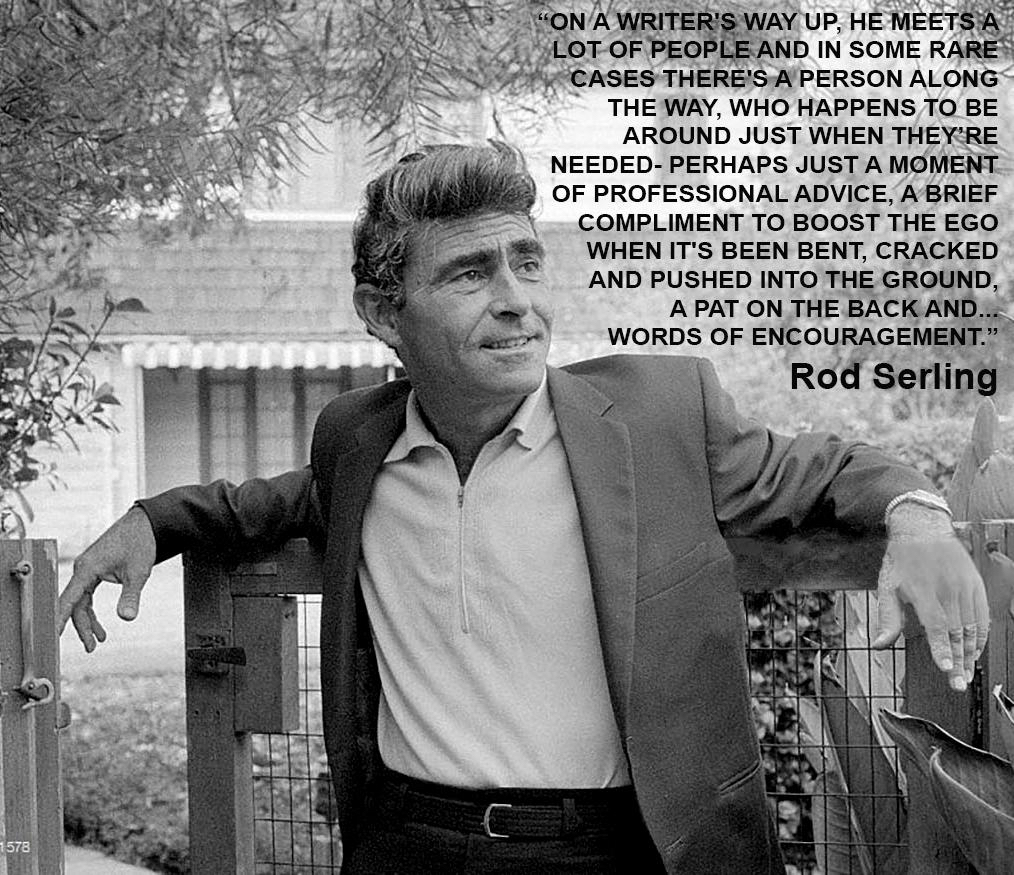
The writer’s role is to menace the public’s conscience. He must have a position, a point of view. He must see the arts as a vehicle of social criticism and he must focus the issues of his time. — Rod Serling

Rod Serling on set

Creativity comes from a conflict of ideas. — Donatella Versace

An essential aspect of creativity is not being afraid to fail. — Edwin Land

If you can’t turn yourself into your customer, you probably shouldn’t be in the ad writing business at all.
Leo Burnett, Advertising Hall of Fame

Creativity is no longer about grabbing attention or raising consumer awareness. Its goal is to remind consumers about what is fundamental and gratifying about a brand. — Peter A. Georgescu, Advertising Hall of Fame

If opportunity doesn’t knock, build a door. – Milton Berle

Passion is one great force that unleashes creativity, because if you’re passionate about something, then you’re more willing to take risks. – Yo-Yo Ma

Meetings are all too often the burial grounds of great ideas. — Keith Reinhard, Advertising Hall of Fame

The more complex the world becomes, the more creative we need to be to meet its challenges. – Sir Ken Robinson (Mar 04, 1950 – Aug 21, 2020)


Hopefully making a ruckus, one blog post at a time!

Be sure to check out my other blog, Joe’s Journey, for a different kind of playground for creativity, innovation and inspiring stuff.

Cannes Lions 2022: The State of Creativity

Every summer the advertising world treks to France and pays tribute to its version of Mecca, the Cannes Creativity Festival. In the words of a UK publication who was onsite last week, “Cannes Lions is a circus, a meeting of minds, a place to hear the same buzzwords again and again and a chance to listen to celebrities try to explain how to do advertising to rooms full of people who do advertising for a living.

But it’s also a chance to take the temperature of creativity once a year. Seeing all the work that’s winning and being surrounded by people talking about creativity gives people a unique bird’s eye perspective for just one week.”

So, while talking to the cross section of creative leaders, a very broad, but pertinent question was asked: “what is the state of creativity in 2022?”

Here’s what some of them said.

Caitlyn Ryan
VP, Meta

There’s much more optimism and real celebration. We were seeing lots more joyful work. There was one piece that won Gold [in Social & Influencer], for BMW China for the Lunar New Year. The team worked out that the word for BMW in China includes the word horse, and it was the year of the Tiger. It’s properly bonkers but it’s also so joyful. I think it’s a really great example of a couple of things, this celebration and joyfulness, but also as a social campaign. They created all of these assets that then they gave over to the community that allowed them to socialise the idea. I think it’s quite complex but it looks simple and fun.

Yes, there of course is social purpose work – and there was amazing work, especially the charity work The Lost Class, which was just beautiful. That definitely triggers a reaction and wanting to sign up to a social purpose activation. Also we can sell products through joyfully co-creating with the community. I think that’s a really important next step out of the pandemic. It’s incredibly important that we get the economy up and running again, and we use creativity to do that.

Bruno Bertelli
Global Creative Director, Publicis WW and CEO, Le Pub

On one level, there’s a little bit of dated work. Still purpose-led, still a little bit from the past. But on the other hand, there is a trend which is interesting, which is that today brands cannot tell people [things] or inspire people, it’s much more about supporting people doing things. Even if it’s for a small issue, it’s much more about supporting people in what they want to achieve. Story-doing has become much more societally relevant and less strategic – what’s your purpose, what’s your message? Some of these activations don’t even need a message because it’s clear that ‘here’s an issue and I’m just here to help’. It’s a very gen-z attitude. The other thing is not all brands are understanding the importance of being topical today. It’s so important after covid. If you’re not topical, you’re not going anywhere. 

Anna Qvennerstedt
Senior Partner and Chairman of the Board, Forsman & Bodenfors

Last year I was judging brand experience and activation. And I think that my big takeaway from last year was that there are so many really ‘nice’ ideas, but you can feel how quite a few of them are just… very reasonable. You look at it and it’s well done… but there’s no tension in it. There’s no element of surprise. It’s just basically very, very clever. And I think in the jury, when you look at it, you know that it’s going to do well, but then you see something where there’s an actual idea that is expected and no one saw coming, and that sort of changes you a little bit. Those are the ones that win the big awards, I think, and there are not many of them. I mean, again, lots of great work, but those really unexpected ones felt quite rare.

But I think there’s a renaissance for really creative ideas, that we’re sort of starting to see a little bit in the requests from clients.

Rod Sobral
Global CCO, Oliver 

I am a paranoid optimistic. I know it’s a cliche, but I use it all the time. I think every leader should be a bit of a paranoid optimistic. You have to believe that things are going to change, that it’s going to evolve in order for you to be in the right state of mind, and to take some risks. 

My view on that is absolutely, still the most important thing in the marketplace – and I don’t think this will ever change – is the idea. And an idea that connects with you on an emotional or a rational level, sometimes both. 

I think we do have this superpower in our industry to change people’s lives. It can be an ad that’ll put a smile on your face or remind you to call your mom or it can be an app that will help you to deal with your asthma or to run better. So I know that this is possible. And I think we should be doing that. 

I believe, when it comes to the state of creativity, we are in a very exciting place, frankly, because I feel that there’s a lot of energy to try things. Let’s be honest, with digital, with commerce, we have so many platforms, we produce so much. Any creative can relate to the many times you create something and you end up with one asset that people see for a fraction of a second. There is a lot of vision from people saying, ‘I don’t want to be part of the clutter, I want to be part of the signal’. The more clutter there is, the more anxious people get to change, to try to do something to break the mould.

John Berghdal
Global Creative Lead, Forsman & Bodenfors

There was so much fear in the last few years and everybody was thinking about just controlling things, not wanting things to get out of hand. And of course, then you lean on data, and you’re like, ‘OK, Facebook, Google, what can you give me? This is my budget and let’s just use programmatic. Let’s just steer this thing to not have a catastrophe, we’re going to control the situation’. Through creativity and unexpectedness, you have to be bold. You have to risk something – and I don’t think people have been in a risky kind of mood… [We were talking earlier] about the pendulum and maybe this is when people are waking up and coming out and saying, ‘OK, wait a minute, let’s build brands that people care about.’


Hopefully making a ruckus, one blog post at a time!

Be sure to check out my other blog, Joe’s Journey, for a different kind of playground for creativity, innovation and inspiring stuff.


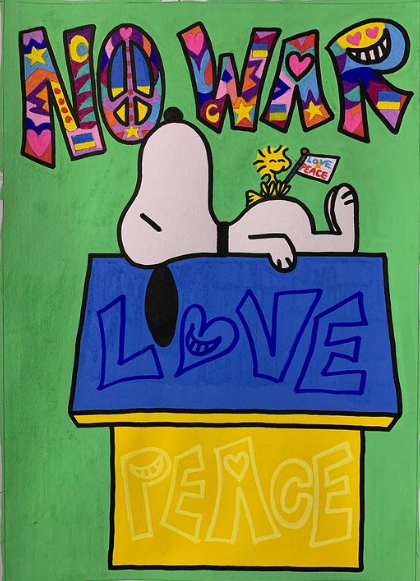
Live long and prosper, Ukraine.

Quotes – Special Edition

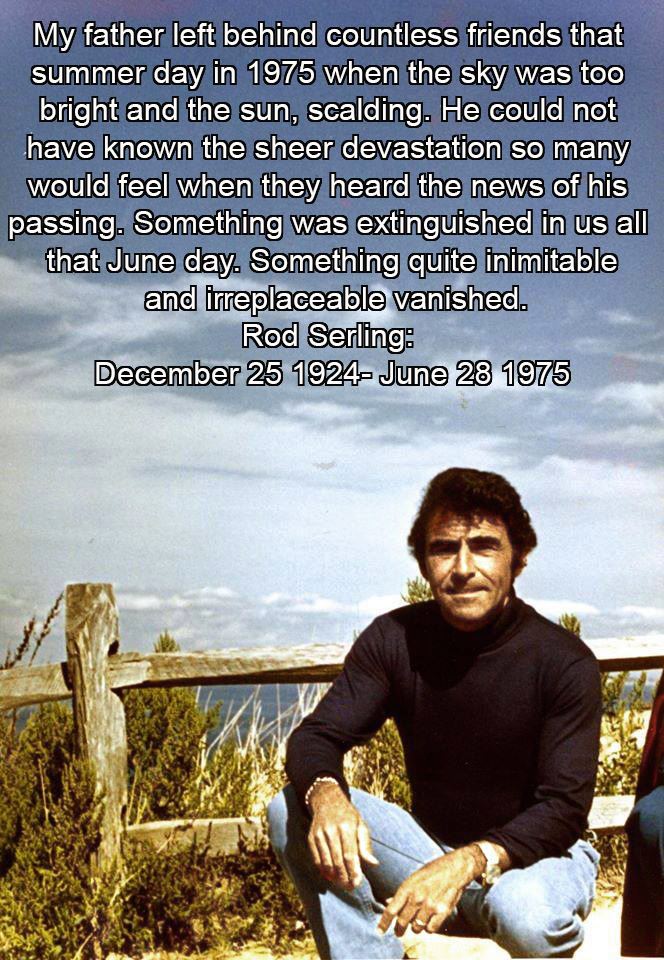
Forty-seven years ago this week, June 28, 1975, creativity lost an icon. A mentor to many both near and afar and an inspiration to those of us putting “pen to paper.” Rod Serling, creator and host of the TV series, The Twilight Zone, was a master at utilizing one’s imagination and turning it on its ear. And we loved him for it!

These quotes pay tribute not only to Rod but to various creative artists and thought leaders who have also played a role in tweaking our imagination and how we think.

I just want [people] to remember me a hundred years from now. I don’t care that they’re not able to quote any single line that I’ve written. But just that they can say, ‘Oh, he was a writer.’ That’s sufficiently an honored position for me.Rod Serling

An important idea not communicated persuasively is like having no idea at all. — William Bernbach, Advertising Hall of Fame

Human beings must involve themselves in the anguish of other human beings. This, I submit to you, is not a political thesis at all. It is simply an expression of what I would hope might be ultimately a simple humanity for humanity’s sake. ― Rod Serling

Like the musical score, a mission statement is only as good as the performance it inspires. — Keith Reinhard, Advertising Hall of Fame

Let’s gear our advertising to sell goods, but let’s recognize also that advertising has a broad social responsibility. — Leo Burnett, Advertising Hall of Fame

Treasure diversity. Seek unity, not uniformity. Strive for oneness, not sameness. — Dan Zadra, American businessman and author

Human history becomes more and more a race between education and catastrophe. – H. G. Wells

Good advertising is written from one person to another. When it is aimed at millions, it rarely moves anyone. — Fairfax M. Cone, Advertising Hall of Fame

In order to attain the impossible, one must attempt the absurd. – Miguel de Cervantes

I think, at a child’s birth, if a mother could ask a fairy godmother to endow it with the most useful gift, that gift should be curiosity. – Eleanor Roosevelt
 
Failure is the condiment that gives success its flavor. – Truman Capote


Hopefully making a ruckus, one blog post at a time!

Be sure to check out my other blog, Joe’s Journey, for a different kind of playground for creativity, innovation and inspiring stuff.


Live long and prosper, Ukraine.

Images of Creativity

Images, works of art. Striking. Unsettling. Amazing. Jaw dropping. Awesome.

Creativity in its different forms.

Below are a few examples of spaces that accommodate large scale installations.


Going big in small spaces. Irrespective of the environments we design, there are always opportunities to create unexpected scale through architectural intervention. It’s a strong and powerful way for brands to transport an audience to another world.


Credits:

Artist Matthew Mazzotta has designed HOME at Tampa airport

AC Milan HQ by Fabio Novembre

Sophie’, 2009 in Germain Restaurant, Paris by Xavier Veilhan

‘Karma’ is by the Korean sculptor and installation artist DO HO SUH STUDIOS LLP  


Hopefully making a ruckus, one blog post at a time!

Be sure to check out my other blog, Joe’s Journey, for a different kind of playground for creativity, innovation and inspiring stuff.


Live long and prosper, Ukraine.

Emotions and Their Role in Your Creativity

Every once in awhile I run across an article that really speaks to me about my creativeness and my own psychological workings. This particular article by Dr. Mihaela Ivan Holtz speaks to that. I’ve highlighted her work in some of my previous blog posts. You may very well already enjoy a good relationship with a psychotherapist who understands your background and troubles. If not, seek one out. And refer to the link at the end of this post for more insightful information.

Now, Dr. Holtz, the floor, er, uh, post is yours . . .

As a creative, you use your emotions to tell compelling stories. When your art is born from a genuine emotional expression, you offer your audience a glimpse of the unique you – your interpretation and manifestation of human experiences. 

There’s something about living in the full depth of human experience that is conducive to creativity. The extent to which one can step into the full breadth of their emotions is what makes them a true artist. The ability to be with and use complex and mixed layers of emotions is important for creativity.

It’s through the moments of deep insight and states of intimate connection to your inner world that your craft comes alive.

When you are intimately connected to your emotions’ texture, nuance, and depth, it comes through your art. Your audience can feel the depth of your feeling, and your work truly speaks to their hearts. 

Thanks to the  expression of pure emotion, others can find a piece of themselves in your art. When art comes from an intimate connection to your internal world, the people who witness it  can feel seen, heard, or validated. They are transformed when you share your own experience of transformation.

Uninspired man holding a guitar

Unfortunately, it’s not always easy to find and maintain this connection with your emotions and convey them in your art.  Unhealed emotional trauma, unconscious conflicts, and unhealthy defensive strategies that you may have developed to cope with life’s challenges can all interfere with your creativity.

When you hit a creative block or a prolonged dry spell, you may find yourself wondering: “Why do my emotions mess up my creativity?”

Many times, unprocessed trauma causes your emotions to feel too intense, overwhelming, or  painful. You can’t stay present with such feelings and you disconnect from your own inner emotional world.  You may feel like you can only tiptoe around the edges of your experience, but can never go too deep. You keep a safe distance from your own emotional experiences. It doesn’t seem possible to  tap into the depth and beauty of your emotions and use them to further your creativity. 

This inability to engage your emotions and go deep are all signs that you may need to do some emotional work to help you process trauma, conflicts, or defenses that are locking you out of your emotional creative space. 

If you’re someone who feels comfortable in your inner creative world some of the time but then loses touch with that place at other times, you may find yourself confused and looking for answers. You may be grieving the loss of your creativity since it has been so long since you were able to access your creative emotional space.

To reconnect to your creativity, you need to do your own inner healing work. Your current struggles are a sign that emotional trauma from your past needs to be examined, processed, and integrated. 

How can doing your “emotional work” help you regain your creativity? 

When you do your emotional work to heal old conflicts and trauma, you can access the full spectrum of your emotions and use them to enhance your art. You can remove the barriers to creativity and  find that you can organically enter your artistic flow.

Thanks to the healing process, the “emotional work” you can do with a trained psychotherapist, you can connect with all that you are. Your emotions, talents, and skills can come together and you can express yourself and you trust your creativity. 

The creative brain is unique, and that is why therapy for creative people needs to be sensitive to your specific needs. 

Creative people have greater connections between two areas of the brain that are typically at odds with one another.  The brain regions associated with focus and the brain network of regions associated with imagination, spontaneity, and emotions are in conversation in the creative brain.

Unfortunately, these connections usually tend to be impaired by unhealed trauma. Psychotherapy can help you reconnect these parts of your brain so you can regain your creativity and discover new creative energy. 

Focused and passionate female dancer practicing in a studio

When creative people commit to doing their emotional work, they develop their ability to stay in complex and even seemingly incompatible states of being. In other words, they can access the messiness of their minds and human experience with more comfort, ease, and focus. They can really dive into their old and present emotional experiences and internal world to create.

What kind of psychotherapy would help you? 

There is no cookie-cutter treatment plan for creatives with emotional trauma. The treatment is a creative journey in itself. Together, we enter a meaningful process  uniquely crafted to help you get in touch with your life experiences and reconnect you with your own artistic voice and expression. 

When you process the emotional trauma and conflicts you will feel: “My creativity is the core of who I am. My past struggles do not define me.  My past can inform what I create, but is not the core of who I am.”

That shift will help you stay intimately connected with your emotional world to make your authentic art that will touch audiences and, in some way either great or small, transform our world. 

I am Mihaela Ivan Holtz, Doctor in Clinical Psychology. I help creatives face and shift emotional trauma, depression, anxiety, performance anxiety, creative blocks, and addictions – to be and live their own best version. You can read more about Therapy for Creatives and Performers here.


Hopefully making a ruckus, one blog post at a time!

Be sure to check out my other blog, Joe’s Journey, for a different kind of playground for creativity, innovation and inspiring stuff.

Live long and prosper, Ukraine.

Quotes . . .Quotes . . .

It’s that time of the month again wherein I present an array of quotes from a variety of well-respected folks offering numerous perspectives. From Obama to Burnett to Serling and more.

Take note. Take a listen. Take heed. Put ’em into practice if you can. Enjoy!


Promoting science isn’t just about providing resources, it’s about protecting free and open inquiry. It’s about ensuring that facts and evidence are never twisted or obscured by politics or ideology. It’s about listening to what our scientists have to say, even when it’s inconvenient, especially when it’s inconvenient. Because the highest purpose of science is the search for knowledge, truth and a greater understanding of the world around us. – Barack Obama

Don’t let anyone rob you of your imagination, your creativity, or your curiosity. It’s your place in the world; it’s your life. Go on and do all you can with it, and make it the life you want to live.  – Mae Jemison

Nothing splendid has ever been achieved except by those who dared believe that something inside of them was superior to circumstance. — Bruce Barton, member, Advertising Hall of Fame

The place to start in advertising is the basic selling appeal. An appeal that fulfills some existing need in the prospect’s mind, an appeal that can be readily understood and believed. — Morris Hite, member, Advertising Hall of Fame

I have learned that any fool can write a bad ad, but that it takes a real genius to keep his hands off a good one. — Leo Burnett, member, Advertising Hall of Fame

Defeat is not the worst of failures. Not to have tried is the true failure. – George E. Woodberry

A teacher’s influence doesn’t stay in school. It goes out into the world and cannot truly ever be measured. Every student you inspire to do something great goes on to inspire others. There is no limit to your impact. – George Couros

It has forever been thus: So long as we write what we think, then all of the other freedoms – all of them – may remain intact. And it is then that writing becomes a weapon of truth, an article of faith, an act of courage. – Rod Serling

A good ad should be like a good sermon: It must not only comfort the afflicted, it also must afflict the comfortable. — Bernice Fitz-Gibbon, member, Advertising Hall of Fame

It is easier to tone down a wild idea than to think up a new one. — Alex Osborne, member, Advertising Hall of Fame


Hopefully making a ruckus, one blog post at a time!

Be sure to check out my other blog, Joe’s Journey, for a different kind of playground for creativity, innovation and inspiring stuff.


Live Long and Prosper, Ukraine!

A Creativity Cloud is Emerging


There will be a cloud of creativity lurking over the advertising center of northeast Arkansas tomorrow when the AAF chapter of Northeast Arkansas hosts Expanding Your Toolbelt, a series of afternoon workshop sessions covering a variety of topics relative to advertising and creativity.

Projected schedule:

Lunch & Session 1: 11:30 am – 1:00 pm | Take This Job and #^*&  with Anissa Centers
This workshop is about investing in what it takes to excel in your field, even when you are no longer motivated.

Session 2: 1:00 – 2:00 | Digital Drawing Workshop with Whitney Blackburn
Take some time to learn a new skill that you can utilize in your professional or personal time. Learn all the ins and outs of digital drawing.

Session 3: 2:00 – 3:00 | Kickstarting Creativity Without Screwing Up the Idea with Joe Fournet
Creativity plays a vital role in getting the consumer’s attention, no matter the size of one’s budget or what it is a company is selling to the public. Joe’s presentation has some fun showcasing winning and wacky ways to kick-start the creative process while staying true to the core ideas. 

Session 4: 3:00 – 4:00 | Leadership Lessons From the Lockdown with AAF National President, Steve Pacheco
From handling crises to navigating new channels of communication and connecting with your team, advice, and tips from lessons learned during lockdown.

Session 5: 4:00 – 5:00 | Curiosity with Professor Leslie Moore Parker
This session helps identify the self-imposed constraints that may hold us back in our careers and lives. It encourages participants to open their minds and hearts to the unexpected and the outrageous.  

I am honored to be a part of this elite panel of speakers and some of the highlights of Kick Starting can be found in the Download section of my website at the link below.

For those of you who can’t make the virtual visit, feel free to download a couple of documents I’ve posted on my website relative to various tips and techniques to enhance and develop the creative process. You’ll find them here at ideasnmore.net as well as other helpful information.

Organizations like the AAF are wonderful resources for professionals interested in joining with other like-minded peers in the advertising and marketing spheres. Various chapters like this one in northeast Arkansas, and mine in Houston, serve the local advertising and creative community and make it worthwhile to become a member and strengthen one’s career and life interests.

Hope you can join us tomorrow either in-person or virtually. I think you’ll be glad you did!


Hopefully making a ruckus, one blog post at a time!

Be sure to check out my other blog, Joe’s Journey, for a different kind of playground for creativity, innovation and inspiring stuff.


Live Long and Prosper, Ukraine!


When Your Muse Strikes, Follow It.

I don’t know how Seth Godin does it. He writes and publishes a blog everyday, 365 days a year. I have trouble publishing my two blogs each WEEK!

Part of my problem is having something interesting to publish. That is every blogger’s nightmare. There have been times I write a blog the night before because I came up with an idea and just developed it.

When I’m in a pinch and nothing comes to mind, I try and change my focus. In a way, I let myself become distracted, not by merely doing something else but by switching creative gears and concentrating on another creative project.

It was where my muse wanted to take me, so I let it. What is a muse you might ask?

Muse, in Greco-Roman religion and mythology, any of a group of sister goddesses of obscure but ancient origin, the chief centre of whose cult was Mount Helicon in Boeotia, Greece. They were born in Pieria, at the foot of Mount Olympus.

They probably were originally the patron goddesses of poets (who in early times were also musicians, providing their own accompaniments), although later their range was extended to include all liberal arts and sciences—hence, their connection with such institutions as the Museum (Mouseion, seat of the Muses) at Alexandria, Egypt. There were nine Muses as early as Homer’s Odyssey, and Homer invokes either a Muse or the Muses collectively from time to time.

Virgil (centre) holding a scroll with a quotation from the Aeneid, with the epic Muse (left) and the tragic Muse (right), Roman mosaic, 2nd–3rd century ad. Courtesy of the Musée Le Bardo, Tunis

As the creative juices begin to flow and my “new” project begins to take shape, I begin to develop several ideas that would make for interesting blog posts. I did, however, make sure I finished what I had previously started so I could “celebrate” the accomplishment (a musical slide show).

Whether or not you follow your instincts when you have a calling to do so, is up to you. Your mind and imagination are wondrous tools in the creative process. Don’t ignore them.


Hopefully making a ruckus, one blog post at a time!

Be sure to check out my other blog, Joe’s Journey, for a different kind of playground for creativity, innovation and inspiring stuff.


Live Long and Prosper, Ukraine!