The Haunting-The Manor Murders

Spooky entrance to haunted neighborhood by the bay. Adobe Stock

It seemed tranquil enough at first sight. It also appeared quite spooky. The residents didn’t seem to mind, after all they were used to it. It was the outsider who would occasionally visit their neighborhood by the sea. It was the outsider who got queasy when he set foot in the neighborhood. It was the outsider who wouldn’t return from whence he came. It could be the outsider who might become a permanent resident if he didn’t end up dead.

You see, the residents were very selective as to whom they invited into their little neighborhood by the bay. It didn’t matter to them that it was haunted. That just added a bit of allure to the area. No, it wasn’t the Twilight Zone. It was just a little haunted neighborhood by the bay.

By what or from whom is it haunted you might ask? There have been rumors scattered around for years but nobody knows for sure. Seems like around the late 19th Century, a shipwreck happened upon the shores of what would become this little neighborhood.

The wreck was the result of a horrendous storm that destroyed the ship and caused the crew to abandon her. As the storm ravaged on, some of the crew was lost at sea with only a handful of them surviving and eventually making it to shore.

Once there, the remaining crew found refuge in an old abandoned shack from where they would ride out the storm.

As the story/rumor goes, the fledgling crew mates did what they could to survive but kept a low profile in the neighborhood. All appeared to be going okay for the neighborhood until about one year later.

That was the year, in fact the exact day, a year later when another massive storm hit the area and completely wiped out many in this shoreline populace. Including the house in which lived the crew mates. The house still stood but the crew was gone.

No signs of anyone, anywhere. No belongings, no nothing. They just vanished.

THREE YEARS LATER

One night as a couple of the residents were out for a stroll, one noticed a distant light coming from one of the houses on the edge of the neighborhood. As they got closer they discovered the light was emanating from the long abandoned house that was vacated after the bad storm several years prior. But how could that be; no one had been living there since the previous and only occupants from the ship wreck and they had completely vanished after the storm hit. They were all thought dead.

Through a bit of trepidation and curiosity, the couple decided to investigate and moved closer to the house. Because the house had been abandoned after the storm and not been kept up, it was in a state of disrepair and looked dilapidated. Nevertheless, the couple nervously managed to walk up to the front steps near the entrance. Then they froze as if they had encountered an invisible wall. They couldn’t move. The only thing they felt was cold, extreme cold as if from a meat storage locker.

Although they stood there frozen in place, they could still see their surroundings but it was as if time itself had stopped. That’s when they saw it. Slowly but ever so gradually the front door began to open. As they stood there they felt the expectation of finally seeing someone answering the door, albeit under very strange circumstances. But as the door creaked open, they saw no one. An empty space in the entrance way.

What to make of this? They didn’t know what to think. Or do. How long would they remain frozen in place?

It seemed like it was just a blink, a millisecond in time before they found themselves inside the house standing unfrozen in the entranceway. Though they could move, they did not. They just stared at one another as if to silently ask “what do we do now?”. They were in total darkness except for a tiny light at the end of the hallway. This couldn’t be the light they saw from outside. That one, they surmised, must have come from the upstairs. But how? Were these lamps, candles set ablaze. There had been no electricity turned on since the storm hit and as far as they knew, the house was abandoned.

Or was it? How were the lights on? Even if the light source was a candle, it would have to be lit. Like it or not, further investigation was in order.

So the couple slowly made their way toward the flickering light at the end of the hall and just as they approached it they suddenly felt immense cold, as if they had walked into a freezer. It was just like they’d experienced when they reached the front door.

Simultaneously at that point the light flickered out and they were standing in complete darkness. But for a moment. There, just a few steps away and up what appeared to be a staircase, flickered another light as if beckoning them up the staircase. Interestingly the cold seemed to immediately dissipate when they began walking upstairs.

But as soon as they approached the light it moved. It was as if someone or something was leading them somewhere and holding the light as they traversed the curving, spiral staircase. Even in this twilight setting they could see no one. The light seemed to be moving on its own, always staying just slightly ahead of the couple.

When they finally arrived at the top of the stairs, they discovered open air, no rooms or walls, save for one partly dilapidated door that lead to an empty, what was left of a bedroom.

The light was still flickering but just barely, given the slight evening breeze from the adjoining bay.

The couple just stood there, frozen, afraid to step anywhere for fear of the timbers giving way. It was at this moment that they felt an uncontrollable sense of movement like they were being pushed toward the large opening on the bay side of the house.

Haunted castle at night, with glowing ghostly figures drifting through the misty air outside. Adobe Stock

There was nothing here but open air and a drop of about 300 feet down to the rocks below. No one could survive that fall. But why were they standing there now, right on the precipice of falling to their death?

They were once again standing there in total darkness. No sound except for the uneasy beating of their hearts. Their pulse raced, blood pressure climbing and anxiety rising to new heights.

Could they have outstayed their uninvited welcome? Did someone want them dead? Who the hell was behind these flickering lights? Was this a convoluted prank or sick joke? In any event they were more than ready to take their leave.

Because of their unsure footing they slowly started backing away from the open air portion of the storm-torn wall and began to turn around and walk out.

That’s when they heard it; a scraggly old voice that sounded more like a whisper.

“Where are you going? You can’t leave now, the party’s just begun. Besides you just got here,” voiced something quite invisible to their eyes. As they were still trying to adjust their eyesight in the dark, a candlelight appeared right in front of them, seemingly floating in mid-air.

There was no one present. This time, though, instead of a rush of very cold air they felt only a slight chill. As if a door had simply opened to the night air.

“Who’s there?” blurted out the man. No one answered.“ I said, ‘who’s there? Show yourself or at least speak and answer me.”

Silence.

Finally, the man turned to his lady friend and urged, “come on, let’s get the hell out of here.”

They began to walk but the flickering light stayed just in front of them, floating in mid-air. Whenever they turned, it turned. Always in front.

When the couple reached out in front of them to see if they would feel anything, all they felt was air; nothing.

“I don’t know who or what you are but we’re leaving; we’ve had enough,” said the man. Just then the light seemed to move out of their way as if to let them by. As the couple made their way out of this “semi death trap” their way out was lit by another floating light.

They made their way safely down the stairwell and into the foyer and out the door. Once outside they stopped and just looked at each other. Totally perplexed but relieved they would now be on their way back home in the neighborhood.
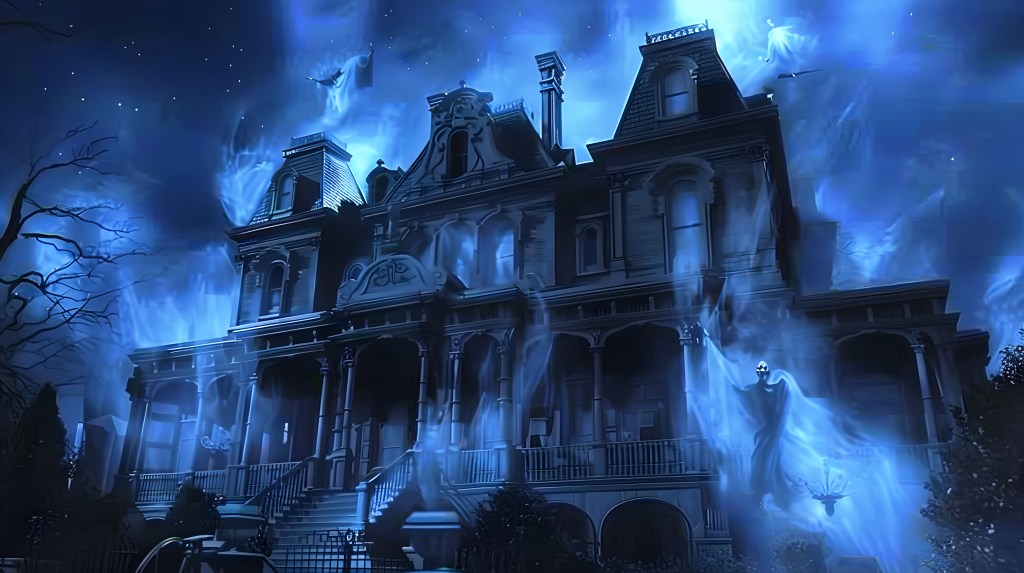
An eerie haunted mansion with shadowy figures peering out of the windows in the night. Adobe Stock

While the couple was walking away, the door gradually closed and the soft sound of quiet laughter could be heard from within the house.

Then a distant voice, “you think they’ll be back?” “Oh, I’m sure of it,” said another voice. “And we’ll be ready.”

***************

Over the course of the next few weeks, the couple queried several of their friends in the neighborhood and told them of their encounter in the apparently abandoned house at the end of the block overseeing the bay. Not one person they talked to knew anything about the house and had understood it had long been empty, that no-one had lived there since before the storm hit.

After one such neighborly conversation, the couple returned to their abode where they had been residing for just the past six months. As they discussed with each other their various conversations with their neighbors, they agreed that something was amiss. No one knew anything and/or no one was talking.The couple suspected their neighbors knew more than they were letting on.

During these last few weeks the conversations with their neighbors did reveal circumstances about the shipwreck over a year ago and that some survivors did make it onshore to seek cover from the storm. It was at this time that the survivors sought refuge in the old house at the end of the neighborhood. This fact was confirmed by the neighbors who recalled that time. After that, however, no one could recall anything. On this topic the neighborhood grew silent.

As the couple thought back on their eerie encounter inside the house, they began to wonder if they hadn’t experienced the presence of the survivors in ghostly form. They didn’t really believe in that sort of thing but at this point it seemed a viable explanation. Or one very elaborate hoax. But why? And, what’s with the neighborhood acting clueless?

One thing was sure: The couple wouldn’t get any clarification from their neighbors. They’d have to further investigate on their own. So, by mid morning the next day the couple set out to walk down the neighborhood “streets” – if you could call dirty, muddy avenues streets – to end up at the old house on the edge of the neighborhood overlooking the bay. They anticipated a different experience that time of the morning in contrast to their initial visit late at night.

Before they even got near the house, they thought it was extremely odd that the neighborhood was so quiet. There wasn’t a soul stirring, no dogs barking, nobody out for a morning jog. There was . . . no life at all present. It was as if everyone and everything had died.

As the couple approached the house, the hairs on the back of their necks rose up and a genuine sense of anxiety increased within them. When they got to the front door, they stopped cold. They heard voices, although somewhat muted, coming from inside. It sounded like a gathering of people were having some sort of meeting. They knocked, politely of course, but no one answered. Then the door creaked open ever so slightly so they cautiously opened it and stepped in. There was no one inside and no noise whatsoever. What happened to all those voices? Where had they gone?

As they stood there in the foyer, seeing nothing, they heard a voice very distinctly say, ” Welcome. Nice to see you again. We’re having a little get-together of the neighborhood and discussing future plans for the area. Won’t you come in and join us?”. The couple hadn’t moved but said, “uh, sure, we’d love to join you.”

As they both continued walking into what appeared to be nothingness, the man let out an agonizing groan and immediately dropped to his knees. His wife, looking on with startled amazement, gasped as she saw a huge silver sword driven into her husband’s abdomen. Not knowing what to do at that instant, she started to kneel down beside him when he let out an horrific scream as another silver, razor-sharp sword was being thrust into his back, killing him instantly. As he fell to his side, she tried to embrace him but looked up at where she thought someone stood above her and yelled out, “Why in God’s name have you done this? What did we ever do to you?”.

The invisible voice soon took shape, as did the rest of the characters in the room, and remarked “We want to welcome you two into our neighborhood. Our neighborhood of ghostly beings, our disembodied souls who still want to live and rejoice.”

As the woman muttered, “but I don’t understand; why did you have to kill my husband?” “Simple,” the ghost said; “you need to be dead before you can enter into our neighborhood.” Just then the woman muttered in disbelief, “but I’m not dead.” Upon hearing that, the rest of the gathering shouted back to her, “Yet, deary, but you soon will be.”

Looking upon them with mystified horror, the woman, still bending down beside her dead husband, started to say something when everything went black. No noise, no voices, no feeling. She was numb except for an unknown sense of disembodiment. Turns out she hadn’t felt when her head left her body as it rolled down the floor in the foyer. She subsequently collapsed right beside her dead husband, blood spilling profusely from her body.

The “main ghostly figure” proudly announced to the group, “Behold, the newest members of our neighborhood. We shall call them Joe and Karen, such a sweet couple.” The group responded with an energetic round of applause. One of the ghost members added, “they will make such a nice contribution to our neighborhood.”

And with that the applause continued, thundering down the hallway into the misty night air. The Manor by the bay had done its job. The neighborhood would grow quiet again. Until the next time . . .
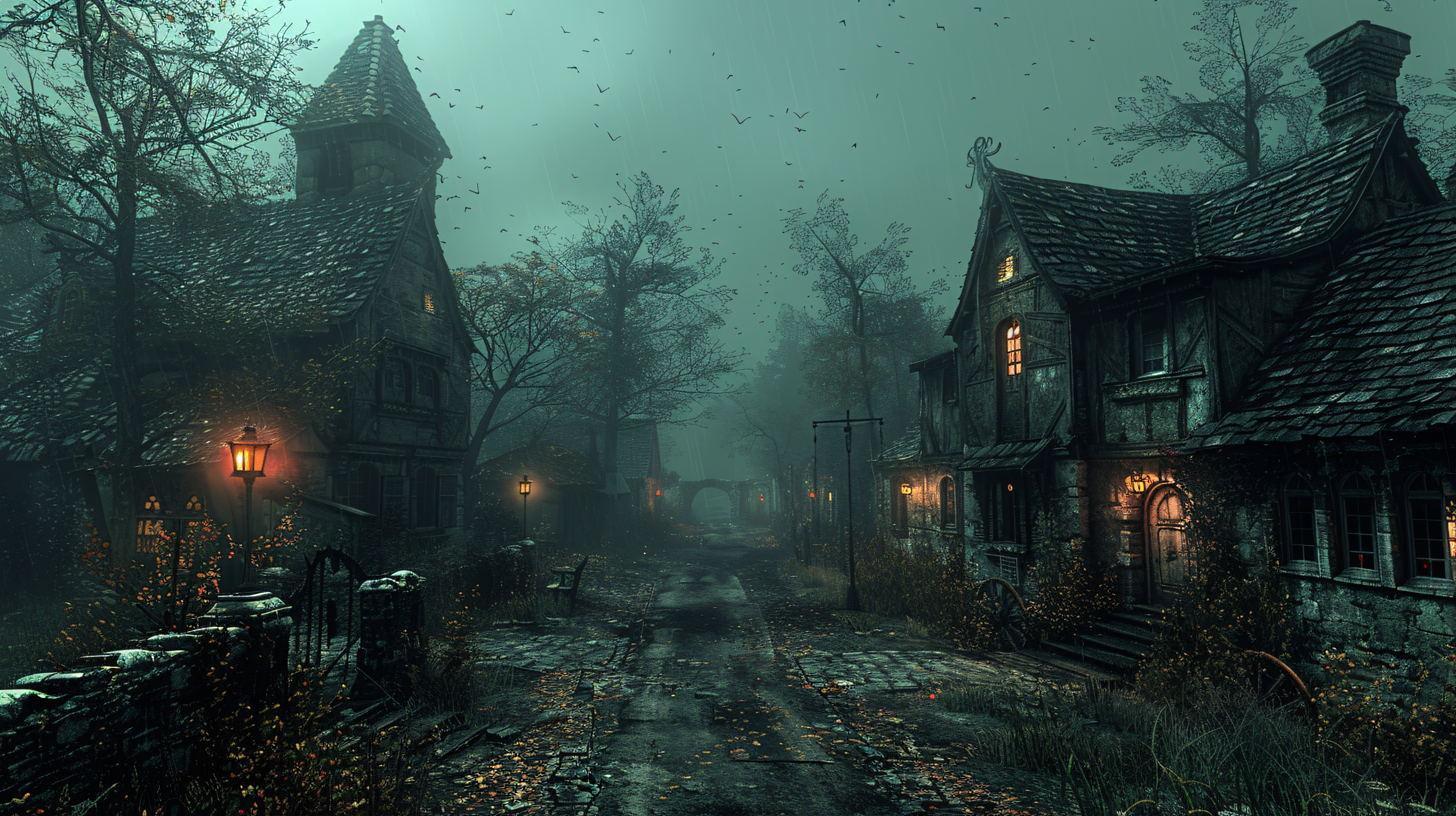
The neighborhood by the bay and its ghostly appearance at night is quiet for now.
Adobe Stock

For other stories of mystery and the macabre, check out my collection at ideasnmore.net/gallery

Brands should align data and creative from the start

Adobe Stock

An unlikely pairing some would surmise but they’re actually made for each other. In another of various selected articles from AdAge, this article I read recently by Matt Kaupa discusses how best for brands to align data with creative and do so from the beginning. Developing and studying one or the other separately won’t do any good.

At first glance, “data” and “creative” feel like opposites. One loves structure, the other color. One obsesses over decimal points, the other ellipses. But when they team up, the results can be surprising. And the best work happens when they collaborate from the start—not when data shows up at the end to judge. Here’s how to get there.

Don’t wait until after launch

Too often, data gets invited to the party only after a campaign is out in the world. At that point, it’s just there to grade the work, not shape it. Data and creative are two ingredients in the same dish. If you taste the soup only after it’s served, you can complain about the flavor—but you missed your shot to add the seasoning.

Strategy: Bring analysts into the creative kickoff. Audience insights—demographics, psychographics, behaviors, even reactions to past campaigns—can shape tone, format and story direction from day one. If you want to measure success, then why wouldn’t measurement help guide the strategy?

Example: Want to talk to busy moms in Charlotte? Don’t guess. See what they actually engage with at 10 p.m. Trying to position a brand as “premium” but still “relatable”? Let sentiment data show the words they use—not the words you wish they used.

Speak in the audience’s words

Every brand has its own vocabulary, but if your audience doesn’t speak that language, you’re basically shouting into the void. It doesn’t matter how clever your copy is if no one understands it—or worse, if it feels out of touch.

Strategy: Pull top organic search terms and social comments into the copy deck. Use their words, not yours.

Example: In industries like health care or finance, expert language doesn’t always translate. Otolaryngology? That’s just an ENT.

Don’t ignore A/B test losers

Everyone loves a winner, but the losing versions of a campaign are often way more interesting. They show you where instincts clashed with reality—and that tension is where new ideas live.

Strategy: Treat every test as a learning lab, not just a scoreboard. Every version has a story to tell—whether it’s what to do, or what to avoid.

Example: Sometimes insights come from a single weird data blip. Why did that version spike in Wisconsin? It didn’t have anything to do with cheese—or overrated football teams (skol!).

Let dashboards tell a story

Dashboards don’t have to be painful. But let’s be honest: They usually are. They’re dense, ugly and built for people who already live and breathe numbers. For everyone else? They’re more like a punishment than a resource.

Strategy: Co-build reporting visuals with designers so your dashboards are as compelling as your campaigns. When data looks like a story, people actually use it. Also, dummy-proof your insights: structure data and visuals in a way that reduces the number of assumptions—especially wrong ones—that your audience has to make.

Example: Imagine if your media dashboard looked less like a spreadsheet exploded and more like an infographic—highlighting trends, telling a narrative, and pulling out the “so what” at a glance. One client stopped ignoring their reports entirely once we reframed their monthly dashboard like a campaign storyboard. Suddenly, the CFO wasn’t just tolerating the data—he was quoting it in meetings.

Flip feedback into fuel

Brands collect mountains of feedback but rarely use it for anything more than “good job” or “try again.” What if, instead of treating it like a report card, you treated it like raw material? Customers are basically writing copy for you every day.

Strategy: Use real-time listening tools to turn survey responses or social reactions into iterative campaign content.

Example: Imagine a spot stitched together directly from customer feedback. Or a campaign whose copy comes entirely from what people are saying online.

Wrap smarter

When the campaign’s over, most people move on to the next thing. But the wrap-up is where the hidden treasure lives. Go beyond “what performed” and dig into why—because those answers set you up for the next win.

Strategy: Cluster analysis can reveal new audience segments. Performance patterns can challenge assumptions. Maybe Gen Z does like long-form after all—just not when you lead with product shots.

Data shouldn’t chase creative, and creative shouldn’t wait for data. The smartest work happens when both teams co-own the problem from day one. Remember that data isn’t just numbers. Just as we need to speak our audience’s language, we also need to speak the creatives’ language. Incorporate qualitative data—social comments, organic searches, reviews, surveys—to make sure we don’t lose the forest for the numbers.

Hopefully making a ruckus, one blog post at a time!

Be sure to check out my other blog, Joe’s Journey, for selected short stories and personal insights on life and its detours.

From White Rabbit to Einstein

A variety of quotes to help round out your week.

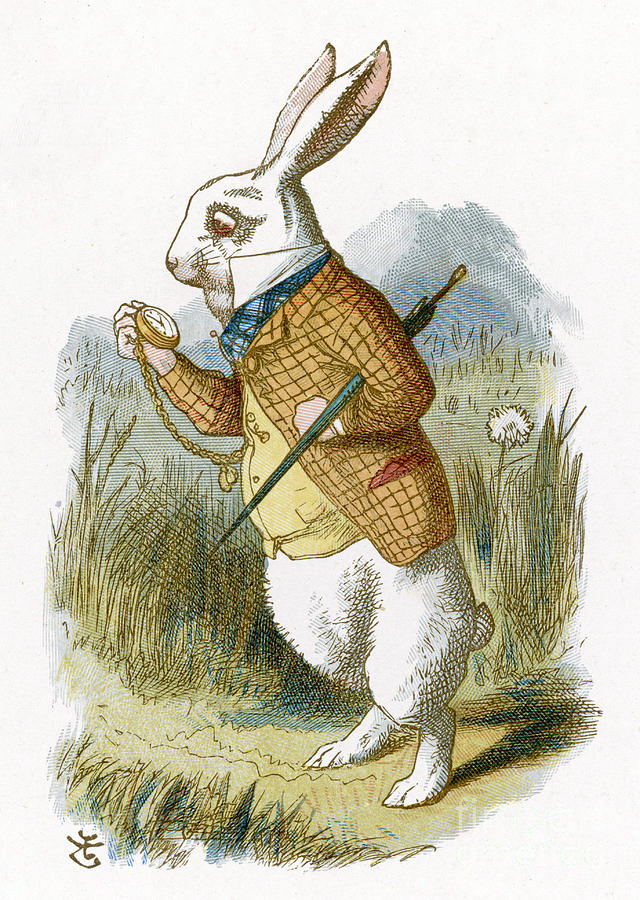
I’m late, I’m late! For a very important date! No time to say ‘hello, goodbye,’ I’m late, I’m late, I’m late! — White Rabbit

The White Rabbit is a fictional and anthropomorphic character in Lewis Carroll’s 1865 book Alice’s Adventures in Wonderland. Mary Evans Picture

No company that markets products or services to the consumer can remain a leader in its field without a deep-seated commitment to advertising. — Edwin Artzt, member, Advertising Hall of Fame

You can say the right thing about a product and nobody will listen. You’ve got to say it in such a way that people will feel it in their gut. Because if they don’t feel it, nothing will happen. — William Bernbach, member, Advertising Hall of Fame

The soft stuff is always harder than the hard stuff. — Roger A. Enrico, member, Advertising Hall of Fame

And that’s the world’s biggest problem: the future is seen as someone else’s concern. –David A. Sinclair, biologist, professor of genetics

Everything has its beauty, but not everyone sees it. – Andy Warhol

The most beautiful thing we can experience is the mysterious. It is the source of all true art and all science. He to whom this emotion is a stranger, who can no longer pause to wonder and stand rapt in awe, is as good as dead: his eyes are closed. – Albert Einstein

Obstacles are those frightful things you see when you take your eyes off your goal. – Henry Ford

Whenever a theory appears to you as the only possible one, take this as a sign that you have neither understood the theory nor the problem which it was intended to solve. – Karl Popper

Diversity is truly about seeing everyone’s uniqueness as a beautiful gift to be nurtured and developed, not changed to conform to some arbitrary standard. — Mary-Frances Winters, American author and diversity & inclusion expert


Hopefully making a ruckus, one blog post at a time!

Be sure to check out my other blog, Joe’s Journey, for a different kind of playground for creativity, innovation and inspiring stuff.


Live Long and Prosper, Ukraine!

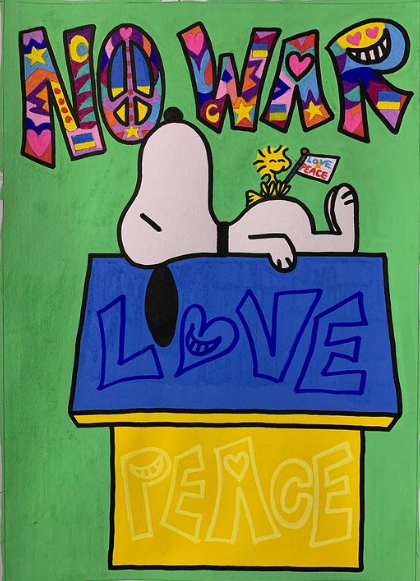
Snoopy in Concrete

Creativity knows no bounds. Nor, it seems, does an artist’s or cartoonist’s palette. Take, for instance, a recent, uh, exhibit at the Charles Schulz Museum in Santa Rosa, CA.

Talk about a lasting impression! If you’ve ever put your hands or feet into wet cement, you know what I’m talking about. When I came upon this photo entry by Jean Schulz, yes, that Schulz, I had to share it via my own creativity blog. All of us can relate to having impressions in concrete. Then, again, if you’re a world-famous beagle, your impressions are as varied as your moods.

In her latest blog post, “Leaving a Lasting Impression,” Jean Schulz shares the simple joy of leaving your mark in wet cement.


Hopefully making a ruckus, one blog post at a time!

Be sure to check out my other blog, Joe’s Journey, for a different kind of playground for creativity, innovation and inspiring stuff.

Live Long and Prosper, Ukraine!

A Tip of the Hat to the Cat in the Hat! (and his creator)

Happy Belated Birthday, Dr. Seuss!

As you may have gathered by now, this post is an out-of-the-ordinary-one. It celebrates one of our nation’s top word sleuths, a master of reduced vocabulary and a penchant for a feline sporting a floppy chapeau.

His birthday was yesterday but his creativity, particularly with and for children, certainly merits more than just a mention in this creativity blog. He is, of course, Dr. Seuss, and with that brief introduction comes some background that some of you may not know.

Theodor Seuss Geisel (March 2, 1904 – September 24, 1991) was an American children’s author, political cartoonist, illustrator, poet, animator, and filmmaker. He is known for his work writing and illustrating more than 60 books under the pen name Dr. Seuss. His work includes many of the most popular children’s books of all time, selling over 600 million copies and being translated into more than 20 languages by the time of his death.

Geisel adopted the name “Dr. Seuss” as an undergraduate at Dartmouth College and as a graduate student at Lincoln College, Oxford. He left Oxford in 1927 to begin his career as an illustrator and cartoonist for Vanity Fair, Life, and various other publications. He also worked as an illustrator for advertising campaigns, most notably for FLIT and Standard Oil, and as a political cartoonist for the New York newspaper PM.

He published his first children’s book And to Think That I Saw It on Mulberry Street in 1937. During World War II, he took a brief hiatus from children’s literature to illustrate political cartoons, and he also worked in the animation and film department of the United States Army where he wrote, produced or animated many productions including Design for Death, which later won the 1947 Academy Award for Best Documentary Feature.

After the war, Geisel returned to writing children’s books, writing classics like If I Ran the Zoo (1950), Horton Hears a Who! (1955), The Cat in the Hat (1957), How the Grinch Stole Christmas! (1957), Green Eggs and Ham (1960), One Fish Two Fish Red Fish Blue Fish (1960), The Sneetches (1961), The Lorax (1971), The Butter Battle Book (1981), and Oh, the Places You’ll Go (1990). He published over 60 books during his career, which have spawned numerous adaptations, including 11 television specials, five feature films, a Broadway musical, and four television series.

Geisel won the Lewis Carroll Shelf Award in 1958 for Horton Hatches the Egg and again in 1961 for And to Think That I Saw It on Mulberry Street. Geisel’s birthday, March 2, has been adopted as the annual date for National Read Across America Day, an initiative on reading created by the National Education Association.

He also received two Primetime Emmy Awards for Outstanding Children’s Special for Halloween is Grinch Night (1978) and Outstanding Animated Program for The Grinch Grinches the Cat in the Hat (1982).

Geisel’s most famous pen name is regularly pronounced /suːs/, an anglicized pronunciation inconsistent with his German surname. He himself noted that it rhymed with “voice”. Alexander Laing, one of his collaborators on the Dartmouth Jack-O-Lantern, wrote of it:

You’re wrong as the deuce
And you shouldn’t rejoice
If you’re calling him Seuss.
He pronounces it Soice (or Zoice)

Geisel switched to the anglicized pronunciation because it “evoked a figure advantageous for an author of children’s books to be associated with—Mother Goose” and because most people used this pronunciation. He added the “Doctor (abbreviated Dr.)” to his pen name because his father had always wanted him to practice medicine.

So whether or not you heard Horton’s Who or salivate over his breakfast suggestion of Green Eggs and Ham, take a moment and say Thank You to the one main character to whom millions of kids have related to for years, Dr. Seuss.

A Dozen Tips to Enhance Your Creativity

• Creativity needs to be synonymous with “FUN!”

• Idea Tub – can be a physical place or thing and/or an electronic file. It’s a compilation of all ideas
ever submitted since you started keeping track, but organized as to be readily accessible.

An elaborate Idea Tub

• Don’t let the execution bury the idea. Your message will be diluted and possibly even confusing if
the creative is too cute, too complex or just plain dumb. Think napkin, not computer.

• Realize your own sense of creativity by challenging your imagination and stimulate thoughts to lead
yourself to a new level of solution.

• The idea, for best results, should be media and discipline neutral. Otherwise, you limit yourself.

• Focus on how you’re going to make the idea work and be relevant. But, never fall in love with it.

• Don’t ever underestimate the power of the mind or your imagination. Don’t ever be afraid to ask,
“Why, Why not or What if . . .?”.

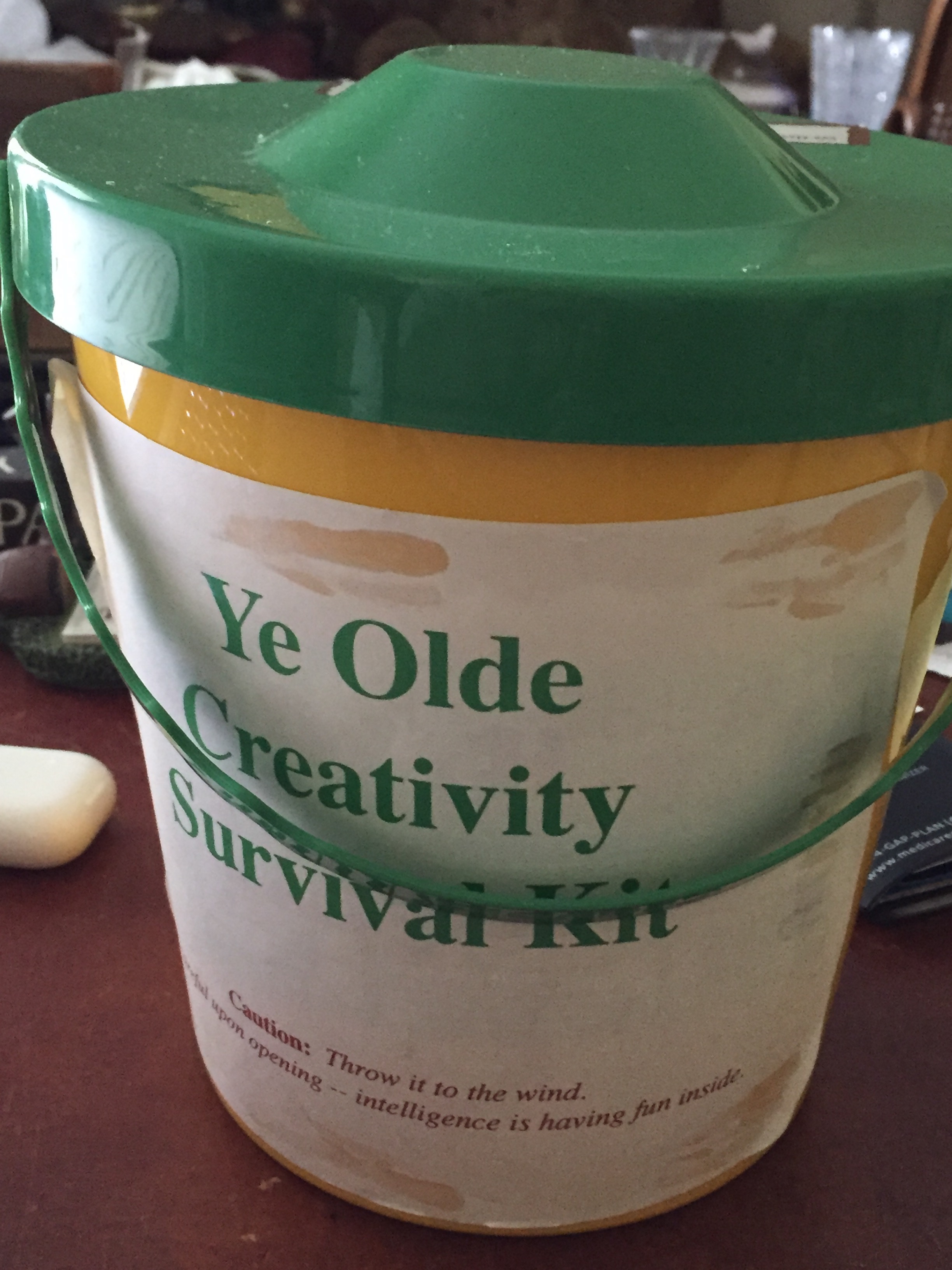
• Ye Olde Creativity Survival Kit — Any sort of container in which you place whatever makes you
FEEL creative and THINK creatively. In this industry, silly is sometimes serious business.

• Thinking at Warp Speed – Generating ideas at breakneck speed is a great way to capture ideas on
Post-it Notes (one per note) in answering a specific question to solve a problem. Remember Giant
Post-its for your “idea wall” which can foster brainstorming and open-door policy idea addition.

• Drill Down Technique – Discovering THE idea. In this unusual method choose your five best ideas
and ELIMINATE THEM, choose five more and ELIMINATE THEM. The last idea Post-it may or
may not be the best, but it’s one to which you normally would not have paid much attention. Go play.

• As ideas are developed, make sure their essence is refined. Make sure your ideas are clear and
you can explain their basic value in about 20 seconds. If you can’t explain it to an 8-year old so they’ll understand it, you need to refine your idea more.

• Don’t manage creativity; manage for creativity. Provide an environment that is open and receptive
to new ideas, and that builds failure into the process. Acknowledge error or failure in a constructive
and supportive way.

Hopefully making a ruckus, one blog post at a time!

Be sure to check out my other blog, Joe’s Journey, for personal insights on life and its detours.

Stopover at the Majestic.

A time traveler with his magic walking stick that, among other things, makes him invisible on demand and also serves as a teleportation device, travels back to 1965 to visit the Majestic Hotel in Lake Charles, LA. Just before it’s torn down. Unbeknownst to him, however, he’s not the only one who made the trek.

i

Dressed in a three piece, white linen suit with straw hat, the Visitor was no stranger to style. His cane, or walking stick as it is sometimes referred, is black with an ornate, brass top as if to resemble the crown on an office building. A green button is displayed in its center.

He slowly gazes around the elaborate lobby as if he’s expecting someone; either that, or he’s casing the joint for future opportunity of financial gain. Somehow, I rather doubt that.

There seems to be electricity in the air today as if all those gathered here anticipate some grand event. No doubt many a grand event has been held in this majestic old hotel. Yet this day seems different.

He stops a nearby guest and inquires, “I say, pardon me, but what’s all the excitement around the lobby today?” The reply is anything but cordial. “Excitement? What excitement?” exclaims the guest.

“Don’t you know?” asks the guest. “Why the Majestic is being torn down. After all these years the grand ole dame is being reduced to shambles and rubble,” he says. “Damn shame if ya ask me!” he sniffs.

The Visitor sits there, expressionless for the most part. He studies the lobby and its inhabitants. It’s not like they are a vengeful mob about to attack. It’s more like they anticipate the destruction without knowing when.

The Visitor senses this and begins to move about, first, though giving his cane a friendly glance.

Slowly, deliberately he begins to meander throughout the lobby, gradually making his way toward the front door and eventually onto the lobby porch or as it’s more commonly referred, the South Porch.

The Visitor stops and simply stands there, weighing in on the sights in the street before him as well as the few men seated in the many rocking chairs along the porch. It’s a mild Summer day and not nearly as warm as would normally be the case in Southwest Louisiana.

The Majestic Hotel was quite the luminary in its day, having hosted Harry Houdini, the Barrymores, General and Mrs. Eisenhower and Jackie and John Kennedy. It had its own power plant and water system, as well as ceiling fans in every room. It had a popular restaurant and was alleged to have hosted every president from Theodore Roosevelt to JFK, though not necessarily when they were president. Yet despite all this, it was deemed “obsolete” in 1965 and was demolished for parking.

The Visitor gazes down at his cane and wonders to himself, “Hmmmmm . . .”

“Damn shame about the pending destruction of the Majestic, doncha think, Mr. , uh . . .,” queries the porch stranger as he approaches the Visitor. “Can’t you do anything about it?,” he asks, assuming the Visitor is in management with the hotel.

“Sir, I’m just a guest, like you. I don’t know what to tell you. Oh, the name is Curtis, Mr. Curtis,” replied the Visitor. “But I will say I tend to agree with you in that it is a shame about the hotel’s destruction. It’s especially true if they aren’t planning to build another fine hotel in its place.,” said Curtis.

Our Visitor knew and thought to himself that, according to the Space-Time Continuum, the destruction of the hotel could not be changed. It will go as planned here in 1965. Curtis can’t change that nor does he want to do so, even though he does think it’s a mistake.

Perhaps it’s time to return to a period when the hotel was at its roaring best, he wonders, the Twenties.

Gradually making his way back into the lobby, our Visitor ventures down a hallway leading, eventually, to a row of guest rooms. After he makes sure he is alone in the hall, he quietly but directly speaks into the crown of his Walking Stick, “Majestic Hotel, Lake Charles, Louisiana, Lobby Bar, circa 1925.”

He presses the green button atop its face and . . . he’s gone!

Continue reading

Seth Godin on Creativity

“To count, it needs to ship,” Seth Godin.

Whatever you end up creating, for it to count, it needs to ship. Ship in the sense that it needs to be published, displayed, lectured, drawn, invented, etc. Whatever you create needs exposure.

If you’re not that familiar with Seth or his myriad of work, go explore Seth’s site. You’ll be glad you did.

I’ve been following Seth’s podcast, Akimbo, for several years now and find it quite nourishing. I also subscribe to his emails. How he does this 365 days of the year, I’ll never know.

But, I’m glad he does.

So take a listen below to Seth’s take on Creativity if you haven’t already. Once done, choose to create something.

Then ship it!

Hopefully making a ruckus, one blog post at a time!

Be sure to check out my other blog, Joe’s Journey, for personal insights on life and its detours.

Extraordinary Creativity. Dynamic Images, strikingly different. 100 Years Apart.

What do you get when you pair an egotistical, genius architect from the early 20th Century with a young Canadian-born illustrator producing incredibly creative work?

Oh, and throw in 100 years difference between the two.

What do they have in common? Extraordinary talent.                                 Extraordinary images.

One was a visionary; the other expresses her visions colorfully. He showed bold and dramatic executions; so does she. He was extremely creative and imaginative. Her: Ditto. That’s what this blog is all about: Various and different perspectives on creativity.

In reading articles recently on re-imaging, I was reunited with the subject of a paper I’d written years ago. This article took a different perspective. About the same time, I was introduced to a new subject of creativity in an article on illustration.

The subjects: Very different and very dynamic.

The subject I wrote about years ago was the infamous and egotistical architect, Frank Lloyd Wright. I was intrigued by his designs and his persona. His works were that of genius. My aunt, being an interior designer, was quite familiar with Mr. Wright, especially after seeing him in Chicago during the fifties. This heightened my interest and pushed me to write the paper.

frank-lloyd-wright_1

Courtesy PPG Paint Color Collection: Frank Lloyd Wright™

Since this blog centers around creativity and innovation, let alone imagination, I thought it appropriate to publish some of Wrights work with an intriguing take on some of his designs that were never built. They’ve been reimagined here in the 21st Century. Keep in mind, dear audience, that Wright flourished during the early 20th Century. He died in 1959. His last project, in Phoenix, was recently put on the market for $2.7M.

Spanish architect, David Romero, has created photorealistic computer renderings of unbuilt or demolished Wright buildings. Admittedly, as I was first reading about his process and looking at the photos, the settings seemed surreal.

Wright-car showcase-davidromero

Wright’s Roy Wetmore Car Repair and Showroom was to have been built in Detroit, Michigan. Credit: David Romero

Romero also painstakingly researched the context and location of the building, including adding era-appropriate cars, traces of rain and dirt on the building, and other details in order to bring the project to life. As a result, at times it can be hard to tell these are illustrations rather than stylized photographs.

gordonstrong-davidromero

Intended to stand atop Sugarloaf Mountain in Maryland’s Blue Ridge Mountains, the plan for the Gordon Strong Automobile Objective commissioned in 1924 called for a planetarium and restaurant to accompany a scenic overlook. Its developer, wealthy Chicago businessman Gordon Strong, envisioned it as a destination where families would drive for the day from Baltimore and Washington, D.C. Credit: David Romero

Take a trip back to yesteryear and see for yourself various Wright projects either demolished or even never built.

Larkin-Administration-Building-01

Larkin-Administration-Building-inside


The Larkin Administration Building (left) and inside the building (right) made design statements all throughout. However, the building does not exist any longer. Wright’s Larkin Building in Buffalo, New York—his first office building—was built in 1903 and demolished in 1950.

According to Romero, after gobs of research and learning, they had to be works that did not exist, either because they disappeared or because they never came to be built. The reason is simple: 3D rendering tools serve precisely for this, to show what does not exist.

Describing his process of recreation, Romero explains: “I start the model in Autocad, then I export it to 3ds Max + Vray where I add textures, lights and cameras, as well as vegetation and the environment. Finally there is some retouching in Adobe Photoshop, although very light.”

Creativity of today depicting creativity of a bygone era. Fascinating!

~~~~~~~~~~~~~~~~~~~~~~~~~~~~

From the early 20th Century to present day we go. I find that creativity is not age based. What’s creative and imaginative is creative and imaginative, regardless of when created.

Take the young Canadian illustrator, Lynn Scurfield. She has positioned her career path thusly: “I wanted to be an animator until I saw artist Alphonse Mucha’s work in high school. I knew that I had to do what he did! Drawing insanely beautiful images and then having them used in different commercial ways was mind blowing.”

Lynn-Slf_Portrait2020

I was taken with this illustration of a smoke monster-type creature (any Lost fans out there?) apparently poised to eat a woman who is just leaving this house, oblivious to her impending danger.

Scurfield Illust

“Hello! I’m an illustrator living in a sleepy town just outside of Toronto, Ontario. My work is defined by crazy colours and textures with strong emotional qualities.”  For Marzena Czarnecka’s article ‘Unsafe at Home, Lost in the System,’ for city lifestyle magazine Avenue Calgary.

She describes her approach as . . . “My art style, which utilizes a mix of media, really confuses people because they never know how much of my work is done traditionally versus digitally. People are also intrigued by how emotional my work can feel. I’m usually hired to create images about emotionally difficult topics, like death, mental health and separation. The fact that I’m being hired to make illustrations that emotionally connect with a general audience is special and amazing.”

. . . and her philosophy as . . . “Don’t overthink your work. When I was in school, I was always worried if my work was good enough, if it was cool enough, if I was a two-bit artist. Since I’ve started working in the industry, I’ve realized that thoughts like these aren’t healthy, and they don’t make you a better artist. I like my work more now that I care less about what people think. As long as my clients are happy with the final results, I’m happy!”

Walrus-Lynn

“For Erin MacNair’s short story ‘Thin Crust,’ for general interest magazine The Walrus.”

Interestingly, both Wright and Scurfield, though a century apart, expressed their work in striking and dramatic ways while emitting strong, emotional qualities. Imagination is at the heart of creativity and the images exhibited by these two talents stirs that imagination.

Born of different generations, one has left his indelible mark in the world of architecture while the other continues to illustrate hers. Take heed; the rest of us can learn something. Creativity and imagination are not constrained by time and space, and to a lesser degree, neither are we. Think about it!

Happy Halloween? The Trumpster Gets Treated.

Young trick or treaters being scared by a Trump-like figure with orange hair and carrying two very full pumpkins of candy

Striking, isn’t it? Kinda scary, too; well, at least for the little kiddos, all masked up with candy-laden pumpkins running for their lives. It’s Halloween, after all, and when I saw this illustration I couldn’t resist sharing on this most appropriate of “holiday.”

This blog is not purposefully political but because this cover art of a well-known magazine gets one’s attention by the illustration, I thought it worthy of being shared.

There will, of course, be those who don’t find it funny in the least; others will think it hilarious. Artwork, in this illustrative form, is very creative. It does more to entice the reader inside to view the story than any photograph would do.

It also helps that it’s Halloween.

The New Yorker offers a playful trick-or-treat-themed cover—with a political edge. The work of illustrator Mark Ulriksen, a longtime contributor to the magazine, it shows President Donald Trump striking fear into the hearts of trick-or-treaters.

When New Yorker Art Editor Francoise Mouly interviewed Mr. Ulriksen, he briefly addressed the political subtext of the cover:

Mouly: Your previous Halloween covers have featured a haunted version of the Capitol and some colorful characters in Congress. We’re sensing a theme.

Ulriksen: Yes, I somehow equate Washington politicians with scary monsters.

Well, there you have it, boys and girls.

Happy Halloween, everybody.

BOO!