The Season of Creativity

Photo by Joel Holland

Periodically, my friend, Felix Scardino, a psychotherapist here in Houston, publishes an email/blog that touches upon various aspects of life and its challenges. The below segment is his latest and I thought I’d share it on this blog. Learn and enjoy!

**************

In our winter message, The Season of Inwardness, Thomas Merton urged us to Trust the winter when the plant says nothing. He was reminding us that, although things appear dead, hidden within them are resources that lead to new life. With its burst of color and growth, spring validates that concept. Let this season be your teacher. Spring can remind you not to jump to dire conclusions when all seems lost, when you can’t see much in your future, or when you feel that your reserves have dried up.

Take a lesson from nature. Our resources for new ideas and insights are often so hidden that our lives look like dead branches. If you find yourself in a personal winter of doubt, confusion and fear (what Shakespeare calls the Winter of our Discontent), rest assured that there is a creative source within you. You will begin to see shoots of life and hope, which usher you into your spring. But be prepared to work for it!

In spring, at the end of the day, you should smell like dirt.

                                                                        ~Margaret Atwood 

‘Smell like dirt’ means be willing to do the work, take a chance, experiment, risk disapproval, fall on your face, start over! New biomedical research suggests that you will thereby activate your healing system. We feel most alive when, acting from our deepest nature, we allow what lives inside of us to come out.

Don’t wait for the big bang of colossal insights before you roll up your sleeves. Trust the “still, small voice” of your quiet inkling and hunches–not by thinking about them, but by acting on them.

Honor them, work with them, shape them as you would clay. Speak them, write them and teach them in your office and at school. Stir them, mix them and chop them in your kitchen. Hammer them, sand them and paint them in your workshop. Make bold strokes. Make a mess. You can always clean it up and start over.

Welcome spring and your new creative self!

Hopefully making a ruckus, one blog post at a time!

Be sure to check out my other blog, Joe’s Journey, for selected short stories and personal insights on life and its detours.

Kick Start Your Creativity

Some times we all need a kick in the pants to get our creative juices to start flowing. Perhaps the attachments in this post will help in that regard. I wrote these years ago in preparation for some speaking engagements. Given their nature, I’d bet they’re still valid today.

Hopefully making a ruckus, one blog post at a time!

Be sure to check out my other blog, Joe’s Journey, for personal insights on life and its detours.

And, check out creative selections from ideasnmore.net.

Jolan tru!


Big Ideas Don’t Always Equal Better

I recently came across an article about generating ideas and the belief that generating the Big Idea will produce the Best Idea. This isn’t necessarily so, as the article points out. Also, the Big Idea isn’t, and rarely is, the Best Idea.

Arriving at the Big Idea is usually the end result of utilizing one of several exercises. When one settles on the Big One, several smaller ideas have usually already been introduced. Don’t discard these. They might yet be useful even if leading into a different angle. This is where due diligence comes into play. But, I digress; this is the subject of a different blog post.

Now, about that article by Ahab Nimry . . .“Big Idea” is often a misnomer. Big Ideas can actually be small ideas, and most of the best ones are. They do not necessarily point to unique selling propositions (USPs), but rather single out a small aspect of what a brand does and elevate it. Such an approach works in many categories, from the probably insignificant additives in brand name gasoline to the distinctive but largely unused camera features in cell phones. But when treated with creativity and ingenuity, they can become touchstones for a brand that symbolizes far more. 

One of the best campaigns is All State’s “Mayhem.” In the spots, Mayhem is a middle-aged man who acts out likely causes of chaos. Sometimes he’s a teenager distracting you with social media, other times he’s the latest hashtag campaign or even a dopey, former frat boy who ruins a wedding. Typically, he intervenes in the lives of ordinary people, resulting in crashed cars, smashed windows, and destroyed dreams. At the end of each commercial, he explains that if you have discount insurance rather than All State, you might have to pay for it all yourself.

While the commercials are humorous, the concept is not unique to the company. Protecting against the results of random mayhem is what insurance companies do. All State has merely taken a creative approach to an ordinary function of every company in its category. Of course, this process is much easier said than done.  

Start with (and reject) the first big idea

When you look at a brief, it’s a good idea to take careful note of the first idea that springs to mind. The really obvious one. The amusement park with the happy family. The extreme ski resort with someone doing a backflip off of a jump. The cruise ship with a gorgeous model emerging from a crystal-clear pool. Identify this idea as quickly as possible because it’s exactly what you don’t want to do. 

Continue reading

Ask Wicked Questions to Enhance Your Creativity

Enhancing one’s creativity is not difficult when you utilize various tools. One such tool is the art of questions. A recent article I read by Lee Duncan, IBM Enterprise Design Thinking Leader, explores this practice. He aims it toward designers but, in fact, all creatives should learn from it and profit by it.

I’ve heard it described by asking Better questions, too. Whichever you select, dig deeper into the problem to get to the soul of the matter to uncover more options to deliver the solution. In this post, I pass along Lee’s contribution so that you may also glean some suggestions that will help you derive better solutions to enhance your creativity.


As designers, we often get caught up in the details of our work and lose sight of the big picture. It’s easy to get bogged down in the nitty-gritty of design, but sometimes what we really need is a fresh perspective. This is where wicked questions come in.

Wicked questions are questions that challenge assumptions and shake up our thinking. They don’t have simple answers, and they force us to think deeply and creatively. By asking wicked questions, designers can gain a better understanding of the problem they are trying to solve, and ultimately create better solutions.

Why a Beginner’s Mind Matters

One of the keys to asking wicked questions is to approach a problem with a beginner’s mind. This means letting go of preconceptions and assumptions and approaching the problem as if you were completely new to it. By doing this, you open yourself up to new possibilities and ideas that you might not have considered before.

When you approach a problem with a beginner’s mind, you are more likely to ask questions that challenge assumptions and push boundaries. You are also more likely to see the problem from a fresh perspective, which can lead to innovative solutions.

The Value of Being Curious

Curiosity is an essential trait for designers. It’s what drives us to explore new ideas and try new things. By being curious, we can ask questions that lead to new insights and discoveries.

When you are curious, you are always asking questions. You want to know more about the problem you are trying to solve, the users you are designing for, and the world around you. This curiosity fuels your creativity and helps you come up with innovative solutions.

Continue reading

Why Play is More Important than Talent for Creativity

This week my creativity blog features an excerpt from a podcast initiated in Japanese, “The Creative Mindset”, with the first guest on the podcast, Ian Spalter (Ian Spalter), the man behind the design of Instagram.

Ian cited this quote during the interview: “Hard work beats talent when talent doesn’t work hard.”

A few years ago, Ian led the redesign of the Instagram app as well as its brand identity as the Head of Design at the company. That process was well documented and Ian was featured in a Netflix special called “Abstract: The Art of Design.” Since then, he moved to Japan with his family to head up the Instagram business there. He’s now leading design at Meta for its metaverse initiative, still residing in Japan, where the podcast episode was recorded.

In the podcast interview with Ian, there were three key takeaways that stood out and can be helpful for, not just designers, but those particularly in a position to manage others:

1. The permission and the freedom to be wrong is essential to creativity.

Ian uses simple activities and games in meetings with his team in order to create what he calls the State of Play. These games might be something as simple as drawing for people who are not typically used to drawing. He says that play is useful in getting people out of their comfort zone and letting people be wrong without, or at least with less, fear. Eliminating the sense of fear is essential to cultivating creativity, especially in a corporate environment, according to Ian.

2. Humility is underrated.

One of Ian’s hobbies living in Japan is to go visit shokunin, craftspeople typically engaged in making traditional daily tools and objects such as sandals, bowls, baskets, buckets, etc., oftentimes painstakingly by hand. Having visited quite a few of them in various towns, he observed that they all have something in common: a commitment to humble excellence. This kind of humility is underrated, he says, and he witnesses that it makes such a big difference in the final product.

3. Representation matters.

When he started his career in NYC, one of his first managers was Omar Wasow, a co-founder of BlackPlanet.com in the 1990s. At R/GA, Ian worked under a colleague who was from the Dominican Republic and a person of color. The fact that his bosses were minorities back then and how they reflected on Ian himself wasn’t lost on him. As a Black designer, he felt and still feels that how he does would reflect on other people that look like him that would come after him. Ian projected a sense of duty in his voice as a leading yet humble designer who happens to be Black.

If you are curious about the conversation with Ian, please listen to this episode “Why Play, Not Talent, Is More Important for Creativity” wherever you get your podcast:

This blog post represents portions of an interview moderated by Rei Inamoto, a designer by trade, a minimalist at heart. Founding Partner of I&CO. Named in “Creativity 50,” “The Top 25 Most Creative People in Advertising.”


Hopefully making a ruckus, one blog post at a time!

Be sure to check out my other blog, Joe’s Journey, for personal insights on life and its detours.

And, check out creative selections from my website.

Jolan tru!


Top Tips for Kick-Starting Creativity

Albeit some years back, I came up with a list of tips for kick-starting one’s creativity. These are tips I’ve learned over the years and have put into practice. May they serve you as well as they have me!

Hopefully making a ruckus, one blog post at a time!

Be sure to check out my other blog, Joe’s Journey, for personal insights on life and its detours.
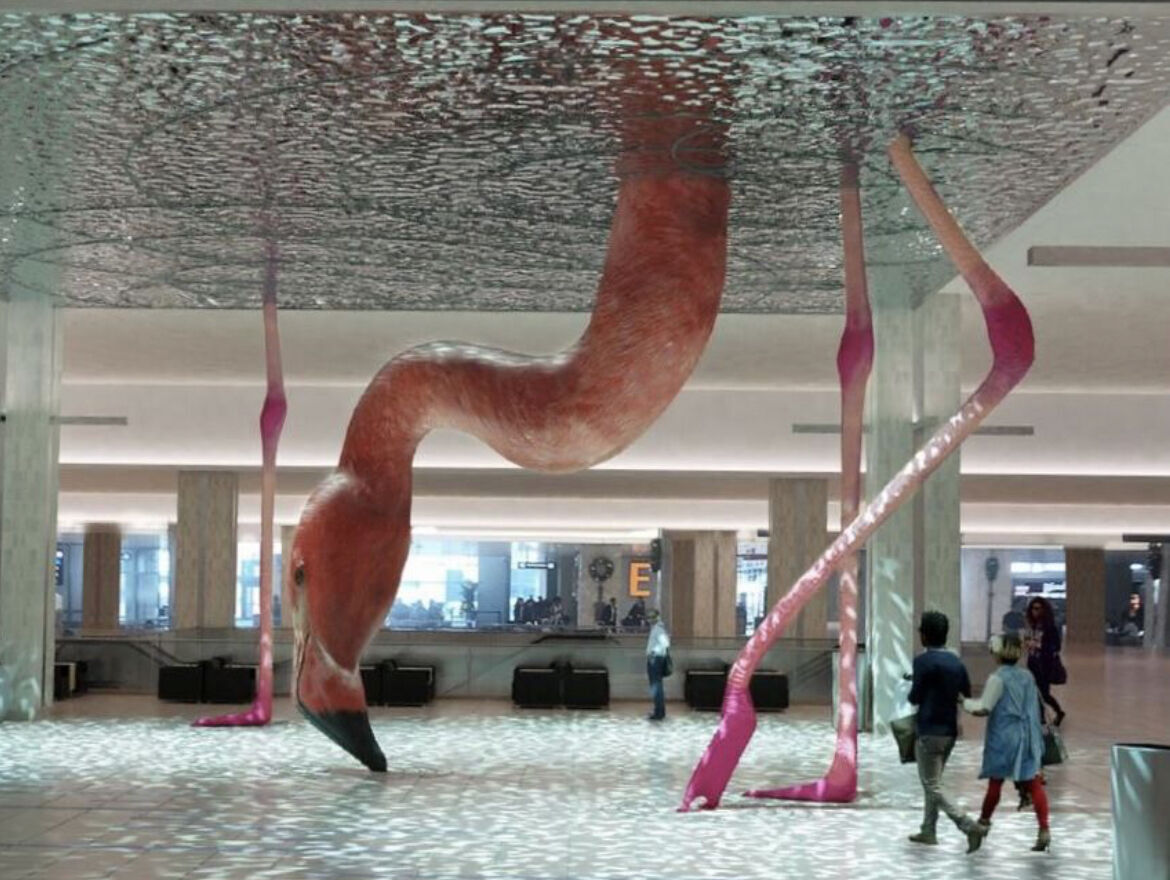
 

Feel free to review various creative selections from my website.

Quotes Anew

Well, it’s that time of the month again when I present a variety of quotes from different personalities from the worlds of creativity and advertising, among others. Take to heart but also take time to think. They’ll serve you well! Enjoy!


Creativity is no longer about grabbing attention or raising consumer awareness. Its goal is to remind consumers about what is fundamental and gratifying about a brand. — Peter A. Georgescu, member, Advertising Hall of Fame

Meetings are all too often the burial grounds of great ideas. — Keith Reinhard, member, Advertising Hall of Fame

Every area of trouble gives out a ray of hope, and the one unchangeable certainty is that nothing is certain or unchangeable. — John E. Kennedy, member, Advertising Hall of Fame

The creation of something new is not accomplished by the intellect but by the play instinct acting from inner necessity. The creative mind plays with the objects it loves. – Carl Jung

Most executives, many scientists, and almost all business school graduates believe that if you analyze data, this will give you new ideas. Unfortunately, this belief is totally wrong. The mind can only see what it is prepared to see. – Edward de Bono

Ideals are like stars; you will not succeed in touching them with your hands. But like the seafaring man on the desert of waters, you choose them as your guides, and following them you will reach your destiny. – Carl Schurz

The self you know, the you deep inside, is obscured by a stack of untold stories.
Janet Mock, writer, television host, director, producer and transgender rights activist

The person who knows HOW will always have a job. The person who knows WHY will always be his boss. – Alanis Morissette

To think is to practice brain chemistry. – Deepak Chopra

A life spent making mistakes is not only more honorable, but more useful than a life spent doing nothing. – George Bernard Shaw


Hopefully making a ruckus, one blog post at a time!

Be sure to check out my other blog, Joe’s Journey, for personal insights on life and its detours.

Contradictions and Creativity

There appear to be many factors that infiltrate the creative realm when dealing with problem solving. Obviously, the way we think is of paramount importance. Rarely do we think along the “straight and narrow” but usually have to navigate various problematic areas before arriving at some conclusion. Notice I didn’t say the “correct” or most viable solution.

Studying this trait in creative development, Art Markman, Ph.D., a cognitive scientist at the University of Texas whose research spans a range of topics in the way people think, drew upon a paper, referenced below, that deals with creativity research and how contradictions play a part in evolving a solution.

Research on creativity points out that most thinking follows a path of least resistance in which a situation reminds people of experiences related to that situation, and they determine what to do based on what emerges from memory. This use of memory is valuable, because it is what enables people to use their experience to guide their actions. After all, people should generally do what they did in the past in order to navigate a situation effectively and efficiently.

As a result, if a situation calls for creativity, it is important to block that path of least resistance in some way. A paper by Ella Miron-Spektor, Kyle Emich, Linda Argoe, and Wendy Smith in a 2022 issue of Organizational Behavior and Human Decision Processes suggests one way of blocking this path of least resistance in group creativity.

They suggest that there are two factors that can come together to promote creativity. The first is that teams need to embrace contradictions when generating creative ideas rather than choosing a trade-off between them. For example, when designing a product, there is often a trade-off between expense of the materials and design and the performance of the product.

A designer might opt to create a luxury product that is high in price and performance or an economy product that is low in price and performance. But a creative team that embraces contradictions might seek new materials that provide an improvement in performance while keeping prices low.

In order to do this work of embracing contradictions, though, teams must also be motivated to think carefully about the problem rather than just going with the first idea they think of. The researchers suggest that the ideal combination for creativity requires both an orientation to embrace contradictions and the motivation to think deeply about the problem.

They tested this possibility in two studies. Participants were placed into teams of three people and given a design problem to make a prototype for a creative but affordable car using parts from a building set. To simulate the expense of the car, each part had a price associated with it.

The researchers manipulated both people’s orientation to contradictions as well as their motivation to think about the problem. They influenced people’s orientation to contradictions through instructions. Some groups were encouraged to embrace the contradictions they saw rather than deny them. Other groups were just told to review different perspectives without suggesting that they embrace the contradictions.

They manipulated people’s motivation to think in different ways in different studies. In one study, participants given high motivation to think were told they would be interviewed about their team strategy after the study and that they would watch a video of their brainstorming and be asked to comment on it.

Knowing they would have to justify their responses was expected to create high motivation to think carefully. The control group was not told about any interviews. A second study manipulated motivation to think through instructions that either asked participants to review and understand opposing perspectives or simply said that successful teams look for compromise.

The creativity of ideas was assessed by independent raters who examined how novel and useful the ideas were. This is a standard way of evaluating the creativity of the ideas people generate. Consistently, the most creative ideas were generated by those groups who had been asked to embrace contradictions and had a high motivation to think about the ideas.

All of the other conditions had lower and roughly similar levels of creativity. One of the studies also had raters look at the group dynamic and assess whether all the group really elaborated their ideas by discussing them and explaining their usefulness. The groups that embraced contradictions and were motivated to think were more likely to elaborate their ideas than those in the other groups.

This research suggests that contradiction can be a fruitful source of creative ideas. Contradictions can be used as a motivation to seek a new way of resolving a conflict rather than just compromising. However, putting in the effort to really embrace a contradiction requires being motivated to think through ideas carefully rather than just reaching a quick compromise and moving on. Ultimately, creativity requires effort, and so teams that are asked to be creative need some incentive to want to do that work.

Agree? Disagree? No opinion? Regardless, drop a comment if you so choose and  let me know.

Key points

  • Most thought follows a path of least resistance and is not creative.
  • Embracing contradictions can be a fruitful path for creativity.
  • Teams embrace contradictions only when they are motivated to want to think deeply about a problem.

Thanks to these sources for supplying the information on which this blog post is based.

References

Miron-Spektor, E., Emich, K. J., Argote, L., & Smith, W. K. (2022). Conceiving opposites together: Cultivating paradoxical frames and epistemic motivation fosters team creativity. Organizational Behavior and Human Decision Processes, 171, 104-153.

Art Markman, Ph.D., is a cognitive scientist at the University of Texas whose research spans a range of topics in the way people think.


Hopefully making a ruckus, one blog post at a time!

Be sure to check out my other blog, Joe’s Journey, for a different kind of playground for creativity, innovation and inspiring stuff.

Images of Creativity

Images, works of art. Striking. Unsettling. Amazing. Jaw dropping. Awesome.

Creativity in its different forms.

Below are a few examples of spaces that accommodate large scale installations.


Going big in small spaces. Irrespective of the environments we design, there are always opportunities to create unexpected scale through architectural intervention. It’s a strong and powerful way for brands to transport an audience to another world.


Credits:

Artist Matthew Mazzotta has designed HOME at Tampa airport

AC Milan HQ by Fabio Novembre

Sophie’, 2009 in Germain Restaurant, Paris by Xavier Veilhan

‘Karma’ is by the Korean sculptor and installation artist DO HO SUH STUDIOS LLP  


Hopefully making a ruckus, one blog post at a time!

Be sure to check out my other blog, Joe’s Journey, for a different kind of playground for creativity, innovation and inspiring stuff.


Live long and prosper, Ukraine.

When Your Muse Strikes, Follow It.

I don’t know how Seth Godin does it. He writes and publishes a blog everyday, 365 days a year. I have trouble publishing my two blogs each WEEK!

Part of my problem is having something interesting to publish. That is every blogger’s nightmare. There have been times I write a blog the night before because I came up with an idea and just developed it.

When I’m in a pinch and nothing comes to mind, I try and change my focus. In a way, I let myself become distracted, not by merely doing something else but by switching creative gears and concentrating on another creative project.

It was where my muse wanted to take me, so I let it. What is a muse you might ask?

Muse, in Greco-Roman religion and mythology, any of a group of sister goddesses of obscure but ancient origin, the chief centre of whose cult was Mount Helicon in Boeotia, Greece. They were born in Pieria, at the foot of Mount Olympus.

They probably were originally the patron goddesses of poets (who in early times were also musicians, providing their own accompaniments), although later their range was extended to include all liberal arts and sciences—hence, their connection with such institutions as the Museum (Mouseion, seat of the Muses) at Alexandria, Egypt. There were nine Muses as early as Homer’s Odyssey, and Homer invokes either a Muse or the Muses collectively from time to time.

Virgil (centre) holding a scroll with a quotation from the Aeneid, with the epic Muse (left) and the tragic Muse (right), Roman mosaic, 2nd–3rd century ad. Courtesy of the Musée Le Bardo, Tunis

As the creative juices begin to flow and my “new” project begins to take shape, I begin to develop several ideas that would make for interesting blog posts. I did, however, make sure I finished what I had previously started so I could “celebrate” the accomplishment (a musical slide show).

Whether or not you follow your instincts when you have a calling to do so, is up to you. Your mind and imagination are wondrous tools in the creative process. Don’t ignore them.


Hopefully making a ruckus, one blog post at a time!

Be sure to check out my other blog, Joe’s Journey, for a different kind of playground for creativity, innovation and inspiring stuff.


Live Long and Prosper, Ukraine!