This was one of the more unusual campaigns I’ve read about recently. Definitely an attention getter.
The U.K.’s Channel 4 unveils a vomiting public fountain
The U.K. broadcaster is promoting its new drama “Dirty Business” with a provocative public installation on London’s South Bank titled “The Fountain of Filth.” Created by 4Creative in partnership with Glue Society and Biscuit Filmworks, the 10-meter-wide fountain features bronze-style statues of men, women and children appearing to vomit murky brown water, while a suited executive stands above them with pockets stuffed with cash, symbolizing the alleged human toll of Britain’s sewage scandal.
(Water companies routinely discharge raw sewage into rivers and coastal waters, leading to public outcry.) The activation directs visitors via QR code to firsthand accounts tied to the series, which aired over three consecutive nights. Over 100,000 people saw the installation live and the work reached millions being featured in The Times, The Guardian, The Independent, The Mirror, Time Out and Secret London.
(Channel 4) (Channel 4) (Channel 4)
Hopefully making a ruckus, one blog post at a time!
Be sure to check out my other blog,Joe’s Journey, for selected short stories and personal insights on life and its detours.
When we last saw our time traveler, Mr. Curtis, he had returned to the Majestic of the Sixties and was rummaging around the evil GM’s office when he came upon an oddly shaped locket. It had a ruby red crystal in the middle which was obviously designed to be pressed into some form of action. Upon closer examination, Mr. Curtis discovered that it was already set to activate and, not only that, but was currently set to emit a beacon of sorts.
Mr. Curtis felt a deep, unsettling tenseness in his gut when he realized the beacon was “live” and transmitting. Was this some sort of homing mechanism and to whom was this signal being sent? In the pit of his soul, he didn’t really want to know but he feared it was already too late.
This scenario raised all sorts of questions. For whomever the beacon was intended, were “they” already enroute to Earth? If so, for what reason and who was behind this?
Unfortunately, his police buddy-Time Traveler had been killed in the explosion in the Majestic Hotel lobby years ago. He thought under the circumstances he’d get cooperation in his new search.
In any event Mr. Curtis figured he needed to alert and apprise the Space Time Continuum Authority (STCA) and the Timeline Police.
So he left immediately for Mars, the galactic headquarters of the STCA. Once there he’d visit Admiral Moratoki, the fiesty ole bird from the Gamma Quadrant. Curtis had worked with the admiral before on the Saturn Caper and felt good about seeking his opinions on this Ruby locket mystery.
“Why Mr. Curtis, it’s nice to see you again,” welcomed the Admiral. “Please, take a seat and let’s compare notes, shall we?” he remarked.
“I take it you know why I’m here,” intoned Mr. Curtis.
“News travels fast in these parts,” replied Moratoki. “We’ve had our suspicions about the ruby locket for some time but we haven’t been able to gather much information on it, I’m afraid. I was hoping you might be able to fill us in a bit,” he said.
“Well, sir, all I know so far is what I found in the Majestic GM’s old office; an ornate locket with a red ruby in the center that appeared to have been activated at some previous point. I say activated since it appears the ruby itself is gently vibrating and glowing,” explained Mr. Curtis.
“That’s what I was afraid of,” grumbled Moratoki. As he gently took the locket from Curtis’ hand, he indicated he wanted to turn it over to the Seismic Lab for observation. At this point the last thing they wanted to do was to make things worse by accidentally tampering with the device and further triggering an action they may not be able to reverse.
“How far in the future do you think this thing has come from?” asked Curtis.
“Just based on preliminary data, we’d guess about 500 light years,” replied the admiral. “Wherever its origin, we think it’s from unchartered space. We need you to try and track it down,” Mr. Curtis.
“And how do you propose I do that?” inquired Curtis.
“Why, simple, ole chap. Just program that walking stick of yours for 500 light years into the future. Here, I’ll do it for ‘ya,” volunteered Moratoki.
“But, sir, I . . .,” blurted out Curtis. Then, poof, in an instant he was gone.
“Hmmm, 500 Light Years into the future,” Curtis grumbled. Where would he end up, he wondered. He was about to find out.
Time travel usually doesn’t take that long, at least that’s been Mr. Curtis’s experience. He somehow felt this time would be no different. He was right. The transport process completed and here he stood: right in the middle of a vast wasteland or desert-like environment. The air was breathable so oxygen was present.
Adobe Stock
As he stood there taking his surroundings all in, he viewed mountains in one direction and a city skyline in the other. Fortunately for him, the city did not appear that far away, maybe only about a quarter mile. He figured he could walk that. The temperature was comfortable, not hot, not cold.
As he neared the city limits, he was impressed with the architecture he saw. The buildings were quite modern and a variety of styles and shapes. Very attractive and distinctive.
Where would Curtis begin his search and who, exactly, was he looking for? He couldn’t approach the first person he saw that looked like a time traveler and ask, “Excuse me, but are you the resident time traveler on this planet?”
His first thought was to go to the city’s “grand hotel” and seek out the general manager and/or the local police detective. As he walked further down what appeared to be the Central Business District, he stopped and asked a passersby where the local hotel was.
Well, conveniently, it was located at the end of Main Street and was very “grand looking.” “You can’t miss it,” the passersby told Mr. Curtis.
And he was right. The closer Curtis got to the end of Main Street, he stopped cold. Just stood there, frozen in awe and disbelief.
He was standing at the front entrance of their grand hotel . . . The Majestic.
1930 Louisiana Postcard, Majestic Hotel, Lake Charles, LA
Is it a reproduction of the original from Lake Charles, LA in early 20th century or was it mysteriously transported to the future and here it is?
Mr. Curtis hoped to find some answers when inside this Majestic. Well, as soon as he entered the lobby he heard a voice saying “Welcome to the Majestic, Mr. Curtis!”
Then everything went dark.
————-
The room was quiet except for what sounded like a low murmur of voices. Then, “Mr. Curtis.” Silence. “Mr. Curtis,” again. “it’s alright, sir, you’re amongst friends,” said a voice.
Mr. Curtis, feeling groggy, eventually began to focus on the room and the voices just heard. Or at least he thought he heard them.
Then everything came into focus and what, or rather who, he saw first alarmed him. Shocked, however, might be a better descriptor.
“It can’t be,” he murmured. “You’re dead; you’ve been dead for several centuries! How the Hell . . .”
“All in good time, Mr. Curtis. All in good time,” said the “dead” guy’s voice.
“But, you’re the time traveler/time cop I met at the Majestic back in Lake Charles in the early sixties. I saw you die in the lobby explosion,” blurted out Mr. Curtis.
“That’s correct,” said the cop. “You see, I didn’t really die. Over time, my cells regenerated and, in effect, brought me back to life. I’ll explain it more to you over a bourbon. For now, though, we’ve got a problem on our hands,” he replied.
“Do you know about the red ruby pendant that’s acting like a homing device?” questioned Mr. Curtis. “It’s our guess that the signal was emanating from this location, on this planet in this section of unchartered space,” he explained.
“Yes, I’m very much aware of it,” answered the cop. “We’ve been trying to track it for years now but haven’t made much progress,” he pointed out.
‘Mr. Policeman’ continued, “We think the Koralye are behind this. They’re a small but deadly band of galactic pirates who not only time travel but also shape shift. Their sole mission seems to be mind-altering destruction wherever and however they please. As weird as it sounds, we believe this culture seems to be their DNA,” summed up the cop.
“So where does that leave us with the locket?,” asked Curtis. “I mean it seemed to have been activated and its homing device armed and sending signals somewhere, presumably here,” pointed out Curtis.
“By the way,” he interjected, “where the Hell are we, anyway?”
“We’re on an asteroid circling the third moon of Axios, a planet in an uncharted galaxy in what we think might be the Butella Nebula. We believe the Koralye are headquartered here and for sometime have kept the nebula invisible and undetectable to our sensors,” explained the cop.
“How is that even possible?,” Curtis asked, somewhat bewildered.
“We think the Koralye have harnessed some sort of galactic cloaking effect but we can’t be sure,” offered the cop.
“Well, that may be a question to be addressed another day,” stated Curtis. “Meanwhile, regarding the Ruby locket, is the current theory that the signals sent here from Earth are meant to guide this Koralye group to Earth for invasion?,” asked Curtis.
“That is our belief as of now,” stated the cop. “But not just invasion; total destruction of our planet,” he continued. “We think it’s a strategic move on their part so they would gain a key foothold within the Milky Way Galaxy. We can’t let that happen,” declared the cop.
“But how would the destruction of an entire planet serve in their best interests?,” asked Mr. Curtis.
“It’s simple,” said the cop. “Since they would have created a hole in space, you might say, they’d simply replace that hole with their asteroid. The one we’re standing in.”
Mr. Curtis, sounding rather dumbfounded, replied, “You mean they can actually move this asteroid into the place in space that Earth currently occupies? That’s incredible, if it’s true.”
“Incredible as it may seem, Mr. Curtis, we think it’s entirely possible,” reasoned the cop. “Given their technology behind the galactic cloaking phenomenon. We don’t even know to call it a device, or what. But to transform through space and time an entire planet would be the type of devious technology that this species probably is behind,” he continued.
“Well,” bemused Mr. Curtis, “taken into account what we already know, it seems like the Red Ruby locket can be disposed of, since they obviously know how to get to Earth. So the homing device is no longer needed. But after we stop them, seems like we’d need to destroy this asteroid, their headquarters. Then they would not be able to do anything. let alone literally move into Earth’s former space in the solar system,” Curtis conjectured.
“But if that’s the plan,” continued Curtis, “I alone don’t have the authority to give that authorization. That has to come from the… space time continuum authority,” he said.
The cop interjected, “Well, Mr. Curtis, I suggest you contact them immediately and advise them of our situation and ask for instructions.”
After several hours of discussion with the STCA and more introspection Mr. Curtis agreed with the Authority that the only option available was to destroy the asteroid housing the Koralye HQ. A not so minor problem was that they, too, were also on the asteroid.
How to destroy it and get out before complete obliteration took place was the challenge Curtis was going to have to address. Alas, the Authority was no help. What were a few lives lost in service to their planet Earth compared to the billions of lives potentially lost on Earth? In other words, Curtis and his colleagues were expendable.
So, when Curtis delivered the news to his group, the mood was understandably somber. And anxious. How soon could they enact a plan and could it be done without killing themselves in the process?
What about the Ruby pendant; could it be of use? Curtis thought of asking the STCA’s scientists and engineers who had been studying the pendant for clues as to what made it work and was it programmable.
If it can transport one over light years could it also work as a remote detonation device? Or, for that matter, could Curtis’ own walking stick with its emerald jeweled knob be used in connection with the pendant to bring about destruction?
The Authority’s experts would probably have some options. Mr. Curtis decided he’d immediately travel back in time to inquire as to what they’d found out.
Since it wouldn’t take Mr. Curtis that long to travel the 500 light years back in time, he thought he would first check in with Admiral Moratoki and compare notes as to what they knew before checking in with the “tech folks.”
“Not much, Mr. Curtis,” replied the admiral when asked about progress. “Oh, we have an idea or two about how that Ruby pendant works but it’s based on futuristic science and technology; we just don’t have that knowledge yet.”
“Well, since this Authority designed my walking stick, do we know if it’s plausible for it to connect with or talk to the Ruby pendant”?, asked Curtis.
“I’ve asked our chief technologist, Mr. Craig, to join us here for direct feedback,” stated the admiral.
“Ah, Mr. Craig, c’mon in. Right on time”, said the admiral. “This is Mr. Curtis whom I’m sure you remember. What’s the latest on the Ruby pendant? Do we know any more of its secrets”? the admiral inquired.
“Well, sort of,” replied Craig. “It’s composed of several chemical agents, most of which are unknown to us except one: hydrochlorabenzaprine; yeah, I know, it’s a mouthful! It’s commonly referred to as Hyzaprine. The Vulcans were using it back in the 24th Century in certain mining operations. And, yes, it does have destructive powers for good, as long as it’s under control. Out of control it’s extremely volatile,” explained Craig.
“How volatile?,” inquired the admiral.
“Extremely!,” answered Craig. “When combined with Veritol, an explosive, one can have a very impactful and lethal weapon,” stated Craig.
“Could it be developed for a cataclysmic explosion or destruction?,” asked the admiral, “like an entire asteroid?”
“Indirectly, sir,” Craig responded. “The combination of these chemicals would work to disrupt the asteroid’s inner core and thereby creating massive seismic shifts resulting in earthquakes and internal hemorrhages of that core. In this respect, yes, the asteroid could be obliterated; it would, in effect, blow itself up,” concluded Craig.
“How can the pendant be triggered to do this and how much time before all Hell would break loose after it’s triggered?, asked the admiral.
“Once the Ruby is pressed it would only be a matter of seconds before the chain reactions occur. And, sir, someone would have to press the Ruby; it can’t be remote controlled,” stated Craig.
Mr. Curtis interjected “Admiral, I can do that. I can certainly press the Ruby and immediately press the emerald on my walking stick to travel in time away from there.”
“But, what if something goes wrong? You’d have to be in position with Ruby in hand and then “beam” out into time and space as soon as you press the Ruby,” alerted the admiral.
“Yes, I know,” replied Curtis. “Considering what’s at stake, I’m the logical one to do this and this is the only way.”
“I sure hope you know what you’re doing, Mr. Curtis,” Morataki intoned. “Mr. Craig, how soon can you revamp the pendant to do what we need done?” he asked.
“Give me a few hours, Admiral, and we’ll be ready,” confirmed Craig.
“Proceed, Mr. Craig,” the admiral instructed.
“As for you, Mr. Curtis, sit down with me, have a drink or two and let’s chat. I want to hear how you plan to pull this off,” the admiral reassuredly stated.
And waited and drank and chatted for several hours they did until the pendant was ready. Mr. Curtis would leave this timeline at first light tomorrow. Hopefully, if all went well, he would end up saving Earth, no small feat even in the 28th Century.
**********
First light: Mr. Curtis, standing there resplendent in his crisp, all white three-piece suit and white fedora is clutching his walking stick somewhat nervously rubbing the emerald on top.
He admits to himself that he’s uncharacteristically nervous about this mission. He’s never really been in a position to “single handedly” save the world or in this case Earth.
The emerald is pushed and Mr. Curtis feels the transition of going forward in time. It’s a good thing that this voyage won’t take but a few seconds since he won’t have long at all to think anymore about it.
Before he knew it, Curtis rematerializes in a secluded area he had not been before. No problem, he thought; he could remain undetected for a bit longer than he’d anticipated.
Where could he sneak away to for the most devastating vantage point to press the Ruby? He knew from previous excursions about where “their” HQ is located. By his estimate he wasn’t that far away. Now to get there unnoticed.
Wait a second, he thought. Although seldom used he recalled a setting on the area surrounding the emerald that could program site to site transport. He could set it to beam him a few miles directly to the HQ site, hopefully undetected.
Curtis then set the emerald to beam him to an area that his sensor told him was uninhabited. Perfect, he thought. One press of the emerald and, poof, he disappeared. Next thing he knew he was by himself outside some shelter at the heart of the Koralye HQ.
All he had to do now was press the Ruby on the pendant and “all Hell” would begin. Then he had to get out of there immediately.
All of a sudden he felt trembling from the ground below; the destruction had begun. Now press the emerald on your walking stick, he thought to himself, and get the Hell out of this timeline.
Just as he positioned his walking stick so that he could access the emerald, the ground beneath his feet shook so fiercely he lost his balance and fell to the ground. His walking stick landed a few feet away but was still intact.
He quickly gathered himself and reached out for his cane when he suddenly felt something blocking his way. Someone was standing on the cane.
“Well, well what do we have here,” said a voice. “You looking for me? Ha, seems you found me or rather I found you, Mr. Curtis,” the voice continued.
“I’m Nicholas Basba, the head of the Koralye. What you’re trying to do here won’t work. Our technology is way too advanced for your “modifications “ so pressing the Ruby won’t do a thing,” Basba proudly stated.
Meanwhile, nobody seemed to notice that the ground was continuing to break up and a large swath of land was quickly opening up beneath where Basba stood. He was instantly knocked off balance and swallowed up in the resulting sink hole formed by the ground movement.
Just as Curtis had managed to slightly stand to reach for his cane, he, too, began to slip downward into the sink hole. But, as he was slipping, he held onto the edge of the hole and, while struggling, pulled himself up and out of the cave-in.
He reached down to grab his cane and started to press his emerald to activate the time shift. In a moment he would vanish, leaving this time and world far behind.
“Here we go . . .3 .2 .1,” murmured Curtis. “Press the emerald and off we go”. . . Then nothing. No action whatsoever.
Okay, don’t panic he thought to himself. He tried again, even while all around him rocks and debris were falling.
“3 . . .2 . . .1 . . .press emerald,” he almost shouted and . . . Nothing. “DAMN,” he exclaimed. “What’s wrong? It’s never failed before. Must be these surroundings,” he thought.
Curtis then quickly stammered to an opening at the edge of the sheltered area and, without missing a stride, pushed the emerald once more and suddenly in a flash he was gone. Completely vanished.
Desolation was taking place behind our time traveler. An entire asteroid was being obliterated and an evil empire was being phased out of existence.
Epilogue
Back at STCA HQ, 500 light years in the past, Admiral Moratoki was both pleased and relieved. Seems a sensor array from an affiliated solar system picked up a tremendous explosion from a planetary system light years away. It could only have come from a sun going nova or a similar mass destruction. Perhaps an asteroid explosion.
In any event Curtis was exhausted but pleased the mission was a success. Now, what’s next? Curtis was in no hurry to find out.
The only thing of importance on his mind was to travel back to the early sixties in South Louisiana, Lake Charles specifically, to visit the old Majestic Hotel and relax in their comfortable lobby and enjoy a delicious, cool Mint Julip. After all, he never knew who he might run into, again.
Wondering that, Mr. Curtis rose to stand and bent over to pick up his walking stick. Then he noticed it: The emerald had been replaced with the red ruby. And it was vibrating! What the . . . ?
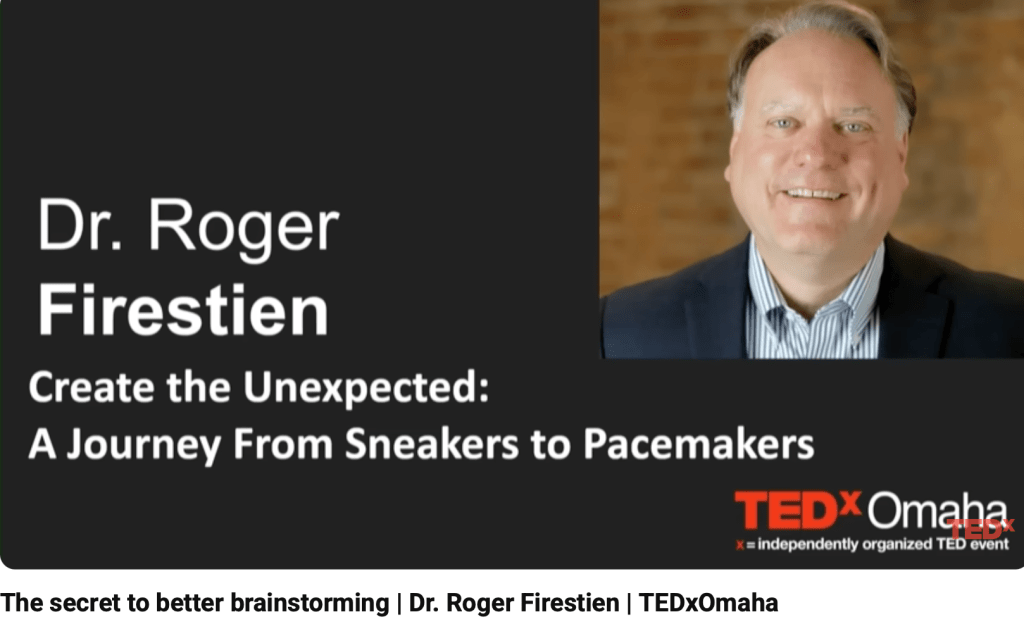
I’ve had the privilege of listening to Dr. Firestien on several occasions when attending a webinar from the Center for Applied Imagination at Buffalo State in New York. He’s quite interesting and very personable.
What do a kingfisher, a hazard light and a waffle iron have in common? A creativity technique called Forced Connections, which leads to break through innovations. Brainstorming and coming up with new ideas is easy, we do it every day. Or so we think. The truth is we barely scratch the surface with our ”more of the same ideas”. We fall extremely short with quantity and quality of really good ideas. We miss the mark on really good innovations, because “More of the Same” does not break into big time innovation. Time to shift ideation gears with Dr. Roger Firestien and find out how to use a really simple ideation tool called ‘forced connections’. Not a new technique and certainly not a secret to those who work in the field of creativity, marketing or the business of creating ‘new and different’. However, new to most of us. Game changer. Creativity changer. Innovation changer.
Dr. Firestien is an associate professor and senior faculty member at the Center for Applied Imagination at SUNY Buffalo State and President of Innovation Resources, Inc. He is the author of six books, including Leading on the Creative Edge and Why didn’t I think of that? His expert views on creativity have been reported in Fast Company, Forbes, Investor’s Business Daily and The New York Times. When Roger is not traveling, he lives in Buffalo, New York, and regularly works cattle on the SK Hereford Ranch near Medina, New York This talk was given at a TEDx event using the TED conference format but independently organized by a local community.
Hopefully making a ruckus, one blog post at a time!
Be sure to check out my other blog,Joe’s Journey, for selected short stories and personal insights on life and its detours.
Late last year ADAge’s Tim Rudd penned an article about the alleged death of creativity. Well, some argue that its death may be premature. The campaign described below illustrates that point of view. As Tim reports . . .
Creativity may not be six feet under, but D&AD (Design & Art Direction) is still here to poke it with a stick.
The global creativity nonprofit is kicking off its 2026 award season with a global campaign from Uncommon Creative Studio that pushes the industry to stop hovering over the “think” button and start hitting “make.” Its centerpiece is a manifesto that challenges the too-common habit of watching ideas drift by rather than shaping them into something tangible. The work signals a shift toward more hands-on creative energy at a moment when the industry seems increasingly cautious.
The campaign leans on stark visuals and a single provocative question: Is creativity alive or dead? It stretches across D&AD’s awards, learning initiatives and talent effort, inviting practitioners to respond through action instead of commentary. The rollout also introduces a refreshed identity for the 2026 awards, turning the manifesto into a design brief for the entire program.
(D&AD) A massive Times Square billboard displays a bold message about misjudging bad ads as the death of creativity, illuminated above the city at night.
Alongside the identity comes the reveal of the 2026 jury presidents, a slate of creative leaders drawn from a mix of global brands and agencies such as Dentsu Tokyo, Airbnb, FCB Global, 72andSunny, Havas Health & You and others. Their remit is to steer the judging with the manifesto’s call for experimentation and decisiveness in mind. D&AD positions the jury presidents as creative figures who already operate with a bias toward making.
“Creativity doesn’t die, it drifts. It gets buried under deadlines, data and fear of taking risks,” said Lisa Smith, D&AD president and Uncommon’s global chief design officer. “This manifesto is a reminder to the industry that ideas are only as powerful as the people brave enough to make them real. As creative leaders, we have a responsibility to protect that spirit—to keep making, experimenting and proving that bold, human ideas still matter. D&AD exists to champion that pulse. To show that creativity isn’t just alive—it’s vital.”
(D&AD) A storefront covered in black-and-white posters displays bold gothic text declaring “Creativity is Dead” and “Creativity is Alive” alongside graphic logos.
(D&AD) A row of black-and-white street posters on a graffitied wall presents stark slogans about creativity and work beside the D&AD logo.
This year’s D&AD awards also introduce new categories meant to reflect the ways ideas move through culture. Brand Transformation spotlights work that blends strategic thinking with the craft of execution. Cultural Influence highlights projects that shape conversation or find a place in the wider cultural bloodstream. Sports Entertainment covers creative output tied to sport from campaigns to content to fan engagement.
“Creativity today is more decentralized than ever, coming from makers, creators, in-house teams and a new wave of independent studios. Our role is to ensure all these voices are equipped and inspired to keep pushing creative excellence forward,” said Donal Keenan, D&AD’s chief operating officer. “Yet in this abundance, creativity risks becoming diluted. Brands are finding it harder than ever to cut through and truly engage audiences, which is exactly why this provocation is needed.”
D&AD is also launching an editorial hub that digs into the same big question at the heart of the campaign. The platform collects commentary from designers and advertisers who are looking at how creativity has changed in a landscape of nonstop feeds and constant distraction.
(D&AD) A minimalist white typographic poster lays out a manifesto proclaiming “Creativity is Dead” before urging readers to revive it with intention.
As long as there are people who continue to push boundaries, creators who are never satisfied, folks who are always curious and a consuming public who always want refreshing and innovative ideas, creativity will never die. It will always be alive and thriving.
Hopefully making a ruckus, one blog post at a time!
Be sure to check out my other blog,Joe’s Journey, for selected short stories and personal insights on life and its detours.
I came across this article last month in one of the industry trade pubs and thought it quite relevant, not to mention interesting. The author, Wayne Best, chief creative officer of VML New York, cites one of the pioneers of creativity in advertising, one Bill Bernbach, as a major force during the sixties. The industry during that time is totally different than it is today. Mr. Best offers some viable suggestions as to how to resurrect, if you will, that creative zest so pronounced during Bernbach’s time.
I’m in total agreement with what Mr. Best suggests. I’ve been thinking the same for years and used to speak on these topics when on the AAF speakers’ junket. Today, with the advent of AI, they have been much more difficult to be realized and put into practice.
Mr. Best writes . . . I have no personal connection to DDB. I have never worked there and have very little knowledge of the culture at the time its name was “retired.” I do, however, have a great deal of respect for Bill Bernbach. I still use quotes he uttered from before I was alive. He ushered in the power of creativity in advertising.
That led me to wonder if his name disappearing (well, the B in DDB) was the end of the era of creativity. I have decided the answer is no.
Advertising executive, William Bernbach at press conference discussing his stance against cigarette advertising. Original caption: NO SMOKING—William Bernbach, newly named “The man who contributed most to advertising in 1963,” said Thursday that advertising cigarettes amounts to “just selling sickness.” He voiced several other strong opinions on advertising at a press conference here, but denied being a crusader. Photo: Jack Carrick, Los Angeles Times
I will admit that I miss the days when smart, insightful advertising was prolific and opening an awards book was like unwrapping a gift. That’s not to say great work isn’t still happening, but lately it feels like the priorities have been put on data, systems and efficiency. And learning how to best use AI.
These are good things. They are changing advertising for the better. Yes, some jobs will change as a result. For instance, it’s a hard time to be a storyboard artist. But the best storyboard artists have visual taste and can tell a good story. Those skills are still needed; it’s just that the tools that get you there have changed.
So, embrace change and adapt.
Resistance is futile.
That last line is not meant to be eerie. It’s just true. The sooner you acknowledge it, the further you’ll go. After all, the path to great work is to kill good work. Progress requires you to kill your darlings so you’re free to think in less expected ways.
Yes, media and production efficiencies can optimize our budgets. Customization and transcreation will continue to improve. But there is still an itch that all of that can’t scratch. And that is love.
Great brands have a place in our hearts, and that love still needs to be earned. It starts with a great product, but that’s just the beginning. Steve Jobs didn’t just produce great products; he also found a way to connect with people on a very human level. “1984” isn’t just an ad for a computer, it’s a celebration of individuality and a middle finger to corporations. “Here’s to the Crazy Ones” is about honoring the misfits who are daring enough to think they can change the world. The brand has a distinct point of view.
Data doesn’t do that. And AI aggregates the past rather than finding the unexpected. It doesn’t have the soft skills. It doesn’t have empathy.
That said, I don’t think our quest for data or AI are to blame for our current creative lull.
We’ve made it hard on ourselves to do breakthrough work.
We’ve added layers and layers of decision-makers. We’ve tried to be all things to all people. We’ve become afraid to make hard decisions and take chances, and that’s dangerous, because when you don’t make hard decisions, you sit in the middle. And the world ignores the middle, no matter the media budget.
I’m sure there are things I’m leaving out, but here are five things I know absolutely get in the way of building a great brand. None of them have to do with AI:
1. There are too many people involved in the decision-making. While it’s important to listen to opinions, a camel is a horse designed by a committee. Listening to people is fine, but somebody needs to be the decider, or you will build that camel.
2. If you try to please everybody, you will excite nobody. To be a great brand, you need to have a distinct POV. This means there are a lot of things you need to not say. Deciding what not to say is harder than deciding what to say, because different stakeholders care about different things.
3. Building a brand the right way takes time. We are always in a rush today, and the speed of AI and digital production has us moving faster than ever. Technology helps with the daily work, but to crack the bigger brand work, you need to be thoughtful and deliberate. Impatience is not a virtue.
4. Write shorter briefs. It’s hard. Writing long-winded briefs that everyone can read and find the “thing” they care about covered in the many pages is easy. Finding that sharp, pointed thing you can own in a sentence is hard. But until it gets sharp at the brief stage, you’ll be wasting expensive creative time. Make the hard decisions on what matters, and what doesn’t matter, at the brief stage. Or it will create endless swirl.
5. Never forget the problem you’re actually trying to solve. It’s easy for Walmart to promote deals on its website, but the bigger challenge is making consumers feel good when their neighbors see that Walmart box on their porch. It’s not an accident Walmart started using popular music and celebrities and buying high-profile media. When you keep the bigger goal in mind, it makes daily decisions easier.
I’m still sad when I see the greatest names in advertising dropped into a six-foot hole. But hey, those people were already dead. It’s what we learn from them that matters. If Bill Bernbach were alive today, he wouldn’t be moaning about the death of the print ad, he’d be figuring out how to build a real connection between a brand and the humans who need it given our current environment.
I am bullish on 2026.
As we learn to work with AI, it gets less scary and more helpful. The weirdness of the pandemic is wearing off. Mergers have become less of a shock and more of a way of working. And the best minds I know are anxious to be more creative again. They’re excited to do unexpected and wonderful things.
Let’s roll up our sleeves and get to work.
Hopefully making a ruckus, one blog post at a time!
Be sure to check out my other blog, Joe’s Journey, for selected short stories and personal insights on life and its detours.
I’m on the email list of Buffalo State University’s Center for Applied Imagination and so I receive notices from time to time about upcoming lectures and seminars and the like. The publication cited below is from one of their recent notices.
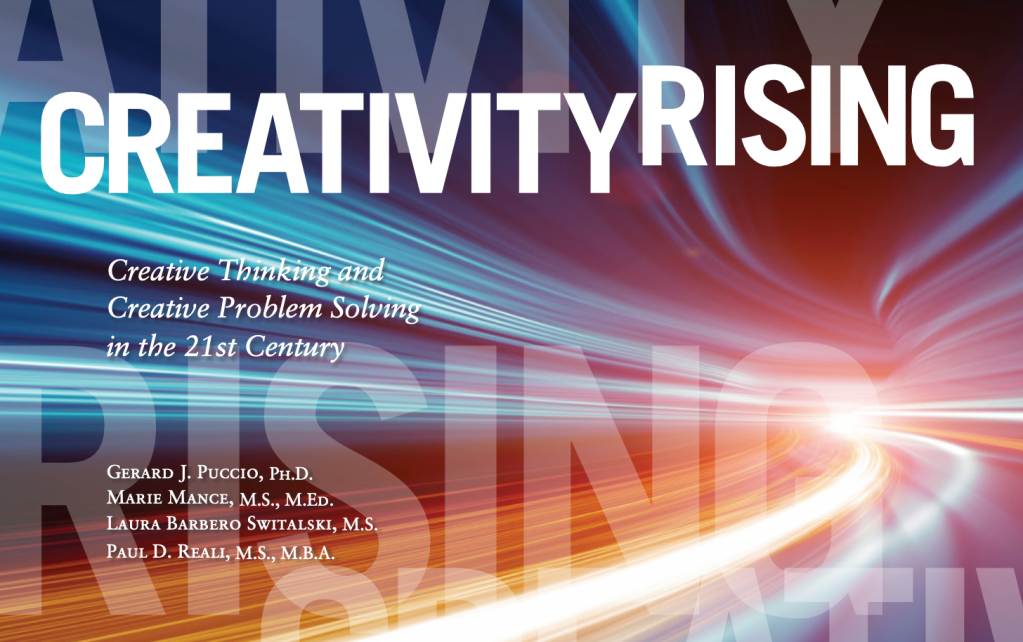
From the authors . . . The need for creativity has never been greater. In fact, we chose the title, “Creativity Rising: Creative Thinking and Creative Problem Solving in the 21st Century,” to reflect this belief. If we are to live healthy, productive lives in this century we must develop the mind-set and the skill set for effectively responding to and initiating change. Creativity Rising is both a why-to and how-to guide to help you create your own future. In this book we: • explore the nature of creativity • debunk common myths about creativity • describe the rapid rise of change in the 21st century • outline the time-tested Creative Problem Solving process, an approach to on-demand creativity.
Hopefully making a ruckus, one blog post at a time!
Be sure to check out my other blog,Joe’s Journey, for selected short stories and personal insights on life and its detours.
Fueling Creativity in Education bridges the gap between the science of creativity and classroom practice, with a focus on both creative teaching and teaching creativity. Since launching during the pandemic, we’ve interviewed over 100 leading researchers, educators, and administrators.
Hopefully making a ruckus, one blog post at a time!
Be sure to check out my other blog,Joe’s Journey, for selected short stories and personal insights on life and its detours.
Canadian graphic designer Jean-Pierre Lacroix explains how creative agencies and brands can make better use of generative AI by using it to expand team creativity.
As in the past I came across this article on the Web and thought it both interesting and inspiring. Given our challenging times, I think you will too. Enjoy!
The concept of generative AI technology creating content from user prompts using advanced algorithms. Adobe Stock
Every brand and agency is trying to tap into the promise of generative AI. So far, the results don’t always meet expectations. Is that so surprising? AI is brand new technology that no one fully understands, including its creators. Right now, we’re in an era that calls for experimentation. Results will come, but maybe not how we imagine. In the meantime, we must adopt a human-centered approach to AI, enabling creative teams to use AI as a platform for thinking differently and learning.
So far, the best AI brand activations aren’t AI-generated ads or design. Successful examples of creatives using AI have a distinctly human perspective. For example, Heinz created an ad showing the audience what happens when they prompt AI to create images of ketchup: it reproduces hundreds of variations of the iconic Heinz bottle design. No matter how they try, according to the ad, they can’t get AI to drop the Heinz label because it’s synonymous with ketchup.
Although the ad shows AI-generated imagery, Heinz is cleverly using AI to make a point about their brand rather than to generate and execute a creative idea.
On the other hand, when companies try to generate creative using AI, even the best work requires enormous human effort and it doesn’t always come off well with consumers. That may change, but today, AI-generated material just doesn’t look and feel right. The fear that AI will take jobs away from humans causes concern in some scenarios, for example with the use of AI-generated models.
How should creative teams be using AI today? It’s about testing and learning to develop skills and confidence. No one can say for sure how AI models will evolve but being prepared means teams need to start experimenting now.
Key considerations for AI experimentation
Create a cross-functional team assigned to explore AI tools relevant to their roles. Tracking and testing new models, staying informed about potential legal concerns and gathering case studies will ensure you have a strong foundational knowledge to guide decision-making.
Establish guidelines for AI use at your company. You’ll need someone who’s on top of legal matters, keeping in mind that various legislation is pending in many regions. You also need to understand how your consumers or clients perceive AI. Although there are some who hate AI no matter the circumstances, for most people, context matters. Conduct research with your stakeholders to make sure your intended uses align with their preferences. Provide your team with an approved list of licensed tools to use and establish a process for testing new ones.
Try, fail, try again. At our company, we created an AI self-assessment platform that allows brands to evaluate their design against a competitor through the lens of our branding philosophy. This was a test-and-learn scenario that resulted in numerous unsatisfactory iterations, ultimately leading to a beta model that runs well, albeit with some caveats. (You can test it for yourself.) As we continue to improve the tool, our team continues to learn. Don’t expect perfection because you won’t get it. Building confidence, knowledge and skills should be the goal.
Be transparent. If you work with clients, gauge their comfort level with AI and give them the option to opt out if you intend to make it part of your workflow. Something as simple as AI notetaking may run counter to privacy policies, for example.
Protect your privacy and the privacy of clients. Before using any AI platform, ensure your IT team reviews their data policies. This brings us back to establishing guidelines. Ensure that everyone at your company is aware of which platforms they’re permitted to use, and that the appropriate people have licensed accounts where data will be kept confidential.
Better, faster creative? Not yet
The hype around AI may lead some to think creative work can be completed faster and at a lower cost. At this stage, efficiency-finding with AI is only possible if you significantly lower your standards. Most creative agencies and brands would likely agree that AI can be useful in ideation but isn’t as helpful in execution.
For example, we’ve found that even when given clear design guidelines, it’s very difficult for AI to create final art for packaging that works in real life. We’ve found it useful for editing images, brainstorming a hundred ways to depict a watermelon and general ideation. But so far, human creatives are still significantly better at everything else.
AI does a decent job writing emails and copy for social media, but that too is bumping up against some limitations. Consumers are starting to recognize the tone of AI-generated copy and they find it grating.
AI is best suited to help structure content, create headlines and keywords and clean up copy. Marketers shouldn’t let their writing skills decline! AI can decipher what makes a clickable headline, but it doesn’t have any fresh ideas – it’s a solid Beatles cover band, but it’s no Lennon or McCartney.
Where we’ve found it most useful is with coding, where it helps us do more in a shorter time frame. However, teams still need to be proficient enough to know how to prompt for the right code and how to correct mistakes.
The human connection gap
One of the most common consumer-facing uses of AI is chatbots. They give us insight into the human connection gap that can occur with AI. Although serviceable and polite, AI chatbots annoy people. We know they’re not human and this changes the way we treat them.
Consider the Taco Bell drive-through incidentwhere a customer derailed an AI chatbot by ordering thousands of glasses of water. In cities with fleets of self-driving cars, they often get stuck and cause traffic jams because drivers won’t let them in the way they would a human driver.
Then there are the many incidents of people assaulting robots, especially humanoids. As much as we love a fun tool to play with, creatives can’t ignore the dehumanizing potential of AI.
How do we deal with this? The answer isn’t ignoring AI but learning how to use it to support human ideas and interactions. If what the utopia tech companies are selling is achievable, it will be because users engage with it thoughtfully. Creative teams are in a great position to lead this kind of conscientious, intelligent use of AI.
Jean-Pierre Lacroix is president of Shikatani Lacroix Design, a global branding firm specializing in transforming customer experiences for consumer packaged goods companies, financial institutions and retailers. He is a member of the Registered Graphic Designers of Ontario, and has sat on the board of the Society of Environmental Graphic Designers, Packaging Association of Canada and the Association of Professional Futurists.
Hopefully making a ruckus, one blog post at a time!
Be sure to check out my other blog, Joe’s Journey, for selected short stories and personal insights on life and its detours.
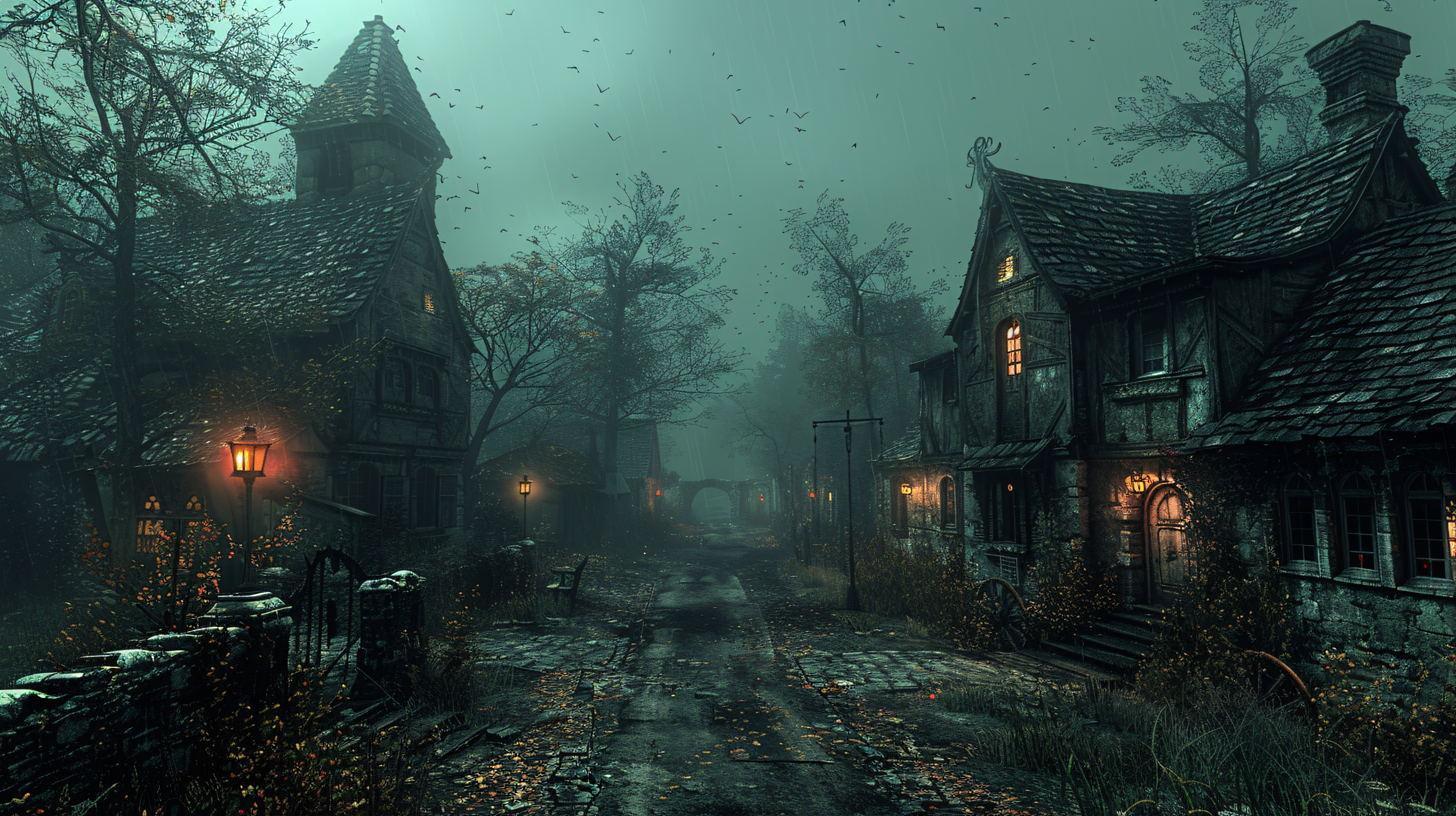
Spooky entrance to haunted neighborhood by the bay. Adobe Stock
It seemed tranquil enough at first sight. It also appeared quite spooky. The residents didn’t seem to mind, after all they were used to it. It was the outsider who would occasionally visit their neighborhood by the sea. It was the outsider who got queasy when he set foot in the neighborhood. It was the outsider who wouldn’t return from whence he came. It could be the outsider who might become a permanent resident if he didn’t end up dead.
You see, the residents were very selective as to whom they invited into their little neighborhood by the bay. It didn’t matter to them that it was haunted. That just added a bit of allure to the area. No, it wasn’t the Twilight Zone. It was just a little haunted neighborhood by the bay.
By what or from whom is it haunted you might ask? There have been rumors scattered around for years but nobody knows for sure. Seems like around the late 19th Century, a shipwreck happened upon the shores of what would become this little neighborhood.
The wreck was the result of a horrendous storm that destroyed the ship and caused the crew to abandon her. As the storm ravaged on, some of the crew was lost at sea with only a handful of them surviving and eventually making it to shore.
Once there, the remaining crew found refuge in an old abandoned shack from where they would ride out the storm.
As the story/rumor goes, the fledgling crew mates did what they could to survive but kept a low profile in the neighborhood. All appeared to be going okay for the neighborhood until about one year later.
That was the year, in fact the exact day, a year later when another massive storm hit the area and completely wiped out many in this shoreline populace. Including the house in which lived the crew mates. The house still stood but the crew was gone.
No signs of anyone, anywhere. No belongings, no nothing. They just vanished.
THREE YEARS LATER
One night as a couple of the residents were out for a stroll, one noticed a distant light coming from one of the houses on the edge of the neighborhood. As they got closer they discovered the light was emanating from the long abandoned house that was vacated after the bad storm several years prior. But how could that be; no one had been living there since the previous and only occupants from the ship wreck and they had completely vanished after the storm hit. They were all thought dead.
Through a bit of trepidation and curiosity, the couple decided to investigate and moved closer to the house. Because the house had been abandoned after the storm and not been kept up, it was in a state of disrepair and looked dilapidated. Nevertheless, the couple nervously managed to walk up to the front steps near the entrance. Then they froze as if they had encountered an invisible wall. They couldn’t move. The only thing they felt was cold, extreme cold as if from a meat storage locker.
Although they stood there frozen in place, they could still see their surroundings but it was as if time itself had stopped. That’s when they saw it. Slowly but ever so gradually the front door began to open. As they stood there they felt the expectation of finally seeing someone answering the door, albeit under very strange circumstances. But as the door creaked open, they saw no one. An empty space in the entrance way.
What to make of this? They didn’t know what to think. Or do. How long would they remain frozen in place?
It seemed like it was just a blink, a millisecond in time before they found themselves inside the house standing unfrozen in the entranceway. Though they could move, they did not. They just stared at one another as if to silently ask “what do we do now?”. They were in total darkness except for a tiny light at the end of the hallway. This couldn’t be the light they saw from outside. That one, they surmised, must have come from the upstairs. But how? Were these lamps, candles set ablaze. There had been no electricity turned on since the storm hit and as far as they knew, the house was abandoned.
Or was it? How were the lights on? Even if the light source was a candle, it would have to be lit. Like it or not, further investigation was in order.
So the couple slowly made their way toward the flickering light at the end of the hall and just as they approached it they suddenly felt immense cold, as if they had walked into a freezer. It was just like they’d experienced when they reached the front door.
Simultaneously at that point the light flickered out and they were standing in complete darkness. But for a moment. There, just a few steps away and up what appeared to be a staircase, flickered another light as if beckoning them up the staircase. Interestingly the cold seemed to immediately dissipate when they began walking upstairs.
But as soon as they approached the light it moved. It was as if someone or something was leading them somewhere and holding the light as they traversed the curving, spiral staircase. Even in this twilight setting they could see no one. The light seemed to be moving on its own, always staying just slightly ahead of the couple.
When they finally arrived at the top of the stairs, they discovered open air, no rooms or walls, save for one partly dilapidated door that lead to an empty, what was left of a bedroom.
The light was still flickering but just barely, given the slight evening breeze from the adjoining bay.
The couple just stood there, frozen, afraid to step anywhere for fear of the timbers giving way. It was at this moment that they felt an uncontrollable sense of movement like they were being pushed toward the large opening on the bay side of the house.
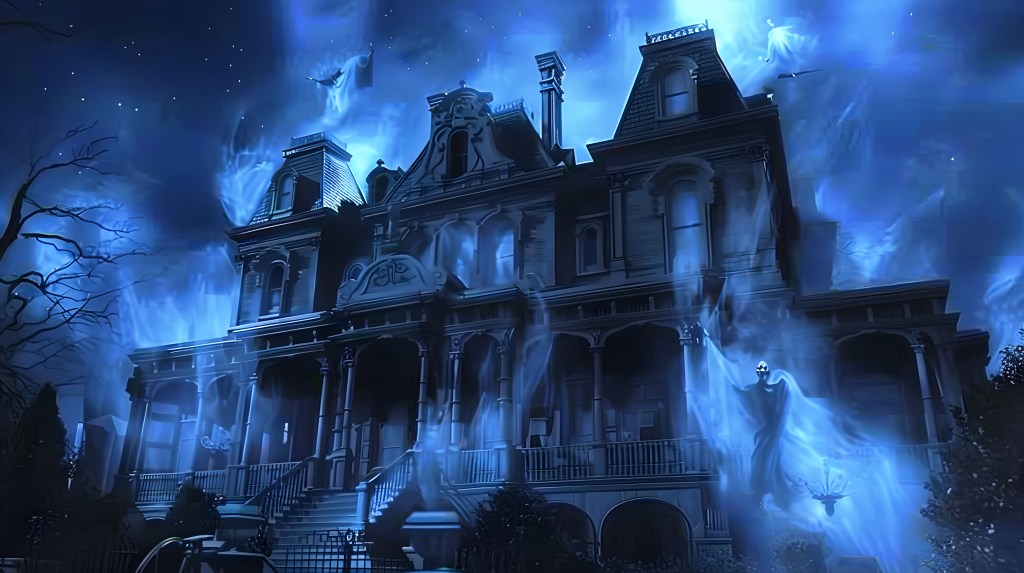
Haunted castle at night, with glowing ghostly figures drifting through the misty air outside. Adobe Stock
There was nothing here but open air and a drop of about 300 feet down to the rocks below. No one could survive that fall. But why were they standing there now, right on the precipice of falling to their death?
They were once again standing there in total darkness. No sound except for the uneasy beating of their hearts. Their pulse raced, blood pressure climbing and anxiety rising to new heights.
Could they have outstayed their uninvited welcome? Did someone want them dead? Who the hell was behind these flickering lights? Was this a convoluted prank or sick joke? In any event they were more than ready to take their leave.
Because of their unsure footing they slowly started backing away from the open air portion of the storm-torn wall and began to turn around and walk out.
That’s when they heard it; a scraggly old voice that sounded more like a whisper.
“Where are you going? You can’t leave now, the party’s just begun. Besides you just got here,” voiced something quite invisible to their eyes. As they were still trying to adjust their eyesight in the dark, a candlelight appeared right in front of them, seemingly floating in mid-air.
There was no one present. This time, though, instead of a rush of very cold air they felt only a slight chill. As if a door had simply opened to the night air.
“Who’s there?” blurted out the man. No one answered.“ I said, ‘who’s there? Show yourself or at least speak and answer me.”
Silence.
Finally, the man turned to his lady friend and urged, “come on, let’s get the hell out of here.”
They began to walk but the flickering light stayed just in front of them, floating in mid-air. Whenever they turned, it turned. Always in front.
When the couple reached out in front of them to see if they would feel anything, all they felt was air; nothing.
“I don’t know who or what you are but we’re leaving; we’ve had enough,” said the man. Just then the light seemed to move out of their way as if to let them by. As the couple made their way out of this “semi death trap” their way out was lit by another floating light.
They made their way safely down the stairwell and into the foyer and out the door. Once outside they stopped and just looked at each other. Totally perplexed but relieved they would now be on their way back home in the neighborhood.
An eerie haunted mansion with shadowy figures peering out of the windows in the night. Adobe Stock
While the couple was walking away, the door gradually closed and the soft sound of quiet laughter could be heard from within the house.
Then a distant voice, “you think they’ll be back?” “Oh, I’m sure of it,” said another voice. “And we’ll be ready.”
***************
Over the course of the next few weeks, the couple queried several of their friends in the neighborhood and told them of their encounter in the apparently abandoned house at the end of the block overseeing the bay. Not one person they talked to knew anything about the house and had understood it had long been empty, that no-one had lived there since before the storm hit.
After one such neighborly conversation, the couple returned to their abode where they had been residing for just the past six months. As they discussed with each other their various conversations with their neighbors, they agreed that something was amiss. No one knew anything and/or no one was talking.The couple suspected their neighbors knew more than they were letting on.
During these last few weeks the conversations with their neighbors did reveal circumstances about the shipwreck over a year ago and that some survivors did make it onshore to seek cover from the storm. It was at this time that the survivors sought refuge in the old house at the end of the neighborhood. This fact was confirmed by the neighbors who recalled that time. After that, however, no one could recall anything. On this topic the neighborhood grew silent.
As the couple thought back on their eerie encounter inside the house, they began to wonder if they hadn’t experienced the presence of the survivors in ghostly form. They didn’t really believe in that sort of thing but at this point it seemed a viable explanation. Or one very elaborate hoax. But why? And, what’s with the neighborhood acting clueless?
One thing was sure: The couple wouldn’t get any clarification from their neighbors. They’d have to further investigate on their own. So, by mid morning the next day the couple set out to walk down the neighborhood “streets” – if you could call dirty, muddy avenues streets – to end up at the old house on the edge of the neighborhood overlooking the bay. They anticipated a different experience that time of the morning in contrast to their initial visit late at night.
Before they even got near the house, they thought it was extremely odd that the neighborhood was so quiet. There wasn’t a soul stirring, no dogs barking, nobody out for a morning jog. There was . . . no life at all present. It was as if everyone and everything had died.
As the couple approached the house, the hairs on the back of their necks rose up and a genuine sense of anxiety increased within them. When they got to the front door, they stopped cold. They heard voices, although somewhat muted, coming from inside. It sounded like a gathering of people were having some sort of meeting. They knocked, politely of course, but no one answered. Then the door creaked open ever so slightly so they cautiously opened it and stepped in. There was no one inside and no noise whatsoever. What happened to all those voices? Where had they gone?
As they stood there in the foyer, seeing nothing, they heard a voice very distinctly say, ” Welcome. Nice to see you again. We’re having a little get-together of the neighborhood and discussing future plans for the area. Won’t you come in and join us?”. The couple hadn’t moved but said, “uh, sure, we’d love to join you.”
As they both continued walking into what appeared to be nothingness, the man let out an agonizing groan and immediately dropped to his knees. His wife, looking on with startled amazement, gasped as she saw a huge silver sword driven into her husband’s abdomen. Not knowing what to do at that instant, she started to kneel down beside him when he let out an horrific scream as another silver, razor-sharp sword was being thrust into his back, killing him instantly. As he fell to his side, she tried to embrace him but looked up at where she thought someone stood above her and yelled out, “Why in God’s name have you done this? What did we ever do to you?”.
The invisible voice soon took shape, as did the rest of the characters in the room, and remarked “We want to welcome you two into our neighborhood. Our neighborhood of ghostly beings, our disembodied souls who still want to live and rejoice.”
As the woman muttered, “but I don’t understand; why did you have to kill my husband?” “Simple,” the ghost said; “you need to be dead before you can enter into our neighborhood.” Just then the woman muttered in disbelief, “but I’m not dead.” Upon hearing that, the rest of the gathering shouted back to her, “Yet, deary, but you soon will be.”
Looking upon them with mystified horror, the woman, still bending down beside her dead husband, started to say something when everything went black. No noise, no voices, no feeling. She was numb except for an unknown sense of disembodiment. Turns out she hadn’t felt when her head left her body as it rolled down the floor in the foyer. She subsequently collapsed right beside her dead husband, blood spilling profusely from her body.
The “main ghostly figure” proudly announced to the group, “Behold, the newest members of our neighborhood. We shall call them Joe and Karen, such a sweet couple.” The group responded with an energetic round of applause. One of the ghost members added, “they will make such a nice contribution to our neighborhood.”
And with that the applause continued, thundering down the hallway into the misty night air. The Manor by the bay had done its job. The neighborhood would grow quiet again. Until the next time . . .
The neighborhood by the bay and its ghostly appearance at night is quiet for now. Adobe Stock
For other stories of mystery and the macabre, check out my collection at ideasnmore.net/gallery
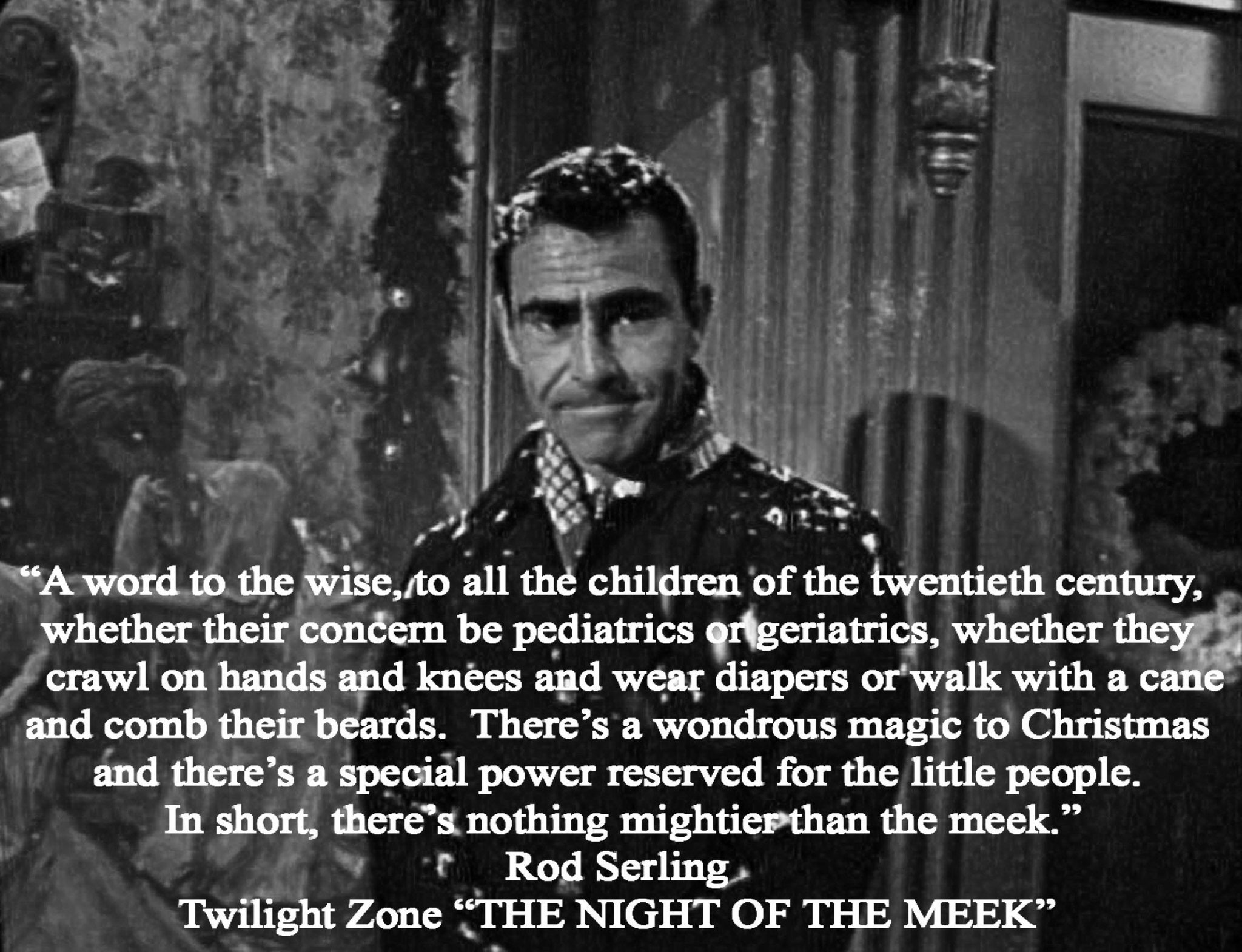
“Christmas is more than barging up and down department store aisles and pushing people out of the way. Christmas is another thing finer than that. Richer, finer, truer, and it should come with patience and love, charity, compassion.” — Rod Serling
Today is my Dad’s birthday. He left us when he was 72 back in 1978. I miss him. I miss my family, most of whom have passed on from when I knew them growing up. He would agree with Mr. Serling and the quotes above and below. Dad was a quiet man; even tempered. Like my Uncle June, a true gentleman.
Mom, Dad, Grandmother (Maw) 1976
Rod Serling was another man I admired and respected. As a writer, I’ve looked to Rod as a sort of mentor, always conscientious as to what I put down in words. I always strive to be insightful, imaginative and entertaining, just as Rod did. Alas, we lost him in 1975, the year I graduated from college. when he was only 50. The words and messages he brought forth then are just as powerful and meaningful today. Dad would definitely approve.
Merry Christmas and Happy Birthday, Daddy and long live Rod Serling!!
Hopefully making a ruckus, one blog post at a time!
Be sure to check out my other blog, Joe’s Journey, for selected short stories and personal insights on life and its detours.

















 ideasnmoreblog