
Why Play is More Important than Talent for Creativity

This week my creativity blog features an excerpt from a podcast initiated in Japanese, “The Creative Mindset”, with the first guest on the podcast, Ian Spalter (Ian Spalter), the man behind the design of Instagram.

Ian cited this quote during the interview: “Hard work beats talent when talent doesn’t work hard.”

A few years ago, Ian led the redesign of the Instagram app as well as its brand identity as the Head of Design at the company. That process was well documented and Ian was featured in a Netflix special called “Abstract: The Art of Design.” Since then, he moved to Japan with his family to head up the Instagram business there. He’s now leading design at Meta for its metaverse initiative, still residing in Japan, where the podcast episode was recorded.

In the podcast interview with Ian, there were three key takeaways that stood out and can be helpful for, not just designers, but those particularly in a position to manage others:

1. The permission and the freedom to be wrong is essential to creativity.

Ian uses simple activities and games in meetings with his team in order to create what he calls the State of Play. These games might be something as simple as drawing for people who are not typically used to drawing. He says that play is useful in getting people out of their comfort zone and letting people be wrong without, or at least with less, fear. Eliminating the sense of fear is essential to cultivating creativity, especially in a corporate environment, according to Ian.

2. Humility is underrated.

One of Ian’s hobbies living in Japan is to go visit shokunin, craftspeople typically engaged in making traditional daily tools and objects such as sandals, bowls, baskets, buckets, etc., oftentimes painstakingly by hand. Having visited quite a few of them in various towns, he observed that they all have something in common: a commitment to humble excellence. This kind of humility is underrated, he says, and he witnesses that it makes such a big difference in the final product.

3. Representation matters.

When he started his career in NYC, one of his first managers was Omar Wasow, a co-founder of BlackPlanet.com in the 1990s. At R/GA, Ian worked under a colleague who was from the Dominican Republic and a person of color. The fact that his bosses were minorities back then and how they reflected on Ian himself wasn’t lost on him. As a Black designer, he felt and still feels that how he does would reflect on other people that look like him that would come after him. Ian projected a sense of duty in his voice as a leading yet humble designer who happens to be Black.

If you are curious about the conversation with Ian, please listen to this episode “Why Play, Not Talent, Is More Important for Creativity” wherever you get your podcast:

This blog post represents portions of an interview moderated by Rei Inamoto, a designer by trade, a minimalist at heart. Founding Partner of I&CO. Named in “Creativity 50,” “The Top 25 Most Creative People in Advertising.”


Hopefully making a ruckus, one blog post at a time!

Be sure to check out my other blog, Joe’s Journey, for personal insights on life and its detours.

And, check out creative selections from my website.

Jolan tru!
 

Creativity + Constraints = A Good Pairing?

When one adds any sort of constraint to the creative process, one gets bogged down, right? Um, not necessarily. In fact, it could be just the opposite. From a variety of perspectives, constraints can open up dialogue and creative opportunities not originally thought or considered.

Portions of this blog post, originated by one, Lee Duncan, got me to thinking about just that. In the early stages of writing a short story, I jotted down some thoughts on my iPhone, knowing they would be automatically “copied” to another application (Notes) on my laptop so I could continue at some later date. When that later date came and I went to access them on my laptop, the additions I had made were nowhere to be found.

Oh, the horror!

I discovered a major constraint! Now, I had to rely on memory to reconstruct the few paragraphs I had previously written. I realized I couldn’t remember everything word for word so I revised my thinking a bit to write new dialogue based around what I did remember. All in all, it turned out okay (so far).

In his post, Duncan cites that designers, artists, writers, and creatives of all kinds are often told to “think outside the box” and let their imagination run wild. He asserts that creativity loves constraints. That limitations can actually enhance our creativity rather than hinder it? I tend to agree.

Both he and I agree that the idea that constraints can fuel creativity is not new. In fact, it has been embraced by some of the world’s most innovative thinkers, including Dr. Seuss, who famously wrote “Green Eggs and Ham” using only 50 different words. Steve Jobs once said, “Creativity is just connecting things. When you ask creative people how they did something, they feel a little guilty because they didn’t really do it, they just saw something. It seemed obvious to them after a while. That’s because they were able to connect experiences they’ve had and synthesize new things.”

Thinking Differently

Constraints force us to think differently. Or “newly” as in my case. They force us to look at a problem from a different angle and approach it in a new way. When we’re faced with limitations, we’re forced to be more resourceful, more innovative, and more creative.

Duncan cites an Instagram example: In the early days, the platform’s co-founders were faced with a constraint: they had to build a photo-sharing app for the iPhone using only the phone’s built-in camera. Rather than seeing this as a limitation, they embraced it and created a platform that revolutionized the way we share and consume visual content.

The Brain on Constraints

Research has shown that constraints can actually stimulate the brain and enhance our problem-solving abilities. When faced with a difficult problem, our brains tend to default to familiar solutions. But when we’re presented with constraints, we’re forced to explore new solutions and think outside the box.

One study conducted by the University of Amsterdam found that participants who were given a set of constraints to work within were more creative in their problem-solving than those who were given no constraints at all. Another study found that imposing a deadline on a creative project actually increased creativity, as it forced participants to make decisions and move forward with their work.

In my view, this wouldn’t necessarily increase creativity but it would increase the possibility of failure or at the very least, some new ideas. Creativity would then evolve.

Ideas and Constraints

Constraints can therefore help us generate better ideas. When we’re given a blank slate and no direction, it can be overwhelming and difficult to know where to start. You’re sort of blindly throwing the dart at the board and seeing where it lands. But when we’re given a set of constraints, we’re forced to work within certain parameters, which can actually help us come up with more focused and relevant ideas.

When a group of designers was tasked with creating a new line of office furniture, they were given a set of constraints to work within, including a specific budget and a requirement that the furniture be modular and easy to assemble. Rather than hindering their creativity, these constraints helped them generate a range of innovative ideas that met the client’s needs and exceeded their expectations.

Applying Constraints to Facilitation

Constraints can also be applied to facilitation, or the process of leading a group through a creative problem-solving process. By imposing constraints on the group, the facilitator can help guide them toward more creative solutions.

For example, a facilitator might ask a group to brainstorm ideas for a new product, but impose a constraint that the product must be made entirely from recycled materials. This constraint forces the group to think about sustainability and environmental impact, which can lead to more innovative ideas.

If no constraints were added, the group might generate hundreds of new ideas but would have to undergo a due diligence exercise to decide which ideas were better and then further decide how to proceed. That’s another exercise entirely but well worth the time invested.

While it may seem counter-intuitive, constraints can actually be a powerful tool for fueling creativity. They force us to think differently, stimulate our brains, help us generate better ideas, and can be applied to facilitation to guide groups toward more innovative solutions.

When constraints happen, and they will, gather your thoughts and let your imagination roam, exploring new opportunities and possibilities. I think you’ll find that paired together, creativity and constraints make for a viable coupling.


This blog post is based upon an article by Lee Duncan, an IBM Enterprise Design Thinking Leader.


Hopefully making a ruckus, one blog post at a time!

Be sure to check out my other blog, Joe’s Journey, for personal insights on life and its detours.

And, check out creative selections from my website.

Jolan tru!


Obsession with Productivity Can Kill Creativity.

Don’t Let It Kill Yours!

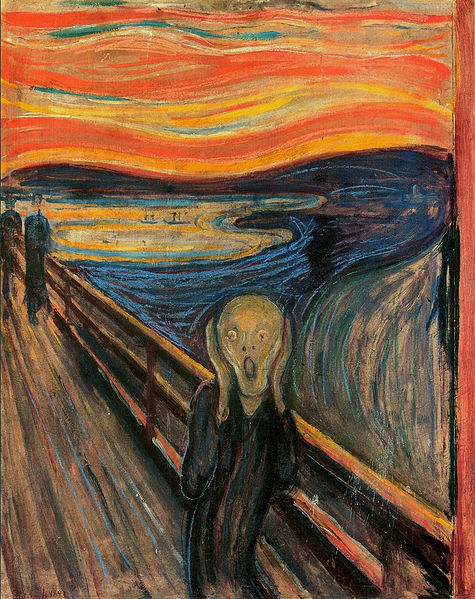
How would a “productive day” compare to a “creative day”? What would, if anything, they have in common? Chances are not much.  One might think a productive day would be closely aligned with scratching off items on a to-do list. On the other hand, someone’s idea of a creative day might not even have a to-do list. 475px-The_Scream

Our current work world is obsessed with productivity. We are inundated with books, articles, white papers, to time block this and time block that; all just to do more work. But our relentless quest to be productive is undermining one of the most important abilities in today’s workplace: creativity.

What of the future, though? Will machine learning and artificial intelligence perform the routine aspects of our work at the expense of our ingenuity and creativity? So how do we create the right conditions for creativity, particularly when we are trying to deal with a to-do list?

Consider this comment from screenwriter Aaron Sorkin (the mastermind behind the television show West Wing and films like Moneyball and The Social Network). He told The Hollywood Reporter that he takes six showers a day. “I’m not a germaphobe,” he explains but when his writing isn’t going well, he’ll shower, change into new clothes, and start again.

Sorkin’s trade relies on him minting something fresh on a regular basis. And it occurred to him that his best thoughts were not happening in moments of fevered concentration, but when he was in the shower. So he had a shower installed in the corner of his office and makes regular use of it. He has described the process as “a do-over” for triggering original ideas.

In 1939, James Webb Young, a Madison Avenue advertising executive, wrote a definitive guide to the process of creativity, A Technique for Producing Ideas. In this short book, Webb Young reminds us, “that an idea is nothing more nor less than a new combination of old elements.” In his view, the skill of creativity is the ability to spot new connections between familiar thoughts, and the art is “the ability to see [new] relationships.”

Fifty years later, Steve Jobs observed something similar: “Creativity is just connecting things. When you ask creative people how they did something, they feel a little guilty because they didn’t really do it, they just saw something. It seemed obvious to them after a while. That’s because they were able to connect experiences they’ve had and synthesize new things.” Webb Young also lays out a remarkably simple technique for creative thought. It involves stimulation. Continue reading

Obsession with Productivity Can Kill Creativity.

Don’t Let It Kill Yours!

How would a “productive day” compare to a “creative day”? What would, if anything, they have in common? Chances are not much.  One might think a productive day would be closely aligned with scratching off items on a to-do list. On the other hand, someone’s idea of a creative day might not even have a to-do list.

475px-The_ScreamOur current work world is obsessed with productivity. We are inundated with books, articles, white papers, to time block this and time block that; all just to do more work. But our relentless quest to be productive is undermining one of the most important abilities in today’s workplace: creativity. What of the future, though? Will machine learning and artificial intelligence perform the routine aspects of our work at the expense of our ingenuity and creativity?

So how do we create the right conditions for creativity, particularly when we are trying to deal with a to-do list?

Consider this comment from screenwriter Aaron Sorkin (the mastermind behind the television show West Wing and films like Moneyball and The Social Network). He told The Hollywood Reporter that he takes six showers a day. “I’m not a germaphobe,” he explains but when his writing isn’t going well, he’ll shower, change into new clothes, and start again. Sorkin’s trade relies on him minting something fresh on a regular basis. And it occurred to him that his best thoughts were not happening in moments of fevered concentration, but when he was in the shower. So he had a shower installed in the corner of his office and makes regular use of it. He has described the process as “a do-over” for triggering original ideas.

In 1939, James Webb Young, a Madison Avenue advertising executive, wrote a definitive guide to the process of creativity, A Technique for Producing Ideas. In this short book, Webb Young reminds us, “that an idea is nothing more nor less than a new combination of old elements.” In his view, the skill of creativity is the ability to spot new connections between familiar thoughts, and the art is “the ability to see [new] relationships.”

Fifty years later, Steve Jobs observed something similar: “Creativity is just connecting things. When you ask creative people how they did something, they feel a little guilty because they didn’t really do it, they just saw something. It seemed obvious to them after a while. That’s because they were able to connect experiences they’ve had and synthesize new things.”

Webb Young also lays out a remarkably simple technique for creative thought. It involves stimulation. Continue reading