The end of mid-size agencies? Inside the shifts that will reshape the ad business

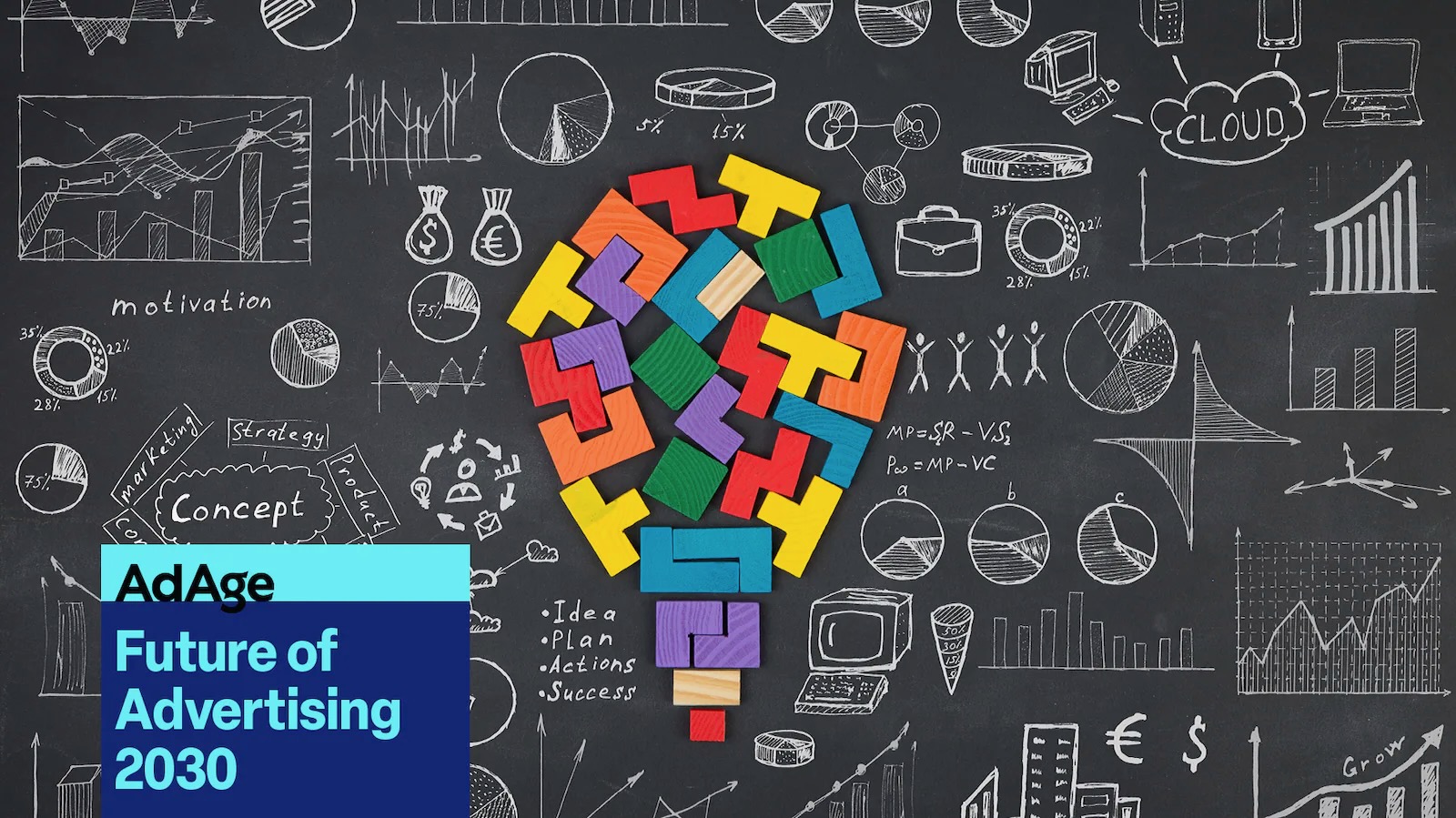
This story is part of Ad Age’s Future of Advertising 2030 series exploring how marketing, media and creativity will evolve over the next five years.

Advertising agencies are in the process of setting strategies for the next five years despite numerous unknowns—the impact of AI, speed of consolidation and increasing ease of in-housing among them. These variables may have wide-reaching impact, including the potential demise of mid-size agencies, that marketers should be preparing for now.

On Ad Age Insider, Ad Age reporters look at the future of ad agencies and strategies that industry leaders are putting into place now to prepare.

“A lot of [agencies’] executional work becomes commoditized by AI, and a lot of marketers will have pretty robust in-house systems. So the real value and agency lie in their strategic thinking and being able to bring an outsider perspective to the equation.” –Ewan Larkin, agency reporter, Ad Age

Ad Age Insider podcast transcript

Parker Herren, host: How will the agency landscape transform by 2030? What has surprised you guys the most in your reporting on the future of agencies?

The demise of mid-size agencies

Brian Bonilla, senior agency reporter: It’s hard to be surprised, but I would say something that might surprise people in general—the role of the mid-size agency might go away by 2030, meaning we’re already seeing a lot of small, independent agencies get a lot of business, but we’re now starting to see those same agencies competing with each other and competing with large agencies and seeing a leveling of new business opportunities. And at the same time, mid-size agencies, which typically range from like 100 to maybe 250 employees, are competing with large holdco networks of like 5,000 employees for the same business. 

So by 2030, you’re going to see those mid-sized agencies either merge with other entities or sell to private equity firms or things like that. That’s going to be something that might be surprising for a lot of people, and I think will happen quicker than people realize.

How agency structures will shift

Ewan Larkin, agency reporter: This is interesting. For a couple of years, agencies have been trying to market themselves as consultants, and it hasn’t really stuck. To some degree, it has, but I think it’s obvious they are still service providers fundamentally. But I actually do think now we might see that shift start to stick a little bit. A lot of the executional work becomes commoditized by AI, and a lot of marketers will have pretty robust in-house systems. So the real value at agencies lies in their strategic thinking and being able to bring an outsider perspective to the equation. 

I think that puts them in direct contact … with the likes of Deloitte Digital and Accenture Song. So the focus for agencies really should be building up some of those consulting capabilities and commerce consulting capabilities. Agencies like VML are already starting to do this. They rolled out a unit earlier that encompasses consulting, CX and other things, and that already accounts for about 40% of their overall global revenue. So, I expect more people to make moves like this. This is one of the early stages of holding companies really being able to package up one of those offerings.

Parker: For Ad Age’s Future of Advertising package, media reporter Brandon Doerrer wrote about 2030 readiness. And chief technology reporter Garett Sloane dug into the 2030 tech stack. That sounds pretty thrilling. What did you guys find in your reporting?

Brandon: People tend to think that there are just going to be more and more integrated accounts, especially between creative and media. The walls are really coming down between those two functions. We are seeing brands increasingly hire the same agency to handle both of those functions. So, agencies are going to need to get used to those two functions not being in silos anymore, not having walls exist between those two teams.

Garett: We’re already starting to see these roles change. We’re seeing shifting ways of billing clients, different business models, different services agencies have to cater to. So, it’s already happening. It’s going to happen more and more where agencies are going to have to operate as platforms and services that can interact with brands and help brands build their ad tech stacks, acting as consultants, acting as facilitators into this futuristic landscape.

That’s where agencies need to go, and they’re starting already by developing new products and services. Whether that will work is still an open question, and if they can adjust and change—some will, some won’t.

The social AOR resurgence

Parker: Let’s talk influencers. Gillian Follett covered the future of the social and influencer space. Is there any way the future of influencers will impact agencies in 2030?

Gillian: Experts that I talked to for the story said that they predict the spectrum of influencer agencies will stretch to the extremes. So, we’ll see more brands working with influencer functions within larger holding companies, or we’ll see brands looking to very specialized boutique agencies who specialize in specific platforms or types of creators, like gaming creators, for example.

We’re also going to continue to see influencer budgets increase, not at the same meteoric rate that we’ve seen over the past couple of years, but based on forecasts from intelligence companies like eMarketer, it’s definitely on an upward trajectory. 

We’re also seeing a resurgence of social agency of record assignments from brands across different categories. Something that I spoke to one marketer about was this idea that it’s not just the brands that are trying to target Gen Z or want to be social-first anymore that are looking for social AORs. It’s brands that they wouldn’t expect, like more established legacy brands are looking for social AORs. And a lot of these brands are seeking the insights that social media can provide in terms of what consumers are looking for, the types of products that they’re craving and using social as the foundation for their marketing campaigns rather than having social be a tacked-on piece at the end.

Parker: Okay, Lindsay, I’m going to let you round out this group with some intel from your reporting on the RFP process in 2030.

Lindsay Rittenhouse, senior agency reporter: Within the RFP process, agencies are going to have to stop the theater—the glossy presentations, the pitch decks, and really showcase how you’re working as a team. Get ready to be in more chemistry meetings—enough with the showboating and the theater in the pitch.

Parker: Tell us how marketers should begin preparing for that now.

Lindsay: Well, they have to set up the process so that there are more chemistry meetings and more time for the meatier stuff, the interviewing, the briefings, the working together, and just get rid of some of the processes. You don’t have to do these massive pitch presentations. [Marketers] are the ones who set the process for the RFP, so don’t allow the theatrics.

Agencies in 2030—how to plan ahead

Parker: I want to hear everyone’s advice for how marketers or agency leaders can begin prepping for their 2030 strategy. Why don’t we just go round robin, starting with you, Brian.

Brian: Start thinking about what type of agency model do you want as a marketer. We’re seeing roster agency models become way more popular, meaning instead of having just one AOR handle everything, I’ll have a social agency here, I’ll have a creative agency here or I’ll have a roster of five creative agencies. 

If you’re an agency, start thinking about what model makes the most sense for you to be in—should I be more niche or should I broaden my capabilities? And as a marketer—same question but on the flip side. If I’m going to be spending less on marketing, but I’m expecting to have more outcomes, what is the best model that makes sense for my external partnerships? Because I do think agencies will still be necessary as much as we’re talking about in-housing and things like that.

Ewan: They need to clarify which functions they want done in-house, which ones they need outsourced, very clearly defining what they can do themselves versus what is essential that they get from an external partner. There is a push for efficiency, and, obviously, everybody wants to save costs, so they want to bring it in-house, but you are going to need an external partner. You always do need that outside perspective. So, very clearly define what needs to be done yourselves and what you need an agency for. 

But rethinking agency relationships in general—they’ve always been seen as providers, that’s what they are, but now a lot of them are going to be actually helping build those internal capabilities. So identify which agencies are high-level strategic thinkers, which ones really understand your brand and your challenges, which ones can help me build my internal chops. Those are the ones that I think are likely to have long-term value.

Brandon: On the agency side of things, if you’re a creative agency and you don’t already have media capabilities, really digging in and evaluating if it would be worth building that out. If you have a unique angle, something to offer brands to make yourself stand out from the plethora of media agencies that can do the same thing. Media is probably in a similar boat. At least having an understanding of various creative processes is going to be helpful.

On the marketer side of things, brands can just not be afraid to ask. I did a story not too long ago about how indie creative agencies can respond to requests for media services. And the reason why agencies are starting to think about either building these capabilities internally or which media agencies they can partner with is because they’re getting these requests. Marketers—don’t be afraid to ask if you have an indie creative shop that you’re working with that doesn’t do media. They’re getting used to getting that question already, and they are starting to think about how to best answer that question. So, no dumb questions is the advice.

Garett: They could start developing the services and tools, and some are. We’ve seen agencies launch AI agents—the trading bots that they can all of a sudden potentially give out to brands to start to use. A lot of these tools that agencies are building are internal, but eventually, they’re going to make them external and start shipping them to brands to use as part of their suite of services. So, agencies start building internally and then will start giving it out to the masses.

Gillian: Brands should start considering whether they want to look to agencies to help them with sharpening their social strategies to adapt to this new way of seeking consumer insights from social and using social as a starting point for marketing. For some brands, it might make more sense to develop a social media team in-house to lead these efforts for the brand. Some brands have sought social media agencies of record because of the wide range of functions that are involved in social media marketing today, like paid social, creator marketing, social media intelligence gathering. There’s just a lot that goes into it these days.

Brands should start considering whether that’s something they can do in-house, or if they need to find partners to help them develop those strategies as social becomes more and more important.

Key Takeaways

  • Mid-size agencies will likely disappear by 2030, either merging or selling to private equity firms
  • Agencies are shifting from ad makers to consultants and platform builders
  • Creative and media functions will merge as brands increasingly hire one agency for both services

Hopefully making a ruckus, one blog post at a time!

Be sure to check out my other blog, Joe’s Journey, for selected short stories and personal insights on life and its detours.

Ideas, not AI, will decide who survives in 2030

In a world where everything can be personalized and optimized, there’s only one true differentiator left: ideas. (Adobe Stock)

AI will undoubtedly shrink the marketing services industry. Or so that’s the opinion of industry paper Ad Age via author Barry Lowenthal in a recent piece a few weeks back. Thought it worthwhile to share again especially to those of you who may not have seen it yet.

Many of the functions agencies are paid for today—targeting, media planning, asset versioning — are already being handled faster and cheaper by machines.

Yet the most successful agencies in 2030 won’t be those with the biggest AI budgets; they’ll be the ones still capable of original thought.

Since the explosion of generative AI, holding companies have raced to future-proof themselves, pouring hundreds of millions of dollars into the technology. They’ve hired engineers, signed vendor deals and built proprietary tools. The logic is that automation improves margins by enabling more work to be produced with less overhead, and it’s attractive to clients.

But here’s the problem: Everyone is doing the same thing.

AI platforms might look different, but they’re powered by the same foundation—similar models, trained on similar data, offering similar outputs.

AI is a great equalizer. While early investment and enterprise deals offer short-term advantages, the tools are ultimately accessible to all. As technology becomes commodified, there’s only one true differentiator left: ideas.

In a world where everything can be personalized and optimized—where every ad element, from celebrity to color palette to music cue, is engineered for conversion—what cuts through is the unexpected.

Zany, emotional, human ideas. The kinds that make people laugh out loud, tear up or text a friend because it hit a nerve. The kind no algorithm can predict because they come from life experience, not data.

Those ideas aren’t born from prompts or dashboards, but from humans living messy, interesting lives—wandering museums, walking unfamiliar streets, swapping stories at a dive bar.

The agencies that stay relevant in an AI era will be the ones that protect this kind of cultural immersion. They’ll hire for life experience, not just technical literacy. They’ll measure inspiration like they do performance, instead of grinding their teams into creative exhaustion. They’ll reward originality over speed and efficiency. 

If the goal is to survive the next five years, curiosity and creative instinct must be treated as core competencies.

That means rethinking workflows to allow time for discovery, not just delivery. It means protecting those unproductive long walks and deep rabbit holes.

The payoff won’t always show up neatly in a dashboard, so it will be a challenging pitch to the CFO. But in a world where AI devours everything else agencies in once thought made them valuable, it’s the only bet worth making.

That’s the future. And no, you can’t buy it; you have to nurture it.

********

I agree with Mr. Lowenthal, original thought leading to creatively inspired ideas will and must lead the way. I’ve been involved in this business for several decades and I realize that the industry has turned into a young person’s game. Most have grown up with AI and consider it the “standard.” That is unfortunate. It still must be considered a tool in the work belt of the creative person who’s developing the idea. It can’t be used as the end-all. That is unless sameness is one’s idea of creative thought.

Hopefully making a ruckus, one blog post at a time!

Be sure to check out my other blog, Joe’s Journey, for selected short stories and personal insights on life and its detours.

Creative ideas—not spreadsheets—drive long-term brand growth

In a recent edition of Ad Age I caught an interesting article posted by Jon Gibbs having to do with the importance of creative ideas to brand growth. I thought it appropriate enough to share it with you. So here goes . . . enjoy!

In today’s climate of shrinking budgets, AI automation and relentless pressure to prove ROI fast, marketers are increasingly forced to make creative decisions based on what’s measurable rather than what’s meaningful. Dashboards and spreadsheets dominate boardroom conversations. But metrics tell you only what has worked. Creativity shows you what could work.

That difference is critical. The most powerful growth doesn’t come from simply following the data; it comes from ideas bold enough to break new ground. Ideas that capture attention, stir emotion and become memorable. Safe decisions may feel efficient, but safe doesn’t build distinctiveness. Safe builds sameness. And sameness is a dangerous place for brands to be in a hyper-competitive, three-second-attention world.

Creativity is what gives brands an edge. It’s how you move from being seen to being remembered. In other words, when creativity leads, the numbers follow.

The problem is that creative ambition is often cut short by over-measurement. Distinctive ideas can feel unfamiliar at first, and unfamiliarity makes people uncomfortable in a test group. Measure too early, and you’re often just testing comfort levels, not long-term effectiveness. As a result, bold work gets diluted or dropped before it has the chance to breathe.

So how can leaders, whether running an agency or leading marketing inside a brand, protect creativity in a world ruled by metrics?

Trust your instincts

We often turn to measurement when we’re unsure about trusting our instincts. But instinct isn’t guesswork: it’s built on years of experience, consumer understanding and category knowledge. Leaders who know their brand and market well should feel confident backing that expertise when making decisions.

That doesn’t mean being reckless. It means recognising that the best creative decisions often come from people who understand the brand and its audience most deeply, not from what a spreadsheet says.

Protect the process

Great ideas take time to evolve. They need space to be explored, debated and refined. Forcing ideas through rapid testing cycles or rushed approval rounds is more likely to drown out the creative ideas in favor of safer ideas proven by metrics. Agency leaders should create an environment where their teams can push boundaries without the constant fear of metrics-based rejection early on. Brand leaders must give their agencies the space to explore, not demand instant metrics.

The world’s obsession with efficiency often makes this worse. Too many global brand decisions happen in 15-minute Teams calls with a yes or no verdict. That’s not enough time for the deeper conversations that sharpen ideas. Feedback loops matter; every time work is put on the table, the team learn more about each other’s insights and instincts. Cutting those discussions out cuts out a lot of that depth that drives strong creative ideas. 

Protecting the process also means resisting the urge to test too soon. The point of iterative feedback is to build confidence before the work goes in front of consumers; otherwise, you end up evaluating unfinished thinking.

Know when to hold your nerve

Almost every bold idea meets a moment of doubt. They’re supposed to feel novel or different. Leaders earn their value by having the conviction to back the work. If the strategy is sound, the team is experienced and the creative instinct is strong, that’s the time to stand by it. 

Brand campaigns that hold their nerve are usually the ones that people remember. Nike did this with its “So Win” Super Bowl return this year (after 27 years), which highlighted the rise of female athletes. Rather than celebrity cameos or quick laughs, it backed a cinematic, purpose-driven film, and the risk paid off with one of the most celebrated ads of the night.

Use metrics wisely

Metrics are essential for informing insight, for sense-checking later in the process and for guiding optimization once work is in market. But they shouldn’t dictate the earliest imaginative ideas, because those ideas need space to breathe. 

And not all research is equal. Too often, multimillion-dollar brand decisions hinge on the cheapest possible online focus group. Thirty people in a £500 panel should not determine the fate of a £25 million brand. Poor-quality research is worse than no research at all. Whether you’re commissioning research on the brand side or interpreting it on the agency side, resist the temptation to reduce decisions to the cheapest possible test.

Telstra’s recent stop-motion campaign, which scooped the Cannes Lions Film Craft Grand Prix, is a good example: 26 playful shorts that probably wouldn’t have survived an early focus group, but once in market, they resonated widely. It proves the value of creative originality.

Champion distinctiveness over novelty

Bold does not mean weird for weird’s sake. Distinctive ideas are rooted in what makes a brand unique. It amplifies personality, sharpens positioning and makes the brand easier to recall in buying moments. Leaders should push teams to be distinctive, not just different, by allowing space for imaginative thinking, while asking the right questions: what does the brand want to be known for? What makes it meaningfully different? How can creativity make that difference visible and memorable?

Too many people today have become conditioned to believe that what can be measured is what matters most, but agency and brand leaders need to show that the truth is the opposite. What matters most often can’t be fully measured in advance. 

The campaigns that thrive will be the ones with leaders who defend creativity against premature measurement, holding their nerve when bold ideas feel risky, and treating creativity as the most important driver of growth.

Hopefully making a ruckus, one blog post at a time!

Be sure to check out my other blog, Joe’s Journey, for selected short stories and personal insights on life and its detours.

The future of ad jobs—what changes to expect by 2030 and why it matters

In my recent past I ran across this story about future advertising jobs and thought it interesting in light of the increasing presence of AI. The story is part of Ad Age’s Future of Advertising 2030 series exploring how marketing, media and creativity will evolve over the next five years. I thought it worth sharing. Credit Lindsay Rittenhouse, senior reporter, Ad Age.

As the advertising industry transforms, the skills needed to climb the ladder are as well. At the top, chief marketing officers may take on new duties as others in the C-suite are replaced by AI; at the entry level, young marketers need to develop targeted and differentiated skills to stand out against work that could be automated.

And the relationship between the highest and lowest workers may change as the need for apprentice-like models emerges to maintain the talent pipeline.

“Some agencies are now rethinking how junior roles are comprised…By 2030, they’re going to be looking for generalists, more client-facing junior employees, more strategists versus the intern-type tasks, the reporting and those technical kinds of jobs.”

Ad Age Insider podcast transcript

Parker Herren, host: Let’s dig in to today’s topic: inside the rapidly changing job market and how talent can plan ahead for their career paths. Jack, how will the CMO job look different in 2030?

The CMO of 2030

Jack Neff, editor-at-large: For CMOs, AI may actually help them to some extent in that AI is good at what a lot of CMOs aren’t good at: data, analytics, legal logistics, product science, things of that nature. And some folks believe that AI will lessen the role of other participants in the C-suite and increase the role of marketers.

The new entry level

Parker: Lindsay, I know you had perspective on the opposite end of the industry. How will entry-level jobs change by 2030?

Lindsay Rittenhouse, senior reporter:From my reporting, AI is going to drastically change the role of junior employees. So a lot of the tasks that they’re doing right now in media, there’s reporting and certain technical tasks—AI can take over, which threatens their jobs. But some agencies are now rethinking how junior roles are comprised.

They’re building junior roles. By 2030, they’re going to be looking for generalists, more client-facing junior employees, more strategists versus them doing the intern-type tasks, the reporting and those technical kinds of jobs.

The new AI workflow

Parker: AI seems to be a recurring theme. So let’s popcorn over to Garett Sloane, Ad Age’s chief technology reporter. Then we’ll go to senior agency reporter Brian Bonilla and media reporter Brandon Doerrer.

Garett Sloane, chief technology reporter:I’m sure we’re going to hear a lot of this throughout the package, this sort of angst about whether AI will be taking jobs, how much it will replace. And when you talk to the experts, it’s always, “AI will supplement your job,” and, “it’s going to just be an assistant,” and, “it’s going to make you do more work, not less; we’re going to need more workers, not fewer.” 

I think that may be a little optimistic. I think some of these AI agents being developed and other tools built on AI—these are going to replace a lot of work that is currently being done. You’re going to have to be working with AI and someone who’s knowledgeable about it to manage a lot more and do a lot more with less. So I think we have to be ready for that.

Brian: There’s a few different things here. Again, with AI, we’re seeing resumes being catered to AI-specific roles. And a lot of times, people are looking for people who understand how to prompt-engineer specific tasks. And we’re seeing [applications] that have specific tests for different AI functions. Talent needs to be thinking about getting prepared for that, just like how when I was growing up, I was prepared for certain questions. I think these are going to be very common. 

Beyond AI, we’re seeing a few different rises. Social media accounts, in general, are growing within agencies. I’m expecting a rise in social media expertise, same as strategists and consulting-type roles, especially as agencies like VaynerMedia, for example, they’re investing in this new product called Co-Lab, where the whole premise is basically having agency teams built within in-house teams at brands. And they believe that by 2030, this can make up 50% of their revenue. That is not a traditional advertising agency role. 

So how do you prepare for that? You need to start thinking more strategically. How are you building your consulting expertise just as much as your creative thinking expertise?

Brandon: I spoke with Matt Moorut, who is an analyst at Gartner, for my 2030 checklist story, and we talked a lot about how the unpredictability of the next five years makes it a lot harder to justify hiring specialists anymore, particularly in media. It just doesn’t make a lot of sense to hire people who have a lot of hyper-expertise on one platform or a small handful of platforms. It seems like marketers are going to benefit from having a broad skill set and being generalists.

Parker: How can talent start preparing right now for that unpredictability?

Brandon: Something that Matt and I talked about is that it makes more sense to train the employees you have right now to be more generalists, give them a broader set of tools, especially in the media landscape. Get them familiar with all the different places that they can help a brand show up. These people already know the needs of a brand, of a company, and it’s going to be easier to train the people you already have than to hire new generalists and get them familiar with everything that a brand needs.

Parker: Who else has a tip for marketers? Jack?

Jack: [Marketers] should probably work on becoming adept at managing AI as part of their workforce essentially, and becoming conceivably the force within the C-suite that is better at working with AI than anybody else.

The emerging apprenticeship model

Parker: Okay, I’m seeing a hand. This is Creativity Editor Tim Nudd with a little nuance on this AI conversation.

Tim Nudd, creativity editor: One thing I think is interesting and important as agencies and brands get ready for this new structure is finding ways to maintain the excitement in the creative department. One interesting thing is that people worry about what’s called “cognitive atrophy” when it comes to AI, which is where if AI does a lot for you, then you start to think less yourself and maybe you lose skills. And I think that can be true in creativity as well, where if AI is coming up with most of your ideas and you’re just curating them, that could have a negative impact on people’s creativity. 

One thing that agencies can do to prepare is to think about how to guard against that. If you think back to the Renaissance, there was this apprentice model where the young folks learning a craft would have direct access to the master. Creative departments could end up being structured that way too, where juniors work more directly with senior creatives much earlier in their careers. That doesn’t happen a lot now. 

So, to guard against AI doing all the work and people not actually learning any skills, marketers and agencies would do well to really focus on human mentorship and really getting people to learn those skills, the fundamentals of creativity, fundamentals of advertising earlier in their careers, or really [give] access to the top folks.

What this may end up doing is hollowing out the middle management within creative agencies, where you really have the seniors who can work directly with the brands, and then you’ve got more juniors who are learning the trade directly from them. In some ways, it could end up being a throwback to the centuries-old model of learning from the master within advertising too.

Parker: Garrett, take us home with a last thought on how talent can prepare for the industry’s future job market.

Garett: They should be incorporating AI into their general daily work. You’re using ChatGPT every day—I’m sure people are already doing that. It’s already become part of the basic computing tools we’re using. 

A fun term to come out of my future of ad tech story is a topic known as “vibe targeting.” Vibe targeting is using AI in sort of a jazzy, freestyle way where you’re prompting it to come up with new ideas and for targeting in programmatic advertising. It’s about finding new audiences, just going with the flow to figure out the best way to come up with a target audience, feeding AI different pieces of data so you can uncover new trends maybe from social media or from something about your brand. And then having AI assist you with just good vibes.

Hopefully making a ruckus, one blog post at a time!

Be sure to check out my other blog, Joe’s Journey, for selected short stories and personal insights on life and its detours.

Will branded experiences outperform ads by 2030?

Some say yes but CMOs are still chasing ads while consumers crave something beyond a screen. I recently ran across an article in AdAge about this and thought it worthwhile to pass on. Seems like the industry is changing right before our eyes. It’s difficult to keep up let alone try to figure out where it’s headed years from now. Hopefully this article will clarify some of the mystery.

The rules of attention have changed. Ads cost more than ever but work less than ever. People are paying to skip, block or scroll right past them. But experiences? They’re lining up for those and sometimes paying to get in.

Look at Lollapalooza, Coachella or the US Open, where the brands aren’t a backdrop, they’re part of the headline. Festivals and big cultural moments aren’t just about music or sports anymore; they’re about the branded experiences people talk about long after the event ends.

The disconnect is clear. Netflix has 247 million subscribers paying to avoid ads. Spotify Premium has 220 million doing the same. Every one of those subscriptions is a consumer saying: My attention is valuable enough that I’ll pay to protect it.” Yet advertisers keep pouring money into channels people are actively opting out of. That’s not a strategy; that’s a slow leak.

Meanwhile, experiential is thriving. The category grew 10.5% last year to $128 billion. Why? Because instead of interrupting what people want, it is what people want. A great branded experience doubles as entertainment, content and memory. It creates emotion, builds loyalty and turns people into advocates.

Vibrant Urban Pop-Up Storefront Transforms Cityscape with Interactive Marketing and Philanthropy – Adobe Stock

Younger consumers are driving this shift fastest. They don’t just want to sit back and watch a brand throw messages at them. They want to take part, contribute, belong. Creator culture proves it, and experiential is the live version of that same energy.

Action above ads. Experience above everything. The brands that win are the ones that stop interrupting what people care about and become what people care about.

The shift is already happening. The only question is: Will you lead it, or watch it pass you by?

Well?

Hopefully making a ruckus, one blog post at a time!

Be sure to check out my other blog, Joe’s Journey, for selected short stories and personal insights on life and its detours.

Advertising Ethics Must Become a Core Creative Capability

Ethics. A word that is at times used too little because most people don’t think ethics exists any longer. It has been said that a man or woman is not truly whole if he or she does not possess ethical behavior within. It’s has become painfully obvious that some of us don’t. That’s sad.

It’s particularly troubling in marketing and advertising. For years those industries, especially advertising, had a lower ethics image than used car salesmen. Fortunately, that image is not as bad as it was. Today’s environment and enhanced creativity has increased the need for a true belief and practice of ethical behavior in what the industry puts forth to the consumer.

The following article is a good dissertation on the importance of ethics in advertising and its crucial need when developing creativity.

*******

If the world’s most prestigious stage for creativity can be gamed, what does that say about the structures behind the stories we tell?

There are still advertising professionals who treat ethics as something to call in after the crash, never to integrate into the system. 

The Cannes Lions cheating scandal has exposed a fracture at the heart of advertising: a growing contradiction between the public ideals that the advertising industry promotes and the problematic business behaviors behind the scenes.

In the advertising industry, we like to think of ourselves as storytellers. But in truth, we are choice architects. We shape how people see, feel and decide, often invisibly, powerfully and at scale. That is a position of enormous influence, and it carries a moral impact.

As legal scholar Cass Sunstein has long argued, even small nudges can have major consequences. What we design into our messaging, the defaults, the frames and the incentives, can improve lives or quietly exploit them. In advertising, as in public policy, how we shape choice matters as much as what we say.

Yet, astonishingly, there are still advertising professionals who treat ethics like outsourced IT support: something to call in after the crash, never to integrate into the system.

This is not just shortsighted. It’s reckless. Ethics is not a bolt-on; it is the foundation. No trust, no transaction. Ethics cannot be outsourced; it must be embedded into every campaign as a priority capability.

The ethical advantage

Advertising thrives when people believe in it. Yet today, surveys show consumer trust in advertising hovering near historic lows. Greenwashing, data misuse and AI-manipulated content have all made audiences wary of what they see. Worse, new entrants to the profession increasingly ask: Does this industry reflect my values?

The answer must be yes. But only if we earn it.

Ethical advertising isn’t a compliance checkbox; it’s a design choice. And it can be a competitive edge. Agencies and brands that adopt clear ethical standards, disclose targeting criteria, evidence-backed sustainability claims and consent-based personalization are not only preempting legal risk, but signaling integrity. And integrity is sticky.

Consumers, employees, shareholders and customers all want to work with firms they can trust. That trust must be built by actions, not taglines.

The role of learning and professional development

Ethical decision-making in advertising isn’t instinctive; it’s learned. As the landscape evolves, so too must the frameworks and training that guide professionals in the field. We are entering an era where fluency in ethical reasoning is as essential as creative talent or data literacy. This is the professional norm in law, finance, medicine, architecture, engineering, real estate and most other major professions.

That’s why continuous learning matters. Whether you’re navigating consent-based data use, sustainability claims or AI-generated content, knowing how to assess what’s fair, transparent and responsible requires both study and structure. Ethical practice is not just a matter of personal judgment; it’s a professional discipline. 

What comes next

Ethical practice doesn’t constrain creativity; it liberates it. When boundaries are clear and trust is high, bold ideas flourish. When young professionals believe they’re part of something credible, they stay. And when clients see ethics as a lever, not a liability, better work gets made.

The Institute for Advertising Ethics is an organization that spearheads ethical standards in education of our profession. I am a founding member and firmly believe in the continued development of the professionals in our industry. Ethics is a standard of practice we dare not let go to the wayside. After all, excellence in creativity is at stake, along with our reputation as practitioners of the industry.

Havas Puts Neurodivergent Creatives Center Stage at Cannes Lions

“Beyond the Brief” aims to redefine creative inclusion

This is another article I came across from the Cannes Festival last month that I wanted to share. It was written by AUDREY KEMP, a staff reporter for Adweek based in New York City. It has an interesting take on the creative industry and the players of today leading us into advertising’s future.

Havas is using Cannes Lions’ global stage to challenge the ad industry’s assumptions about what creative talent looks like—and who gets to be included.

On Monday, June 16, the French holding company debuted “Beyond the Brief,” a global campaign that positions neurodivergent minds as the future of the creative industry.

The effort builds on Havas’ Neuroverse initiative, launched in March, which supports the recruitment, retention, and development of neurodivergent talent through training, inclusive design, and partnerships. It’s also backed by new research from the agency, in partnership with nonprofit Understood.org and the 4A’s, that examines how neurodivergent creatives experience the workplace.

One stat that stood out to Donna Murphy, global CEO of Havas Creative and Health Networks, is that 40% of neurodivergent people are unemployed.

“The creative power they have is bar none,” Murphy told ADWEEK. “We saw a unique opportunity, not only for inclusion, but also for the market expansion of our clients.”

Inclusion as Innovation

Havas sees the lack of neurodiverse talent in advertising not just as an inclusion issue, but a source of untapped commercial potential. According to the agency’s study, over half of Gen Z identifies as neurodivergent—a demographic shift that’s forcing brands to reconsider how they design, market, and communicate.

“They think differently, they have sensory issues, and they see differently. If they go into a store and it’s not curated properly, and they’re overwhelmed, they leave,” said Murphy. “If you aren’t speaking to them, you’re going to miss that whole part of the market.”

The agency’s work around neurodivergence isn’t new. In 2023, Havas created a campaign for Reckitt-owned detergent brand, Vanish, that followed the daily life of a young autistic girl. During development, the team learned that autism and ADHD are often underdiagnosed in women and girls—a theme the campaign brought to light.

The spot sparked national conversation in the U.K., racking up 5 million TikTok views in 24 hours and, according to Murphy, leading to “the highest ever month of autism diagnosis.”

“Beyond the Brief” takes that advocacy global, with teaser ads along Cannes’ Croisette posing the question: “What if the future of creativity doesn’t look like the past—and never did?”

The campaign culminated in a main stage panel on Monday at the Lumière Theatre in the Palais, titled “Neurodivergent Minds: They Don’t Need Advertising—Advertising Needs Them.” Timed with Neurodiversity Pride Day, the session featured Murphy; global recording artist Lola Young; Renee Connolly, chief belonging and inclusion officer at Merck; and The New York Times’ Michael Barbaro as moderator.

The campaign title is also a deliberate nod to the awards culture of Cannes.

“We have to remind ourselves sometimes that Cannes is an award show,” said Loris Repellin, chief of staff, Havas Creative and Havas Health Networks. “The campaign that receives the most awards [is the one that] goes beyond the brief.”

Tools for Change

Off the Croisette, Havas is building infrastructure to support neurodivergent talent. The agency has developed training programs and partnered with an architecture firm to design more inclusive spaces, complete with VR simulations to illustrate sensory processing differences in the workplace.

The agency is expanding these efforts across its network, including through Havas People—its talent communications and employer branding division—and a growing neurodiversity practice. Havas has also begun hiring neurodivergent talent, including Sydney, a former intern now working as a copywriter, and Catherine, a leading SEO expert—though the agency did not share their full names.

The network is planning an experiment at the festival following an influencer marketing shopping spree

But systemic change, Murphy said, takes more than hiring. “They work totally differently. Sometimes they need to work remotely. Sometimes they need quiet space. Sometimes they need extra time. Sometimes they need less time,” she said of neurodivergent people. “Traditional employees don’t always have the patience to deal with it… which is why the training is so important.”

Murphy admitted that while Havas has already begun its journey to include neurodiverse talent in its workforce, “we don’t have all the answers… we’re still learning as we go.”

But she maintained that agencies that don’t embrace this growing talent pool are “going to fall behind.”

Hopefully making a ruckus, one blog post at a time!

Be sure to check out my other blog, Joe’s Journey, for selected short stories and personal insights on life and its detours.
Viagra’s Emotional Rebrand Wins the Cannes Lions Pharma Grand Prix 

Vaseline and New Zealand Herpes Foundation also take top health honors

A bold herpes awareness campaign took home top honors in the Health categories at Cannes Lions 2025.

I know that Cannes has been over for a week or so but I read this and wanted to share it. Thanks toAUDREY KEMP, a staff reporter for Adweek based in New York City. Good advice and a good read, especially for those who may not be up on Cannes.

Pharma Lions

Viagra won the Grand Prix in the Pharma category.

The “Make Love Last” campaign by Ogilvy Shanghai and Viatris repositions Viagra with an emotional, cinematic narrative focused on intimacy and long-term relationships. The campaign marks a departure from more clinical or humor-driven approaches and was praised for its film craft and cultural sensitivity.

The sexual wellness brand’s cinematic campaign led the Health category winners at Cannes. Other Grand Prix honors went to Unilever’s Vaseline and a bold nonprofit awareness push for herpes education.

Health and Wellness Lions

Unilever’s Vaseline won the Grand Prix in Health and Wellness.

The “Vaseline Verified” campaign, led by Ogilvy Singapore, used social media creators to combat skincare misinformation online. The effort stood out for addressing health literacy in underserved communities and using platform-native storytelling to restore trust in science.

Health Grand Prix for Good

The New Zealand Herpes Foundation won the Grand Prix for Good.

“The Best Place in the World to Have Herpes,” developed by Finch and Motion Sickness, reframed stigma around sexually transmitted infections through bold humor and transparency. With help from real patients, the campaign used outdoor, digital and long-form content to drive destigmatization and raise awareness globally.

Review all the Cannes Lions Grand Prix winners here.

Hopefully making a ruckus, one blog post at a time!

‘AI Will Not Save Advertising’ – Apple’s Tor Myhren

The marketing leader opened Cannes Lions by arguing for human craft as the industry’s superpower.


“There’s no AI more capable of making us feel than the human mind,” Myhren told Cannes Lions attendees. (Tim Nudd/Ad Age)

This is the week of the Cannes Creativity Festival in Cannes, France, which some of you are aware. As such, commentary and opinions on the global advertising and creative community are being espoused far and wide. This blog shares some of that with you like this piece from BRITTANEY KIEFER. Brittaney is Adweek’s creative editor based in London.

Like advertisers from Coca-Cola to Google, Apple has previously caught backlash for seemingly elevating technology’s power above human creativity. 

But on the first day of Cannes Lions, Apple marketing leader Tor Myhren made a case for human creativity as the industry’s savior and superpower.  

Like last year, AI will likely be a hot topic at Cannes Lions. There’s both good news and bad news when it comes to AI, according to Myhren, vice president of marketing communications at Apple, which is Cannes Lions’ 2025 Creative Marketer of the Year

“The good news is AI is not going to kill advertising,” Myhren said on stage Monday. “The bad news is AI is not going to save advertising. We’ve got to save ourselves, by believing in what’s always made this industry special: human creativity.”

Will Creators Be the Future of Cannes Creativity?

Apple has long been a creatively esteemed brand, so Myhren’s talk drew a large crowd. But his comments were also notable after the company drew backlash last year for its “Crush” ad, which depicted a hydraulic press flattening artistic objects such as musical instruments, paint cans, and a camera.

Some critics called the ad “soul-crushing” for its portrayal of the destruction of creative tools, and it tapped into creative people’s fear about how tech like AI could jeopardize their professions. Myrhen apologized for “Crush” at the time, saying, “We missed the mark.”

In his Cannes remarks, Myrhen shifted the focus away from technology to the human talent at the heart of the industry. “Human touch is our superpower,” he said. “It’s the secret to building long-term brand love.”

For those still fearful about AI’s potential destructive power, Myhren ended his speech with a call to action: “AI will ride shotgun and be the best creative partner this industry has ever seen,” he said. “But we’ve got to drive.”

Hopefully making a ruckus, one blog post at a time

Be sure to check out my other blog, Joe’s Journey, for selected short stories and personal insights on life and its detours.
How Effective Can Creativity Be In The Age of AI?

The advertising industry has seen beaucoup changes over the past few years. One recent change that is sweeping the ad scene is Artificial Intelligence or AI for short. We’re still grappling with it.

Man and AI robot waiting for a job interview: AI vs human competition Credit: Adobe Stock

With this in mind, I came across an article written by the Op-Ed Contributor of MediaPost, Manjiry Tamhane, who sheds a fairly comprehensive take on AI and how best to understand it and cope with it to enhance our creativity and, in turn, our marketing and advertising. It’s a bit of a long read but worth it.

Writes Manjiry . . .

The marketing landscape is undergoing a seismic shift. The rise of artificial intelligence (AI) is not just transforming how brands engage with consumers—it’s revolutionising how we measure, optimise, and ultimately prove the value of creativity itself. For marketers eager to demonstrate the tangible impact of their creative work on sales, AI-powered measurement techniques offer an unprecedented opportunity.

This is an exciting, future-focused moment for our industry. Creativity has always been at the heart of effective marketing, but now, thanks to AI, we can finally unlock its full commercial potential with scientific precision.

Why Creative Effectiveness Is More Important Than Ever

In a world where consumers are bombarded by thousands of messages every day, creativity is what cuts through the noise. It shapes perceptions, drives engagement, and builds lasting brand equity. However while media optimisation—deciding where and when to place messages—has long been a focus, it’s increasingly clear that creative quality is just as critical. In fact, research from the Institute of Practitioners in Advertising (IPA) suggests that up to 49% of a campaign’s sales uplift can be attributed to creativity.

Yet, for years, measuring the true impact of creative ideas and executions has been notoriously difficult. Marketers have often relied on intuition, anecdotal evidence, or basic metrics such as impressions and click-through rates. While tools like ad recall surveys, focus groups, and creative awards offer some insight, these methods frequently fall short of capturing the full contribution of creativity to business outcomes. Traditional measures tend to overlook how creative quality drives emotional engagement, brand equity, and importantly, sales impact. 

Enter AI. With the advent of advanced data analytics and machine learning, we now have the tools to decode what makes creative work effective—and, crucially, to link it directly to sales performance. 

The Evolution of AI in Marketing: From Data Mining to Generative Models

To appreciate the transformative power of AI, it’s worth reflecting on how far we’ve come. In the 1990s, AI in marketing was largely limited to rule-based systems—useful for direct marketing, credit scoring, and basic customer segmentation. The 2000s saw the rise of machine learning and web analytics, enabling marketers to understand online behaviour in new ways. 

The 2010s ushered in the era of deep learning and personalisation. AI could now analyse unstructured data—images, text, even video—at scale, powering everything from chatbots to personalised recommendations. Fast forward to today, and generative AI models like ChatGPT, Gemini, and Llama are producing compelling copy, visuals, and even video content tailored to specific audiences and platforms. 

What’s changed most dramatically is speed and scale. Since 2010, the cost of computing power has plummeted, while the volume of global data has exploded. This abundance of data fuels ever more sophisticated AI systems, capable of processing information and generating insights in real time. While AI has enabled marketers to analyse vast datasets and uncover patterns, we are now entering an era defined by ‘agentic AI’—artificial intelligence systems that can act with autonomy and initiative. These AI agents are capable of proactively managing tasks, making decisions, and optimising campaigns in real time. 

For marketers, this means moving beyond hindsight (what happened) and insight (why it happened), to true foresight—predicting what will work best before campaigns even launch.

Cracking the Code: How AI Measures Creative Effectiveness 

So, how does AI help us truly understand the effectiveness of creative work?

The answer lies in the ability to analyse vast numbers of creative assets—across multiple channels, formats, and iterations—and extract the features that drive results. With agentic AI, intelligent agents can autonomously evaluate creative assets, identify high-performing elements, and recommend improvements, freeing up human teams to focus on strategy and ideation.

Here’s how next-generation AI-led techniques are transforming creative measurement:

1. Feature Importance

Machine learning models can automatically score each creative feature—be it a visual element, tone of voice, messaging, or format—against key business outcomes such as sales or brand lift. By connecting creative features to end-market measurement, marketers can pinpoint which elements have the greatest impact, and which may be holding back performance.

2. Feature Testing

With thousands of creative variations running across different channels, it’s impossible for humans to keep track of what works best. AI analyses past campaigns to identify which combinations of features consistently perform well. AI agents can continuously test and learn from past campaigns, autonomously adjusting parameters to find optimal combinations. This enables teams to establish rules and guidelines for future creative development, ensuring that each execution is built for success.

3. Predictive Modelling

Perhaps most excitingly, AI allows marketers to simulate and predict the likely performance of creative assets before they go live. If a particular advert underperformed, predictive modelling can reveal which features—if added or emphasised—would have boosted its impact. This empowers creative teams to experiment boldly, iterate rapidly, and optimise campaigns with confidence.

4. Content Recommendations

Advanced AI models don’t just diagnose problems—they prescribe solutions. By analysing patterns across successful campaigns, AI can recommend specific changes to creative content, such as introducing the brand name earlier in a video or adjusting the call-to-action for greater clarity. Crucially, these recommendations respect brand guidelines and ensure consistency across all touchpoints.

5. Visualising the Brand Space

AI can also map out the “creative execution space” for a brand and its competitors, revealing who owns which creative territories and where there may be opportunities for differentiation. For example, analysis of fast-food advertising in the US has shown how one brand’s creative approach began to encroach on another’s distinctive territory—insights that would be nearly impossible to glean manually.

AI Across the Funnel: Precision at Every Stage

While AI is transforming creative measurement, it’s important to remember that the fundamentals of marketing remain unchanged. At its core, marketing is about guiding customers through a journey—from awareness and consideration to conversion, retention, and advocacy. 

What’s changed is how AI enables us to execute each stage with unprecedented precision and agility: 

Top of Funnel: AI analyses massive datasets to segment audiences and optimise ad placements, maximising reach and impressions. 

Mid-Funnel: Personalisation engines ensure that potential customers see content tailored to their needs, while predictive analytics anticipate what information or incentives will move them closer to purchase.

Bottom of Funnel: AI streamlines the conversion process, optimising landing pages, personalising calls-to-action, and automating follow-ups.

Post-Conversion: AI-driven customer service tools provide instant support, while predictive models trigger retention strategies and suggest complementary products.

At every stage, AI helps marketers model key performance indicators (KPIs), attribute value accurately, and optimise investments for maximum growth. Crucially, it is creative that acts as the catalyst, moving consumers seamlessly through the funnel—from capturing attention at the awareness stage, to sparking interest and consideration, driving action at conversion, and fostering loyalty post-purchase. By harnessing AI to measure and refine creative effectiveness at each touchpoint, brands can ensure their messaging not only reaches the right audience but also resonates powerfully, guiding consumers along the journey and maximising the impact of every marketing investment.

Taking Action: How to Embrace the Future of Creative Measurement

To harness the full potential of AI-led creative effectiveness measurement, brands should consider the following actions:

  • Adopt a Data-Driven Mindset: Invest in AI-powered tools and talent to move from intuition to evidence-based creative strategies. Make data central to every decision.
  • Foster Experimentation: Encourage rapid testing and learning, using AI to simulate and refine creative concepts before launch. Create a culture where experimentation is celebrated and failure is seen as a step towards improvement. 
  • Align Creativity with Business Goals: Use AI insights to ensure every creative decision is linked to measurable sales impact, not just aesthetic appeal or awards.
  • Assess Organisational Readiness: Evaluate your organisation’s data, technology, and people to ensure you’re equipped for sustainable, AI-driven growth. Tools like the Marketing Impact Readiness Assessment (MIRA) can help benchmark your capabilities.
  • Prioritise Privacy and Ethics: As you embrace AI, ensure robust governance and transparency around data usage. Build trust with customers by being clear about how their data informs creative targeting and measurement.

A Bold New Era for Creative Effectiveness

AI isn’t just reshaping creative development—it’s redefining how we measure, optimise, and prove the value of creativity. However, the true power of this new era lies in the collaboration between human ingenuity and AI-driven insight. While AI brings speed, scale, and analytical precision, it is human creativity, intuition, and strategic thinking that inspire ideas, craft compelling narratives, and connect emotionally with audiences.

Credit: Adobe Stock

Brands that embrace these future-focused techniques—harnessing the best of both human talent and artificial intelligence—will lead the way, delivering campaigns that don’t just look great, but drive real business results. The future of creative effectiveness is bright, bold, and powered by a partnership between imagination and intelligence.

Now is the time to combine your team’s creative vision with the transformative capabilities of AI, creating marketing that inspires, engages, and delivers measurable growth. 

Are you ready to seize the opportunity? The next chapter of creative effectiveness starts now—with humans and AI working together.

What form that will take, who knows. One thing’s for sure; it’s the next stop on Creativity’s journey to persuasive excellence.

Hopefully making a ruckus, one blog post at a time!

Be sure to check out my other blog, Joe’s Journey, for selected short stories and personal insights on life and its detours.