How does one get the inside track on anything? Well, you talk or listen to someone who is on the inside, who knows what’s going on. That’s just what we have in the advertising community here in Houston.
The American Advertising Federation-Houston (AAFH) hosts a regular podcast on everything advertising right here in Houston. But the topics don’t stop with the geography; topics know no boundaries.
The people who guest-speak on the podcast can come from a variety of backgrounds and expertise, but they all are usually focused on what the AAFH is doing and how it relates back to advertising in the Houston community.
I’m speaking, of course, about Ad Speaks Houston, the podcast brought to you by the AAFH. If you’re into advertising at all, interested in what Houston’s ad scene is all about these days, wanting to stay current with the ever-changing ad world, well, tune in and subscribe to Ad Speaks Houston.
Ad Speaks Houston airs on KPRC 950 AM from 10 am to 11 am on Sundays. You can tune in to the podcast anytime from anywhere.
Who knows, you could be their next guest-speaker.
It’ll be fun, you’ll see! Click on the logo below and enjoy!
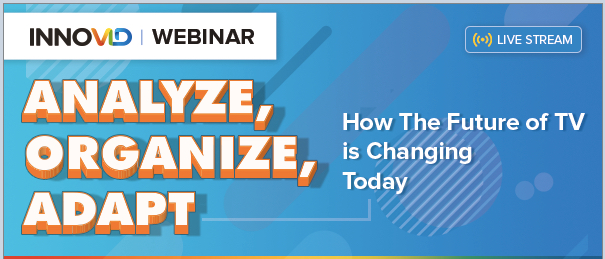
In a previous post, we learned about the future of advertising, which is still unfolding. This post deals with the future of TV, which is definitely still unfolding and evolving. Long gone are the days when we would settle in our easy chair to watch the national news at 5:30, then continue on at 6 for one’s local news.
Today, everything seems to be easy on, instantaneous.
So much so that we find ourselves in an unprecedented time where consumers around the globe are turning to TV and internet entertainment as they adjust to world events. View the webinar below as Innovid CTO Tal Chalozin walks through today’s ever-changing TV consumer trends, what they mean for advertisers, and what brands can expect in the immediate future.
You’ll learn:
What the data reveals about viewer impressions and device usage across key markets,
AdWeek Special Report: 6 Tips to Help Creativity and Quarantine Co-Exist
In times like these I find it particularly important to share news and helpful information wherever and whenever I come across it. Such is the case with this blog post. Thanks to Adweek and its contributor, Sara Spary for the article on which this blog is based.
In the creative world, we’re used to people getting together, face-to-face, to collaborate and exchange ideas, to, well, create that next great ad or TV commercial. So what does one do when quarantine is the order of the day for just about all the known universe?
Demands for making the abnormal as close to normal abound from clients and prospective ones. Business as usual it’s not. So, how is this all working out thus far?
The trade publication Adweek asked veteran creatives around the world to “share their experiences and advice on how to keep the creative juices flowing from home”—even when COVID-19 is knocking on the front door.
Think Face-to-Face
Since you’re already used to doing this, why stop now?
“We’ve made it a point to keep interactions face-to-face whenever possible. Every meeting, regroup, catch-up, brainstorm session—no matter how big or small—is done through Google Hangouts,” said Ryan Engelbert, creative director at We Are Social New York. “It’s forced us to be even more focused on each other and more accountable for the information and ideas that are being exchanged.”
This feels weird, not to mention a bit awkward
Engelbert’s creative partner and fellow creative director Casey De Pont recommends creatives embrace the occasional awkwardness that comes with video calls, since you never know where such moments may lead.
“Video chat still feels awkward to us as humans,” Du Pont said. “There’s a lot of pressure for maximum productivity and zero wasted time when you’re digitally staring each other down, but creative development doesn’t work that way.”
Not everybody may be used to video chat but not everybody is used to uninterrupted speech in a live conference room meeting either. Goof ups and unintended pauses work the same as if you were humanly in the same room with one another.
“You need the awkward pauses and the space between ideas to let things breathe and develop. The more we can be real people in the virtual space, the more comfortable we’ll become working there,” she said.
Be a Space Cadet
Spending time alone in quarantine gives you the time to quietly explore ideas and concepts without any critics jumping down your throat. You’ve got plenty of space to think out loud if you want.
Droga5 copywriter Gabe Santana like it this way. “I think the best part about working from home is that I can lie down on the floor and say bad ideas out loud without bothering anyone,” Santana said. “Except Germany, of course.”
That would be Germany Lancaster, Droga5 art director, Santana’s creative partner and self-proclaimed homebody. Lancaster prefers to brainstorm alone and mull it all down to a few good concepts “before meshing ideas” with Santana.
“Once I’ve got a couple ideas down, I like to either present them to my partner in a deck or chat through them in hopes that they springboard into something grand. Chatting through ideas always leads to lots of laughs, so that’s definitely a bonus,” Lancaster said.
Establish a Stronger Relationship
Working remotely can really strengthen that and those relationship(s).
For Ludovic Miege, copywriter at Havas Paris, working remotely hasn’t been too much of a problem so far because he and his creative partner, art director Jordan Molina, have worked together for six years.
“For us, working like this is not very complicated because we know how to work together and do not need to see each other to work,” he said. “We can call each other all day long using Facebook, Whatsapp, Gmail, Zoom. We have many ways to communicate and exchange our ideas.
“Because of our long relationship, we know how the other one understands things. You are more efficient when your partnership is strong.”
Have a Flexible Routine
Working remotely can feel odd and awkward to those not used to doing it. Don’t overdo the video conferences and calls just to prove something. Remember, too many conference calls can lead to less time for thinking.
But Madrid-based Javier Campopiano, who recently joined Grey as chief creative officer of Grey Europe and Global, warns this will only lead to burnout. He says keeping structure in your day is important.
“Right now, I try to keep a routine. My kids are not going to school so we don’t need to wake up as usual, but we’re trying to keep the same schedule. I try to exercise on the balcony, because I can’t go for a run—we can get a fine—so I exercise and then shower,” he told Adweek. “I dress up to work, maybe less formally than I usually do, and I sit in front of my computer in my little office here at home.”
So you work in your pajamas. So what?
Depending on what kind of routine one is used to doing, spending the day in your PJ’s may feel very normal. If not, that’s okay, too.
Mariana Albuquerque, a creative copywriter working in Ireland suggests “the main challenge is not being distracted by other people—or animals—in your home, and understanding the time to start working and finishing it,” she said. “Since I’ve been working from home for a week, I’ve created a routine for myself. I do wear comfy PJs, though. It doesn’t make me feel lazy at all. But I do comb my hair in case of a video call.”
Her creative partner and art director, Carina Caye Branco, urges the most important thing of all is open communication.
“Communication is key, and trying to organize our day and tasks. Be online all the time, or at least tell your partner if you need to go offline and how long,” she said. “And keep a record of everything you’re thinking/doing. [That has] been proving really helpful for us.”
Sara Spary is a freelance journalist based in London. She’s been a reporter for eight years, covering advertising and consumer brands.
Over the past two blog posts about crisis coping, we’ve listened in on a conversation between the author, Ellyn Kail, and photographer Danny Ghitis about various methods to cope for creatives who have been entangled in the Coronavirus pandemic.
In this, the third and last post of the series, they explore what it’s like finding a sense of community during these very scary times.
*********************************
In the last two weeks, I have received more than two dozen emails about the temporary closures of galleries and studio spaces amid the coronavirus pandemic. I’ve received several more about canceled exhibitions. This is a period of uncertainty for the photography community as a whole, but in this time, we’ve also witnessed people coming together.
In between those letters about closures and cancelations, there have also been emails from artists who are hosting camera giveaways, publishers who are discounting their books, and non-profit organizations who are offering free talks and photog resources.
Globally, photographers are sharing information about how we can donate supplies to local hospitals and encouraging us all to practice social distancing for the safety and well-being of the community.
Over the past week, we’ve spoken to the photographer and professional development coach Danny Ghitis about how creatives can cope during this time and continue to create meaningful work in unprecedented circumstances.
Photography, like any art form, can be a solitary pursuit, but it’s also full of communities and resources. With all the recent gallery closures and exhibition cancellations, how can photographers stay connected and engaged with one another?
“This is so crucial. One of the main causes of my own burnout was a feeling of isolation as a photographer, and that was way before all this coronavirus mayhem. We are wired to need other people. That lone wolf photographer icon can be really damaging because it makes asking for help look like a weakness when, in reality, it’s a superpower.
“In a way, this moment offers a unique opportunity. Everyone is struggling with the same overarching challenge. Everyone needs help, and we have the technology to easily stay in touch. We’re not as spread thin as usual with a thousand networking events, galleries, meetings, etc. So reach out, offer support, provide feedback, invite conversation, have a virtual coffee, host a roundtable discussion.”
Has the creative community faced any upheavals like this one in recent years, if not on the same scale? If so, what can we learn from that time, and how can we apply those lessons to the here and now?
“I graduated from college with a photojournalism degree in 2006, the year before the iPhone hit the market and changed everything. The newspaper bureau where I interned closed a couple months after I arrived (not my fault, I swear!). I started my freelance career at the same time as the 2008 financial meltdown.
“Somehow, I made it work and grew as a human and professional. And guess what, I’m not that special. Human beings are resilient by evolutionary design. We’ve outlasted and overpowered nearly every other living organism and are capable of incredible adaptation. If you’re reading this and you’re human, you already have the tools you need inside your body.”
What are some ways you see the creative community coming together right now to support and help one another? Any moments that have given you hope?
“All of a sudden we’re in it together. We have a common struggle and purpose. We’re thinking collectively like a tribe like in the good old prehistoric days. Of course, we don’t wish sickness and suffering upon anyone and hope this goes away soon, but it does offer a unique opportunity to see the big picture.
“I keep getting emails and social media posts about virtual gatherings and support groups, and I am getting more messages than usual from friends checking in. I just started an online meetup group, and there are lots of others out there if you’re willing to search. It’s all about taking initiative and reaching out.”
How would you advise photographers and other creatives who suddenly have a lot of free time on their hands?
“This can be viewed as a great opportunity because we’re being forced to evaluate how to spend our time wisely. First, the mindset work. If you’re not in a good state of mind, it’s very hard to be focused and productive. If you want business results, practice self-care. Remember how flight attendants demonstrate putting on your oxygen mask first? Same deal. Take care of yourself to take care of others.
“Ask yourself, ‘How can I serve?’ It’s easy to get caught up in self-centered problem solving during a crisis, while orienting toward service can be more effective in creating action and will make you feel better. What do others need, and what skills do you have that can help them?”
**********
We are truly living in unprecedented times. Deadly times. History has recorded plagues, wars, and various catastrophes yet we’ve managed to survive. Granted, the planet has lost life in measurable means before but we’ve never faced a global pandemic like this before. I guess, in a sense, this could be compared to chemical warfare on a global scale from an invisible enemy.
Yet, we will live on. We will create and innovate. We have to do that now to find a vaccine to nullify the virus so we may begin to get used to a new normal. Things won’t be the same since we won’t be the same, those of us who will survive. But we will. We have to. Together. Smarter. Stronger. More persistent. Less partisan.
Wait, what’s that? It’s creativity knocking at the door. Let’s welcome her in, shall we!
This is part three of three of our interview with Danny Ghitis. Here are parts one and two.
In this second of three part series by Ellyn Kail, they speak of various tools to utilize for staying creative, especially when stressed. Letting your creative juices flow during times like these does reduce anxiety and can give you a sense of accomplishment. Creativity is a happy, constructive tool that, when applied, can take you to a place normally abandoned during a crisis.
I speak from personal experience. Take my two blogs, for instance. I’m still trying to write them every week and during this Coronavirus outbreak, it’s like a medicine for me. It’s also important to me to provide my take and share with others that information pertinent to this crisis. Speaking of which, here’s part 2.
*******************************
Creativity doesn’t just improve our wellbeing; it can also reduce our stress levels. Recent studies tell us that creative tasks can unlock our imaginations, distract us from our feelings of stress and anxiety, and even prompt our brains to secrete feel-good chemicals.
That’s something we could all use right now. Still, it can be challenging to find that creative spark when we’re experiencing anxiety and stress. Amid the worldwide coronavirus pandemic, finding space for creative exploration and experimentation can feel overwhelming.
In the first part of our interview with the photographer and professional development coach Danny Ghitis, we asked him to share some tools for coping during this difficult period. This time, we wanted to pick his brain and get some of his best tips staying creative and motivated.
You might be stuck indoors, but there are still ways to engage your brain and get the ideas flowing. Read on for his advice.
Habits and routines can be especially important when we’re facing uncertainty and upheaval. What are your favorite creative habits?
“I don’t believe in a prescribed habit routine, and there are so many people out there modeling specific approaches. The important thing is to figure out what works for you through trial and error.
“People have a lot of ‘shoulds,’ like ‘I should get up at 6:00 AM and meditate’ or ‘I should chunk my day into rigid blocks.’ Hey, if that works for you then, totally go for it. But there’s a ton of anxiety around being someone other than yourself, and habits are much less likely to stick if they’re not intrinsically motivated.
“Give yourself a break! Take the time to reflect on what does make sense for you, given the circumstances. Ask yourself more proactive questions. What habits will support your goals at this point? What trusted person can help you be accountable for building that habit?”
Do you think stress can ever be channeled creatively?
“It depends on how you define creativity and stress. There’s a broad range of experience there. There’s a difference between the inspired creativity of discovering a new project idea and the focused creativity of cranking out five pitch emails on deadline.
“If creativity is about innovative ideas and broad perspectives, then anxiety and stress are not the best. When your body is in a stressed state, your thinking narrows and focuses on the perceived threat. So, if your goal is to think expansively, you should focus on calming your stress response and getting into a broader state of mind. It’s why people have epiphanies in the shower.
“On the other hand, if you define creativity as, say, a detail-oriented craft, then you can leverage stress in your favor by color-correcting images in Photoshop or keywording your image archive, etc.”
Do you have any skills for calming that “stress response” and getting back to thinking expansively?
“Your body’s ‘rest and digest’ mode takes much longer to activate than your ‘fight-flight-freeze’ mode. Stress is meant to keep you safe, but chronic stress defeats the purpose and can seriously hurt your immune system.
“To regulate this, get into the habit of conscious breathing as often as possible. Your breath gives you a direct line to your autonomic nervous system, which is the otherwise unconscious way your body knows how to regulate itself.
“There’s a common misconception that taking a ‘deep breath’ will calm you down. In fact, it’s the out-breath that triggers a calming response. Try this: breathe in slowly for four counts, hold for two counts, breathe out slowly for six counts, hold for two counts. Repeat.
“Ultimately, managing stress is a huge topic, and there’s no one-size-fits-all technique. It’s important to understand what triggers your stress and address it using what works for you.”
What are some of your favorite (productive and creative) things photographers can do with the time they spend stuck indoors? Do you have any books or resources you’d recommend?
“This is a hard question for me to answer because I tend to look at an individual’s specific needs before discussing a course of action. It’s easy to get caught in a social comparison trap, wanting to succeed the way others do because it looks sexy.
“It’s normal to be influenced by other artists, but you have to show up for yourself, especially when it feels hard. This is a great moment to explore, research, plan, and reassess.
“To get your creative juices flowing, The Artist’s Way by Julia Cameron and The War of Art by Steven Pressfield are always solid staples. For more insight about how you best show up in the world, I suggest taking the VIA Institute’s free character strengths assessment and reading their materials.”
Some of us are using this time to recalibrate and refocus, whether that’s in business or the creative sphere. What are your insights on setting realistic goals, both in the long and short term?
“My favorite method of self-sabotage is perfectionism. I set the bar too high, making it impossible to succeed, and it’s a terrific excuse for getting nothing done. If you never get things done, you also avoid failure and create a false sense of comfort. You’re not failing, but you’re also not succeeding.
“This is super common in creative fields rife with rejection. Aim for scoring a B instead of an A with your projects. Set iteration goals without expecting a specific final outcome. You’ll actually increase your chances of achieving an outcome you’re happy with.”
Any more tips for photographers working from home right now?
“If you want to be shooting while you’re in quarantine, my suggestion is to be proactive about it. Keep your camera with you as often as possible and think of it like a sketchbook.
“Your thoughts and behaviors influence each other, so the more you take pictures, the more you’ll think about taking pictures and feel like someone who can take pictures in the moment.
“Because of cognitive bias, your brain filters what it thinks will be useful for you. If you keep ‘telling’ it to look for interesting compositions through repetition, the more you’ll automatically start finding them.
“This also applies to your mindset about business during these strange times. If you read panicky headlines all day, you’ll believe the sky is falling and hide under your bed, but if you look for opportunity, you will find it!”
This is part two of three of our interview with Danny Ghitis. Here’s Part one. For more in-depth and tailored coaching, Ghitis offers free 30-minute consultations.
During this time of uncertainty and distress, many factors are at odds with our coping mechanisms. Everyday stressors are one thing but having additional ones attack us during a health crisis is quite another.
I ran across a timely series of articles by Ellen Kail for Feature Shoot when they were publicized in Communication Arts. My immediate thought was that I really need to share these. So share, we will, with some input from yours truly.
******************************
The experts agree: amid the ongoing coronavirus pandemic, public anxiety is mounting. The World Health Organization recently released a list of mental health considerations to keep in mind during the outbreak. This is a challenging moment for people around the globe, whether we’re coping with the stress spurred by the latest news headlines or the boredom and uncertainty of self-quarantine.
For photographers, and other creatives as well, the COVID-19 outbreak can also mean canceled exhibitions, fewer clients, and financial uncertainty. If your assignments require traveling and commuting, it means you might face the possibility of radically changing the way you work, at least for the time being.
Those factors don’t help ease the anxiety we’re experiencing right now, but there are ways to cope and navigate through this difficult period. We asked the photographer and professional development coach Danny Ghitis to tell us about some of his best skills for staying balanced and productive during times of uncertainty.
During these uncertain times, what do you think is the biggest challenge facing creatives, and what is your number one piece of advice for photographers who are navigating this challenge?
“While these circumstances are new, the fundamental feeling of uncertainty is not. Creatives tend to be well-acquainted with that primal fear, given the nature of their work. This particular fear convinces you that there’s doom lurking around the corner and locks you into survival mode.
“Since we’re more exposed than ever to a constant stream of freak-outs, it’s easy to get stuck in this belief. Especially if you’re creative and envision apocalyptic dramas and spend hours ruminating on the world’s end.
“The key is to remember you have a choice about how to respond. That doesn’t mean you can choose/control everything–a lot of stress comes from resisting and trying to control the inevitable. The choice comes from examining your feelings and thoughts and understanding how they impact your behavior.
“Your beliefs create your experience of reality. Try this: recall an instance where you felt uncertain and navigated your circumstances successfully. What thoughts did you have at the time? How did they make you behave, and what results did you get from that behavior?”
What are some short-term coping strategies you’d recommend to photographers? Let’s say you read a terrifying headline or tweet, get overwhelmed, and have trouble coping. How do you not let the news consume your day?
“The thing about the news is that it’s not there to help you cope or feel good. It’s there to report the news. When people freak out, the news reports it, and then people read the news and freak out more, and so on. Don’t go to the news if you’re looking for relief. It’s like sticking your head in the oven to cool down.
“The challenge is making the effort to remove the temptations all around us. Know that you have a negativity bias and that your brain will jump at any opportunity to ‘protect’ you. Being informed is good, but most of us are well enough informed just by living in society that we don’t need to read new headlines multiple times per day.
“Unless you have a specific and clear reason to be on the news or social media, consider staying away from it, especially now. Spend time outside, call someone on Facetime, reset.”
What advice do you have for photographers who are experiencing a lot of anxiety right now? How do you keep fear and worry at bay?
“First of all, it’s okay. It’s normal. It’s expected. If your income sources have suddenly vanished, you have permission to be upset. Write yourself a permission slip. Don’t pretend that it doesn’t suck if you feel like it does. There’s no such thing as bottling up emotions–they will come out in one way or another, so it’s better to deal with them directly instead of letting them skew your results indirectly.
“Of course, there are the staples: exercise, meditate, eat healthy, sleep well. They sound like cliches, but if you prioritize them, you’ll feel a lot better. If you’re not, then get help from other people.
“And try this: write down all the potential ways this moment could be an opportunity. If you’re feeling guilty because you ‘shouldn’t’ see this as an opportunity, well, let that sh*t go. Consciously helping yourself doesn’t mean exploiting other people. It’s quite the opposite.”
How would you advise photographers and other creatives who suddenly have a lot of free, unstructured time on their hands?
“The busier you keep yourself, the more you’ll get done. This is a perfect opportunity to level up skills that you normally don’t have time to focus on. Create an exciting challenge for yourself, or do it with a group of people (online) for accountability.
“Immerse yourself in an indoor or nature-oriented project, practice lighting setups; take a marketing course; plan out a series of promo campaigns; challenge yourself to read five business books; research the hell out of your next project.
“When else will you have such an opportunity to deep dive? Take advantage and remove physical and mental distractions that will sap your energy. Focus on people who want to see you succeed, and brainstorm about how to help.”
This interview is part of a three-part series with Ghitis on coping, staying creative, and finding community during this time.
What of the future? The simple truth is, we don’t know.
Yet.
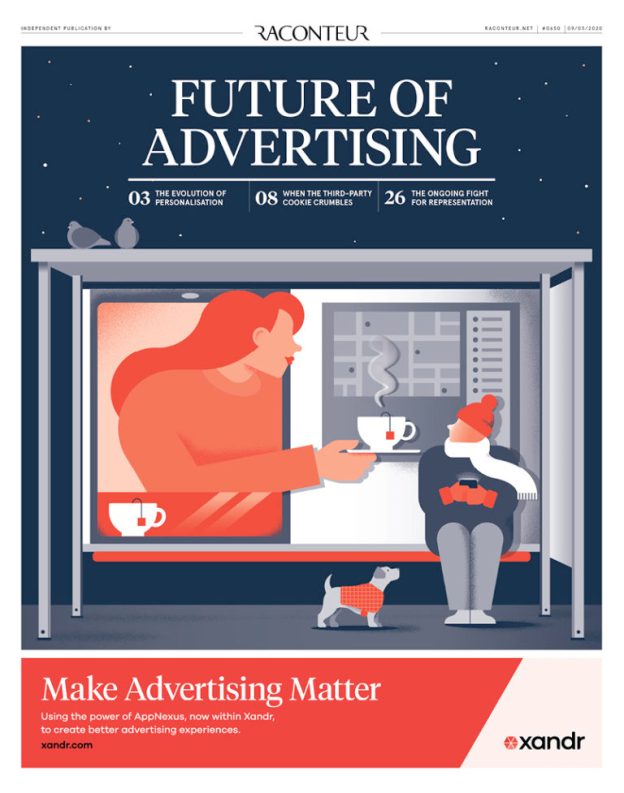
Though we can’t predict the future, we can wager a pretty good guess at times as to how we think all will turn out. However, everything is so up in the air right now. No one really knows what’s going to happen with this Coronavirus and the lives it has touched, plus those it hasn’t reached yet. I came upon this publication covering a variety of topics relative to advertising and its perceived future.
Regardless of the impact of COVID-19, vast changes in the way we do things are inevitable. Touching on several areas of marketing and creativity are key players in the global scene sharing their perspective on advertising and the ways we deliver the message to the consumer. Here are a couple of highlights.
Ads, Authenticity and Action
“Marketing is in a perpetual state of disruption . . . but the best way to deal with disruption is to lead it,” so says Marc Pritchard, Chief Brand Officer, Proctor & Gamble. It’s “constructive disruption” he’s looking for: “There have been many disruptions that have destroyed value but the hardest task is to disrupt in a way that creates value for the consumers we serve.”
As it relates to marketing, he adds “(we want to create campaigns) more superior, more useful and more interesting to the point where people actually look forward to seeing ads.” He continues “The way we’re focused on doing that is by merging the ad world with other creative worlds, with music, comedy, sports and entertainment. So, we can continue to convey the superiority of our brands. But done in a way that is really engaging.”
The Campaign for Creativity
Philip Thomas, chairman Cannes Lions International Festival of Creativity, “believes creativity is essential for business growth, industry and societal change and as a driving force for good.”
“The businesses we work with tell us that embedding creativity requires the right conditions and culture to drive long-term, sustainable growth and impactful brand building.
“For brands and businesses to remain relevant and future-fit, they must continually reinvent.
“In recent years, we’ve seen an emerging trend in creative work driven by purpose. And on Festival stages we have seen brand activism, social justice and diversity lead the discourse. There’s been a recognized shift in the move from purpose and activism to accountability, and of course action.
“With the combination of global reach and power of brands, as well as the expertise of organizations like the UN, and the unbounded creativity of the advertising and marketing community, change for good is truly possible.”
There is no one single “conclusion” or summary statement relegated to the future of advertising. That’s because its state is comprised of various amounts of integral data, cultures, points in time and marketing techniques. It’s complicated and it will change.
The publication Raconteur lays it out nicely and is an interesting read.
We’re still right in the thick of this mess, the Coronavirus pandemic, and with no signs of it letting up. In fact, it’s just the opposite; more cases are reported daily, around the globe. Just about a week ago a little less than 200,000 people globally had been infected while over 7,500 people have died.
In order to try and stop the spread of the virus, the globe’s inhabitants are retreating inward, at least most of them. “Stay home, stay healthy” seems to be the motto of the day. If ET were to re-visit Earth right now, he’s probably wonder, “Where did everybody go?”
Businesses are shutting down and boarding up, as if they’re dealing with some big storm surge. Eating places are delivery or take-out only, if they’re even open. Schools are closing until further notice and most modes of transportation have ground to a halt or have severely curtailed their routes. Grocery stores have become almost barren, especially the paper goods and beverage aisles.
Most everyone is self-quarantining. Very few people are on the roads unless they just have to be.
Writing from Johannesburg, South Africa, Rohan Reddy says, “Our hands have never been cleaner, human contact is being frowned upon, people are getting sick or dying. We don’t care much about advertising or design anymore; mortality is our reality, we care about surviving.
The executive creative director for the McCann Africa network continues, “When 2020 comes to an end, the world we live in will probably look very different from the one we said goodbye to in 2019. And it is impossible to predict what this new world will look like.”
I agree with him. The world is in uncharted waters with this virus. We’re doing good to react, let alone react in some timely manner. Forget about planning and acting on the plan. This stage is in its infancy, though it is forging ahead.
Some corners of the world are doing better than others; Italy seems to have their act together while the U.S. is falling behind and will be doing good to “fight a good fight.”
Reddy again, “Creativity will save the world. People will look to our poets, our artists, our musicians, our dancers, our inventors, our architects, our engineers, our writers and designers to redefine humanity’s purpose post-Covid-19. Businesses will look to their advertising agencies and design studios to redefine how we consume everything from food to fashion to travel.
“Because, at the end of 2020, it will not be business as usual. It will be something completely different. We will spend our money differently, we will save our money differently and we will probably make our money differently too.”
We won’t have to wait until the end of this year for business and living habits to become different. That is happening right now. Our lifestyles and business practices are changing, out of necessity, right before our eyes. We will be “ever-adapting” continuously through the rest of this year and into the near future.
Creativity will play a vital role in how we think, solve problems and present solutions. Creativity won’t be the exclusive territory of advertising. Hopefully, creative thinking and development will be in hyper-drive so that society can be the benefactor.
I think most intelligent people will adopt a much more sincere form of togetherness, a true multi-partisanship. We, as a society, really have no choice. We have to create through togetherness since our survival depends on it.
Past actions of stupidity and greed will be looked upon incredulously. There will be no room for them in our future. Disease, like this COVID-19 doesn’t discriminate when it comes to these fallacies; it also doesn’t play politics.
No matter how long it takes to save ourselves from this pandemic, creativity will and must play a part. That’s creativity in all forms, not just in the creative arts.
Together we need to rebuild into a better, much more aware future. The creative minds among us have a responsibility to craft a sound and viable and livable future for our society.
I agree with Mr. Reddy. As a creative, I can’t do this on my own. I can, however, do it together in forming a creative front to help lead us in progressing forward. We owe it to ourselves, our children, their children, as well as the planet.
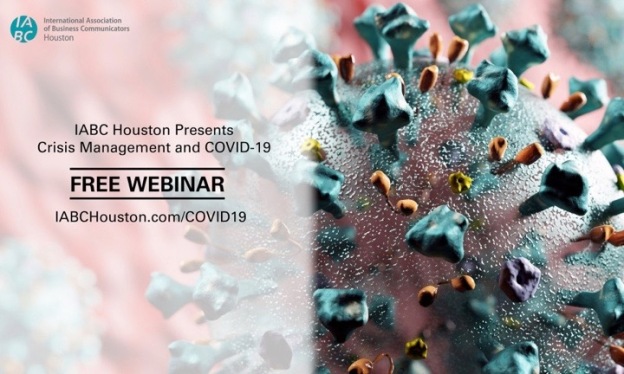
This is a special edition of the Ideasnmoreblog featuring a recent webinar by IABC Houston on the Coronavirus and the impact it’s having on the communication industry.
The Coronavirus disease (COVID-19) has disrupted the global markets and the pandemic is now impacting many within our own community. Schools have closed, local businesses have shuttered, and many are unsure of the long-term implications to their careers and personal health.
In this time of uncertainty, how can we navigate the COVID-19 crisis as communicators? Join IABC Houston and our panel of experts for an informative discussion on crisis management during the COVID-19 pandemic. Our panel will share insights into their corporate response, working remotely, and the importance of maintaining a focus on mental health.
Thank you to all who tuned into the Crisis Management and COVID-19 webinar yesterday! If you missed it, you can watch the full webinar onFacebook or YouTube. Feel free to share the links with friends and colleagues as well.
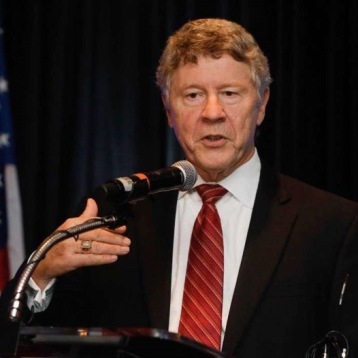
Judge Ed Emmett is the former county judge of Harris County, Texas. From 1979 to 1987, he was a Republican member of the Texas House of Representatives, first from District 78 from 1979 to 1983 and then newly numbered District 127 from 1983 until 1987. After a twenty-year hiatus from politics, he was elected as county judge to head the five-member Harris County Commissioners Court, based in Houston.
Emmett has been awarded numerous awards in his career, including being named Transportation Person of the Year by Transportation Clubs International in 2005, receiving the Presidential “Call to Service” Award from president George W. Bush in 2008, and receiving the 2009 Distinguished Public Service Award from the LBJ School of Public Affairs at the University of Texas. In 2011, Emmett was named a distinguished alumnus of Rice University.
Emmett is now a professor at Rice University, a senior fellow at Rice’s Kinder Institute for Urban Research, and a distinguished senior fellow at Northeastern University’s Global Resilience Institute. He also maintains his transportation logistics consultant practice in Houston, Texas.
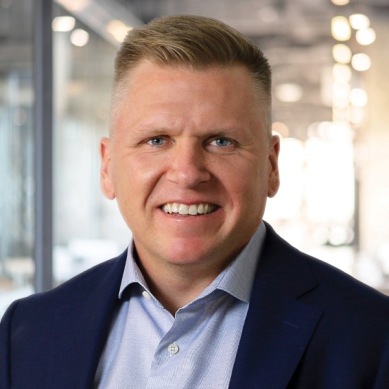
Clint Woods | Pierpont
As chief operating officer, Clint Woods leverages more than 20 years of industry experience to ensure future growth for Pierpont Communications. In order to drive new business and deliver successful service expansions, Clint is responsible for client and employee development, setting firm-wide strategy and overseeing many functions across the agency, such as strategic partnerships, P&L growth and M&A activities.
In addition to leading Pierpont’s energy practice, Clint has worked with clients across a broad spectrum of industries including automotive, retail, enterprise hardware and software, professional services, business intelligence and collaboration tools, financial services and manufacturing. He has led or supported engagements with globally respected brands such as BP, Boston Consulting Group, Group 1 Automotive, Halliburton, Imperial Sugar, TPG Capital, and Wood Group, among many others.
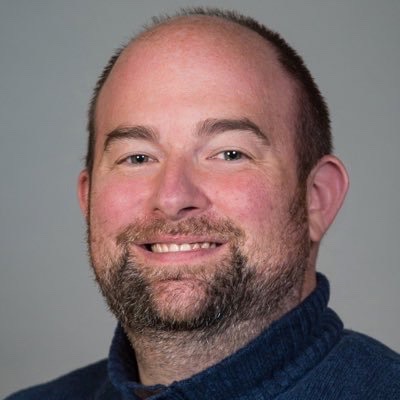
Dr. Chris Yandle | St. Tammany Parish Public School System
A native of South Louisiana, Dr. Chris Yandle is a former college athletics administrator and an award-winning public relations professional at both the K-12 and college level. After spending more than a decade with five different NCAA Division I college athletics programs, he transitioned to K-12 communications in his home state in 2016.
Considered among the leading communications professionals in college athletics, Chris served as the Assistant Athletic Director for Communications at the University of Miami (2012-2014) and Georgia Tech (2014-2016). He was CoSIDA’s university division recipient of the 2014 Rising Star Award. He is the author of Lucky Enough: A Year of a Dad’s Daily Notes of Encouragement and Life Lessons to His Daughter and he continues to share his daily notes on social media in an effort to help parents make non-digital connections in a digital world.
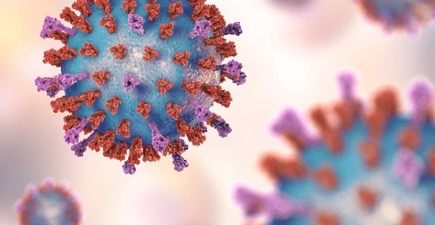
Strikingly bizarre. Amazing how some life form that microscopic can wreak such havoc on mankind.
Global Enemy #1
In some strange way there is beauty among these images. Strange and weird and deadly. Awesome.
Let us never forget what we’re going through, will go through and have gone through.
The Horrors.
The ones we’ve lost and will lose.
Those of us who will survive.
No matter how advanced we think we are, we’re still no match for microscopic life on this planet.
Moscow
Building new hospital
Stock market woes
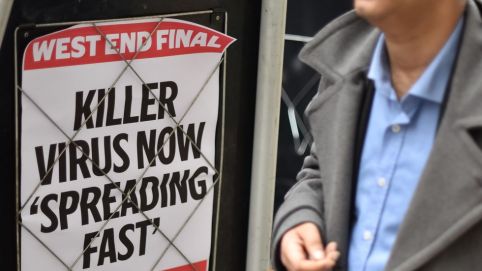
From Hong Kong to San Francisco and Italy to Israel and all points in between, the Coronavirus or COVID-19 has made its mark and as of this writing sees no stoppage.






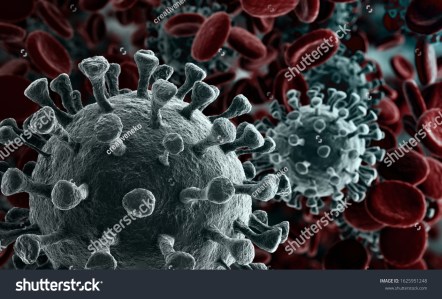
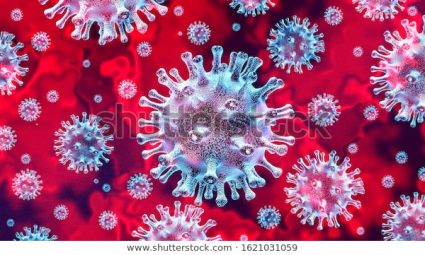
 In some strange way there is beauty among these images. Strange and weird and deadly. Awesome.




 ideasnmoreblog