Which animal would you compare yourself to and why?
A beagle like Snoopy. Very smart and has vivid imagination.

Which animal would you compare yourself to and why?
A beagle like Snoopy. Very smart and has vivid imagination.
I’ve had the privilege of listening to Dr. Firestien on several occasions when attending a webinar from the Center for Applied Imagination at Buffalo State in New York. He’s quite interesting and very personable.
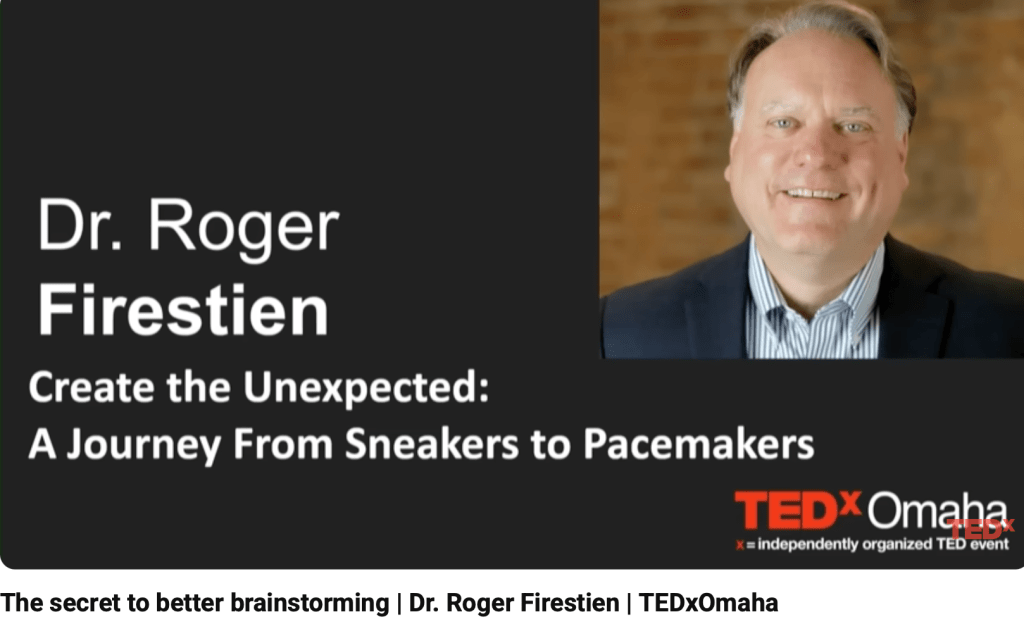
What do a kingfisher, a hazard light and a waffle iron have in common? A creativity technique called Forced Connections, which leads to break through innovations. Brainstorming and coming up with new ideas is easy, we do it every day. Or so we think. The truth is we barely scratch the surface with our ”more of the same ideas”. We fall extremely short with quantity and quality of really good ideas. We miss the mark on really good innovations, because “More of the Same” does not break into big time innovation. Time to shift ideation gears with Dr. Roger Firestien and find out how to use a really simple ideation tool called ‘forced connections’. Not a new technique and certainly not a secret to those who work in the field of creativity, marketing or the business of creating ‘new and different’. However, new to most of us. Game changer. Creativity changer. Innovation changer.
Dr. Firestien is an associate professor and senior faculty member at the Center for Applied Imagination at SUNY Buffalo State and President of Innovation Resources, Inc. He is the author of six books, including Leading on the Creative Edge and Why didn’t I think of that? His expert views on creativity have been reported in Fast Company, Forbes, Investor’s Business Daily and The New York Times. When Roger is not traveling, he lives in Buffalo, New York, and regularly works cattle on the SK Hereford Ranch near Medina, New York This talk was given at a TEDx event using the TED conference format but independently organized by a local community.
Hopefully making a ruckus, one blog post at a time!
Be sure to check out my other blog,Joe’s Journey, for selected short stories and personal insights on life and its detours.
Late last year ADAge’s Tim Rudd penned an article about the alleged death of creativity. Well, some argue that its death may be premature. The campaign described below illustrates that point of view. As Tim reports . . .
Creativity may not be six feet under, but D&AD (Design & Art Direction) is still here to poke it with a stick.
The global creativity nonprofit is kicking off its 2026 award season with a global campaign from Uncommon Creative Studio that pushes the industry to stop hovering over the “think” button and start hitting “make.” Its centerpiece is a manifesto that challenges the too-common habit of watching ideas drift by rather than shaping them into something tangible. The work signals a shift toward more hands-on creative energy at a moment when the industry seems increasingly cautious.
The campaign leans on stark visuals and a single provocative question: Is creativity alive or dead? It stretches across D&AD’s awards, learning initiatives and talent effort, inviting practitioners to respond through action instead of commentary. The rollout also introduces a refreshed identity for the 2026 awards, turning the manifesto into a design brief for the entire program.

Alongside the identity comes the reveal of the 2026 jury presidents, a slate of creative leaders drawn from a mix of global brands and agencies such as Dentsu Tokyo, Airbnb, FCB Global, 72andSunny, Havas Health & You and others. Their remit is to steer the judging with the manifesto’s call for experimentation and decisiveness in mind. D&AD positions the jury presidents as creative figures who already operate with a bias toward making.
“Creativity doesn’t die, it drifts. It gets buried under deadlines, data and fear of taking risks,” said Lisa Smith, D&AD president and Uncommon’s global chief design officer. “This manifesto is a reminder to the industry that ideas are only as powerful as the people brave enough to make them real. As creative leaders, we have a responsibility to protect that spirit—to keep making, experimenting and proving that bold, human ideas still matter. D&AD exists to champion that pulse. To show that creativity isn’t just alive—it’s vital.”


This year’s D&AD awards also introduce new categories meant to reflect the ways ideas move through culture. Brand Transformation spotlights work that blends strategic thinking with the craft of execution. Cultural Influence highlights projects that shape conversation or find a place in the wider cultural bloodstream. Sports Entertainment covers creative output tied to sport from campaigns to content to fan engagement.
“Creativity today is more decentralized than ever, coming from makers, creators, in-house teams and a new wave of independent studios. Our role is to ensure all these voices are equipped and inspired to keep pushing creative excellence forward,” said Donal Keenan, D&AD’s chief operating officer. “Yet in this abundance, creativity risks becoming diluted. Brands are finding it harder than ever to cut through and truly engage audiences, which is exactly why this provocation is needed.”
D&AD is also launching an editorial hub that digs into the same big question at the heart of the campaign. The platform collects commentary from designers and advertisers who are looking at how creativity has changed in a landscape of nonstop feeds and constant distraction.

As long as there are people who continue to push boundaries, creators who are never satisfied, folks who are always curious and a consuming public who always want refreshing and innovative ideas, creativity will never die. It will always be alive and thriving.
Hopefully making a ruckus, one blog post at a time!
Be sure to check out my other blog,Joe’s Journey, for selected short stories and personal insights on life and its detours.
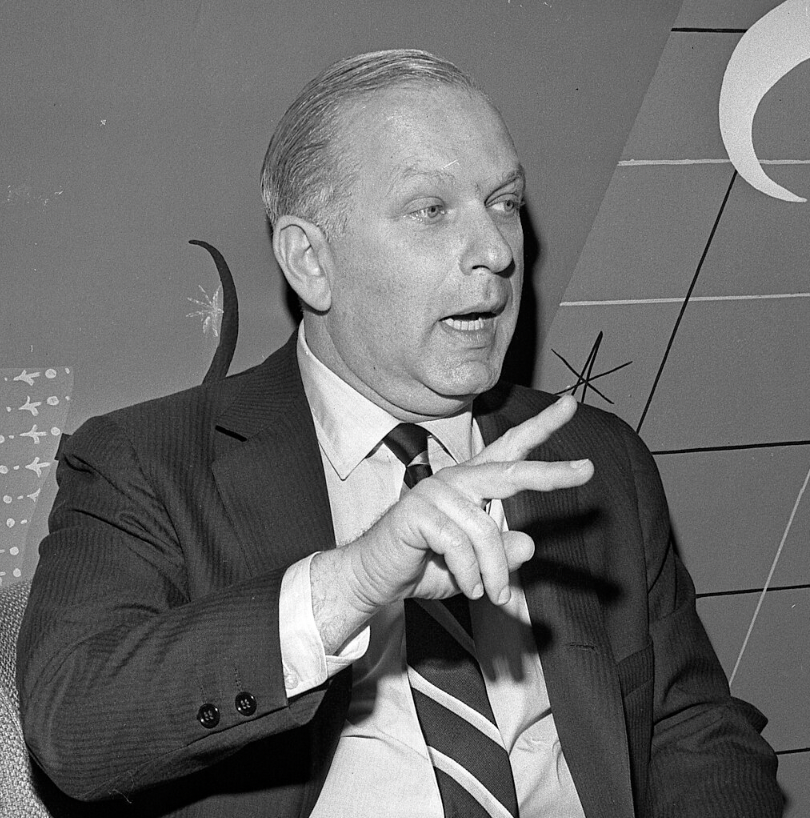
I came across this article last month in one of the industry trade pubs and thought it quite relevant, not to mention interesting. The author, Wayne Best, chief creative officer of VML New York, cites one of the pioneers of creativity in advertising, one Bill Bernbach, as a major force during the sixties. The industry during that time is totally different than it is today. Mr. Best offers some viable suggestions as to how to resurrect, if you will, that creative zest so pronounced during Bernbach’s time.
I’m in total agreement with what Mr. Best suggests. I’ve been thinking the same for years and used to speak on these topics when on the AAF speakers’ junket. Today, with the advent of AI, they have been much more difficult to be realized and put into practice.
Mr. Best writes . . . I have no personal connection to DDB. I have never worked there and have very little knowledge of the culture at the time its name was “retired.” I do, however, have a great deal of respect for Bill Bernbach. I still use quotes he uttered from before I was alive. He ushered in the power of creativity in advertising.
That led me to wonder if his name disappearing (well, the B in DDB) was the end of the era of creativity. I have decided the answer is no.
I will admit that I miss the days when smart, insightful advertising was prolific and opening an awards book was like unwrapping a gift. That’s not to say great work isn’t still happening, but lately it feels like the priorities have been put on data, systems and efficiency. And learning how to best use AI.
These are good things. They are changing advertising for the better. Yes, some jobs will change as a result. For instance, it’s a hard time to be a storyboard artist. But the best storyboard artists have visual taste and can tell a good story. Those skills are still needed; it’s just that the tools that get you there have changed.
So, embrace change and adapt.
Resistance is futile.
That last line is not meant to be eerie. It’s just true. The sooner you acknowledge it, the further you’ll go. After all, the path to great work is to kill good work. Progress requires you to kill your darlings so you’re free to think in less expected ways.
Which brings me to the question: Has “brand” become irrelevant?
I don’t think so.
Yes, media and production efficiencies can optimize our budgets. Customization and transcreation will continue to improve. But there is still an itch that all of that can’t scratch. And that is love.
Great brands have a place in our hearts, and that love still needs to be earned. It starts with a great product, but that’s just the beginning. Steve Jobs didn’t just produce great products; he also found a way to connect with people on a very human level. “1984” isn’t just an ad for a computer, it’s a celebration of individuality and a middle finger to corporations. “Here’s to the Crazy Ones” is about honoring the misfits who are daring enough to think they can change the world. The brand has a distinct point of view.
Data doesn’t do that. And AI aggregates the past rather than finding the unexpected. It doesn’t have the soft skills. It doesn’t have empathy.
That said, I don’t think our quest for data or AI are to blame for our current creative lull.
We’ve made it hard on ourselves to do breakthrough work.
We’ve added layers and layers of decision-makers. We’ve tried to be all things to all people. We’ve become afraid to make hard decisions and take chances, and that’s dangerous, because when you don’t make hard decisions, you sit in the middle. And the world ignores the middle, no matter the media budget.
I’m sure there are things I’m leaving out, but here are five things I know absolutely get in the way of building a great brand. None of them have to do with AI:
1. There are too many people involved in the decision-making. While it’s important to listen to opinions, a camel is a horse designed by a committee. Listening to people is fine, but somebody needs to be the decider, or you will build that camel.
2. If you try to please everybody, you will excite nobody. To be a great brand, you need to have a distinct POV. This means there are a lot of things you need to not say. Deciding what not to say is harder than deciding what to say, because different stakeholders care about different things.
3. Building a brand the right way takes time. We are always in a rush today, and the speed of AI and digital production has us moving faster than ever. Technology helps with the daily work, but to crack the bigger brand work, you need to be thoughtful and deliberate. Impatience is not a virtue.
4. Write shorter briefs. It’s hard. Writing long-winded briefs that everyone can read and find the “thing” they care about covered in the many pages is easy. Finding that sharp, pointed thing you can own in a sentence is hard. But until it gets sharp at the brief stage, you’ll be wasting expensive creative time. Make the hard decisions on what matters, and what doesn’t matter, at the brief stage. Or it will create endless swirl.
5. Never forget the problem you’re actually trying to solve. It’s easy for Walmart to promote deals on its website, but the bigger challenge is making consumers feel good when their neighbors see that Walmart box on their porch. It’s not an accident Walmart started using popular music and celebrities and buying high-profile media. When you keep the bigger goal in mind, it makes daily decisions easier.
I’m still sad when I see the greatest names in advertising dropped into a six-foot hole. But hey, those people were already dead. It’s what we learn from them that matters. If Bill Bernbach were alive today, he wouldn’t be moaning about the death of the print ad, he’d be figuring out how to build a real connection between a brand and the humans who need it given our current environment.
I am bullish on 2026.
As we learn to work with AI, it gets less scary and more helpful. The weirdness of the pandemic is wearing off. Mergers have become less of a shock and more of a way of working. And the best minds I know are anxious to be more creative again. They’re excited to do unexpected and wonderful things.
Let’s roll up our sleeves and get to work.
Hopefully making a ruckus, one blog post at a time!
Be sure to check out my other blog, Joe’s Journey, for selected short stories and personal insights on life and its detours.
I’m on the email list of Buffalo State University’s Center for Applied Imagination and so I receive notices from time to time about upcoming lectures and seminars and the like. The publication cited below is from one of their recent notices.
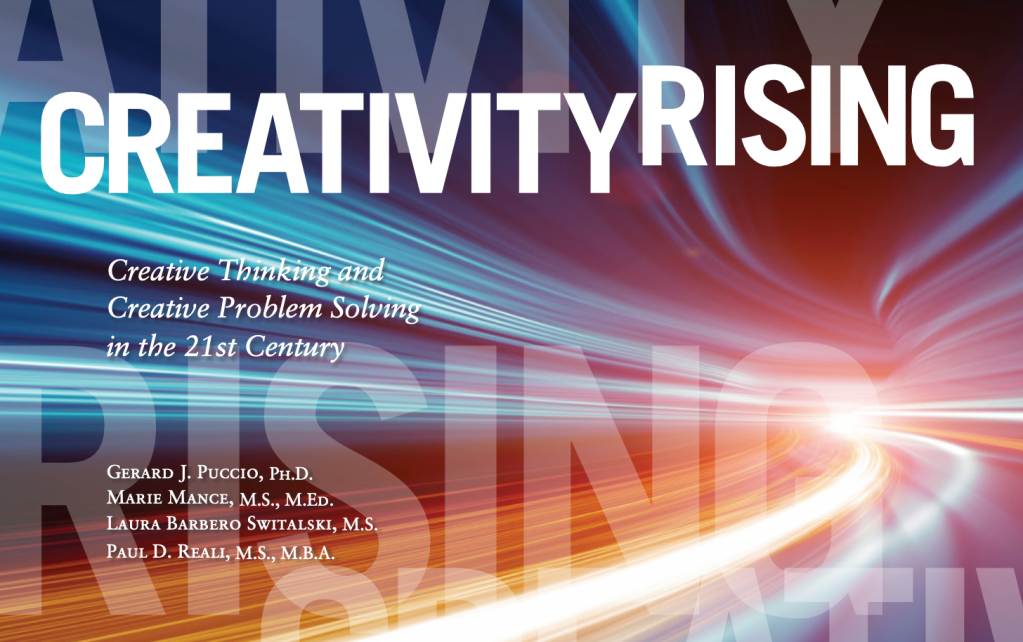
From the authors . . . The need for creativity has never been greater. In fact, we chose the title, “Creativity Rising: Creative Thinking and Creative Problem Solving in the 21st Century,” to reflect this belief. If we are to live healthy, productive lives in this century we must develop the mind-set and the skill set for effectively responding to and initiating change. Creativity Rising is both a why-to and how-to guide to help you create your own future. In this book we: • explore the nature of creativity • debunk common myths about creativity • describe the rapid rise of change in the 21st century • outline the time-tested Creative Problem Solving process, an approach to on-demand creativity.
Hopefully making a ruckus, one blog post at a time!
Be sure to check out my other blog,Joe’s Journey, for selected short stories and personal insights on life and its detours.

Now that we know the Seattle Seahawks and New England Patriots will face off in this year’s Super Bowl, another thing is certain: viewers want funny, celebrity-filled ads—but they are split on the role of AI.
Reporter Erika Wheless said Ad Age partnered with the Harris Poll to gauge consumers’ expectations for this year’s Super Bowl ads by surveying around 1,000 consumers in mid-January.
Seventy-one percent of respondents said they most want to see funny ads, while 46% said that they are most likely to remember a funny ad. Brands are listening—funny spots comprised 70% of Big Game ads in the last three years, according to iSpot.
Technology and AI-generated ads are less popular. The Harris Poll found that 17% of those surveyed most wanted to see AI-generated ads, with millennials being the most open to them (28%), followed by Gen Z (21%).
Respondents were also split on how comfortable they would be watching an ad with AI-generated celebrities, characters, or spokespersons, with 51% feeling “very” or “somewhat comfortable” and 49% “not at all” or “not very.”
This year, Svedka Vodka is bringing back its robot mascot, Fembot, in a fully generative AI commercial. Silverside AI is working on the ad, the same agency that led Coca-Cola’s much-talked-about AI Christmas ad.
Forty-four percent of those surveyed said that they did not like the idea of AI being used in ads or that the use of AI feels fake or misleading. Thirty-six percent said that they would be more open to AI-generated ads if ads disclosed that AI was used, while 33% said they would not be comfortable with an AI ad at all, even if AI use was disclosed, the ad was obviously fictional, or a character or a celebrity approved their likeness being used.
When it comes to the kinds of companies that should advertise in the Super Bowl, 70% of those surveyed think packaged food and drink and snack food companies should advertise, up from 47% last year. That’s good news for the multitude of food and drink brands in this year’s game, including Lay’s, Poppi, Pepsi, Ritz, Liquid Death, Kinder Bueno, Pringles and Nerds.

Seventy-two percent believe restaurants and food delivery apps should have ads, but only 63% of Gen Z agrees. Instacart and Uber Eats return, joined by Grubhub, while DoorDash opts for a social-first strategy.
Gen Zers (in their late 20s) and millennials (around 30 to 45 in 2026) were most excited about celebrity-driven ads, at 40% and 39%, respectively. Last year, 68% of Super Bowl ads featured a celebrity. This year, Pringles teams up with Sabrina Carpenter, Kinder Bueno features influencer Paige DeSorbo, Instacart collaborates with Ben Stiller and Benson Boone.
Gen Z and millennials plan to stay active on their second screens, with 61% and 62% looking up featured brands, texting about ads, and posting reactions on social media.
When it comes to alcohol advertising, there is a generational divide: 67% of Gen Xers (ages 45 to 60) think alcohol brands should advertise, compared to 49% of Gen Zers, reflecting the younger generation’s lower alcohol consumption. Additionally, 70% of Gen Xers believed automotive brands should advertise, significantly higher than Gen Z’s 32%. Thus far, Cadillac and Toyota are the only auto brands to confirm ad buys.
The good news for advertisers is that excitement for the game builds annually, with 82% of those surveyed likely to watch this year’s game on Feb. 8, up from 72% last year and 67% in 2024.
Last year’s Super Bowl drew 127.7 million viewers across Fox, Fox Deportes, Telemundo and the Tubi streaming platform, making it the largest audience in the history of the game, according to Nielsen. NBCUniversal announced in early September that it had sold out of ad inventory for this year’s game, which will air on NBC, Peacock and Telemundo.
Let’s hope this year’s batch of ads will be much improved over last year’s underwhelming batch. Until then, we’ll wait and see.
Hopefully making a ruckus, one blog post at a time!
Be sure to check out my other blog,Joe’s Journey, for selected short stories and personal insights on life and its detours.
Fueling Creativity in Education bridges the gap between the science of creativity and classroom practice, with a focus on both creative teaching and teaching creativity. Since launching during the pandemic, we’ve interviewed over 100 leading researchers, educators, and administrators.
Hopefully making a ruckus, one blog post at a time!
Be sure to check out my other blog,Joe’s Journey, for selected short stories and personal insights on life and its detours.
Canadian graphic designer Jean-Pierre Lacroix explains how creative agencies and brands can make better use of generative AI by using it to expand team creativity.
As in the past I came across this article on the Web and thought it both interesting and inspiring. Given our challenging times, I think you will too. Enjoy!

Every brand and agency is trying to tap into the promise of generative AI. So far, the results don’t always meet expectations. Is that so surprising? AI is brand new technology that no one fully understands, including its creators. Right now, we’re in an era that calls for experimentation. Results will come, but maybe not how we imagine. In the meantime, we must adopt a human-centered approach to AI, enabling creative teams to use AI as a platform for thinking differently and learning.
So far, the best AI brand activations aren’t AI-generated ads or design. Successful examples of creatives using AI have a distinctly human perspective. For example, Heinz created an ad showing the audience what happens when they prompt AI to create images of ketchup: it reproduces hundreds of variations of the iconic Heinz bottle design. No matter how they try, according to the ad, they can’t get AI to drop the Heinz label because it’s synonymous with ketchup.
Although the ad shows AI-generated imagery, Heinz is cleverly using AI to make a point about their brand rather than to generate and execute a creative idea.
On the other hand, when companies try to generate creative using AI, even the best work requires enormous human effort and it doesn’t always come off well with consumers. That may change, but today, AI-generated material just doesn’t look and feel right. The fear that AI will take jobs away from humans causes concern in some scenarios, for example with the use of AI-generated models.
How should creative teams be using AI today? It’s about testing and learning to develop skills and confidence. No one can say for sure how AI models will evolve but being prepared means teams need to start experimenting now.
Create a cross-functional team assigned to explore AI tools relevant to their roles. Tracking and testing new models, staying informed about potential legal concerns and gathering case studies will ensure you have a strong foundational knowledge to guide decision-making.
Establish guidelines for AI use at your company. You’ll need someone who’s on top of legal matters, keeping in mind that various legislation is pending in many regions. You also need to understand how your consumers or clients perceive AI. Although there are some who hate AI no matter the circumstances, for most people, context matters. Conduct research with your stakeholders to make sure your intended uses align with their preferences. Provide your team with an approved list of licensed tools to use and establish a process for testing new ones.
Try, fail, try again. At our company, we created an AI self-assessment platform that allows brands to evaluate their design against a competitor through the lens of our branding philosophy. This was a test-and-learn scenario that resulted in numerous unsatisfactory iterations, ultimately leading to a beta model that runs well, albeit with some caveats. (You can test it for yourself.) As we continue to improve the tool, our team continues to learn. Don’t expect perfection because you won’t get it. Building confidence, knowledge and skills should be the goal.
Be transparent. If you work with clients, gauge their comfort level with AI and give them the option to opt out if you intend to make it part of your workflow. Something as simple as AI notetaking may run counter to privacy policies, for example.
Protect your privacy and the privacy of clients. Before using any AI platform, ensure your IT team reviews their data policies. This brings us back to establishing guidelines. Ensure that everyone at your company is aware of which platforms they’re permitted to use, and that the appropriate people have licensed accounts where data will be kept confidential.
The hype around AI may lead some to think creative work can be completed faster and at a lower cost. At this stage, efficiency-finding with AI is only possible if you significantly lower your standards. Most creative agencies and brands would likely agree that AI can be useful in ideation but isn’t as helpful in execution.
For example, we’ve found that even when given clear design guidelines, it’s very difficult for AI to create final art for packaging that works in real life. We’ve found it useful for editing images, brainstorming a hundred ways to depict a watermelon and general ideation. But so far, human creatives are still significantly better at everything else.
AI does a decent job writing emails and copy for social media, but that too is bumping up against some limitations. Consumers are starting to recognize the tone of AI-generated copy and they find it grating.
AI is best suited to help structure content, create headlines and keywords and clean up copy. Marketers shouldn’t let their writing skills decline! AI can decipher what makes a clickable headline, but it doesn’t have any fresh ideas – it’s a solid Beatles cover band, but it’s no Lennon or McCartney.
Where we’ve found it most useful is with coding, where it helps us do more in a shorter time frame. However, teams still need to be proficient enough to know how to prompt for the right code and how to correct mistakes.
One of the most common consumer-facing uses of AI is chatbots. They give us insight into the human connection gap that can occur with AI. Although serviceable and polite, AI chatbots annoy people. We know they’re not human and this changes the way we treat them.
Consider the Taco Bell drive-through incidentwhere a customer derailed an AI chatbot by ordering thousands of glasses of water. In cities with fleets of self-driving cars, they often get stuck and cause traffic jams because drivers won’t let them in the way they would a human driver.
Then there are the many incidents of people assaulting robots, especially humanoids. As much as we love a fun tool to play with, creatives can’t ignore the dehumanizing potential of AI.
How do we deal with this? The answer isn’t ignoring AI but learning how to use it to support human ideas and interactions. If what the utopia tech companies are selling is achievable, it will be because users engage with it thoughtfully. Creative teams are in a great position to lead this kind of conscientious, intelligent use of AI.

Hopefully making a ruckus, one blog post at a time!
Be sure to check out my other blog, Joe’s Journey, for selected short stories and personal insights on life and its detours.
This story is part of Ad Age’s Future of Advertising 2030 series exploring how marketing, media and creativity will evolve over the next five years.
Advertising agencies are in the process of setting strategies for the next five years despite numerous unknowns—the impact of AI, speed of consolidation and increasing ease of in-housing among them. These variables may have wide-reaching impact, including the potential demise of mid-size agencies, that marketers should be preparing for now.
On Ad Age Insider, Ad Age reporters look at the future of ad agencies and strategies that industry leaders are putting into place now to prepare.
“A lot of [agencies’] executional work becomes commoditized by AI, and a lot of marketers will have pretty robust in-house systems. So the real value and agency lie in their strategic thinking and being able to bring an outsider perspective to the equation.” –Ewan Larkin, agency reporter, Ad Age
Parker Herren, host: How will the agency landscape transform by 2030? What has surprised you guys the most in your reporting on the future of agencies?
Brian Bonilla, senior agency reporter: It’s hard to be surprised, but I would say something that might surprise people in general—the role of the mid-size agency might go away by 2030, meaning we’re already seeing a lot of small, independent agencies get a lot of business, but we’re now starting to see those same agencies competing with each other and competing with large agencies and seeing a leveling of new business opportunities. And at the same time, mid-size agencies, which typically range from like 100 to maybe 250 employees, are competing with large holdco networks of like 5,000 employees for the same business.
So by 2030, you’re going to see those mid-sized agencies either merge with other entities or sell to private equity firms or things like that. That’s going to be something that might be surprising for a lot of people, and I think will happen quicker than people realize.
Ewan Larkin, agency reporter: This is interesting. For a couple of years, agencies have been trying to market themselves as consultants, and it hasn’t really stuck. To some degree, it has, but I think it’s obvious they are still service providers fundamentally. But I actually do think now we might see that shift start to stick a little bit. A lot of the executional work becomes commoditized by AI, and a lot of marketers will have pretty robust in-house systems. So the real value at agencies lies in their strategic thinking and being able to bring an outsider perspective to the equation.
I think that puts them in direct contact … with the likes of Deloitte Digital and Accenture Song. So the focus for agencies really should be building up some of those consulting capabilities and commerce consulting capabilities. Agencies like VML are already starting to do this. They rolled out a unit earlier that encompasses consulting, CX and other things, and that already accounts for about 40% of their overall global revenue. So, I expect more people to make moves like this. This is one of the early stages of holding companies really being able to package up one of those offerings.
Parker: For Ad Age’s Future of Advertising package, media reporter Brandon Doerrer wrote about 2030 readiness. And chief technology reporter Garett Sloane dug into the 2030 tech stack. That sounds pretty thrilling. What did you guys find in your reporting?
Brandon: People tend to think that there are just going to be more and more integrated accounts, especially between creative and media. The walls are really coming down between those two functions. We are seeing brands increasingly hire the same agency to handle both of those functions. So, agencies are going to need to get used to those two functions not being in silos anymore, not having walls exist between those two teams.
Garett: We’re already starting to see these roles change. We’re seeing shifting ways of billing clients, different business models, different services agencies have to cater to. So, it’s already happening. It’s going to happen more and more where agencies are going to have to operate as platforms and services that can interact with brands and help brands build their ad tech stacks, acting as consultants, acting as facilitators into this futuristic landscape.
That’s where agencies need to go, and they’re starting already by developing new products and services. Whether that will work is still an open question, and if they can adjust and change—some will, some won’t.
Parker: Let’s talk influencers. Gillian Follett covered the future of the social and influencer space. Is there any way the future of influencers will impact agencies in 2030?
Gillian: Experts that I talked to for the story said that they predict the spectrum of influencer agencies will stretch to the extremes. So, we’ll see more brands working with influencer functions within larger holding companies, or we’ll see brands looking to very specialized boutique agencies who specialize in specific platforms or types of creators, like gaming creators, for example.
We’re also going to continue to see influencer budgets increase, not at the same meteoric rate that we’ve seen over the past couple of years, but based on forecasts from intelligence companies like eMarketer, it’s definitely on an upward trajectory.
We’re also seeing a resurgence of social agency of record assignments from brands across different categories. Something that I spoke to one marketer about was this idea that it’s not just the brands that are trying to target Gen Z or want to be social-first anymore that are looking for social AORs. It’s brands that they wouldn’t expect, like more established legacy brands are looking for social AORs. And a lot of these brands are seeking the insights that social media can provide in terms of what consumers are looking for, the types of products that they’re craving and using social as the foundation for their marketing campaigns rather than having social be a tacked-on piece at the end.
Parker: Okay, Lindsay, I’m going to let you round out this group with some intel from your reporting on the RFP process in 2030.
Lindsay Rittenhouse, senior agency reporter: Within the RFP process, agencies are going to have to stop the theater—the glossy presentations, the pitch decks, and really showcase how you’re working as a team. Get ready to be in more chemistry meetings—enough with the showboating and the theater in the pitch.
Parker: Tell us how marketers should begin preparing for that now.
Lindsay: Well, they have to set up the process so that there are more chemistry meetings and more time for the meatier stuff, the interviewing, the briefings, the working together, and just get rid of some of the processes. You don’t have to do these massive pitch presentations. [Marketers] are the ones who set the process for the RFP, so don’t allow the theatrics.
Parker: I want to hear everyone’s advice for how marketers or agency leaders can begin prepping for their 2030 strategy. Why don’t we just go round robin, starting with you, Brian.
Brian: Start thinking about what type of agency model do you want as a marketer. We’re seeing roster agency models become way more popular, meaning instead of having just one AOR handle everything, I’ll have a social agency here, I’ll have a creative agency here or I’ll have a roster of five creative agencies.
If you’re an agency, start thinking about what model makes the most sense for you to be in—should I be more niche or should I broaden my capabilities? And as a marketer—same question but on the flip side. If I’m going to be spending less on marketing, but I’m expecting to have more outcomes, what is the best model that makes sense for my external partnerships? Because I do think agencies will still be necessary as much as we’re talking about in-housing and things like that.
Ewan: They need to clarify which functions they want done in-house, which ones they need outsourced, very clearly defining what they can do themselves versus what is essential that they get from an external partner. There is a push for efficiency, and, obviously, everybody wants to save costs, so they want to bring it in-house, but you are going to need an external partner. You always do need that outside perspective. So, very clearly define what needs to be done yourselves and what you need an agency for.
But rethinking agency relationships in general—they’ve always been seen as providers, that’s what they are, but now a lot of them are going to be actually helping build those internal capabilities. So identify which agencies are high-level strategic thinkers, which ones really understand your brand and your challenges, which ones can help me build my internal chops. Those are the ones that I think are likely to have long-term value.
Brandon: On the agency side of things, if you’re a creative agency and you don’t already have media capabilities, really digging in and evaluating if it would be worth building that out. If you have a unique angle, something to offer brands to make yourself stand out from the plethora of media agencies that can do the same thing. Media is probably in a similar boat. At least having an understanding of various creative processes is going to be helpful.
On the marketer side of things, brands can just not be afraid to ask. I did a story not too long ago about how indie creative agencies can respond to requests for media services. And the reason why agencies are starting to think about either building these capabilities internally or which media agencies they can partner with is because they’re getting these requests. Marketers—don’t be afraid to ask if you have an indie creative shop that you’re working with that doesn’t do media. They’re getting used to getting that question already, and they are starting to think about how to best answer that question. So, no dumb questions is the advice.
Garett: They could start developing the services and tools, and some are. We’ve seen agencies launch AI agents—the trading bots that they can all of a sudden potentially give out to brands to start to use. A lot of these tools that agencies are building are internal, but eventually, they’re going to make them external and start shipping them to brands to use as part of their suite of services. So, agencies start building internally and then will start giving it out to the masses.
Gillian: Brands should start considering whether they want to look to agencies to help them with sharpening their social strategies to adapt to this new way of seeking consumer insights from social and using social as a starting point for marketing. For some brands, it might make more sense to develop a social media team in-house to lead these efforts for the brand. Some brands have sought social media agencies of record because of the wide range of functions that are involved in social media marketing today, like paid social, creator marketing, social media intelligence gathering. There’s just a lot that goes into it these days.
Brands should start considering whether that’s something they can do in-house, or if they need to find partners to help them develop those strategies as social becomes more and more important.
Hopefully making a ruckus, one blog post at a time!
Be sure to check out my other blog, Joe’s Journey, for selected short stories and personal insights on life and its detours.
The 4As hosted a roundtable with Ad Age and seven industry leaders from holding companies and independent agencies at Advertising Week New York to discuss some of the most pressing issues facing executives today.
Lindsay Rittenhouse reported that the roundtable included a lineup of executives spanning a wide range of roles and companies: 4As CEO Justin Thomas-Copeland; Stacey Hightower, CEO of Omnicom Specialty Marketing Group; Frances Webster, CEO of independent agency Walrus; Tracey Faux-Pattani, CEO of independent shop Butler, Shine, Stern & Partners; Chris Foster, CEO of Omnicom Public Relations Group; Ian Grody, chief creative officer of independent shop Giant Spoon; Joe Baratelli, executive VP and chief creative officer of independent agency RPA; and Nada Bradbury, CEO of Ad-ID, which sets a standard for the industry to identify advertising assets across all media.
These leaders discussed a wide range of topics, including how they are using AI in their day-to-day; how they are driving value in their agencies; the means to stand out in an increasingly crowded market; and what talent they are hiring.
Some takeaways from the conversation:
Webster said Walrus is using AI to respond to an “RFI right now … it’s helping us with upfront strategy and segmentation.”
“It’s like the internet from the ‘90s, you’ve got to surf the wave and you can’t have a two-year plan,” she said. “It’s a three-month plan or a six-month plan. But if you’re not engaging with it, you’re out.”
Hightower said Omnicom Specialty Marketing Group has been using AI in Europe “for quite some time.” He said the agency created a call center that has been using AI to speak with customers who dial in on branded hotlines. It’s also now bringing internal efficiencies. For example, Omnicom Specialty Marketing Group uses AI to sift through resumes.
“We do probably 5,000, on average, hires a year in Europe … We can’t get to every resume that comes into our inbox,” Hightower said.
“We’re an indie shop, so we’re bootstrapping everything,” Baratelli said. “We’re using it around the stuff no one wants to do, reporting, scoping.”
The conversation came on the heels of Madison Logic releasing new research from a Harris Interactive survey of more than 300 business-to-business marketing leaders. It found that three in four of those surveyed believe the future of advertising will be defined by AI-driven creative processes (73%) in the next five years. Two in three of those surveyed predicted personalization at scale and immersive advertising (66% each) will become more prevalent, and 84% believe traditional advertising will be dead by 2030.
Still, all of the executives agreed that advertising is a relationship business and nothing will change that.
“It’s important to point out that these are all really responsible uses of AI,” Ad-ID’s Bradbury said. “What we are seeing on our side is folks trying to understand the various uses of AI. So everybody does all this great work [and] we’re getting calls saying, ‘Can you help verify this for me? Is this a product that came out of an agency? There’s this other layer that you just can’t control [AI] that we need to start to wrap our arms around it.”
AdAge asked what jobs are most in demand right now and strategy was the one definitive.
Faux-Pattani said BSSP is always on the hunt for great strategists, but noted that the shop sometimes struggles to find truly top candidates in that space. She said curiosity is always needed in that role, but the agency has had a hard time finding candidates who have curiosity that is “intuitive” versus “data curiosity.”
The strategy role is also shifting and putting more pressure on professionals in those roles.
Since clients are buying more “connected solutions,” agencies need strategies to be adept in everything from “commerce to brand, to media, to analytics, to creative understanding,” Thomas-Copeland said. “I don’t know any strategies that can do all of those things really well. And then at the same time in the room there was a call for strategy as a function to be front-of-house with clients. So suddenly they’re in a new environment.”
Webster argued that strategists and account people now have to “battle together … as an account strategist, you really need to understand your client’s business much better than they do.”
Most of the executives said there is a lot of opportunity to win new pieces of business, but they are far-ranging in size. Industry and agency leaders also have to be strategic in deciding what accounts to go after.
Health care agency reviews are on the rise, for example, and Faux-Pattani said she sees a lot more “emerging brands” looking to hire shops right now.
In terms of the boon in health care agency reviews, Thomas-Copeland said that category has always been more “resilient” to macroeconomic factors. Still, 4As agency members have told the organization that even within health care marketing, “projects are not being solidified … in terms of planning and commitments, there’s a bit less of that,” he said.
Thomas-Copeland said agencies are having to place “their bets on where they’re going to look for opportunity, and trying to get really good at judging what is an opportunity that looks like it has some longevity, versus the one-and-done.”
“We’ve been very selective over the past 18 months or so in terms of the clients that we pursue from a business perspective and it’s worked,” Giant Spoon’s Grody said. “Over the last six months, we’ve won 67% of our pitches. The reason is we go after fewer, bigger, better and then we find smaller clients where we see that profound growth potential.”
Webster said Walrus has had success going after emerging brands that have reached $200 million to $400 million in revenue and are “ready to spend. They’re either getting ready for an IPO or sale, or they’ve just sold and need to show return on that investment,” she said.
For Omnicom Public Relations Group, Foster said it’s a much different situation.
“We will probably chase 2,500 RFPs in the course of a year,” he said. “We’re doing 100 or so a week as a network, if not more. The deal flow is very different in PR than advertising and media … in Europe, I’m seeing competitive consolidation in the marketplace, and so the deal sizes are small because there’s just a lot more competition.”
Faux-Pattani said she’s starting to see more intimate pitches with two or three competing shops, versus somewhere between four and six, which she welcomes. She said she sometimes will turn down a pitch if there are too many shops vying for the account.
That might be good for the agencies invited to pitch, but that means there are even fewer opportunities to get a foot in the door. The executives discussed how they are standing out in an increasingly overcrowded market that sees new agencies popping up seemingly every day to compete with holding company shops and independents alike.
“There are 14,000 agencies out there,” Webster said, making it more pertinent to understand your niche and where it makes sense for you to show up as an agency. Walrus, she said, goes after the opportunities it wants, rather than waiting for them.
“We have a robust sales department, PR program and outreach program,” she said. “For these smaller pieces of business, too, it’s much easier to hunt—to prospect, build, identify opportunities and make relationships, so we’re not actually having to go into a pitch. We close a lot of business that way.”
Hightower said Omnicom Specialty Marketing Group promotes itself through “product innovation and storytelling.”
“In Europe, we will pitch a suite of modalities, so we’ll say, ‘Give us your budget and we’ll figure out the best way to implement your spend across a number of modalities,” he said. “That has resonated well in that marketplace. In the U.S., it’s been through technology, building platforms where we are able to acquire data about the client, about their value chain, and then providing them feedback that can help them reduce costs and get more bang for their buck.”
Despite the conservative backlash to diversity initiatives, the executives said they remain committed.
“From a 4As standpoint, the focus will continue to be on inclusive teams, and inclusive teams are great for business, they’re great for being an economic multiplier, they’re great for brands being much more in tune with the market,” Thomas-Copeland said.
Webster reiterated that point, saying companies with diverse boards and teams outperform those that are not.
“We’ve always been committed to inclusivity,” Grody said. “We remain committed to inclusivity. Nothing has changed.”
Hopefully making a ruckus, one blog post at a time!
Be sure to check out my other blog, Joe’s Journey, for selected short stories and personal insights on life and its detours.
 ideasnmoreblog