How Effective Can Creativity Be In The Age of AI?

The advertising industry has seen beaucoup changes over the past few years. One recent change that is sweeping the ad scene is Artificial Intelligence or AI for short. We’re still grappling with it.

Man and AI robot waiting for a job interview: AI vs human competition Credit: Adobe Stock

With this in mind, I came across an article written by the Op-Ed Contributor of MediaPost, Manjiry Tamhane, who sheds a fairly comprehensive take on AI and how best to understand it and cope with it to enhance our creativity and, in turn, our marketing and advertising. It’s a bit of a long read but worth it.

Writes Manjiry . . .

The marketing landscape is undergoing a seismic shift. The rise of artificial intelligence (AI) is not just transforming how brands engage with consumers—it’s revolutionising how we measure, optimise, and ultimately prove the value of creativity itself. For marketers eager to demonstrate the tangible impact of their creative work on sales, AI-powered measurement techniques offer an unprecedented opportunity.

This is an exciting, future-focused moment for our industry. Creativity has always been at the heart of effective marketing, but now, thanks to AI, we can finally unlock its full commercial potential with scientific precision.

Why Creative Effectiveness Is More Important Than Ever

In a world where consumers are bombarded by thousands of messages every day, creativity is what cuts through the noise. It shapes perceptions, drives engagement, and builds lasting brand equity. However while media optimisation—deciding where and when to place messages—has long been a focus, it’s increasingly clear that creative quality is just as critical. In fact, research from the Institute of Practitioners in Advertising (IPA) suggests that up to 49% of a campaign’s sales uplift can be attributed to creativity.

Yet, for years, measuring the true impact of creative ideas and executions has been notoriously difficult. Marketers have often relied on intuition, anecdotal evidence, or basic metrics such as impressions and click-through rates. While tools like ad recall surveys, focus groups, and creative awards offer some insight, these methods frequently fall short of capturing the full contribution of creativity to business outcomes. Traditional measures tend to overlook how creative quality drives emotional engagement, brand equity, and importantly, sales impact. 

Enter AI. With the advent of advanced data analytics and machine learning, we now have the tools to decode what makes creative work effective—and, crucially, to link it directly to sales performance. 

The Evolution of AI in Marketing: From Data Mining to Generative Models

To appreciate the transformative power of AI, it’s worth reflecting on how far we’ve come. In the 1990s, AI in marketing was largely limited to rule-based systems—useful for direct marketing, credit scoring, and basic customer segmentation. The 2000s saw the rise of machine learning and web analytics, enabling marketers to understand online behaviour in new ways. 

The 2010s ushered in the era of deep learning and personalisation. AI could now analyse unstructured data—images, text, even video—at scale, powering everything from chatbots to personalised recommendations. Fast forward to today, and generative AI models like ChatGPT, Gemini, and Llama are producing compelling copy, visuals, and even video content tailored to specific audiences and platforms. 

What’s changed most dramatically is speed and scale. Since 2010, the cost of computing power has plummeted, while the volume of global data has exploded. This abundance of data fuels ever more sophisticated AI systems, capable of processing information and generating insights in real time. While AI has enabled marketers to analyse vast datasets and uncover patterns, we are now entering an era defined by ‘agentic AI’—artificial intelligence systems that can act with autonomy and initiative. These AI agents are capable of proactively managing tasks, making decisions, and optimising campaigns in real time. 

For marketers, this means moving beyond hindsight (what happened) and insight (why it happened), to true foresight—predicting what will work best before campaigns even launch.

Cracking the Code: How AI Measures Creative Effectiveness 

So, how does AI help us truly understand the effectiveness of creative work?

The answer lies in the ability to analyse vast numbers of creative assets—across multiple channels, formats, and iterations—and extract the features that drive results. With agentic AI, intelligent agents can autonomously evaluate creative assets, identify high-performing elements, and recommend improvements, freeing up human teams to focus on strategy and ideation.

Here’s how next-generation AI-led techniques are transforming creative measurement:

1. Feature Importance

Machine learning models can automatically score each creative feature—be it a visual element, tone of voice, messaging, or format—against key business outcomes such as sales or brand lift. By connecting creative features to end-market measurement, marketers can pinpoint which elements have the greatest impact, and which may be holding back performance.

2. Feature Testing

With thousands of creative variations running across different channels, it’s impossible for humans to keep track of what works best. AI analyses past campaigns to identify which combinations of features consistently perform well. AI agents can continuously test and learn from past campaigns, autonomously adjusting parameters to find optimal combinations. This enables teams to establish rules and guidelines for future creative development, ensuring that each execution is built for success.

3. Predictive Modelling

Perhaps most excitingly, AI allows marketers to simulate and predict the likely performance of creative assets before they go live. If a particular advert underperformed, predictive modelling can reveal which features—if added or emphasised—would have boosted its impact. This empowers creative teams to experiment boldly, iterate rapidly, and optimise campaigns with confidence.

4. Content Recommendations

Advanced AI models don’t just diagnose problems—they prescribe solutions. By analysing patterns across successful campaigns, AI can recommend specific changes to creative content, such as introducing the brand name earlier in a video or adjusting the call-to-action for greater clarity. Crucially, these recommendations respect brand guidelines and ensure consistency across all touchpoints.

5. Visualising the Brand Space

AI can also map out the “creative execution space” for a brand and its competitors, revealing who owns which creative territories and where there may be opportunities for differentiation. For example, analysis of fast-food advertising in the US has shown how one brand’s creative approach began to encroach on another’s distinctive territory—insights that would be nearly impossible to glean manually.

AI Across the Funnel: Precision at Every Stage

While AI is transforming creative measurement, it’s important to remember that the fundamentals of marketing remain unchanged. At its core, marketing is about guiding customers through a journey—from awareness and consideration to conversion, retention, and advocacy. 

What’s changed is how AI enables us to execute each stage with unprecedented precision and agility: 

Top of Funnel: AI analyses massive datasets to segment audiences and optimise ad placements, maximising reach and impressions. 

Mid-Funnel: Personalisation engines ensure that potential customers see content tailored to their needs, while predictive analytics anticipate what information or incentives will move them closer to purchase.

Bottom of Funnel: AI streamlines the conversion process, optimising landing pages, personalising calls-to-action, and automating follow-ups.

Post-Conversion: AI-driven customer service tools provide instant support, while predictive models trigger retention strategies and suggest complementary products.

At every stage, AI helps marketers model key performance indicators (KPIs), attribute value accurately, and optimise investments for maximum growth. Crucially, it is creative that acts as the catalyst, moving consumers seamlessly through the funnel—from capturing attention at the awareness stage, to sparking interest and consideration, driving action at conversion, and fostering loyalty post-purchase. By harnessing AI to measure and refine creative effectiveness at each touchpoint, brands can ensure their messaging not only reaches the right audience but also resonates powerfully, guiding consumers along the journey and maximising the impact of every marketing investment.

Taking Action: How to Embrace the Future of Creative Measurement

To harness the full potential of AI-led creative effectiveness measurement, brands should consider the following actions:

  • Adopt a Data-Driven Mindset: Invest in AI-powered tools and talent to move from intuition to evidence-based creative strategies. Make data central to every decision.
  • Foster Experimentation: Encourage rapid testing and learning, using AI to simulate and refine creative concepts before launch. Create a culture where experimentation is celebrated and failure is seen as a step towards improvement. 
  • Align Creativity with Business Goals: Use AI insights to ensure every creative decision is linked to measurable sales impact, not just aesthetic appeal or awards.
  • Assess Organisational Readiness: Evaluate your organisation’s data, technology, and people to ensure you’re equipped for sustainable, AI-driven growth. Tools like the Marketing Impact Readiness Assessment (MIRA) can help benchmark your capabilities.
  • Prioritise Privacy and Ethics: As you embrace AI, ensure robust governance and transparency around data usage. Build trust with customers by being clear about how their data informs creative targeting and measurement.

A Bold New Era for Creative Effectiveness

AI isn’t just reshaping creative development—it’s redefining how we measure, optimise, and prove the value of creativity. However, the true power of this new era lies in the collaboration between human ingenuity and AI-driven insight. While AI brings speed, scale, and analytical precision, it is human creativity, intuition, and strategic thinking that inspire ideas, craft compelling narratives, and connect emotionally with audiences.

Credit: Adobe Stock

Brands that embrace these future-focused techniques—harnessing the best of both human talent and artificial intelligence—will lead the way, delivering campaigns that don’t just look great, but drive real business results. The future of creative effectiveness is bright, bold, and powered by a partnership between imagination and intelligence.

Now is the time to combine your team’s creative vision with the transformative capabilities of AI, creating marketing that inspires, engages, and delivers measurable growth. 

Are you ready to seize the opportunity? The next chapter of creative effectiveness starts now—with humans and AI working together.

What form that will take, who knows. One thing’s for sure; it’s the next stop on Creativity’s journey to persuasive excellence.

Hopefully making a ruckus, one blog post at a time!

Be sure to check out my other blog, Joe’s Journey, for selected short stories and personal insights on life and its detours.

We All Need a Little Spark of Creativity.

Adobe Stock

A few weeks ago I read a piece from the New York Times about a man who cultivated his creativity at a young age. While we all may not echo his circumstances, we can sure learn from them. Every one of us needs a little spark of creativity now and then to make life a wee bit more interesting . . . And fun.

*****

Last May, my father-in-law showed up at my house with a child-size drum set in his trunk. That might make some parents shudder, but I was thrilled. I was a drummer when I was younger, with a set just like this one, and now my 7-year-old son could follow in my footsteps.

I’ve learned two things in the year since. First, you can’t force your kids to like the things you like; my son has probably played those drums for 15 minutes total. More important, though, I learned that I wasn’t a former drummer. I’m still a drummer. Even though I hadn’t engaged that part of my brain in years, my trips downstairs to do laundry now usually include a few minutes bashing on that little drum set. I’m not making beautiful music — just ask my neighbors — but I’m having a great time. Every little session leaves me feeling energized.

That spark of creativity is something my colleagues at Well, The Times’s personal health and wellness section, think everyone could use more of. Starting tomorrow, they’ve got a five-day challenge that aims to help readers nurture their creative side. I spoke with Elizabeth Passarella, the writer behind the project, to learn more.

After years away from the drums, I’ve been shocked by how good it feels to make music. Why is that?

What you feel is what many of us feel when we do something creative: giddy and inspired. Whether you do something more traditionally creative, like draw or play music, or riff on a recipe because you were out of an ingredient, it gives you a little boost. And there is plenty of research that links creativity to happiness and better moods.

Some people reading this are gifted painters and musicians, I’m sure. But others would probably say that they don’t have much artistic talent. What would you say to them?

You are all creative in some way. There’s a definition of creativity that researchers use: generating something novel that is also useful. That could be the score to a movie. It could also be, as one expert told me, a brilliant solution to keeping your dog out of a certain area of your house. Or making up a weird game to play with your toddler.

Basically, anybody can be creative at any time.

Yes. And it might come more naturally to some of us. But it’s a skill you can practice and grow. Several researchers I spoke to emphasized how curiosity — just being open to something new or asking questions — is a hallmark of being creative. We can all nurture that.

[Note:: I have an avid curiosity and a sometimes warped sense of humor].

Part of the goal here, I know, is to help people actually get over the hump and do a creative new thing. How does that happen?

Every day, we give you a short exercise that’s a warm-up for your brain. Kind of like a stretch. And we tell you the aspect of creative thinking that it’s demonstrating, some of which you probably already do but just don’t realize. For example, having constraints when you are problem-solving can improve your solutions. It’s why I write snappier articles when my editors give me word counts (which they always do). On the day we talk about constraints, we’ll ask you to write a poem using only certain words we provide. I love that challenge. You’ll see one of my poems as an example. Be nice.

I’m sure your poetry is just as good as my drumming. Before this project, did you consider yourself a creative person?

[Note: I agree with what he says; I’ve been an advertising creative director, copywriter, and currently a freelance writer]

Absolutely. I’m a journalist, I write books and I have no other employable skills. Writing is the only job I’ve ever had, so honestly, learning techniques to get out of a rut and knowing I can grow my own creativity feels like I’ve gained a little job security. (Haha, just kidding. There’s no job security in writing.) But in all seriousness, before reporting this story, I would have said that creativity always alights on you, like a muse. I learned that, no, you can work at it. That makes me excited and hopeful.

I hope all you creative and soon-to-be creatives get something from this article. After all, a part of creativity is sharing about creativity. Have fun, guys!

Hopefully making a ruckus, one blog post at a time!

Be sure to check out my other blog, Joe’s Journey, for selected short stories and personal insights on life and its detours.

By Tom Wright-Piersanti, an editor on The Morning.

Creativity Without Productivity?

Though I’m not sure where I first read this post, I believe its author is a designer named Noah Kay. It intrigued me so I thought I’d pass it on to my fellow creatives, and those who want to be.

I’ve always considered myself a “creative person”. I’ve always been into art, always had a deep appreciation for it. Paintings, drawings, sculpture, music, writings, movies, games, you name it. I have a distinct appreciation for all of them and the uniqueness for what each can accomplish only in their own medium. Eventually design was tacked onto that list and became seriously entrenched in the idea of doing it for a living. And now that’s what I do. I’m a designer, for my real life job, right now in this timeline.

I feel like there’s something I need to create. Something I need to make on almost this instinctual level, but nothing really seems to really hit this imaginary mark I seem to have created for myself.

Looking back I feel like so many outlets for my creativity throughout my life have been rooted in some sort of need for productivity surrounding work or potential work: Highschool and college classes giving out artistic or design related assignments, pursuits for the prospect of getting a specific type of job, or to potentially expand my skills of a job I already have.

I told myself that I want to “get back to making things just for me” about a year ago now, since I was in a “creative rut” for a good 3 years beforehand. Well, less of a rut and more of a prison.

My previous job would leave me so exhausted that the idea of coming home and working on endeavors that didn’t melt my brain was not in the cards. Brain was out of gas. But because I wanted out of my then job, I forced myself to other things. But many of those things were for the purpose of getting a different job or furthering my career: Working for non-profits, honing my skills in After Effects to be able to add that extra bullet point on my resume, working on my portfolio endlessly to make it feel like something I both don’t hate and recruiters don’t hate.

I didn’t entirely hate what I was doing since I had a bit more creative freedom in choosing and executing on these projects, but there was still this veneer of “these things need to make me hirable”. That same veneer was on school projects made through the relatively narrow framework we’re taught in design school. The same veneer was on the extremely restricted world of haphazard corporate design that suffocated me for almost 3 years.

What drew me to design in the first place was the artistic side, which has been beaten out of so much of what we see today. I’ve always loved looking through old design history books, looking at techniques and pieces from non-European designers, seeing how people crack and break that Unimark-crafted framework that has been beaten into us by both big money and Eurocentric dominance influencing design curriculum.

This is the first time in my life that I don’t desperately want to leave my job, I don’t have any mandated assignments to finish, I don’t have any mandated guidelines to follow. And honestly I think that’s why I’m feeling this way because to be honest, I’ve never done my design work like this before. Photography has always kind of been my “fuck around and find out” medium of choice, but applying that same mode of thinking to a form of creativity which I have done my entire life in the exact opposite way is…more difficult.

I think that’s why I’ve been trying other things I haven’t done before too, like this whole “writing” thing I’ve been doing sporadically or even making a couple of YouTube videos that I hope people never see. Mentally breaking that restriction of “will making this get me a job” as the primary motive for whether I go pursuing a project or not. This general sense of aimlessness has me throwing darts at the proverbial dartboard to see if trying something else completely unrelated will tick that box I’m desperately trying to erase.

I tell other people things like this in regards to creativity all the time, “if you like it and you want to try it then fuck it dude, ball out. go nuts. see what happens.” and I really need to start taking my own advice here.

I don’t need to know why, I don’t need to rationalize it, I don’t need to be “productive”, I just need to make.

Where this fellow is a designer, I’m a writer with design instincts. I can relate to a lot of what he says, especially the corporate aspect.

To my readers, I hope you get something out of this as well.

A Dozen Tips to Enhance Your Creativity

• Creativity needs to be synonymous with “FUN!”

• Idea Tub – can be a physical place or thing and/or an electronic file. It’s a compilation of all ideas
ever submitted since you started keeping track, but organized as to be readily accessible.

An elaborate Idea Tub

• Don’t let the execution bury the idea. Your message will be diluted and possibly even confusing if
the creative is too cute, too complex or just plain dumb. Think napkin, not computer.

• Realize your own sense of creativity by challenging your imagination and stimulate thoughts to lead
yourself to a new level of solution.

• The idea, for best results, should be media and discipline neutral. Otherwise, you limit yourself.

• Focus on how you’re going to make the idea work and be relevant. But, never fall in love with it.

• Don’t ever underestimate the power of the mind or your imagination. Don’t ever be afraid to ask,
“Why, Why not or What if . . .?”.

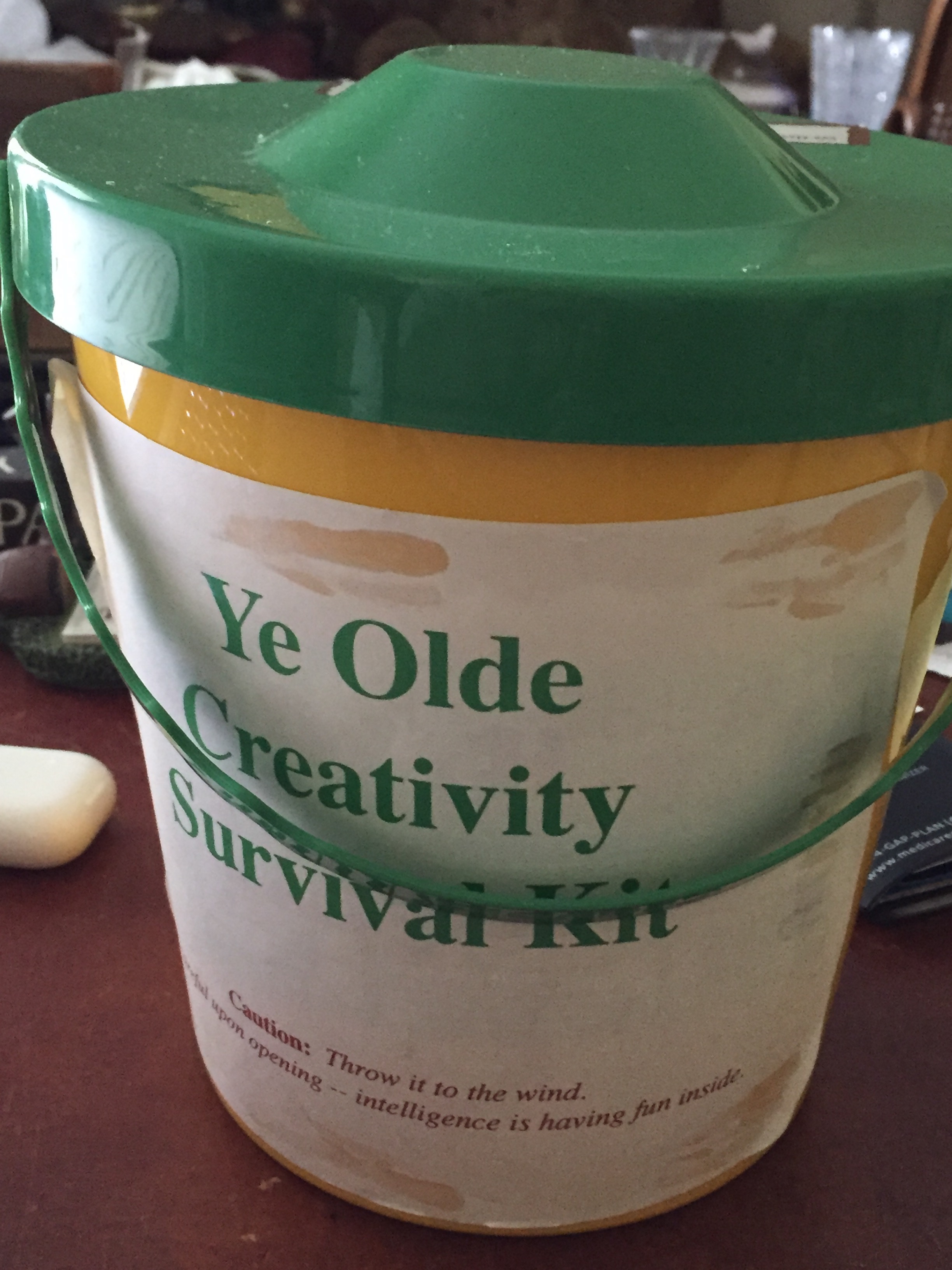
• Ye Olde Creativity Survival Kit — Any sort of container in which you place whatever makes you
FEEL creative and THINK creatively. In this industry, silly is sometimes serious business.

• Thinking at Warp Speed – Generating ideas at breakneck speed is a great way to capture ideas on
Post-it Notes (one per note) in answering a specific question to solve a problem. Remember Giant
Post-its for your “idea wall” which can foster brainstorming and open-door policy idea addition.

• Drill Down Technique – Discovering THE idea. In this unusual method choose your five best ideas
and ELIMINATE THEM, choose five more and ELIMINATE THEM. The last idea Post-it may or
may not be the best, but it’s one to which you normally would not have paid much attention. Go play.

• As ideas are developed, make sure their essence is refined. Make sure your ideas are clear and
you can explain their basic value in about 20 seconds. If you can’t explain it to an 8-year old so they’ll understand it, you need to refine your idea more.

• Don’t manage creativity; manage for creativity. Provide an environment that is open and receptive
to new ideas, and that builds failure into the process. Acknowledge error or failure in a constructive
and supportive way.

Hopefully making a ruckus, one blog post at a time!

Be sure to check out my other blog, Joe’s Journey, for personal insights on life and its detours.

Ever Been on a Creative Hot Streak? A New Study Finds That It Involves These Two Habits

At one time or another, we’ve all been on a creative hot streak even if we didn’t realize it. The words flowed freely, the design snapped into place magically making for very impactful creative. But how did that happen? How does one get on a “hot steak” of creativity? A new study from the Kellogg School of Management at Northwestern University may have a road map.

The secret involves experimenting with a wide range of subjects, styles, and techniques before perfecting a specific area of one’s craft—what the authors describe as a mix of exploration and exploitation.

“Although exploration is considered a risk because it might not lead anywhere, it increases the likelihood of stumbling upon a great idea,” the study’s lead author, Dashun Wang, said in a statement. “By contrast, exploitation is typically viewed as a conservative strategy. If you exploit the same type of work over and over for a long period of time, it might stifle creativity. But, interestingly, exploration followed by exploitation appears to show consistent associations with the onset of hot streaks.”

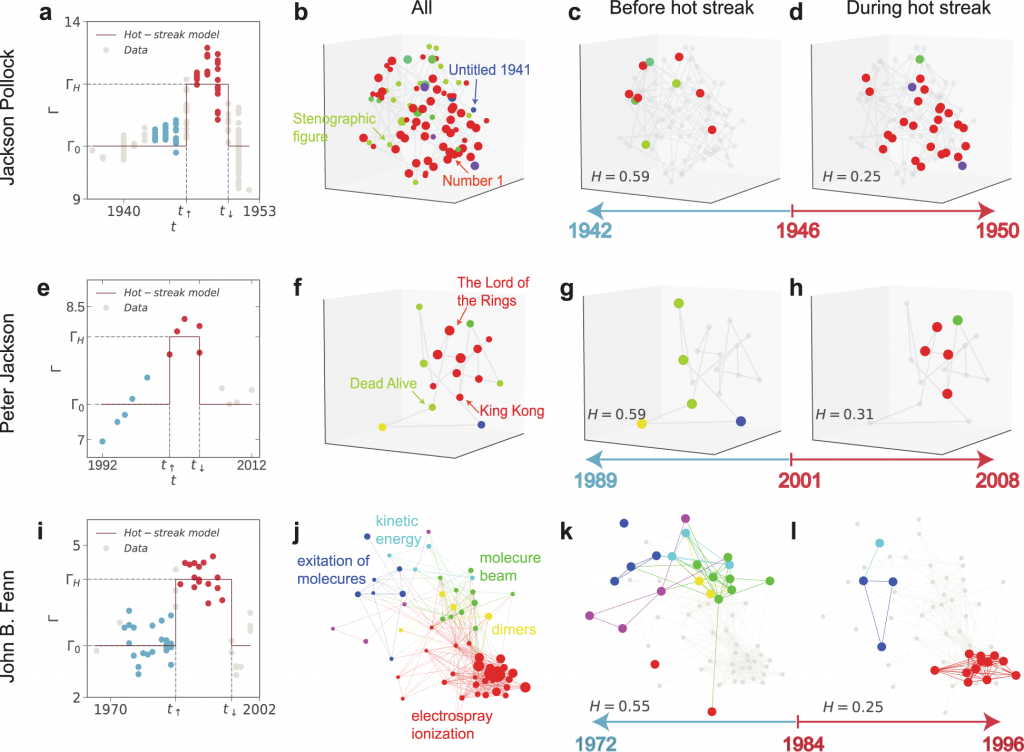
Wang’s findings, published in the journal Nature, sought to identify periods of intense creativity in the work of visual artists, as well as film directors and scientists. The team used image recognition algorithms to analyze data from 800,000 artworks from 2,128 artists, including Jackson Pollock, Frida Kahlo, and Vincent van Gogh. The rest of the study was based on Internet Movie Database (IMDb) data sets for 4,337 directors, and publications and citations on the Web of Science and Google Scholar for 20,040 scientists.

Creative trajectories and hot-streak dynamics: three exemplary careers. Data analyzing the work of Jackson Pollock, Peter Jackson, and John Fenn.

Creative trajectories and hot-streak dynamics: three exemplary careers. Data analyzing the work of Jackson Pollock, Peter Jackson, and John Fenn.

Pollock, who achieved widespread popular and critical success with his groundbreaking drip paintings from 1946 to 1950, is one of three creators singled out as examples in the paper.

Director Peter Jackson, who famously made the “The Lord of the Rings” epic fantasy trilogy after experimenting in genres such as horror-comedy and biography is another.

John Fenn, who won the 2002 Nobel Prize in chemistry for his work with electrospray ionization, having previously studied numerous other topics is another.

The paper identified patterns in the creators’ work over time—changes in brushstrokes, plot points or casting decisions, or research topics. It noted the diversity both in the period leading up to a hot streak, which typically lasts about five years, and at other times in the subject’s career. Five years?!

I found this to be surprising in that most hot streaks I’ve personally encountered have been anywhere from a few hours to several months. I’ve never thought of them in terms of years. Anywhoo . . .

In all three fields, the trend tended toward a more diverse body of work in the period before a hot streak than at other points in time. Then, during the hot streak, the creators tended to continue to work in the same vein, suggesting “that individuals become substantially more focused on what they work on, reflecting an exploitation strategy during hot streak.”

So when is your next hot streak coming up and will you know it when it hits you?

This post is based upon the article by Sarah Cascone of Art Net News.

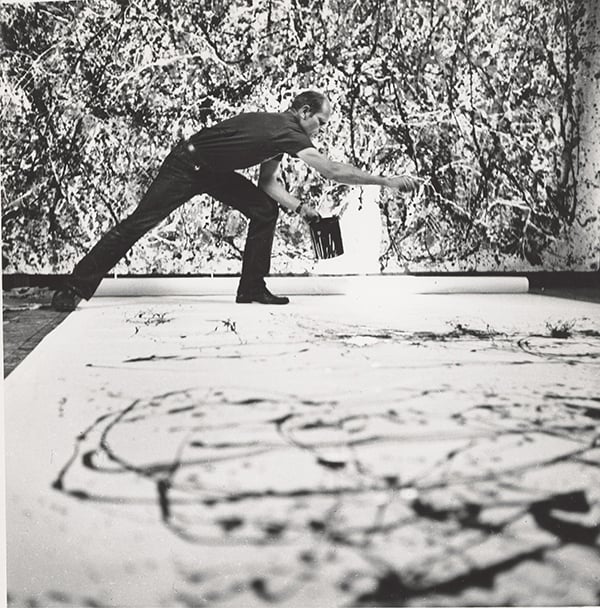
https://news.artnet.com/app/news-upload/2015/12/Jackson-Pollock-1950_L2011001166.jpg
Jackson Pollock at work in 1950. Photo: ©1991 Hans Namuth Estate Courtesy Center for Creative Photography, the University of Arizona.

Creativity Tip #24: Trying to satisfy everybody never got anybody anywhere. Focus on what’s important, then do it.

Hopefully making a ruckus, one blog post at a time!

Be sure to check out my other blog, Joe’s Journey, for personal insights on life and its detours.

Creativity and Risk Taking

Being creative requires taking some risks. Sometimes it’s the risks that hold us back from moving forward and being creative. Learn about two types of risks, what it really means to step out of your comfort zone, and how to test assumptions you might have about your fears.

How do you think you’d do getting out of your comfort zone? As a test, try my Creativity Tip below. First, think of a question that is a problem needing to be solved. Then, tackle tip #23. As an added challenge, try coming up with 100 ideas (one or two words or short phrases) in 10 minutes.

Creativity Tip #23: Warp Speed Thinking – Come up with as many one or two-word ideas as you can in 5 minutes.

Hopefully making a ruckus, one blog post at a time!

Be sure to check out my other blog, Joe’s Journey, for personal insights on life and its detours.

Death Resides in an Upstairs Room

Sometimes death takes on different forms for different people. This is a tale about one of those times.

Death is nothing at all. It does not count. I have only slipped away into the next room. Nothing has happened. Everything remains exactly as it was. I am I, and you are you, and the old life that we lived so fondly together is untouched, unchanged. Whatever we were to each other, that we are still.

Call me by the old familiar name. Speak of me in the easy way which you always used. Put no difference into your tone. Wear no forced air of solemnity or sorrow. Laugh as we always laughed at the little jokes that we enjoyed together.

Play, smile, think of me, pray for me. Let my name be ever the household word that it always was. Let it be spoken without an effort, without the ghost of a shadow upon it. Life means all that it ever meant. It is the same as it ever was.

There is absolute and unbroken continuity. What is this death but a negligible accident? Why should I be out of mind because I am out of sight? I am but waiting for you, for an interval, somewhere very near, just round the corner. All is well. — Author Unknown

Excuse me a moment. Believe someone’s at the door.

(Hears knocking.) Hmmm, sounds like from upstairs but I don’t have an upstairs.

(Door sounds, squeakily opens.)

“Pam?” I ask. No response.

“Pam?” I ask again. 

“I can’t come out but you can come in,” she intones.

“I hear your voice but can’t see you. If this is what I think it is, I can’t come up there now. It’s not yet my time,” I say.

Then slowly I hear a squeaky door closing. 

“Pam?”, I ask. No response. Then again; nothing.

Then, faintly, as if In the distance, I hear a door close.

I stand there, frozen and jarred by the experience.

News Bulletin from the Interdimensional News Agency:

Did this really happen? Does life exist that close to another dimension? Does just a door we cannot see separate us from the hereafter? Who knows!

Perhaps in the Twilight Zone it does, but this is not the TZ. Or is it?

Perhaps it’s simply a page-turn at the chapter’s end in the multidimensional book of life and death.

“Pam? . . . Pam?”. . . Fade to black . . .

That was over a year ago and nothing like that has reoccurred. I think back on that evening from time to time wondering if it did, in fact, happen or was I just dreaming.

This particular evening was quiet and I found myself curled up in my easy chair with a good book. I had just come to a stopping point and started to head off to bed when I heard what I thought was a very squeaky door slowly opening. Thinking to myself it came from next door, I went off to bed.

“Joe?” the voice intoned in what was more like a low whisper.

“Joe?” the voice asked again.

I froze. I just stood there, saying and doing nothing.

“Who’s there?,” I asked, not really expecting a reply.

“I can’t come out but you can come in,” the voice replied softly.

Not again, I thought. This can’t be happening.

“Joe?,” said the voice again. “Please come up and join me. I miss you!” she said .

Playing along, I said “Who is this and what do you want?”

“It’s me, Pam. Please join me upstairs.”

“I don’t have an upstairs and you can’t be Pam. My wife died over a year ago,” I said.

“If this is some sort of sick, perverted joke, I don’t appreciate it!,” I stressed.

“It’s no joke, Joe,” the voice said softly. “It is me, Pam, and you do have an upstairs, just not like you know it to be.”

Then, for some strange reason, I turned around and looked back toward the living room and kitchen area. There was a cloud-like haze inside the apartment, almost like a cloud had seeped inside hugging just below the ceiling.

I heard what sounded like a door slowly rocking back and forth on its hinges. I stood there in awe of what I thought I saw.

What was this sight I was seeing. Could it be an actual cloud? No, that’s impossible, I thought. Another dimension?

Then the voice again, “Joe, come join me. I miss you.” This time the voice was much clearer and louder, but not yelling. “There’s a room that’s been made ready for you. It’s right next to mine. Won’t you please join us?” she asked.

“Us?” I said. “Who’s us,” I asked.

No answer. Silence. Utter stillness.

Yet, the “cloud” remained. Was it an entrance to another dimension? Was this voice talking and beckoning to me really Pam? I didn’t know. I just know that during this time the hairs on the back of my heard were still at attention and I was quite uneasy.

Meanwhile, that slow rhythmical squeaking of a door rocking back and forth on its hinges was the only sound I heard.

Until I didn’t. Then the door closed shut, rather startlingly.

“Pam? . . . Pam?” I called out.

Silence.

Continue reading

Pamela’s Lantern

A short tale of life and the somewhat perversely humorous after life.

The lantern stands guard over Pamela’s cremated remains until one day magically transforms another living being into the remains the lantern is guarding so that Pamela takes new life in the other living being’s body.

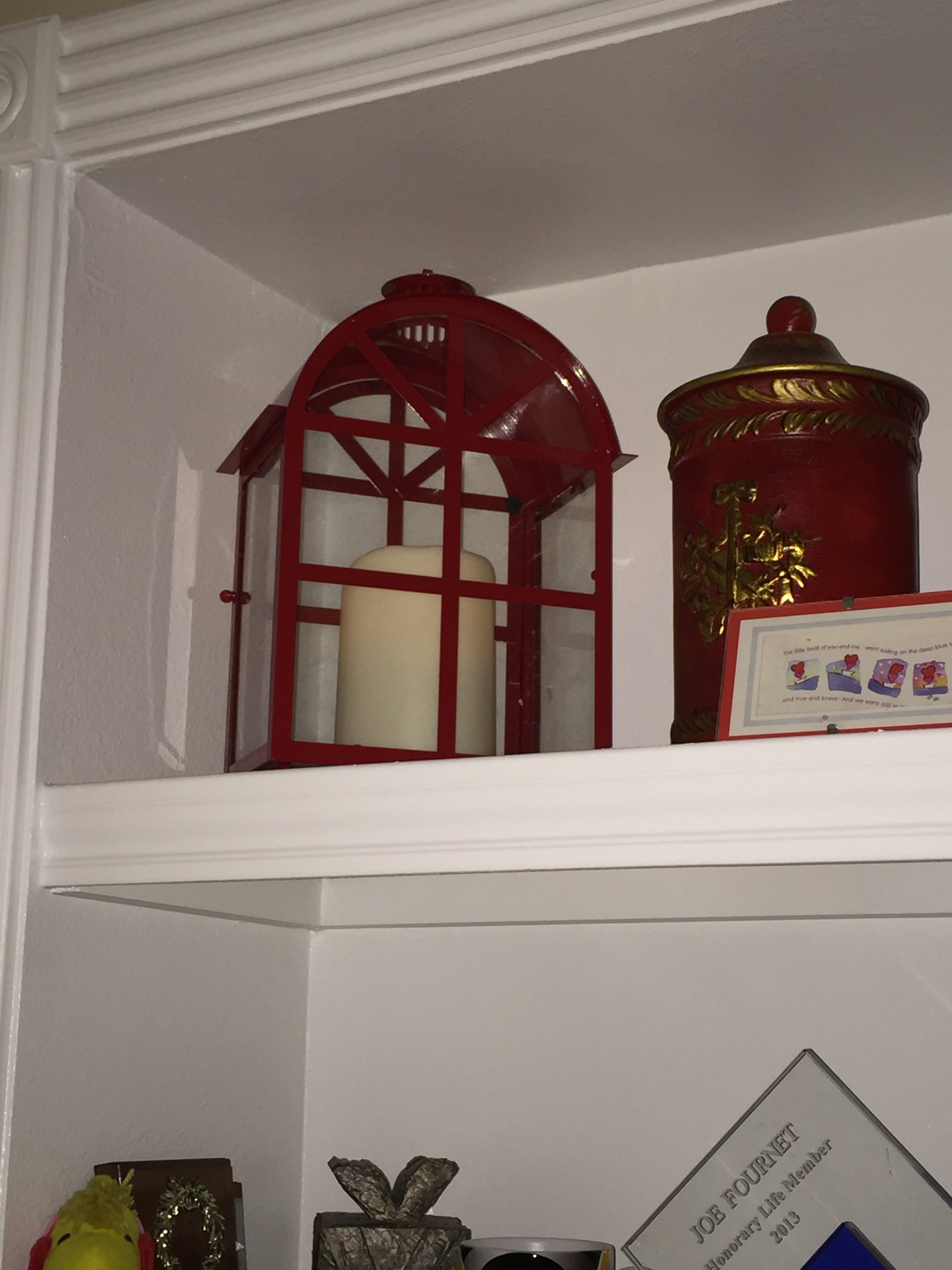
The lantern stands guard constantly overlooking the ornate, Chinese red urn containing Pamela’s remains. Almost like a person, the lantern is always looking from an angle, never taking its stare away from the urn. Its duty is to protect, watch over and remain a reminder that all is calm, peaceful, okay – A little like the eternal flame at JFK’S grave site.

By all appearances the lantern is normal looking, what one might expect at seeing a candle perched inside a window-latticed, red-lacquered, nautically designed portable lamp.

It’s normal looking and serves its purpose as a lamp overlooking Pam’s oriental urn. That is, except for when it decides to act independently and transform a living body’s substance into cremated remains and then swap them out with Pamela’s.

Admittedly a neat trick that not every lantern is capable of doing. Why it performs this rather perverse ritual, if one wants to call it that, is unknown at this juncture. It just does it. Randomly. It’s as if the lantern has a sixth sense about the person with whom it selects to interact.

You might be asking yourself how I know this happens at all. Have I witnessed this rather profane exercise in transformation? Has it happened to me? It has not. Yet! Though I wonder what type of emotional ties does the lantern have with its “subjects”. I sense it wants what’s best for Pam, to bring her joy and comfort in some very strange and weird way.

Assuming this to be true, I’d surmise that my transformation would be soon to come. I am, after all, Pam’s widower.

Can a lantern get jealous?, I asked myself one day. How can it?; it’s not a living being, I reasoned. It’s more of an entity, a thing that lights up. But it’s an entity that keeps watch over a very important vase, one in which my wife’s ashes are kept. Somehow, I think it knows that. It’s seen me take them out of the vase since they’re contained in a large plastic bag within the vase. It’s watched me handle them with utmost care. It knows of their importance.

On the other side of Pam’s urn is a cute little stuffed raccoon I gave her years ago. The raccoon, nicknamed Lil’ Rocky, also stands guard. Pamela is well protected should anything bad befall her.

11:48 pm – that’s when the lantern turns itself on every night. When that happens, it casts an entirely different light on its shelf. Though it doesn’t cast that much illumination on Pamela’s urn, it does cast a lovely glow that brings about a peaceful setting in the darkness.

Every time I get up during the night, I look over to notice the lamp and to make sure all is okay. This night was no exception. The lantern automatically turns off at about 4:15 am and all is dark in the living room. I go back to bed and wake up after the sun’s up.

One morning as I was walking through the room heading to the kitchen to make some coffee, I looked over at Pam’s urn and wished her good morning, just like I always do. After I made my coffee, I started walking back into the bedroom but paused my stride and turned back to glance in the direction of Pam and the lantern.

Everything looked the same but I stood there wondering why I had stopped to glance her way. I even walked up a few steps to get a closer look but nothing appeared out of the ordinary. I just thought I was still asleep since I hadn’t even taken sip number one of my coffee.

I didn’t realize at the time I wasn’t the only one wondering if something was amiss.

As I returned to my work area later that day, I noticed nothing odd at all. I didn’t give it another thought, so to work I went. Towards the end of this day as I was winding down, I went through my routine of shutting things off and getting ready for bed. Upon leaving my study, I glanced up to Pam’s area to bid her goodnight and I noticed something was different, if ever so slightly.

Both the lantern and the Chinese urn were exactly the same but the little raccoon was different; she was now turned to a position where she was looking down at me, where I usually work. I kind of shook my head thinking I was viewing this in a bit of a haze. Upon another gaze, I realized I was seeing things correctly. The raccoon had definitely changed positions. How? I didn’t have the foggiest idea!

I just stood there, staring up at the bookshelf where I had placed her. Without thinking, I reached up and turned her back into her original position at a slight angle, looking more at the Chinese urn than in my direction below. After doing that, I turned around and marched off to bed, turning off lights as I went.

Continue reading

Your Creative Juices Not Flowing Due to Uncertainty?

Having trouble getting your creativity loaded? Those creative juices simply not flowing for ‘ya? “Creativity block” is something akin to writer’s block. It’s a difficult stage to get through and at times can last longer than we’d like. It’s been especially difficult developing new ideas, creating new products and launching new services in the chaotic reality of this pandemic.

subpng.com

Do times of uncertainty cause a decline in creativity and innovation? That’s not exactly a slam dunk of a “yes”. History tells us that innovation and creativity thrive even in periods of uncertainty and chaos.

Many successful companies like Airbnb and Uber, for example, were founded during the Great Recession of 2007-2009. General Electric was established and grew during the massive economic downturn in America, also known as “The Panic of 1893.”

According to this Harvard Business School article on innovation, the Great Depression of the 1930s was one of the most innovative decades in the last century. A proliferation of new technologies, exceptional innovations and inventions that pushed the world forward were conceived and created during that time period.

Inventions such as the jet engine and the helicopter were created, followed by the FM radio, sunglasses, copiers, nylons, ballpoint pens, electric razors, car radios and much more.

Accessing the mindset of creativity and innovation in times of uncertainty is not easy. When we feel as if we are losing control over our external circumstances, we start telling ourselves there is no point in starting the creative process, as nothing we do will succeed. Nothing like shooting ourselves in our creative feet before we begin!

Uncertain times are the norm. It’s always been that way. We can’t predict the future and the only thing we can control is us. We’re the source of creativity, innovation and inspiration. Nothing new there.

The stability and certainty we need to support our creative process comes from within. How can we tap into that? As I touched upon in another blog post, we need to find an inner calm so that we may better conjure up the spark to our creativity. It’s there in all of us. We just need to find that which can ignite the spark.

Hemingway ignited the spark when he had trouble getting started on writing, by writing one declarative sentence . . . the rest, he said, will start to come naturally. You’ve got to “prime the pump,” so to speak. Even the artist needs to take a brush or a pen and just start doodling, anything that will stimulate the mind.

When we find our inner calm, alongside our commitment to continue the creative process no matter what, we’ll also find the right mindset for stepping up and making progress. The more we detach ourselves from the external madness, the more we can engage the creative process. We need to “catch the wave” before we can ride it.

Recession, chaos, uncertainty, and, yes, even a pandemic or two go hand in hand with creativity and innovation. Uncertainty surrounds us whether we like it or not. So, let’s deal with it in some way, shape or form. Start creating, inventing, solving problems and adding value. You do that by thinking clearly, calmly and intuitively. Concentrate on what you can control. The rest usually takes care of itself.

This post was contributed, in part, from an article by Nili Peretz, Forbes Councils Member.

Creativity Tip #27: Never fall in love with your idea; there’s always a better one around the corner.

Hopefully making a ruckus, one blog post at a time!

Be sure to check out my other blog, Joe’s Journey, for personal insights on life and its detours.


Rising from the Ashes

A Macabre Tale of the Dearly Departed

I’m sort of numb, sitting in Pam’s huge, upholstered easy chair just staring into space. It’s only been a few weeks since she died and here I am staring at the forlorn-looking black box that the funeral home delivered containing her ashes.

I’m scared to open it. I’ve never even seen someone’s ashes before. Not sure what to expect.

I sit. I stare. I wonder. I need a drink! Maybe two!!

After I return with my Jack Daniel’s on-the-rocks, I put the glass down and notice some liquid residue evidently left over from a glass no longer sitting here on the coffee table. I just mutter to myself that I’ll wipe it up later.

I take a sip of Jack, replace the glass on the table and reach for the black box to open it. Opening is no problem but I see that the bag inside is tightly tied so as to prevent spillage of the ashes.

Or so I thought.

When I lifted the bag from its container and began to remove it from the box, it began to slip from my hand and spill out onto the table. Evidently, the bag was not as securely tied as I was led to believe.

Though startled, and slightly embarrassed, even though there’s no one else home, I quickly apologized to Pam for having accidentally spilled some of her ashes. When I began to wipe up the ashes from the table, I noticed some weird reaction start to take place with those ashes.

It seems that some of them spilled precisely where some liquid remained from a few drinks ago.

I sat there mesmerized as I watched some chemical reaction taking place with the spilled ashes and liquid. To my amazement, it seemed as if some sort of figure was beginning to form.

A blob. Unrecognizable. But then, my God, it’s transforming right before my eyes into . . . a . . . person.

Pamela’s Voice imagerpy from The Night Gallery

I watch, amazed, not knowing what, if anything, to do. I am utterly transfixed on what is happening right before me. Then to my astonishment, it stands there and speaks, “Hi Joe!”

“It” is Pam, and I faint.

ii

“Uh, Joe,” she says. “It’s me, Pam, I think, though I’m not sure how I got here. It’s kinda fuzzy to me.”

“You wouldn’t believe me if I told you,” I muttered, slowly beginning to regain consciousness.

“Do you remember dying?,” I asked. “You know, you really screwed up my day, not to mention yours!,” I stated as flatly sarcastic as I could.

“I don’t know. I mean, I remember laying on the bed, semi-asleep and then, well, nothing. It’s as if everything went black,” she said.

“I don’t want to dwell on your death, Pam. I’m still in some kind of shock. It was I who discovered you, thank you very much,” I said.

“That moment was my worst nightmare come true,” I retorted.

“I’m sorry, but I didn’t exactly plan it that way,” she said. “But enough of this! How the hell did I get back here and what am I doing in our living room?”, she asked.

“Well, I was handling your bag of ashes and they slipped out of my hands with some spilling into a little residue of liquid there on the table. The mixture began some sort of chemical reaction and the next thing I know, you formed into, uh, you” I explained.

“You mean I was sort of resurrected from my ashes?,” she blurted out.

“That’s pretty much it,” I said.

“Well, that explains the gritty taste in my mouth,” she said as she sort of spit out some sandy-like substance.

“Why are you looking at me that way?” she asked.

“It’s not everyday, Pam, that I bring the dead back to life!” I said. “And,” as I stumbled for words, “you’re much younger looking than when you died,” I explained. “You look like you did when we first met, about 30 years ago!” I confessed.

“Maybe your appearance has something to do with your transformation,” I offered. “Whatever the explanation, I’m glad it has taken place” I admitted.

Evidently, unknown to me at the time, the mixing of the liquid with ashes that produced the chemical reaction also transformed the liquid somehow to create a person. This has resulted in forming a human, in this case, Pam, as I recall her from when we first met.

Oh, man, do I have questions, I thought. Does simply mixing a little of the ashes with any liquid produce this magical transformation to a “living being?” Is this magical elixir the solution for bringing the dead back to life?

“Pam, why don’t we take a little walk outside and get some fresh air? You’ve been bagged and bottled up for too long,” I suggested.

She agreed and off we went. However, as soon as we began to walk out the front door, she screamed in agony. We both immediately stopped and I looked down in horror.

She had begun to disappear!

iii

Her feet and ankles were dissolving and were starting to leave behind some dust reside. Thinking quickly in almost a reactive sort of way, I grabbed hold of her and immediately yanked her entire body back inside the house.

Within moments, thankfully, the shape of both feet and ankles began to return to normal appearance.

“Whew, thank God,” I exclaimed in shortness of breath. I was still holding on to her and sort of afraid to let her go. We eventually made it back to the living room where we both sat down in utter relief, she on the table and me in her overgrown chair.

“What the hell was that all about,” she screamed. “I started to disappear,” she said.

“Yeah, I know” I said. “I have a theory,” I suggested.

“Perhaps once the person leaves the house or the dwelling she occupies, she begins to dissolve and then disintegrates. In other words, she can’t venture outside or else she returns to dust or ashes in your case,” I theorized.

“You mean I can’t go outside or physically leave this house?,” she exclaimed.

“Not this way,” I said.

“Damn!” she retorted.

“Well, after all, you’re dead, remember?” I told her.

“As you have said on more than one occasion, my dear Joe, ‘minor little detail!'” she deadpanned.

iv

My now-growing list of questions boggles my mind: Is this chemical reaction trick a way of always producing Pam whenever I wish? Even though this creation is evidently limited to exist within the boundaries of my home, is that enough to satisfy me or to counter my longing for her? Could I bring her back in a different setting if I began the process from a different locale?

NightGalleryArtMinds

I have no clue at this point. The quest for clarification is now upon me. Where will it lead? Am I flirting with another dimension? Where is Rod Serling when you need him?

I think I’ll pour me another Jack Daniel’s and sit, contemplate . . . and chat with Pam.

Hopefully making a ruckus, one blog post at a time!

Be sure to check out my other blog, Joe’s Journey, for personal insights on life and its detours.