5 reasons it’s gotten harder to do great work—and how to get back to it

I came across this article last month in one of the industry trade pubs and thought it quite relevant, not to mention interesting. The author, Wayne Best, chief creative officer of VML New York, cites one of the pioneers of creativity in advertising, one Bill Bernbach, as a major force during the sixties. The industry during that time is totally different than it is today. Mr. Best offers some viable suggestions as to how to resurrect, if you will, that creative zest so pronounced during Bernbach’s time.

I’m in total agreement with what Mr. Best suggests. I’ve been thinking the same for years and used to speak on these topics when on the AAF speakers’ junket. Today, with the advent of AI, they have been much more difficult to be realized and put into practice.

Mr. Best writes . . . I have no personal connection to DDB. I have never worked there and have very little knowledge of the culture at the time its name was “retired.” I do, however, have a great deal of respect for Bill Bernbach. I still use quotes he uttered from before I was alive. He ushered in the power of creativity in advertising.

That led me to wonder if his name disappearing (well, the B in DDB) was the end of the era of creativity. I have decided the answer is no.
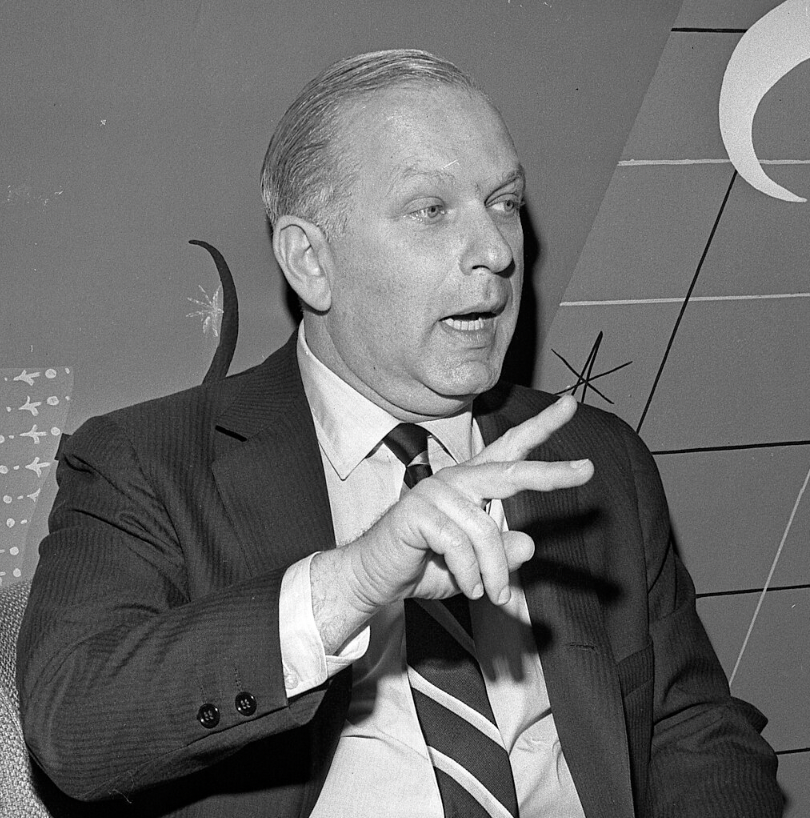
Advertising executive, William Bernbach at press conference discussing his stance against cigarette advertising. Original caption: NO SMOKING—William Bernbach, newly named “The man who contributed most to advertising in 1963,” said Thursday that advertising cigarettes amounts to “just selling sickness.” He voiced several other strong opinions on advertising at a press conference here, but denied being a crusader.
Photo: Jack Carrick, Los Angeles Times

I will admit that I miss the days when smart, insightful advertising was prolific and opening an awards book was like unwrapping a gift. That’s not to say great work isn’t still happening, but lately it feels like the priorities have been put on data, systems and efficiency. And learning how to best use AI. 

These are good things. They are changing advertising for the better. Yes, some jobs will change as a result. For instance, it’s a hard time to be a storyboard artist. But the best storyboard artists have visual taste and can tell a good story. Those skills are still needed; it’s just that the tools that get you there have changed. 

So, embrace change and adapt. 

Resistance is futile.

That last line is not meant to be eerie. It’s just true. The sooner you acknowledge it, the further you’ll go. After all, the path to great work is to kill good work. Progress requires you to kill your darlings so you’re free to think in less expected ways.

Which brings me to the question: Has “brand” become irrelevant?

I don’t think so. 

Yes, media and production efficiencies can optimize our budgets. Customization and transcreation will continue to improve. But there is still an itch that all of that can’t scratch. And that is love.

Great brands have a place in our hearts, and that love still needs to be earned. It starts with a great product, but that’s just the beginning. Steve Jobs didn’t just produce great products; he also found a way to connect with people on a very human level. “1984” isn’t just an ad for a computer, it’s a celebration of individuality and a middle finger to corporations. “Here’s to the Crazy Ones” is about honoring the misfits who are daring enough to think they can change the world. The brand has a distinct point of view.

Data doesn’t do that. And AI aggregates the past rather than finding the unexpected. It doesn’t have the soft skills. It doesn’t have empathy. 

That said, I don’t think our quest for data or AI are to blame for our current creative lull.

We’ve made it hard on ourselves to do breakthrough work. 

We’ve added layers and layers of decision-makers. We’ve tried to be all things to all people. We’ve become afraid to make hard decisions and take chances, and that’s dangerous, because when you don’t make hard decisions, you sit in the middle. And the world ignores the middle, no matter the media budget.

I’m sure there are things I’m leaving out, but here are five things I know absolutely get in the way of building a great brand. None of them have to do with AI:

1. There are too many people involved in the decision-making. While it’s important to listen to opinions, a camel is a horse designed by a committee. Listening to people is fine, but somebody needs to be the decider, or you will build that camel.

2. If you try to please everybody, you will excite nobody. To be a great brand, you need to have a distinct POV. This means there are a lot of things you need to not say. Deciding what not to say is harder than deciding what to say, because different stakeholders care about different things.

3. Building a brand the right way takes time. We are always in a rush today, and the speed of AI and digital production has us moving faster than ever. Technology helps with the daily work, but to crack the bigger brand work, you need to be thoughtful and deliberate. Impatience is not a virtue.

4. Write shorter briefs. It’s hard. Writing long-winded briefs that everyone can read and find the “thing” they care about covered in the many pages is easy. Finding that sharp, pointed thing you can own in a sentence is hard. But until it gets sharp at the brief stage, you’ll be wasting expensive creative time. Make the hard decisions on what matters, and what doesn’t matter, at the brief stage. Or it will create endless swirl.

5. Never forget the problem you’re actually trying to solve. It’s easy for Walmart to promote deals on its website, but the bigger challenge is making consumers feel good when their neighbors see that Walmart box on their porch. It’s not an accident Walmart started using popular music and celebrities and buying high-profile media. When you keep the bigger goal in mind, it makes daily decisions easier. 

I’m still sad when I see the greatest names in advertising dropped into a six-foot hole. But hey, those people were already dead. It’s what we learn from them that matters. If Bill Bernbach were alive today, he wouldn’t be moaning about the death of the print ad, he’d be figuring out how to build a real connection between a brand and the humans who need it given our current environment. 

I am bullish on 2026. 

As we learn to work with AI, it gets less scary and more helpful. The weirdness of the pandemic is wearing off. Mergers have become less of a shock and more of a way of working. And the best minds I know are anxious to be more creative again. They’re excited to do unexpected and wonderful things. 

Let’s roll up our sleeves and get to work.


Hopefully making a ruckus, one blog post at a time!

Be sure to check out my other blog, Joe’s Journey, for selected short stories and personal insights on life and its detours.


Creatives can lead a humanistic approach to AI . . . Here’s how.

Canadian graphic designer Jean-Pierre Lacroix explains how creative agencies and brands can make better use of generative AI by using it to expand team creativity.

As in the past I came across this article on the Web and thought it both interesting and inspiring. Given our challenging times, I think you will too. Enjoy!

The concept of generative AI technology creating content from user prompts using advanced algorithms. Adobe Stock

Every brand and agency is trying to tap into the promise of generative AI. So far, the results don’t always meet expectations. Is that so surprising? AI is brand new technology that no one fully understands, including its creators. Right now, we’re in an era that calls for experimentation. Results will come, but maybe not how we imagine. In the meantime, we must adopt a human-centered approach to AI, enabling creative teams to use AI as a platform for thinking differently and learning. 

So far, the best AI brand activations aren’t AI-generated ads or design. Successful examples of creatives using AI have a distinctly human perspective. For example, Heinz created an ad showing the audience what happens when they prompt AI to create images of ketchup: it reproduces hundreds of variations of the iconic Heinz bottle design. No matter how they try, according to the ad, they can’t get AI to drop the Heinz label because it’s synonymous with ketchup. 

Although the ad shows AI-generated imagery, Heinz is cleverly using AI to make a point about their brand rather than to generate and execute a creative idea. 

On the other hand, when companies try to generate creative using AI, even the best work requires enormous human effort and it doesn’t always come off well with consumers. That may change, but today, AI-generated material just doesn’t look and feel right. The fear that AI will take jobs away from humans causes concern in some scenarios, for example with the use of AI-generated models.  

How should creative teams be using AI today? It’s about testing and learning to develop skills and confidence. No one can say for sure how AI models will evolve but being prepared means teams need to start experimenting now. 

Key considerations for AI experimentation

Create a cross-functional team assigned to explore AI tools relevant to their roles. Tracking and testing new models, staying informed about potential legal concerns and gathering case studies will ensure you have a strong foundational knowledge to guide decision-making. 

Establish guidelines for AI use at your company. You’ll need someone who’s on top of legal matters, keeping in mind that various legislation is pending in many regions. You also need to understand how your consumers or clients perceive AI. Although there are some who hate AI no matter the circumstances, for most people, context matters. Conduct research with your stakeholders to make sure your intended uses align with their preferences. Provide your team with an approved list of licensed tools to use and establish a process for testing new ones. 

Try, fail, try again. At our company, we created an AI self-assessment platform that allows brands to evaluate their design against a competitor through the lens of our branding philosophy. This was a test-and-learn scenario that resulted in numerous unsatisfactory iterations, ultimately leading to a beta model that runs well, albeit with some caveats. (You can test it for yourself.) As we continue to improve the tool, our team continues to learn. Don’t expect perfection because you won’t get it. Building confidence, knowledge and skills should be the goal.  

Be transparent. If you work with clients, gauge their comfort level with AI and give them the option to opt out if you intend to make it part of your workflow. Something as simple as AI notetaking may run counter to privacy policies, for example. 

Protect your privacy and the privacy of clients. Before using any AI platform, ensure your IT team reviews their data policies. This brings us back to establishing guidelines. Ensure that everyone at your company is aware of which platforms they’re permitted to use, and that the appropriate people have licensed accounts where data will be kept confidential. 

Better, faster creative? Not yet

The hype around AI may lead some to think creative work can be completed faster and at a lower cost. At this stage, efficiency-finding with AI is only possible if you significantly lower your standards. Most creative agencies and brands would likely agree that AI can be useful in ideation but isn’t as helpful in execution. 

For example, we’ve found that even when given clear design guidelines, it’s very difficult for AI to create final art for packaging that works in real life. We’ve found it useful for editing images, brainstorming a hundred ways to depict a watermelon and general ideation. But so far, human creatives are still significantly better at everything else. 

AI does a decent job writing emails and copy for social media, but that too is bumping up against some limitations. Consumers are starting to recognize the tone of AI-generated copy and they find it grating.

AI is best suited to help structure content, create headlines and keywords and clean up copy. Marketers shouldn’t let their writing skills decline! AI can decipher what makes a clickable headline, but it doesn’t have any fresh ideas – it’s a solid Beatles cover band, but it’s no Lennon or McCartney. 

Where we’ve found it most useful is with coding, where it helps us do more in a shorter time frame. However, teams still need to be proficient enough to know how to prompt for the right code and how to correct mistakes.  

The human connection gap

One of the most common consumer-facing uses of AI is chatbots. They give us insight into the human connection gap that can occur with AI. Although serviceable and polite, AI chatbots annoy people. We know they’re not human and this changes the way we treat them. 

Consider the Taco Bell drive-through incidentwhere a customer derailed an AI chatbot by ordering thousands of glasses of water. In cities with fleets of self-driving cars, they often get stuck and cause traffic jams because drivers won’t let them in the way they would a human driver. 

Then there are the many incidents of people assaulting robots, especially humanoids. As much as we love a fun tool to play with, creatives can’t ignore the dehumanizing potential of AI.

How do we deal with this?  The answer isn’t ignoring AI but learning how to use it to support human ideas and interactions. If what the utopia tech companies are selling is achievable, it will be because users engage with it thoughtfully. Creative teams are in a great position to lead this kind of conscientious, intelligent use of AI.  

Jean-Pierre Lacroix is president of Shikatani Lacroix Design

Jean-Pierre Lacroix is president of Shikatani Lacroix Design, a global branding firm specializing in transforming customer experiences for consumer packaged goods companies, financial institutions and retailers. He is a member of the Registered Graphic Designers of Ontario, and has sat on the board of the Society of Environmental Graphic Designers, Packaging Association of Canada and the Association of Professional Futurists.

Hopefully making a ruckus, one blog post at a time!

Be sure to check out my other blog, Joe’s Journey, for selected short stories and personal insights on life and its detours.